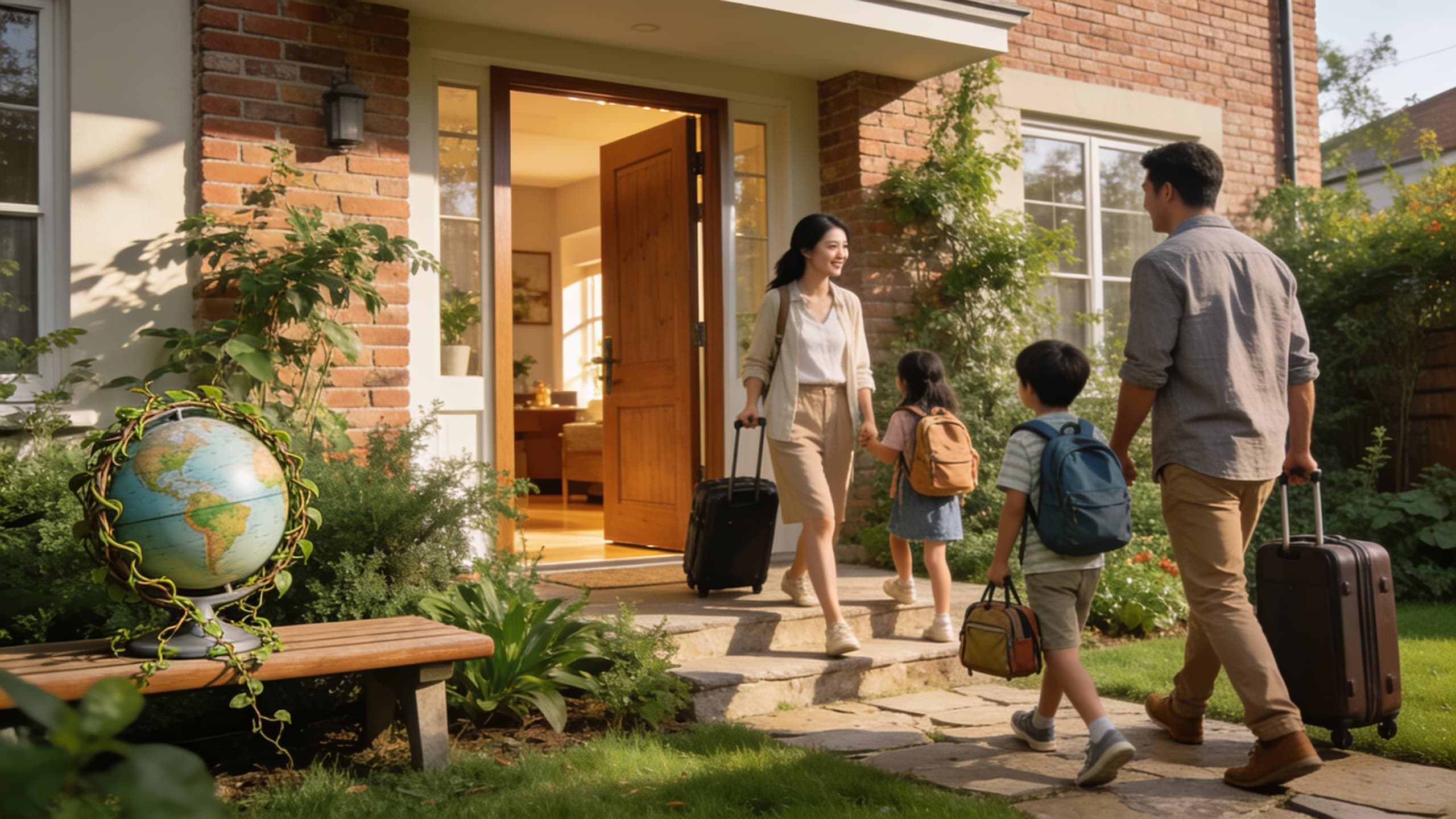
How Home Swapping Helps You Travel More Sustainably

SwappaHome Editorial Team
Home Exchange & Slow Travel Editorial
Sustainable travel used to be the kind of thing only a certain crowd cared about. Now it's just... what people expect. Millions of travelers want to see the world without wrecking it, and home...
Sustainable travel used to be the kind of thing only a certain crowd cared about. Now it's just... what people expect. Millions of travelers want to see the world without wrecking it, and home swapping is honestly one of the least complicated ways to actually do that instead of just talking about it.
If you've never come across the idea: home swapping means you exchange your house or apartment with another homeowner instead of booking a hotel. And the reason it's genuinely greener isn't some marketing angle. It's simple. Instead of pouring new construction, energy, and resources into a destination, you're taking homes that already exist and putting them to work twice. Once for the family who lives there. Once for the traveler passing through.
So let me walk you through how home exchange stacks up against regular tourism, what it does for the neighborhoods you visit, and how platforms like Swappahome are quietly turning ordinary homeowners into hosts.
Table of Contents
- What Is Home Swapping, and Why Is It a Form of Sustainable Travel?
- How Does Home Swapping Reduce Your Environmental Footprint?
- Home Swapping vs. Traditional Tourism: A Sustainability Comparison
- How Do Home Exchanges Support Local Communities?
- Eco-Friendly Vacation Options Beyond Just Lodging
- How Much Does Sustainable Travel Through Home Swapping Actually Cost?
- Getting Started with a Sustainable Home Swap
- Frequently Asked Questions
What Is Home Swapping, and Why Is It a Form of Sustainable Travel?
Home swapping is an arrangement where two people or families trade homes for a set stretch of time, so each gets a free place to stay while traveling. The reason it counts as sustainable is that it leans entirely on housing that already exists. No new hotel gets built. No extra apartment gets pulled off the market to become a rental. Nothing gets constructed just to sit empty ten months of the year.
Think about what a big hotel or resort actually requires to keep running. Constant construction and renovation cycles, enormous water and energy use, and a never-ending churn of fresh linens, tiny shampoo bottles, and single-use everything. Home swapping skips basically all of it. You're staying somewhere that's already fully kitted out. Kitchen, laundry, garden, the works. It's just being used a little more efficiently.
On Swappahome, members list the home they already live in, set when it's free, and swap stays with verified travelers. What I find kind of clever about this is that the "supply" of places to stay keeps growing without a single new building going up. If you want the bigger-picture version of where all this is heading, the piece on how home swapping is changing the future of travel gets into it properly.
How Does Home Swapping Reduce Your Environmental Footprint?
Home swapping shrinks your travel footprint mostly by cutting out the extra energy, water, and waste that hotel operations pile up, while also nudging you toward habits that are just naturally lower-impact, like cooking at home and hopping on the local bus. And it's not only about the bed you sleep in. It happens across the whole trip.
Less duplicate infrastructure. When you stay in a swapped home, you're using a kitchen, bathroom, and living room that already exist and get maintained daily anyway by whoever owns the place. Hotels are a different beast. They're running centralized laundry, cleaning every single room every single day, and pumping climate control through long hallways and lobbies whether anyone's there or not. A private home swapped for a week or two doesn't carry any of that overhead. It's just... a different person living in it for a bit.
Then there's the food thing, which people underestimate. Because swapped homes come with real kitchens, you actually end up shopping at local markets and cooking some of your own meals. That means less packaging waste, fewer emissions from the whole restaurant supply chain, and groceries that usually come from the area around you rather than the machinery built to feed a tourist district three meals a day.
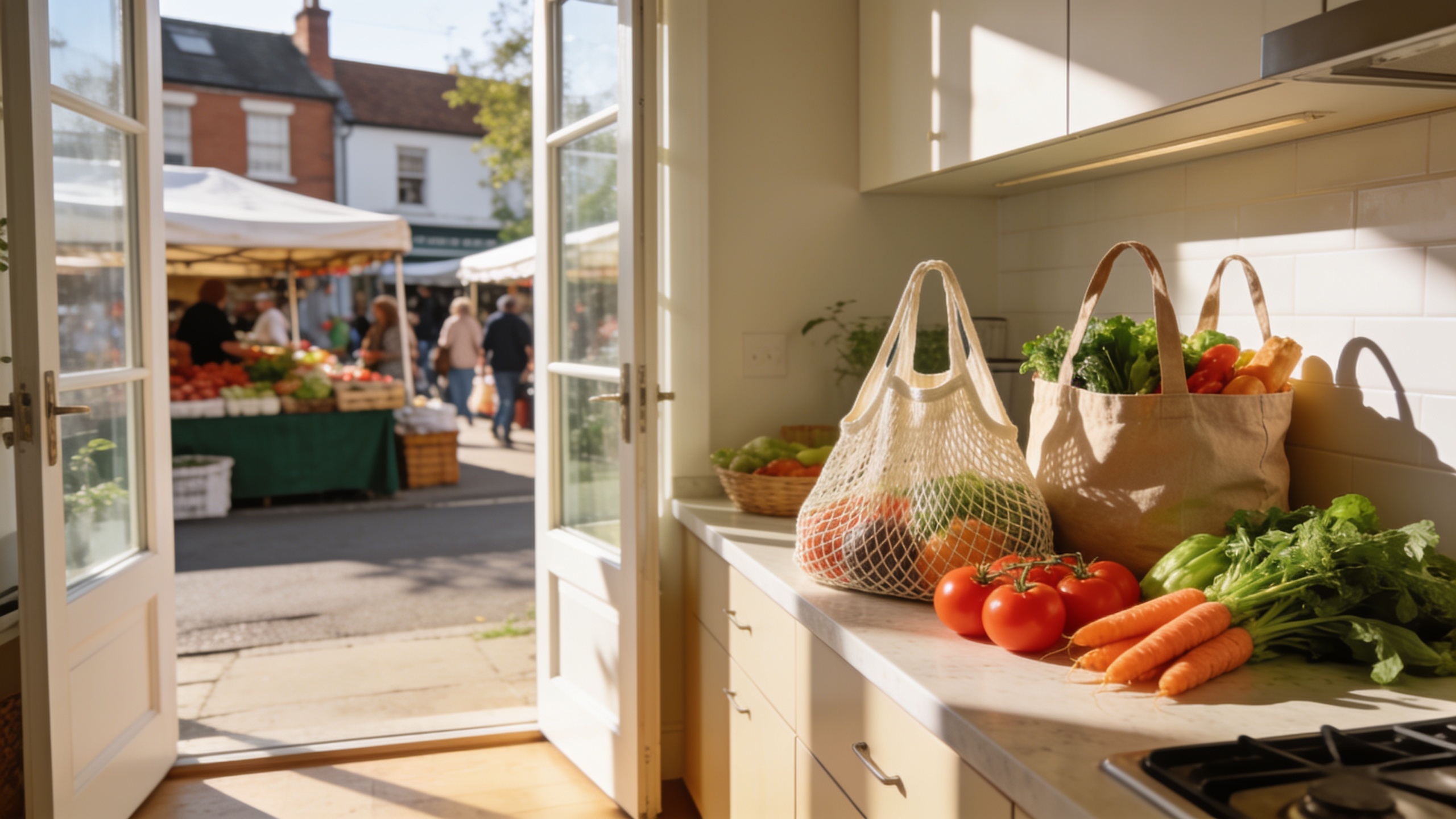 A home kitchen with fresh local market produce, representing sustainable cooking and reduced packaging waste while home swapping
And staying in a real neighborhood quietly changes how you get around. Instead of taxiing between attractions clustered near a resort strip, you tend to walk, cycle, or take local transit, because you're living where actual residents live. That said, let's be honest. There are moments a reliable ride is exactly what you need. A late airport arrival, hauling luggage between two homes, making a train you can't miss. Having a dependable local option like Wimborne Cab Taxis in the Bournemouth and Wimborne Minster area is a decent example of the whole point here: sustainable travel doesn't mean torturing yourself. It just means being deliberate about when you reach for the convenient thing.
Home Swapping vs. Traditional Tourism: A Sustainability Comparison
Home swapping pretty consistently wins over hotel and resort travel on cost, resource use, and how connected you feel to a place, though I'll be straight with you: it takes more upfront coordination than tapping "book" on a hotel room. Here's how the two lines up across the stuff that actually matters when you're deciding.
| Factor | Traditional Hotel/Resort Travel | Home Swapping (e.g., Swappahome) |
|---|---|---|
| Typical accommodation cost | $150–$400+ per night | 1 credit per night on Swappahome, with no cash exchanged between members |
| New construction/resource demand | Ongoing hotel development and renovation cycles | Uses existing homes already in daily use |
| Space | Small room, limited amenities | Entire home with kitchen, garden, and living space |
| Daily operations | Centralized laundry, daily housekeeping, constant HVAC in shared spaces | Home continues operating as it normally would, just with a different resident |
| Food habits | Restaurant-dependent, tourist-area dining | Local grocery shopping and home cooking are common |
| Community contact | Anonymous check-in, tourist-area experience | Verified members, local tips from hosts, real-neighborhood living |
| Membership cost | N/A (pay-per-stay) | Free to join, with 7 credits given at signup |
The money gap alone is kind of wild. Based on average nightly prices tracked across 947 cities by AirROI's public data (snapshot dated April 29, 2026), a 14-night stay booked through Airbnb averaged roughly €1,707, versus €0 in direct cost through a credit-based swap on Swappahome. Now, that's not an environmental number on its own. But it points at something real. Swapping skips the commercial markup, the energy bills, the turnover costs baked into every paid rental and hotel. And every one of those costs traces back to resources being consumed somewhere down the line.
How Do Home Exchanges Support Local Communities?
Home exchanges support local communities by keeping travelers planted in actual neighborhoods instead of packed into hotel zones, which spreads tourism money around more evenly and eases the pressure on housing markets that short-term rentals tend to squeeze. Instead of a building getting yanked out of the local housing supply for good so tourists can cycle through it, a swapped home stays a home. Somebody else lives in it for a short window, then it goes right back to its owner.
This matters more than it might sound. One of the biggest complaints about mass short-term rental tourism is that it eats long-term housing stock and drives rents up for the people who actually live there. Home swapping dodges that entirely, because nothing gets converted or permanently listed. It's a temporary, reciprocal trade between two people who both still live in their own homes the rest of the year.
You see this play out in the listings, too. One host in Farum, Denmark offers a private upper floor of a two-story home with its own rooftop terrace. She describes herself as a schoolteacher who swaps during Danish school holidays and enjoys "giving others the chance to experience Copenhagen from a peaceful, local perspective." That's the kind of exchange regular tourism almost never produces. Real local tips, two-way reviews after every stay, an actual relationship between guest and host instead of a nameless transaction at a front desk.
 A peaceful residential neighborhood with rooftop terrace view, showing authentic local community living versus tourist-focused areas
And because every member is ID-verified and reviewed after each stay, the whole thing builds a kind of trust that feels a lot closer to how neighbors deal with each other than how a hotel check-in works. If you're chewing on the practical side of letting a stranger into your home (totally fair to be nervous about that), it's genuinely worth reading through how to handle insurance and liability in home swapping before your first go. Knowing what's covered and who's responsible for what up front is a big part of what keeps this kind of travel smooth for everybody.
Eco-Friendly Vacation Options Beyond Just Lodging
Eco-friendly travel isn't only about where you sleep. It bleeds into how you get around, what you pack, and how you spend your actual days. And home swapping tends to push you toward the greener versions of all of those, kind of by accident, just because of how the model is built.
Staying in a residential neighborhood instead of a resort usually means more walking, more cycling, more public transit, and fewer little taxi hops between sights. A lot of swappers end up building their days around whatever their host recommended nearby, the parks, the markets, the trails, rather than transport-heavy day trips out to the big-name stuff. If you're the type who likes to hike or explore on foot, all that extra activity can leave you pretty sore by evening. Which is where something like Muscle Mint's menthol cream, made with natural oils, comes in handy. Beats hunting down a pharmacy in a town where you don't speak the language.
Full kitchens also quietly kill a lot of single-use waste. Fewer disposable takeout containers, and a washing machine means you can pack light and just do laundry instead of buying travel-sized toiletries and clothes you'll never use again. Small stuff, sure. But it adds up fast next to the routine waste a hotel throws off, from the daily-swapped linens to the tiny plastic bottles.
There's one more layer people rarely think about, and it's the online side. Sustainable travel isn't purely physical. It also touches how a community shows up on the internet at all. The same way swappers rely on platforms that connect them straight to local hosts, small tourism-dependent businesses need decent digital visibility just to be found. Services like Digital Fusion Hub, which help businesses build affordable websites and clean up their online presence, are part of that same quiet infrastructure. It's what lets a little guesthouse or café or independent tour guide actually compete for eyeballs against the big travel brands, and that's what keeps the money circulating locally instead of funneling off to some giant middleman.
How Much Does Sustainable Travel Through Home Swapping Actually Cost?
At the accommodation level, home swapping is basically free. Swappahome is described as 100% free to join, no required membership fees, and new members get 7 free credits at signup. That's roughly a week of stays before you've even hosted anyone. From there the credit system is dead simple: every night a guest stays in your home earns you 1 credit, credits don't expire, and 1 credit equals 1 night anywhere in the network. No money changes hands between members. Ever.
Line that up against normal accommodation costs. The platform's own comparison puts hotel or resort stays at $150–$400+ per night, and remember that AirROI figure, around €1,707 for 14 nights through Airbnb versus €0 through a swap.
So what's the catch? Because there's always one. The real "cost" of home swapping is the reciprocal commitment. You've got to be willing to host other people in your place to keep earning credits, and you're leaning on your home's location and charm to attract interest. That's it. For anyone on a budget, retirees trying to stretch a fixed income across more destinations, digital nomads shaving down their fixed monthly costs, that trade of hosting for free lodging elsewhere is often the entire draw.
Getting Started with a Sustainable Home Swap
Getting started on Swappahome comes down to three moves: list your home, earn credits when guests stay there, then spend those credits to book stays anywhere in the network. One credit, one night. No cash between members at any point.
Before your first swap, poke around by city or country to see what's actually available right now. Swappahome's listings cover Germany, Italy, the Netherlands, the United Kingdom, Spain, France, Denmark, Belgium, Portugal, Australia, Hungary, and Greece, which is a pretty broad starting point for planning that first trip. The listings put the practical stuff right up front too, guest capacity, how many bedrooms and bathrooms, whether the host is ID-verified, so matching a home to your dates and group size isn't a guessing game.
Once you've found a match, take a minute to actually understand your responsibilities as both host and guest. This is exactly where reading up on insurance and liability considerations stops being optional homework and becomes genuinely useful. And since there are two-way reviews after every stay, treat the home you're borrowing the way you'd want yours treated. That reputation follows you into your next swap.
If you're a host who wants your listing to stand out, how you describe your place matters as much as the place itself. Clear photos, an honest take on the neighborhood, a note about your own travel style (like that Farum host mentioning her availability tracks the Danish school calendar) all set expectations for a swap that goes smoothly. And for the travel bloggers or hosts building a bigger online presence around their swap adventures, tools like RobinRank, which automates SEO content writing and publishing, are a sign that even solo travelers are starting to borrow the same content playbook the big hospitality brands use to get found.
Frequently Asked Questions
Okay, but is home swapping actually more sustainable than a hotel? Yeah, and mostly because it skips the added construction, the daily housekeeping churn, and the centralized energy use that come with running a hotel. It's using homes that are already lived in year-round. It also tends to pull you toward lower-impact habits on the trip itself, cooking at home, taking local transit, since you're living in a real neighborhood instead of a tourist zone.
How does Swappahome's credit system actually work? You earn 1 credit for every night a guest stays in your listed home, and those credits never expire. Then you spend them at 1 credit per night to book stays in other members' homes anywhere in the network. No money changes hands between members, and there are no required membership fees.
Do I have to swap at the exact same time as my partner? Not necessarily. The credits are reusable and don't expire, so you earn them when someone stays at your place and can spend them later on a totally different trip. It's not always a simultaneous, same-week thing. Just confirm the specific dates and details directly with your matched host through the platform.
Is it safe? Are hosts actually verified? Swappahome runs as an ID-verified, members-only community, and every stay includes two-way reviews, so both host and guest build up a track record over time. Still, do yourself a favor and understand the insurance and liability side before your first exchange, since your responsibilities aren't quite the same as they'd be at a hotel.
Which countries can I swap in right now? Going by current listings, Swappahome has homes in Germany, Italy, the Netherlands, the United Kingdom, Spain, France, Denmark, Belgium, Portugal, Australia, Hungary, and Greece. And new members get 7 free credits at signup to put toward those first stays.
Look, home swapping isn't going to replace every kind of trip. It won't. But for anyone who wants to explore more while consuming less, less money, less waste, less strain on the places they land in, it's one of the more practical moves out there right now. Family that needs more room than a hotel box offers, retiree stretching a travel budget, digital nomad who just wants a real kitchen and a real neighborhood to work from. Home swapping turns ordinary houses into a genuinely sustainable travel network. One exchange at a time.

Published by
SwappaHome
SwappaHome Editorial Team
Home Exchange & Slow Travel Editorial
The SwappaHome Editorial Team brings together travel research, home-exchange community insights, and platform data to produce practical guides for first-time and experienced home swappers. Every article cites real platforms, current market rates, and verifiable city-level facts so readers can make informed decisions without guessing.
Ready to try home swapping?
Join SwappaHome and start traveling by exchanging homes. Get 7 free credits when you sign up!