
How the Martinez Family Pulled Off a Reunion Across Three Continents (Without Going Broke)

SwappaHome Editorial Team
Home Exchange & Slow Travel Editorial
When Elena Martinez left Bogotá for grad school in Toronto back in 2014, she wasn't thinking about family logistics. She was thinking about her thesis. But that one move set off a chain reaction, and...
When Elena Martinez left Bogotá for grad school in Toronto back in 2014, she wasn't thinking about family logistics. She was thinking about her thesis. But that one move set off a chain reaction, and within a few years her people were scattered across the globe. Her brother landed in Madrid. Her parents started bouncing between Colombia and Florida. Her cousin's family planted themselves in Melbourne, roughly as far from Bogotá as you can physically get.
So here's how thirteen relatives from five countries managed to spend two weeks together without anyone racking up hotel debt or losing their minds sharing cramped rooms. They used a home swap. If you've never heard the term, it's basically an arrangement where two households trade living spaces instead of both booking paid lodging somewhere. And honestly, once you see how the Martinez family made it work, you'll wonder why more sprawling international families don't do the same thing.
Table of Contents
- The Martinez Family's Story: Scattered Across Three Continents
- What Is a Home Swap, and Why Did the Martinezes Choose It?
- Planning a Multinational Family Reunion Through Home Exchange
- How Much Did the Martinez Family Actually Save?
- Why Sharing a Real Home Changed Everything
- What They'd Tell Other Families Trying This
- Is Home Swapping Actually Safe for a Family Reunion?
- Frequently Asked Questions
The Martinez Family's Story: Scattered Across Three Continents
The core problem was simple to describe and a nightmare to solve: how do you get thirteen people spread across Canada, Spain, the United States, Colombia, and Australia into the same place at the same time? Everyone had a different budget. Different work schedule. Different idea of what a "vacation" even meant. Video calls had kept them close in the emotional sense, but the whole family hadn't physically been in one room since a wedding back in 2018.
Elena, who's a marketing consultant working remotely from Toronto these days, floated the idea after her dad's 70th birthday slipped by with nothing but a group video call to mark it. That stung. She wanted everyone in one place, for real.
But then came the math. Thirteen people. Two weeks. Hotel rooms, flights, meals, all of it in one destination. Even somewhere modest, that easily runs into the thousands. Her brother in Madrid teaches school, so his budget was locked to the Spanish academic calendar and not exactly flexible. Her parents were living on a retirement income. And nobody, absolutely nobody, wanted to be the one who killed the trip because they couldn't swing the cost.
That's the pressure that got Elena looking at home exchange in the first place. She'd read about families stretching their vacation budgets this way, including a setup pretty close to what she was imagining in how one family saved $3,000 on vacation with home swapping. Her question was whether the same trick could work for a full-blown reunion across multiple countries, not just one household's getaway.
What Is a Home Swap, and Why Did the Martinezes Choose It?
A home swap is when one household lists its property for exchange and stays in another member's home in return, usually with no cash changing hands for the lodging. On a platform like Swappahome, members list their homes for free, verify who they are with a LinkedIn profile, and use a credit system (generally one credit per night) to book stays instead of paying nightly rates.
But the cost was only half of it. What really sold Elena was the idea that a home gives every generation an actual functional space instead of a shoebox with a bed. Her parents needed a ground-floor bedroom and a kitchen where her mom could still cook her own food. Her brother's two teenagers needed decent Wi-Fi to keep up with schoolwork, since they'd be traveling during term time. Elena herself needed a spot to work for a few hours each morning before the family stuff kicked off. A single house that could sleep and support thirteen people, with real bedrooms and a real kitchen and internet that didn't quit, solved a pile of problems that a block of hotel rooms never could.
Here's a detail people miss: some home exchange platforms are actually built with remote workers in mind. Swappahome, for one, tags homes as "work-ready," meaning they've got a workspace and stated Wi-Fi speeds rather than just assuming everyone's on holiday. For a family where at least two adults (Elena and her cousin's husband in Melbourne) still had to log real work hours, that wasn't a nice-to-have. It was the whole thing.
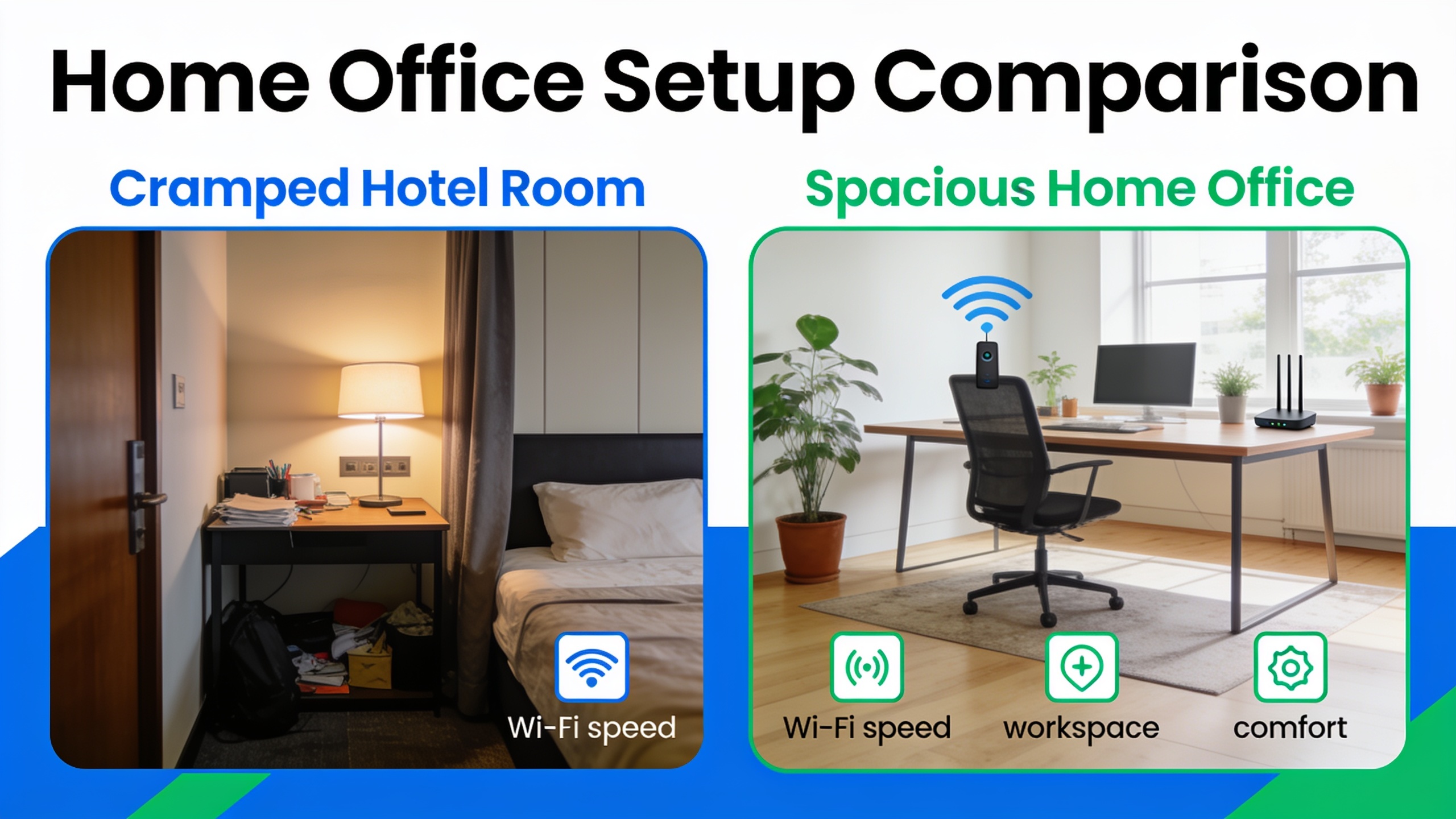 Infographic comparing a cramped hotel room workspace versus a spacious, work-ready home office setup with proper desk, lighting, and Wi-Fi
Planning a Multinational Family Reunion Through Home Exchange
Pulling off a home swap reunion across five countries takes more upfront planning than booking a hotel, no getting around that. But it's genuinely doable if you break it into three chunks: nailing down dates, finding a house big enough, and figuring out who shows up when.
Getting Everyone's Calendars to Line Up
This was the ugliest part of the whole process. Elena's brother could only travel during specific Spanish school breaks, no wiggle room. Her parents had freedom as retirees but flat-out refused to deal with peak southern European summer heat (fair enough). After a bunch of group video calls, the family locked in a two-week window during the Spanish spring school holiday. Lucky timing, because that also happened to fall during the autumn term break for her cousin's family in Australia.
Finding One House That Fits Thirteen People
Instead of trying to swap into thirteen separate bedrooms scattered around, which sounds like a logistical migraine, the family went hunting for one big property to serve as a home base, with one or two nearby exchanges for overflow. They filtered listings by guest capacity, bedroom and bathroom count, and destination, and they leaned toward homes with multiple bedrooms and real communal living space over raw square footage. What ended up working best was a place that could sleep most of the group under one roof, plus a second smaller swap a short walk away for the rest.
Working Out Who Comes and Goes When
Not everyone could commit to the full two weeks, and that's normal. Elena's cousin in Melbourne, facing by far the brutal flight, showed up a few days late and left a bit early. This kind of staggered arrival is completely standard for big international family gatherings, and it's actually one of the reasons home exchange beat a hotel block for them. With a swap, they weren't paying for empty beds on the nights when half the family hadn't landed yet. And if someone wanted to wander off on their own before or after the main event, that's exactly the kind of flexibility covered in solo travel home swap tips for the independent explorer, which a couple of family members actually used to plan short solo side trips.
How Much Did the Martinez Family Actually Save?
The biggest financial win was dead simple: they skipped nightly lodging costs entirely, because Swappahome runs on credits, not cash. According to Swappahome's own published pricing comparison, built on average nightly prices tracked across 947 cities using AirROI public data in a snapshot dated April 29, 2026, a seven-night stay in Paris ran an average of 1,707 euros through Airbnb versus 0 euros through a Swappahome exchange. Swappahome also pegs a typical hotel night at $150 to $400, compared to one credit per night on its platform, and there are no membership fees to list or swap.
Now multiply any of that by thirteen people over two weeks and you can see how fast it snowballs. Even at the low end of Swappahome's hotel range, a two-week stay for that many people split across rooms means dozens of paid room-nights. A home exchange flips that entirely: instead of cash spent per night, you're spending credits you earned by listing your own home. It's the same model the family had already dug into via how one family saved $3,000 on vacation with home swapping.
Here's the quick and dirty comparison for a multi-week, multi-person trip:
| Factor | Traditional Hotel Booking | Home Swap (Swappahome model) |
|---|---|---|
| Cost per night | $150–$400 (per Swappahome's published comparison) | 1 credit per night; no cash fee |
| Space per stay | Single hotel room | Entire home, including kitchen and communal areas |
| Kitchen access | Rarely included | Typically included, reducing restaurant spending |
| Workspace / Wi-Fi | Not guaranteed | Listed upfront on work-ready homes |
| Group capacity | Multiple rooms needed for large families | One larger home can house extended family under one roof |
| Membership cost | N/A | Free to list and join |
And the lodging wasn't even the whole savings story. Because the swap home had a full kitchen, they slashed what would've been an obscene restaurant bill for thirteen people eating three meals a day for two weeks. Grandma Martinez took over the kitchen and cooked several family meals herself, which turned a budget move into one of the most beloved parts of the entire trip. Funny how that works.
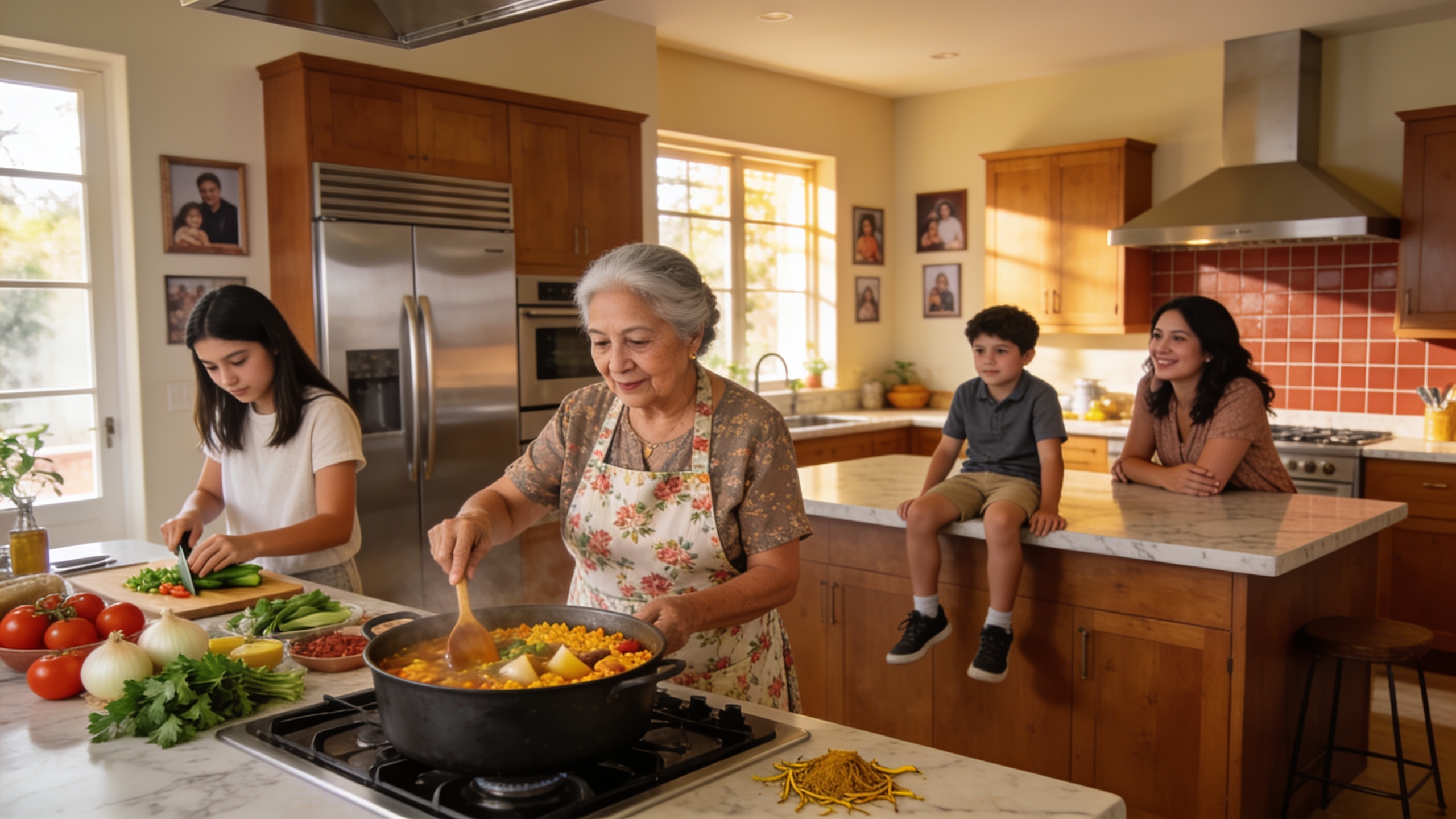 Grandmother cooking traditional family meals in a spacious home kitchen while family members gather around, sharing food and conversation
Why Sharing a Real Home Changed Everything
The money mattered, obviously. But every single person in that family, when you ask them about the trip, talks about the emotional side first. Sharing a real home instead of a bunch of disconnected hotel rooms created spaces where connection just... happened, without anyone having to schedule it.
Elena's dad had been nervous about long-haul travel at 70. He told her afterward that waking up in a proper bedroom with the kitchen just down the hall, instead of some sterile hotel corridor, made the whole thing feel less like a stressful vacation and more like just visiting family. The teenagers, who were easily the most reluctant recruits going in, ended up staying up late in the living room playing cards with cousins they'd only ever seen on a screen. That doesn't happen on a hotel floor, where every family unit is sealed behind its own door down some hallway.
I think this is the part people underestimate. A home-like setup breeds the kind of in-between-moments bonding that a hotel actively discourages. Hotels push you out. Out to restaurants, out to lobbies, out to public spaces. A shared house pulls you back in. And for families where video calls have been the default for months or years on end, two weeks under one physical roof can genuinely reset the relationships in a way a quick transactional trip never manages.
They Built the Trip Around Living Together, Not Just Sightseeing
Because the house came with a working kitchen, a garden, and enough beds for everyone, the family spent way less energy coordinating dinner reservations and way more time just... living together. Breakfast was communal in the kitchen every morning. Afternoons split between sightseeing in little groups and lazy time at the house. Evenings, everybody circled back under one roof. That rhythm was a lot closer to how the family might've actually lived together decades ago, and it's basically impossible to recreate in a hotel, where you're constantly being nudged outward instead of inward.
What They'd Tell Other Families Trying This
If your family's spread across a bunch of countries and you want to copy what the Martinezes did, the short version is: start planning early, care more about space and a kitchen than about a glamorous destination, and stay loose about arrival and departure dates. A few specific things stood out from their run at it.
First, figure out your home base capacity before you start browsing. The family burned real time early on drooling over gorgeous listings that could never actually fit thirteen people, even with a backup swap nearby. Filter by guest count and bedrooms first, then worry about how pretty the destination is. Saves you a lot of heartache.
Second, if anyone in the group has to work during the trip, treat work-readiness as a hard requirement, not a bonus. Homes on platforms like Swappahome that list Wi-Fi speeds and a dedicated workspace up front are what let Elena and her cousin's husband knock out a few hours each morning without blowing up everyone else's plans.
Third, leave room for staggered arrivals. People's travel dates never line up perfectly, and a home swap absorbs that mess far more gracefully than a rigid hotel booking, since you're not paying a fixed per-room rate no matter who's actually there.
And last, don't sleep on the kitchen. Seriously. For a large multinational family, food traditions turned into a bonding point precisely because there was a real kitchen to cook in. A hotel would've killed that entirely.
Is Home Swapping Actually Safe for a Family Reunion?
This is the question everyone asks, and it's a fair one, because you're both staying in a stranger's home and hosting a stranger in yours. Platforms built around identity verification, like Swappahome's requirement that members sign up through a LinkedIn profile, add a layer of accountability that an anonymous hotel check-in just doesn't have.
For the Martinez family, actually reviewing a host's profile, photos, and listing details before committing was a big part of feeling okay about it. Because Swappahome builds its community around remote workers and real profiles instead of faceless transactions, they found it pretty easy to size up whether a home matched what they actually needed on space, location, and amenities before locking in dates.
That said, use common sense. Read the listing details carefully. Talk to the host directly about your group size and what you're expecting. Confirm the bedroom, bathroom, and shared-space specifics before you commit to anything. Exactly what the Martinez family did while narrowing down to a home that could comfortably hold most of the group.
Frequently Asked Questions
How does a home swap even work for a big family, not just one household? A swap normally pairs one household's listed property with a stay in another member's home. But big groups can bend the model by booking one large home that fits most relatives plus a second nearby exchange for the overflow, which is exactly the workaround the Martinez family used to house thirteen people over their two-week reunion.
Does everyone in the family need to be on the platform? Nope. Usually one person handles the listing and booking for the whole crew, same as one person might book a hotel for the extended family. Whoever runs the account does typically need to verify their identity, though, like with a LinkedIn sign-up on Swappahome.
Is a home swap really cheaper than hotel rooms for a big international trip? For lodging, yes, at least based on how Swappahome describes its model. There's no cash rate per night, just a credit system, versus the $150 to $400 per night the platform cites for hotels. And you tend to save even more thanks to the on-site kitchen cutting into your restaurant spending, which the Martinez family felt directly over their two weeks.
What if we can't all travel on the exact same dates? Totally normal for big international trips, and a home exchange handles it way better than a hotel block booked at a fixed per-room, per-night rate. You're not paying separately for each person's precise travel window, so staggered arrivals and departures just aren't a financial headache.
Do these platforms actually work for family members who can't fully unplug? Some do. Swappahome specifically markets itself around "work-ready" homes that spell out Wi-Fi speeds and workspace details, and that's what let the working members of the Martinez family handle their jobs each morning without having to cut the trip short.
Two weeks together didn't undo the years the Martinez family spent apart across Toronto, Madrid, Florida, Bogotá, and Melbourne. Of course it didn't. But it gave thirteen people something no video call ever could: shared meals, shared mornings, a real home to gather in. And that's the thing I keep coming back to with their story. A home swap reunion isn't just a budgeting hack. For families scattered across the map, it's a genuinely practical way to close the physical distance without blowing open a financial gap they can't afford to close.

Published by
SwappaHome
SwappaHome Editorial Team
Home Exchange & Slow Travel Editorial
The SwappaHome Editorial Team brings together travel research, home-exchange community insights, and platform data to produce practical guides for first-time and experienced home swappers. Every article cites real platforms, current market rates, and verifiable city-level facts so readers can make informed decisions without guessing.
Ready to try home swapping?
Join SwappaHome and start traveling by exchanging homes. Get 7 free credits when you sign up!