How to Choose the Right Home Swap Partner for Your Trip

SwappaHome Editorial Team
Home Exchange & Slow Travel Editorial
Finding a great place to stay is only half the puzzle when you're planning a home exchange. The other half? Finding a person you'd actually trust with your own front door. And honestly, that second...
Finding a great place to stay is only half the puzzle when you're planning a home exchange. The other half? Finding a person you'd actually trust with your own front door. And honestly, that second part is the one most people underthink.
Get the match right and you'll come home with a trip you keep bringing up at dinner parties. Get it wrong and, well, you'll have stories too, just not the fun kind. Whether you're a family chasing beach days, a retiree doing Europe on the cheap, or a digital nomad bouncing between cities, the person you swap with shapes basically everything about how the whole thing feels.
So let's talk about what actually matters. Location, amenities, communication, reviews, the works. By the end you'll be able to size up a potential partner without just crossing your fingers and hoping.
Table of Contents
- What Does It Mean to Choose the Right Home Swap Partner?
- How Do You Evaluate a Swap Partner's Location?
- What Amenities Should You Compare Before You Choose a Home Swap Partner?
- Why Communication Makes or Breaks a Home Exchange Match
- How Do You Check Reviews and Verify Trust Before Swapping?
- Red Flags to Watch For When Choosing a Swap Partner
- Home Swap Partner Comparison at a Glance
- Frequently Asked Questions
What Does It Mean to Choose the Right Home Swap Partner?
Choosing the right home swap partner means finding someone whose home, location, schedule, and expectations line up closely enough with yours that both households feel good about handing over the keys. If you're new to all this: a home swap (or home exchange) is when two travelers trade access to their primary homes for a set stretch of time, usually with no money involved.
And here's the part people get backwards. The "right" partner isn't the one with the infinity pool. It's the one whose needs actually match yours and who answers your messages like a normal, reliable human.
A 2023 survey referenced by the home exchange community found that most swappers point to trust and communication, not property size, as the number one factor behind a successful trade. I love that finding, because it flips the whole shopping mentality. Instead of hunting for the biggest place with the best view, the real question is simpler: is this someone I'd feel fine leaving my home with for a week or two? Everything else, the décor, the amenities, all of it, comes second to that.
Now, if you're still figuring out which platform to even browse on, that's worth sorting first. A side-by-side like Swappahome vs HomeExchange: Which Platform Is Right for You? walks through how different platforms verify members and set up their listings. That stuff directly affects how hard or easy it is to find someone trustworthy in the first place.
How Do You Evaluate a Swap Partner's Location?
You evaluate a swap partner's location by checking how close it is to the attractions, transit, and type of neighborhood that fit your trip, not just the city name on the listing. "Paris" can mean a walkable arrondissement near the Louvre. It can also mean a 45-minute commuter suburb where you're staring at a train schedule every morning. Very different trips.
Match the Neighborhood to Your Travel Style
Start by pinning down the general area. Most platforms only reveal the exact address after you've matched, but you can almost always see the neighborhood beforehand. Then ask yourself the honest questions: Can I walk to the things I want to see, or am I ordering rideshares constantly? Is it near nightlife, a school, a dead-quiet residential block? Are there grocery stores and a pharmacy within reach?
Because priorities shift depending on who you are. Families with little kids usually care way more about parks and calm streets than being steps from the action. Digital nomads will trade a pretty view for solid transit and a coworking spot nearby without blinking. And retirees settling in for a longer stay tend to want walkability and easy access to a pharmacy over whatever neighborhood is trendy this year.
Research Beyond the Listing
Don't just take the photos at face value. Your partner is (understandably) showing their home in its best light, so cross-reference the neighborhood yourself using maps, travel forums, and a bit of local real estate context. A site like Viviendalista, which focuses on real estate listings and neighborhood data, can give you a wider read on an area's character and typical housing. If the "quiet residential street" they described is apparently ringed by high-rise construction according to nearby listings, that's exactly the kind of thing you want to know before you commit, not after.
It's also worth thinking about the vibe you're stepping into. If you're heading somewhere with a serious music or nightlife scene, say a city big on Afro House or Amapiano, poking around a niche platform like Afro House King beforehand gives you a real feel for the local energy. Helps you figure out whether that neighborhood's pulse matches what you actually want out of the trip.
What Amenities Should You Compare Before You Choose a Home Swap Partner?
The amenities that matter most are the ones tied to your everyday routine: reliable Wi-Fi, a decent kitchen, laundry, parking, climate control. Not the decorative stuff. When you're sizing up a partner, measure these practical things against what you genuinely need instead of getting seduced by nice throw pillows.
And I mean specific answers here, not a breezy "yeah, we've got that." A few worth nailing down before you agree to anything:
- Wi-Fi speed and reliability. Non-negotiable if you're working remotely or video-calling.
- Kitchen setup. Families and long-stay folks cook most of their meals, and a sad, half-equipped kitchen is a genuine bummer.
- Laundry. In-unit, shared building, or nothing at all completely changes what you pack.
- Parking. Huge in cities with restricted street parking or if you're renting a car.
- Climate control. AC matters a lot more in Phoenix in July than in Reykjavik, obviously.
Oh, and accessibility. Stairs, elevators, step-free entry. Easy to forget until it's the thing standing between a retiree and a comfortable stay.
Match Amenities to Trip Type
A digital nomad settling in for six weeks and a family doing a two-week summer swap want almost nothing in common. Here's a rough way to sort it out:
| Traveler Type | Must-Have Amenities | Nice-to-Have Amenities |
|---|---|---|
| Family with kids | Extra bedrooms, safe outdoor space, full kitchen | Board games, kid-friendly neighborhood, washer/dryer |
| Digital nomad | Fast, stable Wi-Fi, dedicated workspace, coffee maker | Standing desk, quiet street, nearby coworking spot |
| Retiree couple | Step-free access, quiet location, comfortable bedding | Garden, proximity to pharmacy/medical care |
| Budget-conscious couple | Functional kitchen, reliable heating/cooling | Central location, public transit access |
One thing people forget: being honest about your own home matters just as much as scrutinizing theirs. A fair swap starts with accurate listings on both sides. And if your own photos or description feel a little flat, it's worth polishing the presentation the same way a business fusses over its online storefront. Something like Digital Fusion Hub, which does web design, content, and branding, is a good example of how thoughtful presentation makes any listing, business or home swap, read as more trustworthy to the right people.
Why Communication Makes or Breaks a Home Exchange Match
Communication is the single biggest predictor of whether a swap goes smoothly, because it's how you drag expectations and house rules and potential problems out into the open before they turn into an actual mess mid-trip. Pretty much every piece of home exchange advice starts here, and for good reason: talk more than you think you need to, and do it before you commit to anything.
A solid pre-swap conversation should cover the dates and how flexible everyone is (including arrival and departure times), the house rules, who to call in an emergency, how utilities and any extra costs get handled, and plant or pet care if that's part of the deal. None of it is glamorous. All of it saves you a headache later.
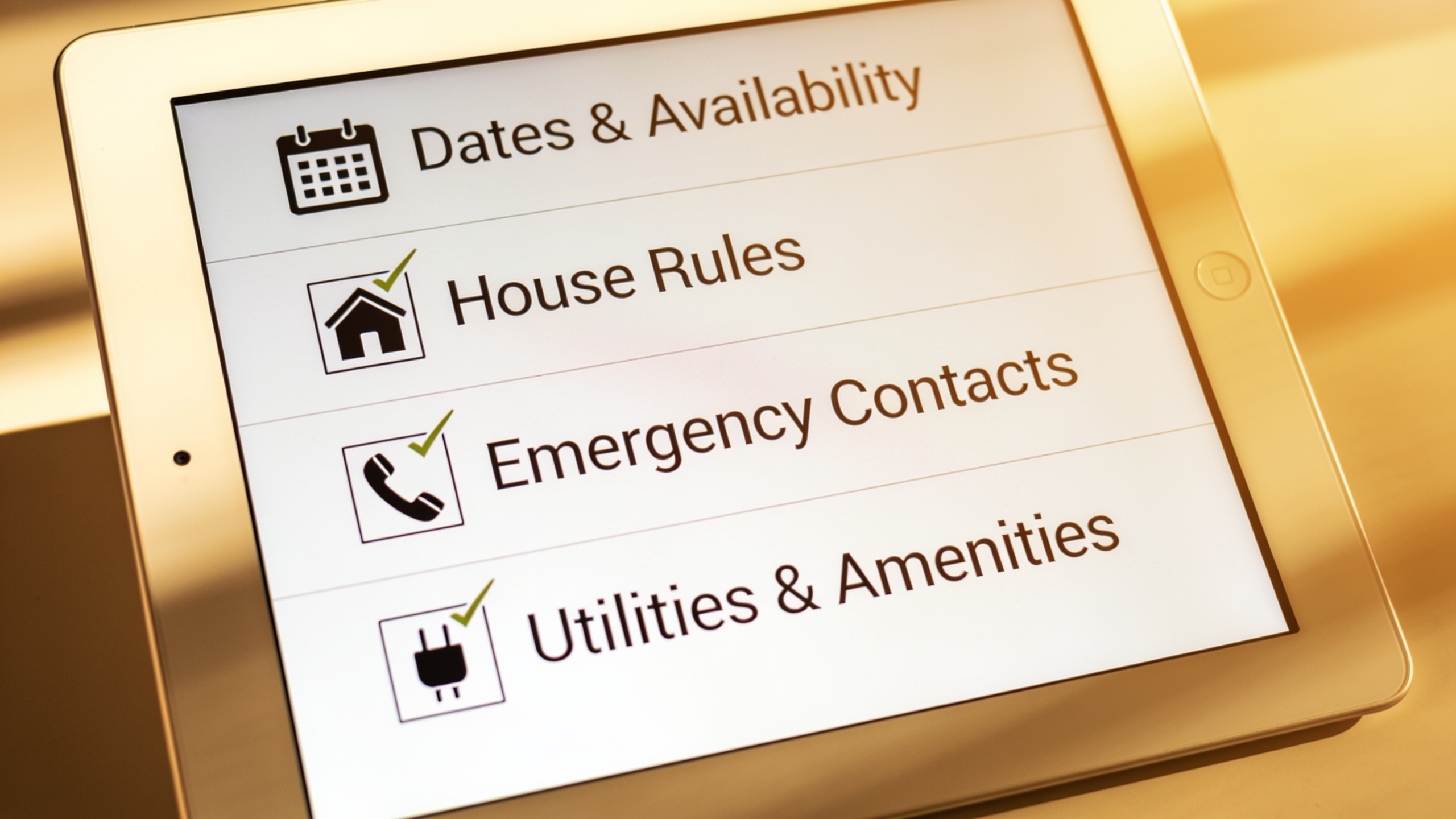 Digital checklist of essential home swap communication topics including dates, house rules, emergency contacts, and utilities
But here's what I'd pay the most attention to. Not just what your prospective partner says, but how they say it. Someone who takes a week to answer a simple question, or fires back vague one-liners, is quietly telling you what communication will be like during the actual swap. Not great. Meanwhile a partner who volunteers stuff before you even ask, like where the spare key lives or the weird trick to the thermostat, is showing you exactly the kind of reliability that makes the whole thing low-stress.
If it's your first time having these conversations and you're not sure what to even ask, having a framework helps a ton. The guide 10 Tips for a Stress-Free First Home Swap Experience has practical scripts and checklists for exactly these early back-and-forths. Takes a lot of the guesswork out of vetting someone new.
How Do You Check Reviews and Verify Trust Before Swapping?
You verify trust before swapping by reading detailed reviews from past partners, checking how long someone's been active on the platform, and confirming their identity through whatever verification steps the platform offers. Reviews are gold here, honestly, because they reflect what actually happened rather than a nicely worded profile.
What to Look for in Reviews
Not all reviews are worth the same. When you're digging through someone's history, weigh recency first. A glowing review from three years ago tells you a lot less than one from last month. Then look for specificity, because "left the fridge fully stocked" or "checked in every day during a small plumbing issue" is a hundred times more useful than a generic "great host!" And check whether the person leaves thoughtful reviews for others too. That reciprocity usually means you're dealing with someone genuinely part of the community, not a drive-by account.
Volume matters as well, but in a common-sense way. A handful of detailed reviews across several swaps beats one lonely five-star rating every time.
Verification Signals Beyond Reviews
Most reputable platforms, Swappahome included, offer identity badges, linked social profiles, or ID checks. Look for them. And don't be shy about asking for a quick video call. Seeing someone's face and hearing them talk about their home in real time adds a layer of confidence no amount of texting can match. A lot of veteran swappers will tell you a five-minute video chat clears up more doubt than a week of messaging, and I think they're right.
Red Flags to Watch For When Choosing a Swap Partner
The clearest red flags are vague or evasive answers, pressure to skip verification, and stuff that just doesn't add up between what someone says and what their photos or reviews show. Trust your gut on this. If something feels off, pump the brakes before locking in dates.
The warning signs worth taking seriously: a reluctance to video call or send more photos when you've asked politely; a push to take the conversation off-platform and dodge the verification system, which conveniently leaves no record; listings full of stock-looking, over-staged photos with nothing casual or lived-in; reviews that read copy-pasted across different exchanges; and last-minute changes to terms you'd already agreed on, like suddenly tacking on blackout dates or new house rules.
Now, to be fair, none of these on its own means someone's a scammer. Plenty of perfectly lovely hosts are just camera-shy or brand new to the platform. But when two or more of these pop up together? That's your cue to slow down, ask more questions, or quietly start looking at other matches.
Home Swap Partner Comparison at a Glance
Sometimes it just helps to see it laid out. Use this as a gut-check the next time you're weighing a couple of options against each other.
| Factor | Strong Swap Partner | Risky Swap Partner |
|---|---|---|
| Communication | Responds within a day or two, answers specific questions clearly | Slow, vague, or avoids direct questions |
| Reviews | Multiple recent, detailed reviews from real exchanges | Few or no reviews, or reviews with generic language |
| Verification | ID-verified, linked social profiles, willing to video call | Unverified, resists any form of identity check |
| Listing accuracy | Photos match description; amenities clearly listed | Photos are outdated, staged, or inconsistent with description |
| Flexibility | Open discussion of house rules, dates, and edge cases | Rigid, evasive, or changes terms after agreement |
Bringing It All Together on Your Own Listing
Here's the thing worth remembering: this is a two-way street. The clearer you are about your own home, your expectations, and honestly just your personality, the more likely you are to reel in the kind of partner described above. A little extra effort on your listing genuinely pays off. Good photos, an honest note about how noisy your street actually gets, real specifics about the kitchen or workspace. That stuff helps serious, compatible swappers find you faster.
And if you're the type who also runs a small business or side project and wants your own corner of the internet, a travel blog, a booking page, whatever, to look as sharp as your swap listing, tools like RobinRank are a good look at how AI-driven content and SEO automation are shifting the way people handle visibility online. Same principle applies either way: the clarity that makes a website rank is the exact clarity that makes a home swap listing trustworthy. Say what you mean, back it up with proof, and make it dead easy for the right person to find you.
Frequently Asked Questions
How early should I start looking for a swap partner? Most seasoned swappers say three to six months before your travel dates, especially for popular spots or peak season (summer in Europe, winter in ski towns). That window gives you room for all the back-and-forth, a video call or two, and a backup match in case your first pick falls through.
What if my home isn't fancy enough to attract good matches? Honestly? A modest home that's presented honestly almost always beats an exaggerated one. Lean into what genuinely makes your place appealing, a great neighborhood, a comfy workspace, being near transit, instead of trying to compete on luxury you don't have. Home swappers tend to be practical people. They care about reliability and location way more than granite countertops.
Is it weird to swap with someone I've never met in person? Nope, it's completely normal. The whole community is built around remote verification, reviews, and messaging precisely to make it safe. That said, a video call before you finalize dates is a widely recommended move, and any comfortable, legit partner will happily say yes to it.
What do I do if a partner wants to change the dates at the last minute? Deal with it head-on and quickly. Ask why, and whether it's a one-off conflict or a sign this person's a bit flaky. Small tweaks a few weeks out are common and totally workable. But repeated last-minute changes, especially close to your travel date, are a fair reason to rethink the match or ask about a firm cancellation policy.
Can I do more than one swap in a single trip? Absolutely. Loads of long-term travelers, digital nomads and retirees especially, string together multi-city itineraries this way. Just build in transition days between swaps for cleaning and travel, and make sure every partner knows your exact arrival and departure windows so nobody's timing overlaps.
At the risk of repeating myself, choosing the right home swap partner really does come down to two things working together: matching your practical needs, and finding genuine trust. Pay attention to the location details. Compare amenities against how you actually travel. Prioritize clear, prompt communication. And let reviews and verification carry the weight when it comes to peace of mind. Nail those four and a home exchange stops feeling like a gamble and starts feeling like swapping keys with a friend.

Published by
SwappaHome
SwappaHome Editorial Team
Home Exchange & Slow Travel Editorial
The SwappaHome Editorial Team brings together travel research, home-exchange community insights, and platform data to produce practical guides for first-time and experienced home swappers. Every article cites real platforms, current market rates, and verifiable city-level facts so readers can make informed decisions without guessing.
Ready to try home swapping?
Join SwappaHome and start traveling by exchanging homes. Get 7 free credits when you sign up!