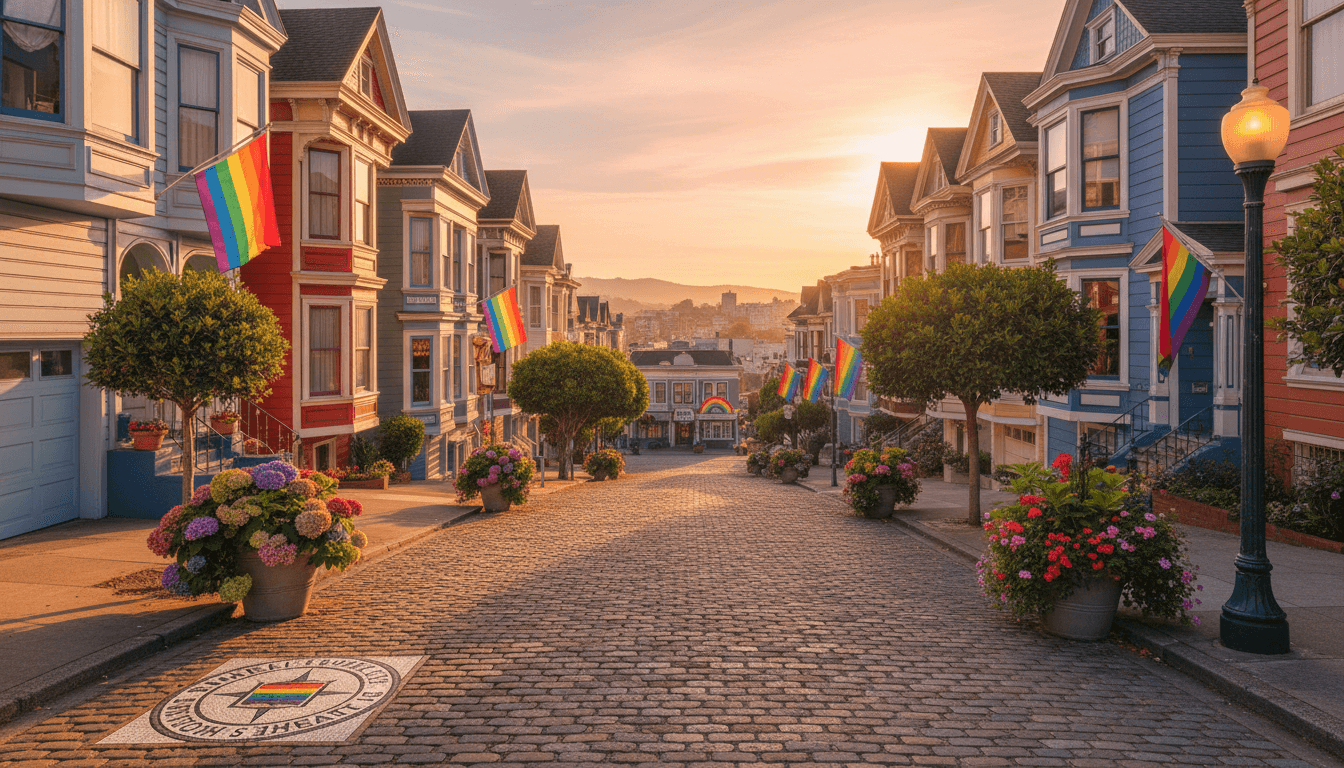
LGBTQ+ Friendly Home Swapping: Your Complete Guide to Inclusive Travel Experiences
Maya Chen
Travel Writer & Home Exchange Expert
Discover how LGBTQ+ friendly home swapping creates authentic, safe travel experiences. Real tips from a queer ally who's done 40+ swaps worldwide.
I still remember the message that changed how I think about travel.
It came from a gay couple in Amsterdam who'd just completed their first home swap—in rural Portugal, of all places. "We were terrified," they wrote. "But our hosts left us a list of the best gay-friendly cafés in Porto, and their neighbors invited us to a barbecue. We've never felt so welcomed anywhere."
That landed in my inbox three years ago. I haven't stopped thinking about it since.
Here's what seven years and 40-plus exchanges have taught me: home swapping isn't just about free accommodation. It's about finding your people in places you'd never expect them.
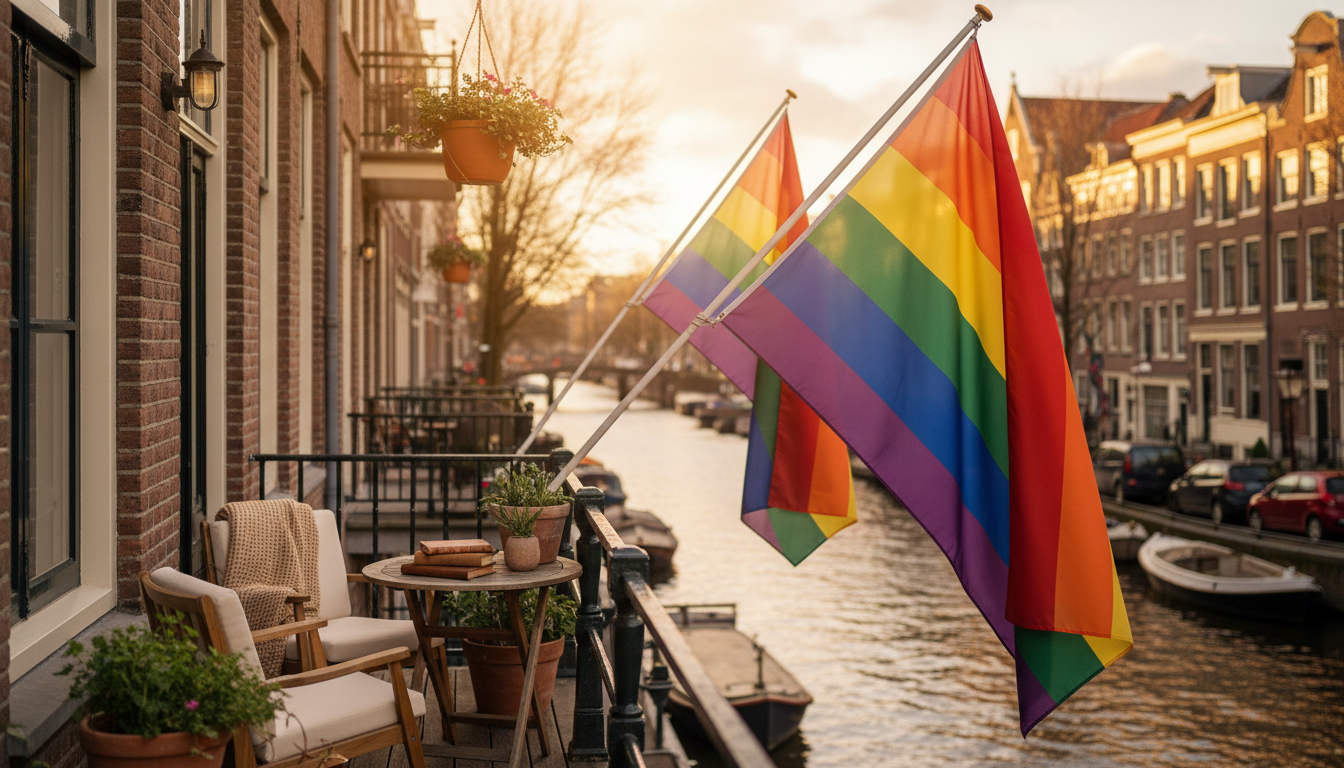 Two rainbow flags hanging from a charming apartment balcony in Amsterdams Jordaan neighborhood, with
Why LGBTQ+ Travelers Are Choosing Home Swapping Over Hotels
Let me be real with you. Hotels can be hit or miss for LGBTQ+ travelers.
I've heard too many stories—the side-eye at check-in when two women ask for one bed, the "are you sure?" when a trans traveler's ID doesn't match expectations, the awkward silence when a same-sex couple holds hands in the lobby. It gets exhausting.
Home swapping sidesteps all of that. You're not dealing with a random front desk clerk or a corporate policy that may or may not actually protect you. You're connecting directly with another human being who's already shown you their home, their life, their values. There's an inherent vulnerability in home exchange—and honestly, that tends to attract open-minded people.
The numbers back this up too. A 2023 survey by IGLTA found that 78% of queer travelers prioritize "authentic local experiences" over traditional tourist activities. Home swapping delivers exactly that. You're not just visiting a place. You're living in it.
But here's what really matters: you get to vet your hosts. Read their profiles. Check their reviews. Message them beforehand. Ask the questions you need to ask. And if something feels off? You simply don't swap with them.
How to Find LGBTQ+ Friendly Home Swap Partners
This is where it gets practical. Finding inclusive hosts isn't about luck—it's about knowing what to look for.
Read Between the Lines in Profiles
Some hosts explicitly state they're LGBTQ+ friendly or part of the community themselves. Easy win. But many allies don't think to mention it because, well, it's just normal life to them.
So look for other signals. Photos that show diverse friend groups or Pride memorabilia. Mentions of supporting local causes or community involvement. Language that feels warm and personal rather than stiff and formal. Book collections visible in photos—seriously, I've spotted everything from Audre Lorde to David Sedaris on shelves.
One of my favorite hosts in Copenhagen had a tiny rainbow sticker on their mailbox in one photo. That was it. Told me everything I needed to know.
Ask Direct Questions (It's Okay, Really)
Here's something I tell every LGBTQ+ traveler considering home swapping: you have every right to ask about the vibe. Not in an interrogating way, but naturally, as part of your getting-to-know-you messages.
Something like: "My partner and I are so excited about Barcelona! We're looking forward to exploring the Gaixample neighborhood—do you have any recommendations for that area?"
If they respond enthusiastically with their favorite gay bar or that incredible drag brunch spot on Carrer de Casanova, you've got your answer. If they seem confused or uncomfortable? That's information too.
Check the Local Context
This matters. A lot.
LGBTQ+ friendly home swapping isn't just about finding accepting hosts—it's about understanding what you're walking into. I always research local laws regarding LGBTQ+ rights (ILGA World's maps are invaluable), neighborhood safety and acceptance levels, whether there's a visible queer community, and the recent political climate.
A progressive host in a conservative area can still offer a wonderful home base. But you'll want to know what to expect when you step outside.
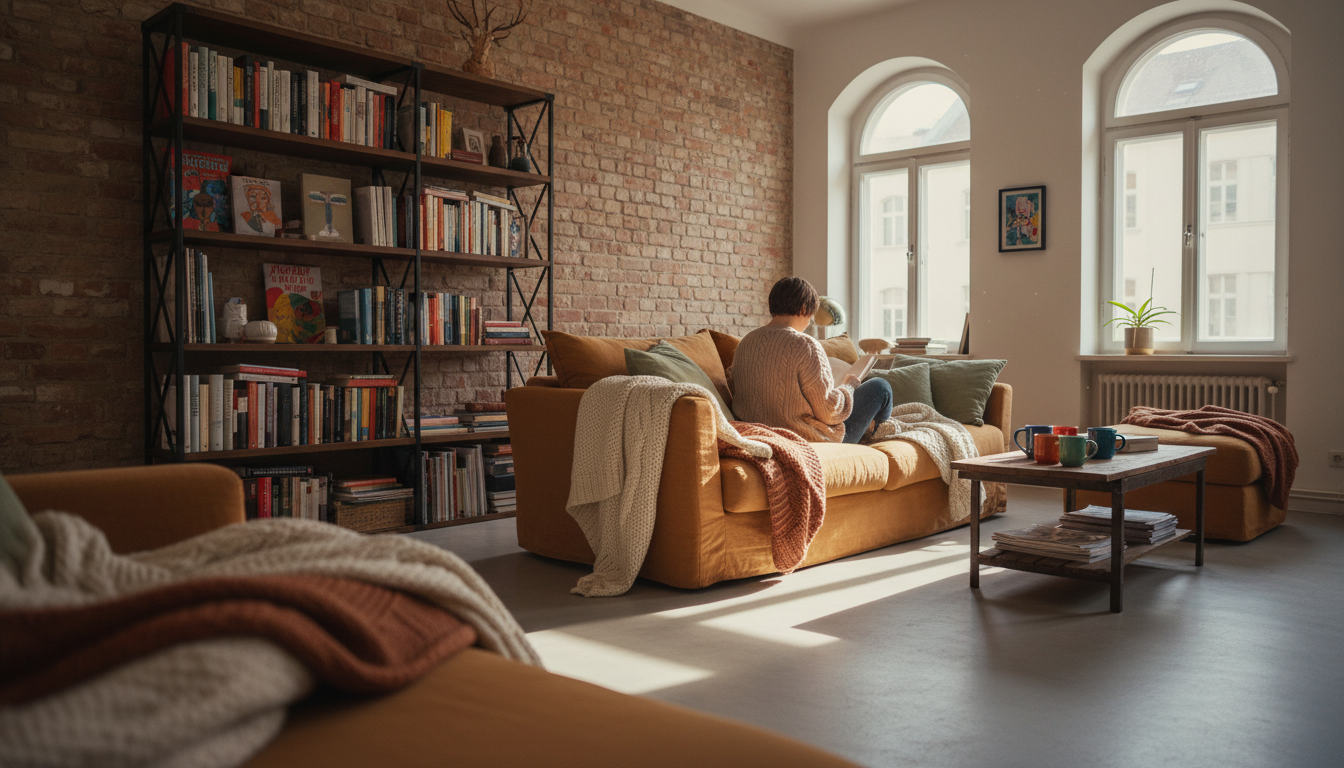 A cozy living room in Berlins Schneberg district with exposed brick, vintage furniture, and a booksh
Best Destinations for LGBTQ+ Friendly Home Exchanges
After years of swapping and countless conversations with queer travelers, certain cities consistently come up as home exchange gold.
Amsterdam, Netherlands
Honestly, if you're new to LGBTQ+ home swapping, start here.
The Dutch capital has been a queer haven for decades, and that acceptance is baked into the culture. I've swapped twice in Amsterdam—once in a houseboat in Jordaan (around $0 versus $250/night for comparable hotels) and once in a sunny apartment in De Pijp.
What struck me both times: nobody cared. Not in an ignoring way, but in a "this is completely normal" way. My hosts' neighbors waved hello. The local bakery owner chatted with me about my partner. It was refreshingly unremarkable.
Target neighborhoods: Jordaan for charm, De Pijp for the food scene, Centrum for convenience.
Berlin, Germany
Berlin is where queer history and modern acceptance collide in the best possible way.
Schöneberg has been the heart of gay Berlin since the 1920s, and while the scene has spread across the city, that neighborhood still holds special significance. A friend of mine—a trans woman who's done twelve home swaps—calls Berlin her "safest feeling city." She's stayed in Kreuzberg, Neukölln, and Prenzlauer Berg, and every host has been actively welcoming.
Pro tip: Ask your host about their favorite Späti (corner shop). These little stores are neighborhood hubs, and a good one can tell you more about local life than any guidebook. Average hotel costs you'd skip? $180-220/night for a decent central location.
Barcelona, Spain
The Gaixample (gay Eixample) is one of Europe's most concentrated LGBTQ+ neighborhoods, but honestly, Barcelona's acceptance extends far beyond those few blocks. I've swapped in Gràcia, Barceloneta, and El Born. The vibe was consistently open.
What makes Barcelona special for home swapping: the apartment culture. Most locals live in flats, often with terraces or rooftop access. You're getting a genuine Barcelona living experience, not a sanitized hotel version.
One swap that sticks with me: a fourth-floor walkup in El Raval, owned by a lesbian couple who left me a hand-drawn map of their favorite tapas spots, including three gay-friendly bars they promised had "the best vermouth in the city." They were right.
Lisbon, Portugal
Lisbon surprised me.
Portugal legalized same-sex marriage in 2010, and the city has quietly become one of Europe's most welcoming destinations. Príncipe Real is the traditional LGBTQ+ hub, but I've found acceptance throughout the city. Home swapping here is particularly rewarding because Lisbon's charm lives in its residential neighborhoods—the tiled facades, the tiny elevators, the neighborhood tascas where everyone knows each other. Hotels can't replicate that.
Cost comparison: A boutique hotel in Alfama runs $200-280/night. A home swap costs you one credit per night. Period.
Beyond Europe: Expanding Your Options
LGBTQ+ friendly home swapping isn't limited to European capitals. I've had wonderful experiences—or heard glowing reports—from Mexico City (the Zona Rosa and Condesa neighborhoods are incredibly welcoming), Cape Town (De Waterkant is the historic gay village), Taipei (Asia's most LGBTQ+-friendly destination with legal same-sex marriage since 2019), and Melbourne (Fitzroy and Collingwood have thriving queer scenes, and Australian hosts tend to be exceptionally laid-back).
One SwappaHome member told me her host in Mexico City's Roma Norte connected her with a local queer hiking group. That's the kind of thing you just don't get from a hotel concierge.
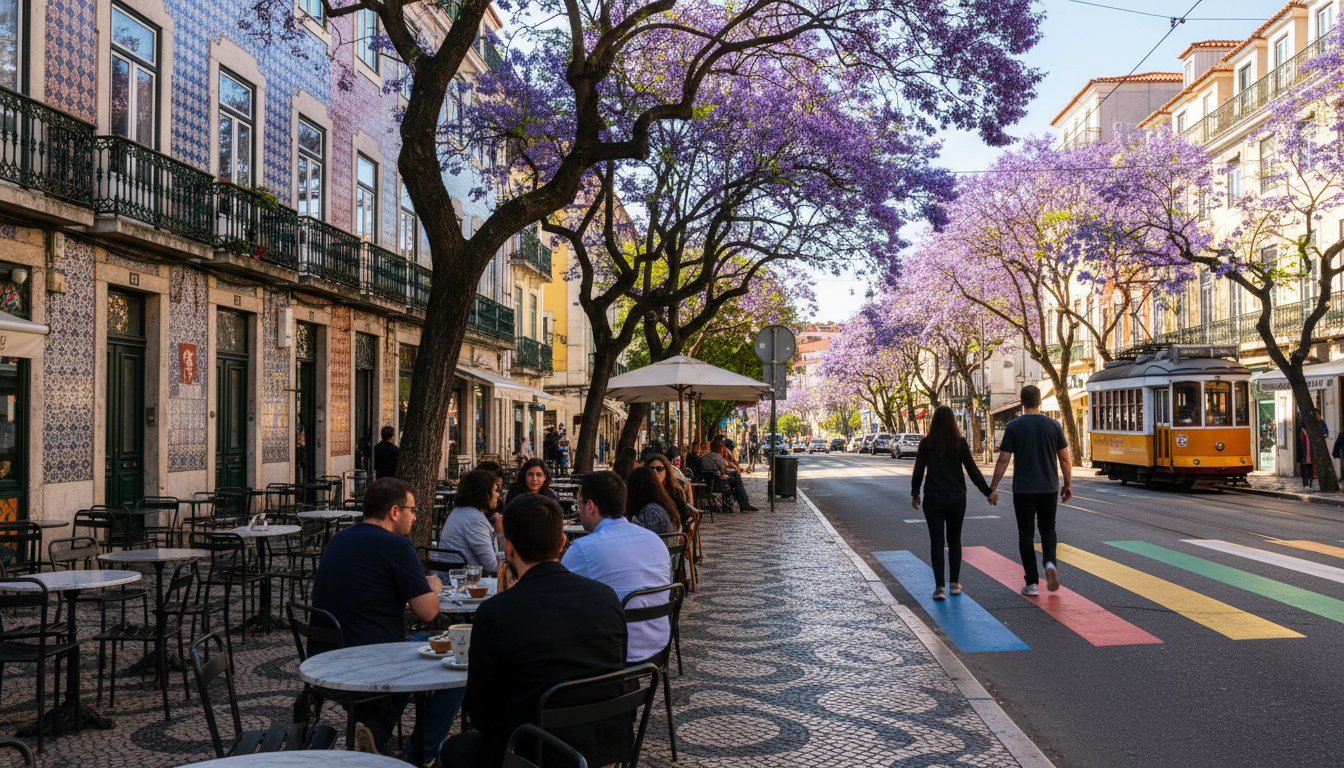 Colorful tiled buildings in Lisbons Prncipe Real neighborhood with a rainbow crosswalk visible, loca
Navigating Challenging Destinations as an LGBTQ+ Home Swapper
Okay, real talk. Not every destination is going to be Amsterdam or Berlin. And that's where home swapping gets complicated—but also, potentially, more valuable.
I've corresponded with LGBTQ+ travelers who've done home swaps in Poland, Hungary, and parts of Southeast Asia. Their experiences have been mixed, but several patterns emerge.
The Ally Advantage
In less accepting regions, connecting with local allies through home swapping can be genuinely life-changing. Your host knows the landscape. They know which restaurants are safe, which neighborhoods to avoid after dark, which cab companies won't give you trouble.
A gay couple I know swapped in rural Japan—not Tokyo, but a small town in Nagano Prefecture. Their hosts were a straight Japanese couple who'd lived abroad and "got it." They'd prepared a whole guide to navigating local customs, including how to handle the onsen situation with sensitivity.
"We never would have had that experience in a hotel," they told me. "We would've stayed in Tokyo, stuck to the tourist bubble, and missed the real Japan."
When to Proceed with Caution
I'm not going to tell you where you should or shouldn't travel. That's your call—it depends on your comfort level, your identity, your circumstances.
But I will say this: research is non-negotiable. Before swapping in any destination with concerning LGBTQ+ rights records, check current travel advisories from LGBTQ+ organizations. Read recent traveler experiences on forums and social media. Be explicit with potential hosts about your needs and concerns. Have a backup plan. Consider whether you'll need to be closeted during your stay and if you're okay with that.
Some travelers find value in visiting challenging destinations precisely because home swapping connects them with progressive locals working for change. Others prefer to spend their travel credits in places that welcome them openly. Both approaches are valid.
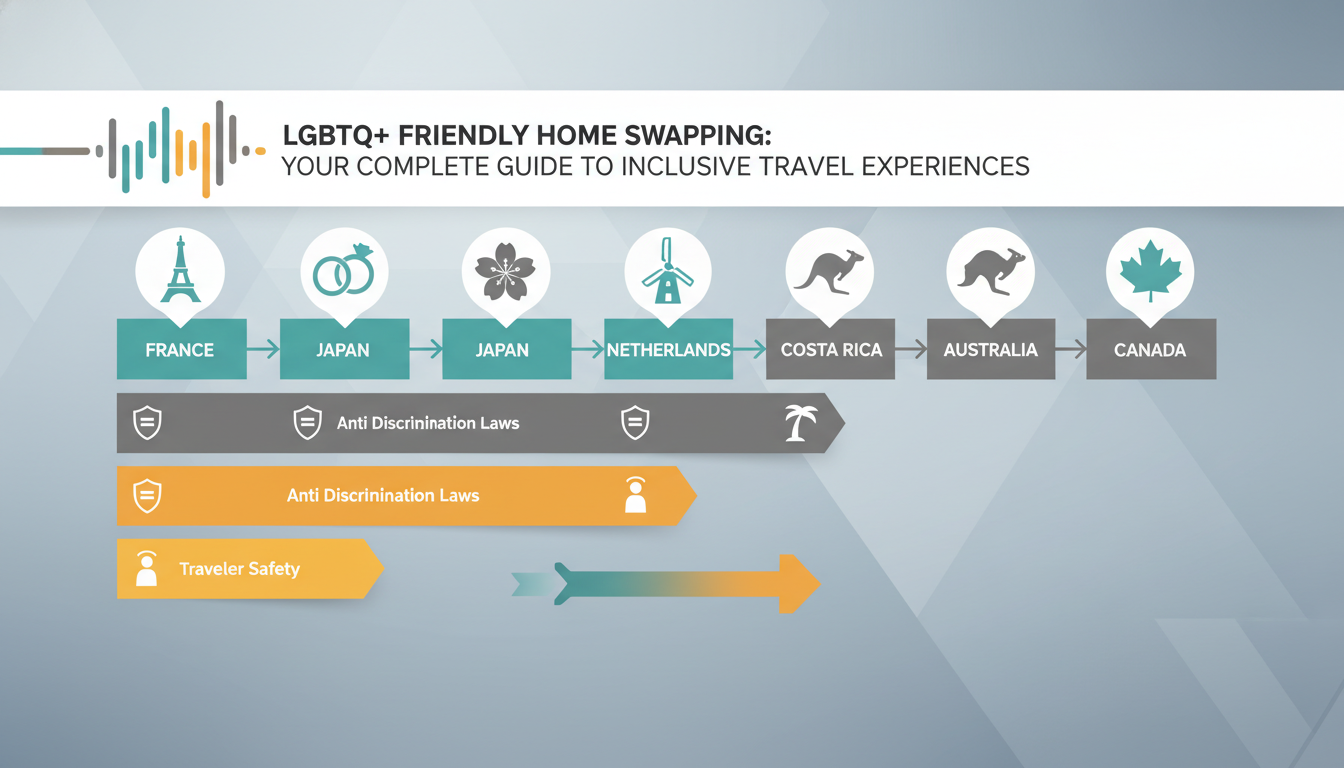 Infographic showing LGBTQ legal status across top home swap destinations, with icons indicating marr
Creating an LGBTQ+ Welcoming Profile on SwappaHome
Whether you're LGBTQ+ yourself or an ally who wants to welcome queer travelers, your profile is your first impression. Here's how to signal inclusivity without being performative.
If You're LGBTQ+
You get to decide how out you want to be on your profile. Some members are explicit—"We're a married gay couple excited to share our home." Others are more subtle, mentioning their partner without gendering them or including photos that naturally show their relationship.
There's no wrong answer. Your safety and comfort come first, always.
What I recommend: be as open as you're comfortable with, but don't feel pressured to make your identity the centerpiece of your profile. You're a traveler first. Your sexuality or gender identity is part of who you are, not all of who you are.
If You're an Ally
Want to signal that LGBTQ+ travelers are welcome? A few approaches work well. Mention it directly: "Our home is a welcoming space for all travelers, including LGBTQ+ guests." Include relevant local info: "We're happy to share recommendations for the local LGBTQ+ scene." Show, don't just tell—if you've hosted diverse guests before, your reviews will reflect that.
One thing I've noticed: the best ally profiles don't make a big production of it. They mention inclusivity naturally, the way they'd mention that they have a cat or that the apartment has a great view. It's just part of the picture.
Red Flags to Watch For
On the flip side, here are signals that a potential swap partner might not be LGBTQ+ friendly: overly formal or rigid language throughout their profile, religious references that could indicate conservative views (though not always—context matters), excessive house rules that feel controlling, lack of any personal warmth, and reviews that mention the host being "particular" or "strict."
Trust your gut. If something feels off, it probably is.
 A warm kitchen scene with two coffee mugs, a handwritten welcome note, and a small pride flag pin on
Practical Tips for Your First LGBTQ+ Friendly Home Swap
Alright, let's get into the logistics. Because all the warm fuzzy feelings in the world won't help if you don't know how to actually make this work.
Before You Book
Message first, always. Don't just send a booking request cold. Introduce yourself, mention why you're interested in their home, give them a chance to get to know you. This is when you can gauge their vibe and ask any questions you need answered.
Be specific about your needs. If you're traveling as a same-sex couple, mention it naturally. "My wife and I are planning our anniversary trip" or "My boyfriend and I have been dreaming about visiting Porto." Their response will tell you a lot.
Check the neighborhood—even in accepting cities, some areas are more LGBTQ+-friendly than others. Ask your potential host about the immediate vibe. And understand the credit system: on SwappaHome, one credit equals one night, regardless of the home's size or location. New members start with 10 free credits. You earn credits by hosting, spend them to stay elsewhere. No money changes hands for the stays themselves.
During Your Stay
Leave a thoughtful review. This matters so much for the LGBTQ+ home swap community. If a host was particularly welcoming, say so. Your review helps the next queer traveler find safe, accepting hosts.
Connect with local resources too. Your host's recommendations are gold, but also check local LGBTQ+ organizations, apps like Hy or Her, and community centers. They often have the most up-to-date info on events and safe spaces.
And respect the home. This goes for everyone, but it especially matters when you're part of a community that's still fighting for acceptance. Be the guest that makes hosts want to welcome more LGBTQ+ travelers.
After Your Trip
Stay in touch. Some of my best friendships have come from home swaps. That gay couple in Amsterdam? We've now swapped three times, and they came to my birthday party last year. Home swapping builds community in ways hotels never can.
Pay it forward. If you had a great experience, consider becoming a more active host yourself. The more LGBTQ+ friendly homes in the network, the better it gets for everyone.
Building Trust in the LGBTQ+ Home Swap Community
I want to address something important: safety isn't just about finding accepting hosts. It's about the practical realities of staying in someone else's home.
SwappaHome provides tools that help build trust—member verification, secure messaging, a review system that creates accountability. But here's what I always tell people: the platform connects you with other members. It doesn't provide insurance or handle disputes.
So what does that mean for you?
Get your own travel insurance. Seriously. Find a policy that covers your belongings, trip interruption, and any specific needs you have. Some LGBTQ+ travelers look for policies that explicitly cover same-sex partners. Document everything—take photos of the home when you arrive, note any existing damage, keep your communication on the platform where it's recorded.
Trust the review system. Members with consistent positive reviews have proven themselves over time. Prioritize hosts with established track records. And communicate clearly—most issues in home swapping come from mismatched expectations. Be explicit about everything.
The LGBTQ+ home swap community tends to be self-selecting for trustworthy people. But that doesn't mean you should skip due diligence.
The Bigger Picture: Why This Matters
I've been writing about home swapping for years, but LGBTQ+ inclusive travel holds a special place in my heart. Maybe because I've seen what it can do.
There's something radical about a queer couple from Texas staying in the home of a gay couple in Berlin, sleeping in their bed, using their kitchen, walking their dog. It's not just accommodation. It's a reminder that we exist everywhere—that we've built lives and homes and communities all over the world.
Home swapping makes that visible. Tangible.
And in a world where LGBTQ+ rights are still under attack in too many places, that visibility matters. Every positive home swap experience—every review that mentions "our wonderful hosts, a lovely gay couple" or "perfect for LGBTQ+ travelers"—builds a more welcoming network.
It's travel as activism, in its own quiet way.
If you're considering your first LGBTQ+ friendly home swap, I say go for it. Start with a destination that feels safe. Message potential hosts until you find one that clicks. Take the leap.
And when you're sitting on someone's balcony in Barcelona or Amsterdam or Lisbon, watching the sunset with your partner, knowing you've found not just a free place to stay but a genuine connection—you'll understand why so many of us are hooked.
SwappaHome's community is full of members ready to welcome you. Your 10 free credits are waiting.
Where will you go first?
Frequently Asked Questions
Is LGBTQ+ home swapping safe?
It can be very safe when you do your research. Use platforms with review systems, message hosts beforehand to gauge their attitude, research local laws and culture, and trust your instincts. Many queer travelers actually find home swapping safer than hotels because you're connecting with vetted, like-minded individuals rather than random staff.
How do I know if a home swap host is LGBTQ+ friendly?
Look for explicit mentions of LGBTQ+ welcome in profiles, rainbow symbols or Pride references in photos, warm and personal language, and positive reviews from diverse guests. You can also message hosts directly and mention your partner naturally—their response will reveal their comfort level.
What are the best cities for LGBTQ+ home exchanges?
Top destinations include Amsterdam, Berlin, Barcelona, Lisbon, and Taipei for their strong legal protections and welcoming cultures. Mexico City, Cape Town, and Melbourne also have thriving LGBTQ+ home swap communities. Always research current conditions though, as situations can change.
How much can LGBTQ+ travelers save with home swapping?
You can save $150-300 per night compared to hotels in major cities. On SwappaHome, every stay costs one credit per night regardless of location. New members receive 10 free credits, meaning your first 10 nights of accommodation cost nothing but the membership fee.
Should I be out on my home swap profile?
Entirely your choice. Some LGBTQ+ members are explicit about their identity, while others prefer subtlety. Consider your comfort level, your primary swap destinations, and your safety needs. There's no wrong answer—your profile should reflect how you want to present yourself to potential hosts.
40+
Swaps
25
Countries
7
Years
About Maya Chen
Travel Writer & Home Exchange Expert
Maya is a travel writer with over 7 years of experience in the home swapping world. Originally from Vancouver and now based in San Francisco, she has completed more than 40 home exchanges across 25 countries. Her passion for "slow" and authentic travel led her to discover that true luxury lies in living like a local, not a tourist.
Ready to try home swapping?
Join SwappaHome and start traveling by exchanging homes. Get 10 free credits when you sign up!
Related articles

Lyon Home Exchange: Your Complete Guide to France's Hidden Gem for Home Swapping
Discover why Lyon home exchange is booming among savvy travelers. From Croix-Rousse to Presqu'île, find the best neighborhoods and insider tips for your swap.

Zurich Bucket List: 47 Unforgettable Experiences to Enjoy During Your Home Swap
Discover the ultimate Zurich bucket list for home swappers—from secret swimming spots to fondue rituals locals actually do. Save thousands while living like a true Zürcher.
Dublin Home Exchange Utilities Guide: WiFi, Heating & Everything Your Guests Need
Master Dublin home exchange utilities—from dodgy WiFi fixes to heating quirks. Practical tips from 7 years of swapping homes across Ireland.