London Museum and Art Guide: 27 Cultural Gems for Home Swappers in 2026

SwappaHome Editorial Team
Home Exchange & Slow Travel Editorial
Discover London's best museums and galleries as a home swapper—from free world-class collections to hidden neighborhood gems locals actually visit.
The security guard at the National Gallery gives you a knowing nod. It's 10:07 AM on a Tuesday, and you've already claimed your favorite bench in Room 34, directly facing Van Gogh's Sunflowers. No tour group in sight. No hotel checkout looming. Just you, a thermos of tea made in your Bloomsbury home swap kitchen, and the unhurried luxury of time.
Here's what most London museum and art guides won't tell you: the city's cultural riches aren't meant to be sprinted through between check-in and check-out. They're meant to be savored, returned to, discovered in layers—and that's precisely why home swapping transforms the London art experience from exhausting box-ticking into something genuinely nourishing.
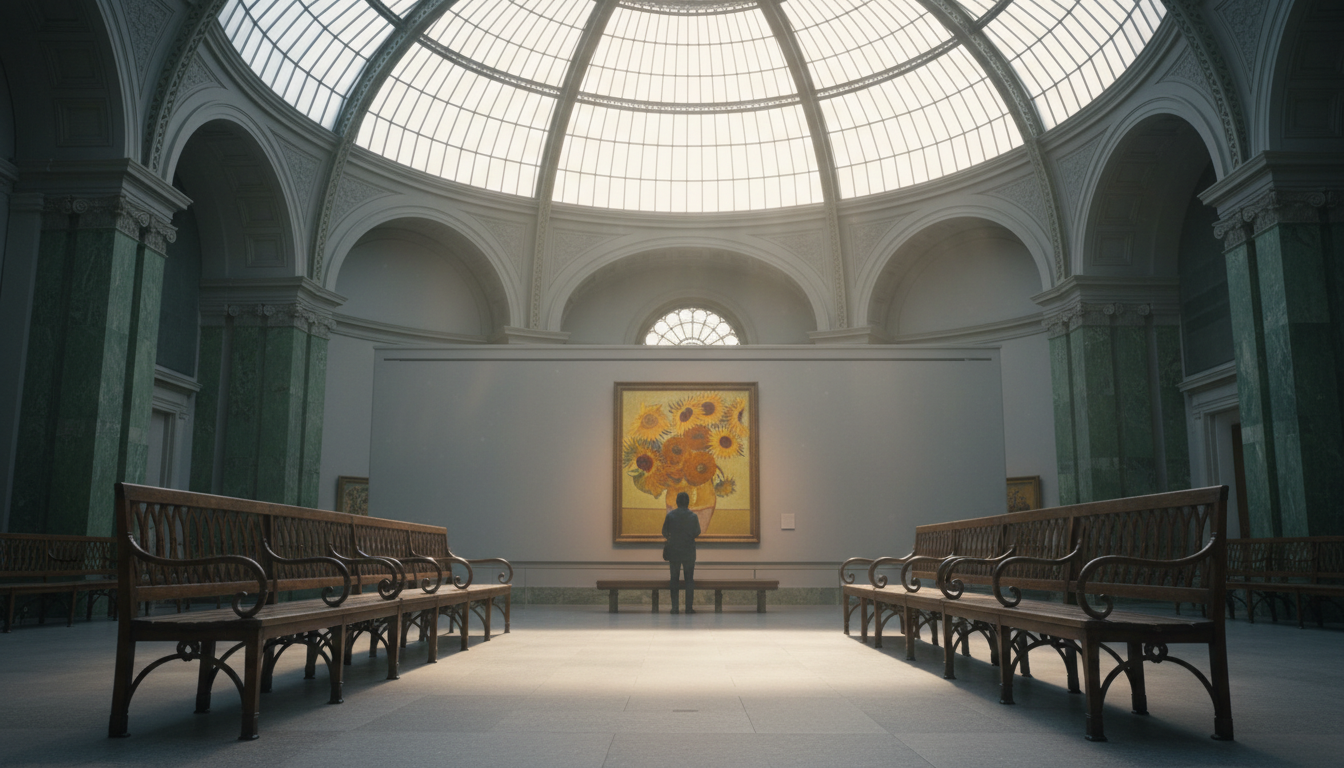 Early morning light streaming through the National Gallerys domed ceiling, a single visitor silhouet
Why Home Swapping Changes How You Experience London's Museums
Most travelers miss something fundamental about London's cultural scene: the best stuff is free, but time is the real currency.
The British Museum, National Gallery, Tate Modern, V&A, Natural History Museum, Science Museum—all free. Zero entry fee. You could theoretically see £500 million worth of art without spending a penny on admission. But here's the catch that hotel-bound visitors discover too late: these institutions are massive. The British Museum alone houses 8 million objects. The V&A spans 12.5 acres. Trying to "do" even three major museums in a weekend hotel stay means you'll remember nothing but aching feet and a blur of glass cases.
Home swappers play a different game entirely.
SwappaHome members staying in London typically book 7-14 night exchanges—and that changes everything. Suddenly you're not racing through the Egyptian galleries at the British Museum. You're visiting the Rosetta Stone on Monday, the Parthenon Marbles on Wednesday, and the Japanese collection the following week. You're discovering that the V&A's British Galleries are practically empty at 4 PM on Thursdays. You're learning that the Tate Modern's Turbine Hall installations hit different when you've seen them in morning light AND evening shadow.
The financial math reinforces this approach. A central London hotel averages £180-280 per night ($230-360 USD). A two-week stay runs £2,500-3,900 ($3,200-5,000 USD) before you've bought a single museum coffee. Home swapping eliminates that cost entirely—SwappaHome's credit system means your stay costs nothing beyond the membership fee. That budget liberation lets you actually use the museums properly: lingering in the café, buying the exhibition catalogue, returning tomorrow when you realize you missed an entire wing.
The Big Six: London's World-Class Free Museums
Every London museum guide covers these institutions. Few explain how to actually experience them without losing your mind. Here's the insider approach.
British Museum (Bloomsbury)
Great Russell Street, WC1B 3DG. Open daily 10 AM-5 PM, Fridays until 8:30 PM.
The British Museum contains human history itself—Egyptian mummies, Greek sculptures, Mesopotamian treasures, the Lewis Chessmen, the Sutton Hoo helmet. It's also overwhelming to the point of paralysis.
The smart strategy: Pick one gallery per visit. Seriously. The Egyptian sculpture gallery (Room 4) deserves an hour alone. The Enlightenment Gallery (Room 1) tells the story of how humans learned to collect and categorize knowledge—it's the museum about museums. The Japan galleries (Rooms 92-94) are perpetually undervisited and stunningly peaceful.
Friday evenings transform the space. The Great Court fills with after-work Londoners grabbing drinks at the central bar. The crowds thin dramatically upstairs. It's the closest thing to having the Rosetta Stone to yourself.
Home swap advantage: Stay in Bloomsbury (one of London's most swap-active neighborhoods) and the British Museum becomes your local. Some members report walking over for a 30-minute morning visit before the coaches arrive—slippers optional.
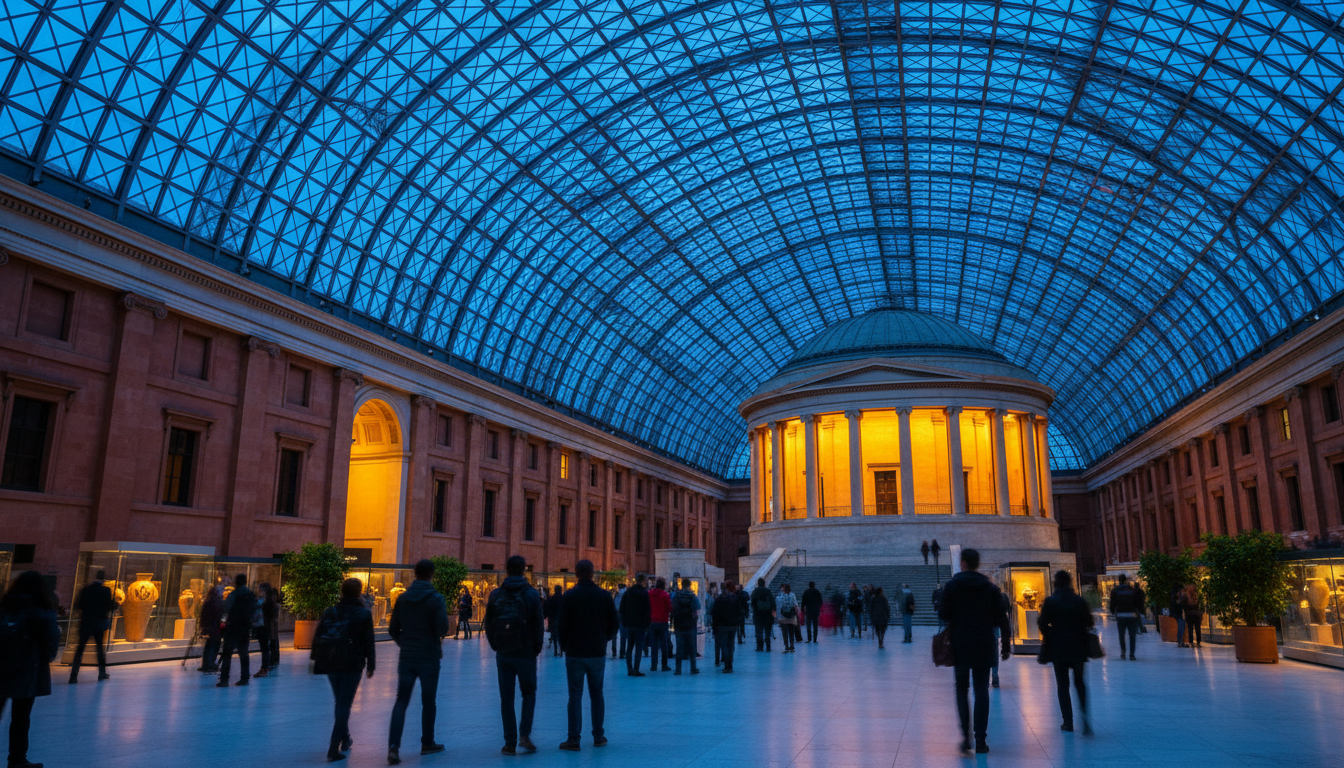 The British Museums Great Court at dusk, geometric glass ceiling glowing blue, scattered visitors be
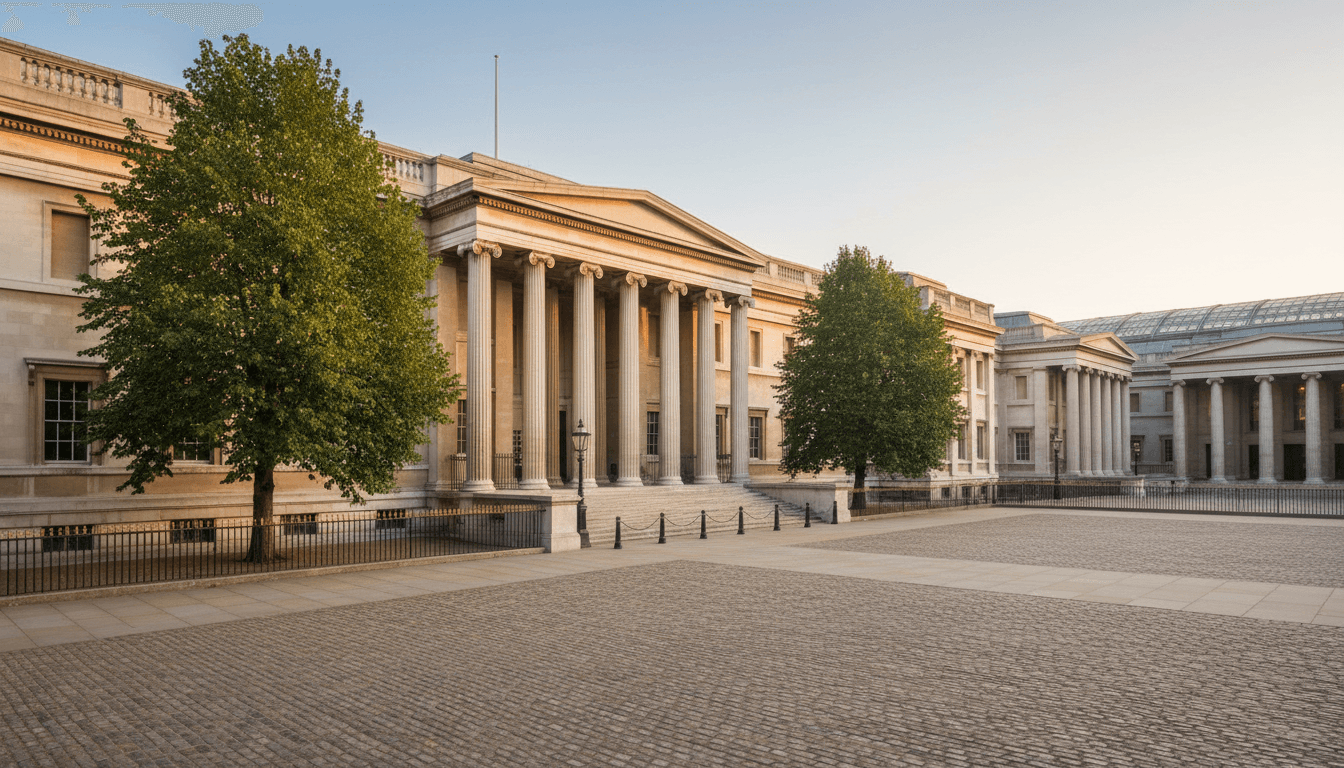
National Gallery (Trafalgar Square)
Trafalgar Square, WC2N 5DN. Open daily 10 AM-6 PM, Fridays until 9 PM.
2,300 paintings spanning 700 years of European art. Botticelli, Leonardo, Rembrandt, Vermeer, Turner, Monet, Van Gogh—the collection reads like a greatest hits album of Western painting.
The building's layout tricks first-timers. The Sainsbury Wing (entrance to the left) holds the oldest works (1250-1500)—Florentine gold-ground paintings, Van Eyck's Arnolfini Portrait, Botticelli's Venus and Mars. The main building progresses chronologically. Most visitors enter through the main portico and wander randomly. Don't.
The smart strategy: Visit the Sainsbury Wing first, ideally on a weekday morning. The rooms are smaller, the crowds lighter, and the medieval and early Renaissance works reward slow looking in ways the more famous Impressionist galleries don't. Save Rooms 41-46 (the Impressionists, Post-Impressionists, and Van Gogh's chair and sunflowers) for a Friday evening when the space stays open late and the after-work crowd creates a convivial atmosphere.
Worth noting: the café in the Sainsbury Wing basement serves excellent coffee and overlooks a small sculpture garden. It's where curators actually eat lunch.
Tate Modern (Bankside)
Bankside, SE1 9TG. Open daily 10 AM-6 PM.
The former Bankside Power Station now houses Britain's national collection of modern and contemporary art. The Turbine Hall—a vast industrial canyon—hosts rotating large-scale installations that range from profound to baffling. The permanent collection spans Picasso, Dalí, Rothko, Warhol, Hockney, and everything that's happened since.
The smart strategy: Start on Level 4, work down. Most visitors enter the Turbine Hall, get overwhelmed, and wander aimlessly. The collection is organized thematically rather than chronologically, which takes adjustment. The "Artist and Society" rooms on Level 4 provide the clearest narrative thread.
The viewing platform on Level 10 offers free panoramic views of St Paul's Cathedral, the Thames, and the City skyline. It's better than the paid London Eye experience—and there's a bar.
Cross the Millennium Bridge afterward. It connects directly to St Paul's Cathedral and makes for one of London's most photogenic walks.
Victoria and Albert Museum (South Kensington)
Cromwell Road, SW7 2RL. Open daily 10 AM-5:45 PM, Fridays until 10 PM.
The V&A is the world's largest museum of decorative arts and design. It's also genuinely confusing to navigate—7 miles of galleries spread across multiple floors with a layout that defies logic. First-time visitors routinely get lost.
This is actually fine.
The smart strategy: Embrace the labyrinth. The V&A rewards wandering more than any other London museum. You'll stumble into a room of Raphael's original cartoons (the designs for Sistine Chapel tapestries), then find yourself surrounded by samurai armor, then emerge into a recreation of a 1960s London boutique.
The Cast Courts (Rooms 46a and 46b) deserve a dedicated visit. Victorian-era plaster casts of Trajan's Column, Michelangelo's David, and medieval church portals fill two enormous halls. It's magnificently weird—a museum of copies that somehow feels more honest about what museums actually do than rooms full of originals.
Friday Late events (monthly, check the website) transform the V&A into a party venue with DJs, pop-up bars, and special access to normally closed galleries.
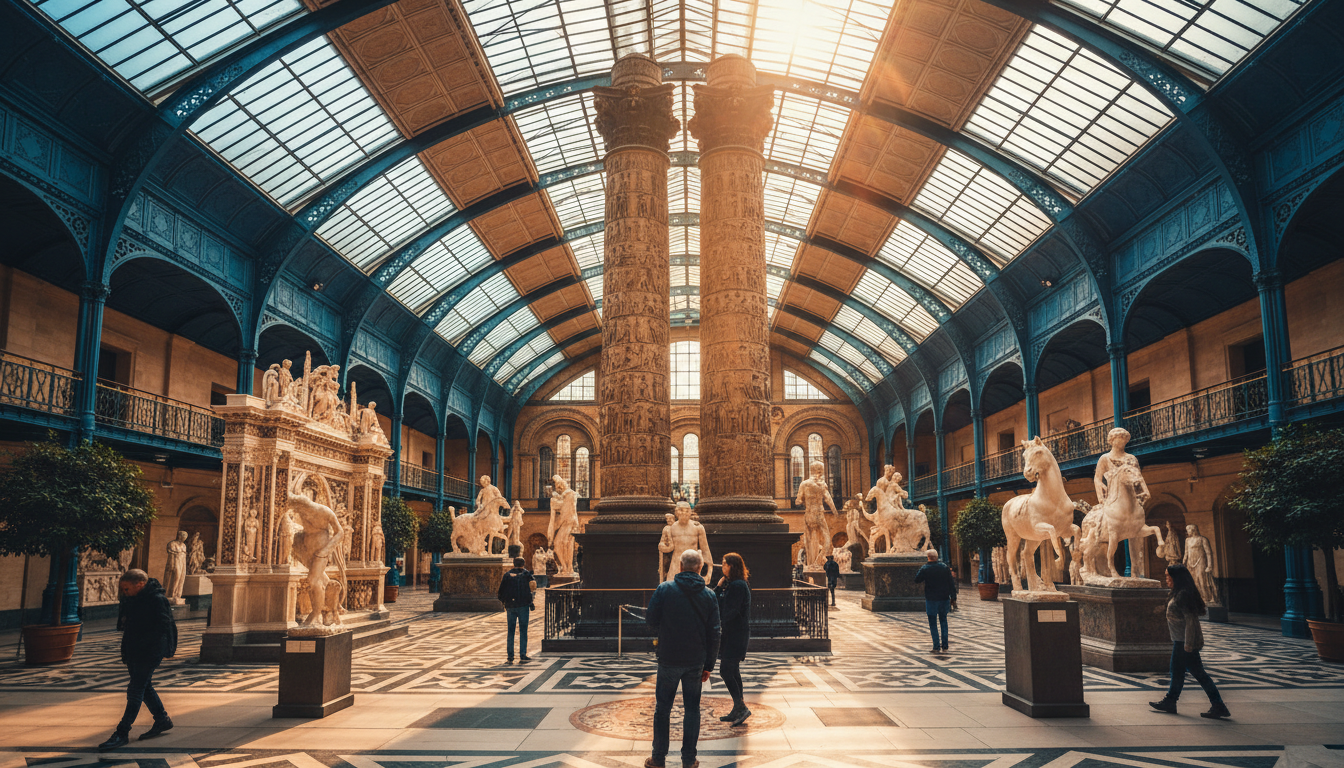 The VAs Cast Courts with Trajans Column replica stretching toward the glass ceiling, visitors dwarfe
Natural History Museum (South Kensington)
Cromwell Road, SW7 5BD. Open daily 10 AM-5:50 PM.
The Romanesque cathedral of science. The building itself—Alfred Waterhouse's 1881 masterpiece—deserves as much attention as the 80 million specimens inside. Terra cotta animals climb the facade. The Hintze Hall's blue whale skeleton (named Hope) has replaced the beloved Diplodocus as the entrance statement piece.
The smart strategy: Skip the dinosaurs on your first visit. Everyone goes there, and the crowds are brutal, especially during school holidays. Instead, head to the Minerals gallery (the Vault displays stunning gemstones in low-lit cases), the Darwin Centre (actual working scientists visible through glass walls), or the Wildlife Garden (a hidden outdoor space that's genuinely peaceful).
Return for the dinosaurs on a Tuesday or Wednesday morning in term time. The difference is dramatic.
Science Museum (South Kensington)
Exhibition Road, SW7 2DD. Open daily 10 AM-6 PM.
Adjacent to the Natural History Museum, the Science Museum traces human innovation from steam engines to space exploration. The permanent collection is free; special exhibitions (often blockbusters on topics like AI or climate) charge £15-20 ($19-26 USD).
The smart strategy: The top floors are consistently less crowded. The Mathematics Gallery (designed by Zaha Hadid) and the Information Age gallery reward adults more than the ground-floor interactive exhibits designed for children. The Flight gallery's suspended aircraft collection includes a Spitfire and early gliders.
The IMAX cinema shows nature documentaries on a screen the size of four double-decker buses. It's £11 ($14 USD) and worth it for the scale alone.
Beyond the Big Six: Museums That Reward Repeat Visits
The following institutions don't make most tourist lists. They're where Londoners actually go.
Sir John Soane's Museum (Holborn)
13 Lincoln's Inn Fields, WC2A 3BP. Free, but timed tickets required.
The former home of architect Sir John Soane, preserved exactly as he left it in 1837. Three townhouses crammed with antiquities, architectural models, paintings (including Hogarth's A Rake's Progress series), and a sarcophagus of Pharaoh Seti I in the basement. The Picture Room's walls fold out to reveal hidden layers of paintings.
This is the most atmospheric museum in London. The candlelit evening openings (first Tuesday of each month) are genuinely magical—book weeks in advance.
Wallace Collection (Marylebone)
Hertford House, Manchester Square, W1U 3BN. Free.
A palatial townhouse filled with French 18th-century furniture, Sèvres porcelain, and one of the world's finest collections of arms and armor. Frans Hals' Laughing Cavalier lives here. So does Fragonard's The Swing. The Great Gallery feels like walking into a Vermeer painting.
The courtyard restaurant serves excellent French-influenced food in a glass-roofed atrium—one of central London's loveliest lunch spots.
Dulwich Picture Gallery (Dulwich Village)
Gallery Road, SE21 7AD. £18 ($23 USD), free on Fridays.
England's first purpose-built public art gallery, designed by Sir John Soane in 1817. The collection—Rembrandt, Rubens, Poussin, Gainsborough—hangs in intimate rooms flooded with natural light. The building itself is a masterpiece of gallery design that influenced every major museum built afterward.
Dulwich Village feels like a Surrey hamlet accidentally swallowed by London. Combine a gallery visit with lunch at the Crown & Greyhound pub and a walk through Dulwich Park.
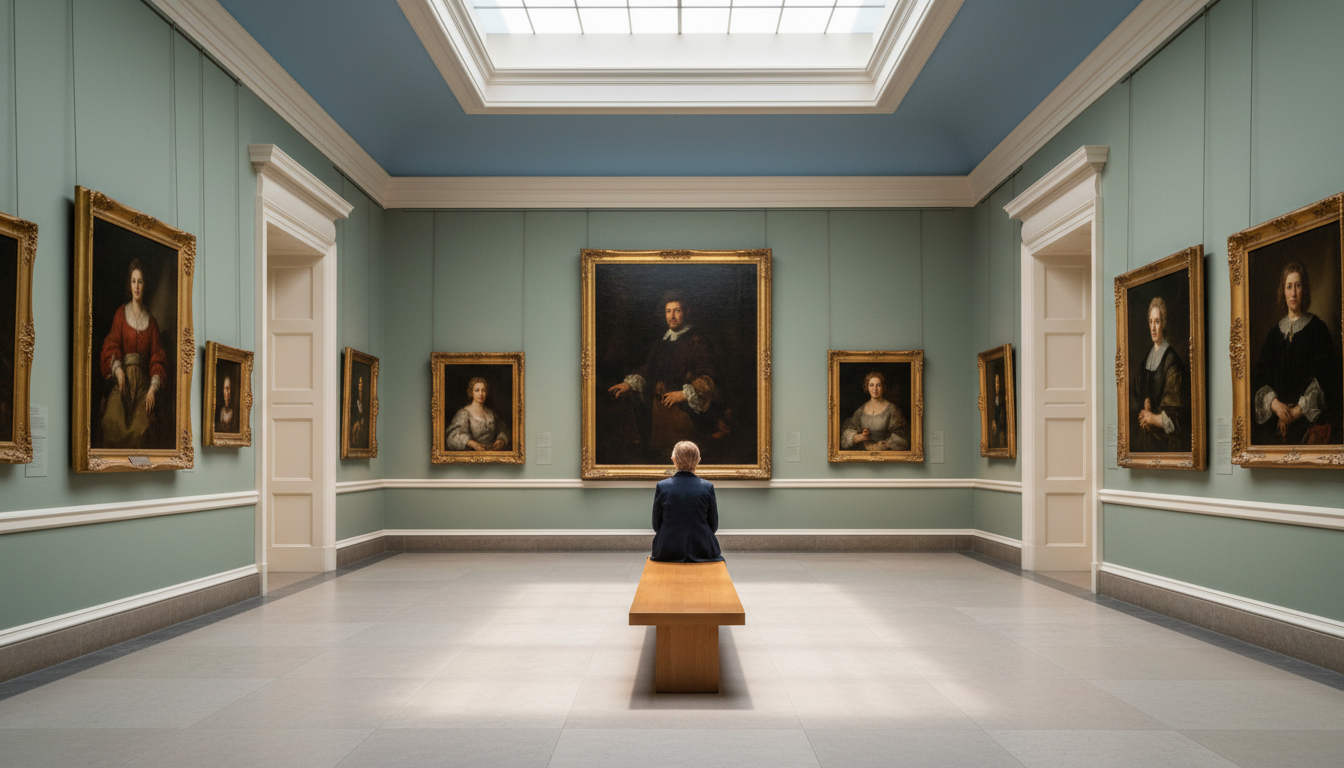 Dulwich Picture Gallerys skylit interior, warm natural light falling on Old Master paintings, a lone
Wellcome Collection (Euston)
183 Euston Road, NW1 2BE. Free.
A museum exploring the connections between medicine, life, and art. The permanent collection includes Napoleon's toothbrush, Darwin's walking stick, and an 18th-century anatomical model made of wax. Temporary exhibitions tackle subjects like consciousness, sexuality, and death with surprising depth and occasional discomfort.
The café is one of London's best museum cafés—proper food, not just sandwiches.
Museum of London Docklands (Canary Wharf)
No.1 Warehouse, West India Quay, E14 4AL. Free.
Housed in a Georgian sugar warehouse, this museum tells the story of London's river and port. The "London, Sugar & Slavery" gallery is one of Britain's most honest examinations of the slave trade's role in British wealth. The reconstructed Victorian "Sailortown" street feels genuinely immersive.
Canary Wharf itself is worth exploring—a strange corporate utopia built on former docklands, with free art installations scattered throughout.
Neighborhood Art Walks: Curating Your Own Experience
London's art scene extends far beyond museum walls. These walks connect multiple venues in single afternoons.
The Southbank Cultural Mile
Start at Tate Modern, walk east along the Thames Path. You'll pass the Globe Theatre (exterior only, unless you're seeing a show), the brutalist National Theatre complex (free foyer exhibitions and live music), the Hayward Gallery (£18/$23 for temporary shows, but the building's raw concrete exterior is free), and the Southbank Centre's public art installations.
End at the BFI Southbank for a film in their archive cinema or a drink in the riverfront bar. The whole walk takes 45 minutes without stops, but plan for 3-4 hours with gallery visits.
Mayfair Gallery Circuit
Bond Street, Cork Street, and the surrounding streets contain London's highest concentration of commercial galleries. Unlike museums, these are free, and the staff are generally welcoming to curious visitors who aren't buying.
Start at the Royal Academy of Arts (Burlington House, Piccadilly—free permanent collection, paid exhibitions). Walk north to Cork Street's contemporary galleries, then east to Hauser & Wirth (23 Savile Row) and White Cube (25-26 Mason's Yard). Most galleries close Sundays and Mondays.
East London Street Art Trail
Shoreditch and Brick Lane host one of the world's densest concentrations of street art. Start at Shoreditch High Street station, walk south to Rivington Street (major murals on both sides), continue to Brick Lane (the walls change constantly), and end at the Whitechapel Gallery (free, with a strong program of contemporary exhibitions).
Sunday combines this with the Brick Lane markets—vintage clothing, food stalls, and a chaotic energy that feels nothing like the museum district.
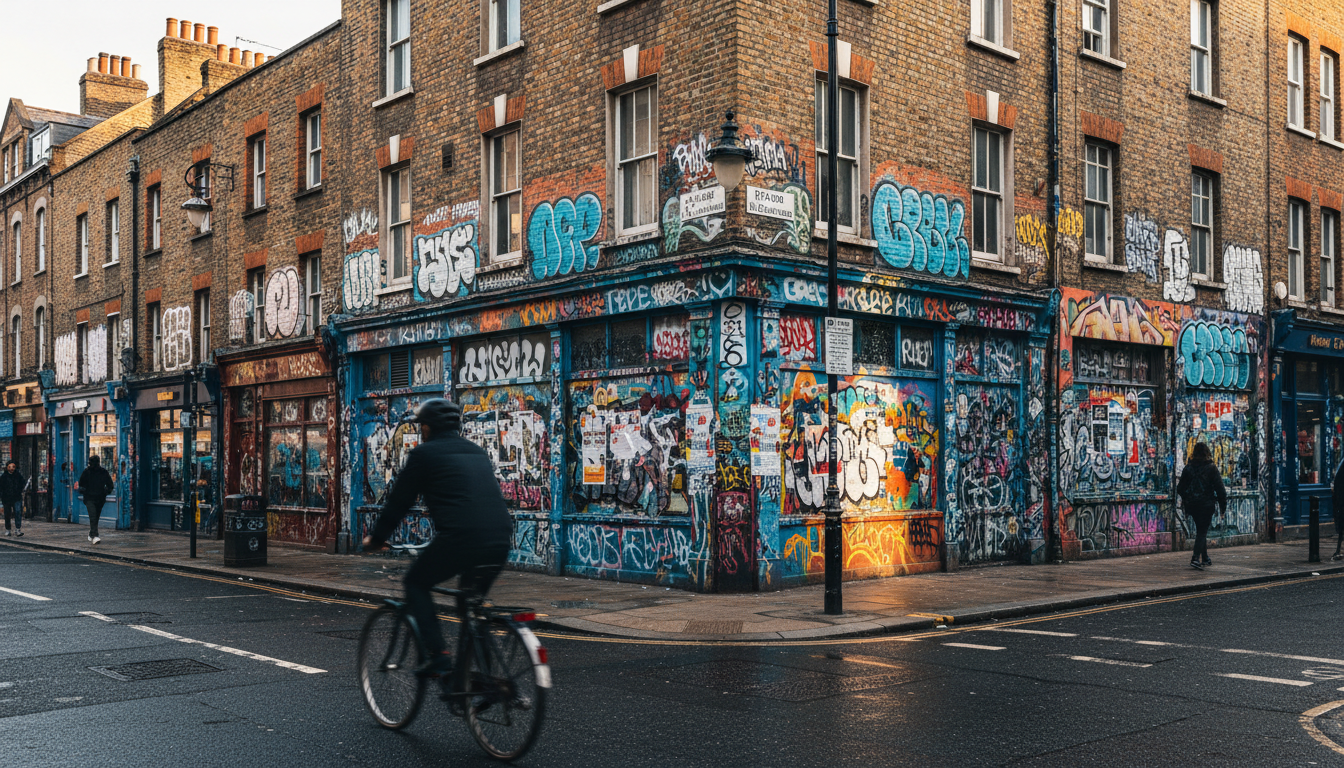 Shoreditch street corner covered in layered graffiti and wheat-paste art, a cyclist passing, Victori
Practical Planning: Timing, Transport, and Tickets
Best Days for Museum Visits
Tuesday-Thursday: Lowest overall crowds at major museums. School groups arrive mid-morning, so aim for opening time or after 2 PM.
Friday evenings: The National Gallery, V&A, and British Museum offer extended hours. The atmosphere shifts—more adults, fewer families, often live music or events.
Weekends: Avoid major museums unless you enjoy crowds. Instead, visit smaller venues (Wallace Collection, Soane Museum) or neighborhood galleries.
School holidays: British school holidays (late July through August, two weeks at Christmas and Easter, half-terms in October and February) dramatically increase crowds at family-friendly museums. Check dates before booking your swap.
Transport Strategy
The Tube is obvious but not always optimal. Museum clusters mean walking often beats underground transfers:
- South Kensington: V&A, Natural History Museum, and Science Museum share a single Tube station and can be visited in combination
- Bloomsbury: British Museum, Wellcome Collection, and the British Library (not technically a museum, but the treasures gallery holds Magna Carta and Beatles lyrics) are all within a 15-minute walk
- Trafalgar Square: National Gallery, National Portrait Gallery (reopening 2026 after renovation), and the free ICA are walkable from each other
Santander Cycles (London's bike-share system) costs £1.65 ($2.10 USD) for unlimited 30-minute rides with a day pass. The Southbank route from Westminster to Tower Bridge is flat, scenic, and connects multiple venues.
Timed Entry and Booking
Most major free museums now require timed entry tickets, even though admission is free. Book online 1-2 weeks ahead for:
- British Museum (especially weekends)
- Natural History Museum (always)
- Sir John Soane's Museum (always, limited capacity)
- Tower of London (not free—£29.90/$38 USD—but requires advance booking)
Paid exhibitions at free museums (Tate Modern, V&A, British Museum) require separate tickets and sell out for popular shows. The 2025 Tate Modern Picasso exhibition sold out weeks in advance.
Home Swap Neighborhoods for Museum Access
Where you stay shapes your cultural experience. SwappaHome listings cluster in these museum-friendly areas:
Bloomsbury
The intellectual heart of London. The British Museum is central, University College London's campus offers free public lectures, and independent bookshops line Charing Cross Road. Georgian townhouses with high ceilings and original features dominate the housing stock—exactly the kind of character property that works well for home swaps.
Typical swap: 2-bedroom flat in a converted Georgian house, 10-minute walk to British Museum.
South Kensington
Museum district central. The V&A, Natural History Museum, and Science Museum are all within a 5-minute walk of each other. The neighborhood is wealthy, quiet, and very well-connected by Tube. Housing tends toward mansion flats and mews houses.
Typical swap: 1-bedroom garden flat in a Victorian conversion, museums visible from the window.
Southwark/Bankside
Tate Modern's neighborhood. The riverside walk connects to the West End via Waterloo Bridge. Borough Market (one of London's best food markets) is a 10-minute walk. Housing includes converted warehouses and new-build apartments with river views.
Typical swap: Modern 1-bedroom flat in a converted warehouse, Tate Modern 5-minute walk.
Shoreditch/Hackney
East London's creative hub. Street art, independent galleries, and the Whitechapel Gallery define the cultural scene. The neighborhood is younger, edgier, and more affordable than central zones. Victorian terraces and warehouse conversions predominate.
Typical swap: 2-bedroom Victorian terrace with garden, 15-minute Tube to central museums.
Making It Work: The Home Swapper's Museum Routine
Patterns emerge among travelers who maximize cultural immersion through home swapping. Here's what tends to work:
Morning visits, afternoon rest. Museum fatigue is real. Most experienced swappers visit one major institution in the morning (opening time to lunch), then return to their swap property for a few hours before evening activities. The ability to retreat to a real home—make tea, read on a sofa, nap—transforms sustainability over a multi-week stay.
Neighborhood rotation. Rather than criss-crossing the city daily, cluster activities by area. Spend Monday-Wednesday in South Kensington, Thursday-Saturday on the Southbank, the following week in Bloomsbury. This reduces transport fatigue and lets you discover local cafés and restaurants.
Rainy day reserves. London weather is unpredictable. Keep a mental list of covered activities for wet days. The British Museum, V&A, and National Gallery are all excellent rainy-day options—large enough to spend hours, climate-controlled, and free.
Evening programming. London's museums offer extensive evening events: Friday Late at the V&A, Late at the Science Museum (adults-only monthly events with DJs and bars), cinema screenings at the BFI. Home swappers can attend these without worrying about hotel curfews or expensive taxis back to suburban accommodations.
What Most Guides Won't Tell You
A few honest observations worth considering:
The British Museum's ethics are complicated. The Parthenon Marbles, Benin Bronzes, and countless other objects were acquired through colonialism. Greece has requested the Marbles' return for decades. Nigeria is actively negotiating for the Bronzes. Visiting these galleries can feel uncomfortable, and that discomfort is worth sitting with rather than ignoring.
Not every famous artwork is worth the crowd. The Mona Lisa has a London equivalent: the Rosetta Stone. It's always surrounded by crowds, and the experience of glimpsing it over dozens of heads is rarely satisfying. The quieter galleries often deliver more genuine encounters with remarkable objects.
Museum cafés are overpriced. The V&A café is beautiful but charges £4.50 ($5.80 USD) for a small coffee. The Wellcome Collection café is the exception—genuinely good food at reasonable prices. Otherwise, bring snacks or step outside to local options.
The gift shops are designed to extract money. They're placed at exits for a reason. The books are marked up 20-30% over bookshop prices. The tote bags are everywhere. Resist unless you genuinely want something specific.
Frequently Asked Questions
Are London museums free for tourists in 2026?
Yes, London's major national museums remain free for all visitors regardless of nationality. The British Museum, National Gallery, Tate Modern, Tate Britain, V&A, Natural History Museum, Science Museum, and National Portrait Gallery charge no admission for permanent collections. Special exhibitions typically cost £15-25 ($19-32 USD). Some smaller museums charge entry—check individual websites before visiting.
How many days do you need for London museums?
Most visitors underestimate the time required. The British Museum alone could absorb three full days without repetition. A thorough exploration of London's major museums requires 10-14 days minimum—which is why home swapping works so well for cultural trips. Hotel-based visitors typically manage 3-4 museums in a weekend; home swappers report visiting 15-20 venues over two-week stays.
What is the best museum in London for first-time visitors?
The National Gallery offers the most immediately rewarding first-time experience. The collection is world-class but manageable in size (2,300 paintings versus the British Museum's 8 million objects). The building is beautiful, the location is central, and the chronological layout makes navigation intuitive. Start in the Sainsbury Wing and work forward through art history.
Should I book museum tickets in advance for London?
Yes, especially for the Natural History Museum, British Museum on weekends, and any paid exhibitions. Free timed-entry tickets are available on museum websites and prevent disappointment at sold-out time slots. The Sir John Soane's Museum has very limited capacity and requires advance booking for all visits. Tower of London tickets should be purchased 1-2 weeks ahead during peak season.
What is the least crowded time to visit London museums?
Tuesday through Thursday mornings (10 AM opening) offer the lightest crowds at major museums. Friday evenings at the National Gallery, V&A, and British Museum attract different crowds—more adults, fewer tour groups—and feel surprisingly spacious. Avoid school holidays (particularly August and half-terms) for family-oriented museums like the Natural History Museum and Science Museum.
The Tube rumbles beneath Bloomsbury. Tomorrow the Wellcome Collection is hosting a talk on the history of pain. The week after, the V&A opens a new fashion exhibition. Next month, who knows—maybe a swap in Edinburgh, or Porto, or somewhere you haven't imagined yet.
That's the thing about experiencing London's museums as a home swapper: you stop treating culture as something to consume and start treating it as something to live alongside. The city has been collecting, preserving, and displaying human creativity for centuries. The least you can do is give it the time it deserves.
The real luxury isn't the free admission—it's the freedom to return.

Published by
SwappaHome
SwappaHome Editorial Team
Home Exchange & Slow Travel Editorial
The SwappaHome Editorial Team brings together travel research, home-exchange community insights, and platform data to produce practical guides for first-time and experienced home swappers. Every article cites real platforms, current market rates, and verifiable city-level facts so readers can make informed decisions without guessing.
Ready to try home swapping?
Join SwappaHome and start traveling by exchanging homes. Get 7 free credits when you sign up!
Related articles
Bachelor and Bachelorette Parties in Singapore: The Complete Home Swap Group Guide for 2026
Planning a bachelor or bachelorette party in Singapore? Discover how home swapping lets groups of 6-12 stay together in luxury condos, saving thousands while partying in Marina Bay.
Cycling in Lisbon: 7 Home Swap Bike Tour Itineraries for Every Rider
Discover the best cycling routes in Lisbon with these home swap bike tour itineraries—from waterfront paths to hilltop adventures, all starting from your borrowed home.
Graduation Trip to Barcelona: How Home Swapping Gives New Graduates the Ultimate Celebration
Planning a graduation trip to Barcelona? Discover how home swapping lets new graduates explore Spain's most vibrant city without the hostel crowds or hotel costs.