
Long-Term Home Exchange in Palma de Mallorca: The Complete Remote Worker's Guide

SwappaHome Editorial Team
Home Exchange & Slow Travel Editorial
Discover how remote workers are using long-term home exchange in Palma de Mallorca to live the Mediterranean dream without the Mediterranean prices.
I was three espressos deep at a café in Santa Catalina when it hit me—I'd been in Palma de Mallorca for six weeks and hadn't paid a single euro for accommodation. My laptop was open, the Wi-Fi was solid, and through the window I could see palm trees swaying against a ridiculously blue sky. This wasn't a vacation. It was just... my life. At least for the next two months.
Long-term home exchange in Palma de Mallorca has become something of an open secret among remote workers. And honestly? I get why people don't talk about it much. Once you've discovered you can live in one of Europe's most desirable cities essentially rent-free, you kind of want to keep that information to yourself.
But here's the thing: I've been doing this long enough to know that sharing actually makes the community stronger. More hosts mean more options. More options mean better matches. So consider this my gift to you—everything I've learned about making Palma your long-term home base through the magic of home swapping.
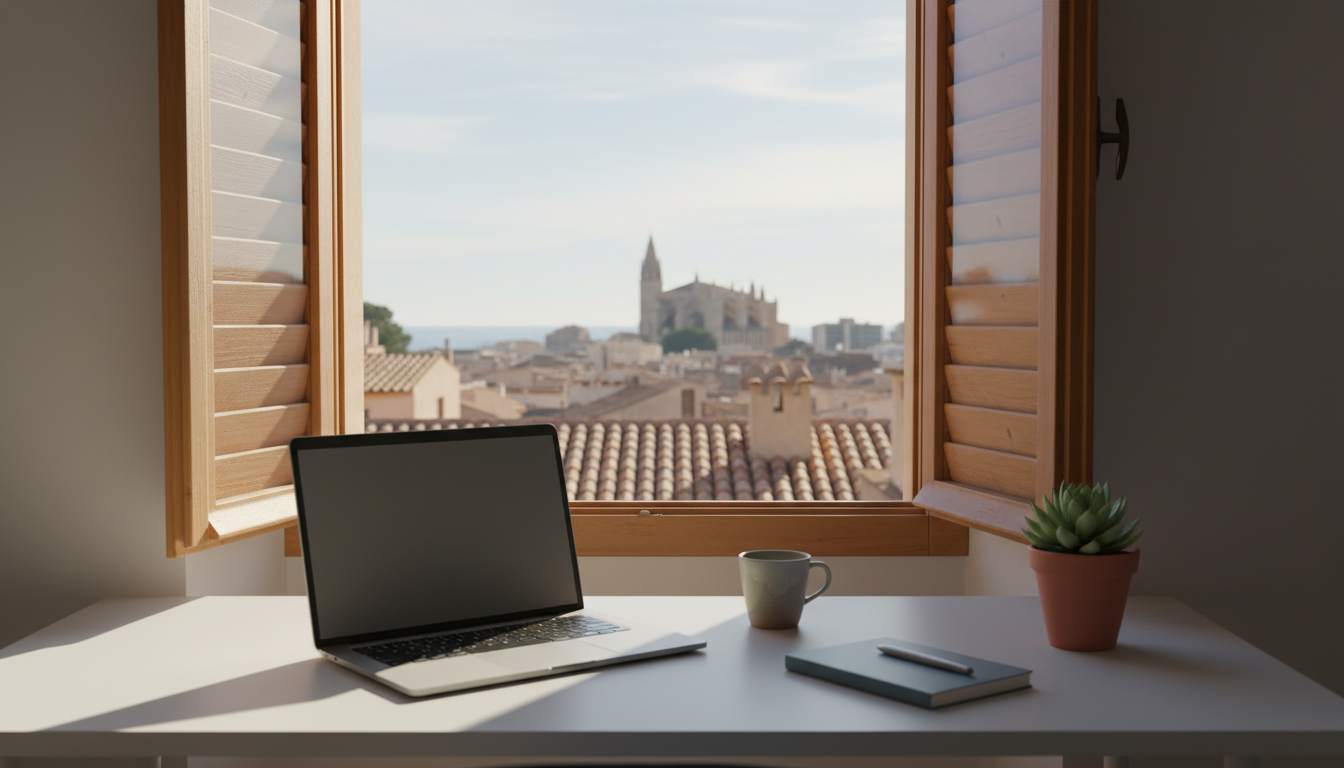 Morning light streaming through wooden shutters onto a minimalist workspace with laptop, overlooking
Why Palma de Mallorca Is Perfect for Long-Term Home Exchange
Let me be real with you: not every city works for extended home swaps. Some places have too few listings. Others attract mainly short-term tourists who want their homes back after a week. Palma hits this sweet spot that's genuinely rare.
First, there's the sheer number of Mallorcans who travel. The island has a long tradition of residents spending summers elsewhere—many families have been doing seasonal migrations for generations. This cultural norm means you'll find homeowners who actually want someone in their place for one, two, even three months at a time.
Then there's the remote worker infrastructure. Palma has quietly become one of Europe's top digital nomad destinations, which means the city has adapted. Cafés understand that one coffee might turn into four hours of work. Coworking spaces have popped up in converted warehouses. The airport connects to basically everywhere. And the time zone—CET—works reasonably well for both European and East Coast American business hours.
The cost factor is where home exchange really shines though. A decent one-bedroom apartment in Palma's center runs €1,200-1,800 per month ($1,300-$1,950 USD) on short-term rental sites. Over a three-month stay, you're looking at €3,600-5,400 ($3,900-$5,850) just for a roof over your head. Through home exchange? That same apartment costs you nothing but the credits you've already earned by hosting.
The Weather Advantage for Long Stays
I've worked from a lot of places. Rainy Lisbon winters. Gray London springs. Palma's climate is genuinely different—300+ days of sunshine annually, mild winters that rarely dip below 10°C (50°F), and summers that are hot but tempered by sea breezes.
For a remote worker, this translates to consistent productivity. No seasonal depression. No days lost to weather-induced cabin fever.
The shoulder seasons—April through May and September through October—are particularly golden for long-term stays. Fewer tourists, perfect temperatures, and homeowners who are often traveling themselves during these transitional months.
How to Find Long-Term Home Exchange Listings in Palma
Here's where strategy matters. Not every home exchange platform works equally well for extended stays, and not every listing is suited for remote work.
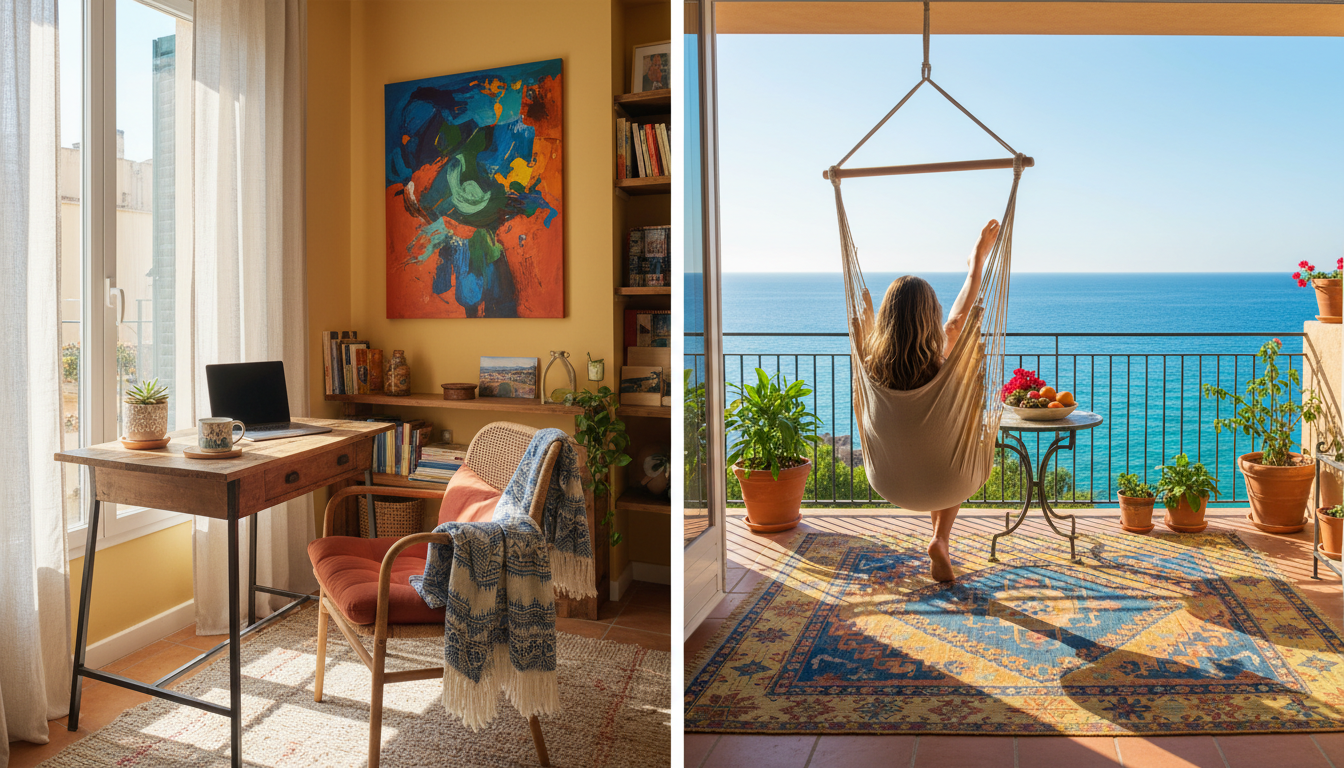 Split-screen showing a cozy Palma apartment interior with dedicated desk space on one side, and the
On SwappaHome, I filter specifically for hosts who've indicated flexibility on stay length. Then I look at the photos—not for aesthetics, but for practicality. Is there a proper desk or table? Multiple power outlets visible? A window with natural light near a potential workspace? These details matter when you're planning to spend eight hours a day working from someone's home.
Crafting Your Request for Extended Stays
When reaching out about a long-term home exchange in Palma, your message needs to do heavy lifting. Generic requests get ignored.
Be specific about dates and duration. "I'm looking to stay 6-8 weeks, ideally mid-September through early November" tells the host exactly what you need. Vague requests like "sometime this fall for a while" signal that you haven't thought this through.
Explain why Palma, specifically. Hosts want to know their city is meaningful to you, not just a random pin on a map. Mention the neighborhood you're interested in. Reference a restaurant you've researched. Show that you understand what you're asking for.
Address the work situation directly. "I work remotely as a [your job] and will need reliable internet and a quiet space during business hours" sets expectations. Some homes aren't suited for this—maybe they're above a noisy bar, or the Wi-Fi is spotty. Better to know upfront.
Offer reciprocity details. If you're asking for two months in someone's Palma apartment, explain what you're offering in return. Your credits speak for themselves, but context helps. "My San Francisco apartment has hosted 15 guests with an average 4.8 rating" builds confidence.
Best Neighborhoods in Palma for Remote Workers
Palma isn't huge—you can walk across the historic center in 20 minutes—but neighborhoods have distinct personalities. Choosing the right one for a long-term stay matters more than it would for a weekend trip.
Santa Catalina: The Digital Nomad Hub
This former fisherman's quarter has become ground zero for Palma's remote work scene. The Mercat de Santa Catalina anchors the neighborhood with fresh produce and tapas stalls. Streets like Carrer de Sant Magí are lined with specialty coffee shops where laptop workers are not just tolerated but expected.
Home exchange listings here tend to be renovated apartments in older buildings—think high ceilings, original tile floors, and small balconies overlooking pedestrian streets. Expect to find more competition for these properties, but also more hosts who understand the remote worker lifestyle.
Café picks for working: Mistral (excellent flat whites, good Wi-Fi, nobody rushes you), Flexas (more of a brunch spot but quiet mornings), and La Molienda (serious coffee people).
La Lonja and the Old Town
The historic center is stunning but comes with trade-offs. Narrow medieval streets mean less natural light in some apartments. Tourist foot traffic peaks in summer. But if you can find a home exchange here—particularly on upper floors with cathedral views—the atmosphere is unmatched.
I spent three weeks in a tiny apartment on Carrer de Can Savellà last year. The church bells drove me slightly crazy the first few days, then became background music. Working with a view of 14th-century architecture does something to your brain. Hard to explain, but it made even spreadsheet work feel meaningful.
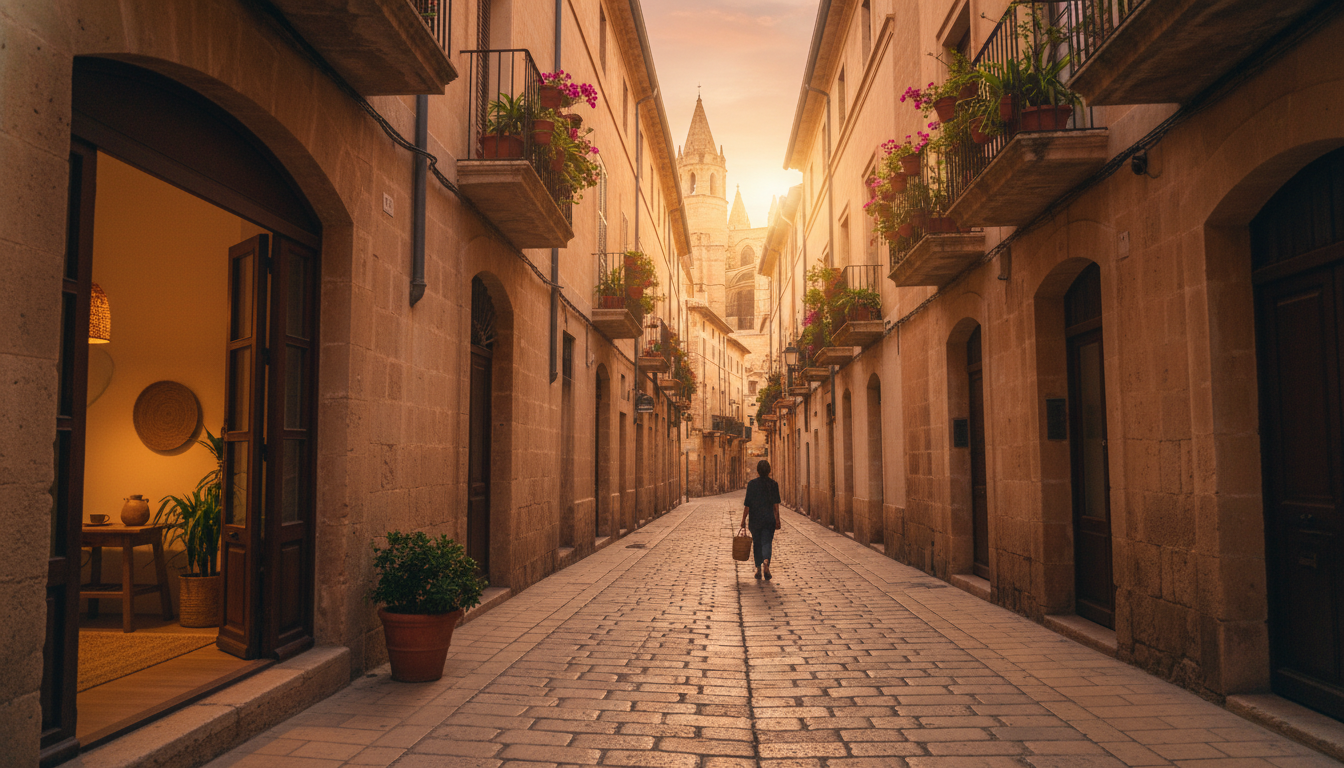 Narrow cobblestone street in Palmas La Lonja district at golden hour, with honey-colored stone build
El Terreno and the Western Neighborhoods
If you're planning a truly long-term home exchange—three months or more—consider the residential areas west of the center. El Terreno, Son Armadans, and the areas climbing toward Bellver Castle offer larger apartments, often with parking (useful if you want to explore the island on weekends), and a more local, less tourist-saturated vibe.
The trade-off: you'll need a bike or be comfortable with 20-minute walks to reach the center. But rents are lower here, which means homeowners are sometimes more open to extended exchanges. And the Paseo Marítimo—the waterfront promenade—is right there for morning runs or evening walks.
Portixol: Beach Life Adjacent
This former fishing village about 15 minutes east of the center has transformed into Palma's trendy beach neighborhood. The vibe is more relaxed, more residential, more... grown-up, maybe? Families, established professionals, people who've moved beyond the party scene.
For remote workers who need beach access for mental health (I count myself in this category), Portixol is ideal. Morning swim, work until 3pm, afternoon at the beach, evening tapas at Es Mollet. The rhythm feels sustainable in a way that constant sightseeing doesn't.
Setting Up Your Remote Work Life in Palma
Once you've secured your long-term home exchange, the real work begins: building a routine that actually functions.
Internet and Connectivity
Most Spanish homes have fiber internet now—Palma included. But speeds vary wildly. Before confirming any extended stay, ask your host specifically: "What's your internet speed, and is it fiber or ADSL?" Anything above 100 Mbps is solid. Below 50 Mbps and you might struggle with video calls.
Backup plan: Spanish mobile data is cheap. Orange, Vodafone, and Movistar all offer prepaid SIMs with generous data packages (around €20-30 for 20-40GB). I always grab one on arrival as insurance.
Coworking spaces if you need them: Palma has several good options. ICONIC Coworking (from €200/month), Wayco Palma (€180/month for flex desk), and the newer CREC Coworking (€220/month) all offer day passes if you just need occasional escape from home.
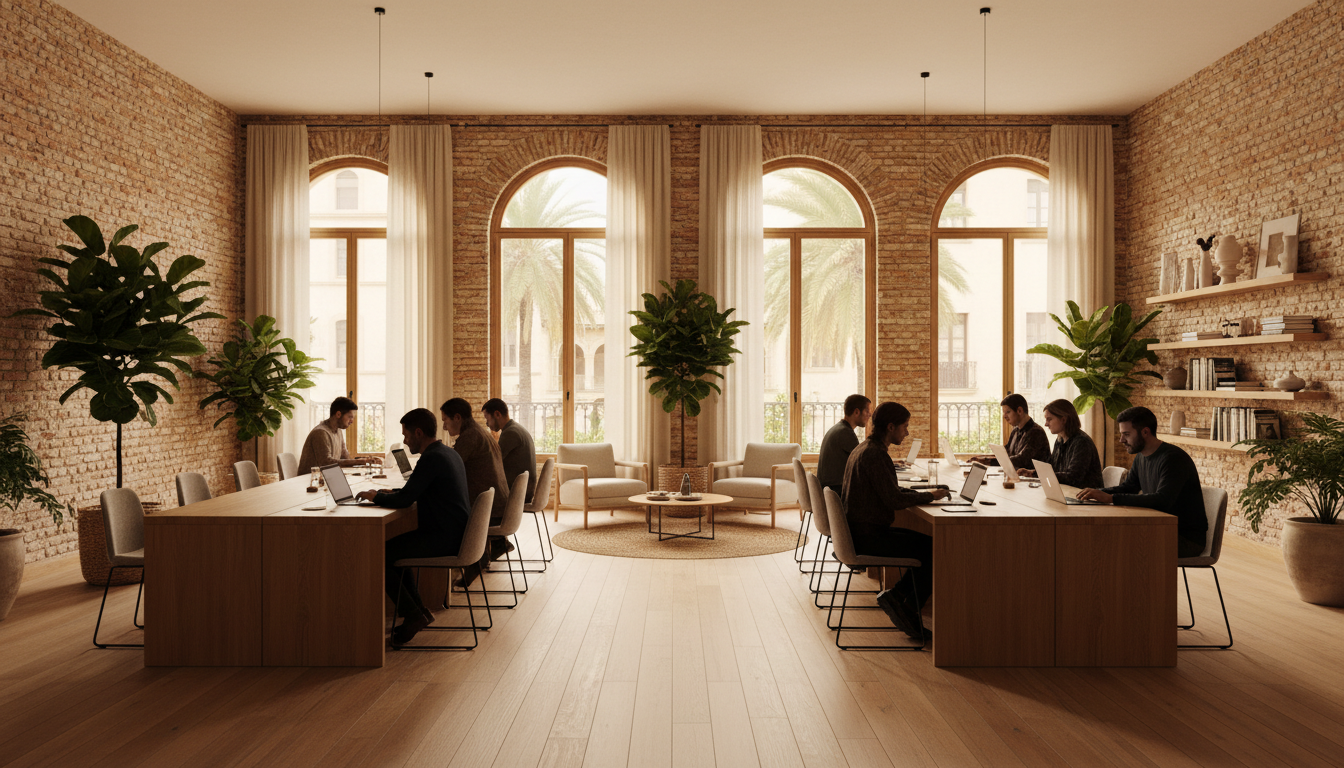 Bright, airy coworking space in Palma with exposed brick walls, large windows, and remote workers at
The Practical Stuff Nobody Talks About
Groceries: Mercadona is the reliable, affordable chain—there's one in almost every neighborhood. For nicer produce and more character, hit the Mercat de l'Olivar in the center or the Santa Catalina market. Budget around €50-70 ($55-75) per week for cooking most meals at home.
Healthcare: EU citizens can use their EHIC card for emergencies. Everyone else should have travel insurance with medical coverage. Hospital Son Espases is the main public hospital; Clínica Rotger is a well-regarded private option. A private GP visit runs about €60-80 ($65-87).
Laundry: Many apartments have washing machines, but dryers are rare. Mallorca's sunshine handles that. If your home exchange doesn't include laundry facilities, laundrettes ("lavandería") charge around €8-12 per load.
Gym access: Most gyms require annual contracts, but some offer monthly rates for foreigners. Dreamfit (€30/month), McFit (€20/month), and various local gyms are options. Many remote workers just run the Paseo Marítimo instead—it's flat, scenic, and free.
Managing Long-Term Home Exchange Relationships
Here's something I've learned the hard way: a two-month home exchange requires different relationship management than a weekend swap.
Communication Rhythms
For short stays, you might exchange messages before arrival and a thank-you after. For long-term exchanges, I recommend establishing a light check-in rhythm. Not daily—that's excessive—but maybe a quick message every two weeks.
"Everything's going great, the apartment is perfect. Quick question: is it normal for the hot water to take a few minutes in the morning?" This kind of communication builds trust and catches small issues before they become problems.
Handling Maintenance and Minor Issues
Things break. Lightbulbs burn out. Drains get slow.
For a long-term stay, discuss upfront how to handle minor maintenance. Most hosts will say: "Just fix small things and I'll reimburse you" or "Here's my handyman's number for anything significant."
I keep a running note of anything I notice—not to complain, but to leave a helpful list at the end. "FYI, the bathroom fan started making a noise around week 4" is valuable information for a homeowner.
Being a Good Long-Term Guest
This might seem obvious, but: treat the home better than you'd treat your own. For an extended stay, this means regular cleaning, not just a mad dash before departure. Taking out trash and recycling consistently (Palma has specific days for different waste types). Being mindful of electricity and water usage. Respecting neighbors—introduce yourself if you see them in the hallway. Leaving the home exactly as you found it, or better.
The review you receive after a long-term exchange carries extra weight. Future hosts will see that someone trusted you with their home for months, and that you honored that trust.
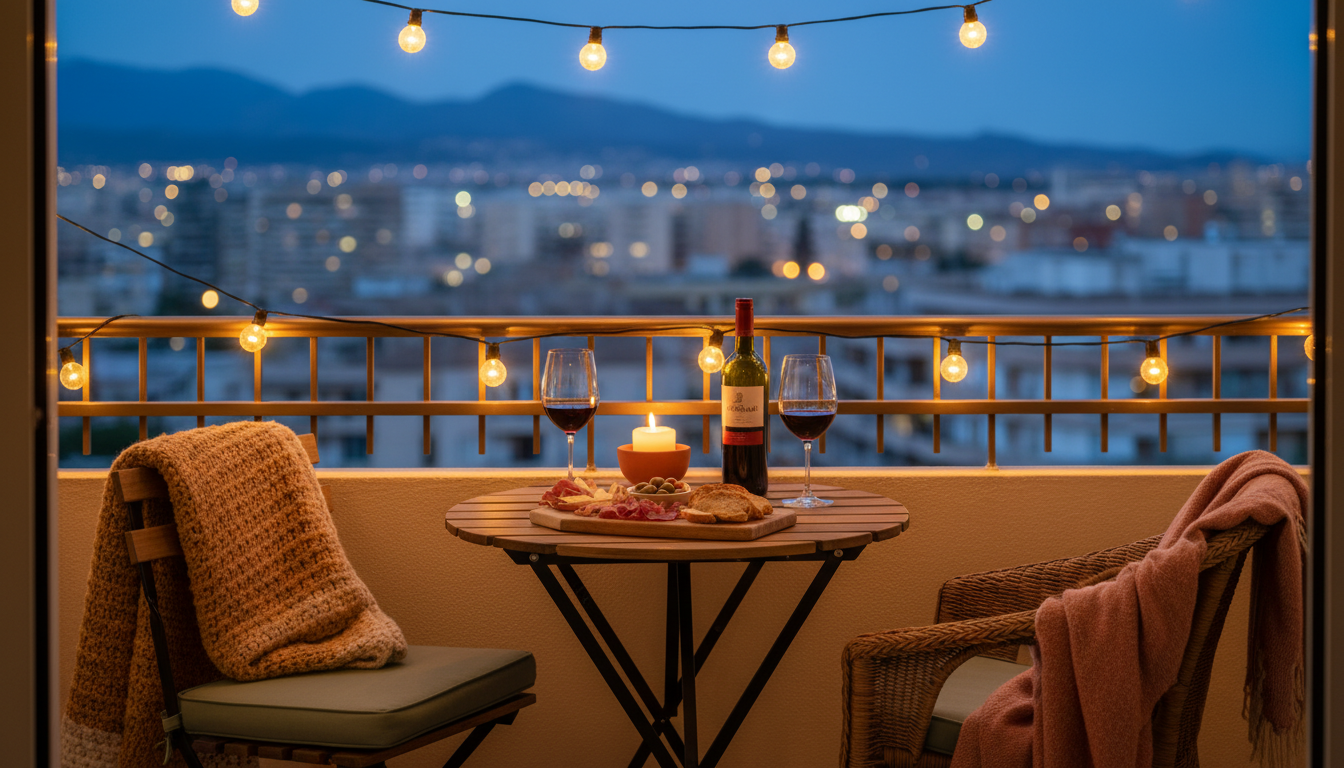 Cozy evening scene on a Palma apartment balcony with string lights, a small table with wine and tapa
Making the Most of Your Palma Base
The whole point of a long-term home exchange is that you're not rushing. You have time to actually live somewhere, not just visit it.
Weekend Explorations
Palma's central location makes it perfect for island exploration. Rent a car for weekends (around €25-40/day from local agencies like Roig or Hiper) and discover:
- Valldemossa: The mountain village where Chopin and George Sand spent a winter. Stunning, touristy, worth seeing once.
- Sóller and Port de Sóller: Take the vintage wooden train from Palma (€25 round trip) for a day of mountain scenery and seaside lunch.
- Deià: The artist colony in the Serra de Tramuntana. Robert Graves lived here. The cove beach is a 30-minute hike down (and a sweaty hike back up).
- Alcúdia and Pollença: The north of the island feels different—more rugged, less developed, incredible cycling.
- Es Trenc: The famous beach on the south coast. Go on a Tuesday, not a weekend.
Building a Local Routine
After a few weeks, you'll find your spots. The café where they know your order. The fruit vendor at the market who saves you the good tomatoes. The beach where you swim every Thursday after work.
This is what long-term home exchange makes possible—and what hotels and short-term rentals never quite achieve. You stop being a tourist and start being a temporary local. Your Spanish improves because you're using it daily for real interactions, not just ordering at restaurants.
The Social Side
Palma has an active expat and digital nomad community if you want it. Facebook groups like "Digital Nomads Mallorca" and "Expats in Palma" organize regular meetups. The coworking spaces host events. It's easy to find your people.
Or you can skip all that and just enjoy the solitude of working from a Mediterranean island. Both approaches are valid. The beauty of a long-term stay is that you have time to figure out what you actually want.
Planning Your Long-Term Home Exchange Timeline
If you're serious about spending an extended period in Palma through home exchange, here's a realistic timeline:
6 months before: Start building your SwappaHome profile if you haven't already. List your home with detailed photos and descriptions. Begin earning credits by hosting guests.
4 months before: Begin browsing Palma listings. Identify 5-10 potential matches. Send thoughtful, specific inquiries.
3 months before: Follow up on promising conversations. Discuss exact dates, house rules, and expectations. Confirm your top choice.
1 month before: Finalize logistics. Book flights (Palma's airport has excellent connections throughout Europe). Arrange transportation from the airport. Get your host's detailed arrival instructions.
1 week before: Confirm everything. Exchange phone numbers for day-of communication. Download offline maps of Palma. Check that your travel insurance covers the full duration.
The Real Cost Breakdown
Let me show you actual numbers from my last two-month Palma stay:
Accommodation through home exchange: €0 (used 60 credits earned from previous hosting)
Flights (San Francisco → Palma, round trip): $850
Food and groceries: €840 ($910) — about €105/week, cooking most meals, eating out twice weekly
Coffee shop work sessions: €180 ($195) — roughly €3-4 daily when I worked from cafés
Transportation (bike rental + occasional car rental): €220 ($240)
Coworking (10 day passes): €150 ($163)
Entertainment and activities: €300 ($325)
Total for 2 months: approximately $2,683
Compare that to two months in a rental apartment (€3,200 minimum) plus all the same living expenses, and you're looking at savings of at least $3,500. That's a significant chunk of money that stays in your pocket—or funds your next adventure.
When Long-Term Home Exchange Isn't Right
I want to be honest: this lifestyle isn't for everyone.
If you need absolute certainty about your living situation, home exchange involves some inherent flexibility. Hosts occasionally need to adjust dates. Sometimes the perfect listing doesn't materialize. You need to be comfortable with a degree of uncertainty.
If you have very specific accessibility needs, home exchange can be limiting. Not every listing has elevator access, walk-in showers, or other accommodations. It's harder to filter for these requirements than when booking traditional rentals.
If you're traveling with pets, the options narrow significantly. Some hosts welcome animals, but many don't. A two-month stay with a dog requires finding a specifically pet-friendly exchange.
And if you simply prefer the predictability of hotels or the services of a rental agency, that's completely valid. Home exchange works best for people who value authenticity and community over convenience.
Your Next Step
I'm writing this from a café in Palma's old town, about to head back to an apartment I'm not paying for, to finish work before an evening swim at Can Pere Antoni beach. This has become normal for me—but I remember when it felt impossible.
Long-term home exchange in Palma de Mallorca isn't complicated. It just requires a bit of planning, a willingness to be part of a community, and the courage to try something different.
If you're already on SwappaHome, start browsing Palma listings today. Notice which neighborhoods appeal to you. Imagine your morning routine in each one. Send a few inquiries—the worst that happens is you don't get a response.
And if you're not yet part of the community, maybe it's time. Your home—wherever it is—could be someone else's dream destination. And their Palma apartment could be waiting for you.
The Mediterranean isn't going anywhere. But your chance to live there, really live there, without draining your savings? That's something worth pursuing.
Frequently Asked Questions
How long can I do a home exchange in Palma de Mallorca?
Long-term home exchanges in Palma typically range from one to three months, though some arrangements extend to six months or more. The duration depends on finding a host whose travel plans align with yours. Many Mallorcan homeowners travel during summer or winter seasons, creating natural windows for extended stays. Through SwappaHome's credit system, you're not limited by needing a direct swap—you can stay as long as you have credits and a willing host.
Is Palma de Mallorca good for remote workers?
Palma has become one of Europe's top remote work destinations for good reason. The city offers reliable fiber internet in most homes, numerous laptop-friendly cafés, several coworking spaces, and a timezone (CET) that works for both European and American business hours. The 300+ days of annual sunshine, mild climate, and high quality of life make it sustainable for long-term stays—not just quick visits.
How much money can I save with long-term home exchange vs renting?
A typical one-bedroom apartment in central Palma rents for €1,200-1,800 ($1,300-$1,950) monthly on short-term rental platforms. Over a three-month stay, that's €3,600-5,400 in accommodation costs alone. With home exchange, your accommodation costs nothing beyond the credits you've earned by hosting others. Most remote workers report saving $3,000-5,000 on a two-month Palma stay compared to traditional rentals.
What's the best time of year for long-term home exchange in Palma?
The shoulder seasons—April through May and September through October—are ideal for long-term stays. Weather is perfect (20-25°C/68-77°F), tourist crowds are manageable, and many homeowners travel during these transitional periods. Summer (June-August) is hottest and busiest but offers the most listings as locals escape the heat. Winter (November-March) is mild and quiet, perfect for focused work, though some businesses reduce hours.
Do I need to speak Spanish for a long-term stay in Palma?
While you can get by with English in tourist areas, some Spanish significantly improves a long-term stay. Locals appreciate the effort, and practical situations—dealing with utilities, understanding mail, communicating with neighbors—become easier. Many Mallorcans also speak Catalan (Mallorquín dialect) as their first language. Even basic Spanish phrases will help you integrate into daily life and feel less like a perpetual tourist.

Published by
SwappaHome
SwappaHome Editorial Team
Home Exchange & Slow Travel Editorial
The SwappaHome Editorial Team brings together travel research, home-exchange community insights, and platform data to produce practical guides for first-time and experienced home swappers. Every article cites real platforms, current market rates, and verifiable city-level facts so readers can make informed decisions without guessing.
Ready to try home swapping?
Join SwappaHome and start traveling by exchanging homes. Get 7 free credits when you sign up!
Related articles

Bachelor and Bachelorette Parties in Singapore: The Complete Home Swap Group Guide for 2026
Planning a bachelor or bachelorette party in Singapore? Discover how home swapping lets groups of 6-12 stay together in luxury condos, saving thousands while partying in Marina Bay.
Cycling in Lisbon: 7 Home Swap Bike Tour Itineraries for Every Rider
Discover the best cycling routes in Lisbon with these home swap bike tour itineraries—from waterfront paths to hilltop adventures, all starting from your borrowed home.

Graduation Trip to Barcelona: How Home Swapping Gives New Graduates the Ultimate Celebration
Planning a graduation trip to Barcelona? Discover how home swapping lets new graduates explore Spain's most vibrant city without the hostel crowds or hotel costs.