
Long-Term Home Swap: A Guide for Remote Workers

SwappaHome Editorial Team
Home Exchange & Slow Travel Editorial
A long-term home swap is when two people trade homes for weeks or months at a time instead of shelling out for a hotel or a short-term rental. And for remote workers, it's turned into one of the...
A long-term home swap is when two people trade homes for weeks or months at a time instead of shelling out for a hotel or a short-term rental. And for remote workers, it's turned into one of the cheapest ways to actually live somewhere while you travel, without your work falling apart in the process. If you're a digital nomad who wants more than a two-night stay, a swap knocks out two headaches at once: your housing bill basically disappears, and you get a real home to work from instead of a hotel room with a sad little desk in the corner.
So this guide walks through how these swaps actually work, what they cost next to the alternatives, how to get your own place ready, and the mistakes that wreck things for first-timers. Doesn't matter if you're a freelancer chasing warmer weather, a consultant who works from wherever, or a couple trying to stretch a remote-work sabbatical across three countries. This is the practical stuff.
Table of Contents
- What Is a Long-Term Home Swap?
- Why Remote Workers Are Choosing Long-Term Home Swaps
- How Does a Long-Term Home Swap Actually Work?
- How Much Does a Long-Term Home Swap Cost?
- Preparing Your Home for a Successful Swap
- Choosing the Right Destination for Remote Work Travel
- Legal, Insurance, and Practical Considerations
- Common Mistakes That Sink Long-Term Home Swaps
- FAQ
What Is a Long-Term Home Swap?
A long-term home swap is a reciprocal housing exchange, usually running anywhere from a month to a full year, where two households agree to live in each other's homes for a set stretch of time, typically without any money changing hands. That last part is the whole point. The difference from a short swap (a week or two, usually a vacation thing) is that with a long one, both sides have to actually think about the boring stuff. Mail. Ongoing bills. Whether there's a decent place to work. Sometimes pets, sometimes even schools.
For remote workers, the appeal is simple: you get a fully furnished house instead of a hotel room. Kitchen, workspace, laundry, internet, all of it. That makes it so much easier to build an actual routine in a new city. Platforms like Swappahome exist specifically to match people who want these longer exchanges, verifying listings and helping both parties nail down the terms before anybody starts packing.
The thing that separates this from renting is reciprocity. You're not paying rent. Your home is the payment. Some swaps happen at the same time (you're in their place while they're in yours), and some don't. The non-simultaneous kind, where the two stays happen at different points, is pretty common when one person has more flexibility with dates than the other.
Why Remote Workers Are Choosing Long-Term Home Swaps
Remote workers are drawn to long-term swaps because remote work demands three things: stability, cheap housing, and infrastructure that doesn't quit on you mid-call. A well-vetted swap tends to deliver all three better than a hotel or a short-term rental ever could. When your paycheck depends on showing up to video calls and hitting deadlines, a messy living situation isn't just annoying. It's a professional problem.
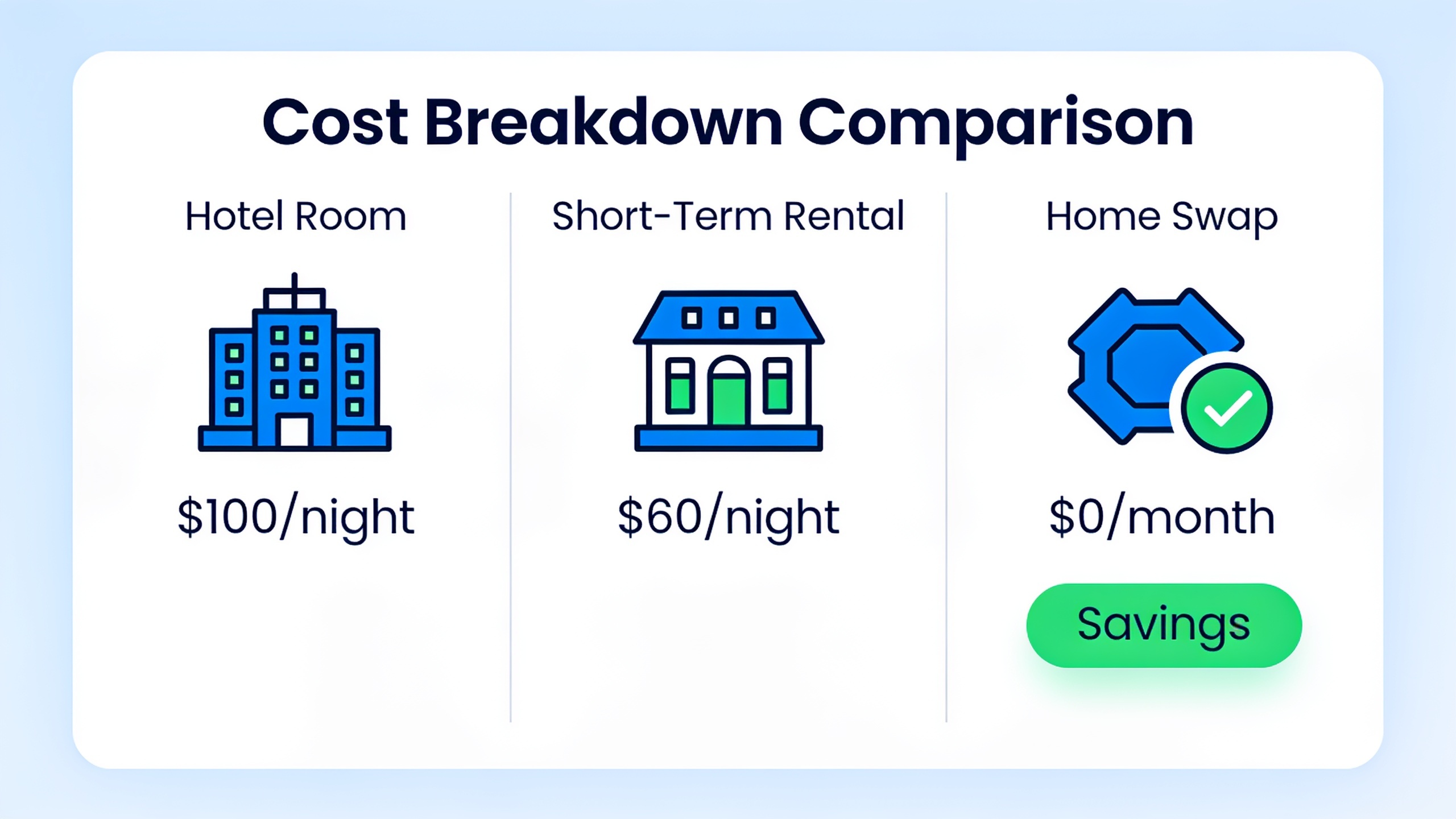
The money part is easy to grasp. According to Numbeo's cost-of-living data, a one-bedroom in the city center of popular nomad hubs like Lisbon, Mexico City, or Chiang Mai runs anywhere from roughly $600 to over $2,000 a month, and that's before utilities, furniture, or a deposit. A swap basically wipes that line off your budget. Which is exactly why a lot of nomads treat it as a core strategy and not some occasional novelty. If you want to go deeper, How Digital Nomads Are Using Home Swaps to Travel for Free gets into how frequent travelers stack swaps back to back and go months without paying rent twice.
 Cost comparison infographic showing home swap savings versus hotels and rental platforms over extended stays
But honestly, the money's only half of it. Remote work goes best when your life has some consistency to it. A real desk. A kitchen so you're not eating out every single meal. A washing machine. A neighborhood you can actually sink into instead of a tourist strip. A swapped home comes with all of that baked in, because it's somebody's actual home. People live there.
There's also a generational thing happening. Younger remote workers have gotten really comfortable with the whole exchange model. Why Millennials Are Choosing Home Swaps Over Hotels digs into this, but the gist is that millennials and younger Gen Xers keep choosing local, lived-in experiences over the sterile sameness of a hotel chain. Long-term swaps give them exactly that.
How Does a Long-Term Home Swap Actually Work?
A long-term swap works by matching two households through an exchange platform, agreeing on dates and house rules, then handing over keys (or access instructions) for the agreed stretch, with each person living as a temporary resident in the other's home. More involved than booking a vacation rental, sure. But not complicated once you see the order of operations.
First, you build a detailed listing. Photos of your place, a description of the neighborhood, the amenities (Wi-Fi speed, workspace, parking, laundry), and your available dates. For remote workers, being upfront about internet reliability and having a real workspace is huge. It's usually the thing that seals the deal for another remote-working swapper.
Then comes the searching and messaging. You browse listings in your target spot, filter by dates, and reach out to hosts whose places fit what you need. Most experienced swappers trade a bunch of messages, sometimes a video call, before they commit. You end up talking about everything from which plants need watering to how the thermostat behaves.
After that, draft something in writing. Even a casual swap benefits from a simple agreement covering dates, who handles what (bills, cleaning, pet or plant duty), emergency contacts, and what happens if something breaks. This isn't about not trusting people. It's about clarity, because misunderstandings almost always come from assumptions, not bad intentions.
The last two pieces are logistics and staying in touch. Logistics means sorting out key handoffs or smart lock codes, sharing the local intel (trash days, Wi-Fi passwords, emergency numbers), and sometimes overlapping for a day so you can walk each other through the place in person. And a quick check-in text halfway through keeps everybody relaxed and lets you flag a leaky faucet or a confusing appliance before it snowballs.
Non-simultaneous swaps add one more wrinkle. Since you're not trading at the same time, you have to figure out access when the other person isn't physically there to hand you keys. Usually that means a lockbox, a smart lock, or a trusted local contact.
How Much Does a Long-Term Home Swap Cost?
A long-term swap costs way less than renting or hotel-hopping for the same period, because your biggest expense, housing, gets covered by your own home instead of your bank account. What's left is the smaller stuff: platform fees, utilities, cleaning, travel insurance, and the occasional security deposit a host asks for as a good-faith gesture.
To see the gap, here's how a 90-day stay stacks up across the usual options. These are rough national averages, not any one city's exact pricing:
| Accommodation Type | Approx. 90-Day Cost (USD) | Included Amenities | Best For |
|---|---|---|---|
| Long-term home swap | $0–$400 (fees, utilities, deposit) | Full kitchen, workspace, laundry, local neighborhood | Remote workers, families, extended stays |
| Extended-stay hotel | $3,000–$9,000 | Housekeeping, basic kitchenette | Short stays, business travel |
| Short-term rental (e.g., vacation rental platforms) | $2,700–$8,000+ | Full home, but often at a nightly-rate markup | Flexible short trips |
| Traditional 3-month lease | $1,800–$6,000+ deposit and rent | Unfurnished or furnished apartment | Long-term relocation |
Those numbers are illustrative averages meant to show the relative cost structure, not a quote for any particular city, because local rental markets swing wildly. But even with all that variance, the pattern doesn't budge: a swap removes the single biggest expense in remote work travel. That's why it appeals to budget-minded travelers, families stretching one income, and retirees on a fixed budget just as much as it does to nomads.
Still, budget for a few real costs, because they do exist. A lot of platforms, Swappahome included, charge a membership or listing fee, though it's a tiny fraction of what one week of hotels would run you. Factor in a modest travel insurance policy too, plus any cleaning fees you agree to pay or collect, and a little buffer for maintenance surprises. Even the neatest swap partner in the world can't promise an appliance won't die on you during a three-month stay.
Preparing Your Home for a Successful Swap
Getting your home ready for a long swap means making it functional, welcoming, and clearly documented, because the more comfortable and self-explanatory your place is, the more it pulls in serious, long-term-minded partners. This matters more for a long stay than a weekend one, obviously. Your guest is going to be living, cooking, and working there for weeks or months.
Start with the furniture. A home hosting someone for an extended stretch needs sturdy, comfortable stuff that survives daily use. A wobbly dining chair or a mattress that's seen better decades turns into a complaint fast. If yours is due for a refresh, solid pieces like the ones from Oak Castle Furniture hold up to frequent guests while keeping the place looking sharp, which pays off if you want repeat requests and good reviews.
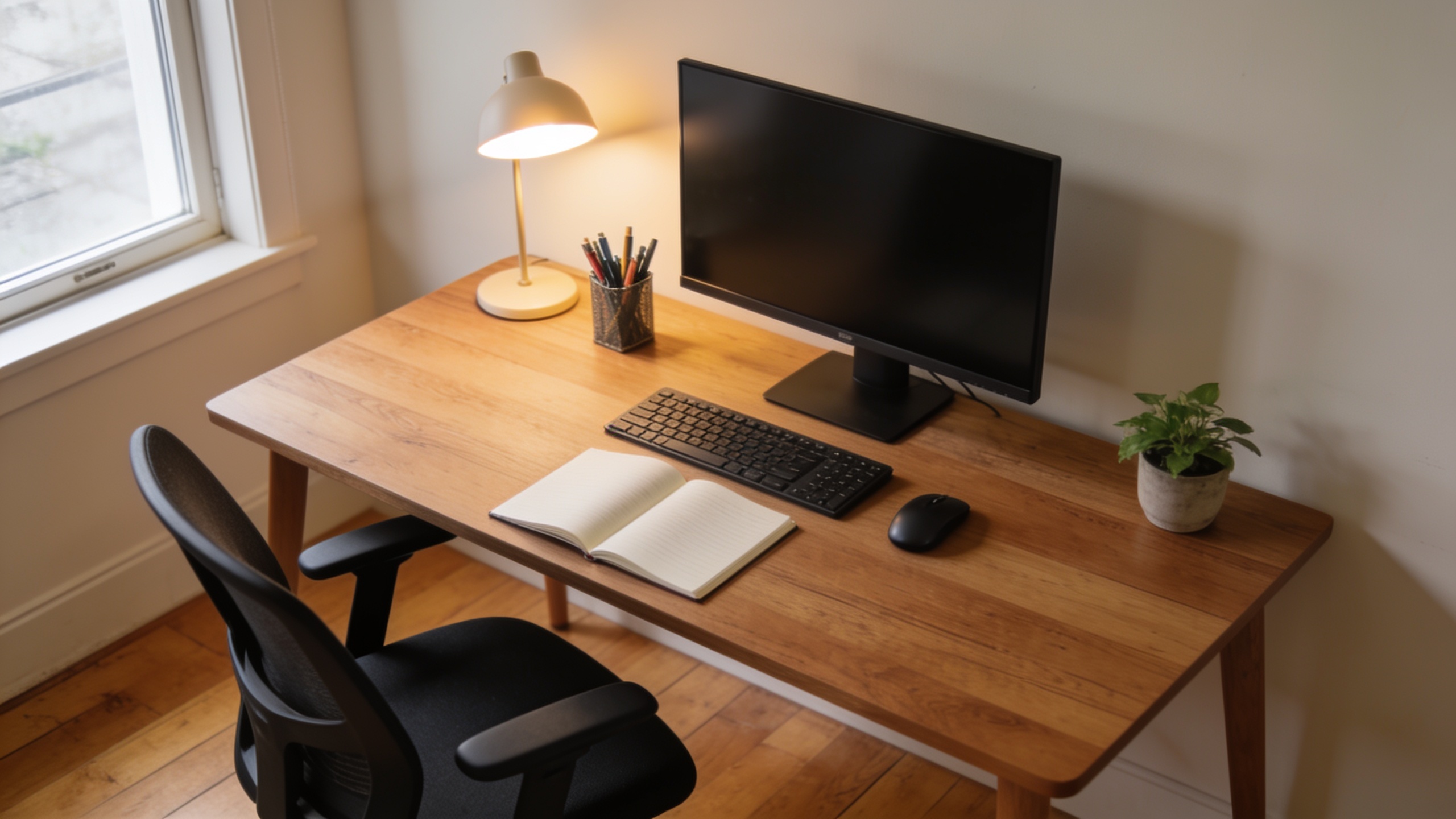
Now think like a remote worker, because that's probably who's staying at your place. Set up a real workspace. An actual desk and chair, not just "the kitchen table." Test your internet at different times of day so the Mbps number you list is honest. And if you've got a smart TV or a monitor guests might use for video calls or a second screen, throw the exact display specs into your listing. Tools like What Is My Screen Size? let you check a monitor's resolution and dimensions in a few seconds, so you can tell people exactly what they're getting before they show up.
 Well-organized home office workspace showing ergonomic setup and amenities that attract remote worker swap partners
Documentation is honestly just as important as the furniture. Put together a simple welcome guide: Wi-Fi login, appliance quirks, trash and recycling schedule, nearby grocery stores, emergency numbers. One decent document cuts way down on the mid-stay back-and-forth and quietly tells potential partners that you've hosted thoughtfully before, even if you haven't.
And be honest in your listing. Noise, quirks, limitations, all of it. Thin walls? Say so. Workspace in the shared living area instead of a private office? Mention it. Remote workers need to know what they're walking into, and being straight with them upfront kills mid-stay disappointment far better than some glowing, vague description ever will.
Choosing the Right Destination for Remote Work Travel
The right destination for remote work balances reliable infrastructure (fast internet, stable power, safe streets) with a cost of living and vibe that fits your goals. A swap only works if the location supports your work and your regular life. Picking somewhere just because it's pretty, without checking the practical details, is one of the fastest routes to being miserable three weeks into a three-month stay.
Connectivity first. Before you commit, ask your prospective partner about actual measured internet speeds, not just whatever the provider advertises, and whether there've been recent outages. For anyone on video calls or moving big files, this one detail can make or break the whole location.
Cost of living and lifestyle fit weigh in just as heavily. A remote worker who runs on a busy city with good transit might find a quiet rural swap deeply isolating, while someone craving a slower pace could feel fried in a dense urban center. Don't sleep on smaller cities and towns either, not just the usual nomad hotspots. Places with a strong local food and culture scene can make a long stay feel so much richer than a generic "digital nomad hub." Say you land near Dallas–Fort Worth. You might spend an evening poking around the local food scene at a spot like Palate Garden in Saginaw, Texas, which does Nepali-Indian dishes in a laid-back, sports-bar kind of setting. That's exactly the neighborhood discovery a home swap makes likely and a downtown hotel basically never does.
Time zones deserve their own thought. If your job needs overlapping hours with a specific team, map out the difference before you lock in dates, and be honest with yourself about whether a six- or nine-hour offset is really sustainable for months. A lot of long-term swappers deliberately stick to destinations within two or three time zones of their core work hours, precisely so they're not burning out on 2 a.m. meetings.
Legal, Insurance, and Practical Considerations
Long-term swaps carry more legal and financial weight than a casual vacation exchange, so both sides need to sort out insurance, visas, and a written agreement before any keys change hands. Skip this and you've found the single biggest risk in an otherwise cheap way to travel.
Homeowners and renters insurance policies treat home exchanges all kinds of different ways, and some flat-out exclude coverage for guests staying long-term or for damage during a swap. Before you finalize anything, call your insurer and just ask, point blank, whether a long-term swap is covered. Get the answer in writing or over email so there's a paper trail. Same goes for your swap partner. Mismatched coverage on either end can turn a small incident into an expensive fight.
Visas and residency rules need attention too, especially for swaps crossing borders that outlast a standard tourist visa. Plenty of countries have rolled out digital nomad visas built for exactly this kind of extended remote work, with terms running from six months to two years depending on where you're headed. Worth checking the current visa categories for your destination well before you book a long stay.
But the written agreement is your real safety net, insurance and visas aside. At minimum, spell out the exact dates, who's covering utilities, what happens if either side needs to cancel, and a basic process for handling damage or disputes. Good platforms often hand you a template for this. Using one costs you nothing but a few minutes, versus the very real cost of an undocumented disagreement later.
Common Mistakes That Sink Long-Term Home Swaps
The most common mistakes in long-term swaps are under-communicating, underestimating how much prep an extended stay takes, and treating the listing itself like an afterthought. All of them avoidable with a little upfront effort. Because these swaps run so much longer than a weekend, small oversights pile up into real problems over time.
A frequent one: not nailing down who handles the recurring costs. Utilities. Streaming subscriptions tied to the home's Wi-Fi. A cleaning service that shows up mid-stay. Put it in the written agreement instead of assuming it'll "sort itself out." It won't.
Another is writing a vague, generic listing. Remote workers specifically hunt for the desk setup, natural light for video calls, and internet reliability. A listing that's all pretty photos and no answers to those functional questions gets skipped by the exact audience most likely to book a long stay. If writing compelling, keyword-relevant copy isn't your thing, tools like RobinRank can help you generate clear, search-friendly descriptions for your listing. That matters more and more as swappers find platforms through search engines and AI answer tools rather than just word of mouth.
Then there's the return transition, which people constantly ignore. Swappers plan arrival down to the minute and completely forget about leaving. Getting the home back to the agreed condition, settling final utility bills, writing a clear handover note. A rushed, sloppy exit is the fastest way to torch your reputation on a platform and lose access to the good matches down the road.
And last, a lot of remote workers underestimate how much a change of scenery messes with productivity. Even with a killer workspace, adjusting to a new city, time zone, or climate eats real energy. Building a few lighter workdays into the start of a long swap, instead of demanding full output from day one, tends to make the whole thing way more sustainable.
FAQ
How long does a "long-term" swap usually last? Most run from one month to six months, though some remote workers set up exchanges lasting up to a year, especially when both parties have flexible schedules and are cool with a non-simultaneous setup.
Do I have to own my home to do a swap? No, but renters usually need their landlord or property manager's permission before offering their unit, since most leases restrict subletting or hosting without prior written consent. Ask first.
Is a long-term swap safe for solo remote workers? It can be, yeah, as long as both sides verify identities through the platform, trade references or reviews, and put a written agreement in place. The same common-sense stuff that applies to any extended travel applies here: research the neighborhood, confirm emergency contacts ahead of time.
What happens if something breaks during a swap? Sort this out in your written agreement before you start. Most swappers agree that normal wear and tear is nobody's fault, while damage from negligence is on the responsible party to fix or pay for, often backed by a modest security deposit.
Can families and retirees do this, or is it just for digital nomads? Absolutely both. Long-term swaps work great for families wanting an affordable, home-like alternative to a vacation rental, and for retirees who want to travel for a while without eating hotel costs. It suits anyone comfortable trading homes instead of paying rent, whether they're working during the stay or not.
Long-term swapping isn't just a hack for dodging expensive rent anymore. It's genuinely becoming a lifestyle strategy for remote workers, families, and retirees who want real time in new places without the financial gut-punch of traditional lodging. Prep your home well, put a clear agreement in place, do a little homework on your destination's infrastructure and legal quirks, and a long-term swap can turn months of remote work into one of the cheapest, most authentically local experiences you'll ever have.

Published by
SwappaHome
SwappaHome Editorial Team
Home Exchange & Slow Travel Editorial
The SwappaHome Editorial Team brings together travel research, home-exchange community insights, and platform data to produce practical guides for first-time and experienced home swappers. Every article cites real platforms, current market rates, and verifiable city-level facts so readers can make informed decisions without guessing.
Ready to try home swapping?
Join SwappaHome and start traveling by exchanging homes. Get 7 free credits when you sign up!