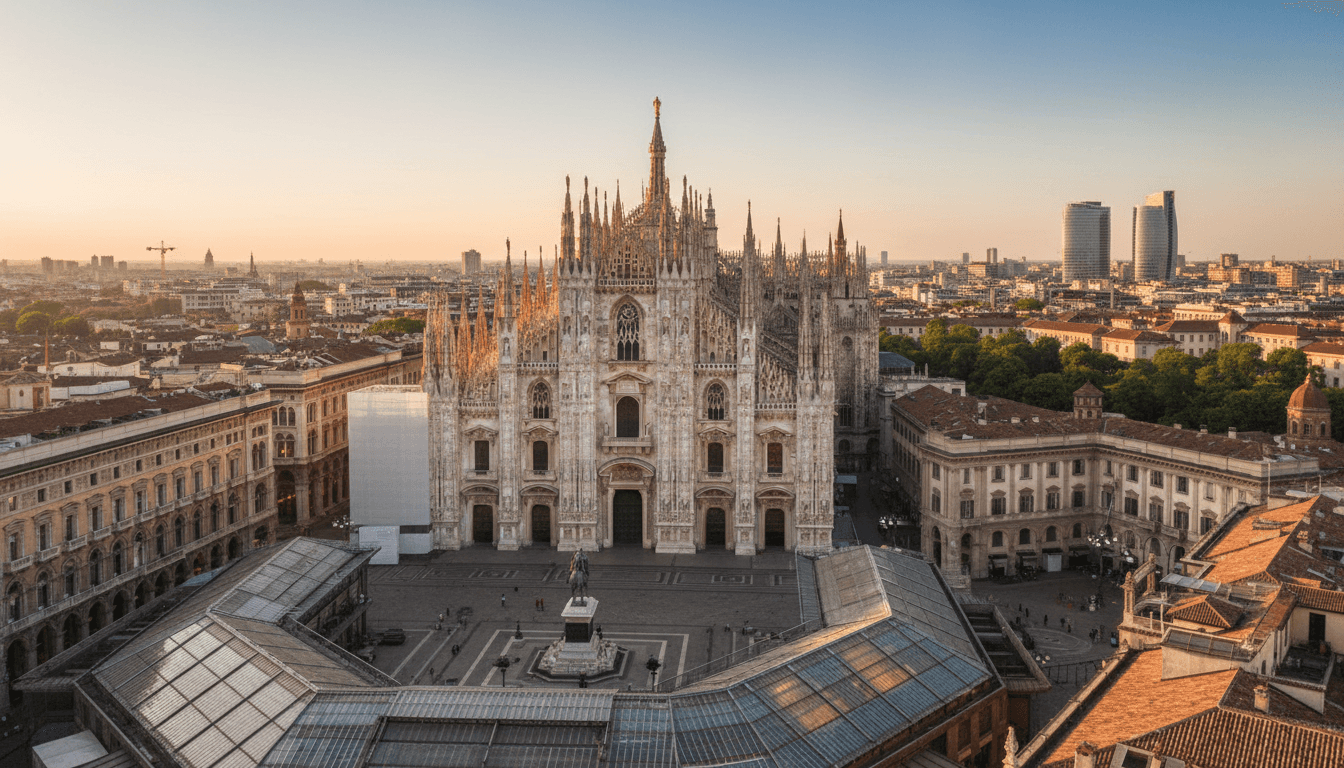
Milan Home Swap Guide: Everything You Need to Know Before Your Italian Adventure

SwappaHome Editorial Team
Home Exchange & Slow Travel Editorial
Planning a Milan home swap? Discover the best neighborhoods, insider tips, and everything you need for an authentic Italian experience without the hotel price tag.
The espresso machine was already loaded when I walked into my first Milan home swap—a third-floor apartment in Navigli with original terrazzo floors and a balcony overlooking the canal. My host, Giulia, had left a handwritten note explaining how to work the moka pot ("the button sticks, just wiggle it") and which bakery downstairs made the best brioche. That was three years ago. I've since returned to Milan twice more through home exchange, and honestly? It's the difference between visiting a city and actually living in one.
Milan isn't the Italy of postcards. It's not rolling Tuscan hills or the crumbling romance of Rome. It's sharper—a city of fashion weeks and financial districts, aperitivo culture and hidden courtyards, where Leonardo's Last Supper sits blocks away from concept stores selling €400 sneakers. And that's exactly why a home swap works so brilliantly here. Hotels feel transactional. An apartment in a real neighborhood? That's where the city opens up.
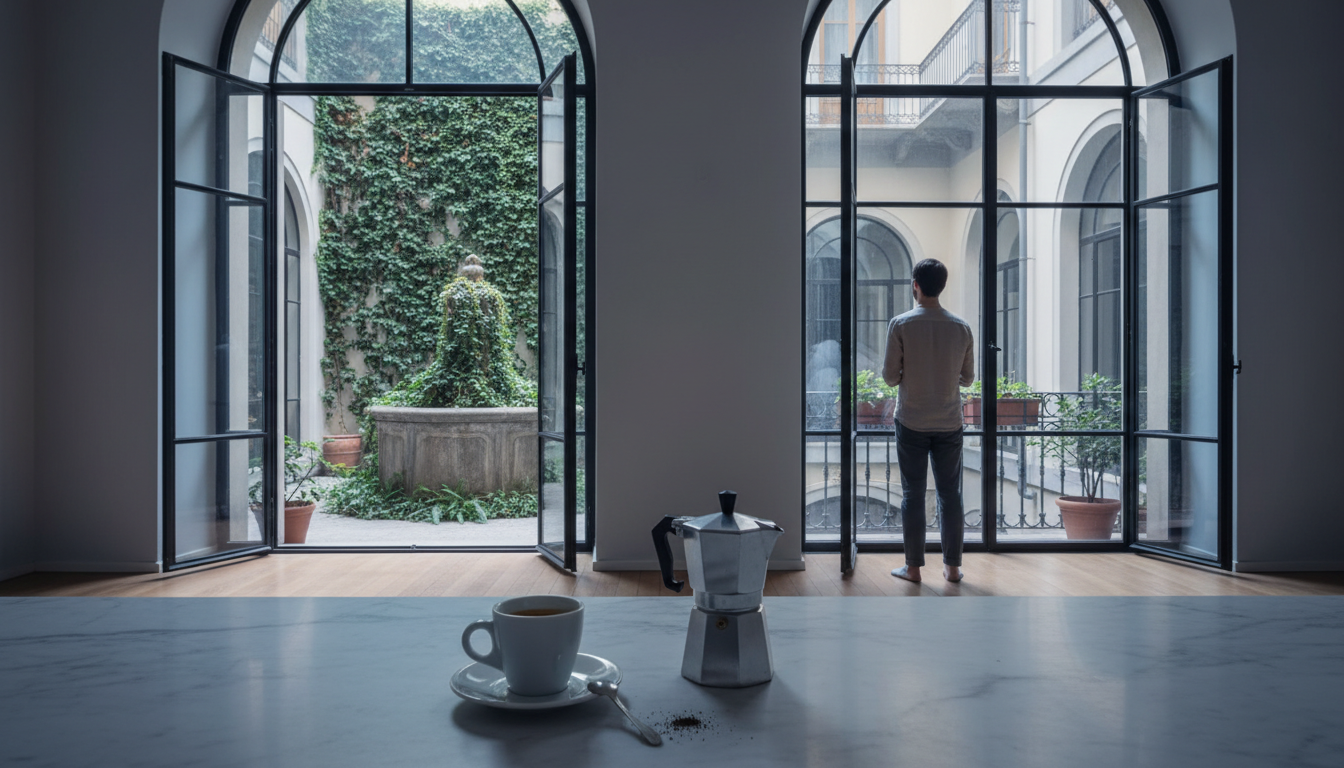 morning light streaming through tall windows of a classic Milanese apartment, espresso cup on marble
Why Milan Home Swap Beats Traditional Accommodation
Let me give you the numbers first, because they're staggering.
A mid-range hotel in central Milan runs €180-280 per night. During Fashion Week or Salone del Mobile, you're looking at €350+ for anything decent. Over a two-week stay, that's potentially €3,500-5,000 just for a room. A home swap through SwappaHome? One credit per night, regardless of the apartment. Those 7 free credits you get when joining? That's 7 nights in Milan—in someone's actual home, with a kitchen, a washing machine, and a neighborhood café that knows your order by day three.
But the real value isn't financial. It's contextual.
When you stay in a Milanese home, you inherit a life for a week. You shop at their corner alimentari. You figure out which tram line runs past your door. You discover that the best gelato isn't in the center—it's at that place three blocks away that your host circled on a hand-drawn map. I've gotten restaurant recommendations from hosts that I'd never have found on TripAdvisor, because they're the spots locals actually go, not the ones optimized for tourist foot traffic.
There's also something about waking up in a home that changes how you travel. You're not rushing to make the hotel breakfast cutoff. You're making coffee in your pajamas, planning the day without that low-grade anxiety of "maximizing" an expensive room. It's slower. It's better.
Best Neighborhoods for Your Milan Home Swap
Milan's neighborhoods have distinct personalities, and choosing the right one can make or break your trip. Here's my honest take on each—based on multiple stays and a lot of walking.
Navigli: Best for First-Time Visitors
This is where I did my first Milan home swap, and I'm still partial to it. The Navigli district centers around two canals—Naviglio Grande and Naviglio Pavese—that were once Milan's commercial lifelines. Today, they're lined with bars, vintage shops, and restaurants that spill onto the towpaths.
The vibe is young and creative without being pretentious. Sunday mornings bring an antique market along the canal. Evenings mean aperitivo at places like Rita & Cocktails or the more traditional Mag Café. Apartments here tend to be in converted industrial buildings or classic Milanese palazzi with internal courtyards.
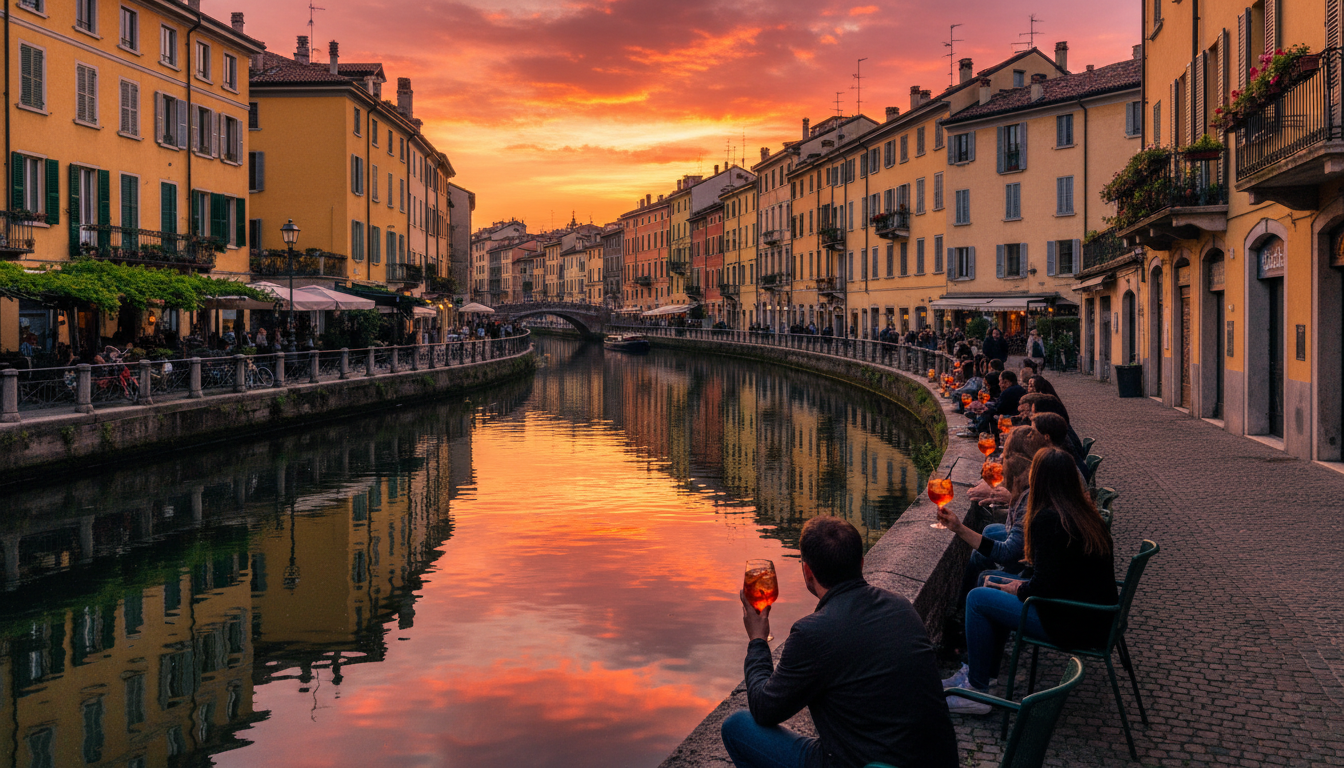 sunset over Naviglio Grande canal, people sitting along the waters edge with Aperol spritzes, colorf
Expect to pay around €4-5 for an espresso and cornetto at local bars, €12-18 for a generous aperitivo spread. The neighborhood connects easily by tram (lines 2 and 14) to the center.
Brera: Best for Art and Design Lovers
Brera is Milan's artistic heart—cobblestone streets, the Pinacoteca di Brera (one of Italy's best art museums), and design studios tucked into every courtyard. It's more polished than Navigli, more expensive, and undeniably charming.
Home swaps here often come with incredible period details: frescoed ceilings, original wooden beams, views over hidden gardens. The trade-off is space—apartments tend to be smaller for the same "value" in credits, but the location is unbeatable for walking to major sights.
I stayed in a tiny Brera studio once, maybe 35 square meters, but it had a juliet balcony overlooking Via Fiori Chiari and I could walk to the Duomo in 12 minutes. Some mornings I'd grab a brioche from Marchesi 1824 (a historic pasticceria now owned by Prada—only in Milan) and eat it in the botanical garden.
Isola: Best for the Coolest Experience
Isola means "island," and this neighborhood was literally cut off from central Milan by railway tracks until recently. That isolation bred a distinct identity—working-class roots, street art, independent boutiques, and some of the city's best contemporary restaurants.
The transformation started with the Bosco Verticale (Vertical Forest) towers, those Instagram-famous buildings covered in trees. Now Isola is Milan's creative hub, home to young professionals, designers, and a thriving aperitivo scene around Piazza Gae Aulenti.
Home swaps in Isola often mean modern apartments in newer buildings—think open-plan living, rooftop terraces, and proximity to Porta Nuova's gleaming skyscrapers. If you want to see Milan's future rather than its past, this is your neighborhood.
Porta Romana: Best for Local Living
This is where Milanese actually live.
Porta Romana is residential, leafy, and blissfully free of tourist crowds. The main drag, Corso di Porta Romana, has all the essentials: bakeries, butchers, cheese shops, and the kind of neighborhood trattorias where the menu is handwritten and changes daily.
I did a two-week home swap here last autumn and fell into a routine I still think about. Morning espresso at a bar where the barista started making my order when she saw me walk in. Afternoon work sessions in the Giardini della Guastalla. Evening passeggiata along Corso XXII Marzo. It's not glamorous. It's better than glamorous—it's real.
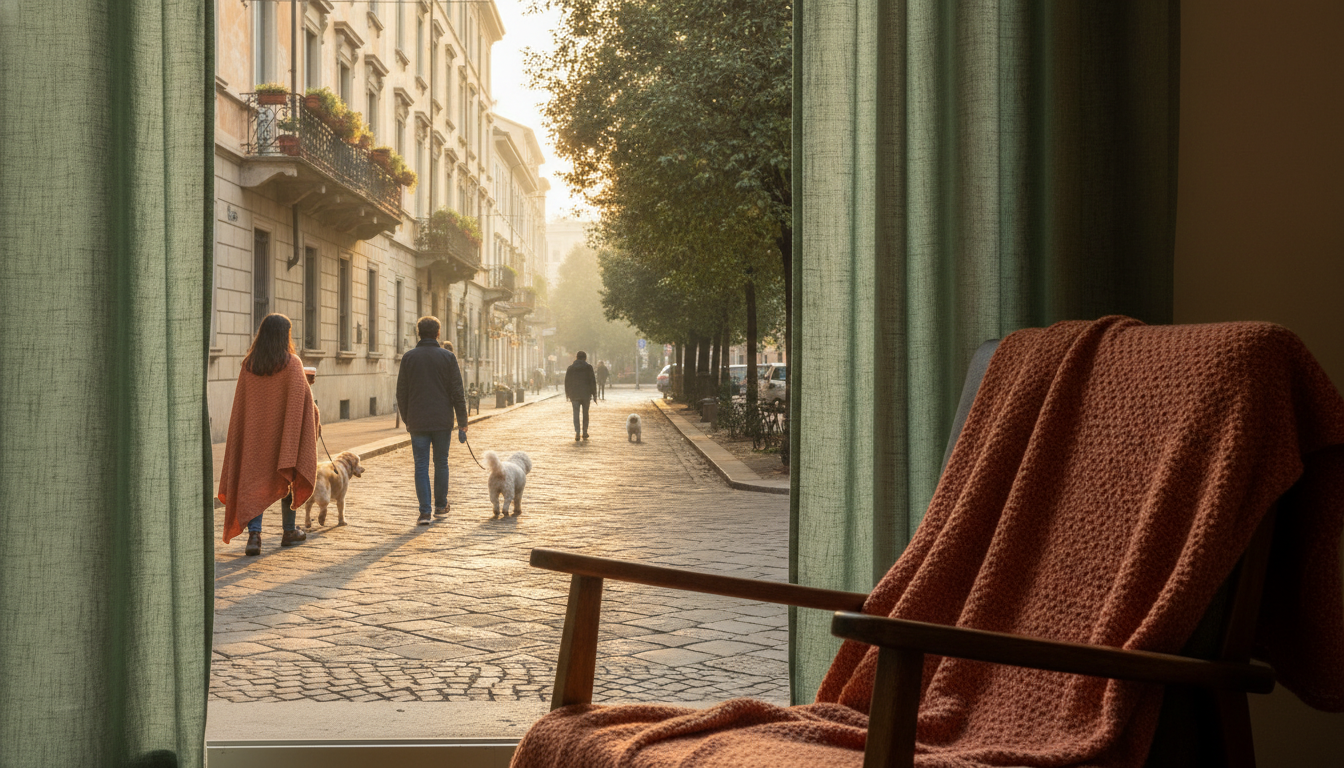 quiet tree-lined street in Porta Romana, morning light, local residents walking dogs, traditional Mi
How to Find the Perfect Milan Home Swap
Finding the right home exchange in Milan takes some strategy. The city has a strong SwappaHome presence—Italians generally love the home swap concept, and Milanese hosts tend to be particularly organized and communicative.
Start Your Search 3-4 Months Ahead
Milan isn't like swapping in a small town where options are limited. There's inventory. But the best apartments—the ones with that perfect combination of location, character, and responsive hosts—get booked. I learned this the hard way when I tried to arrange a Fashion Week swap two months out and found slim pickings.
For major events (Fashion Week in February/September, Salone del Mobile in April, Christmas markets in December), extend that to 5-6 months.
Read Between the Lines of Listings
Milanese hosts tend to undersell their spaces. An apartment described as "simple but functional" might have gorgeous original details they don't think to mention. Look at photos carefully. Check for natural light (Milan's inner courtyards can be dark), actual kitchen equipment (some Italian kitchens are more decorative than functional), proximity to metro or tram lines, and whether there's an elevator—many historic buildings don't have them, and fifth-floor walk-ups get old fast.
Communicate in Detail Before Confirming
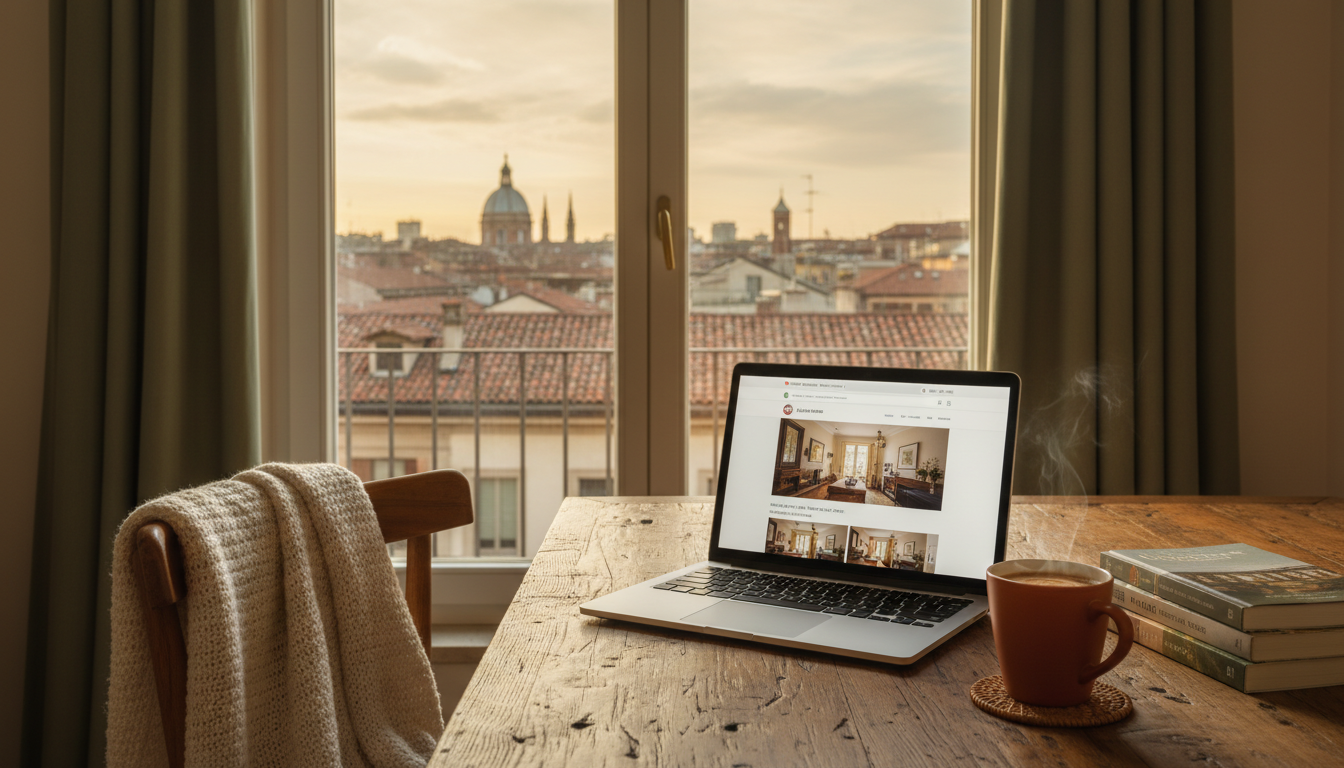
I always send potential hosts a message introducing myself, explaining why I'm visiting Milan, and asking specific questions about the neighborhood. Good ones to try: "What's your favorite local restaurant within walking distance?" or "Is the apartment quiet at night?" (Milan has active nightlife; some streets get loud) or simply "Are there any quirks about the space I should know about?"
The quality of their response tells you a lot. Hosts who answer thoughtfully tend to leave thoughtful welcome notes, stock the fridge with basics, and generally make your stay smoother.
 laptop open on a wooden desk showing a home exchange listing, cup of coffee beside it, window showin
What to Expect from Your Milanese Host
Italian hospitality is legendary, and Milanese hosts often go above and beyond—but in a particular way. They're not effusive or overwhelming. They're practical and generous.
My Navigli host left me a detailed neighborhood guide with her personal ratings of every restaurant within a 10-minute walk. My Brera host arranged for her neighbor to let me in because my flight arrived late. My Porta Romana host stocked the fridge with prosecco, local cheese, and a note saying "Welcome home."
Expect clear communication, well-maintained spaces, and genuine recommendations. Don't expect them to be available 24/7—Milanese people work hard and respect boundaries. If you have questions, ask them before arrival.
The House Rules Conversation
Italian apartments often have specific rules about things like quiet hours (many buildings enforce silence after 10 PM and during afternoon riposo, roughly 1-3 PM), recycling (Milan has strict waste separation—your host will explain the system, and you should follow it religiously), heating (in older buildings, it's centralized and only runs during certain hours or months), and shoes (some hosts prefer you remove them inside, though it's not universal).
None of this is onerous—it's just different from what you might be used to. When in doubt, ask.
Preparing Your Home for Exchange
If you're doing a reciprocal swap or hosting to earn credits for a future Milan trip, your home preparation matters. Milanese travelers tend to be discerning—they appreciate quality and attention to detail.
The Essentials
Make sure your space has clean, quality linens (Italians notice thread count), a well-equipped kitchen (at minimum: moka pot or coffee maker, sharp knives, decent cookware), clear WiFi instructions, basic toiletries for the first day, and a welcome guide to your neighborhood.
The Extras That Make a Difference
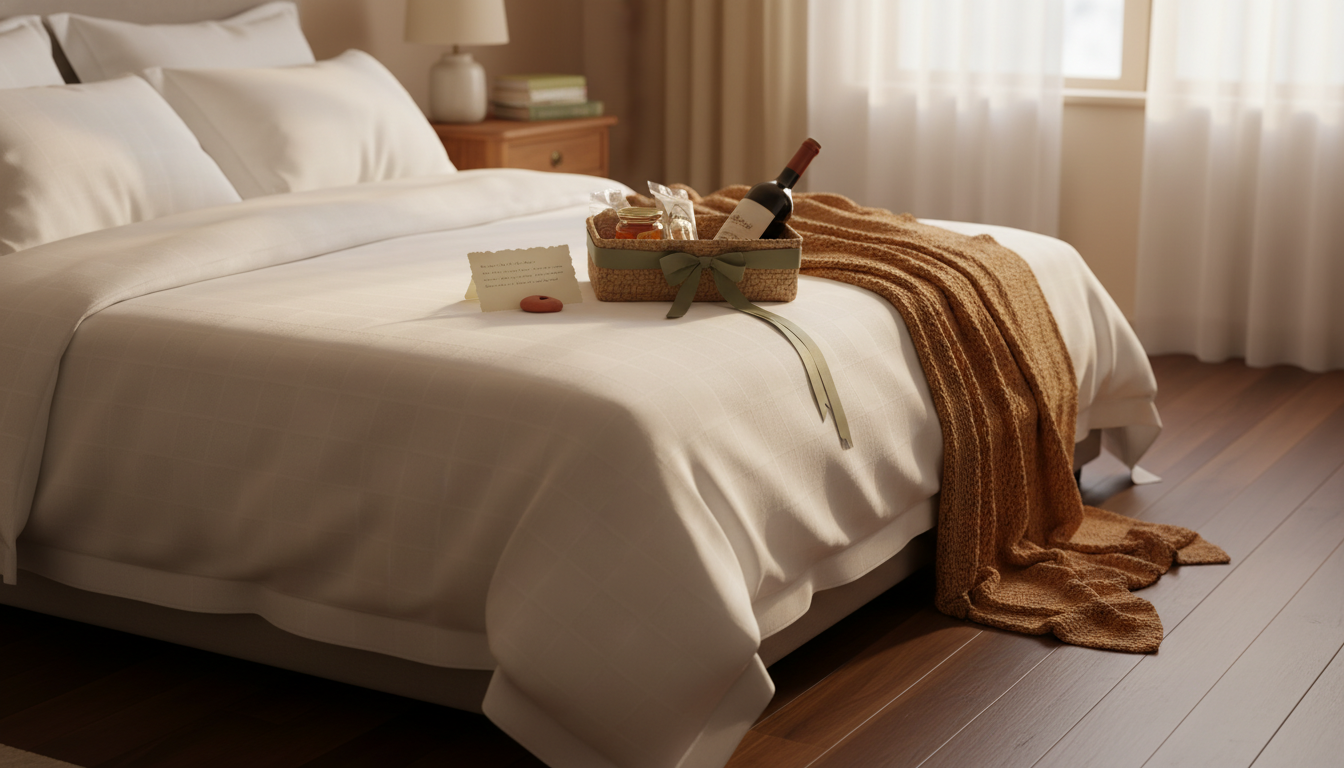
I always leave my guests a bottle of local wine, coffee and tea, recommendations for my favorite spots (with a Google Maps list they can save), and my phone number for emergencies. These small touches get mentioned in reviews constantly. They're also just... nice. Home swapping works because people treat each other's spaces with care. That starts with how you prepare your own.
 neatly made bed with white linens, small welcome basket with wine and local treats, handwritten note
Practical Tips for Your Milan Home Swap Trip
Getting Around
Milan's public transport is excellent. The metro has four lines (M1 red, M2 green, M3 yellow, M5 lilac) covering most areas you'll want to visit. Trams are charming and efficient, especially the historic orange ones. A single ticket costs €2.20 and lasts 90 minutes; a 24-hour pass is €7.60.
From Malpensa Airport, the Malpensa Express train runs to Cadorna station (€13, 50 minutes). From Linate, bus 73 connects to the center (€2.20, 25 minutes). If you're arriving late, arrange for your host to leave keys with a neighbor or in a lockbox—taxis from Malpensa run €95-100 fixed rate.
Eating Like a Local
Milanese food is different from what most people think of as "Italian cuisine." It's richer, more Northern European influenced. You'll want to try risotto alla Milanese (saffron-infused, creamy, golden), cotoletta alla Milanese (the original schnitzel, bone-in and massive), ossobuco (braised veal shank, often served with risotto), and panettone (the Christmas bread, though good bakeries make it year-round).
For aperitivo, expect to pay €10-15 for a drink that comes with a generous spread of snacks—sometimes enough for dinner. This is a Milan institution. Embrace it.
Day Trips Worth Taking
One advantage of a home swap over a hotel: you have a base. You can leave luggage, do laundry, and take day trips without the hassle of checking out.
From Milan, consider Lake Como (1 hour by train to Varenna or Como town—go midweek to avoid crowds), Bergamo (50 minutes by train, with a stunning Città Alta), Turin (1 hour by high-speed train, underrated with incredible food), or Verona (1.5 hours by train—yes, it's touristy, but yes, it's worth it).
Weather and Packing
Milan has actual seasons. Summer (June-August) is hot and humid, often 30-35°C. Many locals leave in August—the city empties. Winter (December-February) is cold and foggy, sometimes dipping below freezing. Spring and fall are ideal: mild temperatures, fewer tourists, and the city at its most livable.
Pack layers regardless of season. Milan is a walking city, so comfortable shoes are non-negotiable—but make them stylish comfortable shoes. This is the fashion capital, after all. You'll feel underdressed in athletic wear.
Making the Most of Your Milan Home Swap Experience
Here's what I've learned after multiple Milan exchanges: the magic isn't in the major sights.
The Duomo is magnificent, yes. The Last Supper will move you (book tickets months ahead—I mean it). The Pinacoteca di Brera deserves a full morning. But the memories I carry are smaller. The elderly signora in Porta Romana who corrected my Italian pronunciation with such gentle patience. The aperitivo spot in Isola where the bartender remembered my order on my second visit. The morning I found a tiny courtyard garden in Brera that isn't in any guidebook, just because I took a wrong turn.
A home swap gives you permission to wander without agenda. You're not trying to justify an expensive hotel room by cramming in attractions. You're living somewhere, temporarily, and that changes everything about how you experience a place.
My advice? Plan less than you think you should. Leave mornings open for slow coffee and people-watching. Let your host's recommendations guide you more than TripAdvisor. Get a little lost in neighborhoods that aren't on tourist maps.
Milan rewards that kind of travel. It's not a city that gives itself up easily—it's too sophisticated for that, too busy being a real place where real people live and work. But when you approach it as a temporary resident rather than a visitor, it opens up in ways that surprise you.
If you're ready to experience Milan this way, SwappaHome has a solid community of Milanese hosts. Browse the listings, reach out to a few that catch your eye, and start the conversation. Your future self—the one drinking espresso on a balcony overlooking a canal you never knew existed—will thank you.
Frequently Asked Questions
Is a Milan home swap safe for first-time exchangers?
Absolutely. Milan has an active home swap community with experienced hosts who understand the exchange process. SwappaHome's review system lets you see feedback from previous guests, and identity verification adds another layer of trust. I'd recommend starting with hosts who have multiple positive reviews and responsive communication. Consider getting your own travel insurance for extra peace of mind—it's a smart move for any international trip.
How much can I save with a Milan home swap versus hotels?
The savings are substantial. Mid-range Milan hotels average €180-280 per night, while home swaps cost one credit per night regardless of location or apartment size. For a two-week stay, you could save €2,500-4,000 compared to hotel rates. During peak events like Fashion Week or Salone del Mobile, when hotel prices spike to €350+, the savings are even more dramatic.
What's the best neighborhood for a Milan home swap with kids?
Porta Romana and Città Studi are excellent family-friendly choices. Both neighborhoods have parks, playgrounds, and a residential feel with less nightlife noise. Porta Romana offers easy access to Giardini della Guastalla, while Città Studi is near the larger Parco Lambro. Look for apartments with washing machines and full kitchens—essentials for traveling with children.
When should I book my Milan home swap?
Start searching 3-4 months before your trip for the best selection. For major events—Fashion Week (February/September), Salone del Mobile (April), or Christmas markets (December)—begin 5-6 months ahead. Popular apartments with great reviews and central locations book quickly, especially during peak tourist season from April through October.
Do I need to speak Italian for a Milan home swap?
Not necessarily, but basic phrases help enormously. Most Milanese hosts on SwappaHome speak English, and communication through the platform works smoothly. In neighborhood shops, local trattorias, and daily interactions though, some Italian goes a long way. Download Google Translate, learn "buongiorno" and "grazie," and don't be afraid to try—Italians appreciate the effort even when your pronunciation is terrible.

Published by
SwappaHome
SwappaHome Editorial Team
Home Exchange & Slow Travel Editorial
The SwappaHome Editorial Team brings together travel research, home-exchange community insights, and platform data to produce practical guides for first-time and experienced home swappers. Every article cites real platforms, current market rates, and verifiable city-level facts so readers can make informed decisions without guessing.
Ready to try home swapping?
Join SwappaHome and start traveling by exchanging homes. Get 7 free credits when you sign up!
Related articles

Bachelor and Bachelorette Parties in Singapore: The Complete Home Swap Group Guide for 2026
Planning a bachelor or bachelorette party in Singapore? Discover how home swapping lets groups of 6-12 stay together in luxury condos, saving thousands while partying in Marina Bay.

Cycling in Lisbon: 7 Home Swap Bike Tour Itineraries for Every Rider
Discover the best cycling routes in Lisbon with these home swap bike tour itineraries—from waterfront paths to hilltop adventures, all starting from your borrowed home.

Graduation Trip to Barcelona: How Home Swapping Gives New Graduates the Ultimate Celebration
Planning a graduation trip to Barcelona? Discover how home swapping lets new graduates explore Spain's most vibrant city without the hostel crowds or hotel costs.