
Packing Guide for Home Swap Travelers: Everything You Actually Need (and What to Leave Behind)

SwappaHome Editorial Team
Home Exchange & Slow Travel Editorial
Master the art of packing for home exchanges with this complete guide. Learn what to bring, what your host provides, and how to pack light for any destination.
I once showed up to a home swap in Copenhagen with three sweaters, two jackets, a wool scarf—and discovered my host had left me a closet full of cozy Danish knitwear with a note saying "help yourself." Meanwhile, I'd forgotten a universal power adapter and spent my first morning hunting for one in a city where everything closes by 5 PM.
That trip taught me something crucial about packing for home exchanges: it's a completely different game than packing for hotels. This is everything I wish someone had told me before my first exchange, distilled from seven years and 40+ swaps across 25 countries.
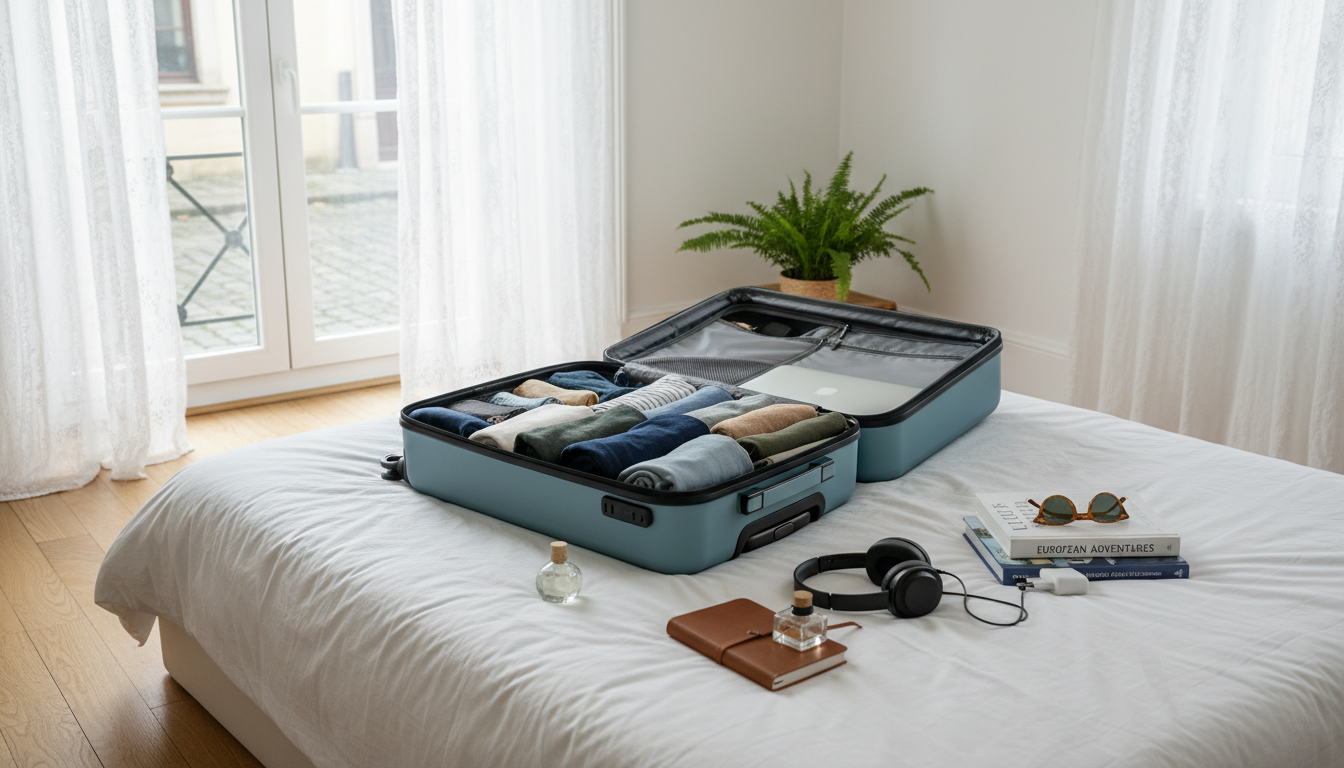 open suitcase on a bed in a bright European apartment, half-packed with neatly rolled clothes, a lap
Why Packing for Home Swaps Is Different Than Hotel Travel
Here's what nobody tells you when you start home swapping: you're not packing for a destination. You're packing for someone's life.
Think about it. Hotels require you to bring everything—toiletries, entertainment, maybe even a travel kettle if you're that person. But someone's actual home? Full kitchen. Washing machine. Probably a Netflix subscription. Definitely shampoo. The whole equation shifts.
I used to overpack dramatically. My first home swap in Lisbon, I brought enough clothes for a month even though I was staying two weeks. By day three, I'd done laundry in my host's washer-dryer and realized I could have packed half as much. By day seven, I was wearing my host's beach cover-up to the local market because she'd said "make yourself at home" and I finally understood what that meant.
The philosophy comes down to this: bring what makes you YOU, leave behind what makes a house a HOME. Your hosts have the home part covered.
The Essential Packing List for Home Swap Travelers
After years of refining my approach, I've landed on a system that works whether I'm swapping into a Manhattan studio or a farmhouse in Provence.
Tech and Connectivity Essentials
This is where I see people mess up most often—including past me, shivering in that Copenhagen apartment with a dead phone.
A universal power adapter is non-negotiable. I use the Epicka Universal Adapter (around $25 on Amazon) because it handles US, EU, UK, and Australian outlets plus has USB ports. Your host's home will have outlets. They just won't be YOUR outlets.
A portable power bank matters too. Even when you have access to a full kitchen and living room, you'll spend days out exploring. I carry an Anker 10000mAh—small enough to forget it's in my bag, powerful enough for two full phone charges.
Here's a pro tip that's saved many a rainy evening: bring your own streaming device. A Fire Stick or Chromecast loaded with your accounts. Your host might have smart TV, but logging into your Netflix on their device is awkward for everyone. Pop in your own device, and you're watching your shows without the digital footprint drama.
And yes, bring your laptop or tablet. Obvious, but worth mentioning because home swaps often mean longer stays. You'll want your own device for trip planning, staying connected, or working remotely. Your host's computer is off-limits unless explicitly offered.
 flat lay of travel tech essentials on a wooden desk - universal adapter, power bank, earbuds, kindle
Clothing Strategy for Home Exchange Trips
Forget the "outfit for every day" mentality. Home swaps come with washing machines—use them.
My packing formula for a two-week swap is simple. For tops, I bring 4-5 pieces that mix and match—two nice enough for dinners out, two casual for exploring, one that I don't mind getting sweaty. All in colors that work together because I learned the hard way that bringing statement pieces in clashing colors means half your wardrobe sits unworn.
For bottoms, three pairs maximum. One jeans or pants for cooler evenings, one shorts or skirt for warm days, one that could pass at a nicer restaurant. I've done three-week swaps with this exact formula.
One layer piece—a cardigan, light jacket, or oversized scarf that works on planes, in over-air-conditioned museums, and on breezy evenings. Mine is a black cashmere-blend wrap that's been to 20 countries.
Sleepwear and loungewear—people forget this, but you're staying in someone's home. You'll want something comfortable for padding around the kitchen at midnight or reading on their couch. I bring lightweight joggers and a soft tee. Nothing I'd be embarrassed to answer the door in.
Shoes? Two pairs max. Comfortable walking shoes and one dressier option. I see people bring four pairs of shoes for a week-long trip and I genuinely don't understand. Your feet don't change that much.
Toiletries: The Minimalist Approach
This is where home swapping really shines for light packers.
Your host will have shampoo, conditioner, body wash, hand soap, toilet paper, tissues, basic first aid supplies. Most have hair dryers. Many have straighteners or curling irons. Almost all have sunscreen somewhere.
What you should bring: your specific skincare (I'm not using someone else's retinol), prescription medications, preferred deodorant, makeup if you wear it, contact solution if relevant, and any hair products you're particular about.
I decant everything into 2oz containers even for long trips because I know I can buy more locally if needed, and I'd rather have room in my bag for souvenirs than a full-size bottle of moisturizer.
One thing I always pack: a small microfiber towel. Not because your host won't provide towels—they will—but for beach days, unexpected swimming opportunities, or that time in Barcelona when I spilled sangria all over myself at La Boqueria.
 bathroom counter in a stylish European home with neatly arranged travel-size toiletries next to the
What to Leave Behind: The Home Swap Advantage
Honestly, the best part of packing for home exchanges is what you DON'T need to bring.
Kitchen supplies? Your host has plates, cups, utensils, pots, pans, a coffee maker, probably a French press, possibly an espresso machine. I've never done a swap where I wished I'd brought my own mug. Leave the travel kettle at home.
Towels and linens are always provided. This isn't a hostel situation.
Entertainment fills their shelves—books, board games, gardens waiting to be explored. I used to travel with three paperbacks; now I bring my Kindle loaded up and usually end up reading my host's collection instead.
Cleaning supplies are there too, and you'll need them for the courtesy clean before you leave. Vacuum, mop, dish soap, laundry detergent—all waiting.
And guidebooks? Your host IS your guidebook. Every swap I've done, my host has left recommendations—their favorite coffee shop, the bakery with the best croissants, which museum to skip. These local tips beat any Lonely Planet.
Packing Tips for Different Home Swap Scenarios
Not all swaps are created equal. Here's how I adjust based on the situation.
Urban Apartment Swaps
City swaps mean walking. Lots of walking. My record is 28,000 steps in a single day in Tokyo.
Prioritize broken-in comfortable shoes (blisters in a foreign city are miserable), a crossbody bag that zips securely, layers for transitioning between hot streets and air-conditioned museums. Consider a packable rain jacket—cities don't stop for weather, and you won't want to either. I use a Patagonia Torrentshell that squishes into its own pocket.
Beach and Coastal Home Exchanges
Coastal swaps mean salt, sand, and a more relaxed vibe.
Prioritize quick-dry fabrics, a good sun hat that packs flat, reef-safe sunscreen (many hosts in beach towns specifically request this), and that microfiber towel I mentioned. Consider snorkel gear if you're particular about fit—many coastal homes have gear, but masks are personal. I bring my own prescription snorkel mask because I'm blind as a bat underwater otherwise.
Rural and Countryside Retreats
That converted barn in Tuscany? Different packing entirely.
Prioritize layers (countryside temperatures swing dramatically), sturdy shoes for uneven terrain, a flashlight or headlamp (rural areas get DARK), and insect repellent. Consider bringing your own coffee if you're picky—small village shops might not stock your preferred roast. Also, a good book. WiFi can be spotty, and that's part of the charm.
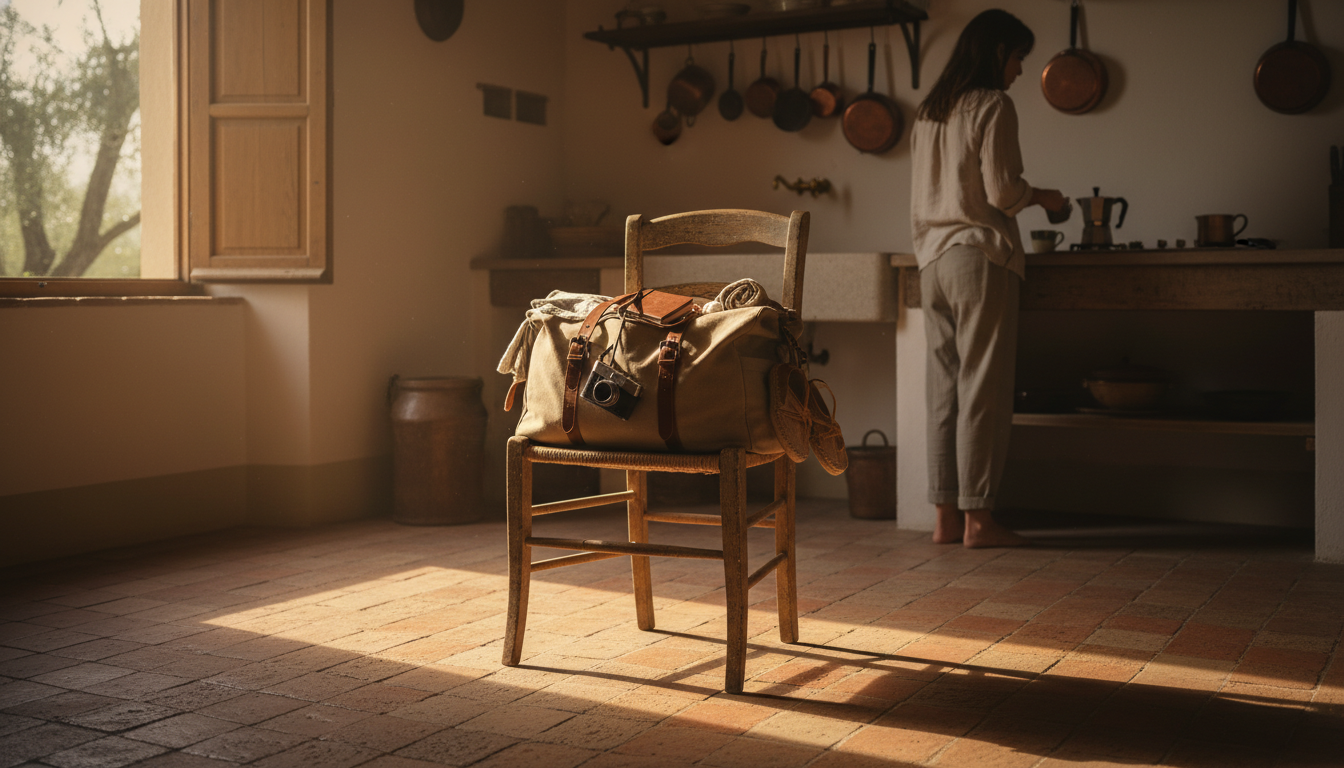 rustic Italian farmhouse kitchen with terracotta floors, a packed canvas bag on an antique chair, mo
Family Home Swaps with Kids
Traveling with little ones changes everything.
Prioritize comfort items from home (that one stuffed animal, the specific sippy cup), any specialty foods your kids won't budge on, car seats if needed (though many hosts with kids offer to leave theirs), and a small first-aid kit with children's medications.
Ask your host what kid gear they have. Most families leave high chairs, strollers, toys, even cribs. I've seen swaps where hosts left their kids' bicycles with a note saying "please use!" Communication before you pack saves suitcase space.
The Pre-Swap Communication That Shapes Your Packing
Here's where home swapping gets collaborative—and where you can really optimize your packing.
About two weeks before my swap, I send my host a message through SwappaHome asking a few key questions. What's the weather actually like right now? (Forecasts lie. Locals don't.) Is there anything you'd recommend I bring that visitors often forget? Any gear I could borrow—bikes, beach chairs, hiking poles? What's your WiFi situation like?
The answers shape my final packing. My host in Amsterdam told me to bring rain gear even though the forecast showed sun—she was right, it rained four out of seven days. My host in Bali mentioned her yoga mats were available, saving me from packing mine. My host in rural Scotland warned me the nearest shop was 20 minutes away, so I packed more snacks than usual.
This communication is also when I mention any special needs. Dietary restrictions, allergies, mobility considerations—your host wants you comfortable in their space. They'll often go out of their way to accommodate if they know in advance.
What to Pack FOR Your Host
This might be the most important section, and it has nothing to do with your own comfort.
Leaving a small gift for your host is home swap etiquette. Nothing extravagant—just a gesture of appreciation for sharing their space.
My go-to gifts: a local specialty from home (I bring San Francisco sourdough chocolate or Ghirardelli squares—something that says "this is where I'm from" without being heavy or fragile), a nice consumable like a good bottle of wine or fancy olive oil or specialty coffee beans, or a thoughtful replacement if you use the last of something.
I pack these gifts in my carry-on, wrapped simply. It takes maybe 500 grams of luggage space and transforms the swap from transaction to connection.
 small gift arrangement on a kitchen counter - a bottle of California wine, artisan chocolates, and a
The Packing Checklist I Actually Use
Here's the master checklist I've refined over seven years of home swapping. I keep this in my phone's notes and check it before every trip.
- Passport and ID (obviously)
- Universal power adapter
- Power bank and charging cables
- Streaming device with accounts logged in
- Phone with offline maps downloaded
- 4-5 tops, 3 bottoms, 1 layer piece
- Comfortable walking shoes and one dressy option
- Sleepwear and loungewear
- Underwear for 5 days (laundry exists)
- Swimsuit if relevant
- Sunglasses and sun hat
- Minimal toiletries in travel containers
- Prescription medications with copies of prescriptions
- Microfiber towel
- Reusable water bottle
- Packable day bag
- Kindle or book
- Small gift for host
- Snacks for travel day
- Copy of host's contact info and address (offline)
- Travel insurance documents
That's it. Everything else, your host provides.
Packing Light for Extended Home Swaps
One of the beautiful things about home exchanges is how they enable longer stays. A week in a hotel gets expensive; a month in someone's home costs the same credits as a week.
But packing for a month? Same suitcase.
Seriously. I did a six-week swap in Portugal with a carry-on and a personal item. The secret is trusting the washing machine and accepting that you'll wear the same outfits on rotation. Nobody in Lisbon was tracking my wardrobe.
For extended stays, I add a few more basics—extra underwear and socks, one more casual top. Some comfort items like my own pillow (controversial, I know, but I sleep better) and a small photo of my cat for the nightstand. If I'm working remotely, my laptop stand and external keyboard because ergonomics matter over weeks.
But I don't add proportionally. A month doesn't mean four times the clothes. It means the same clothes, washed four times.
Common Packing Mistakes Home Swap Travelers Make
I've made all of these. Learn from my failures.
Overpacking "just in case" clothes tops the list. That formal dress for a fancy dinner that never happens. Those hiking boots for a hike you never take. Pack for the trip you're actually planning, not the fantasy version.
Forgetting the adapter—I mentioned Copenhagen. I'll mention it again. Don't be me.
Bringing full-size toiletries wastes precious space. Your host has shampoo. The local pharmacy has everything else. Those 12oz bottles are dead weight.
Not checking luggage restrictions catches people off guard. Budget airlines in Europe have strict carry-on limits. Ryanair will absolutely charge you €50 at the gate for a bag that's 1cm too tall. Measure before you leave.
Packing before researching the home is another trap. I once brought all my own beach towels to a swap where my host had a closet full of them plus beach chairs, umbrellas, and a cooler. Ask first, pack second.
And forgetting host gifts? Awkward. Don't do it.
The Night-Before Packing Ritual
I have a system that's saved me from forgotten chargers and last-minute panics.
The night before departure, everything goes on the bed. Not in the suitcase—on the bed. I look at it all together and ask: "What's missing? What's unnecessary?"
Then I pack in order: heavy items at the bottom (shoes, toiletry bag), clothes rolled tightly in the middle, electronics and fragile items on top. Anything I need during travel goes in my personal item.
I leave one outfit out for travel day—comfortable layers, slip-on shoes for security, nothing I'd be devastated to spill coffee on.
And I always, always do a final sweep of the house in the morning. Chargers plugged into walls. Medications in medicine cabinets. Passports in "safe places" that become forgotten places.
Your Home Swap Packing Philosophy
After 40+ swaps, my philosophy comes down to this: pack like you're visiting a friend who has a fully stocked home and wants you to be comfortable.
Because that's exactly what you're doing.
Your host isn't running a hotel. They're sharing their space, their neighborhood, their life. They've left you towels and coffee and probably a handwritten note about the finicky shower handle. They trust you with their home.
Pack light enough to be a gracious guest, thoughtful enough to leave a small gift, and practical enough to actually enjoy the trip without luggage anxiety.
And if you forget something? You're staying in a real neighborhood with real shops. You'll figure it out. That's part of the adventure.
The best trip I ever took, I forgot my phone charger and had to buy one at a tiny electronics shop in Rome's Trastevere neighborhood. The owner spoke no English, I spoke no Italian, and we communicated entirely through hand gestures and laughter. He threw in a free adapter when he realized I was American.
Some of the best travel moments come from the things you forgot to pack.
Now go check if your passport's expired. I'll wait.
Ready to put this packing guide to use? SwappaHome connects you with home exchange hosts worldwide—each one ready to share their space, their local tips, and yes, their washing machine. Start with 7 free credits and see where lighter luggage can take you.
Frequently Asked Questions
What should I pack for a home swap that I wouldn't need for a hotel?
The main addition is a small gift for your host—local treats from your hometown, nice wine, or artisan goods. You'll also want a streaming device with your accounts and a universal power adapter. Otherwise, you'll actually pack LESS than hotel travel since hosts provide towels, toiletries, kitchen supplies, and entertainment.
How many clothes should I bring for a two-week home exchange?
Pack 4-5 tops, 3 bottoms, one layer piece, and two pairs of shoes. This sounds minimal, but home swaps include washing machines—plan to do laundry once or twice. I've done three-week swaps with this exact formula. Focus on versatile pieces that mix and match rather than complete outfits.
Do I need to bring towels and linens for a home swap?
No—hosts always provide towels and linens as part of the exchange. This is standard home swap etiquette. The only exception: bring a small microfiber towel for beach days or unexpected swimming opportunities. It packs tiny and dries fast, making it useful beyond what your host provides.
What toiletries do home swap hosts typically provide?
Most hosts provide shampoo, conditioner, body wash, hand soap, toilet paper, tissues, and basic first aid supplies. Many have hair dryers and styling tools. Bring only your specific skincare, prescription medications, preferred deodorant, makeup, and any products you're particular about. You can buy anything else locally.
Should I bring gifts for my home swap host?
Yes—it's considered good home swap etiquette and transforms the exchange from transaction to connection. Bring something small that represents your hometown: local specialty foods, artisan chocolates, quality wine, or nice coffee. Pack it in your carry-on and leave it with a thank-you note. Budget around $15-25 USD.

Published by
SwappaHome
SwappaHome Editorial Team
Home Exchange & Slow Travel Editorial
The SwappaHome Editorial Team brings together travel research, home-exchange community insights, and platform data to produce practical guides for first-time and experienced home swappers. Every article cites real platforms, current market rates, and verifiable city-level facts so readers can make informed decisions without guessing.
Ready to try home swapping?
Join SwappaHome and start traveling by exchanging homes. Get 7 free credits when you sign up!
Related articles

Bachelor and Bachelorette Parties in Singapore: The Complete Home Swap Group Guide for 2026
Planning a bachelor or bachelorette party in Singapore? Discover how home swapping lets groups of 6-12 stay together in luxury condos, saving thousands while partying in Marina Bay.

Cycling in Lisbon: 7 Home Swap Bike Tour Itineraries for Every Rider
Discover the best cycling routes in Lisbon with these home swap bike tour itineraries—from waterfront paths to hilltop adventures, all starting from your borrowed home.

Graduation Trip to Barcelona: How Home Swapping Gives New Graduates the Ultimate Celebration
Planning a graduation trip to Barcelona? Discover how home swapping lets new graduates explore Spain's most vibrant city without the hostel crowds or hotel costs.