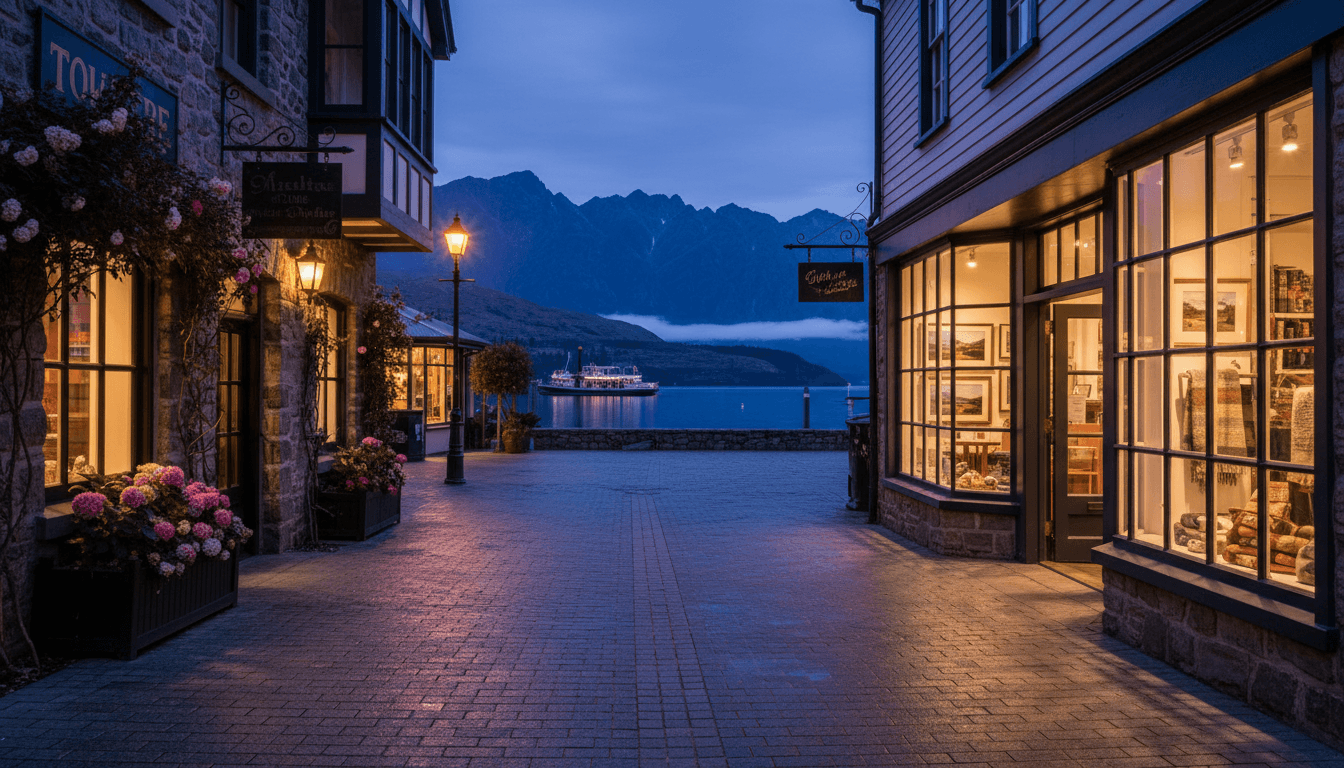
Queenstown for Retirees: Your Complete Guide to Relaxed Home Exchange Experiences

SwappaHome Editorial Team
Home Exchange & Slow Travel Editorial
Discover why Queenstown is perfect for retired home swappers seeking adventure at their own pace—from lakeside mornings to vineyard afternoons.
I wasn't prepared for the light.
That's what I remember most from my first morning in Queenstown—waking up in a cozy lakeside cottage I'd swapped into, pulling back the curtains, and just... standing there. The Remarkables mountain range was doing this thing where the sunrise painted them pink and gold, and Lake Wakatipu was so still it looked like someone had Photoshopped a mirror into the landscape. My host, a retired nurse named Margaret, had left me a note: "Coffee's in the pantry. Take your time. That view isn't going anywhere."
She was right. And honestly? That sentiment captures everything I've come to love about Queenstown for retirees seeking home exchange experiences. This isn't a destination that demands you rush. It rewards the slow travelers, the morning coffee lingerers, the "let's see where today takes us" crowd.
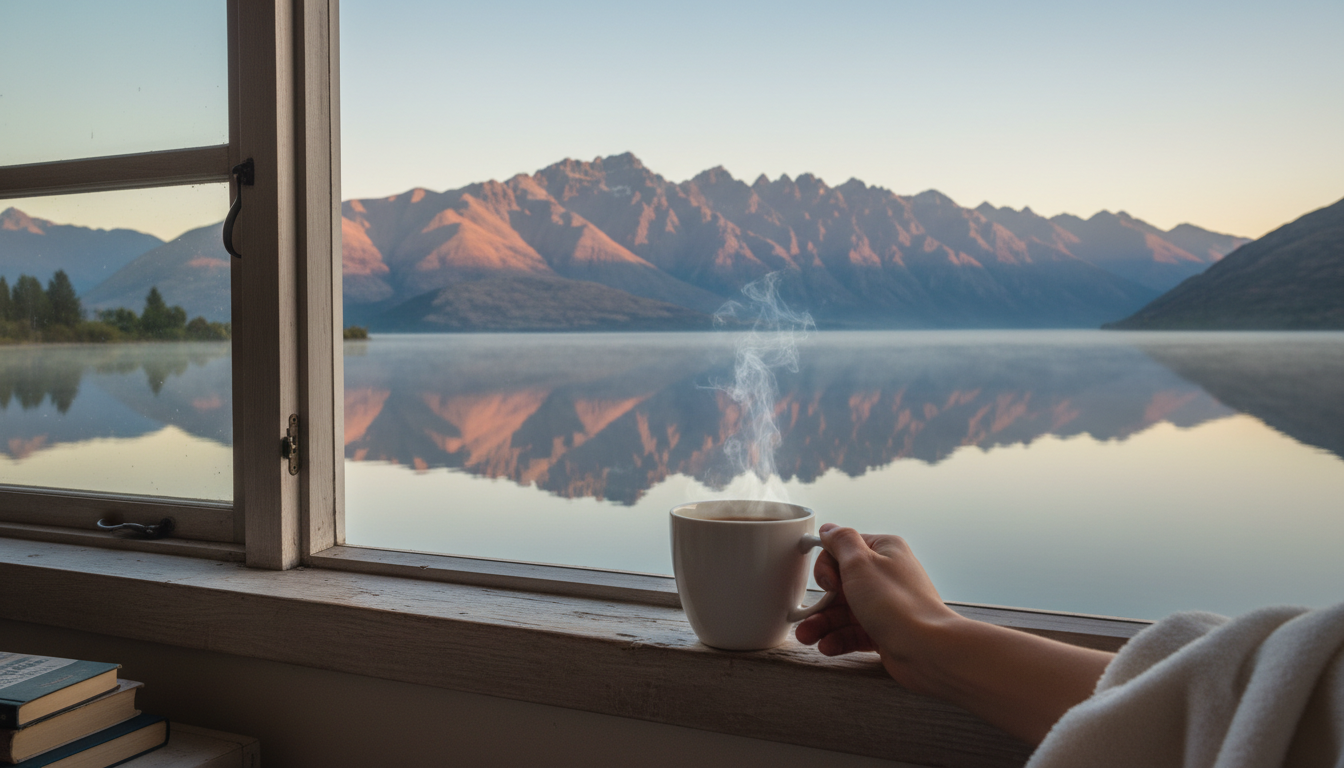 Early morning view of Lake Wakatipu from a cottage window, steam rising from a coffee cup in the for
Why Queenstown Home Exchange Appeals to Retired Travelers
Let me be real with you: Queenstown has a reputation as New Zealand's adventure capital, and that can be intimidating if your bungee-jumping days are behind you. Or never existed—no judgment, mine certainly didn't.
But here's what the tourism brochures don't tell you. Queenstown for retirees is an entirely different experience than Queenstown for twenty-somethings.
The town has matured beautifully. Yes, there are still adrenaline junkies hurling themselves off bridges and out of planes. But parallel to that world exists a Queenstown built around vineyards, scenic cruises, world-class golf courses, and some of the most spectacular walking trails you'll find anywhere on Earth. And the best part? You can experience all of it at whatever pace feels right.
Home exchange makes this even better. Instead of the sterile efficiency of a hotel room, you're waking up in someone's actual home—with their comfortable armchair, their well-stocked kitchen, their local recommendations scribbled on a notepad. Margaret had circled her favorite café on a hand-drawn map (Vudu Café, if you're wondering—their eggs benedict is NZD $26 / about $16 USD and worth every cent).
There's something about staying in a real home that naturally slows you down. You're not racing to get your money's worth from an expensive hotel. You're just... living. Making breakfast. Reading on the deck. Walking to the farmers market because your host mentioned it's on Saturday mornings.
Best Queenstown Neighborhoods for Retired Home Swappers
Not all of Queenstown is created equal when you're looking for a relaxed home exchange experience. Here's where I'd point you, based on my own swaps and conversations with fellow SwappaHome members who've done the same.
Fernhill and Sunshine Bay
This is where I stayed, and I'd go back in a heartbeat.
Fernhill sits above the town center—about a 15-minute walk down (easier) or a short drive up (necessary if your knees are anything like mine). The homes here tend to be established, with actual gardens and mountain views that make you forget whatever you were stressed about back home.
Sunshine Bay, just a bit further along, is even quieter. You're right on the lake, with walking trails that meander along the water's edge. The vibe is residential, peaceful—the kind of place where neighbors wave as they walk their dogs.
Expect homes in this area to range from cozy 2-bedroom cottages to larger family homes. Many retired New Zealanders live here, which means the home exchange options tend to be comfortable, well-maintained, and stocked with things like proper coffee makers and extra blankets.
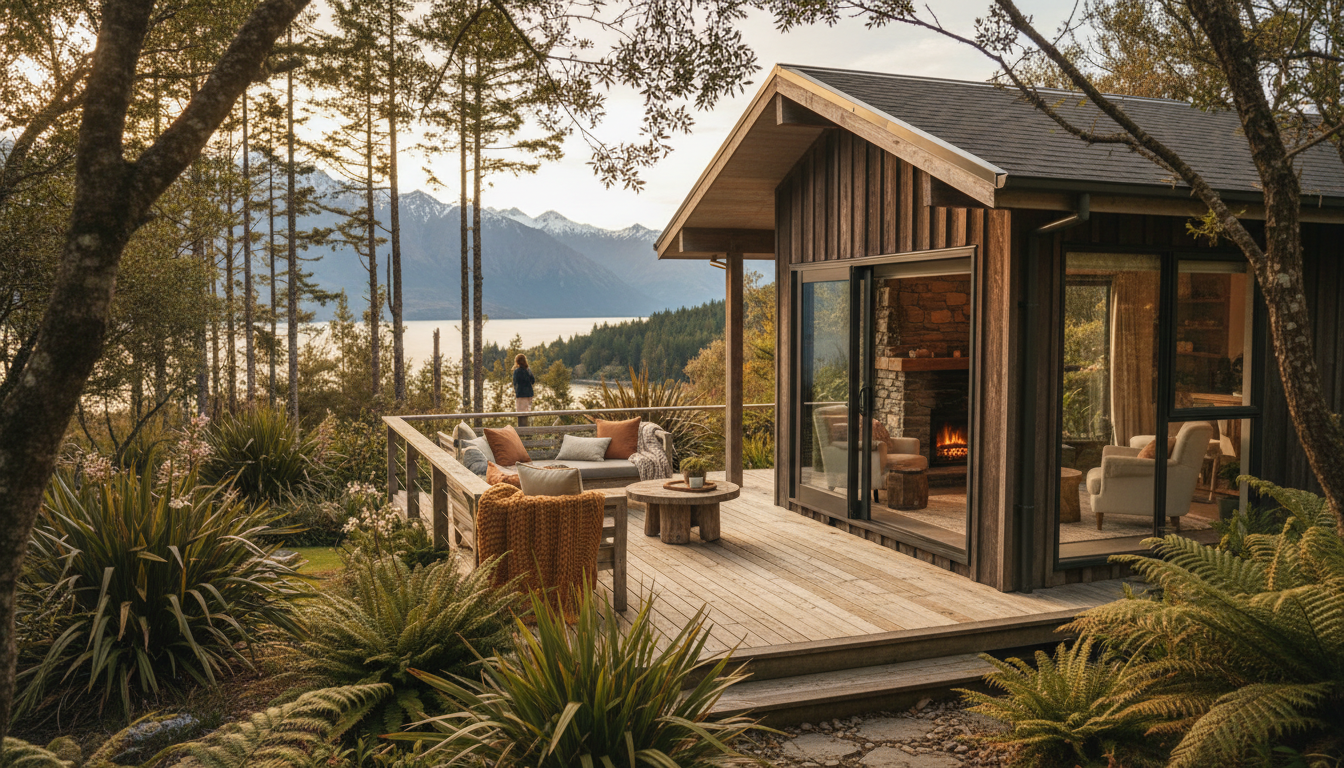 A charming wooden cottage in Fernhill with a wraparound deck, native New Zealand plants in the garde
Arrowtown
Twenty minutes from Queenstown proper, Arrowtown is a former gold-mining village that feels like stepping into a postcard. The main street is lined with heritage buildings housing cafés, bookshops, and galleries. In autumn (March-May), the trees explode into reds and golds that draw photographers from around the world.
For retirees, Arrowtown offers something Queenstown center doesn't: genuine quiet.
The pace here is slower by default. You can spend an entire morning browsing the Lakes District Museum (NZD $12 / about $7.50 USD), then have a leisurely lunch at Provisions, then walk along the Arrow River where people still pan for gold.
Home exchanges in Arrowtown tend to be in standalone houses with gardens. The community is tight-knit, so you'll often find hosts who've lived there for decades and can point you toward hidden gems—like the walking track to Tobins, a historic settlement most tourists never find.
Kelvin Heights
If golf is your thing, Kelvin Heights is worth considering. It's home to the Kelvin Heights Golf Course, which wraps around a peninsula with views that'll distract you from your swing. The neighborhood itself is upscale and quiet, with many homes offering lake access.
The trade-off? You'll need a car. Kelvin Heights is a 10-minute drive from town, and while there's a water taxi, it's not practical for daily use. But if you're planning a slower trip where you're not rushing into town every day, the peninsula's tranquility is hard to beat.
What a Typical Day Looks Like: Queenstown Home Exchange for Retirees
I think the best way to show you why this works so well is to walk you through an actual day from my last Queenstown swap. This was in late autumn, when the crowds had thinned and the air had that crisp bite to it.
Morning: I woke up around 7:30—no alarm, just the light coming through the curtains. Made coffee using the French press my host had left out (with beans from Vibe, a local roaster she'd recommended). Sat on the deck in a borrowed fleece, watching the lake change colors as the sun rose higher. Read for an hour. Didn't check my phone once.
Around 9:30, I drove into town for breakfast at Bespoke Kitchen. It's a bit of a scene—lots of yoga moms and tourists—but their house-made granola with poached pears (NZD $22 / about $14 USD) is genuinely excellent. I grabbed a window seat and people-watched.
Midday: I'd planned to take the Skyline Gondola up Bob's Peak, which I'd recommend even if you've done gondolas elsewhere. The views are absurd—you can see the Remarkables, Cecil Peak, Walter Peak, and the full sweep of the lake. The ride costs NZD $49 / about $30 USD for adults, and there's a café at the top where you can linger.
But here's the retired traveler advantage: I went at 11am on a Tuesday. No crowds. I had a bench to myself at the top and stayed for two hours, just... sitting there. A twenty-something would've taken their photo and rushed to the next thing. I had nowhere to be.
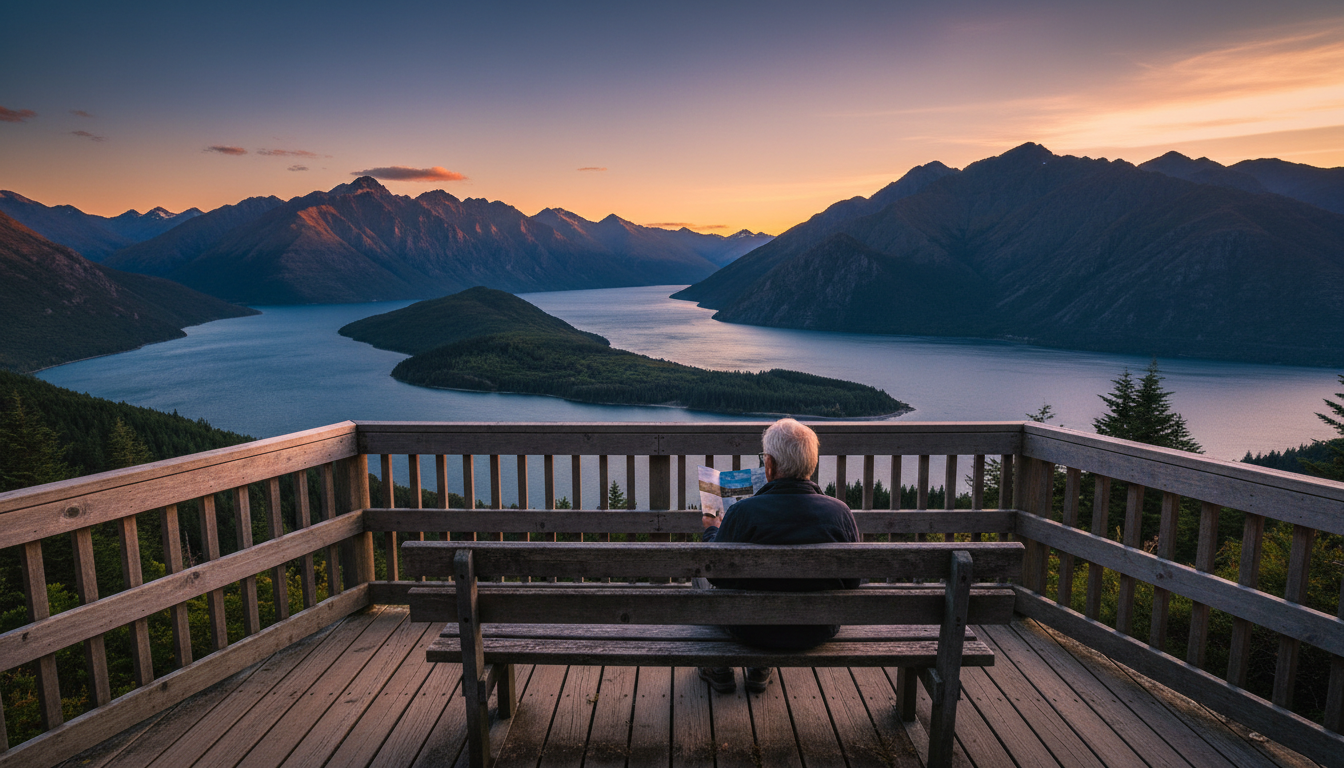 Panoramic view from the Skyline Gondola viewing platform, showing Lake Wakatipu curving through moun
Afternoon: Back down in town, I wandered through the Queenstown Gardens. This is a hidden gem that many visitors skip—a botanical garden on a peninsula jutting into the lake, with walking paths, rose gardens, and massive sequoia trees. I found a bench near the water and ate the sandwich I'd made that morning from my host's kitchen.
Later, I drove out to Gibbston Valley, the heart of Central Otago wine country. The region is famous for Pinot Noir, and Gibbston Valley Winery does a tasting flight for NZD $15 / about $9.50 USD. The sommelier, an older gentleman named Peter, spent 45 minutes telling me about the volcanic soils and cold nights that make these wines special. No rush. No upselling. Just conversation.
Evening: Back at the cottage, I cooked dinner using ingredients from Raeward Fresh (a local grocery that's leagues better than the tourist-oriented supermarkets). Pan-fried salmon, roasted vegetables, a glass of the Pinot I'd bought that afternoon. Ate on the deck as the mountains turned purple in the fading light.
This is what Queenstown home exchange offers retirees: the infrastructure of a world-class destination with the freedom to experience it like a local.
Practical Tips for Your Queenstown Home Exchange
Alright, let's get into the nuts and bolts. If you're planning a home swap in Queenstown as a retiree, here's what I've learned.
When to Go
Shoulder seasons are your friend.
March through May (autumn) brings spectacular foliage, harvest festivals at the wineries, and significantly fewer tourists. September through November (spring) means wildflowers, baby lambs in the fields, and crisp mornings that warm into pleasant afternoons.
Winter (June-August) is ski season—crowds and higher prices, though if you're a skier, it's magnificent. Summer (December-February) is peak tourist season; expect more competition for home exchanges and busier attractions.
I'd specifically recommend late March or early April. The autumn colors are at their peak, the weather is stable, and you'll have your pick of home exchange options as families return to school routines.
Getting Around
You'll want a car. I know that's not what everyone wants to hear, but Queenstown's public transport is limited, and many of the best experiences—wine country, Glenorchy, the scenic drives—require wheels.
Rental cars run about NZD $50-80 / $30-50 USD per day for a compact. If you're doing a home exchange, ask your host if their car is available as part of the swap—many New Zealand hosts include vehicle access, which is a game-changer.
The roads are well-maintained but winding. If you're not comfortable with mountain driving, stick to the main routes. The drive to Glenorchy, while spectacular, involves some sections that might raise your blood pressure.
What to Pack
Queenstown's weather is famously fickle. The locals say you can experience four seasons in one day, and they're not exaggerating. Layers are essential—a merino base layer, a fleece, and a waterproof outer shell will see you through most situations.
Comfortable walking shoes are non-negotiable. Even if you're not planning serious hikes, you'll want to stroll the lakefront, wander through gardens, and explore Arrowtown's historic streets.
Bring sunscreen and sunglasses regardless of season. New Zealand's UV levels are intense due to the thin ozone layer, and the reflection off the lake amplifies everything.
 Flat lay of smart packing for Queenstown merino wool layers, waterproof jacket, comfortable walking
The Best Relaxed Activities for Retired Home Swappers
Forget the bungee jumping. Here's what actually makes Queenstown special for those of us who prefer our adventures a bit more... horizontal.
TSS Earnslaw Cruise
This 110-year-old steamship is a floating piece of history.
The 90-minute cruise across Lake Wakatipu costs NZD $79 / about $50 USD and includes access to the engine room, where you can watch the original coal-fired engines at work. The crew are characters—ask them about the ship's history and they'll talk your ear off.
The cruise connects to Walter Peak High Country Farm, where you can add a gourmet BBQ lunch (NZD $159 total / about $100 USD) and watch sheep shearing demonstrations. It's touristy, yes, but in a charming, old-fashioned way.
Wine Tasting in Gibbston Valley
I mentioned this earlier, but it deserves its own section.
Central Otago is the world's southernmost wine region, and the Pinot Noirs here are genuinely world-class. Gibbston Valley, Chard Farm, and Peregrine are all within a 20-minute drive of Queenstown.
Most wineries offer tastings for NZD $10-20 / $6-12 USD, often waived if you purchase a bottle. The atmosphere is relaxed—these aren't pretentious Napa-style operations. You'll often find yourself chatting with the winemaker themselves.
If you don't want to drive, several companies offer guided wine tours (around NZD $200-250 / $125-155 USD including lunch and tastings at 3-4 wineries). Appellation Wine Tours is particularly good for smaller groups.
Walking Trails for Every Fitness Level
Queenstown's trail network is extensive, and there are options for every ability level.
The Queenstown Gardens loop is flat, paved, and takes about 30 minutes—perfect for a morning stroll. The Frankton Arm Walkway runs along the lake from town to Frankton (about 8km / 5 miles one way). It's flat and scenic, with benches every few hundred meters. You can walk as far as you like and catch a bus back.
The Arrowtown River Trail follows the Arrow River through historic mining sites. It's mostly flat with some gentle inclines, and you can pan for gold along the way (kits available from the museum for NZD $5 / about $3 USD).
For something more challenging but still manageable, the Kelvin Heights Peninsula Track offers stunning lake views on a well-maintained path—about 2 hours round trip.
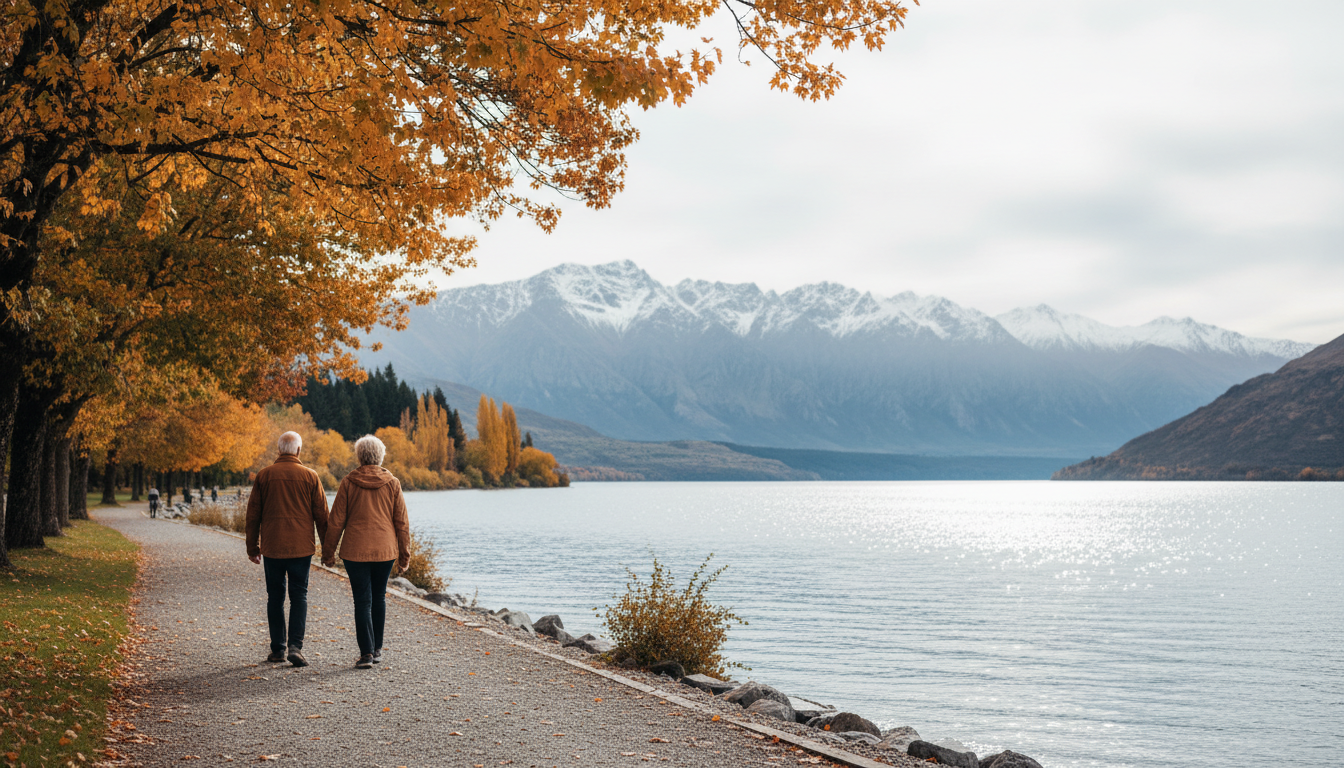 Two retired travelers walking hand-in-hand along the Frankton Arm Walkway, Lake Wakatipu sparkling b
Scenic Drives
Some of the best Queenstown experiences don't require leaving your car.
The Glenorchy Road is frequently listed among the world's most scenic drives. It hugs the lake for 45 minutes, passing through landscapes that served as Middle-earth in the Lord of the Rings films. Stop at Bennett's Bluff for photos—there's a proper car park and viewing area.
The Crown Range Road to Wanaka climbs to New Zealand's highest sealed road, with views that'll make you pull over repeatedly. The Cardrona Hotel at the summit serves excellent pub food and has been operating since 1863.
Making Your Queenstown Home Exchange Work
Now, let's talk about the actual home swap logistics. I've done enough of these to know what makes the difference between a good exchange and a great one.
Creating a Listing That Attracts the Right Swappers
If you're listing your own home on SwappaHome to exchange into Queenstown, be specific about what makes your place comfortable for fellow retirees. Mention the comfortable mattress, the quiet neighborhood, the step-free entry if you have it. Note if you have a garden, a reading nook, a well-equipped kitchen.
Queenstown hosts tend to be outdoor enthusiasts, so they'll appreciate knowing about hiking trails near your home, local farmers markets, or that café down the street with the excellent flat whites.
What to Ask Your Queenstown Host
Before confirming your exchange, I always ask a few key questions: Is the home on flat ground or are there stairs? How far is the nearest grocery store? Is there reliable heating (Queenstown gets cold, even in autumn)? What's the parking situation?
Also ask about their favorite local spots—not the tourist attractions, but where they actually go. Margaret's recommendations were worth more than any guidebook.
The Credit System Works in Your Favor
Here's something retirees often overlook: SwappaHome's credit system is perfect for flexible schedules. You earn 1 credit for every night someone stays in your home, and you spend 1 credit for every night you stay elsewhere. No complicated calculations, no money changing hands.
This means you can host guests throughout the year—maybe a few nights here, a week there—and bank credits for an extended Queenstown stay. I know retirees who've accumulated enough credits for month-long exchanges simply by hosting occasional weekend visitors in their empty nest.
Building Trust Through the Community
SwappaHome's review system is your friend. Before committing to an exchange, read through your potential host's reviews carefully. Look for mentions of cleanliness, communication, and accuracy of the listing.
After your stay, leave a detailed, honest review. The home exchange community thrives on this mutual accountability. And honestly? The retiree demographic tends to be particularly conscientious about this—we remember when a handshake meant something.
Beyond Queenstown: Easy Day Trips
One of the advantages of a longer home exchange stay is having time to explore the wider region. Here are trips that work well for retirees based in Queenstown.
Wanaka (1 hour)
Queenstown's quieter cousin, Wanaka sits on its own glacial lake with its own mountain views. The famous "That Wanaka Tree" is worth a photo, but the real draw is the laid-back atmosphere. Puzzle World (NZD $25 / about $16 USD) is surprisingly entertaining, and the lakefront walk is lovely.
Te Anau and Milford Sound (2-2.5 hours to Te Anau, 4 hours to Milford)
Milford Sound is bucket-list territory, but the drive is long and winding.
My recommendation for retirees: stay overnight in Te Anau (a pleasant lakeside town), then drive to Milford the next morning when you're fresh. The cruise itself (around NZD $90-150 / $55-95 USD) is spectacular—waterfalls, dolphins, sheer cliff faces rising from the water.
Cromwell and the Fruit Trail (45 minutes)
Cromwell is the fruit bowl of Central Otago. In summer and autumn, roadside stalls sell cherries, apricots, and stone fruits directly from the orchards. The Old Cromwell Town historic precinct is charming, with artisan shops and cafés in restored heritage buildings.
What I Wish Someone Had Told Me
After multiple Queenstown home exchanges, here's the unfiltered advice I'd give a fellow retiree.
Don't try to do too much. The temptation is to pack every day with activities because you've traveled so far. Resist it. Some of my best Queenstown memories are mornings spent doing absolutely nothing on the deck.
The weather will change. Accept it. That rainy day is perfect for the Queenstown cinema (comfortable seats, good popcorn) or exploring the surprisingly excellent Eichardt's Bar for an afternoon wine.
Talk to people. New Zealanders are genuinely friendly, and retirees have the time for actual conversations. Some of my best recommendations came from chatting with locals at the grocery store or the wine bar.
Bring your own entertainment for evenings. Queenstown's nightlife is geared toward younger crowds. You'll want books, a streaming subscription, or a good podcast library for those cozy nights in.
Consider travel insurance that covers trip interruption. This isn't specific to home exchange—it's just smart for any international trip at our age. SwappaHome connects you with hosts, but it's your responsibility to protect yourself against the unexpected.
A Final Thought
There's a moment I keep coming back to.
It was my last evening in Queenstown, and I'd driven up to the Remarkables lookout to watch the sunset. The mountains were doing their pink-and-gold thing again, and the lake was turning that impossible shade of blue it gets in the fading light.
A couple around my age pulled up in a rental car, clearly tourists. They jumped out, snapped a few photos, and were back in the car within three minutes. Off to the next thing.
I stayed for an hour.
Because I could. Because I wasn't paying by the night at some hotel, counting the cost of every moment. Because my borrowed cottage was waiting with leftover wine and a comfortable bed. Because home exchange had given me something hotels never could: the time to actually be somewhere.
Queenstown rewards that kind of travel. The mountains aren't going anywhere. The lake will still be there tomorrow. And when you're staying in someone's home, living at the pace of an actual resident, you start to understand why people fall in love with this place and never leave.
If you're a retiree considering your first home exchange, I can't think of a better place to start. Check out the Queenstown listings on SwappaHome—you might be surprised how many welcoming hosts are waiting to share their corner of paradise.
Frequently Asked Questions
Is Queenstown suitable for retirees who aren't physically active?
Absolutely. While Queenstown is known for adventure sports, there's a parallel world of scenic cruises, wine tasting, gentle walks, and scenic drives that require minimal physical exertion. The Skyline Gondola, TSS Earnslaw cruise, and wine country tours are all accessible for those with limited mobility. Many home exchange properties in areas like Fernhill and Arrowtown are single-level with step-free access.
How much does a Queenstown home exchange cost compared to hotels?
With SwappaHome, you spend 1 credit per night regardless of the property—no money changes hands between members. Compare this to Queenstown hotels averaging NZD $250-400 ($155-250 USD) per night in shoulder season, or NZD $400-600+ ($250-375+ USD) in peak season. A two-week home exchange saves you roughly $2,000-5,000 USD in accommodation costs alone.
What's the best time of year for retired travelers to visit Queenstown?
Late March through early May (autumn) offers the best combination of mild weather, stunning fall foliage, fewer crowds, and lower prices. The harvest season means wine country is at its most vibrant. September-November (spring) is another excellent option with wildflowers and pleasant temperatures without summer crowds.
Do I need a car for a Queenstown home exchange?
While Queenstown's town center is walkable, a car significantly expands your options for wine country, scenic drives, and day trips. Many New Zealand home exchange hosts include vehicle access as part of the swap. Rental cars cost approximately NZD $50-80 ($30-50 USD) per day. If you prefer not to drive, consider staying closer to town and using organized tours for excursions.
How do I find trustworthy home exchange hosts in Queenstown?
SwappaHome's review system helps you identify reliable hosts—look for members with multiple positive reviews mentioning cleanliness, communication, and listing accuracy. Verified members have completed identity verification for added security. Always communicate thoroughly before confirming an exchange, and consider getting your own travel insurance for additional peace of mind.

Published by
SwappaHome
SwappaHome Editorial Team
Home Exchange & Slow Travel Editorial
The SwappaHome Editorial Team brings together travel research, home-exchange community insights, and platform data to produce practical guides for first-time and experienced home swappers. Every article cites real platforms, current market rates, and verifiable city-level facts so readers can make informed decisions without guessing.
Ready to try home swapping?
Join SwappaHome and start traveling by exchanging homes. Get 7 free credits when you sign up!
Related articles

Bachelor and Bachelorette Parties in Singapore: The Complete Home Swap Group Guide for 2026
Planning a bachelor or bachelorette party in Singapore? Discover how home swapping lets groups of 6-12 stay together in luxury condos, saving thousands while partying in Marina Bay.
Cycling in Lisbon: 7 Home Swap Bike Tour Itineraries for Every Rider
Discover the best cycling routes in Lisbon with these home swap bike tour itineraries—from waterfront paths to hilltop adventures, all starting from your borrowed home.
Graduation Trip to Barcelona: How Home Swapping Gives New Graduates the Ultimate Celebration
Planning a graduation trip to Barcelona? Discover how home swapping lets new graduates explore Spain's most vibrant city without the hostel crowds or hotel costs.