
Home Swapping for Seniors: Your Complete Guide to Comfortable, Affordable Travel

SwappaHome Editorial Team
Home Exchange & Slow Travel Editorial
Discover how home swapping for seniors offers comfortable, budget-friendly travel at your own pace. Real tips from 7 years of exchanges.
My parents called me last March with news that made me genuinely nervous. "We're thinking about trying one of those home swaps you're always talking about," my mom said. She's 68. My dad's 71. And honestly? My first instinct was to talk them out of it.
I'm so glad I didn't.
Home swapping for seniors has become one of the fastest-growing segments in the travel exchange community—and after watching my parents absolutely thrive during their three-week swap in a ground-floor apartment in Nice, I understand why. They came back more relaxed than I'd seen them in years, having spent a fraction of what a hotel would have cost, with a full kitchen where my dad could make his morning eggs exactly how he likes them.
Here's the thing about travel after 60: the priorities shift. You're not trying to cram 47 attractions into a long weekend anymore. You want comfort. Flexibility. You want to wake up when your body says so, not when checkout demands it. And increasingly, you want to do all this without hemorrhaging your retirement savings on $400-a-night hotel rooms.
Home swapping delivers on all of these—but it does require some specific considerations that younger travelers might not think about. After seven years of doing exchanges myself and now helping my parents navigate their fifth swap, I've learned what actually matters for comfortable senior travel.
 Bright, airy living room in a Mediterranean apartment with comfortable seating, large windows lettin
Why Home Swapping Works Especially Well for Senior Travelers
Let me be direct: hotels are designed for efficiency, not comfort. They're optimized for quick turnover, standardized experiences, and maximum revenue per square foot. Fine for a two-night business trip. Exhausting for a two-week vacation.
When my mom talks about their Nice exchange, she doesn't mention the Promenade des Anglais or the Matisse Museum first. She talks about the kitchen. "I could make tea at 3 AM when I couldn't sleep," she told me. "I didn't have to get dressed and find an open café. I just... made tea. In my pajamas. Looking at the Mediterranean."
That's the real luxury of home swapping for seniors: normalcy in extraordinary places.
The financial math is compelling too. A decent hotel room in Nice during shoulder season runs about $180-220 USD per night. Over three weeks, that's roughly $4,200 at minimum. My parents spent zero on accommodation. They used SwappaHome's credit system—they'd hosted a lovely couple from Lyon the previous fall (earning 7 credits for the week), then used those credits plus some they'd accumulated to book their Nice stay.
The credit system works simply: host someone for a night, earn one credit. Use a credit to stay somewhere for a night. Doesn't matter if you're hosting in a modest condo in Phoenix or staying in a palazzo in Florence—it's always one credit per night. This equality is actually perfect for retirees who might have smaller homes but more time to host.
But beyond money, there's something else. Home swapping creates a different relationship with a place. You're not a tourist staying in the tourist district. You're living in someone's neighborhood, shopping at their grocery store, nodding at their neighbors. My dad, who usually hates travel, spent an entire afternoon chatting with the building's 80-year-old concierge about World War II history. In broken French. He still emails her.
Finding the Right Home Swap Properties: What Seniors Should Actually Look For
Not every listing is right for every traveler, and this is especially true for seniors who may have mobility considerations or specific comfort needs. Here's what I've learned matters most:
Ground floor or elevator access is non-negotiable for many. Sounds obvious, but you'd be surprised how many charming European listings involve "just four flights of stairs!" My parents specifically filter for ground-floor apartments or buildings with elevators. On SwappaHome, you can message hosts directly to confirm accessibility details before committing.
Look for real beds, not sofa beds or lofts. That quirky loft bedroom with the spiral staircase? Adorable for a 28-year-old. A potential disaster for anyone with a dodgy knee. Read listings carefully and look at bedroom photos. A proper queen or king bed at normal height matters.
Proximity to pharmacies and medical facilities. My mom has a heart condition that's well-managed but requires medication. She always researches the nearest pharmacy before confirming any swap. In most European cities, pharmacies are abundant and well-marked with green crosses. In smaller towns, this requires more planning.
Walkability to daily necessities. Can you get groceries without a car? Is there a café within a few blocks for those days you don't feel like cooking? My parents have learned to use Google Street View to virtually "walk" the neighborhood before committing to a swap.
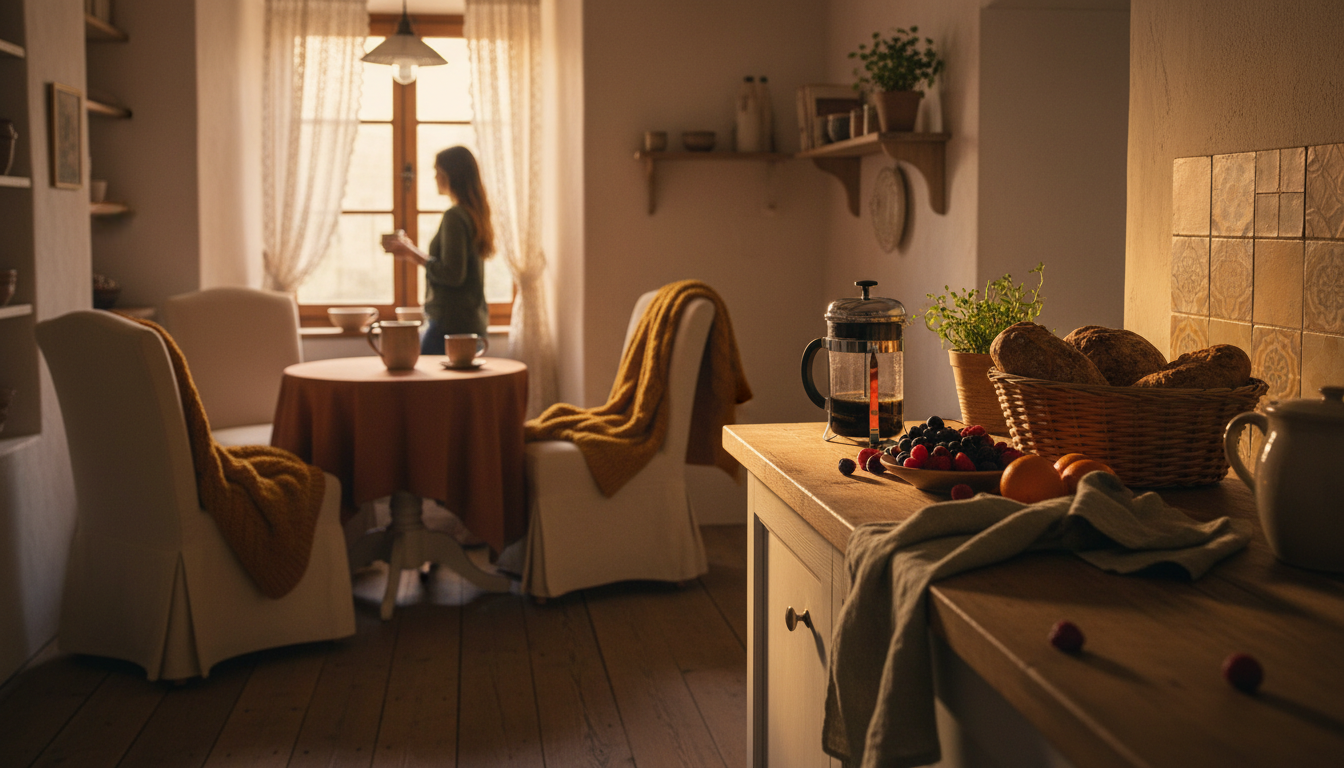 Cozy European kitchen with a small dining nook, morning light streaming through lace curtains, fresh
Laundry facilities on-site. Might seem minor, but the ability to do laundry means you can pack lighter and stay longer. Most home swap properties include washer access—something hotels rarely offer without significant fees.
Reliable WiFi for staying connected. Video calls with grandkids, checking in with doctors, researching day trips—good internet isn't optional anymore. Always confirm WiFi quality before booking, and consider asking the host about their typical speeds.
How to Create a Senior-Friendly Home Swap Listing That Attracts Great Guests
Here's something that took my parents a few tries to figure out: the quality of guests you attract directly correlates with the quality of your listing. Vague, photo-sparse listings attract vague, uncommitted inquiries. Detailed, honest listings attract serious travelers who respect your space.
For seniors creating their first listing, I recommend:
Be honest about your home's limitations. If there are stairs to the entrance, say so. If the neighborhood is quiet (read: not much nightlife), frame it as peaceful. The right guests will appreciate this; the wrong guests will self-select out. Everyone wins.
Highlight comfort features specifically. Mention the new mattress, the blackout curtains, the walk-in shower with grab bars, the heating system that actually works. These details matter enormously to fellow senior travelers browsing listings.
Include your "local gems" list. My mom created a small binder with her favorite neighborhood spots: the bakery that makes the best sourdough, the quiet park perfect for morning walks, the Italian restaurant where the owner remembers regulars. This kind of personal touch elevates a listing from "place to sleep" to "local experience."
Use recent, well-lit photos. Natural light, tidy spaces, and photos that show actual room dimensions. No wide-angle lens tricks that make a closet look like a ballroom. Trust is everything in home swapping, and honest photos build it.
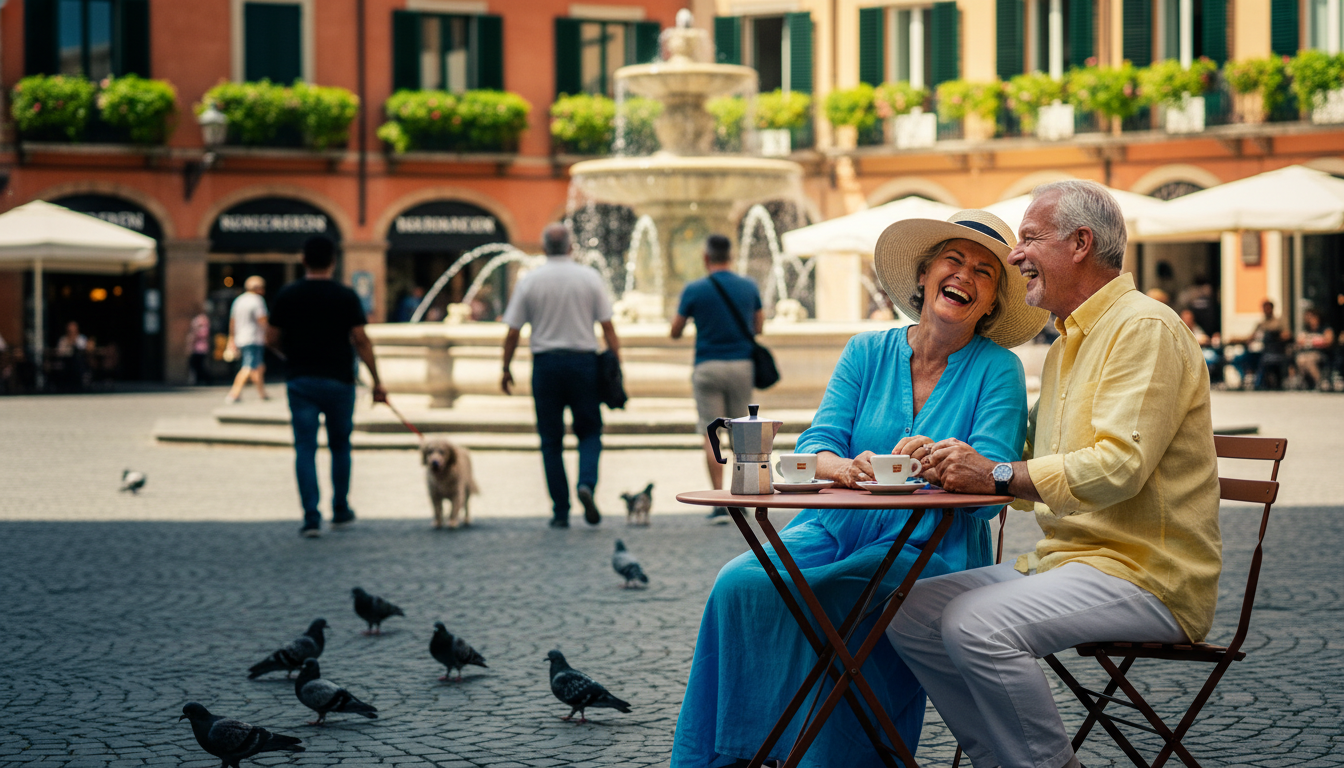 Retired couple sitting at a sidewalk caf in a European plaza, laughing over espresso, with pigeons a
Navigating the Practical Concerns: Health, Insurance, and Peace of Mind
I won't pretend home swapping is worry-free. My parents had legitimate concerns before their first exchange, and addressing them honestly made all the difference.
Health considerations abroad: Before any international swap, my parents consult their doctor about their destination. They carry copies of prescriptions (generic names, not brand names, which vary by country), a brief medical summary, and travel health insurance that covers repatriation. This isn't SwappaHome-specific—it's just smart senior travel practice.
What about protecting your home? This is the question I get most often. SwappaHome connects you with fellow members, and the platform has a review system that builds accountability over time. Members rate each other after stays, creating a reputation that matters.
But here's what I tell my parents—and what I'll tell you: SwappaHome is a platform, not an insurance company. They don't cover damages or offer guarantees. If you want that peace of mind, get your own homeowner's or renter's insurance that covers short-term guests, or look into specific home-sharing insurance policies. Some members also exchange security deposits directly, though this is arranged privately between members.
The community aspect helps enormously. When you're swapping with someone who has 15 positive reviews and has been a member for four years, you're dealing with someone who has skin in the game. They want good reviews too. This mutual accountability isn't a guarantee, but it's a powerful motivator for respectful behavior.
Communication is your best protection. My parents now do video calls with potential swap partners before confirming anything. They ask about house rules, discuss expectations, and get a feel for the person. This 20-minute conversation has saved them from one mismatch (a couple who wanted to bring three large dogs—my parents' condo doesn't allow pets) and cemented several wonderful friendships.
Best Destinations for Senior Home Swapping: Where to Start
Not all destinations are equally suited for first-time senior swappers. Based on my parents' experiences and my own observations, here are some particularly good options:
Portugal (especially Lisbon and the Algarve): Incredible value, excellent healthcare system, widespread English, and a culture that genuinely respects older people. Lisbon's hills can be challenging, but the Alfama and Baixa neighborhoods have flatter areas, and the tram system is charming and practical. Expect to find lovely apartments in the $0 range (credits only) that would cost $150-200/night as rentals.
Spain's smaller cities (Seville, Valencia, Málaga): Less overwhelming than Barcelona or Madrid, with fantastic food, walkable historic centers, and a pace of life that doesn't demand rushing. Seville's Santa Cruz neighborhood is particularly lovely for walking, and Valencia's City of Arts and Sciences area has excellent accessibility.
 Narrow cobblestone street in Sevilles Santa Cruz neighborhood, orange trees lining the path, white-w
The UK and Ireland: No language barrier, familiar-ish culture, excellent public transportation, and a huge home-swapping community. The Cotswolds, Edinburgh, and smaller Irish towns like Galway offer charm without big-city overwhelm. My parents did a swap in Bath and still talk about the ease of it.
Domestic US swaps: Don't overlook staying in your own country. My parents have done swaps in Savannah, San Diego, and Asheville—all places they'd wanted to visit but balked at hotel prices. Driving to a destination eliminates airport hassles and lets you bring more comfort items.
Canada: Vancouver, Victoria, Quebec City, and Halifax all have active swapping communities. Similar healthcare standards to the US (important for peace of mind), stunning natural beauty, and that particular Canadian friendliness that makes everything easier.
The Pace Advantage: Why Slower Travel Is Better Travel
Here's what I've noticed watching my parents travel versus how I traveled in my twenties: they actually remember their trips.
When you're not racing between attractions, when you have a kitchen to retreat to, when your "home" for the week has a comfortable reading chair and good lighting—you process experiences differently. My mom journals every evening of their swaps. My dad has become an amateur photographer, spending hours capturing the same street corner in different lights.
Home swapping for seniors enables this slower pace financially. When accommodation is essentially free, you don't feel pressure to maximize every moment. You can have a "nothing day." You can decide the museum can wait until tomorrow because today, the café terrace is too perfect to leave.
This isn't lazy travel. It's sustainable travel. It's the kind of travel you can do for decades, not just until your body gives out from the pace.
My parents are already planning their sixth swap—a month in a small town in Umbria this fall. They've been messaging with the hosts, a retired Italian couple around their age, for weeks. They're exchanging recipes. They're making friends before they've even met.
 Golden hour view from an Umbrian hilltop terrace, rolling hills with cypress trees, a glass of local
Getting Started: A Realistic First-Swap Timeline for Seniors
If you're considering your first home swap, here's a realistic timeline:
Months 1-2: Set up your profile and listing. Take good photos, write honest descriptions, get verified through SwappaHome's identity verification. Start browsing listings to understand what's available and what appeals to you.
Months 2-3: Host your first guest. This might feel backwards, but hosting first accomplishes several things: you earn credits, you get reviews that make your profile more attractive, and you experience the swap dynamic from the easier side. Start with a short stay—a weekend or a few nights.
Months 3-4: Plan your first away swap. Use the credits you've earned. Start with somewhere not too far, not too foreign. A domestic swap or a destination you've visited before removes some variables while you learn the process.
Month 5+: Expand your horizons. Once you've done one successful exchange in each direction, you'll have the confidence to try more adventurous destinations.
New members on SwappaHome start with 7 free credits, which means you could technically book a 10-night stay immediately. But I'd encourage patience. Build your profile, earn some reviews, and approach this as a long-term travel strategy rather than a one-time hack.
What My Parents Wish They'd Known Before Their First Swap
I asked my mom this question directly, and her answers were characteristically practical:
"I wish I'd known how much we'd communicate with our hosts. It's not just 'here are the keys.' We talked for weeks before, during, and after. Bring a small gift—we brought maple syrup from home—and leave the place cleaner than you found it. These people are trusting you with their home."
"I wish I'd known to ask about the mattress firmness. We like firm; they had soft. Not a disaster, but I'd ask now."
"I wish I'd known how much I'd love it. I would have started years ago. All those hotel rooms, all that money—we could have been doing this the whole time."
My dad's contribution: "Bring your own pillow. Non-negotiable."
The Community You Didn't Know You Needed
There's one more thing about home swapping for seniors that surprised my parents: the community.
They've stayed in touch with almost every host and guest they've exchanged with. They have a standing invitation to return to Nice. The couple from Lyon visited again last summer, this time as friends rather than swappers. My mom and a woman she met through a Savannah swap now exchange book recommendations monthly.
Travel can be isolating, especially as you get older and your social circles naturally shrink. Home swapping creates connections with people who share your values—people who trust strangers, who believe in reciprocity, who are curious about how others live.
Is it for everyone? No. If you need the predictability of a hotel concierge, the daily housekeeping, the room service at midnight—home swapping won't satisfy you. If the idea of strangers in your home makes you deeply uncomfortable, no amount of positive reviews will change that.
But if you're a senior traveler who wants more from your trips—more comfort, more authenticity, more connection, more financial sustainability—home swapping deserves serious consideration.
My parents are proof that it's never too late to try something new. And honestly? Watching them discover this has been one of the unexpected joys of my own home-swapping journey.
If you're curious, start browsing listings on SwappaHome. You don't have to commit to anything. Just look. See what's out there. Imagine yourself making morning coffee in a Lisbon kitchen, or reading on a terrace in Provence, or walking to a neighborhood bakery in Bath.
Then ask yourself: why not?
Frequently Asked Questions
Is home swapping safe for seniors traveling alone?
Home swapping can be quite safe for solo senior travelers when you take standard precautions. Use SwappaHome's verification features, read reviews carefully, video chat with potential hosts before confirming, and trust your instincts. Many solo seniors find the community aspect actually makes them feel more connected than anonymous hotel stays. Consider starting with domestic swaps or destinations with strong English proficiency.
How much money can seniors save with home swapping compared to hotels?
Seniors typically save $150-300 USD per night compared to hotel rates in popular destinations. For a two-week trip, that's $2,100-4,200 in accommodation savings alone. On SwappaHome, you earn and spend credits (1 credit = 1 night), and new members start with 7 free credits. The savings compound over time as you build credits through hosting.
What if something gets damaged during a home swap?
SwappaHome is a platform connecting members—it doesn't provide insurance or damage coverage. Members are responsible for their own arrangements. Many experienced swappers recommend maintaining good homeowner's insurance, communicating clearly about house rules, and building trust through the review system. Some members arrange private security deposits directly with each other.
Can seniors with mobility issues find suitable home swap properties?
Absolutely. Many listings specifically mention accessibility features like ground-floor locations, elevators, walk-in showers, and grab bars. Use SwappaHome's messaging system to ask hosts directly about specific needs before booking. Being upfront about mobility requirements helps you find truly suitable properties and builds honest communication with hosts.
How long does it take to arrange a first home swap?
Plan for 2-4 months from creating your profile to completing your first away swap. This allows time to take quality photos, write your listing, potentially host guests first (earning credits and reviews), and communicate thoroughly with potential swap partners. Rushing the process often leads to mismatched expectations. Patience pays off with better experiences.

Published by
SwappaHome
SwappaHome Editorial Team
Home Exchange & Slow Travel Editorial
The SwappaHome Editorial Team brings together travel research, home-exchange community insights, and platform data to produce practical guides for first-time and experienced home swappers. Every article cites real platforms, current market rates, and verifiable city-level facts so readers can make informed decisions without guessing.
Ready to try home swapping?
Join SwappaHome and start traveling by exchanging homes. Get 7 free credits when you sign up!
Related articles

Bachelor and Bachelorette Parties in Singapore: The Complete Home Swap Group Guide for 2026
Planning a bachelor or bachelorette party in Singapore? Discover how home swapping lets groups of 6-12 stay together in luxury condos, saving thousands while partying in Marina Bay.

Cycling in Lisbon: 7 Home Swap Bike Tour Itineraries for Every Rider
Discover the best cycling routes in Lisbon with these home swap bike tour itineraries—from waterfront paths to hilltop adventures, all starting from your borrowed home.

Graduation Trip to Barcelona: How Home Swapping Gives New Graduates the Ultimate Celebration
Planning a graduation trip to Barcelona? Discover how home swapping lets new graduates explore Spain's most vibrant city without the hostel crowds or hotel costs.