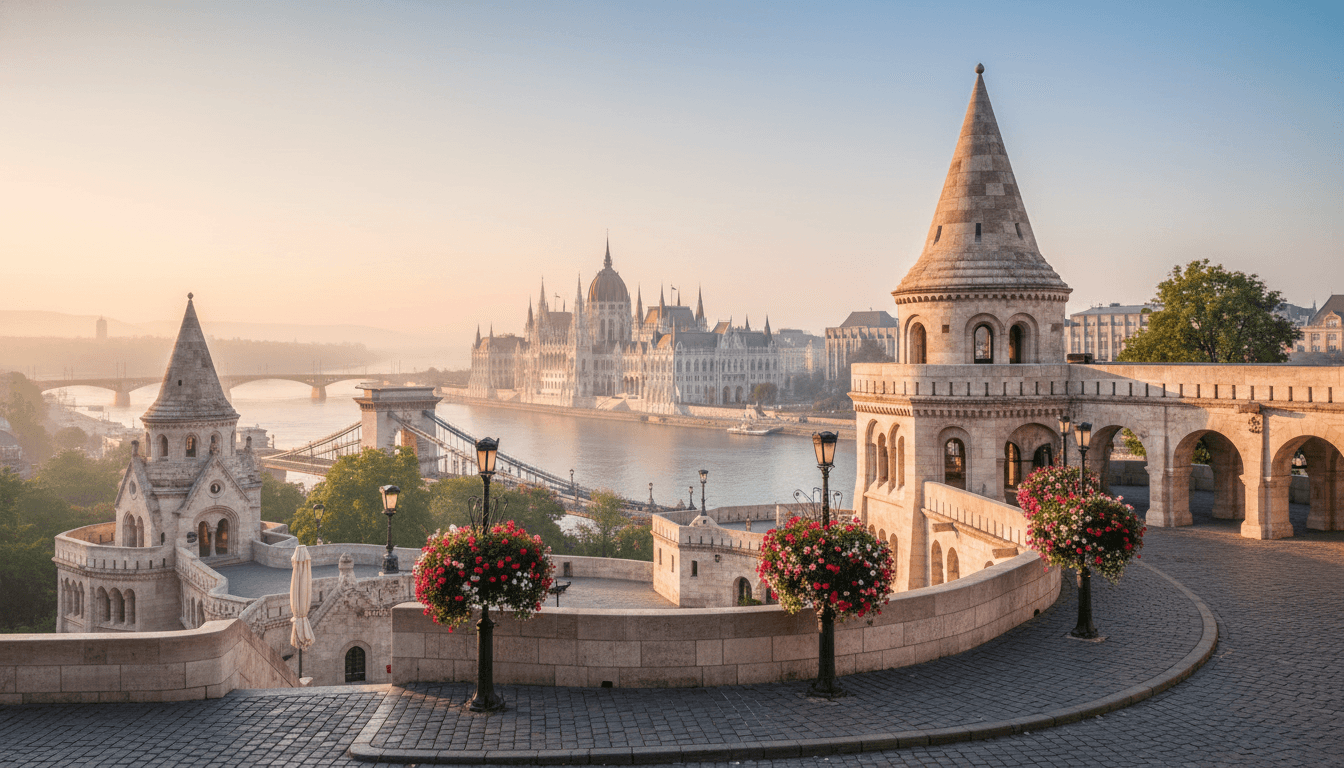
Retirement Travel to Budapest: Why Home Exchange Is the Smartest Way to Explore Hungary's Capital
Maya Chen
Travel Writer & Home Exchange Expert
Discover why retirement travel to Budapest through home exchange offers retirees the perfect blend of affordability, authentic living, and extended stays in one of Europe's most captivating cities.
I was sitting in a thermal bath last October, steam rising around me, watching elderly Hungarian men play chess on floating boards, when it hit me: this is exactly what retirement travel should feel like. Not rushed. Not expensive. Not tourist-trapped. Just... living.
Retirement travel to Budapest through home exchange has become one of the most popular topics in my inbox lately, and honestly? I get it. After seven years of swapping homes across 25 countries, I can tell you that Budapest might be the single best destination for retirees who want to stretch their savings while actually experiencing a place rather than just photographing it.
Here's the thing about Budapest that most travel guides won't tell you: it's wildly affordable, absurdly beautiful, and practically designed for people who have the time to savor it. And when you add home exchange into the mix? You've got yourself a retirement travel hack that feels almost too good to be true.
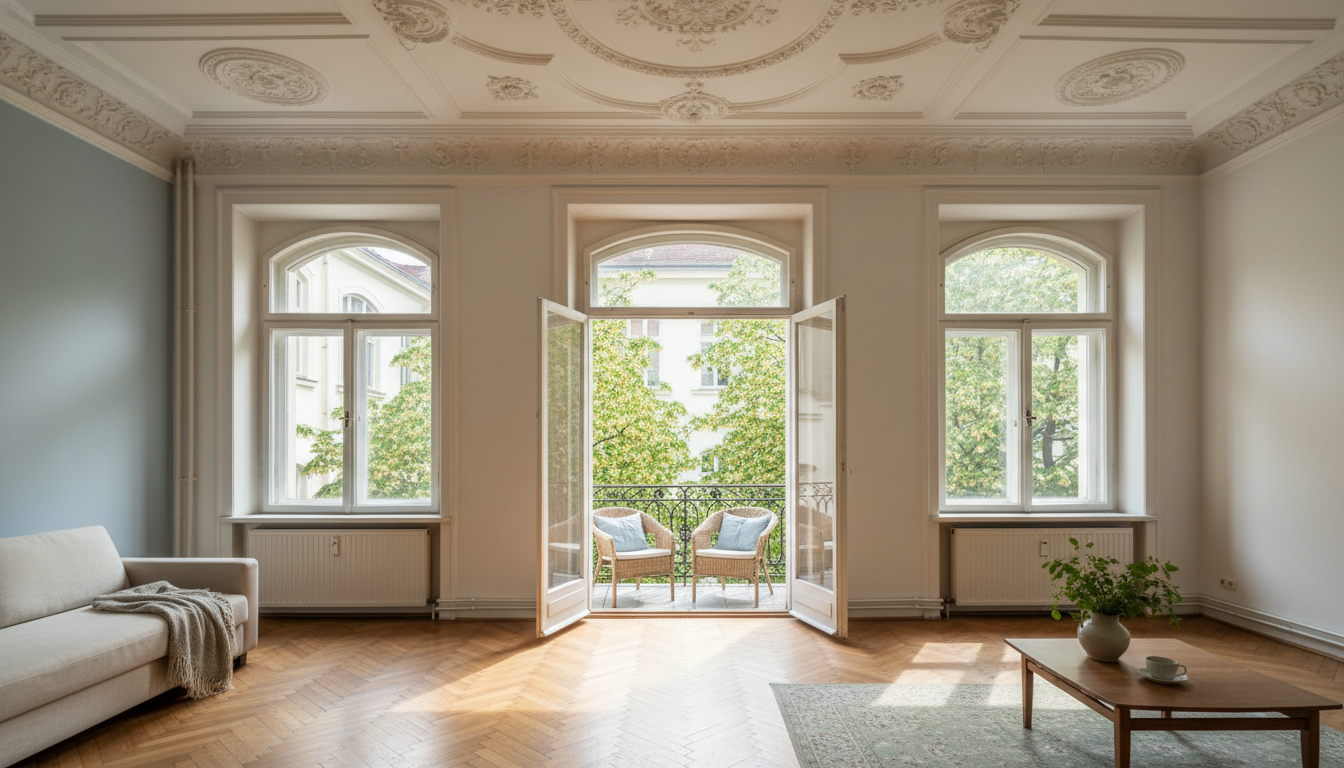 Morning light streaming through the windows of a classic Budapest apartment in the Jewish Quarter, w
Why Budapest Is Perfect for Retirement Travel
Let me paint you a picture of what a typical Tuesday looked like during my last Budapest home swap.
I woke up around 8 AM in a gorgeous pre-war apartment in District VII—high ceilings, those creaky parquet floors that tell stories, and windows that opened onto a courtyard where someone was already practicing violin. I made coffee in a proper kitchen (not a hotel Nespresso pod situation), then walked three blocks to the Szimpla Kert farmers market for fresh túró cheese, still-warm bread, and a jar of acacia honey that cost about $4.
By 10 AM, I was soaking in the Széchenyi Thermal Baths, which cost roughly $25 for a full day pass. Lunch was langos from a street vendor—that's fried dough with sour cream and cheese, and yes, it's as good as it sounds—for about $3. The afternoon? I wandered the antique bookshops along Múzeum körút, then caught a free organ concert at St. Stephen's Basilica.
Total spent: maybe $35. And I wasn't roughing it. I was living well.
This is what retirement travel to Budapest offers that you simply can't replicate in Western European capitals. Your dollar (or pension) stretches dramatically further here. A nice dinner with wine at a local restaurant runs $15-20 per person. Monthly utilities in a Budapest apartment average $80-100. A monthly transit pass for seniors? About $12.
But affordability is just the beginning.
How Home Exchange Transforms Your Budapest Experience
Here's where I need to get a little evangelical about home swapping, because the difference between staying in a Budapest hotel versus a Budapest home is genuinely transformative—especially for retirees.
When you do a home exchange in Budapest, you're not getting a sanitized tourist experience. You're getting a neighbor who waves at you from her balcony. You're getting a local café where the barista starts making your usual before you even order. You're getting a washing machine (trust me, after two weeks of travel, this matters more than any infinity pool).
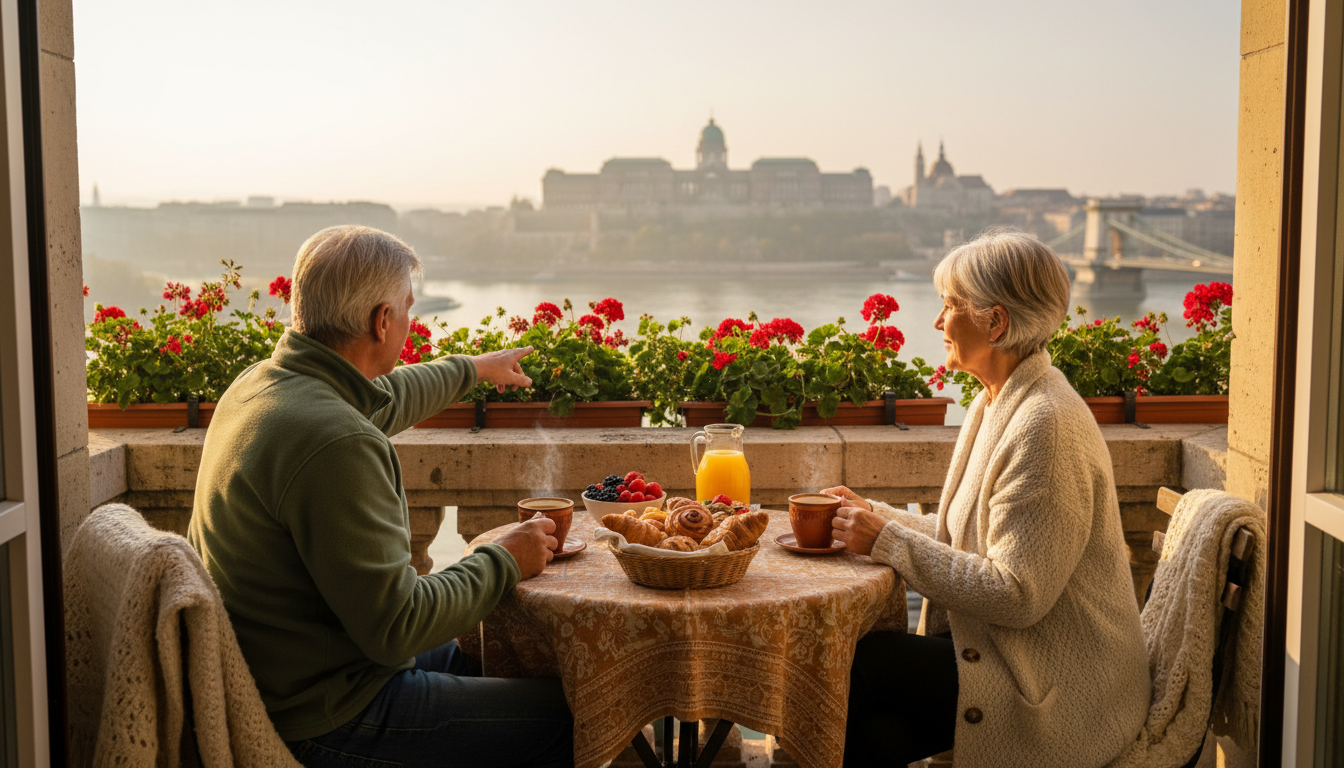 A retired couple enjoying breakfast on a sunlit Budapest balcony with views of Buda Castle across th
I've talked to dozens of retirees who've used SwappaHome for Budapest stays, and they all say the same thing: it doesn't feel like vacation. It feels like having a second home.
The credit system makes this especially accessible for retirees. When you host someone in your home, you earn 1 credit per night. When you stay somewhere else, you spend 1 credit per night. New members start with 10 free credits—that's 10 nights of accommodation anywhere in the world.
So if you're a retiree with a spare bedroom or a vacation home that sits empty, you can host guests while you're home (or away), bank those credits, and then spend a month in Budapest essentially for free. No money changes hands between members for stays. The only costs are your flights and daily expenses—which, in Budapest, are remarkably low.
Best Budapest Neighborhoods for Retirement Home Exchange
Not all Budapest neighborhoods are created equal, especially if you're retired and prioritizing walkability, safety, and access to the things that make daily life pleasant. Let me break down my favorites.
District V (Belváros-Lipótváros): The Elegant Heart
This is Budapest's postcard district—the one with the Parliament building, the Chain Bridge, and the grand boulevards that make you feel like you've stepped into a Wes Anderson film. It's also the most expensive area, but "expensive" in Budapest terms still means reasonable by Western standards.
For retirees, District V offers flat terrain (crucial if mobility is a concern), abundant pharmacies and medical facilities, and the kind of old-world elegance that makes every morning walk feel special. The Central Market Hall is a 10-minute stroll away, and you'll find English spoken almost everywhere.
Home exchange options here tend to be smaller apartments in historic buildings—think 600-800 square feet with high ceilings and those gorgeous double windows that block street noise.
District VII (Erzsébetváros): The Vibrant Jewish Quarter
This is where I stayed on my last swap, and I'm completely biased because I fell in love with it. The Jewish Quarter has this incredible energy—ruin bars and street art and young people everywhere—but it also has quiet courtyards, excellent kosher bakeries, and some of the most characterful apartments in the city.
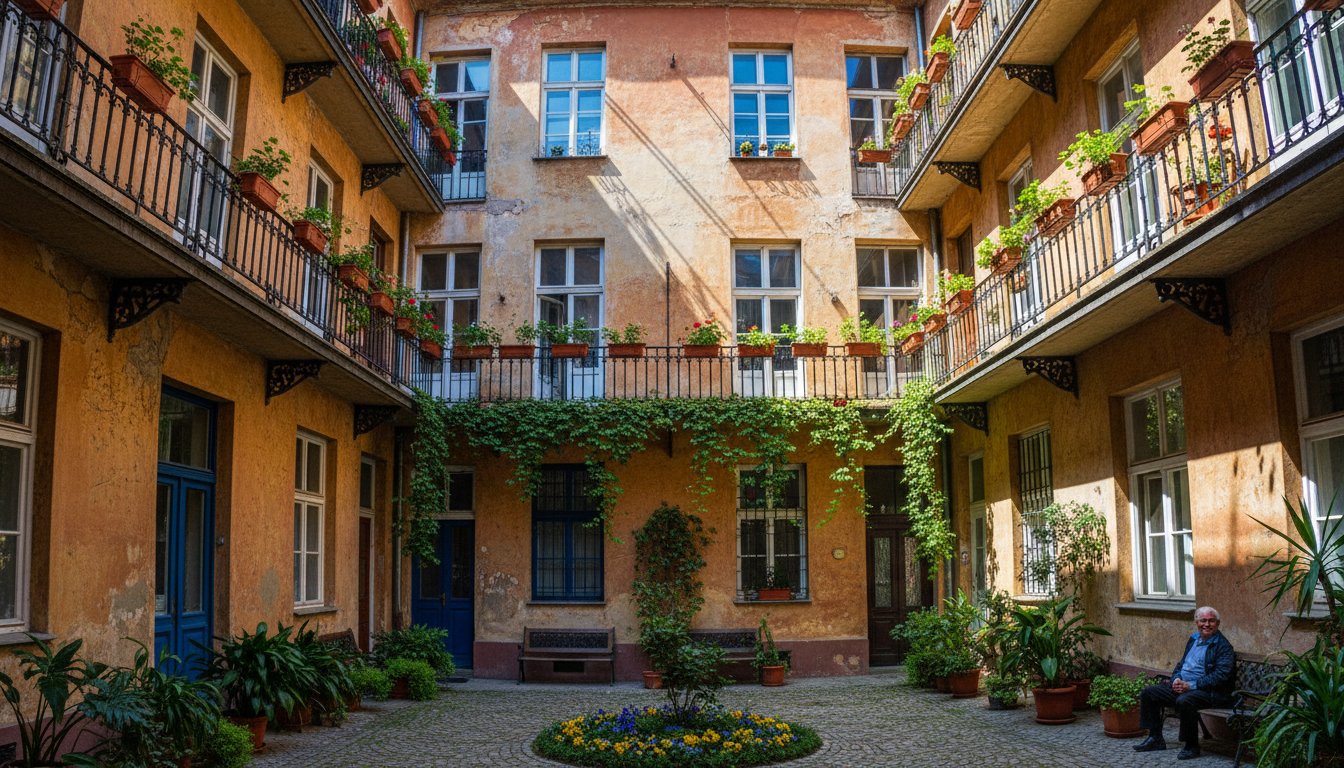 The interior courtyard of a traditional Budapest apartment building in District VII, with wrought-ir
Fair warning: some streets can be noisy at night, especially on weekends. But if you're the kind of retiree who likes being in the middle of things—who wants to walk to a different restaurant every night and stumble upon gallery openings and jazz clubs—this is your spot.
District II (Buda Hills): The Peaceful Retreat
If you want quiet, green spaces, and stunning views, cross the Danube to Buda. District II climbs into the hills, which means stairs and slopes, but also means gardens, hiking trails, and a completely different pace of life.
Many retirees doing extended stays prefer Buda because the homes tend to be larger (sometimes actual houses with gardens), the air is cleaner, and the neighborhood feels more residential. You'll need to take trams or buses to reach the city center, but Budapest's public transit is excellent and senior-friendly.
The trade-off: fewer restaurants and cafés within walking distance, and you'll miss that urban energy that makes Pest so exciting.
District XIII (Újlipótváros): The Hidden Gem
This is my sleeper pick for retirees. District XIII sits just north of the tourist center, along the Danube, and it's where actual Budapestians live their actual lives. The neighborhood is flat, safe, full of local markets and bakeries, and significantly cheaper than Districts V or VII.
Margaret Island—Budapest's beloved park—is right there, perfect for morning walks or afternoon reading on a bench. And you're still only a 15-minute tram ride from the city center.
Home exchanges in District XIII often offer more space for less: two-bedroom apartments with balconies, sometimes even parking if you're planning to rent a car for day trips.
Planning Your Extended Budapest Home Exchange
Here's where retirement travel really shines: you have time. You're not trying to cram Budapest into a long weekend between meetings. You can stay for a month. Two months. A whole season.
That changes everything about how you should approach your trip.
The Sweet Spot: 3-6 Weeks
In my experience, the ideal first Budapest home exchange for retirees is about 4-6 weeks. Long enough to settle into a routine, find your favorite thermal bath, discover the bakery that makes the best rétes (strudel), and actually relax. But short enough that you're not committing to a full season if Budapest turns out not to be your vibe.
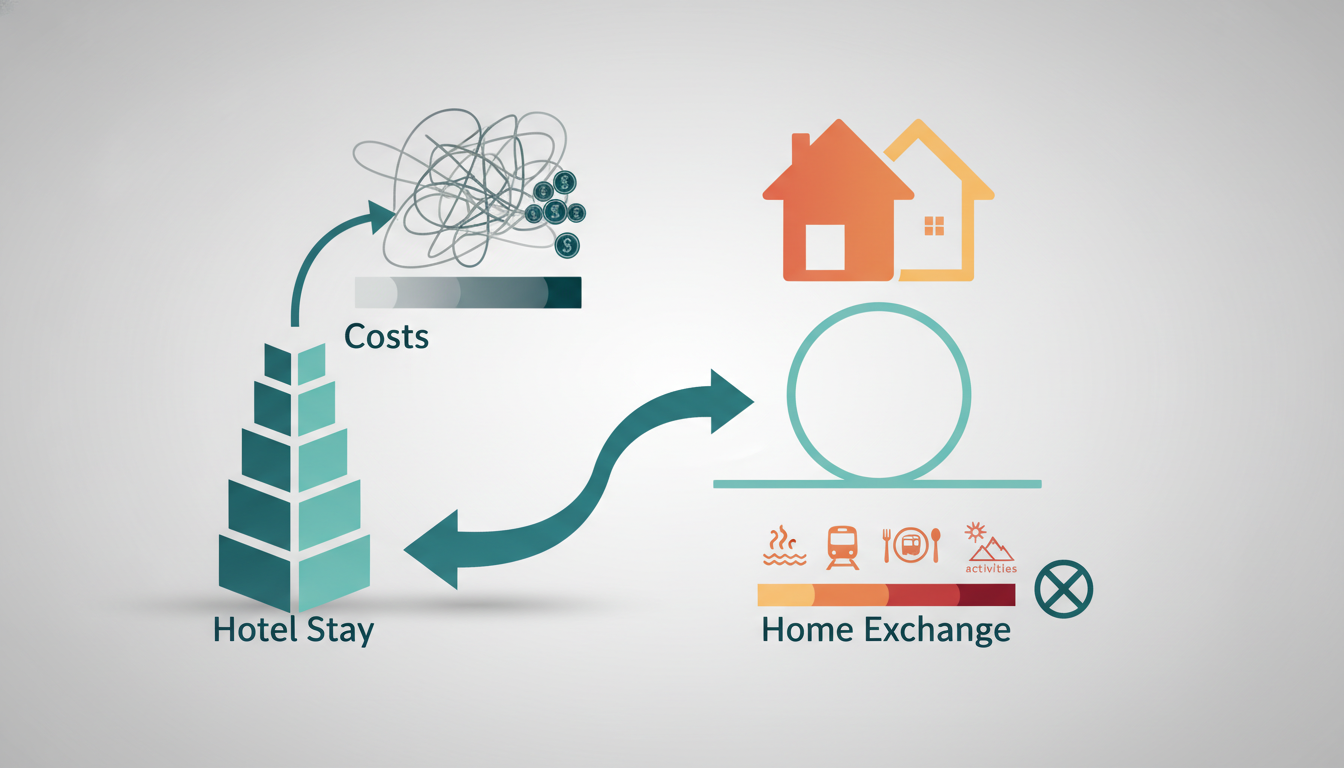 Infographic comparing costs Hotel stay 28 nights showing 2,800-4,200 vs Home Exchange showing 0 acco
Timing Your Visit
Budapest is magnificent year-round, but each season offers something different.
Spring (April-May) brings perfect weather, blooming gardens, and the start of outdoor café season. This is peak home exchange demand, so start looking 3-4 months ahead.
Summer (June-August) gets hot—sometimes uncomfortably so—but the city empties out as locals head to Lake Balaton. Easier to find home exchanges, but make sure the apartment has air conditioning or good cross-ventilation.
Fall (September-October) is my favorite. Golden light, wine harvest festivals, still warm enough for outdoor thermal baths. Moderate demand for exchanges.
Winter (November-March) is cold and gray, but the Christmas markets are magical, the thermal baths feel extra luxurious, and you'll have the museums to yourself. Easiest time to find home exchanges, and many Budapest homeowners are eager to escape to warmer climates.
What to Look for in a Budapest Home Exchange
When browsing listings on SwappaHome, here's my checklist for retirees.
Non-negotiables: Elevator access (many beautiful old buildings don't have them—always check), heating system (Budapest winters are no joke), washing machine, reliable WiFi for video calls with family and streaming, and location within a 10-minute walk of public transit.
Nice-to-haves: A balcony or terrace for morning coffee and evening wine, a bathtub (after all that walking, you'll want soaks), dishwasher (small luxury, big quality-of-life boost), and nearby pharmacy and grocery store.
Red flags: "Charming walk-up" usually means 4+ floors of stairs. "Lively neighborhood" can mean noisy. And if there are no photos of the bathroom? There's always a reason.
Practical Tips for Retirees Doing Budapest Home Exchange
Let me share some things I wish someone had told me before my first extended Budapest stay.
Healthcare Access
Hungary has excellent healthcare, and many doctors in Budapest speak English. If you're from the EU, your European Health Insurance Card (EHIC) covers emergency care. Americans and others should absolutely get travel insurance that covers medical expenses—this isn't something SwappaHome provides, so you'll want to arrange your own policy.
Private clinics like FirstMed (District V) cater to expats and tourists, with English-speaking staff and same-day appointments. A basic consultation runs about $80-100.
Pharmacies (gyógyszertár) are everywhere, and many common medications are available over the counter that would require prescriptions elsewhere. Just bring a list of your current medications with generic names.
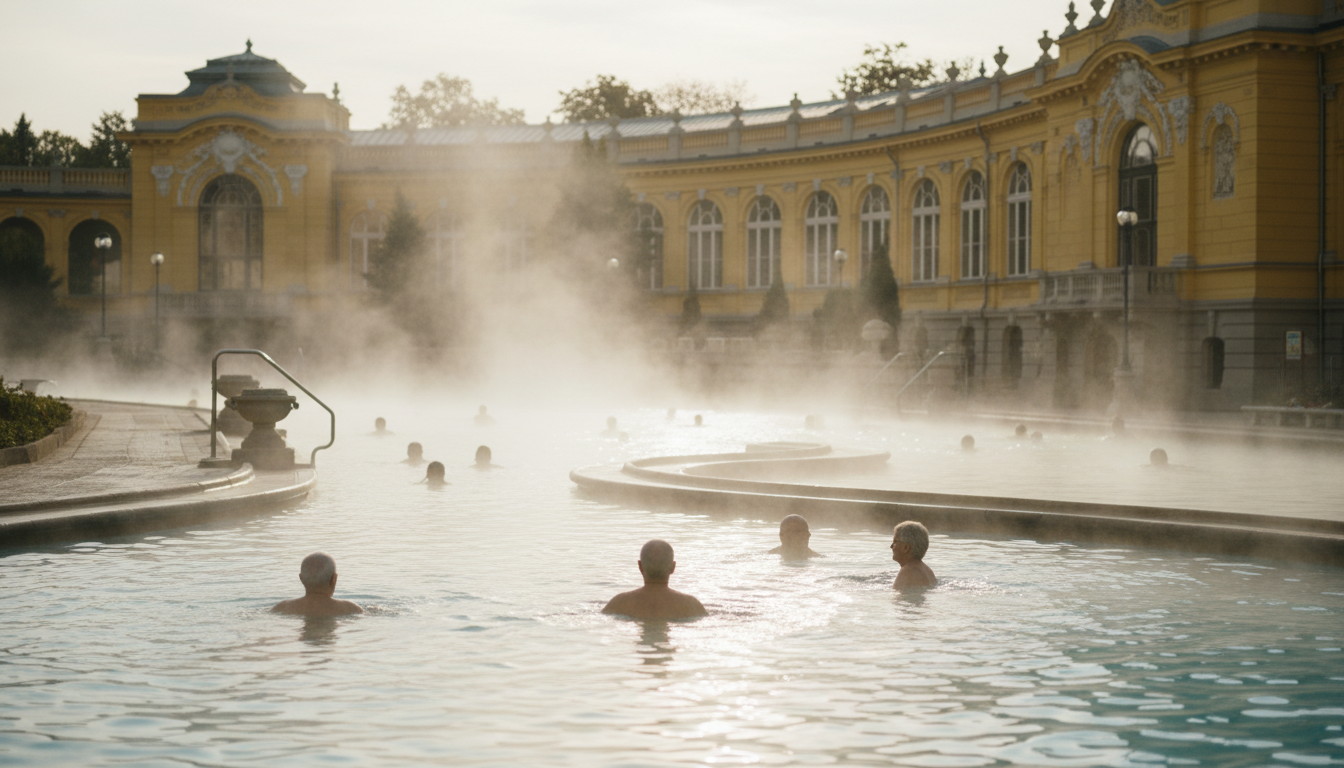 A peaceful morning scene at Szchenyi Thermal Baths, with steam rising from the outdoor pools, ornate
Getting Around
Budapest's public transit system is a gift. The metro, trams, and buses are clean, frequent, and easy to navigate.
For retirees, I recommend the monthly pass (about $12 for seniors 65+ with proof of age), tram lines 2 and 4-6 for scenic routes that connect most places you'll want to go, and the BKK app for real-time transit info in English.
Taxis are cheap by Western standards ($5-10 for most in-city trips), and apps like Bolt work exactly like Uber. For day trips, trains from Keleti or Nyugati stations will take you to wine country, Lake Balaton, or charming small towns for just a few dollars.
Language Barrier (It's Not as Bad as You Think)
Hungarian is genuinely difficult—I won't sugarcoat that. It's not related to any language you probably speak, and even basic pronunciation is tricky. But here's the good news: English is widely spoken in Budapest, especially in tourist areas, restaurants, and among younger Hungarians.
That said, learning a few phrases goes a long way. Jó napot (yo NAH-pot) means good day. Köszönöm (KUH-suh-nuhm) is thank you. Egészségedre (EH-gays-shay-ged-reh) works for both cheers and bless you. And Beszél angolul? (BEH-sail AHN-go-lool) asks do you speak English?
Hungarians genuinely appreciate any attempt at their language, even if you butcher it completely.
Money Matters
Hungary uses the forint (HUF), not the euro. As of my last visit, $1 USD was roughly 350-380 HUF. ATMs are everywhere and offer good exchange rates—avoid the exchange bureaus on Váci utca, which are tourist traps.
Credit cards are accepted at most restaurants and shops, but smaller markets, trams, and some thermal baths are cash-only. I recommend keeping 10,000-20,000 HUF ($30-55) in cash for daily expenses.
Building Community During Your Budapest Stay
One thing I hear from retirees again and again: the fear of loneliness during extended travel. It's real, and it's valid. But Budapest makes it surprisingly easy to build connections.
The Thermal Bath Social Scene
Those chess-playing gentlemen I mentioned at the beginning? They're there every single day. Thermal baths in Budapest aren't just about wellness—they're social institutions. Regulars know each other. Conversations happen. If you visit the same bath at the same time for a week, you'll start recognizing faces.
Széchenyi is the most famous, but locals prefer Rudas (stunning Ottoman architecture, rooftop pool with city views) or Király (smaller, more intimate, recently renovated).
Expat and International Groups
Budapest has a thriving expat community, including many retirees who've made it their base. Facebook groups like "Expats in Budapest" and "Budapest International Community" regularly organize meetups, language exchanges, and cultural outings. InterNations hosts monthly events specifically for internationals.
Your Home Exchange Network
Here's something beautiful about home exchange: you're automatically connected to a community. Your hosts often leave recommendations, introduce you to their neighbors, or even stay in touch during your visit. I've had hosts who invited me to family dinners, connected me with their English-speaking friends, and checked in regularly to make sure I was settling in okay.
This isn't guaranteed, of course—some exchanges are more transactional. But the SwappaHome community tends to attract people who genuinely enjoy hosting and connecting with travelers.
Day Trips Worth Taking
Once you've settled into Budapest life, the surrounding region offers incredible day trip opportunities—all easily accessible by train or bus.
Szentendre is just 30 minutes by train. A picturesque artists' village on the Danube with cobblestone streets, galleries, and excellent Serbian food. Perfect for a lazy afternoon.
Eger takes about 2 hours by train. Famous for its thermal baths, baroque architecture, and the Valley of the Beautiful Women—a collection of wine cellars where you can taste Hungary's famous Egri Bikavér (Bull's Blood) for almost nothing.
Lake Balaton is 1.5 hours by train. Central Europe's largest lake, lined with resort towns, vineyards, and thermal spas. The north shore (Tihany, Balatonfüred) is more upscale; the south shore is more casual and family-oriented.
Visegrád and Esztergom are 1-2 hours by bus. Medieval castles, stunning Danube Bend views, and Hungary's largest basilica. Combine them for a full day trip.
The Real Cost of Retirement Travel to Budapest
Let me break down what a month in Budapest actually costs, assuming you're doing a home exchange.
Fixed costs: Accommodation is $0 through home exchange. Flights from the US East Coast run $600-900 round trip. Travel insurance for one month costs $100-150. Monthly transit pass is $12.
Variable costs (comfortable but not extravagant): Groceries and cooking at home run $200-250. Eating out 10-12 meals costs $150-200. Thermal baths for 8-10 visits total $150-200. Museums and attractions add $50-75. Day trips cost $100-150. Miscellaneous expenses run another $100-150.
Total for one month: approximately $1,400-2,000
Compare that to a month in Paris, Rome, or London, and you'll understand why Budapest has become such a popular retirement travel destination.
Getting Started with Your Budapest Home Exchange
If you're convinced (and honestly, why wouldn't you be?), here's how to make your Budapest retirement travel dream happen.
Step 1: Create your SwappaHome profile. Be detailed about your home—good photos, honest descriptions, mention what makes your place special. Retirees often have homes that are particularly appealing to families (more space, quieter neighborhoods, maybe a garden).
Step 2: Start browsing Budapest listings. Use the filters to find apartments with elevators, in your preferred districts, with the amenities you need. Save favorites.
Step 3: Reach out to potential hosts. Introduce yourself, explain why you're interested in their place, share a bit about your travel style. The best exchanges start with genuine connection.
Step 4: Plan your timing. Remember, you start with 10 free credits—that's 10 nights to test the waters. If Budapest captures your heart (it will), you can host more guests at home to earn additional credits for longer stays.
Step 5: Book your flights, arrange travel insurance, and start learning those Hungarian phrases.
A Final Thought
I've written about dozens of destinations over the years, but Budapest holds a special place in my recommendations for retirees. It's not just the affordability, though that matters. It's not just the beauty, though every corner surprises you. It's the pace.
Budapest doesn't rush. The thermal baths have been there for 500 years; they'll wait for you to finish your coffee. The ruin bars don't start filling up until midnight. The Danube keeps flowing whether you're watching it or not.
For retirees who've spent decades on someone else's schedule, that permission to slow down—really slow down—is worth more than any luxury hotel could offer.
And when you add home exchange to the equation? When you're waking up in a real apartment, shopping at the local market, nodding hello to the same neighbors every morning?
That's not tourism anymore. That's living.
Frequently Asked Questions
Is Budapest safe for retired travelers?
Budapest is considered one of Europe's safest capitals for travelers of all ages. Violent crime is rare, and most tourist areas are well-lit and well-policed. Standard precautions apply—watch for pickpockets on crowded trams and avoid unlit areas late at night—but retirees consistently report feeling comfortable and secure during extended stays.
How much can I save with home exchange versus hotels in Budapest?
A mid-range Budapest hotel averages $80-120 per night, meaning a month-long stay would cost $2,400-3,600 in accommodation alone. With home exchange through SwappaHome, accommodation costs $0—just 1 credit per night. Over a 30-day stay, that's savings of $2,400-3,600 that can fund your entire trip's food, activities, and day trips combined.
Do I need to speak Hungarian for retirement travel to Budapest?
No, English is widely spoken in Budapest's tourist areas, restaurants, hotels, and among younger Hungarians. However, learning basic phrases like "köszönöm" (thank you) and "jó napot" (good day) is appreciated by locals. Pharmacy staff and medical professionals in international clinics speak English fluently.
What's the best time of year for retirees to visit Budapest?
Spring (April-May) and fall (September-October) offer the most comfortable weather for walking and sightseeing, with temperatures between 60-75°F. Winter (November-March) is cold but offers magical Christmas markets and fewer tourists. Summer can be hot (85°F+), so ensure your home exchange has air conditioning if visiting June-August.
Can I access quality healthcare as a retiree in Budapest?
Yes, Budapest has excellent healthcare facilities with English-speaking doctors. Private clinics like FirstMed cater specifically to international visitors and expats. EU citizens can use their EHIC card for emergency care. Non-EU visitors should arrange comprehensive travel insurance before arriving, as SwappaHome does not provide medical coverage.
40+
Swaps
25
Countries
7
Years
About Maya Chen
Travel Writer & Home Exchange Expert
Maya is a travel writer with over 7 years of experience in the home swapping world. Originally from Vancouver and now based in San Francisco, she has completed more than 40 home exchanges across 25 countries. Her passion for "slow" and authentic travel led her to discover that true luxury lies in living like a local, not a tourist.
Ready to try home swapping?
Join SwappaHome and start traveling by exchanging homes. Get 10 free credits when you sign up!
Related articles
Lyon Home Exchange: Your Complete Guide to France's Hidden Gem for Home Swapping
Discover why Lyon home exchange is booming among savvy travelers. From Croix-Rousse to Presqu'île, find the best neighborhoods and insider tips for your swap.
Zurich Bucket List: 47 Unforgettable Experiences to Enjoy During Your Home Swap
Discover the ultimate Zurich bucket list for home swappers—from secret swimming spots to fondue rituals locals actually do. Save thousands while living like a true Zürcher.
Dublin Home Exchange Utilities Guide: WiFi, Heating & Everything Your Guests Need
Master Dublin home exchange utilities—from dodgy WiFi fixes to heating quirks. Practical tips from 7 years of swapping homes across Ireland.