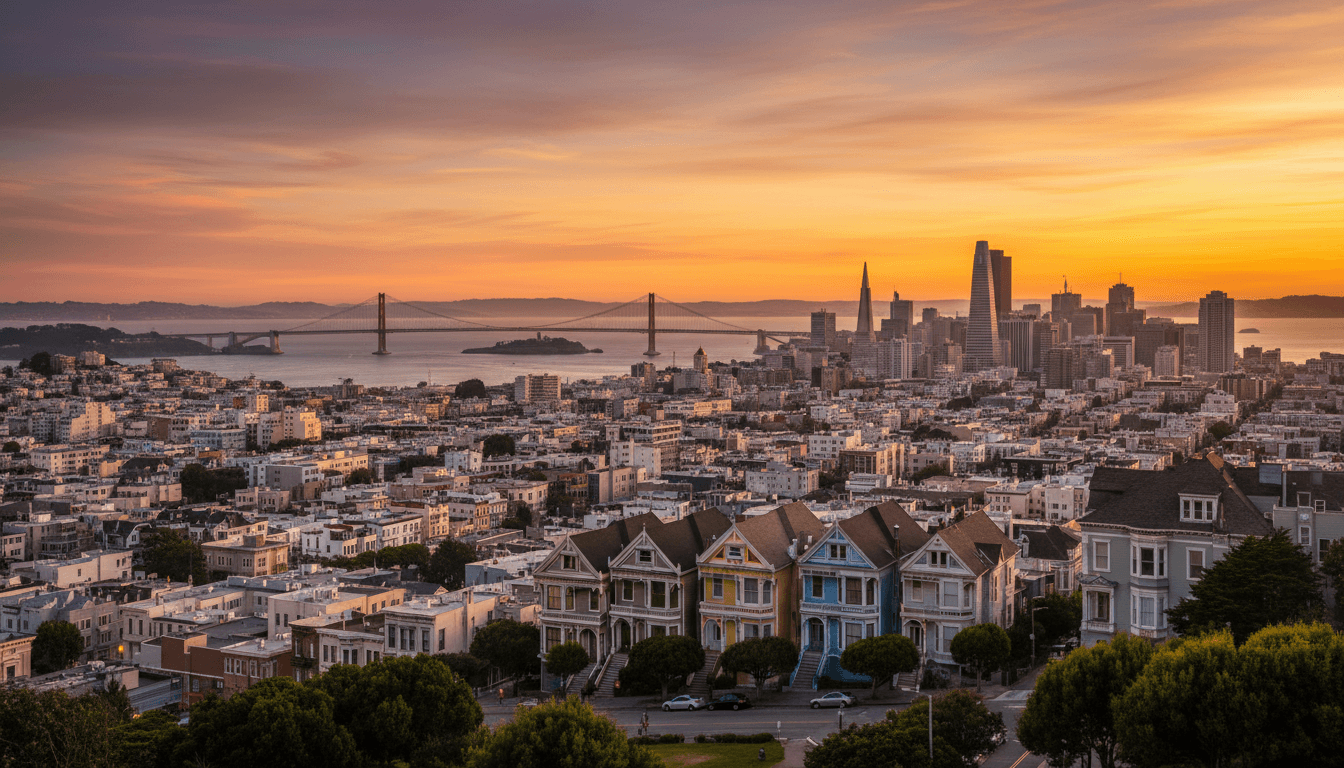
San Francisco Home Exchange Guide: Utilities, WiFi & Essentials for Your Stay

SwappaHome Editorial Team
Home Exchange & Slow Travel Editorial
Everything you need to know about utilities, WiFi, and daily essentials when doing a home exchange in San Francisco—from a local who's hosted 40+ swaps.
The first time I hosted a home exchange guest from Berlin, she messaged me three days into her stay: "Maya, I cannot figure out your garbage system. There are four bins and I'm terrified of doing it wrong."
Fair. San Francisco's composting requirements alone could fill a graduate thesis.
If you're planning a San Francisco home exchange, the city's utilities, WiFi setup, and daily essentials work differently than most places you've traveled. After seven years of swapping homes and hosting guests from 25 countries in my Noe Valley apartment, I've learned exactly what trips people up—and how to make your stay seamless.
This guide covers everything from decoding PG&E bills to finding the best coffee within walking distance of any neighborhood. Consider it the manual I wish someone had handed me when I first moved here.
 Morning light streaming through a Victorian bay window in a San Francisco home, with a coffee cup on
Understanding San Francisco Utilities for Home Exchange Guests
So here's the thing about keeping the lights on in this city.
Electricity and Gas: The PG&E Situation
Pacific Gas & Electric handles both electricity and natural gas for most San Francisco homes. You won't deal with bills directly as a guest—that's between you and your host—but understanding the system helps you be considerate.
What I tell everyone staying at my place:
Electricity here averages $0.25-0.35 per kWh. That's way above the national average. Running heat all day or leaving every light blazing will genuinely impact your host's bill. Most hosts won't mention this, but it's good guest etiquette to be mindful.
The good news? San Francisco's mild climate means you rarely need AC—most homes don't even have it. Heating's only necessary during foggy summer mornings and winter evenings. Yes, you read that right. Summer mornings can be colder than winter afternoons here. Mark Twain may never have actually said that thing about the coldest winter being a San Francisco summer, but whoever did wasn't wrong.
Most homes use forced-air gas heating controlled by a thermostat. Staying in an older Victorian? (You probably are.) The heating might be radiators or wall units. Ask your host for specifics before you arrive.
Water and the California Drought Reality
Even when California isn't in an official drought, water conservation is part of the culture. San Francisco water comes from the Hetch Hetchy reservoir in Yosemite—genuinely some of the best tap water in the country—but supply concerns never fully disappear.
Practical translation: shorter showers are appreciated. Most locals aim for 5-7 minutes. You don't need a stopwatch, but if you're used to 20-minute steam sessions, maybe save those for hotel stays.
Water runs about $12-15 per unit (748 gallons), with most households using 4-6 units monthly. Your host covers this, but being mindful matters.
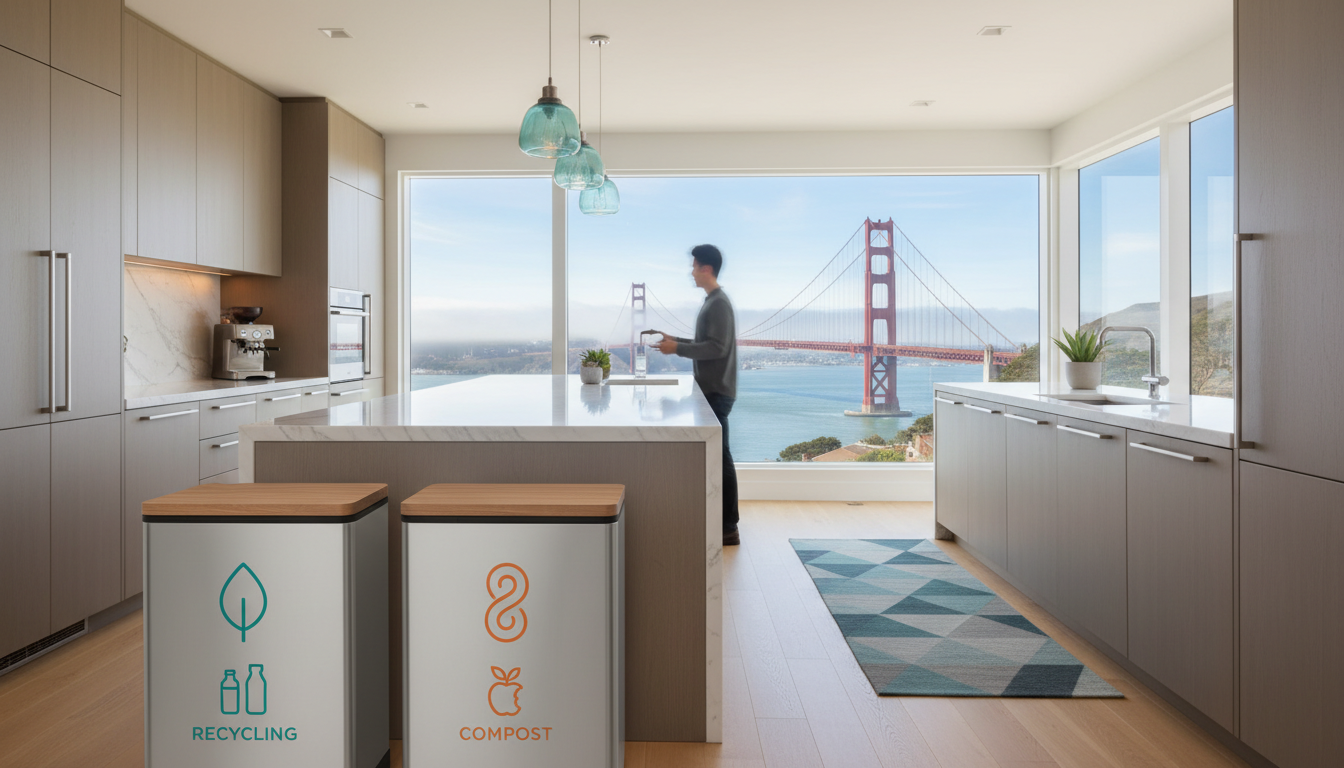 A modern kitchen in a San Francisco apartment showing the recycling and compost bins clearly labeled
San Francisco WiFi and Internet: What Home Exchange Guests Need to Know
This is where people have the most questions. And honestly? The most frustration.
Internet Providers and Speed Expectations
San Francisco's internet infrastructure varies wildly by neighborhood. Tech-heavy areas like SoMa, the Mission, or Potrero Hill often have fiber connections offering 500+ Mbps. Hillier neighborhoods—Twin Peaks, Bernal Heights, parts of the Sunset—can be more modest. Think 50-100 Mbps on a good day.
The main providers:
- Xfinity (Comcast): Most common, typically 200-400 Mbps
- AT&T Fiber: Available in newer buildings, can hit 1 Gbps
- Sonic: Local favorite with great customer service, speeds vary
- Webpass/Google Fiber: Select apartment buildings, extremely fast
Before your exchange, ask your host: "What's your typical WiFi speed, and is the connection reliable for video calls?" If you're working remotely, this matters more than thread count.
The Remote Work Reality
I've hosted dozens of remote workers doing home exchanges here. My honest advice? Always have a backup plan.
San Francisco has excellent coffee shop WiFi culture. If your host's connection hiccups during an important call, these spots have reliable internet and good coffee:
- Sightglass Coffee (SoMa): Fast WiFi, plenty of outlets, $5-7 lattes
- Ritual Coffee (Mission): Iconic SF spot, good for a few hours
- Matching Half Café (Noe Valley): Quieter, great for focused work
- The Mill (Divisadero): Excellent toast, strong connection
Most charge $4-7 for a coffee that buys you a few hours of workspace.
Also worth knowing: San Francisco Public Library offers free WiFi and workspace at all branches. The main library at Civic Center has private study rooms you can reserve.
Setting Up Your Devices
Your host should provide WiFi credentials when you arrive. If they haven't? Message them immediately—don't wait until you're desperate to send a work email.
A few tech tips specific to SF:
Cell coverage gets spotty in certain neighborhoods, especially valleys (Noe Valley, Cole Valley) and near hills. If you're relying on mobile hotspot as backup, test it when you arrive. Verizon and AT&T generally have the best coverage; T-Mobile can be patchy in residential areas.
Smart home devices are common here. Your host might have a Nest thermostat, Ring doorbell, or smart lights. Ask for a quick tutorial before they leave—or request a written guide. I once had a guest who couldn't figure out how to turn off my bedroom lights for three days because everything was on smart switches.
 A cozy home office nook in a San Francisco Victorian apartment, with a laptop on a wooden desk, good
Daily Essentials: Groceries, Laundry, and Neighborhood Navigation
Now for the stuff that makes daily life actually work.
Grocery Shopping in San Francisco
Grocery costs run 20-30% higher than the national average here. A gallon of milk costs around $5.50-6.50. Eggs are $6-8 per dozen. A basic grocery run for a week easily hits $150-200 for two people.
Your main options:
Trader Joe's has locations in Noe Valley, the Marina, Stonestown, and Masonic. Best prices for basics, wine, and snacks. The Noe Valley location on 24th Street is perpetually crowded but worth it.
Whole Foods is pricier but has excellent prepared foods if you don't want to cook. The Market Street location has a great hot bar.
Safeway is the default neighborhood grocery in most areas. Moderate prices, standard American supermarket selection.
Rainbow Grocery in the Mission is a worker-owned co-op with bulk goods, organic produce, and the best cheese selection in the city. It's an experience.
Bi-Rite Market in the Mission and Western Addition is small but curated—excellent for splurge ingredients and their famous ice cream next door.
For the best produce prices, hit the Ferry Building Farmers Market on Saturday mornings or the Alemany Farmers Market on Saturdays. Alemany's more local, less touristy, better prices.
The San Francisco Garbage System (Yes, It Needs Its Own Section)
Remember my Berlin guest and her garbage terror? Here's the breakdown:
San Francisco has mandatory composting, and yes, it's enforced. Every home has three bins:
Green bin (Compost): Food scraps, coffee grounds, tea bags, soiled paper, yard waste. When in doubt, it probably goes here.
Blue bin (Recycling): Clean paper, cardboard, glass, metal, most plastics. No plastic bags, no styrofoam, no food-contaminated items.
Black bin (Landfill): Everything else—but honestly, this should be your smallest pile.
Recology handles all collection. Pickup days vary by neighborhood, so ask your host. Most residential areas have weekly pickup for all three bins.
Pro tip: Keep a small compost container on the kitchen counter (most SF kitchens have one) and empty it every day or two to avoid fruit flies. Non-negotiable in summer.
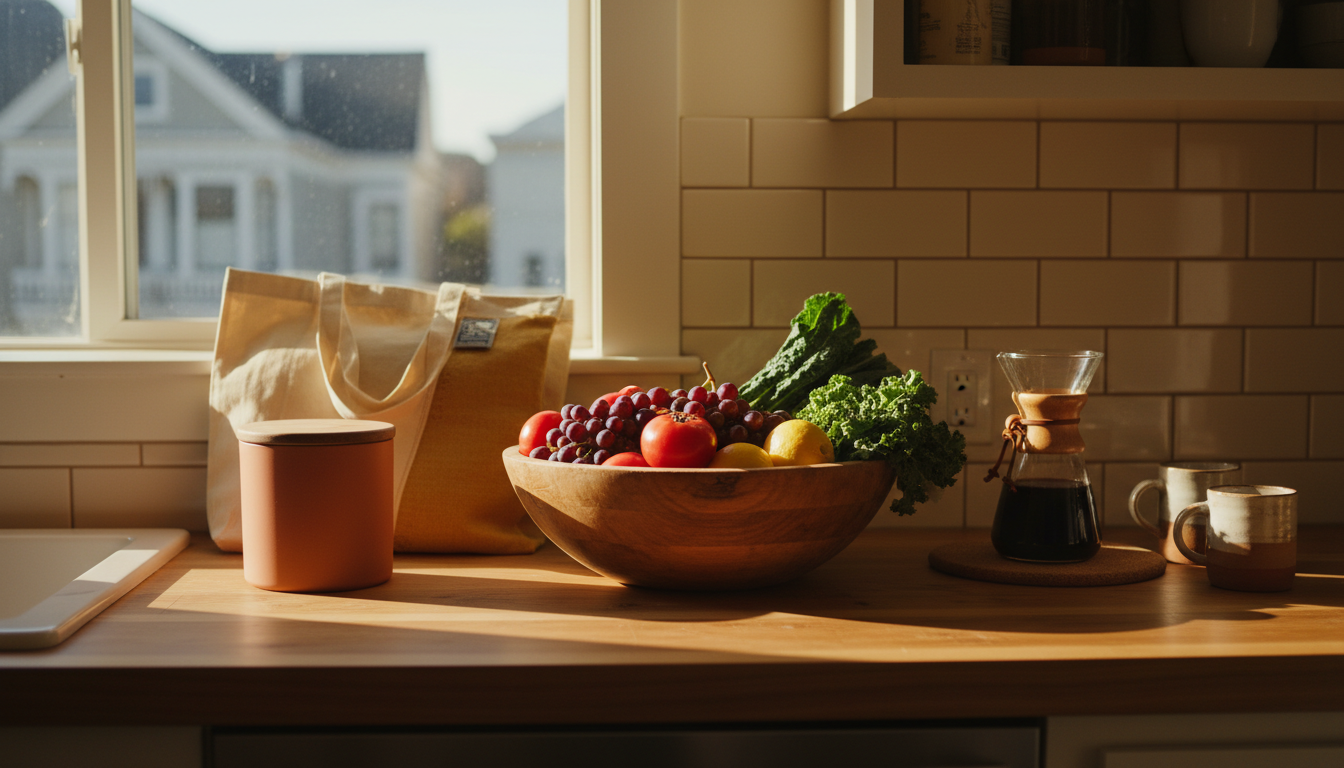 A well-organized San Francisco kitchen counter showing a small compost bin, reusable shopping bags,
San Francisco Home Exchange Essentials: What to Bring and What You'll Find
What Most SF Homes Provide
Based on my experience hosting and staying in homes across the city, here's what you can typically expect:
Usually provided: Linens, towels, basic toiletries (soap, shampoo), kitchen essentials (oil, salt, pepper, basic spices), coffee maker, WiFi, streaming services
Sometimes provided: Laundry detergent, specialty coffee, wine, bikes, transit cards, beach gear
Rarely provided: Personal care items beyond basics, specific dietary ingredients, international power adapters
Always confirm before arrival. A quick message asking "What should I bring versus what's available at your place?" saves everyone awkwardness.
What You Should Definitely Pack
Layers. I cannot stress this enough. San Francisco's microclimates mean you can experience four seasons in a single afternoon. A sunny Mission morning can turn into a foggy, 55°F Sunset evening.
Pack a light jacket or fleece you can tie around your waist. One warmer layer for evenings—hoodie, light down jacket. Comfortable walking shoes because the hills are real. Sunglasses AND a light scarf.
A reusable bag. Single-use plastic bags are banned here. Stores charge $0.25 for paper bags. Just bring your own.
Your own coffee if you're particular. SF has incredible coffee shops, but if you need a specific roast for your morning pour-over, bring it. Your host's Folgers might not cut it.
Laundry Logistics
Many San Francisco apartments—especially in older buildings—don't have in-unit laundry. Your host should tell you about their setup:
In-unit washer/dryer: Lucky you. Ask about any quirks. (My dryer needs two cycles for jeans.)
Shared building laundry: Usually in the basement or garage. Bring quarters—most machines are still coin-operated. $2-3 per wash, $2-3 per dry cycle.
Laundromat: If the building has nothing, your host should point you to the nearest one. Expect $4-6 per load, or $15-25 for wash-and-fold service.
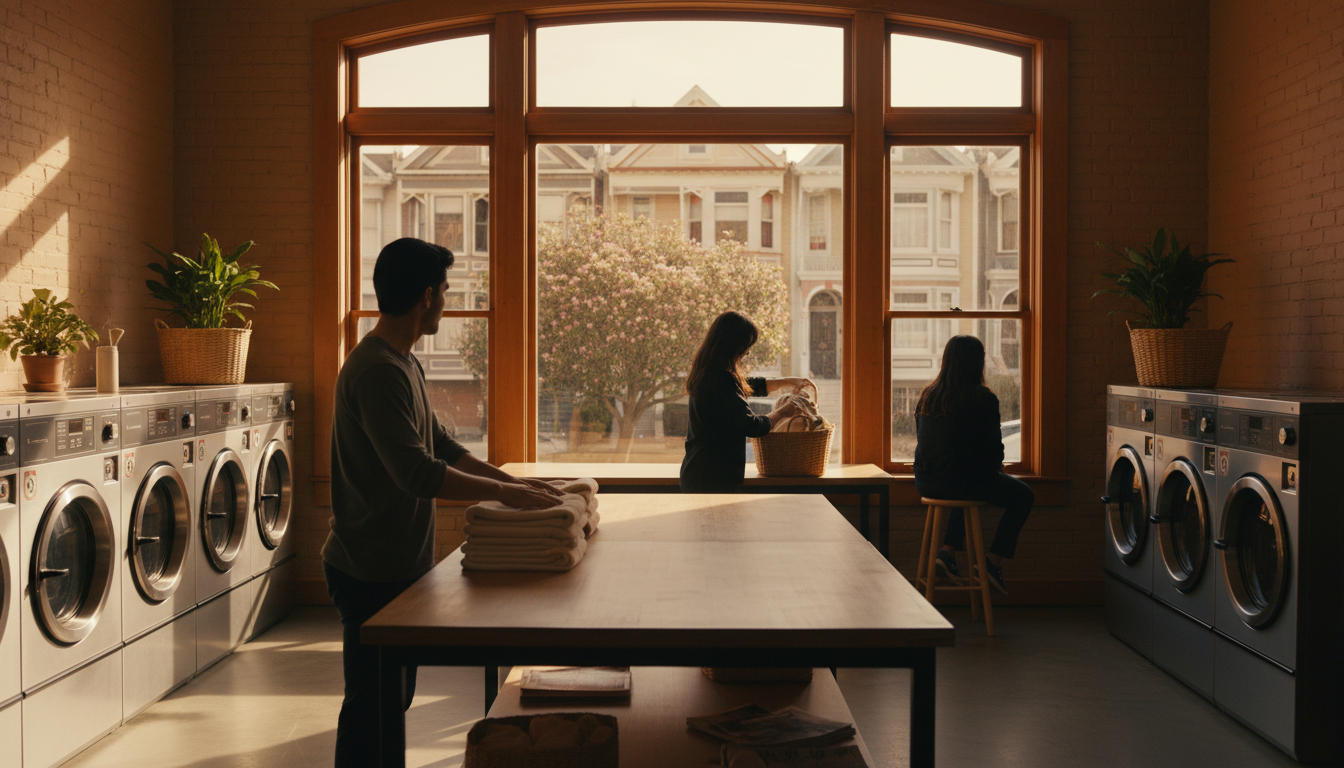 A sunny San Francisco laundromat with large windows, a few locals folding clothes, and a view of Vic
Neighborhood-Specific Tips for San Francisco Home Exchange
Where you're staying changes everything about your daily logistics. Here's the real talk on SF's most popular home exchange neighborhoods:
The Mission
Pros: Best food scene, excellent transit (BART + Muni), flat streets, sunny microclimate
Cons: Can be gritty, parking is nightmarish, some streets are loud at night
Grocery go-to: Bi-Rite Market or Rainbow Grocery. Coffee: Four Barrel, Sightglass. Laundry backup: Mission Laundry on Valencia.
Noe Valley
Pros: Family-friendly, walkable main street, excellent restaurants, relatively quiet
Cons: Hilly, limited nightlife, can feel suburban
Grocery go-to: Whole Foods on 24th or Trader Joe's. Coffee: Matching Half, Bernie's. Laundry backup: Most homes here have in-unit or building laundry.
The Marina/Cow Hollow
Pros: Flat, gorgeous waterfront access, upscale dining, safe
Cons: Expensive everything, "basic" reputation, far from downtown
Grocery go-to: Trader Joe's on Masonic, Mollie Stone's. Coffee: Equator, Jane. Laundry backup: Laundry Locker on Lombard.
Hayes Valley
Pros: Central location, great shopping/dining, walkable to Civic Center
Cons: Small neighborhood, limited grocery options, pricey
Grocery go-to: Bi-Rite on Divisadero (short walk). Coffee: Ritual, Smitten Ice Cream (yes, for coffee). Laundry backup: Most buildings have shared facilities.
The Sunset/Richmond
Pros: Affordable, authentic neighborhood feel, close to beaches/parks
Cons: Foggy (very foggy), far from downtown, less walkable
Grocery go-to: Safeway, or the Asian supermarkets on Clement/Irving for incredible produce prices. Coffee: Andytown, Devil's Teeth Baking Company. Laundry backup: Numerous laundromats on Taraval and Irving.
Transportation Essentials for Your San Francisco Home Exchange
You probably don't need a car. There, I said it.
Getting Around Without a Car
Muni (buses and light rail) covers most of the city. Single ride is $3, or get a Clipper card and pay $2.50. Your host might have a spare—ask.
BART connects SF to the East Bay and SFO airport. Fares vary by distance, $2-15.
Uber/Lyft are everywhere but expensive. A ride from the Mission to the Marina runs $15-25.
Bikes: If your host has bikes, use them. SF has decent bike infrastructure, though hills are no joke. Bay Wheels (bike share) is $3 per ride or $25/month.
If You Do Have a Car
Parking is a blood sport. Street parking requires reading signs carefully—street cleaning days will get you a $75 ticket. Most neighborhoods have 2-hour limits during business hours unless you have a residential permit. (You won't.)
Garage parking runs $20-40/day in most neighborhoods, $40-60 downtown.
Gas is expensive—currently around $4.80-5.50/gallon, among the highest in the nation.
Honest advice: if your host's home exchange doesn't include parking, leave your car at home or rent only for day trips outside the city.
Emergency Information and Local Resources
Hopefully you won't need this section. But here it is.
Medical Care
Urgent care: CityHealth Urgent Care has multiple locations, walk-ins welcome, $150-300 without insurance for basic visits.
Emergency rooms: UCSF Medical Center, SF General Hospital, Kaiser (if you have Kaiser insurance)
Pharmacies: Walgreens and CVS are everywhere, many open until 10 PM. The Walgreens on Divisadero and Castro are 24-hour.
Utilities Emergency Contacts
Power outage: PG&E outage line 1-800-743-5002
Gas smell: Leave immediately, call 911, then PG&E
Water main break: SF Water 311
General Emergency
911 for police, fire, medical emergencies
311 for non-emergency city services (noise complaints, street issues)
Making Your San Francisco Home Exchange Smooth
After hosting so many guests and doing my own swaps, here's what separates a good home exchange experience from a great one:
Communicate before arrival. Ask about utilities quirks, WiFi passwords, garbage days, anything on your mind. No question is too small.
Leave the home as you found it—or better. Run the dishwasher, take out trash and compost, strip the beds if your host prefers.
Be mindful of costs. Your host is covering utilities during your stay. Don't abuse the heating or leave lights on in empty rooms.
Respect the neighborhood. San Francisco neighborhoods are tight-knit. Say hi to neighbors, don't slam doors late at night, follow parking rules.
Platforms like SwappaHome make finding San Francisco home exchanges straightforward—you can browse listings, read reviews from previous guests, and message hosts directly to ask all these practical questions before committing. The credit system means you're not locked into a direct swap; you can host someone from anywhere and use those credits to stay in SF.
Frequently Asked Questions
How much do utilities cost during a San Francisco home exchange?
Your host typically covers utilities, but San Francisco runs high—electricity averages $0.25-0.35/kWh, water costs $12-15 per unit. Being mindful of consumption shows respect for your host's budget and is good home exchange etiquette.
Is San Francisco WiFi reliable for remote work during a home exchange?
It varies significantly by neighborhood. Tech-heavy areas like SoMa and the Mission often have fiber with 500+ Mbps, while hillier neighborhoods may see 50-100 Mbps. Always ask your host about speeds before booking if you're working remotely.
What should I know about garbage and recycling in San Francisco?
San Francisco has mandatory composting with three bins: green (compost), blue (recycling), black (landfill). Food scraps, coffee grounds, and soiled paper go in compost. Non-compliance can result in fines, so ask your host for a quick walkthrough.
Do I need a car for a San Francisco home exchange?
Most guests don't. Muni buses and light rail cover the city well ($2.50-3 per ride), and parking is expensive and difficult—street parking risks $75 tickets, garages cost $20-60 daily. Use transit, bikes, or rideshares instead.
What essentials should I pack for a San Francisco home exchange?
Pack layers—microclimates here mean 20°F temperature swings in a single day. Bring a light jacket, comfortable walking shoes for hills, sunglasses, a reusable shopping bag (plastic bags are banned), and any specific coffee or toiletries you need. Most hosts provide basics.
San Francisco isn't the easiest city to navigate as a visitor, but that's part of what makes staying in a real home—in a real neighborhood—so much better than a downtown hotel. You'll figure out the compost system, find your favorite corner café, and maybe even start nodding at the neighbors.
That's the whole point of home exchange, isn't it? Not just visiting a place, but living in it—even if only for a week or two.
And if you accidentally put recycling in the compost bin once? Don't worry. We've all been there.

Published by
SwappaHome
SwappaHome Editorial Team
Home Exchange & Slow Travel Editorial
The SwappaHome Editorial Team brings together travel research, home-exchange community insights, and platform data to produce practical guides for first-time and experienced home swappers. Every article cites real platforms, current market rates, and verifiable city-level facts so readers can make informed decisions without guessing.
Ready to try home swapping?
Join SwappaHome and start traveling by exchanging homes. Get 7 free credits when you sign up!
Related articles
Bachelor and Bachelorette Parties in Singapore: The Complete Home Swap Group Guide for 2026
Planning a bachelor or bachelorette party in Singapore? Discover how home swapping lets groups of 6-12 stay together in luxury condos, saving thousands while partying in Marina Bay.
Cycling in Lisbon: 7 Home Swap Bike Tour Itineraries for Every Rider
Discover the best cycling routes in Lisbon with these home swap bike tour itineraries—from waterfront paths to hilltop adventures, all starting from your borrowed home.

Graduation Trip to Barcelona: How Home Swapping Gives New Graduates the Ultimate Celebration
Planning a graduation trip to Barcelona? Discover how home swapping lets new graduates explore Spain's most vibrant city without the hostel crowds or hotel costs.