
Senior-Friendly Home Swap in Portland: Your Complete Guide to Accessible, Comfortable Stays
Maya Chen
Travel Writer & Home Exchange Expert
Discover how to find the perfect senior-friendly home swap in Portland with accessibility features, single-level living, and neighborhoods designed for comfortable exploration.
My mom called me last October with a question I wasn't expecting. "Maya, you know all those home swaps you do? Could someone like me actually do that?"
She's 68, uses a cane after her hip replacement, and had been dreaming about visiting Portland's famous rose gardens for years. Hotels felt risky—what if the room was on a high floor with a tiny bathroom? What if she couldn't find somewhere comfortable to rest between outings?
That conversation sent me down a rabbit hole of research about senior-friendly home swap in Portland options. And honestly? I discovered that Portland might be one of the best cities in America for older travelers looking to exchange homes. The city's accessibility infrastructure, walkable neighborhoods, and the sheer number of single-story bungalows make it almost ideal.
So let me share everything I learned—both from research and from helping my mom plan her first swap.
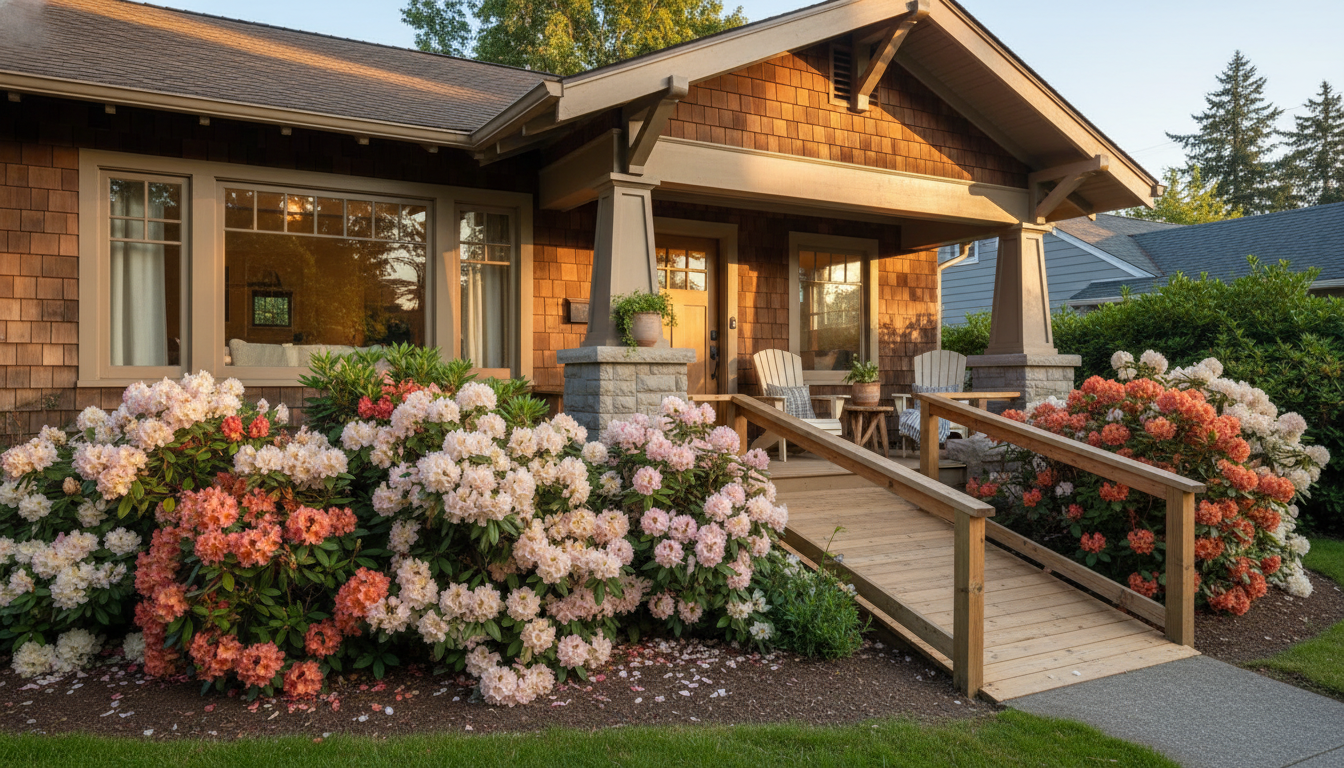 Charming Craftsman bungalow in Portlands Sellwood neighborhood with a gentle ramp entrance, blooming
Why Portland Works So Well for Senior Home Exchanges
Here's something that surprised me: Portland has more single-story homes than almost any major West Coast city. Those classic Portland bungalows from the 1920s? Most of them are entirely on one level. No stairs to navigate, no split-level surprises.
The city also takes accessibility seriously. TriMet, Portland's public transit system, has been ranked among the most accessible in the country. Every bus has a ramp or lift. Every MAX light rail station has elevators. And the city's famous food cart pods? Most have paved, level surfaces now—a change that happened after disability advocates pushed for it.
But the real magic for senior-friendly home swap in Portland is the neighborhood structure. Unlike sprawling cities where you need a car for everything, Portland's neighborhoods are designed around walkability. You can stay in a residential area and still be steps from a bakery, a pharmacy, and a park.
My mom ended up swapping her Vancouver condo for a ground-floor apartment in the Hawthorne district. The owner, a retired teacher named Barbara, had installed grab bars in the bathroom after her own knee surgery. She'd also left detailed notes about which coffee shops had accessible seating and where to find benches along the walking routes to the river.
That's the thing about home swapping with other seniors—they get it. They've thought about the things you're worried about because they've worried about them too.
Best Portland Neighborhoods for Accessible Home Swaps
Not all Portland neighborhoods are created equal when it comes to accessibility. After scouting dozens of options (both virtually and during my own Portland visits), here's where I'd point anyone looking for a senior-friendly stay.
Sellwood-Moreland: The Antique District
This southeast Portland neighborhood feels like stepping back in time—in the best way. The main drag along SE 13th Avenue is lined with antique shops, cozy restaurants, and one of the best bakeries in the city (Papa Haydn, where the cakes are worth every calorie).
What makes it work for seniors: mostly flat terrain, wide sidewalks, and a concentration of single-story homes. The Sellwood Riverfront Park has paved, level paths along the Willamette River. Many restaurants here have outdoor seating that's easier to navigate than cramped indoor spaces.
Typical home swap options run the gamut—1920s bungalows available through SwappaHome's credit system (versus $180-250/night for comparable Airbnbs), many with updated bathrooms and main-floor bedrooms.
Irvington: Historic Elegance with Modern Updates
Northeast Portland's Irvington neighborhood has some of the most stunning historic homes in the city. But here's the insider tip: many of these grand old houses have been converted into duplexes or have separate ground-floor units. Perfect for swapping.
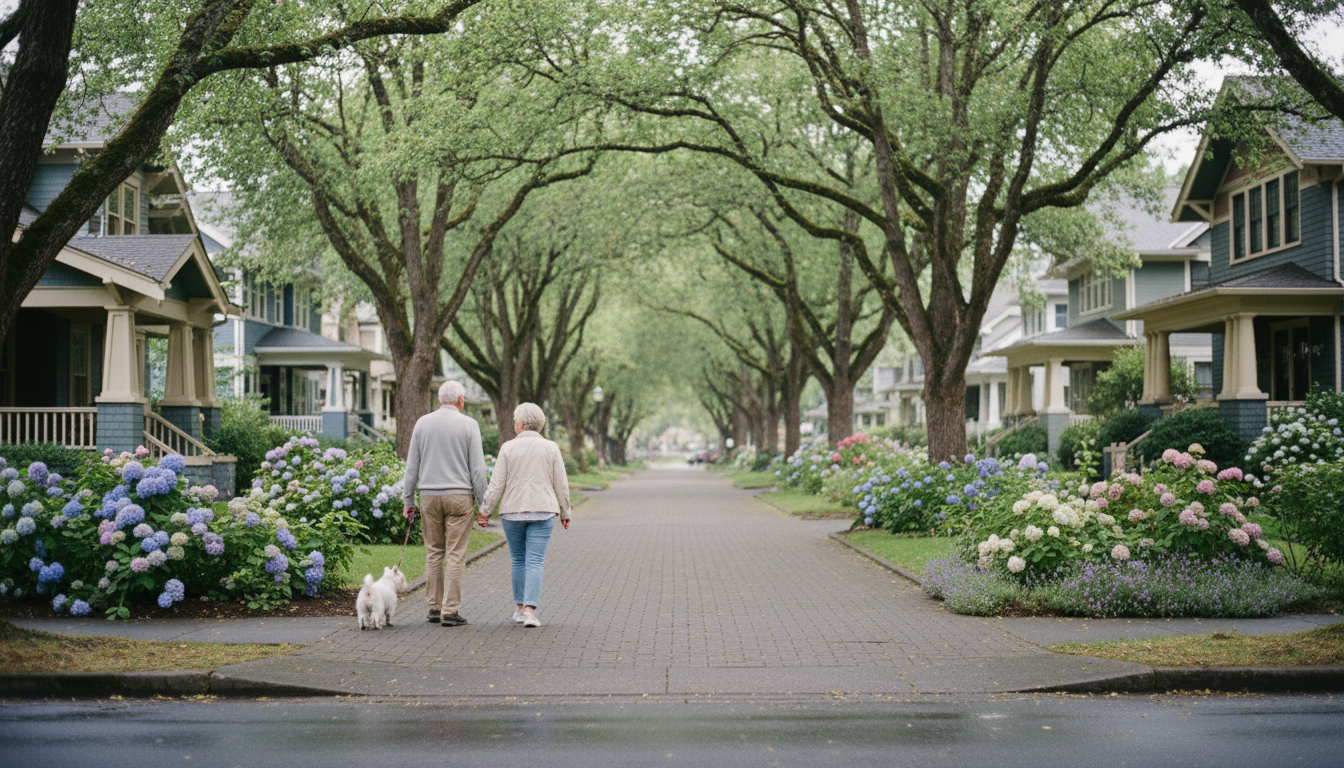 Tree-lined street in Irvington with historic homes, wide sidewalks, and a senior couple walking a sm
The terrain is extremely flat—this was marshland before it was developed—and there's excellent street lighting plus proximity to the Lloyd District's shopping and medical facilities. Providence Portland Medical Center is just minutes away, which offers peace of mind for anyone with health concerns.
You'll find ground-floor units in converted Victorians, newer condos near Broadway, some with elevators.
Multnomah Village: Small-Town Feel in the City
Tucked into southwest Portland, Multnomah Village feels like a separate small town. It has its own main street with a hardware store, a beloved bookshop (Annie Bloom's—my mom spent two hours there), and several restaurants with accessible entrances.
The village center is compact and walkable. Gabriel Park, right nearby, has paved accessible trails and clean restrooms. The neighborhood attracts retirees, so you'll find more homes already set up with accessibility features.
Expect ranch-style homes from the 1950s-60s (naturally single-level), plus some newer townhomes with main-floor master suites.
Alberta Arts District: Vibrant but Variable
I'm including Alberta with a caveat. This northeast Portland arts district is incredible—murals everywhere, galleries, the famous Last Thursday art walk. But accessibility varies block by block.
Some sections have excellent sidewalks and flat terrain. The Alberta Co-op grocery store is fully accessible. Several restaurants have step-free entrances. But some blocks have uneven sidewalks, and a few popular spots have steps at the entrance. If you're considering a swap here, ask specifically about the immediate walking environment.
How to Find Accessible Homes on SwappaHome
Finding the right senior-friendly home swap in Portland takes a bit more communication than a typical exchange. Here's the approach I recommended to my mom—and that she's now used for three successful swaps.
Be Specific in Your Search Filters
When browsing listings, look for keywords like "single-level" or "one-story," "ground floor," "walk-in shower" or "accessible bathroom," "no stairs," and "elevator building."
Not everyone lists accessibility features prominently, so you might need to dig into descriptions or—better yet—just ask.
Ask the Right Questions Before Committing
Once you find a promising listing, send a message through SwappaHome with specific questions. Here's a template my mom uses:
"Hi! I'm interested in your home for [dates]. I'm a senior traveler with some mobility considerations, and I wanted to ask a few questions before we move forward: Are there any steps to enter the home or between rooms? Does the bathroom have a walk-in shower or tub? Any grab bars? How far is it to the nearest grocery store/pharmacy/coffee shop? Is street parking close, or would I need to walk from a lot? Are there any stairs I should know about in the neighborhood?"
Every host she's contacted has been happy to answer. Most have sent additional photos of bathrooms and entrances without being asked.
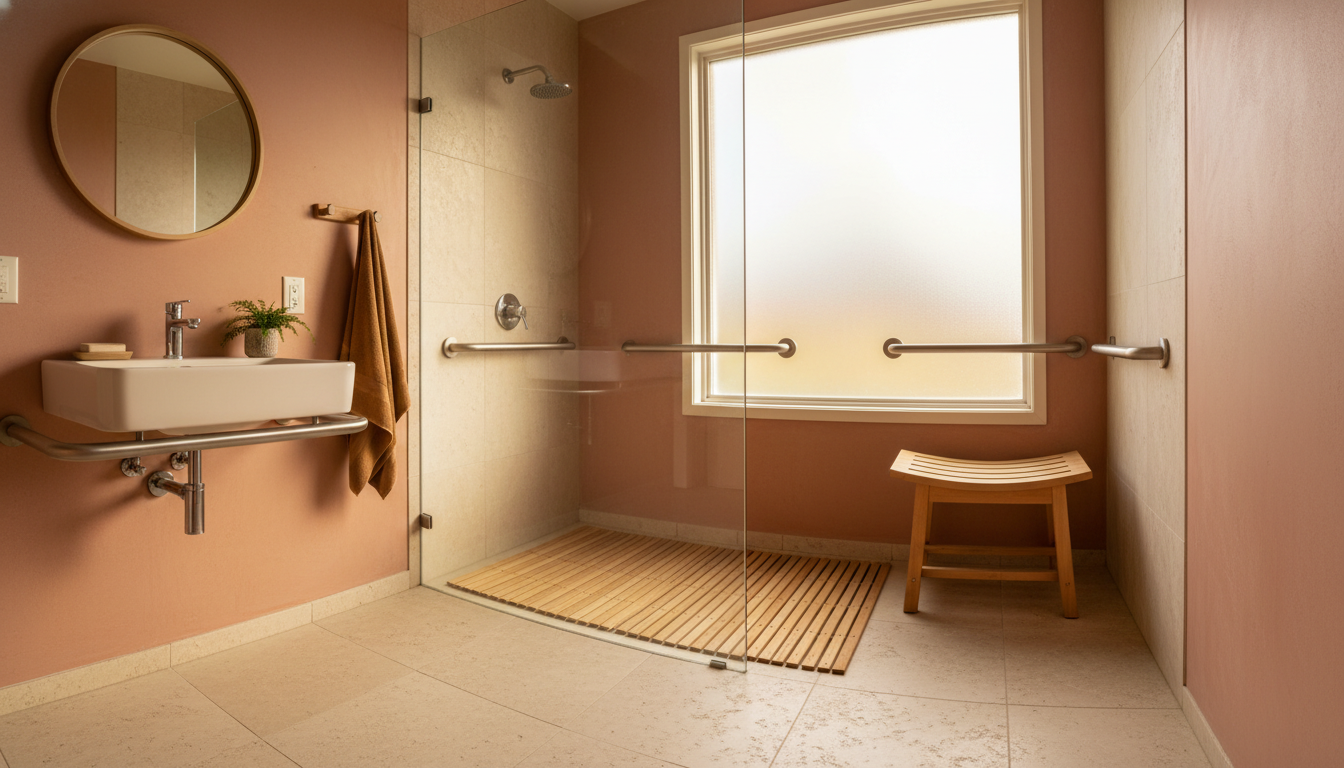 Bright, accessible bathroom with walk-in shower, grab bars, non-slip mat, and a wooden bench seatwar
Look for Hosts Who "Get It"
Some of the best accessible home swaps come from hosts who have their own mobility considerations—or who've hosted elderly parents. Their homes are already set up thoughtfully.
In listing descriptions, look for phrases like "We designed this for aging in place," "My mother stays here when she visits," "Recently renovated for accessibility," or "Comfortable for guests of all mobility levels." These hosts understand what you need because they've lived it.
Essential Accessibility Features to Look For
Based on my mom's experiences and feedback from other senior travelers I've connected with, here are the features that make the biggest difference.
Bathroom Considerations
This is the number one concern I hear about. A gorgeous home means nothing if the bathroom is a hazard.
Prioritize walk-in showers over tubs (or tubs with secure grab bars and non-slip surfaces), grab bars near the toilet and in the shower, good lighting—no dim, moody bathroom situations—a toilet at standard or comfort height (17-19 inches), and non-slip flooring or secure bath mats.
My mom's Portland host had installed a handheld showerhead, which she said made all the difference. It's a small thing, but it meant she could shower sitting on the built-in bench.
Bedroom Setup
Main-floor bedrooms are ideal. If the bedroom is upstairs, that's usually a dealbreaker for anyone with mobility concerns.
Also consider bed height (too low can be hard to get up from; too high requires climbing), nightstand within reach for medications, phone, and water, a clear path to the bathroom—no furniture to navigate in the dark—and adequate lighting with easy-to-reach switches.
Kitchen Accessibility
You might not think about the kitchen, but if you're staying for a week or more, it matters. Look for a microwave at counter height (not mounted above the stove), dishes and cooking essentials in lower cabinets, a place to sit while preparing food, and good lighting over work surfaces.
Outdoor Spaces
Portland's weather is mild enough to enjoy outdoor spaces much of the year. A covered porch or patio can extend your living area significantly.
Check for step-free access to outdoor areas, stable comfortable seating, shade options (Portland summers can get surprisingly warm), and level surfaces—no wobbly flagstones or steep grades.
Portland Accessibility Resources for Visitors
Part of what makes Portland so workable for senior travelers is the infrastructure beyond your swap home.
Transportation
TriMet's Honored Citizen fare is just $1.25 for anyone 65+ (compared to $2.50 regular fare). You can get a Honored Citizen card at the TriMet office downtown or just show ID to the driver.
The MAX light rail connects the airport to downtown and many neighborhoods. Every station has elevators, and trains have priority seating and space for mobility devices.
For days when public transit doesn't work, Portland has several accessible taxi and rideshare options. Uber and Lyft both offer wheelchair-accessible vehicle requests in the Portland area.
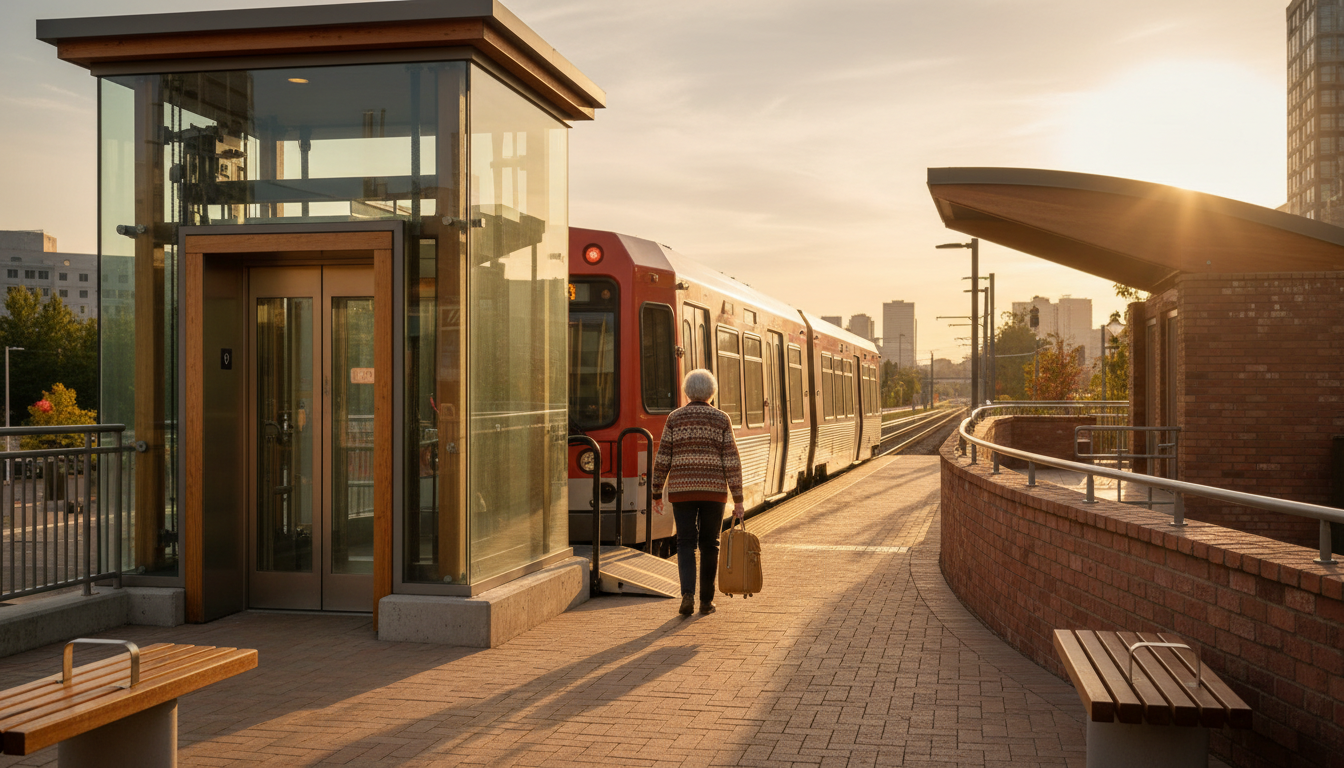 Portland MAX light rail train at a station with visible elevator and ramp access, a senior passenger
Medical Facilities
Portland has excellent healthcare access—something worth knowing even if you don't expect to need it.
Major hospitals with emergency services include OHSU (Oregon Health & Science University), which is nationally ranked, Providence Portland Medical Center, and Legacy Good Samaritan.
Urgent care clinics are scattered throughout neighborhoods. ZoomCare has multiple locations with online booking and typically short wait times. Pharmacies are everywhere—both Walgreens and Rite Aid have locations in most neighborhoods, and many Fred Meyer grocery stores have pharmacies with extended hours.
Accessibility-Friendly Attractions
Portland's top attractions are largely accessible.
Portland Japanese Garden has accessible routes through most of the garden, though some areas involve slopes. Wheelchair rentals are available. The Jordan Schnitzer Japanese Arts Learning Center is fully accessible with an elevator.
International Rose Test Garden is mostly accessible via paved paths, though some sections are steep. The main rose gardens are on relatively flat terrain with benches throughout.
Powell's City of Books—the world's largest independent bookstore—is spread across multiple rooms on different levels, but there's an elevator. Staff are helpful about directing you to specific sections.
Portland Art Museum is fully accessible with elevators between floors. Wheelchairs are available for loan at the front desk. They also offer verbal description tours for visitors with vision impairments.
Lan Su Chinese Garden is mostly accessible, though some pathways are narrow. The teahouse is accessible and offers a peaceful rest stop.
What to Communicate to Your Swap Partner
When you're doing a senior-friendly home swap in Portland—or anywhere—clear communication prevents problems.
Before the Swap
Let them know about any specific mobility equipment you'll be bringing (wheelchair, walker, shower chair), whether you'll need parking close to the entrance, any medical equipment that needs to be plugged in or stored safely, emergency contact information and any relevant medical conditions, and your typical daily schedule (helpful for neighbors who might check in).
Ask Them to Provide
Request the location of the nearest hospital and urgent care, whether any neighbors know about the swap (in case of emergency), the best parking spot for easy access, any tricky locks, steps, or home features to be aware of, and local pharmacy and grocery store recommendations.
My mom creates a simple document for each swap with all this information. She shares it with her host and keeps a copy on her phone.
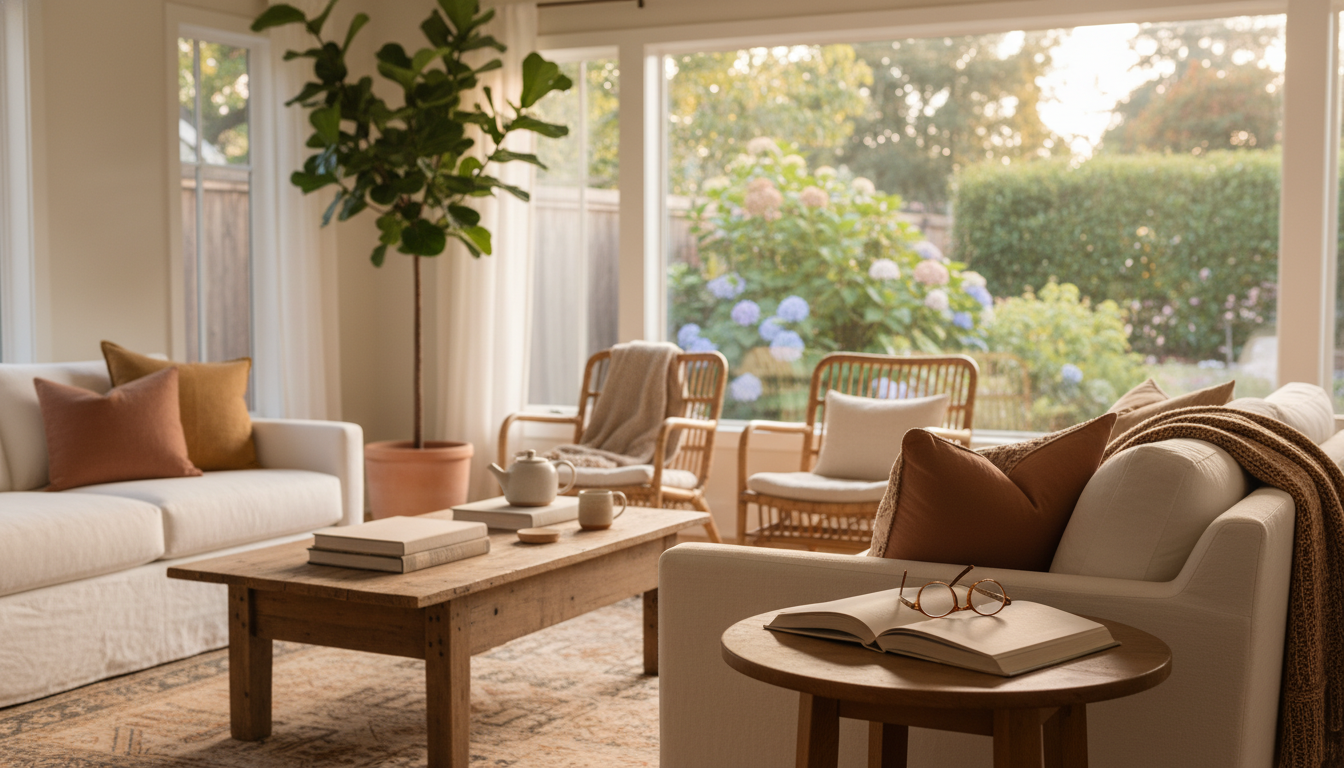 Cozy Portland living room with comfortable seating, good lighting, a view of a garden through large
Real Talk: Is Home Swapping Safe for Seniors?
I'll be honest—my mom had concerns, and they were valid. Staying in a stranger's home feels vulnerable, especially when you're older and maybe not as quick to handle unexpected situations.
Here's how we addressed her worries:
"What if something goes wrong with the house?"
SwappaHome connects you directly with your host. Before traveling, exchange phone numbers and establish how you'll communicate. Most hosts are incredibly responsive because they're trusting you with their home too. For anything major, you'd handle it the same way you would in a hotel—contact the owner, and if needed, local services.
"What if I have a medical emergency?"
This is where preparation matters. Before any swap, my mom researches the nearest hospital and urgent care, keeps her medical information on her phone and in her wallet, shares her itinerary with family, and makes sure her travel insurance covers medical emergencies away from home.
Speaking of insurance—SwappaHome is a platform that connects members, but it doesn't provide coverage for medical issues, damages, or disputes. If you want that peace of mind, look into travel insurance that covers home exchanges. World Nomads and Allianz both have policies that work for this.
"What if the home isn't what they described?"
This is why the review system matters. On SwappaHome, you can see how other members have rated a host and their home. My mom only considers hosts with multiple positive reviews. She also asks for recent photos of specific areas (bathroom, entrance, bedroom) before confirming.
After three swaps, her verdict? "It's actually less stressful than hotels. I know exactly what I'm getting, and I have someone to contact if I have questions."
Sample Portland Itinerary for Senior Travelers
Let me share the itinerary my mom followed during her 10-day Portland swap. It's paced for comfort, with built-in rest time.
Days 1-2: Settle In
Arrive, unpack, get oriented to the neighborhood. Find the nearest grocery store and pharmacy. Take a short walk to scout coffee shops and restaurants. Rest and adjust—especially important if you've traveled far.
Days 3-4: Close to Home
Explore the immediate neighborhood thoroughly. Visit one major attraction (she chose the Japanese Garden). Afternoon rest, evening dinner at a nearby restaurant.
Days 5-6: Venture Further
Day trip to the Columbia River Gorge—she joined a small group tour with hotel pickup. Then a recovery day with light activities: bookshop browsing, coffee shop sitting.
Days 7-8: Downtown and Culture
Powell's Books (she spent four hours there). Portland Art Museum. Lunch in the Pearl District.
Days 9-10: Wind Down
Revisit favorite spots. Pick up souvenirs—she found vintage postcards in Sellwood. Pack gradually, leave the home tidy.
The key was not overscheduling. She did one "big thing" per day maximum, with plenty of time for spontaneous discoveries and rest.
Getting Started with Your First Senior-Friendly Swap
If you're new to home swapping, here's the practical path forward.
Step 1: Create Your SwappaHome Profile
Sign up and build a profile that represents you well. Include clear photos of yourself, an honest description of your home and its accessibility features, what you're looking for in a swap, and your travel style and interests. New members start with 10 free credits—enough for a 10-night stay right away.
Step 2: List Your Home Thoughtfully
Even if your home isn't perfectly accessible, be honest about what it offers. Some travelers don't need accessibility features, and they might love your place.
If your home IS accessible, highlight it! Mention single-level living, walk-in showers, grab bars, elevator access, and proximity to transit and amenities.
Step 3: Start Searching and Reaching Out
Browse Portland listings and save ones that look promising. Send thoughtful messages to hosts—introduce yourself, explain what you're looking for, ask your accessibility questions.
Remember: SwappaHome uses a credit system. You earn 1 credit for each night you host someone, and you spend 1 credit for each night you stay somewhere. It's always 1:1, regardless of home size or location.
Step 4: Plan Thoroughly
Once you've confirmed a swap, exchange contact information with your host, get detailed instructions for the home, research the neighborhood and nearby services, arrange transportation from the airport, and consider travel insurance for peace of mind.
Step 5: Enjoy Portland
And then—go. Smell the roses (literally, at the Rose Test Garden). Browse Powell's until your feet hurt. Eat at a food cart pod. Sit on your borrowed porch and watch the neighborhood go by.
My mom came back from her Portland swap already planning the next one. She's heading to San Diego in March—another ground-floor apartment, another senior host who understands exactly what she needs.
That's the beauty of home swapping at any age. You're not just finding a place to stay. You're finding people who get it.
Frequently Asked Questions
Is senior-friendly home swap in Portland safe for solo travelers?
Yes, Portland is consistently ranked among the safest major US cities for travelers. The home swap community adds another layer of security through verified profiles and reviews. Solo senior travelers should share their itinerary with family, research their neighborhood beforehand, and choose hosts with established positive reviews on SwappaHome.
How much can seniors save with home swapping versus hotels in Portland?
Significant savings are typical. Accessible hotel rooms in Portland average $180-280 per night, while home swapping through SwappaHome costs only credits (no money exchanged). For a 10-night stay, that's $1,800-2,800 in potential savings. New members receive 10 free credits to start.
What accessibility features should I look for in a Portland home swap?
Prioritize single-level homes or ground-floor units, walk-in showers with grab bars, step-free entrances, and proximity to public transit. Portland's classic bungalows are often naturally accessible. Always message hosts directly to confirm specific features like bathroom setup, bed height, and neighborhood walkability before booking.
Do I need a car for a senior-friendly home swap in Portland?
Not necessarily. Portland's TriMet system is highly accessible, with reduced fares ($1.25) for seniors 65+. Neighborhoods like Sellwood, Irvington, and Multnomah Village are walkable with amenities nearby. However, a car helps for day trips to the Columbia Gorge or coast. Many hosts offer parking if you choose to rent one.
How do I find homes with accessibility features on SwappaHome?
Search for keywords like "single-level," "ground floor," "walk-in shower," and "accessible" in listing descriptions. Message hosts directly with specific questions about entrances, bathrooms, and bedroom locations. Look for hosts who mention aging-in-place renovations or hosting elderly family members—their homes are often already set up for accessibility needs.
40+
Swaps
25
Countries
7
Years
About Maya Chen
Travel Writer & Home Exchange Expert
Maya is a travel writer with over 7 years of experience in the home swapping world. Originally from Vancouver and now based in San Francisco, she has completed more than 40 home exchanges across 25 countries. Her passion for "slow" and authentic travel led her to discover that true luxury lies in living like a local, not a tourist.
Ready to try home swapping?
Join SwappaHome and start traveling by exchanging homes. Get 10 free credits when you sign up!
Related articles

Lyon Home Exchange: Your Complete Guide to France's Hidden Gem for Home Swapping
Discover why Lyon home exchange is booming among savvy travelers. From Croix-Rousse to Presqu'île, find the best neighborhoods and insider tips for your swap.

Zurich Bucket List: 47 Unforgettable Experiences to Enjoy During Your Home Swap
Discover the ultimate Zurich bucket list for home swappers—from secret swimming spots to fondue rituals locals actually do. Save thousands while living like a true Zürcher.
Dublin Home Exchange Utilities Guide: WiFi, Heating & Everything Your Guests Need
Master Dublin home exchange utilities—from dodgy WiFi fixes to heating quirks. Practical tips from 7 years of swapping homes across Ireland.