Solo Travel Home Swap in Washington DC: Your Complete Guide to Safe, Affordable Stays
Maya Chen
Travel Writer & Home Exchange Expert
Discover how solo travelers can safely enjoy Washington DC through home swapping—save money, live like a local, and explore the capital on your own terms.
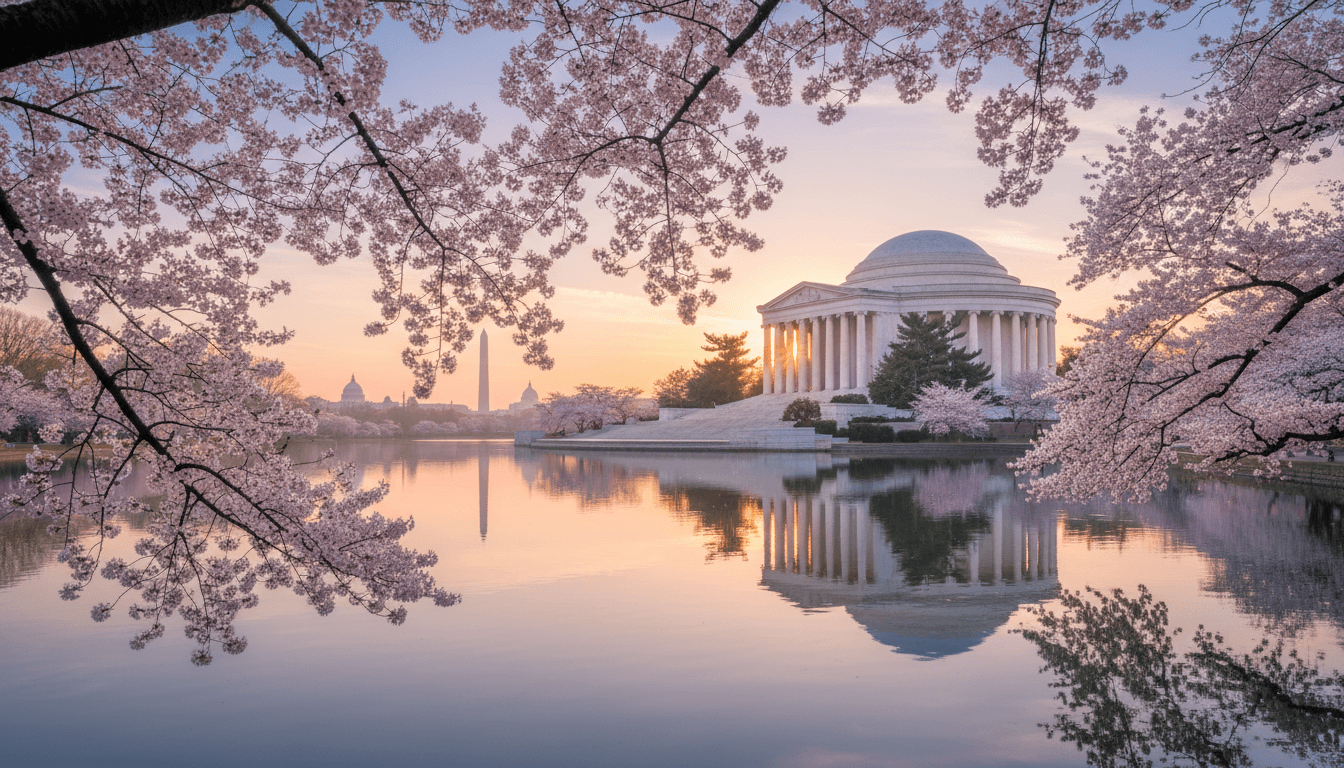
I was standing in front of the Lincoln Memorial at 6:47 AM, completely alone except for a jogger and two squirrels having what I can only describe as a territorial dispute. The reflecting pool was doing its thing—that perfect mirror of the Washington Monument that makes you feel like you've stepped into a postcard. And I remember thinking: this is why solo travel home swap in Washington DC is absolutely worth figuring out.
That trip happened three years ago. I've since done two more solo home exchanges in the DC area, and each time, I'm struck by how different the experience is from staying in a hotel. You're not just visiting Washington DC—you're temporarily living there. Full kitchen for morning coffee. A neighborhood that becomes yours. Neighbors who wave when you walk past.
But I get it. Solo travel anywhere requires extra thought, and adding home swapping to the equation raises questions. Is it safe? Will I feel weird staying in a stranger's home by myself? How do I even find the right swap?
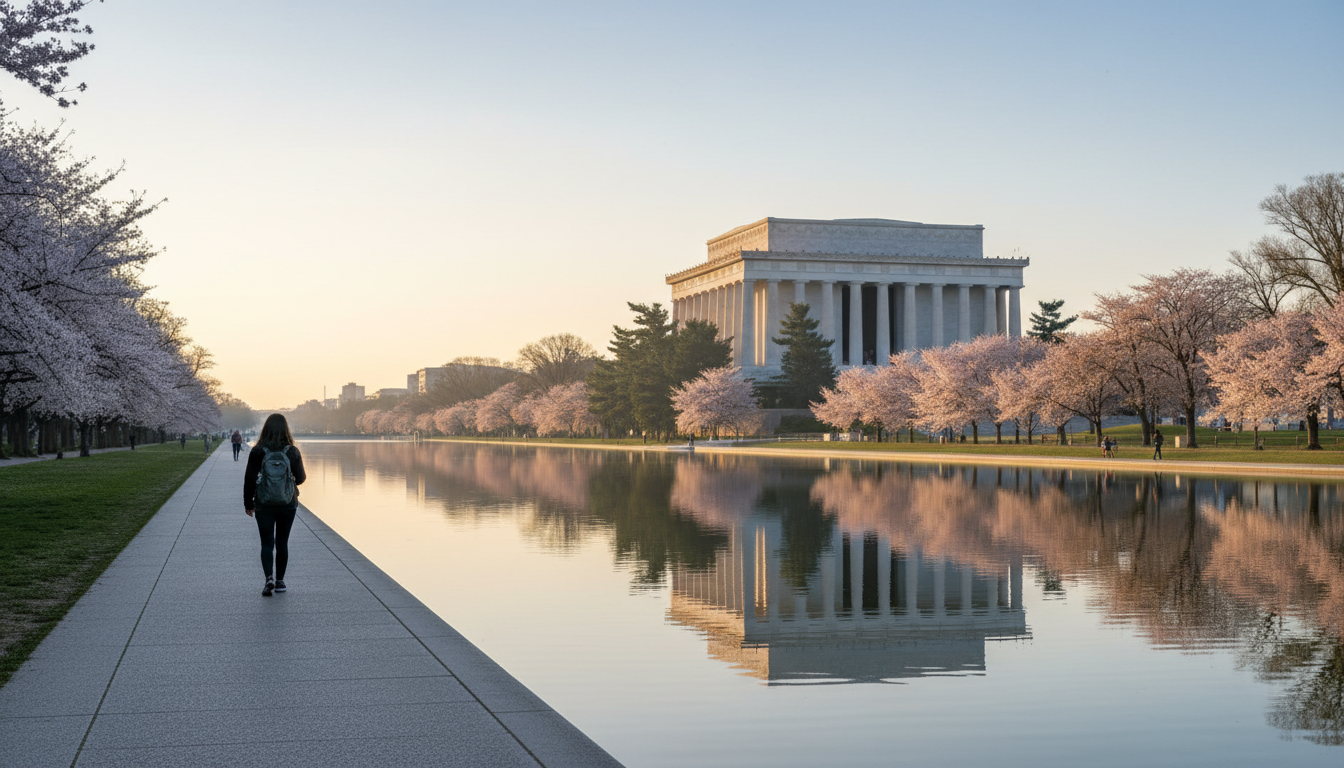 Early morning view of the Lincoln Memorial reflecting pool with soft golden light, a lone figure wal
I'm going to walk you through everything—from choosing the safest neighborhoods to navigating your first solo home exchange in the nation's capital. By the end, you'll have a practical roadmap that takes the guesswork out of planning.
Why Solo Travelers Should Consider Home Swapping in Washington DC
Here's the math that changed my perspective on DC travel: the average hotel room in downtown Washington DC runs about $250-350 per night. During cherry blossom season or major events? You're looking at $400+. A two-week trip could easily cost $3,500-5,000 in accommodation alone.
With home swapping through a platform like SwappaHome, you're spending zero dollars on accommodation. The credit system is beautifully simple—earn 1 credit for every night you host someone, spend 1 credit for every night you stay somewhere else. New members start with 10 free credits, which means you could have nearly two weeks in DC without earning a single credit first.
But cost isn't even the main reason I recommend home swapping for solo travelers specifically.
When you're traveling alone, having a home base changes everything. After a full day of walking the National Mall—my phone clocked 14 miles one day, and my feet still haven't forgiven me—you want somewhere comfortable to collapse. Not a cramped hotel room with a mini-fridge that charges $8 for a bottle of water. An actual living room. A couch. Maybe a bathtub.
There's also the safety element, which we'll dig into more deeply. But briefly: staying in a residential neighborhood, often in a building where your host's neighbors know you're there, can feel more secure than an anonymous hotel corridor.
Best Neighborhoods for Solo Home Swap in Washington DC
Neighborhood choice matters more for solo travelers than for groups. You want somewhere walkable, well-lit at night, and close to public transit. Here's my honest breakdown:
Capitol Hill: Best for First-Time Solo Visitors
Capitol Hill remains my top recommendation for solo home swappers visiting DC for the first time. The neighborhood has that perfect balance of residential charm and accessibility—tree-lined streets with colorful rowhouses, but you're steps from the Capitol South or Eastern Market Metro stations.
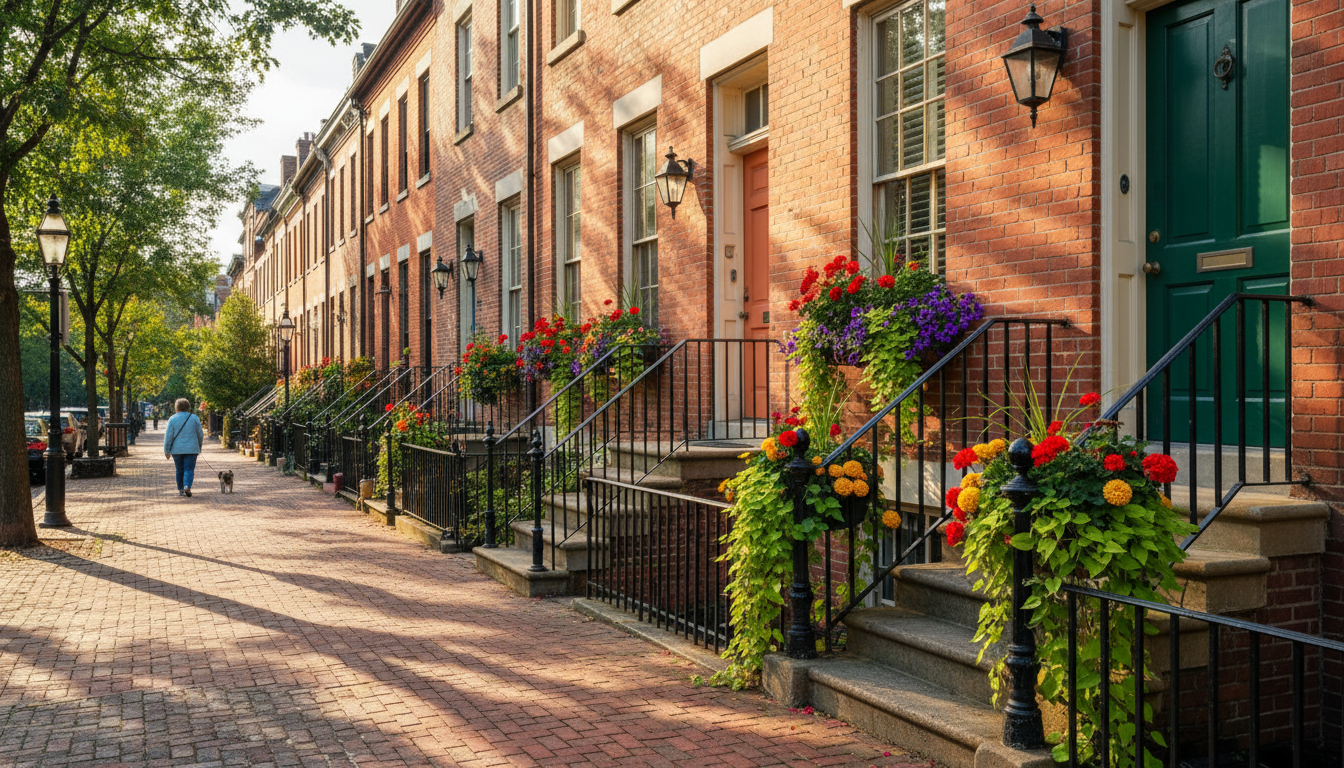 Charming Capitol Hill rowhouses with colorful doors, iron railings, and window boxes full of flowers
Eastern Market is the heart of the neighborhood, especially on weekends when the outdoor flea market takes over. I spent an entire Saturday morning there during my first DC swap, eating blueberry buckwheat pancakes at Market Lunch and chatting with a vendor selling vintage maps. Time sort of disappeared.
Safety-wise, Capitol Hill is well-patrolled and busy enough that you'll always see people around, even late evening. Just use standard city awareness—stick to main streets after dark, keep your phone accessible but not constantly out.
Expect home swap listings here to include historic rowhouses (often with steep stairs—check listings if mobility is a concern), small apartments in converted buildings, and occasionally basement units with separate entrances.
Dupont Circle: Best for Walkability and Nightlife
If you want to be in the thick of things, Dupont Circle delivers. The neighborhood is dense with restaurants, bookshops, and bars—you could spend a week just exploring Connecticut Avenue. The Circle itself is a great people-watching spot, and the Sunday farmer's market is excellent.
For solo travelers, Dupont's advantage is that it's always active. You won't find yourself on deserted streets at 10 PM. The Metro station is a major hub, connecting you to basically everywhere.
The downside? It's pricier, so home swap listings might be smaller apartments. Also, if you're a light sleeper, request a unit that doesn't face the main streets—weekend nights can get lively.
Adams Morgan: Best for Solo Travelers Who Want Character
Adams Morgan has personality. It's diverse, artsy, a little gritty in places, and home to some of DC's best international food. 18th Street is the main drag—Ethiopian restaurants, dive bars, vintage shops, and a general vibe that feels less polished than other DC neighborhoods.
I stayed in Adams Morgan during my second solo DC swap, in a tiny studio above a Salvadoran restaurant. The smell of pupusas wafted up every afternoon around 4 PM. It was perfect.
Safety note: Adams Morgan is generally safe, but it's more of a nightlife area, so weekend nights bring crowds and occasional rowdiness. I'd recommend it for solo travelers who are comfortable with urban environments and don't mind a bit of noise.
Georgetown: Charming but Consider the Trade-offs
Georgetown is gorgeous—cobblestone streets, waterfront views, historic architecture. But here's the thing: it doesn't have a Metro station. You'll rely on buses or walking to reach the rest of DC, which can feel isolating for solo travelers, especially at night.
If you find a great home swap listing in Georgetown and you're comfortable navigating without Metro access, go for it. The neighborhood itself is very safe and incredibly picturesque. Just factor in the transportation logistics.
How to Find Safe Solo Home Swap Opportunities in DC
Safety starts before you even book. Here's my process for vetting potential swaps as a solo traveler:
Read Reviews Like You're Investigating a Cold Case
On SwappaHome, every member builds a reputation through reviews. When I'm considering a swap, I don't just glance at the star rating—I read every single review. I'm looking for mentions of communication style (responsive? clear? friendly?), any comments about the neighborhood or safety, whether previous guests were solo travelers, and specific details that suggest the reviews are genuine.
If someone has 15 glowing reviews and they all mention how helpful the host was with local tips, that tells me something. If reviews are vague or the host has no history, I proceed more cautiously.
Verify, Verify, Verify
SwappaHome offers identity verification for members. For solo travel, I strongly recommend only booking with verified hosts. It's an extra layer of accountability that matters when you're staying somewhere alone.
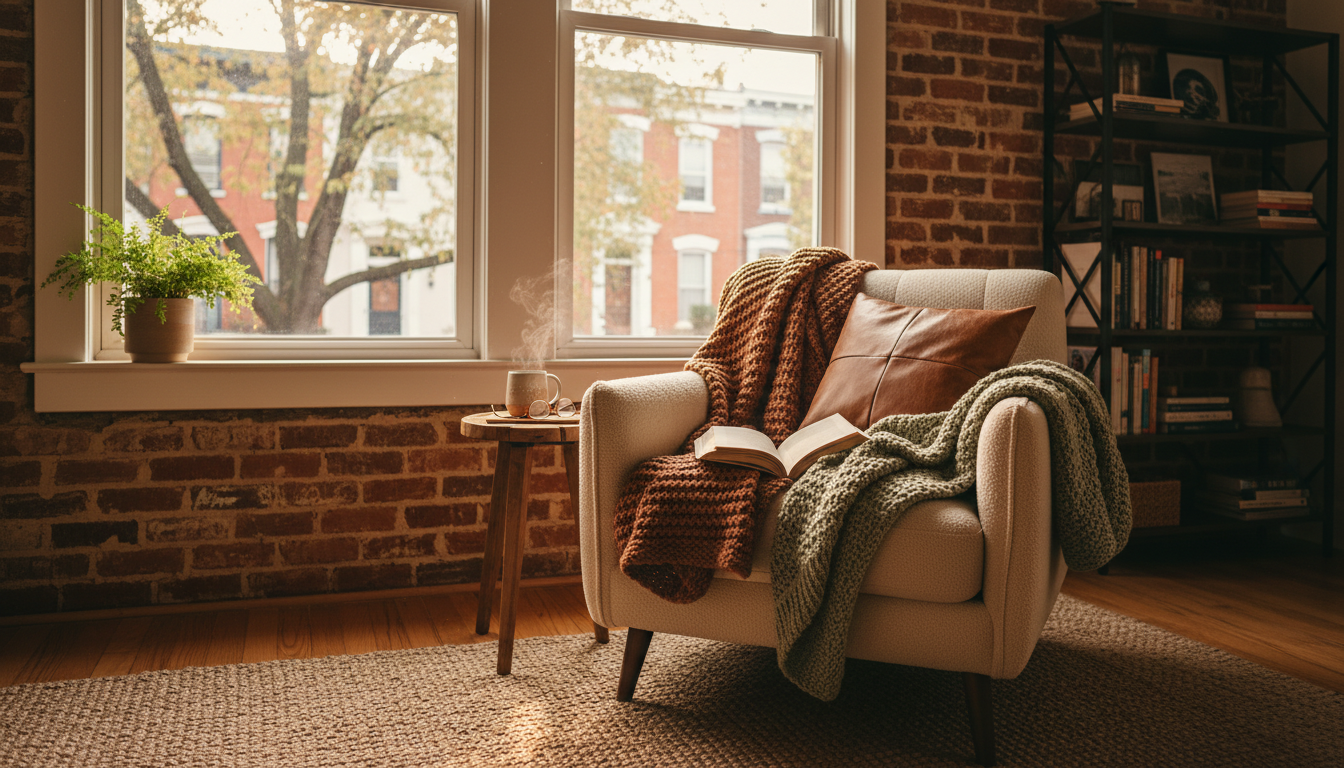 Cozy DC apartment interior with exposed brick, a comfortable reading nook by a window overlooking a
Have a Real Conversation Before Committing
The messaging system exists for a reason. Before I confirm any swap, I have an actual conversation with my potential host. I ask about the neighborhood, the building, parking (if relevant), and any quirks about the space.
Pay attention to how they communicate. Are they thorough? Do they answer your questions directly? Do they ask about you? A good home swap relationship requires mutual respect and communication—if someone is dismissive or vague before you even arrive, that's a red flag.
Trust Your Gut
This sounds cliché, but it's real. If something feels off about a listing or a host, move on. There are plenty of options in a city like DC. You don't need to convince yourself into a situation that makes you uncomfortable.
Practical Safety Tips for Solo Home Swappers in DC
Once you've booked your swap, here's how to stay safe during your actual stay:
Share Your Itinerary with Someone
Before every solo trip, I send my best friend a document with my accommodation address, host contact info, and a rough daily plan. We have a check-in system—I text her every evening. It takes 30 seconds and provides peace of mind for both of us.
Learn the Building Layout
When you arrive, take a few minutes to understand your surroundings. Where are the exits? Is there a doorman or security system? How does the main entrance lock work? If you're in a rowhouse, are there neighbors on either side?
This isn't paranoia—it's just smart solo travel practice.
Get to Know One Neighbor
I always try to introduce myself to at least one neighbor when I'm doing a home swap. A simple "Hi, I'm Maya, I'm staying in [host's name]'s place for a couple weeks" goes a long way. It means someone nearby knows you're supposed to be there, and you have a local contact if something goes wrong.
Keep Emergency Numbers Accessible
DC's non-emergency police line is 311. For emergencies, it's 911. Save both in your phone. Also save the address of your swap—in a stressful moment, you don't want to be fumbling through messages to remember where you're staying.
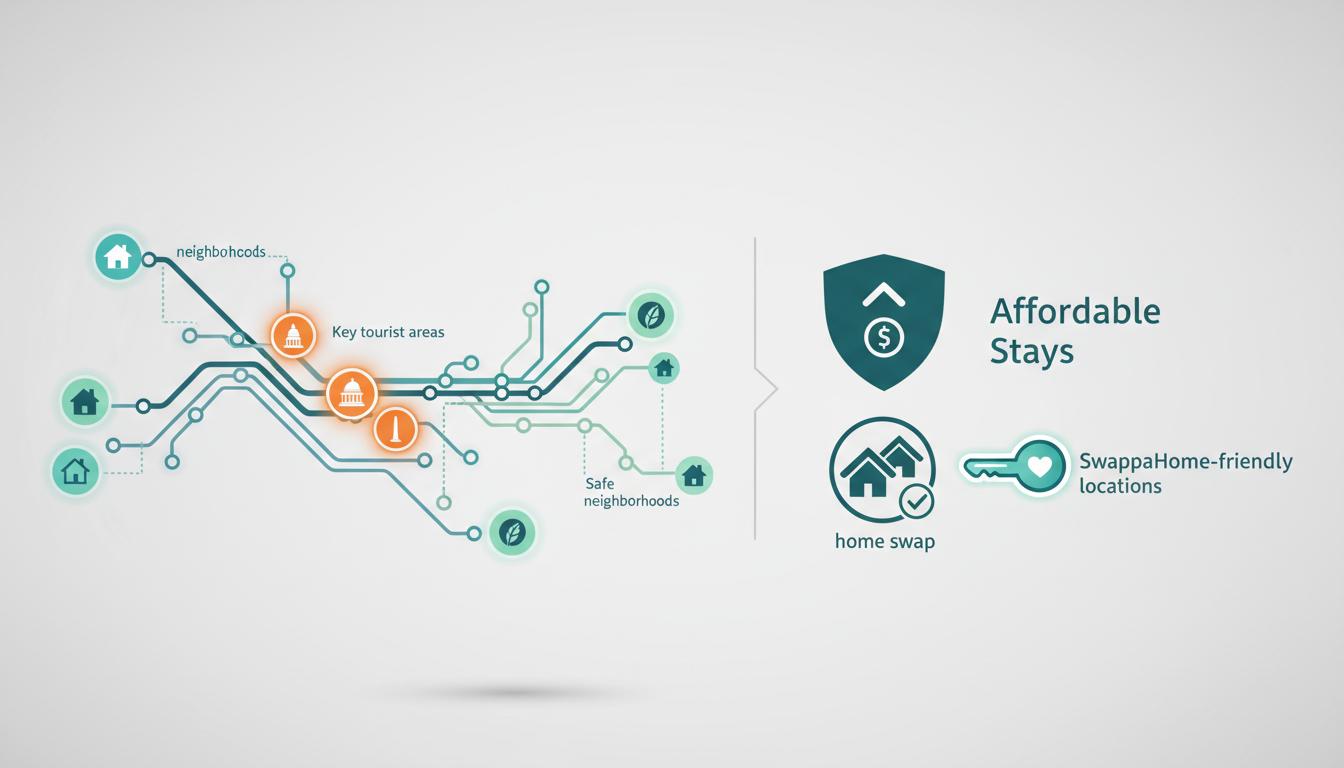 Washington DC Metro map with key tourist areas and safe neighborhoods highlighted, clean infographic
Consider Your Own Insurance
SwappaHome connects you with hosts, but it's a platform—not an insurance company. If you want coverage for your belongings, any potential liability, or trip interruption, look into travel insurance or renter's insurance that covers temporary stays. I use a travel insurance policy that covers me for trips over 7 days. It costs about $40-60 for a two-week trip and gives me peace of mind.
Making the Most of Your Solo DC Home Swap
Now for the fun part—actually enjoying Washington DC as a solo traveler with a home base.
Embrace the Smithsonian Strategy
Here's something tourists don't always realize: the Smithsonian museums are FREE. All of them. The Air and Space Museum, Natural History, American History, African American History and Culture (book timed tickets in advance for this one), the Portrait Gallery—free, free, free.
As a solo traveler with a home swap, you can do what I call the "one museum, one neighborhood" approach. Visit a museum in the morning, then spend the afternoon exploring a nearby neighborhood. You're not rushing because you're not paying $300/night to be there.
Cook at Least Half Your Meals
One of the best parts of home swapping is having a kitchen. DC has incredible grocery options—Eastern Market for produce and prepared foods, Trader Joe's in various neighborhoods, and specialty stores throughout the city.
I usually do a big grocery run on day one. Breakfast and lunch at home, dinner out. This saves money and also gives you downtime—solo travel can be exhausting if you're "on" all the time.
Take Advantage of Solo-Friendly Activities
DC is genuinely great for solo travelers. Some favorites:
- The Library of Congress: Free, stunning, and you can spend hours in the reading rooms
- Walking the Tidal Basin: Especially beautiful at sunrise or sunset
- Jazz at Blues Alley in Georgetown: Tables for one are totally normal
- The Phillips Collection: Small, intimate art museum perfect for solo contemplation
- Coffee shop hopping in Shaw: Spend a morning working through Compass Coffee, A Baked Joint, and Colony Club
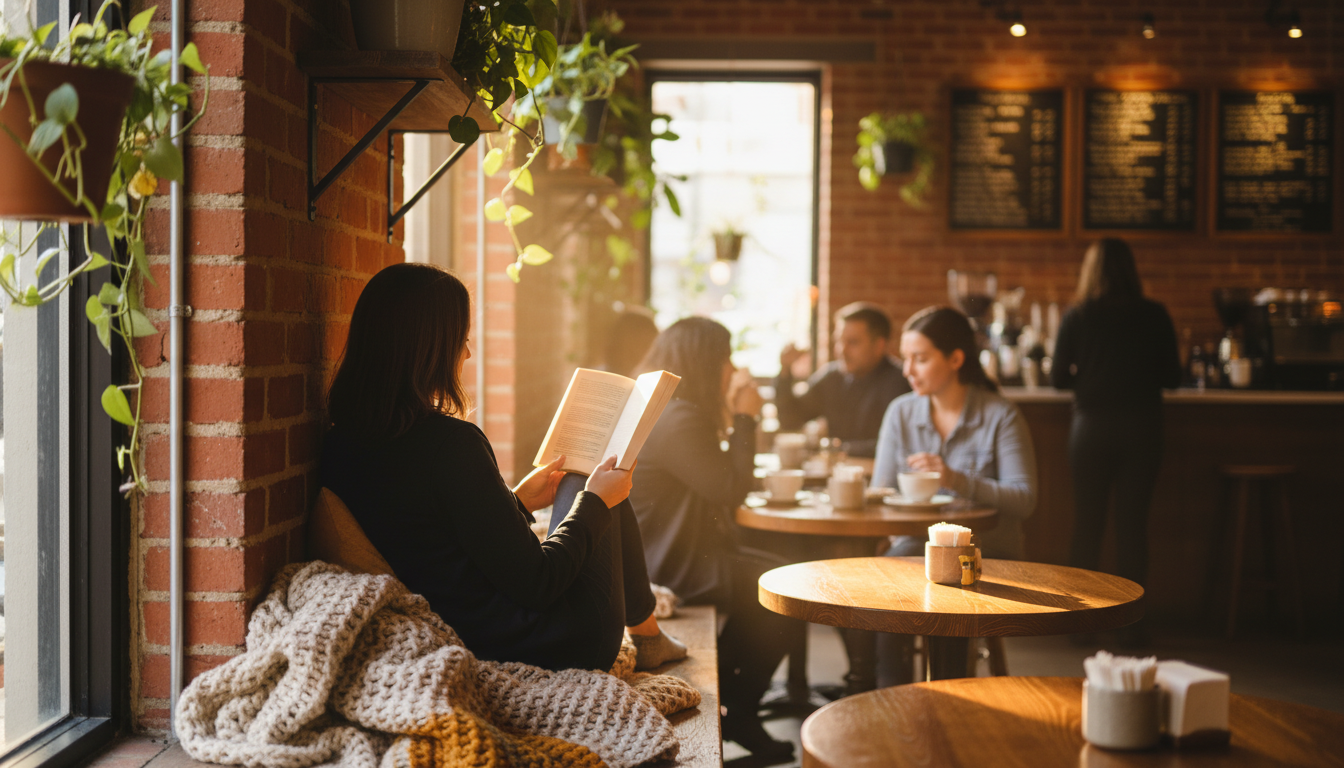 Solo traveler reading a book at a sunny window seat in a DC coffee shop, exposed brick walls, plants
Connect with Locals (If You Want To)
Solo travel doesn't have to mean lonely travel. DC has active Meetup groups for everything from hiking to book clubs. Your home swap host might also leave recommendations for local events or introduce you to neighbors.
That said, one of the joys of solo travel is doing exactly what you want, when you want. Some days I talk to everyone. Other days I don't speak to a single person except to order coffee. Both are valid.
Budget Breakdown: Solo Home Swap vs. Traditional DC Trip
Let me show you real numbers from my most recent two-week solo DC trip:
With Home Swap:
- Accommodation: $0 (used 14 SwappaHome credits)
- Groceries: $180
- Dining out (7 dinners): $280
- Metro/transportation: $85
- Museums/attractions: $45 (most were free)
- Misc (coffee, snacks, souvenirs): $120
- Total: $710
Estimated Hotel Stay (same trip):
- Accommodation (14 nights × $280 avg): $3,920
- All meals out (no kitchen): $700
- Metro/transportation: $85
- Museums/attractions: $45
- Misc: $120
- Total: $4,870
That's a difference of over $4,000. Even accounting for the credits I "spent" (which I earned by hosting travelers in my San Francisco apartment), the savings are dramatic.
What to Include in Your Listing to Attract Solo Travelers
If you're also planning to host—which is how you earn credits for your own travels—here's what makes your listing appealing to solo travelers. Clear safety information matters: mention your neighborhood, building security, and lighting. Include honest photos of the entrance, the street view at night, and any security features. Highlight solo-friendly amenities like a comfortable workspace, good lighting for reading, a cozy couch. And don't underestimate local tips—solo travelers love specific recommendations about your favorite coffee shop, the safest route to the Metro, which grocery store has the best prepared foods.
Seasonal Considerations for DC Home Swaps
Spring (March-May): Cherry blossom season (late March to early April) is peak tourist time. Book your home swap MONTHS in advance—I'm talking October or November for a spring trip. The crowds are intense but the city is magical.
Summer (June-August): Hot and humid. Like, really humid. But Congress is often in recess, so the city is slightly less hectic. Great time for evening walks along the waterfront. Many DC residents travel during summer, so home swap availability can be good.
Fall (September-November): My personal favorite. Weather is perfect, crowds thin out after Labor Day, and the city has a back-to-business energy that I find motivating. October is ideal.
Winter (December-February): Cold but beautiful, especially if it snows. Holiday decorations are lovely, and you'll have museums nearly to yourself. Just pack layers and waterproof boots.
Common Concerns About Solo Home Swapping (Addressed Honestly)
"What if I feel unsafe in someone's home?"
Valid concern. This is why vetting matters so much. But also know that you can leave if something feels wrong. Have a backup plan—know where nearby hotels are, keep enough budget flexibility to book a room if needed. In three years of home swapping, I've never needed my backup plan, but having it reduces anxiety.
"What if something breaks or goes wrong?"
Communicate immediately with your host through SwappaHome's messaging. Most issues are minor and hosts are understanding—things happen in homes. For anything major, document with photos and have an honest conversation. Remember, home swapping is built on mutual trust and respect.
"Is it weird being in a stranger's space alone?"
Honestly? The first night can feel a little surreal. You're surrounded by someone else's books, their art, their choice of dish towels. But by day two, it just feels like... a place you're staying. I've come to love the glimpse into how other people live. It's one of the unique pleasures of home swapping.
"What if my host cancels?"
This is rare but possible. Build flexibility into your travel dates if you can, and always have a communication thread going with your host as your trip approaches. If a cancellation happens, SwappaHome's community often rallies—post in forums or reach out to other DC-area members.
Final Thoughts on Solo Home Swapping in Washington DC
Three years and three solo DC swaps later, I can't imagine doing it any other way. There's something about having a home in a city—even temporarily—that transforms how you experience it. You stop being a tourist and start being a temporary resident. You have a favorite coffee shop. You know which Metro entrance is less crowded. You wave at the neighbor's dog.
Washington DC, for all its political intensity and tourist crowds, is a remarkably livable city. The neighborhoods have distinct personalities. The public transportation actually works. And there's always something free to do, which matters when you're stretching your travel budget.
If you're considering your first solo home swap, DC is an excellent place to start. The city is safe, navigable, and full of other solo travelers. The home swap community here is active and welcoming.
Start by browsing listings on SwappaHome—you don't need to commit to anything. Just see what's available, read some profiles, imagine yourself in those spaces. Your 10 free credits are waiting.
And maybe, if you time it right, you'll find yourself standing in front of the Lincoln Memorial at sunrise, completely alone except for a jogger and two territorial squirrels. Trust me—it's worth it.
Frequently Asked Questions
Is solo home swapping in Washington DC safe?
Yes, solo home swapping in DC is generally safe when you take proper precautions. Choose verified hosts on SwappaHome, stay in well-connected neighborhoods like Capitol Hill or Dupont Circle, read reviews thoroughly, and communicate clearly with your host before arriving. Standard urban safety awareness applies—stick to well-lit streets at night and share your itinerary with someone back home.
How much money can I save with a home swap in DC compared to hotels?
A two-week solo trip using home swap can save you $3,000-4,500 compared to hotel stays. Average DC hotels cost $250-350 per night, while home swapping costs zero dollars for accommodation (you use credits instead). Add kitchen access for cooking meals, and your total trip cost can drop from nearly $5,000 to under $800.
What neighborhoods are best for solo home swappers in Washington DC?
Capitol Hill is ideal for first-time solo visitors—safe, walkable, Metro-accessible, and charming. Dupont Circle offers excellent nightlife and constant activity. Adams Morgan provides character and diverse dining options. Georgetown is beautiful but lacks Metro access, which can feel isolating for solo travelers at night.
How far in advance should I book a DC home swap?
For cherry blossom season (late March-early April), book 4-6 months ahead. For summer and fall trips, 2-3 months is usually sufficient. Winter offers the most flexibility—you can sometimes find swaps with just a few weeks' notice. Always confirm with your host as your trip date approaches.
Do I need insurance for a home swap stay in DC?
SwappaHome is a platform connecting members, not an insurance provider. Consider purchasing your own travel insurance or checking if your renter's insurance covers temporary stays elsewhere. Policies typically cost $40-60 for a two-week trip and provide peace of mind for belongings and liability coverage.
40+
Swaps
25
Countries
7
Years
About Maya Chen
Travel Writer & Home Exchange Expert
Maya is a travel writer with over 7 years of experience in the home swapping world. Originally from Vancouver and now based in San Francisco, she has completed more than 40 home exchanges across 25 countries. Her passion for "slow" and authentic travel led her to discover that true luxury lies in living like a local, not a tourist.
Ready to try home swapping?
Join SwappaHome and start traveling by exchanging homes. Get 10 free credits when you sign up!
Related articles
Lyon Home Exchange: Your Complete Guide to France's Hidden Gem for Home Swapping
Discover why Lyon home exchange is booming among savvy travelers. From Croix-Rousse to Presqu'île, find the best neighborhoods and insider tips for your swap.

Zurich Bucket List: 47 Unforgettable Experiences to Enjoy During Your Home Swap
Discover the ultimate Zurich bucket list for home swappers—from secret swimming spots to fondue rituals locals actually do. Save thousands while living like a true Zürcher.
Dublin Home Exchange Utilities Guide: WiFi, Heating & Everything Your Guests Need
Master Dublin home exchange utilities—from dodgy WiFi fixes to heating quirks. Practical tips from 7 years of swapping homes across Ireland.