
Sydney Home Exchange for Remote Workers: Finding Workspaces That Actually Work

SwappaHome Editorial Team
Home Exchange & Slow Travel Editorial
Discover how Sydney home exchange gives remote workers dedicated workspaces, fast NBN internet, and harbour views—without the $300/night hotel price tag.
The laptop screen glows against morning light flooding through floor-to-ceiling windows in Pyrmont, the Anzac Bridge stretching across Blackwattle Bay in the distance. It's 7 AM, you've been up for an hour adjusting to Sydney time, and the dedicated home office you've landed in has better ergonomics than your setup back home. This is what Sydney home exchange for remote workers looks like when you get it right—a far cry from hunching over a hotel desk designed for signing room service receipts.
Sydney has emerged as one of the most compelling destinations for location-independent professionals, but the city's accommodation costs can eviscerate a remote work budget faster than you can say "harbour view." Hotels in the CBD average AUD $280–380 per night (roughly USD $180–245), and even modest Airbnbs in desirable neighbourhoods rarely dip below AUD $150. For remote workers planning extended stays—the sweet spot for actually experiencing a city rather than just passing through—these numbers become untenable.
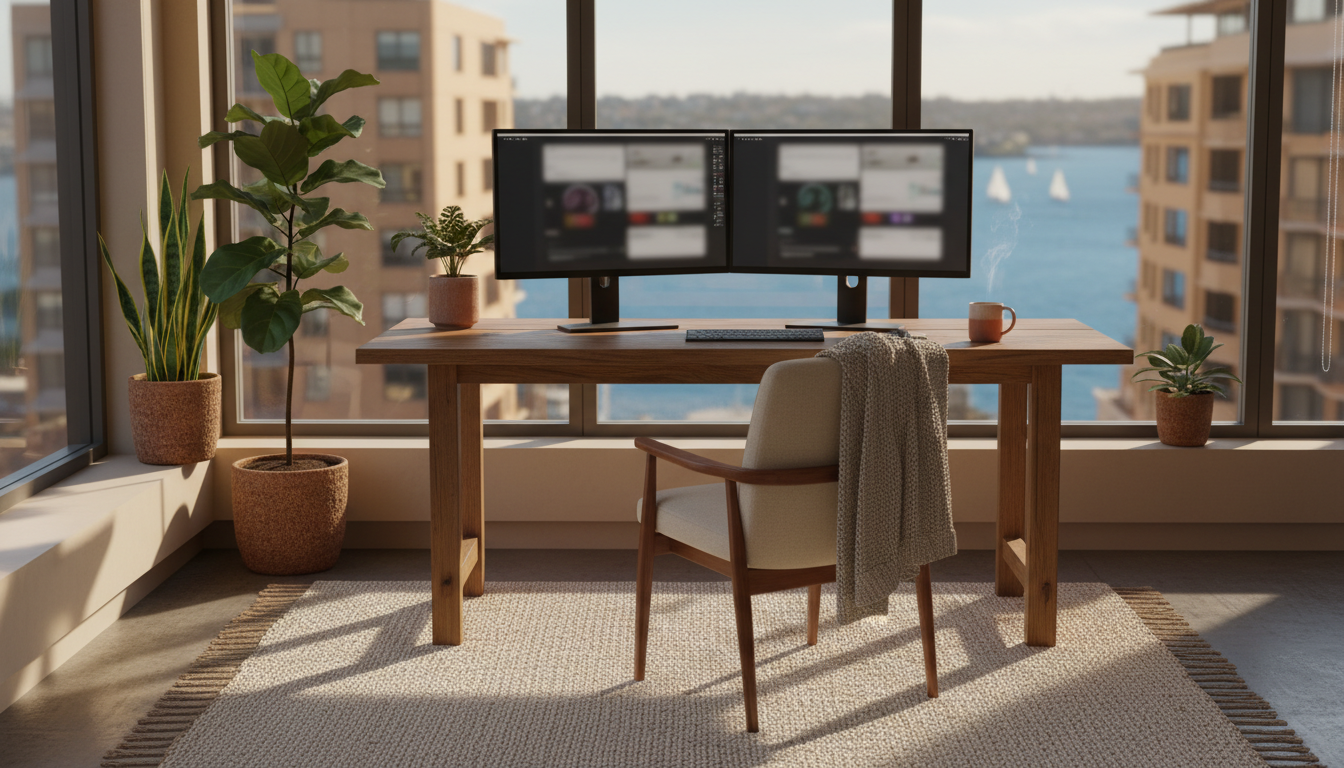 Sunlit home office setup in a Sydney apartment with dual monitors, ergonomic chair, and harbour glim
Home exchange flips this equation entirely. Through platforms like SwappaHome, remote workers trade their own homes for stays in Sydney properties where real people actually live and work. The difference matters: residents invest in proper desks, reliable internet, and comfortable chairs because they use them daily. Hotel rooms are designed for sleeping. Homes are designed for living—and increasingly, for working.
Why Sydney Home Exchange Makes Sense for Remote Workers
The case for home swapping in Sydney goes beyond simple cost savings, though those savings are substantial. The SwappaHome community reports that members typically save 70–90% compared to equivalent hotel stays—in Sydney's market, that translates to thousands of dollars over a multi-week trip.
But here's the thing: the real advantage is infrastructure. Sydney's National Broadband Network (NBN) rollout means most residential properties now have fibre or fixed wireless connections delivering 50–100 Mbps speeds. More than adequate for video calls, large file transfers, and the general demands of remote work. Hotels often throttle WiFi or charge premium rates for "business" internet packages. In a home exchange, you inherit whatever connection the resident uses for their own work.
The practical implications cascade from there. A proper kitchen means you're not spending AUD $25 on mediocre hotel breakfast buffets or AUD $18 on sad CBD sandwiches. Laundry facilities mean you can pack lighter. A living room means you can actually relax after work without sitting on your bed. These aren't luxuries—they're the baseline conditions for sustainable long-term travel.
Sydney specifically offers advantages that matter to remote workers. Time zone arbitrage puts you ahead of most global markets—finish your workday by 3 PM and still catch morning meetings in Europe or late-night calls with US West Coast teams. The city's commitment to harbourside parks, coastal walks, and beach culture means genuine work-life separation is a 15-minute walk away, not a weekend expedition. And the infrastructure reliability that remote work requires? Power outages are rare, internet is stable, and the city functions with reassuring predictability.
Best Sydney Neighbourhoods for Remote Work Home Exchanges
Not all Sydney neighbourhoods serve remote workers equally. The CBD might seem logical, but it's optimised for office commuters and tourists—expensive, loud, and lacking the residential character that makes home exchange worthwhile. Here's where location-independent professionals actually want to land.
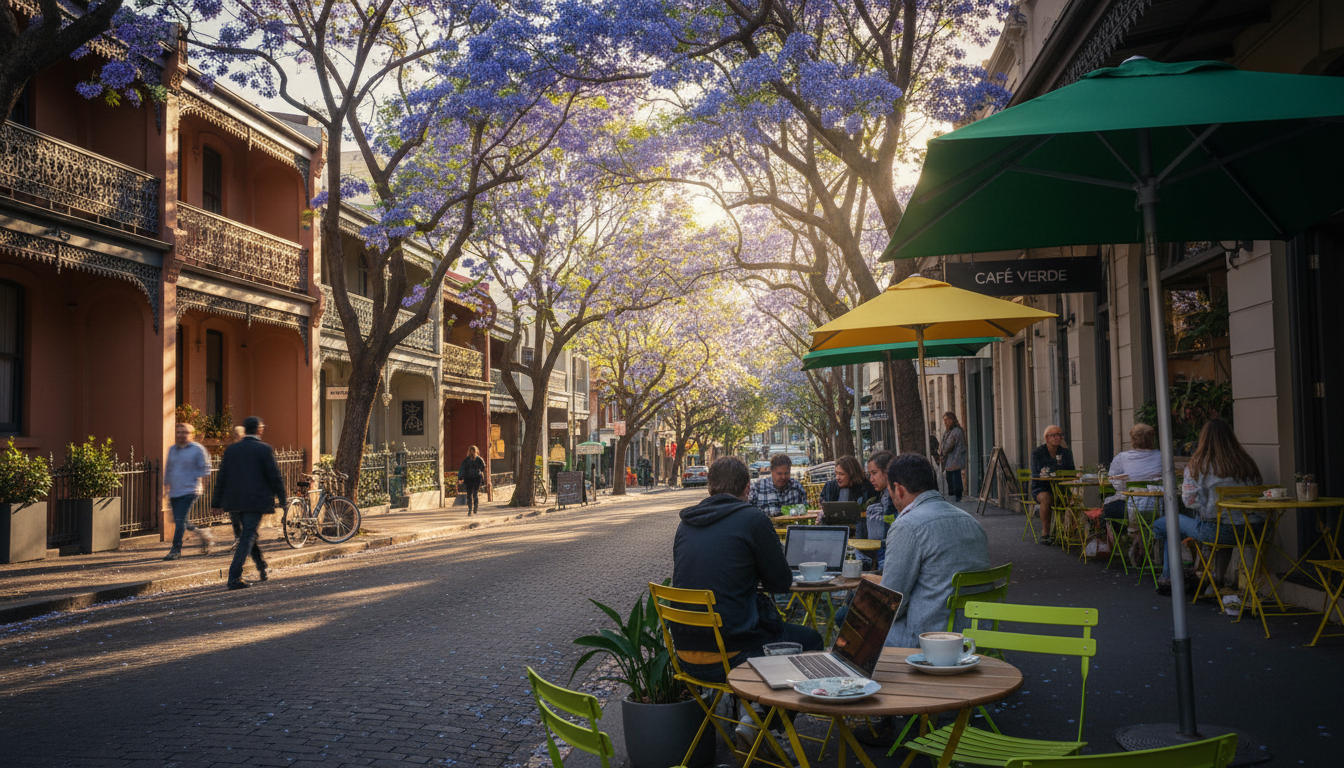 Tree-lined street in Surry Hills with Victorian terraces, corner caf with outdoor seating, morning l
Surry Hills and Darlinghurst
These adjacent inner-city neighbourhoods deliver the urban density remote workers often crave. Cafés on every corner. Walkable everything. A creative energy that makes stepping outside for a break actually interesting. Crown Street and Oxford Street anchor the commercial strips, but the residential pockets between them hide converted warehouse apartments and Victorian terraces with surprising interior space.
Home exchange listings in Surry Hills frequently feature dedicated study nooks or second bedrooms converted to offices—the neighbourhood attracts young professionals and creatives who work from home themselves. Expect properties with exposed brick, high ceilings, and the kind of character that hotels simply cannot replicate.
The downside: street noise. Request properties on quieter back streets if you're sensitive to traffic sounds during calls. Devonshire Street and the blocks around Ward Park tend to be calmer than the main thoroughfares.
Pyrmont and Ultimo
These harbourside neighbourhoods sit on the CBD's western edge, close enough to walk into the city but removed from its intensity. The area's transformation from industrial waterfront to residential precinct happened relatively recently, meaning much of the housing stock is modern apartments with contemporary layouts—open-plan living, integrated home offices, and the kind of NBN infrastructure that comes standard in newer buildings.
The Star casino complex and Darling Harbour tourist zone create some commercial bustle, but the residential streets behind them are genuinely quiet. Pyrmont's location also puts you within walking distance of the Fish Market (excellent for cooking at home) and easy ferry access to Manly and other harbour destinations.
Manly and the Northern Beaches
If your remote work schedule allows flexibility—or if you're specifically seeking a beach-adjacent lifestyle—Manly offers something Sydney's inner suburbs cannot: genuine surf culture without sacrificing urban amenities. The Corso pedestrian mall connects the harbour ferry wharf to the ocean beach, lined with cafés, restaurants, and the essential infrastructure of daily life.
Home exchanges in Manly tend toward apartments with ocean glimpses or houses in the quieter streets behind the beach. That 30-minute ferry commute to Circular Quay? It becomes a feature rather than a bug—a forced transition between work mode and city exploration that many remote workers find psychologically valuable.
The Northern Beaches beyond Manly (Freshwater, Curl Curl, Dee Why) offer more space and lower density, but require car access for practical daily life. Consider these only if your work schedule genuinely allows beach-focused living and you're comfortable with Sydney's driving culture.
Newtown and Enmore
Sydney's inner west delivers the city's most eclectic neighbourhood character. King Street's vintage shops, live music venues, and international restaurants create a walking environment that rewards exploration. The area attracts artists, academics, and the kind of creative professionals who often work remotely themselves.
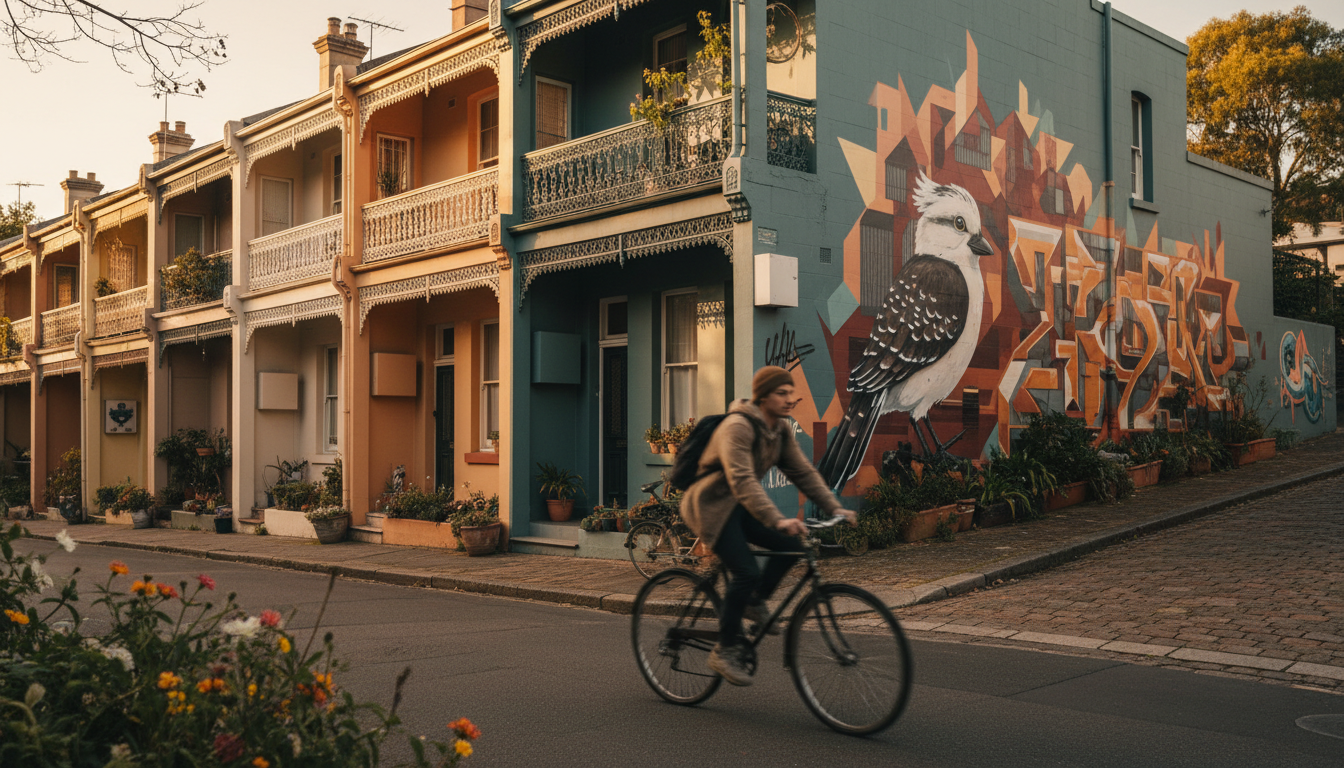 Colourful Victorian terrace houses on a Newtown side street with street art visible on a corner buil
Home exchanges here frequently come with personality: converted workers' cottages with courtyards, apartments above shops with unexpected rooftop access, houses with dedicated studio spaces. The neighbourhood's proximity to Sydney University means good café culture and a steady stream of interesting events. Transit access is excellent—Newtown and St Peters stations connect to the CBD in under 15 minutes, and bus routes run frequently along King Street and Enmore Road.
Setting Up Your Sydney Remote Work Home Exchange
Finding the right property requires more specificity than typical holiday home swapping. The SwappaHome platform allows detailed searches and direct communication with hosts, but you need to know what questions to ask.
Internet Verification
Ask hosts directly about their internet setup. Specifically request the connection type (NBN fibre, fixed wireless, or legacy ADSL—avoid the latter), the speed tier (50 Mbps is adequate for most remote work; 100 Mbps provides comfortable headroom), and reliability information. Has the connection dropped during video calls? Any known outage patterns? What about backup options—mobile hotspot coverage in the property, or nearby cafés with reliable WiFi?
Most Sydney hosts can run a speed test and share results before you commit. This five-minute verification prevents significant frustration later.
Workspace Assessment
Request photos of the actual workspace, not just the living areas. Is there a dedicated desk and chair, or will you be working from the dining table? What's the lighting situation—natural light matters for video calls and general wellbeing. Is the workspace separated from sleeping areas? This matters more than you might expect for sleep quality and work-life boundaries. And if you're travelling with a partner who also works remotely, are there multiple workspaces?
Neighbourhood Logistics
Beyond the property itself, verify walking distance to essentials like a supermarket, pharmacy, and café (for backup WiFi and mental health breaks). Check public transit access—Sydney's trains and buses are reliable, but frequency varies dramatically by neighbourhood. Ask about noise patterns: construction nearby, flight paths, early-morning garbage collection.
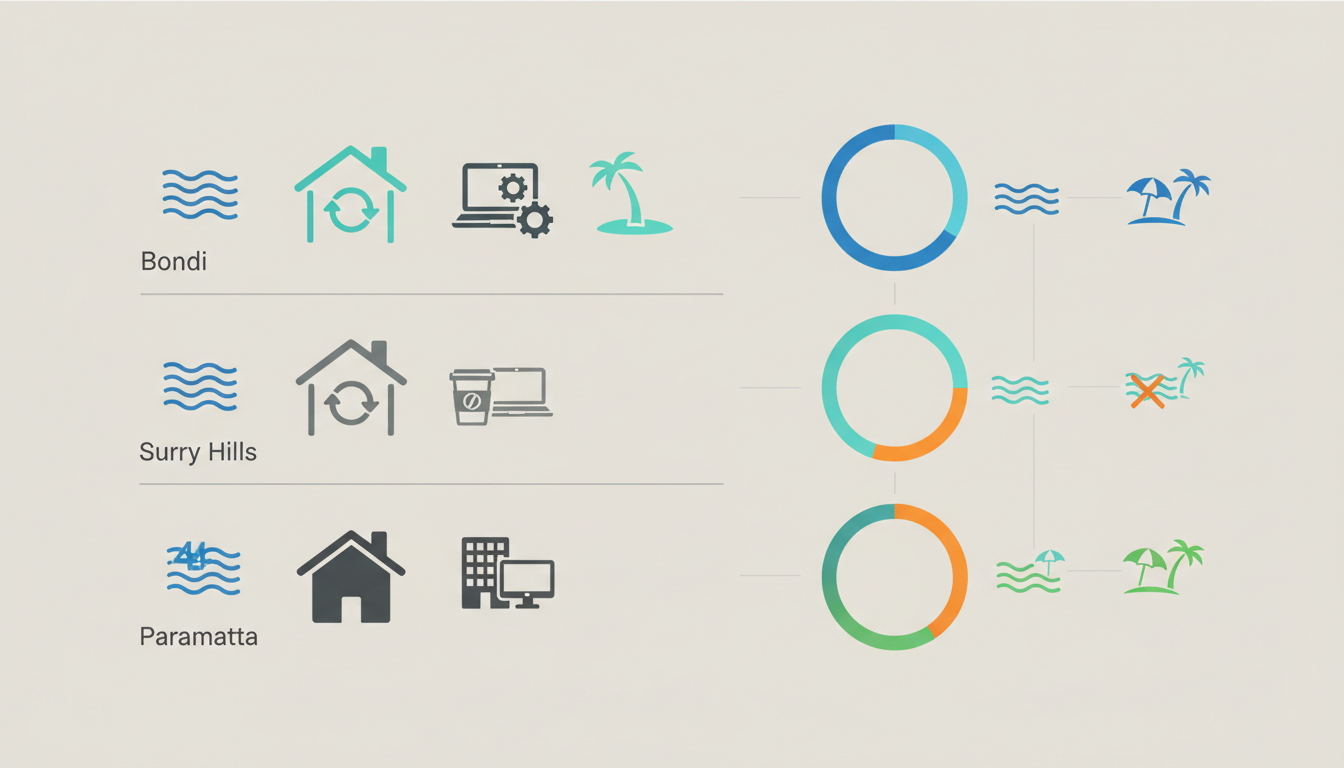 Infographic showing Sydney neighbourhood comparison for remote workers transit access, average home
The Practicalities: Visas, Costs, and Timing
Sydney home exchange for remote workers requires understanding Australia's entry requirements and cost landscape.
Visa Considerations
Most remote workers enter Australia on a standard tourist visa (subclass 600) or the Electronic Travel Authority (ETA, subclass 601) for eligible passport holders. These visas technically prohibit "work"—but the Australian government has clarified that remote work for an overseas employer, where the work is incidental to your visit and you're not being paid by an Australian entity, generally doesn't violate visa conditions.
The standard tourist visa allows stays up to 3, 6, or 12 months depending on the stream. For remote workers planning extended Sydney stays, the 6-month option typically offers the best balance of duration and approval likelihood.
Worth noting: visa rules change, and individual circumstances vary. Verify current requirements through the Australian Department of Home Affairs before planning your trip.
Cost Landscape
Beyond accommodation (where home exchange delivers its primary value), Sydney's daily costs for remote workers typically include coffee at AUD $4.50–6 for a flat white (Sydney's coffee culture is excellent—budget for it), lunch out at AUD $15–25 for casual dining, groceries at AUD $100–150 per week for one person cooking at home, public transit around AUD $50 on an Opal card with weekly caps limiting maximum spend, and coworking backup at AUD $30–50 per day for drop-in access at spaces like WeWork in Pyrmont or Fishburners at the Sydney Startup Hub.
Home exchange eliminates the largest variable cost, making extended Sydney stays financially viable for remote workers who would otherwise be priced out.
Timing Your Exchange
Sydney's seasons are inverted from the Northern Hemisphere, which creates opportunities. September through November (spring) brings ideal weather, jacaranda blooms, and a city buzzing with energy—though high demand for home exchanges means you should list your property early. December through February (summer) is peak tourist season with hot days often reaching 30°C+ and busy beaches; good for beach-adjacent stays, but expect competition for popular listings. March through May (autumn) is arguably the best time for remote work—mild temperatures, fewer tourists, excellent light for video calls. June through August (winter) is mild by global standards (rarely below 10°C), but Sydneysiders retreat indoors, meaning more home exchange availability and lower competition, though less vibrant street life.
Making the Most of Your Sydney Work-Life Balance
The point of remote work from Sydney isn't to replicate your home routine in a different time zone—it's to access experiences that enhance both your work and your life.
Morning Routines Worth Establishing
Sydney rewards early risers. The Bondi to Coogee coastal walk is spectacular at 6 AM, before crowds arrive and while the light is soft. Bronte Beach's ocean pool offers lap swimming with actual waves crashing over the edge. The Royal Botanic Garden opens at 7 AM and provides a meditative walking route before the workday begins.
These aren't tourist activities—they're the daily rituals that make Sydney residents fiercely attached to their city. Home exchange puts you in position to adopt them as your own.
 Dawn at Bronte Beach ocean pool with a lone swimmer doing laps, pink sky reflected in the water, san
Afternoon Breaks That Reset Your Brain
Sydney's geography means water is never far away. The Barangaroo foreshore walk takes 20 minutes and passes through some of the city's most ambitious urban renewal. The ferry to Watsons Bay costs a few dollars and deposits you at a harbourside fish and chips spot that locals have frequented for generations. The Art Gallery of NSW is free and air-conditioned—a legitimate afternoon break destination when you need visual stimulation that isn't a screen. The same applies to the Museum of Contemporary Art at Circular Quay.
Weekend Expansion
Home exchange's cost savings unlock weekend experiences that would otherwise strain a travel budget. The Blue Mountains sit 90 minutes away by train—genuine wilderness with hiking trails and the famous Three Sisters rock formation. Hunter Valley wine country is accessible by car or tour, with cellar doors open for tastings. Palm Beach marks the Northern Beaches' endpoint, where the Pittwater meets the ocean and Sydney feels genuinely remote. And Royal National Park, Australia's oldest, lies south of the city with coastal walks and secluded beaches.
What the SwappaHome Community Reports About Sydney Exchanges
Feedback from SwappaHome members who've completed Sydney home exchanges reveals consistent patterns.
Workspace quality tends to exceed expectations. Sydney's high property costs mean residents invest in their living spaces, and home offices here are typically well-equipped because working from home is common and real estate is too expensive to waste on poorly designed rooms.
Communication with hosts matters more than listing details. The most successful exchanges involve direct conversation about work requirements. Sydney hosts understand remote work culture and can often suggest neighbourhood-specific tips—which café has the best backup WiFi, which library offers quiet work spaces, which parks have reliable mobile coverage.
Longer stays unlock better properties. Two-week minimums are common for Sydney home exchanges, and hosts with premium properties often prefer month-long exchanges. The commitment signals seriousness and reduces the logistical overhead of frequent turnovers.
Summer requires planning. December and January bookings should be secured months in advance. The combination of school holidays, international tourism, and domestic travel creates genuine scarcity in desirable neighbourhoods.
Preparing Your Own Home for Exchange
Home exchange is reciprocal—your Sydney stay depends on making your own property attractive to potential guests. For remote workers, this creates an opportunity: other location-independent professionals are actively seeking properties with good workspaces.
Highlight your home office setup in your SwappaHome listing. Photograph the desk, mention the internet speed, describe the chair. These details matter to the exact audience you're trying to attract—people who understand the difference between a proper workspace and a kitchen counter.
Consider what makes your location attractive to Sydney residents seeking their own remote work adventures. Proximity to nature? A different cultural scene? Better time zone alignment for their work? The exchange works best when both parties gain something they couldn't easily access otherwise.
The Bottom Line
Sydney's combination of infrastructure reliability, lifestyle quality, and sheer beauty makes it one of the world's most compelling remote work destinations. The city's accommodation costs make it one of the most expensive. Home exchange resolves this tension in a way that hotels and short-term rentals simply cannot.
Through SwappaHome's credit system, you can host guests in your home city, accumulate credits, and spend them on Sydney stays without money changing hands between members. New members start with 7 free credits—enough for a week-long trial of the Sydney remote work lifestyle.
The harbour will still be there at 6 PM when you close your laptop. The coastal walks will still be empty at dawn. The flat whites will still be excellent. Home exchange just makes it possible to stay long enough to actually experience them.
Frequently Asked Questions
Is Sydney home exchange safe for remote workers with expensive equipment?
SwappaHome's verification and review system builds accountability between members, and the reciprocal nature of home exchange—where hosts are simultaneously guests in someone else's home—creates mutual trust. For valuable equipment, many remote workers bring laptops rather than leaving desktop setups, and some arrange their own travel insurance covering electronics. The community reports very few incidents, but personal insurance provides additional peace of mind.
How fast is typical internet in Sydney home exchanges?
Most Sydney residential properties now have NBN connections delivering 50–100 Mbps, adequate for video conferencing and large file transfers. Always verify the specific connection type and speed with your host before confirming—ask them to run a speed test. Properties in newer buildings (Pyrmont, Barangaroo, Green Square) typically have the most reliable fibre connections.
What's the best time of year for a Sydney home exchange as a remote worker?
Autumn (March–May) offers the ideal combination: mild temperatures around 20–25°C, fewer tourists competing for exchanges, excellent natural light for video calls, and Sydney's café and cultural scene in full swing. Spring (September–November) is equally pleasant but sees higher demand. Avoid peak summer (December–January) unless you specifically want beach access and can secure bookings months ahead.
Can I legally work remotely in Sydney on a tourist visa?
Australian immigration generally permits remote work for overseas employers when it's incidental to your visit and you're not paid by an Australian entity. The standard tourist visa (subclass 600) allows stays up to 12 months depending on the stream. However, visa rules change—verify current requirements through the Department of Home Affairs before planning extended stays.
How far in advance should I arrange a Sydney home exchange?
For desirable neighbourhoods like Surry Hills, Manly, or Pyrmont, begin searching 2–3 months ahead. Premium properties with dedicated home offices often book quickly, especially for the popular autumn and spring seasons. Summer exchanges (December–February) require even earlier planning—4–6 months is not excessive for sought-after listings.

Published by
SwappaHome
SwappaHome Editorial Team
Home Exchange & Slow Travel Editorial
The SwappaHome Editorial Team brings together travel research, home-exchange community insights, and platform data to produce practical guides for first-time and experienced home swappers. Every article cites real platforms, current market rates, and verifiable city-level facts so readers can make informed decisions without guessing.
Ready to try home swapping?
Join SwappaHome and start traveling by exchanging homes. Get 7 free credits when you sign up!
Related articles
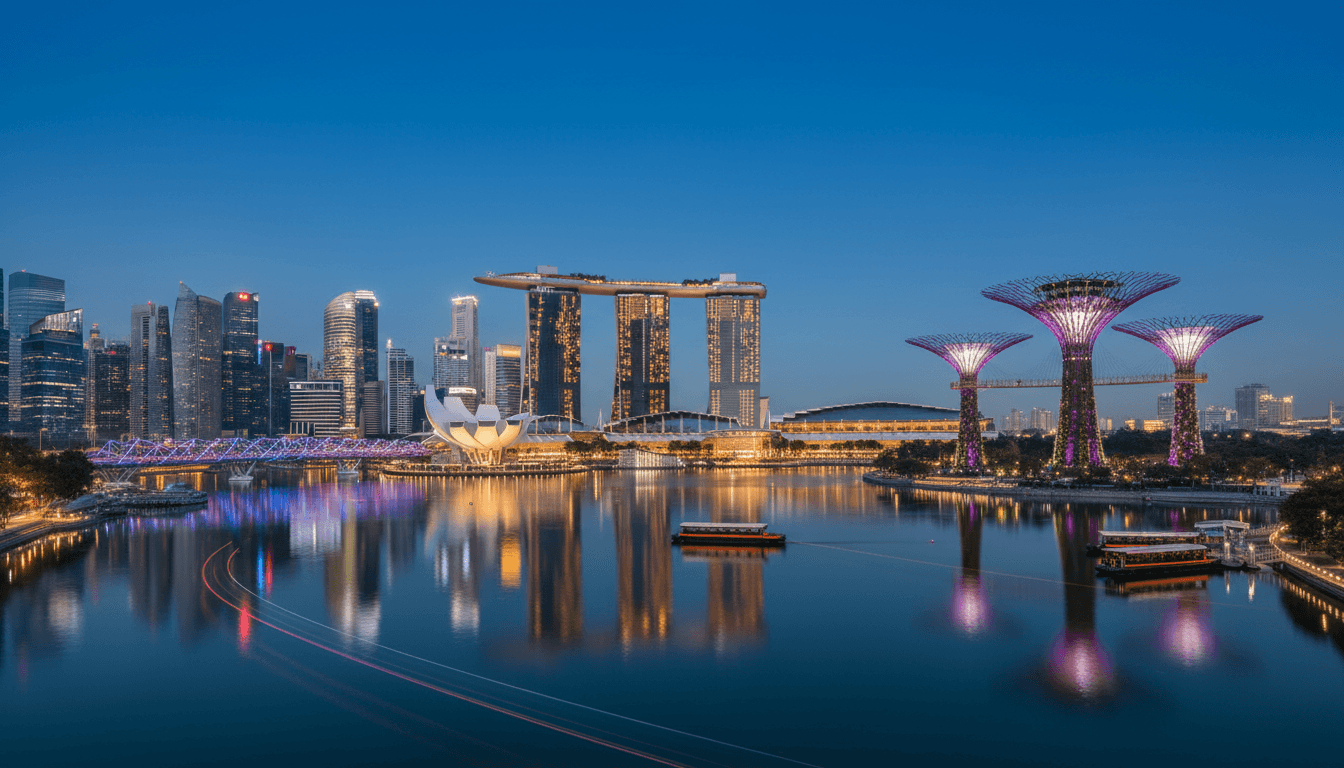
Bachelor and Bachelorette Parties in Singapore: The Complete Home Swap Group Guide for 2026
Planning a bachelor or bachelorette party in Singapore? Discover how home swapping lets groups of 6-12 stay together in luxury condos, saving thousands while partying in Marina Bay.

Cycling in Lisbon: 7 Home Swap Bike Tour Itineraries for Every Rider
Discover the best cycling routes in Lisbon with these home swap bike tour itineraries—from waterfront paths to hilltop adventures, all starting from your borrowed home.

Graduation Trip to Barcelona: How Home Swapping Gives New Graduates the Ultimate Celebration
Planning a graduation trip to Barcelona? Discover how home swapping lets new graduates explore Spain's most vibrant city without the hostel crowds or hotel costs.