Home Swapping in Sydney: Your Complete Insider's Guide to Free Accommodation

SwappaHome Editorial Team
Home Exchange & Slow Travel Editorial
Discover how home swapping in Sydney can save you thousands while living like a local. Real neighborhoods, honest costs, and 7 years of swap secrets revealed.
The first time I woke up in Sydney, I wasn't in a hotel room with blackout curtains and a minibar I'd never touch. I was in a sun-flooded apartment in Surry Hills, listening to kookaburras—actual kookaburras—laughing outside the window while the smell of coffee drifted up from the café below. Home swapping in Sydney had given me something no hotel ever could: a real life in one of the world's most expensive cities.
That was three years ago. Since then, I've done four more Sydney swaps, stayed in everything from a harborside apartment in Kirribilli to a converted warehouse in Marrickville, and saved roughly $8,400 in accommodation costs. Not a typo. Sydney hotels average $180-280 USD per night for anything decent. Home swapping? One credit per night on SwappaHome, no matter if you're staying in a studio or a four-bedroom house with a pool.
This guide is everything I wish I'd known before my first Sydney swap—the neighborhoods that actually make sense, the honest truths about what to expect, and the local tips that took me years to figure out.
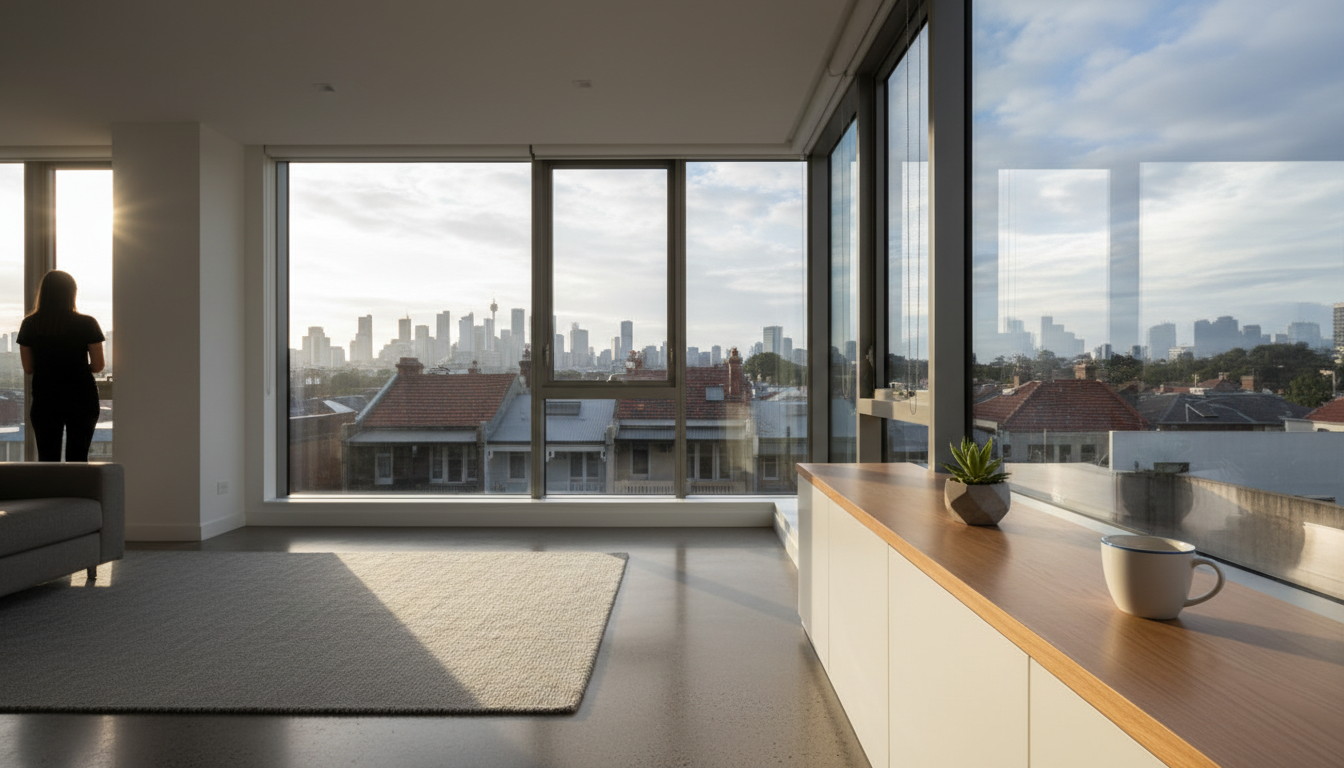 morning light streaming through floor-to-ceiling windows of a modern Surry Hills apartment, coffee c
Why Home Swapping in Sydney Makes Financial Sense
Let me be blunt about Sydney's accommodation costs because nobody warned me properly.
A mid-range hotel in the CBD runs $220-320 USD per night. Airbnbs in decent neighborhoods? $150-250 USD, plus cleaning fees that somehow always surprise you. Even hostels—and I love a good hostel, don't get me wrong—cost $40-60 USD per night for a private room.
Now multiply any of those by two weeks.
When I did my first Sydney home swap, I stayed for 16 nights in Paddington. A comparable Airbnb in that neighborhood would have cost around $3,200 USD. Instead, I used 16 credits—credits I'd earned by hosting travelers in my San Francisco apartment over the previous months. The only money I spent on accommodation was zero dollars.
So here's the thing about SwappaHome's credit system, because I get asked this constantly: you earn one credit for every night you host a guest, regardless of how fancy your place is. You spend one credit for every night you stay somewhere, regardless of how fancy that place is. A beachfront mansion in Bondi costs the same as a cozy studio in Newtown—one credit per night. When you sign up, you get 7 free credits to start.
No direct swaps required either. I've never actually swapped directly with a Sydney member. I hosted a couple from Berlin, a solo traveler from Tokyo, and a family from Barcelona—then used those credits to stay in Sydney homes whose owners were traveling elsewhere entirely.
Best Sydney Neighborhoods for Home Exchange
Sydney sprawls. Like, really sprawls. Choosing the right neighborhood for your home swap matters more here than in most cities because public transport, while decent, isn't quite as seamless as London or Tokyo.
After five Sydney swaps and countless conversations with local hosts, here's my honest neighborhood breakdown:
Surry Hills: Best for First-Time Visitors
This is where I always recommend first-timers look for a Sydney home swap. Surry Hills sits just east of the CBD, walkable to everything central, but with actual neighborhood character—Victorian terrace houses, independent coffee roasters on every corner, and some of the city's best restaurants.
The vibe? Creative professional meets young family. Lots of renovated terraces with courtyards, some newer apartment buildings. Expect home swap listings here to be compact but stylish—Sydney real estate prices mean even locals don't have massive spaces.
Walking distance to Central Station (15 min), Hyde Park (10 min), Oxford Street (5 min). For coffee, hit up Reuben Hills on Albion Street and get the Ethiopian single origin. Grocery situation is excellent, with Harris Farm Markets on Crown Street.
Bondi and Bondi Beach: Best for Beach Lovers
I'll be honest—Bondi is touristy. The beach itself gets packed, the cafés are overpriced, and you'll hear more European accents than Australian ones in summer.
But.
Waking up to the sound of waves, doing the Bondi to Coogee coastal walk before breakfast, swimming in that ridiculous turquoise water... there's a reason people put up with the crowds. If beach access is your priority, a Bondi home swap delivers.
Home swap listings in Bondi tend to be apartments rather than houses. Many have ocean views or are walking distance to the beach. Just know you're trading neighborhood authenticity for location convenience. The bus to CBD takes 35-45 minutes depending on traffic, best swim time is before 8am in summer to beat crowds, and here's a local secret: North Bondi is quieter than the main beach—walk past the skate park.
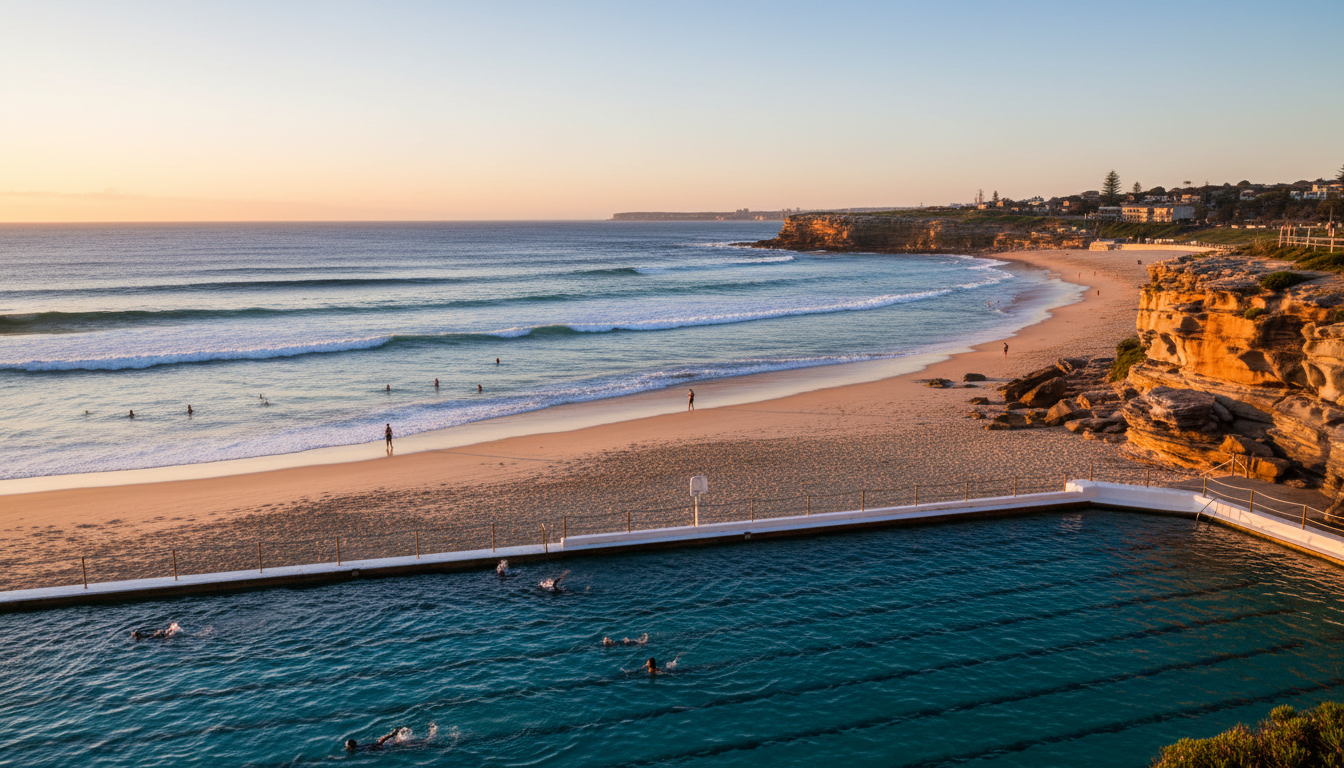 early morning at Bondi Beach with only a few swimmers in the turquoise water, Bondi Icebergs pool vi
Newtown: Best for Budget-Conscious Travelers
Newtown is where Sydney gets weird—in the best way. King Street runs for nearly two kilometers of vintage shops, Thai restaurants, vegan cafés, and pubs with live music. The neighborhood has historically been the LGBTQ+ hub of Sydney, and while gentrification has smoothed some edges, it still feels distinctly alternative.
Home swap options here often give you more space for your credit. You might find a two-bedroom terrace in Newtown where you'd only get a studio in Bondi. The trade-off is you're 20 minutes from the harbor by train and nowhere near a beach.
For me, that trade-off is worth it. My Newtown swap last year was in a Victorian terrace with a backyard, a cat to look after (bonus!), and a local pub—the Courthouse Hotel—that became my second living room. Train to CBD is 15 minutes to Town Hall, best cheap eats is Thai Pothong (been there 40+ years for a reason), and vibe check: if you loved Portland or Berlin, you'll love Newtown.
Manly: Best for Families
Manly feels like a separate beach town that happens to be part of Sydney. You take a ferry across the harbor—30 minutes of genuinely stunning views—and arrive at a place with its own beaches, its own café culture, its own pace.
Families love it here because the beach is calmer than Bondi, there's a protected harbor beach for little kids, and the whole area is more relaxed than the city side. Home swap listings in Manly often include houses rather than apartments, sometimes with yards.
The downside? You're committed to the ferry schedule for city access. Miss the last ferry (around midnight) and you're looking at a $60+ USD Uber. Ferry to Circular Quay is 30 minutes and runs frequently until late. For families, hit Shelly Beach for calmer waters and great snorkeling, and don't skip Gelato Messina on the Corso.
Balmain and Birchgrove: Best for Couples
This is my personal favorite Sydney neighborhood, and I'm biased because my best Sydney swap was here. Balmain is a peninsula jutting into the harbor, all sandstone cottages, hidden parks with water views, and pubs that have been serving locals since the 1800s.
It's residential and quiet. No major attractions. Just incredibly livable, with harbor glimpses around every corner and a village feel that makes you forget you're in a city of five million people.
Home swap listings here tend to be established locals—people who've owned their homes for decades and travel regularly. The properties often have character: original fireplaces, harbor views from the backyard, that kind of thing. Ferry to Circular Quay is 25 minutes from Balmain East Wharf. For sunset, head to Elkington Park—bring wine. And for a perfect Saturday afternoon, there's The London Hotel.
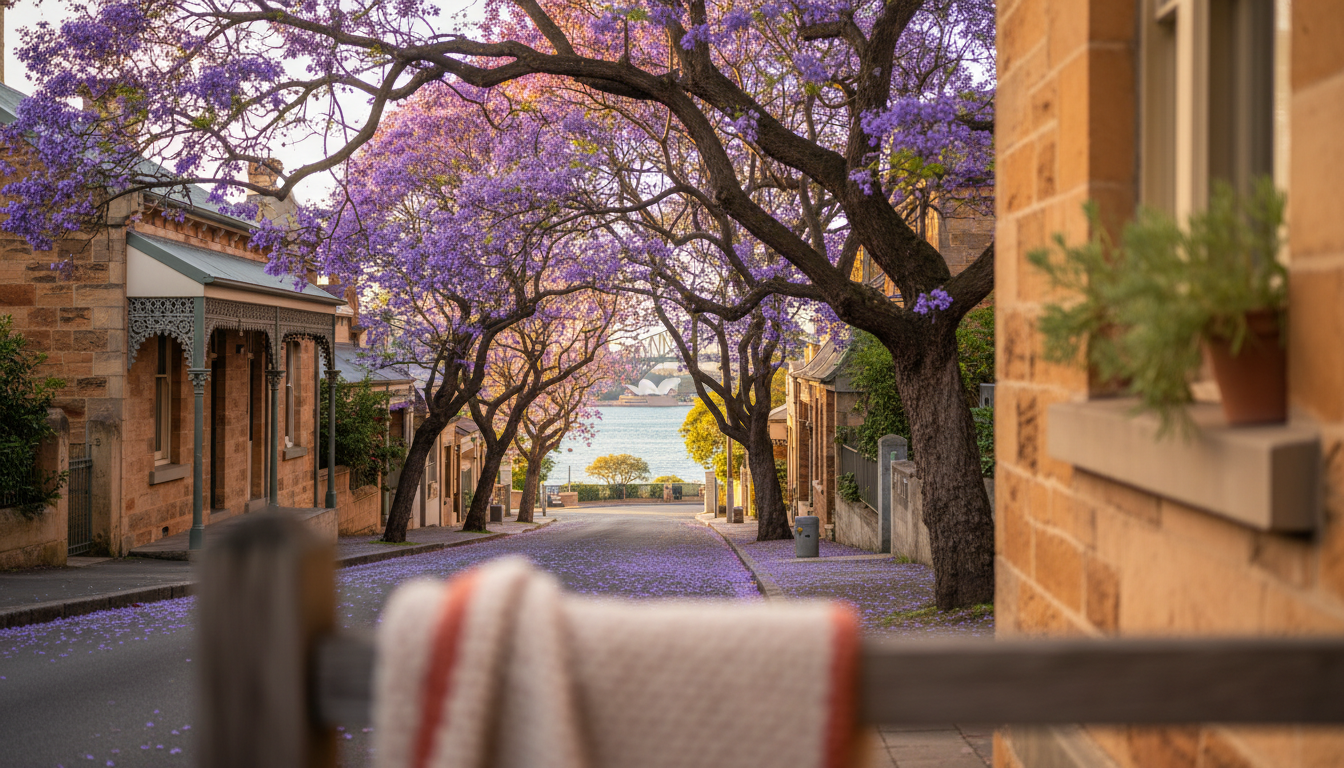 narrow Balmain street lined with heritage sandstone cottages, jacaranda trees in purple bloom, glimp
How to Find the Perfect Sydney Home Swap
I've learned some things about finding good Sydney swaps that I wish someone had told me earlier.
Sydney hosts book up. This isn't like swapping in smaller cities where you can message someone two weeks out and expect availability. For peak season (December through February, which is Australian summer), I start reaching out to potential hosts three to four months in advance. For shoulder season (March-May, September-November), six to eight weeks is usually fine.
Read the reviews carefully. SwappaHome's review system is your best friend here. I specifically look for comments about cleanliness, communication, and whether the listing photos match reality. If a host has ten reviews and they're all variations of "great communication, exactly as described," that tells me something. If reviews mention surprises—good or bad—I pay attention.
And be specific in your initial message. Sydney hosts get a lot of requests. When I reach out, I mention exactly when I want to stay and why those dates, a bit about who I am and what brings me to Sydney, what I can offer in return (my place in San Francisco, my flexibility on dates, my willingness to care for pets), and that I've read their listing carefully—I'll mention something specific, like "I noticed you're near the Marrickville farmers market—I'd love to check that out."
Generic "hey, is your place available?" messages get ignored. Personal, thoughtful messages get responses.
What to Expect from Your Sydney Home Swap
Sydney homes are different from what you might expect if you're coming from North America or Europe.
Space is at a premium. Even in expensive neighborhoods, homes tend to be smaller than equivalent properties in American cities. A "large" Sydney apartment might be 800 square feet. A "spacious" terrace house might be 1,200 square feet across three floors. Adjust your expectations accordingly—and honestly, you won't need much space when Sydney's outdoors is this good.
Air conditioning is not universal. This surprised me on my first summer swap. Many older Sydney homes—especially the charming Victorian terraces—don't have central air. They might have a split system in the living room or bedroom, or just rely on ceiling fans and cross-ventilation. If you're visiting in December through February and can't handle heat, ask specifically about cooling before confirming a swap.
Laundry is often outside. Many Sydney homes have their washing machines in a covered outdoor area or on a back porch. Dryers are less common than in the US—Australians tend to hang-dry clothes, which actually works great in the sunny climate.
Water restrictions exist. Sydney has periodic water restrictions due to drought conditions. Your host should brief you, but generally: shorter showers, no hosing driveways, being mindful of water use. It's not onerous, just different.
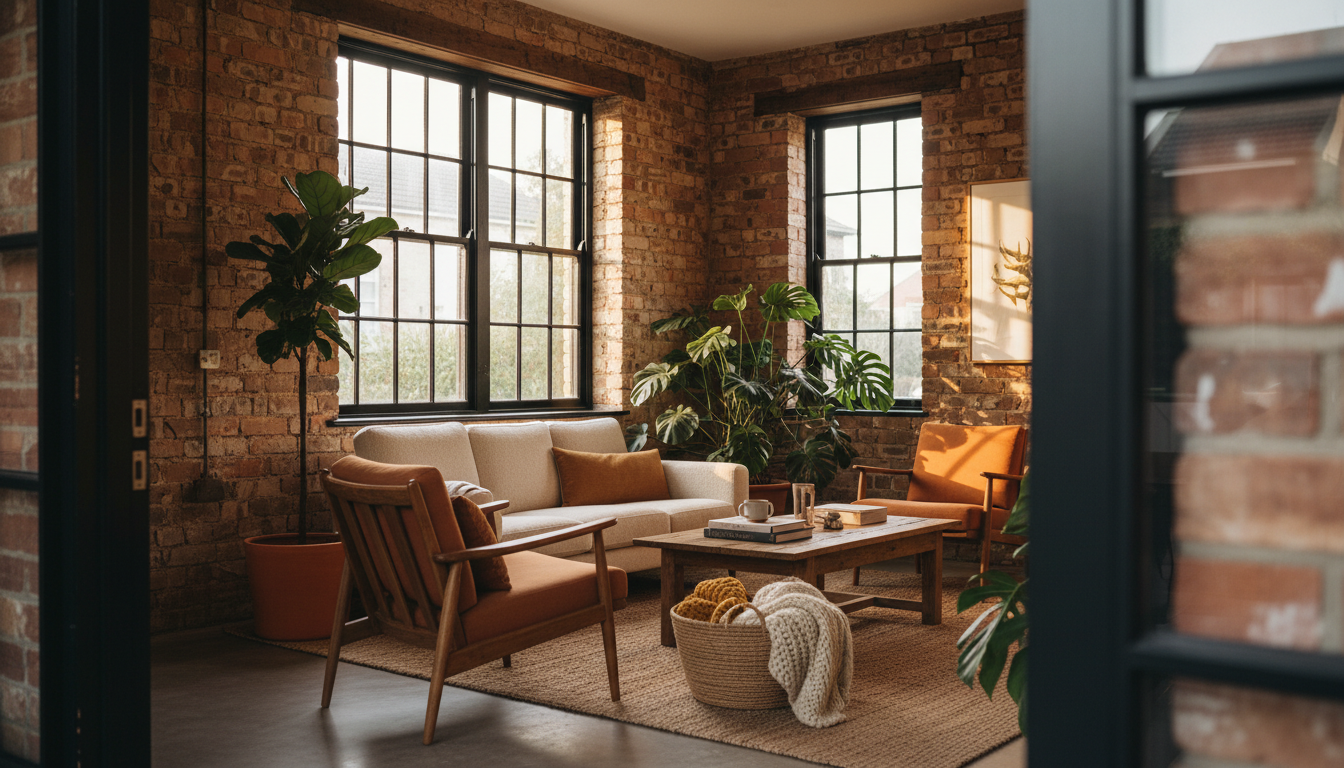 cozy interior of a Sydney terrace house with exposed brick walls, mid-century furniture, indoor plan
Sydney Home Swap Costs You Should Budget For
Home swapping eliminates accommodation costs, but you'll still spend money in Sydney. Here's what my last two-week swap actually cost:
Getting around: Sydney's Opal card (transit card) cost me about $50 AUD ($33 USD) per week using trains, buses, and ferries regularly. Uber rides when I was lazy or out late added another $80 AUD ($53 USD) total.
Groceries: Cooking at home—one of the best parts of home swapping—ran about $150 AUD ($100 USD) per week at Woolworths and local markets. Sydney groceries are more expensive than US prices, especially for meat and dairy.
Eating out: This is where Sydney gets pricey. A decent café breakfast runs $18-25 AUD ($12-17 USD). Dinner at a mid-range restaurant is $40-60 AUD ($27-40 USD) per person with a drink. I budgeted $400 AUD ($265 USD) per week for eating out, which covered maybe five restaurant meals and several café stops.
Activities: Many of Sydney's best experiences are free—beaches, coastal walks, the Botanic Gardens, wandering neighborhoods. But if you want to climb the Harbour Bridge ($300+ AUD / $200 USD), visit Taronga Zoo ($50 AUD / $33 USD), or take day trips, budget accordingly.
My total two-week spend, excluding flights: approximately $1,100 USD. Compare that to what I would have spent with hotel accommodation: easily $4,500+ USD.
Practical Tips for Sydney Home Swappers
After five swaps, these are the things I always do:
Arrive with coffee supplies. Australians take coffee seriously—like, Melbourne-invented-flat-whites seriously. If you're a coffee person, ask your host where the nearest good café is, or bring your own beans if you're particular. The coffee in your host's kitchen might be instant (Australians often get their coffee out rather than making it at home).
Download the Opal Travel app. It shows real-time transit info and lets you plan routes. Sydney's train and bus system is good but not intuitive for visitors.
Get a local SIM card. Telstra or Optus prepaid SIMs are available at the airport and most convenience stores. Data is cheap—about $30 AUD ($20 USD) for a month of decent data. You'll want it for maps, transit apps, and messaging your host if questions come up.
Ask about garbage and recycling. Sydney has specific bin colors and collection days. Nothing says "tourist" like putting the wrong bin out on the wrong day. Your host should leave instructions, but ask if they don't.
Learn the wildlife basics. Yes, there are spiders. Yes, some are dangerous. In practice, I've never encountered anything scary in urban Sydney, but know that you should shake out shoes if they've been sitting outside and check under toilet seats in older homes. It sounds dramatic but becomes second nature.
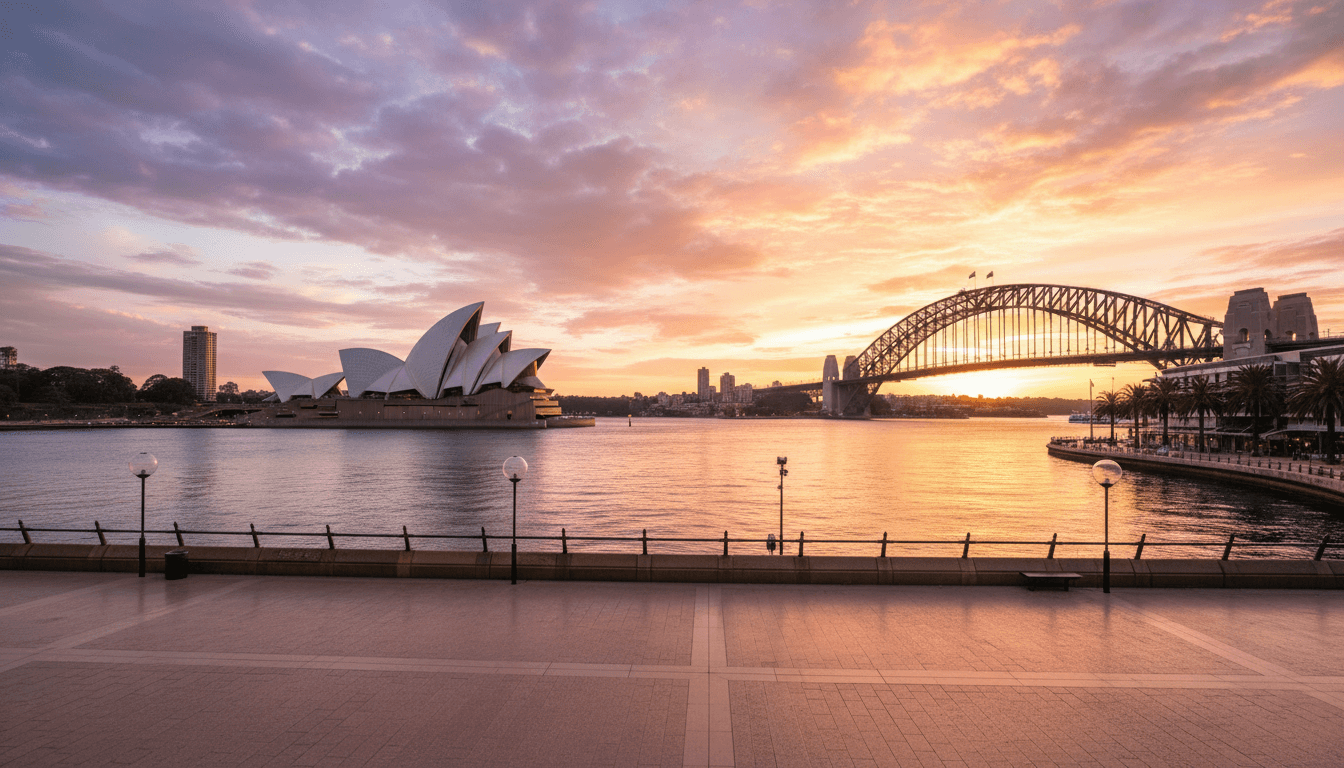
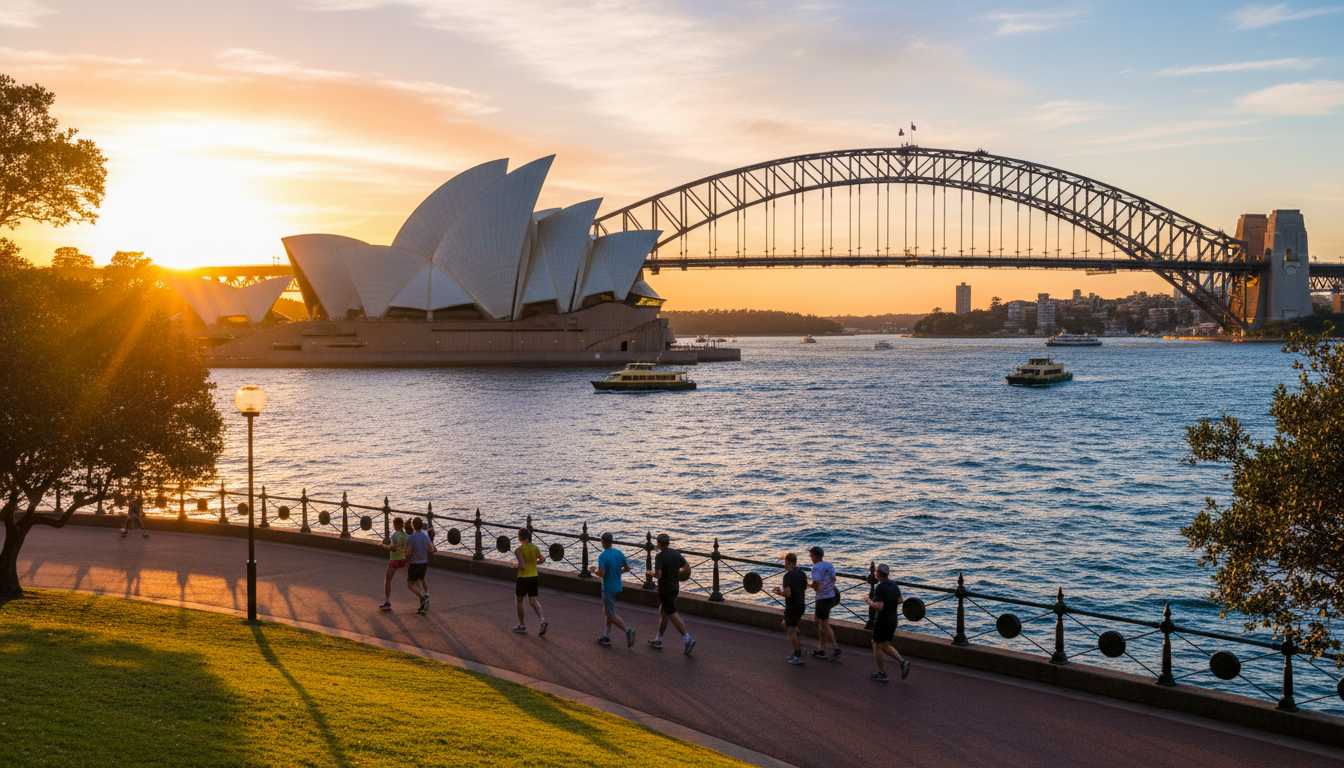 Sydney Opera House and Harbour Bridge at golden hour seen from Mrs Macquaries Chair, with joggers an
The Trust Factor: How Sydney Home Swaps Actually Work
I get asked about safety and trust more than anything else. Here's my honest take.
SwappaHome connects members—it's a platform, not a hotel chain. The company doesn't provide insurance or damage coverage. Members are responsible for their own arrangements, which means the trust is community-based rather than corporate-guaranteed.
This sounds scarier than it is in practice. In seven years and 40+ swaps, I've never had a significant issue. Here's why the system works:
Reviews create accountability. Every swap gets reviewed. If someone trashes a home or is a terrible guest, it shows up in their profile forever. This creates powerful incentive for everyone to behave well—your reputation follows you.
Verification helps. SwappaHome offers identity verification. I only swap with verified members, and I'm verified myself. It's not foolproof, but it adds a layer of confidence.
Communication is key. Before every swap, I have detailed conversations with my host about expectations, house rules, and any concerns. By the time we've exchanged messages about where to find the spare towels and how to work the coffee machine, we've built a relationship.
Get your own insurance if you want coverage. I carry travel insurance that includes personal liability, and I have renter's insurance on my own place that covers guests. This is my choice, not something SwappaHome provides. If peace of mind matters to you, look into your own coverage.
The honest truth? Home swapping works because most people are good. They want the same thing you want—a nice place to stay and a positive experience. The review system keeps everyone accountable, and the community self-polices effectively.
When to Visit Sydney for Your Home Swap
Sydney is genuinely good year-round, but timing affects your experience:
December-February (Summer): Hot, sunny, crowded. Beaches are packed, accommodation demand is highest, and prices for everything spike. But the weather is spectacular and the city buzzes with energy. Book your swap four months ahead minimum.
March-May (Autumn): My favorite time. Warm enough for beaches, fewer crowds, the light turns golden, and you can actually get a table at popular restaurants. Jacarandas bloom in late October/early November if you catch the tail end.
June-August (Winter): Sydney winter is mild—daytime temps around 60°F (16°C)—but locals act like it's the apocalypse. Fewer tourists, easier to find swaps, and you can still do most outdoor activities comfortably. Just bring layers.
September-November (Spring): Warming up, whale watching season, wildflowers blooming. Another excellent shoulder season with good swap availability.
Making the Most of Your Sydney Home Swap
The real magic of home swapping isn't just the free accommodation—it's how it changes the way you travel.
When I stay in hotels, I'm a tourist. I eat breakfast in the hotel restaurant, I follow guidebook recommendations, I see the highlights and move on. When I stay in someone's home in Balmain or Newtown or Surry Hills, I become a temporary local.
I shop at their grocery store. I drink at their local pub. I walk their streets at different times of day, noticing things tourists never see—the guy who walks his three greyhounds every morning, the café that's packed with tradies at 6am, the park where neighbors gather on Sunday afternoons.
My best Sydney memories aren't the Opera House or the Harbour Bridge (though those are spectacular). They're smaller moments: finding the perfect flat white at a café my host recommended, watching a thunderstorm roll across the harbor from a Kirribilli living room, having a conversation with the butcher in Balmain who'd known my host's family for twenty years.
That's what home swapping gives you. Not just accommodation, but access to a life.
If you're considering your first Sydney home swap, start browsing SwappaHome listings now—even if your trip is months away. Get a feel for what's available, which neighborhoods appeal to you, what kind of homes exist. When you're ready, reach out to hosts with genuine, personal messages. Build your profile by hosting travelers in your own home first if you can.
Sydney is waiting. And trust me, it's better from the inside.
Frequently Asked Questions
Is home swapping in Sydney safe for solo travelers?
Home swapping in Sydney is generally safe for solo travelers, especially when you use verified profiles and read reviews carefully. I've done two solo Sydney swaps without issues. The key is thorough communication with your host beforehand and trusting your instincts—if something feels off about a listing or host, move on to another option. Consider getting your own travel insurance for extra peace of mind.
How much money can I save with a Sydney home swap compared to hotels?
A two-week Sydney home swap typically saves $2,500-4,500 USD compared to mid-range hotels, which average $180-280 USD per night. Even compared to Airbnb ($150-250 USD nightly plus fees), you're saving $2,000-3,500 USD. On SwappaHome, every night costs just one credit regardless of the property's location or size—credits you earn by hosting guests at your own home.
What's the best neighborhood for a first-time Sydney home swap?
Surry Hills is ideal for first-time Sydney home swappers. It's walkable to the CBD and major attractions, has excellent cafés and restaurants, and offers authentic neighborhood character without sacrificing convenience. Home swap listings here tend to be stylish apartments and renovated terraces with good public transport access. Newtown is another great option if you prefer a more alternative, budget-friendly vibe.
How far in advance should I book a Sydney home swap?
For Australian summer (December-February), start reaching out to Sydney hosts three to four months in advance—this is peak season and popular listings book quickly. For shoulder seasons (March-May, September-November), six to eight weeks ahead is usually sufficient. Winter (June-August) offers the most flexibility, with many quality listings available on shorter notice.
Do I need a car for a Sydney home swap?
No, you don't need a car for most Sydney home swaps. The city has excellent public transport—trains, buses, ferries, and light rail—all accessible with an Opal card. Neighborhoods like Surry Hills, Newtown, and Balmain are highly walkable. You'd only want a car if you're planning extensive day trips outside the city or staying in outer suburbs. Budget $50 AUD ($33 USD) weekly for transit if you're exploring actively.

Published by
SwappaHome
SwappaHome Editorial Team
Home Exchange & Slow Travel Editorial
The SwappaHome Editorial Team brings together travel research, home-exchange community insights, and platform data to produce practical guides for first-time and experienced home swappers. Every article cites real platforms, current market rates, and verifiable city-level facts so readers can make informed decisions without guessing.
Ready to try home swapping?
Join SwappaHome and start traveling by exchanging homes. Get 7 free credits when you sign up!
Related articles
Bachelor and Bachelorette Parties in Singapore: The Complete Home Swap Group Guide for 2026
Planning a bachelor or bachelorette party in Singapore? Discover how home swapping lets groups of 6-12 stay together in luxury condos, saving thousands while partying in Marina Bay.

Cycling in Lisbon: 7 Home Swap Bike Tour Itineraries for Every Rider
Discover the best cycling routes in Lisbon with these home swap bike tour itineraries—from waterfront paths to hilltop adventures, all starting from your borrowed home.

Graduation Trip to Barcelona: How Home Swapping Gives New Graduates the Ultimate Celebration
Planning a graduation trip to Barcelona? Discover how home swapping lets new graduates explore Spain's most vibrant city without the hostel crowds or hotel costs.