
The essential guide to the digital nomad visa for Portugal (D8)

SwappaHome Editorial Team
Home Exchange & Slow Travel Editorial
Key Takeaways Moving to a new country requires careful planning, specifically when navigating the administrative side of the Portuguese immigration system. Use…
Key Takeaways
Moving to a new country requires careful planning, specifically when navigating the administrative side of the Portuguese immigration system. Use this summary to focus your efforts on the core requirements of your upcoming transition.
- The D8 visa is specifically for remote workers earning income from outside Portuguese borders.
- You must meet a minimum monthly income threshold to qualify for residency.
- Proper documentation of your tax status is non-negotiable for approval.
- The application involves a dual-stage process of initial visa approval followed by local residency permits.
- Early planning for your NIF and banking setup will prevent significant roadblocks later on.
Understanding the Portugal D8 visa
Transitioning to a remote life in a new country like Portugal is a significant life step that centers on the legal framework of the D8 visa. This permit was designed to invite digital nomads who can contribute to the local economy without relying on the local job market. When evaluating the digital nomad visa for portugal, it is helpful to view the visa not just as a piece of paper, but as a bridge to a new lifestyle that balances professional stability with a high quality of life.
Difference between temporary stay and residency
The temporary stay visa acts as a short-term gateway, lasting up to one year and allowing for several renewals. It is perfect if you only want to test the waters of the Iberian lifestyle before committing to a long-term relocation. Conversely, the residency visa is intended for those ready to plant deeper roots, leading to a long-term residence permit and potentially helping you move toward permanent status, as outlined in the guide to the Portugal D8 Digital Nomad Visa.
Financial requirements and monthly income thresholds
You must prove a consistent ability to support yourself without accessing public welfare funds. The current threshold is set at four times the national minimum wage, which ensures that officials are confident in your financial independence. Maintaining a steady flow of income is critical, so be prepared to show that your revenue is reliable and arrives regularly into your accounts each month.
Eligibility criteria for remote workers and freelancers
Eligibility is defined by the source of your work rather than the nature of the tasks you perform. Whether you are an employee of an international company or a freelancer with multiple client contracts, the primary requirement is that your income originates outside of the country. Many remote workers find that finding a home through SwappaHome helps them easily navigate the lifestyle requirements while focusing on their work eligibility.
Required documentation for your application
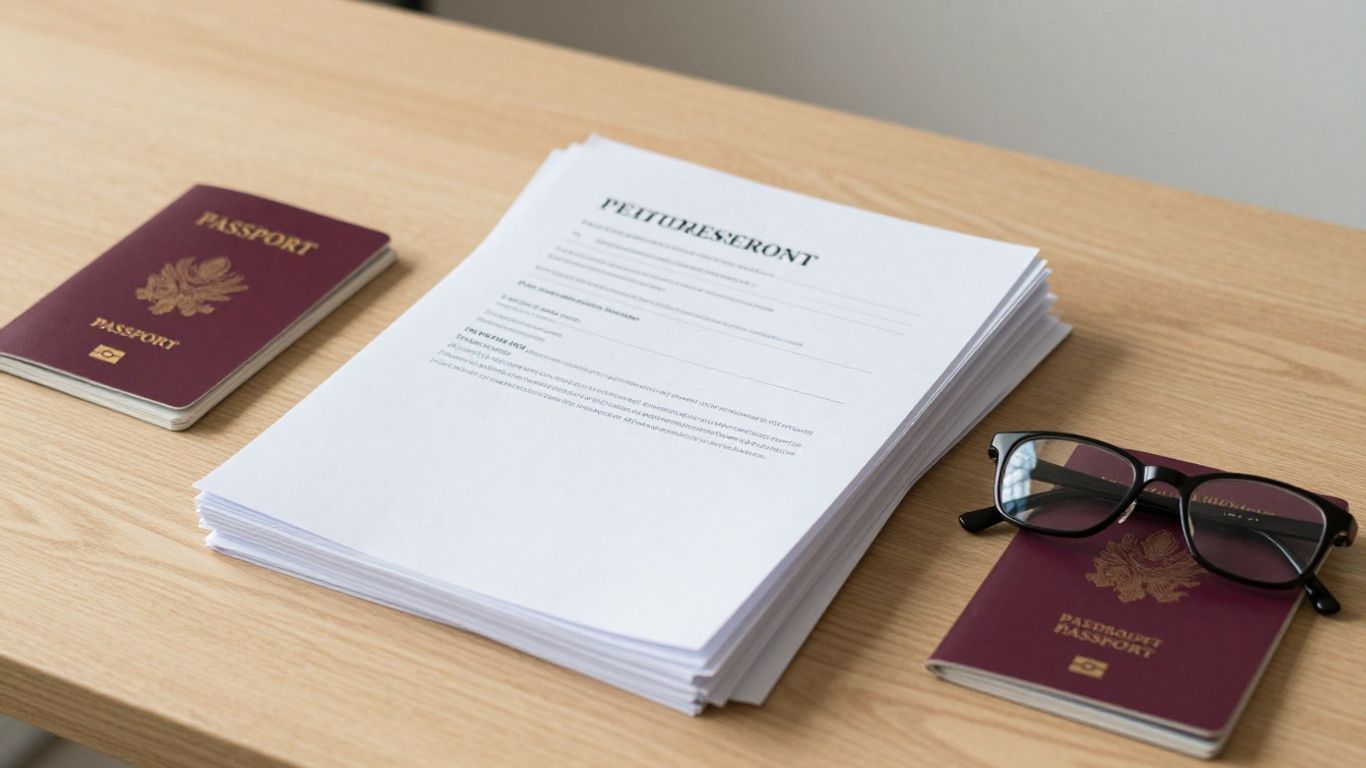 Documentation for your Portuguese visa
Preparing your paperwork correctly is the single most important factor in whether your application sails through or gets stuck in bureaucratic purgatory. You are building a case to convince officials that you are a productive professional who will respect the local legal system. Focus on organizing your file chronologically and transparently from the start.
Proof of remote employment or self-employment
Your contracts must clearly state that your work is capable of being performed remotely and that your employer acknowledges your stay in Portugal. If you are self-employed, provide proof of incorporation or active client agreements. Keeping your paperwork clear and professional reduces the chance of questioning during the review process.
Tax residency status and financial statements
Transparency is the name of the game when it comes to your financial history. You should prepare your records to show exactly how your earnings are distributed. Consider the following breakdown of essential financial documentation needed for the process.
| Document Type | Purpose | Timeframe Covered |
|---|---|---|
| Bank Statements | Verification of income source | Last 6 Months |
| Tax Returns | Proof of fiscal responsibility | Last 2 Years |
| Employer Letter | Confirmation of remote agreement | Current Date |
Providing this simple summary helps the consulate officers visualize your financial stability quickly. It saves them time, which generally works in your favor during the review stage.
Criminal record checks and health insurance requirements
Every applicant needs to clear basic safety standards by providing a clean criminal history record from their home country. Additionally, you must be covered while living abroad. The standard requirement includes:
- A notarized criminal background check certified by local authorities.
- Valid international health insurance covering the duration of your stay.
- A statement of intent regarding your residency plans in the territory.
- Any specific health documents requested during the initial outreach.
After you have secured these, you can confidently proceed to the appointment stage where your biometric data will be captured.
The step-by-step application process
Managing the application flow requires patience and a good eye for detail. You will likely interact with third-party service providers like VFS Global or direct consular services, which requires scheduling in advance. Once you start this path, ensure that your communications remain professional and timely throughout every single interaction.
Securing your NIF and opening a Portuguese bank account
The NIF, or Tax Identification Number, is the foundation of almost every transaction you will make, from signing rental leases to setting up utilities. Most people find it helpful to hire a local representative to secure this before they ever set foot in the country. Once obtained, opening a bank account becomes much easier, allowing you to establish the local financial presence needed for your residency permit.
Scheduling your appointment with VFS Global or the consulate
Slots fill up incredibly fast during peak seasons, so start monitoring the scheduling website long before you think you are ready. Have all your documentation digitized and ready to upload or print at a moment's notice to avoid losing your spot. If you are a UK national, this process is well-documented in the Portugal digital nomad visa guide aimed at facilitating your move.
Submitting your application and biometric data
When attending the interview, present your documents in a clean, organized folder. You will be asked to provide your fingerprint and digital signature during the meeting. Following this, the wait begins; it is important to stay responsive in case the consulate or immigration office requests additional clarification on your income or contract validity.
Timeline and costs associated with the visa
 Processing your visa timeline
Budgeting for the bureaucratic side of your move is often overlooked, leading to unexpected stress. The costs are not just limited to the visa fee itself, as you must factor in the time spent collecting apostilles, translations, and legal consultations. Planning for a cushion in both your calendar and your savings account is a essential part of relocation to ensure you remain comfortable during potential wait times.
Average processing times for visa approval
While official timelines often suggest 30 to 60 days, real-world experiences suggest that you should allow closer to four months from initiation to approval. If you are working in a niche field, this process is also comparable to the needs of those exploring field service management implementation, where planning and careful coordination drive efficiency.
Breaking down government fees and legal costs
Your budget should cover the consular embassy fee, the residence permit issuing fee, and potential attorney costs if you choose to use a legal representative. These initial costs are an investment in your legal standing and peace of mind. Keeping a spreadsheet of these expenses helps you maintain order amidst the high volume of incoming information.
Managing expectations during potential application delays
Sometimes paperwork is misplaced, or the office faces a backlog that remains largely out of your control. Use this time as an opportunity to research your new neighborhood or curate your workspace settings. Being patient prevents the stress that often causes applicants to make mistakes in follow-up communications.
Life as a digital nomad in Portugal
Once you arrive, the real work of integration begins, and it is a rewarding journey. You will find that life moves at a different pace, and that is part of the experience. Choosing authentic neighbourhood home exchange options allows you to settle into a rhythm that keeps you from feeling like a transient tourist.
Best cities for remote connectivity and community
Lisbon, Porto, and Braga offer some of the most reliable infrastructure for digital workers in Europe. You will find that connectivity in urban centers is robust enough for high-bandwidth tasks. Community hubs are plentiful, making it easier to integrate, especially when you use platforms like SwappaHome to find fellow nomads and locals who offer support.
Navigating the cost of living and housing markets
While it is no longer the hidden bargain it once was, Portugal remains highly competitive compared to Northern Europe. Your remote salary should stretch quite far, but pay close attention to housing costs in central districts. For professional logistics, you might even find remote support from teams that also handle Oahu locksmith services in their own professional sectors, showing that global operations touch every industry now.
Understanding tax obligations for remote workers
Tax laws can change, so consult with a professional who understands the specific tax treaty between your home country and Portugal. Many nomads find that early consultation saves them from significant fines down the line. It is worth confirming if you qualify for specific tax incentives before you establish your full tax residence, as these can impact your overall savings significantly.
Common pitfalls and how to avoid them
Even experienced travelers can trip over small administrative hurdles during this process. Watching others navigate these issues can help you avoid them in your own application. It is important to stay proactive and look for solutions before the problems escalate into formal rejections.
Mistakes to avoid with income documentation
Don't assume that a single bank statement is enough to prove stability; provide a series of statements that demonstrate a clear, consistent pattern. Inconsistent data often looks like an attempt to hide lack of liquidity. Clearly format all income sources so that even a busy clerk can understand your financial health in under a minute.
Addressing issues with remote contract validity
If your contract does not explicitly permit remote work, you may face scrutiny regarding the nature of your residency. Always ensure your employer is willing to provide a letter explaining that your role is fully functional from any location. If you are an entrepreneur, demonstrate that your business does not require your physical presence at a specific HQ.
Preparing for post-arrival residency permit interviews
Once in the country, you will have a face-to-face appointment to finalize your residence permit. Treat this as seriously as your initial consular interview. Carry printed copies of every document you used for your visa, along with your housing contract, to prove you have settled in effectively.
Conclusion
Navigating the digital nomad visa for portugal is a multi-step journey that tests your patience but ultimately opens the door to a world-class standard of living. By focusing on financial transparency, maintaining accurate records, and choosing the right local support, you can transition into your new role with confidence and enjoy the vibrant culture that this beautiful country has to offer.
Frequently Asked Questions
How long is the D8 visa initially valid?
The D8 visa is initially granted for a period of up to one year, providing sufficient time to settle in and begin your life in the region, with options for extensions depending on your long-term plans.
Can I bring my family with me on this visa?
Yes, the visa allows for family reunification, meaning you can bring your spouse and dependent children with you, provided you can demonstrate that your income meets the required higher financial threshold for additional household members.
Is the minimum income requirement a hard limit?
Yes, the income threshold is a strict baseline set by the government to ensure all residents can support themselves independently without burdening local systems, and meeting it is a mandatory part of the application process.
Do I need to speak Portuguese to apply?
You do not need to speak Portuguese for the initial visa application process, but learning the language is highly recommended for daily life and integration into local neighborhoods once you arrive and begin your residency.
Can I work for local Portuguese companies?
The D8 visa is designed for those earning income from outside the country, so you should primarily focus on maintaining your international clients or employer, although there are other specific visa types if you wish to switch to local employment later.
How do I prove my tax residency?
You typically prove tax residency by presenting documents such as a tax identification number from your home country or a letter from your local national revenue authority that confirms your current fiscal status.
What happens if my visa expires before I get my residency permit?
It is essential to schedule your local residency appointment well before your visa expires; once you have an appointment confirmed, you are generally considered to be in the country legally while awaiting your residency permit processing.

Published by
SwappaHome
SwappaHome Editorial Team
Home Exchange & Slow Travel Editorial
The SwappaHome Editorial Team brings together travel research, home-exchange community insights, and platform data to produce practical guides for first-time and experienced home swappers. Every article cites real platforms, current market rates, and verifiable city-level facts so readers can make informed decisions without guessing.
Ready to try home swapping?
Join SwappaHome and start traveling by exchanging homes. Get 7 free credits when you sign up!