What to Do in Zagreb: The Ultimate Home Exchange Activity Guide for 2024
Maya Chen
Travel Writer & Home Exchange Expert
Discover what to do in Zagreb through a local lens. From hidden courtyards to €2 coffee rituals, this home exchange activity guide reveals the real Croatian capital.
I wasn't supposed to fall for Zagreb. It was meant to be a quick stopover—three nights between a swap in Vienna and another in Split. But here's the thing about Croatia's capital: it sneaks up on you. By day two, I was extending my stay. By day four, I was already planning my return.
If you're wondering what to do in Zagreb during a home exchange, you're asking exactly the right question. This isn't a city that reveals itself to hotel guests rushing between Instagram spots. Zagreb rewards the slow traveler—the person who wakes up in a real apartment, walks to the local pekara for burek, and stumbles into a courtyard concert they didn't know existed.
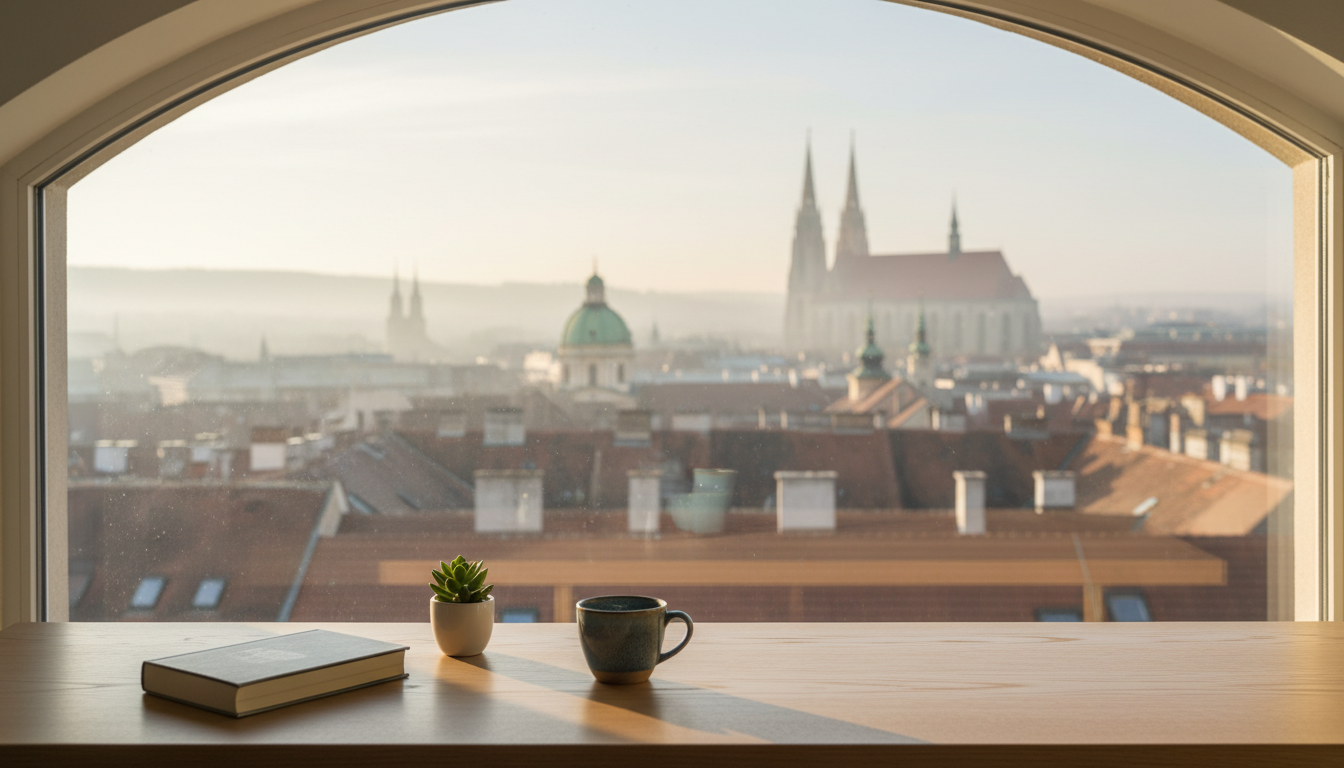 morning light streaming through the windows of a Zagreb apartment in Gornji Grad, coffee cup on a wo
I've done home exchanges in 25 countries now, and Zagreb remains one of my top recommendations for first-timers. The apartments are spacious (Austro-Hungarian architecture means high ceilings and actual rooms), the hosts are genuinely warm, and the city itself? Criminally underrated.
Let me show you what I mean.
What to Do in Zagreb's Upper Town: Where History Lives
Gornji Grad—Upper Town—is where most visitors start. Honestly, it's impossible not to. The funicular connecting it to the lower city costs about 70 cents (€0.66) and takes exactly 64 seconds. I timed it. Twice.
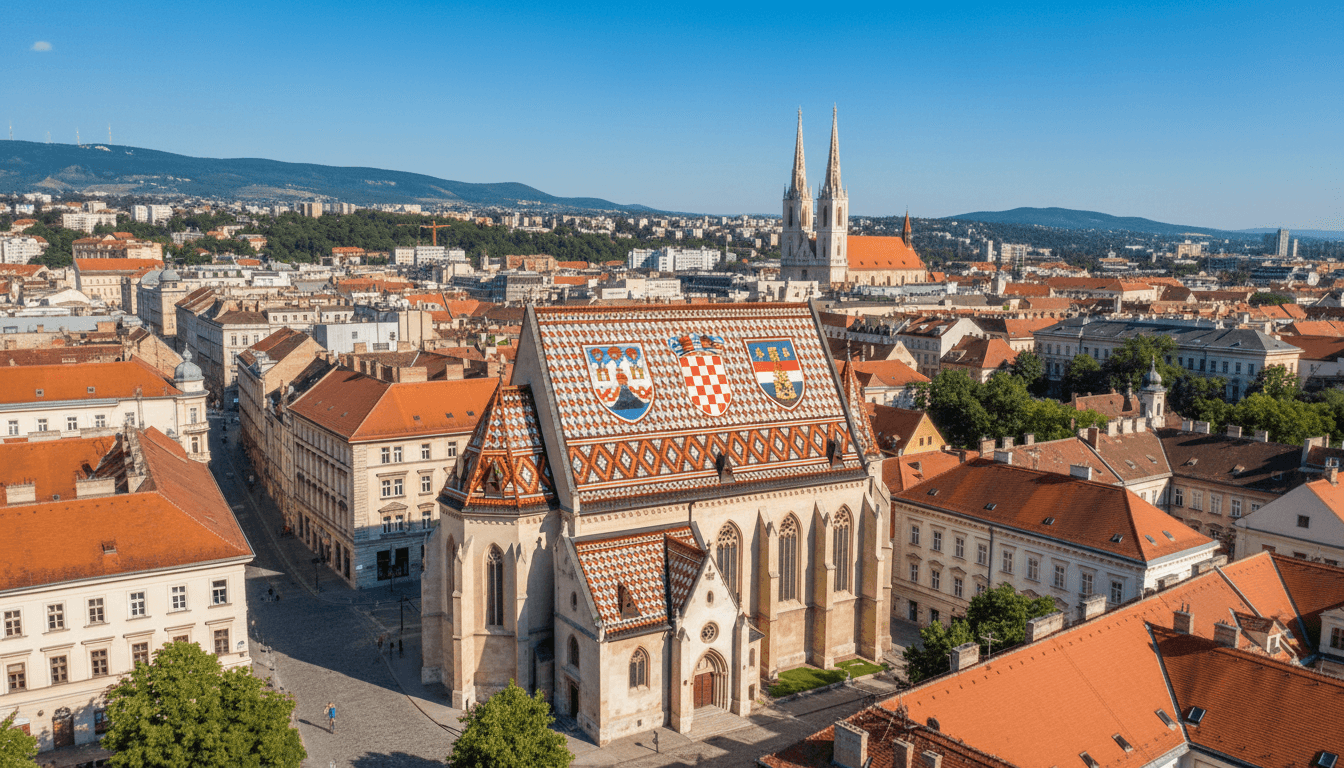
Here's what the guidebooks don't tell you: the best time to explore Upper Town isn't midday when tour groups cluster around St. Mark's Church with its distinctive tiled roof. It's 7 AM, when the only sounds are church bells and your own footsteps on cobblestones. Or 9 PM, when the Strossmayer Promenade transforms into a locals-only hangout with the best sunset views in the city.
During my last Zagreb home exchange, my host Marija left a note suggesting I grab coffee at Palainovka, a tiny café tucked into the Stone Gate passage. The Stone Gate itself is fascinating—a medieval city gate that survived a fire in 1731, with a small chapel inside where locals still light candles. But the café? That's where I spent three mornings writing, watching elderly women stop to pray, businessmen crossing themselves on their way to work.
The Lotrščak Tower fires a cannon every day at noon. It's been doing this since 1877, originally to synchronize the city's church bells. Now it's tradition. Stand on the promenade at 11:58 and watch everyone—tourists and locals alike—cover their ears and wait. It's oddly communal.
The Zagreb Cathedral and Its Secrets
You can't miss the cathedral—its twin spires dominate the skyline. Most visitors don't realize you can climb the north tower for panoramic views (around $4 USD, though hours vary). The cathedral has been rebuilt multiple times after earthquakes, most recently after 2020's devastating tremor. You'll still see scaffolding, but that's part of Zagreb's story now.
Museums Worth Your Morning
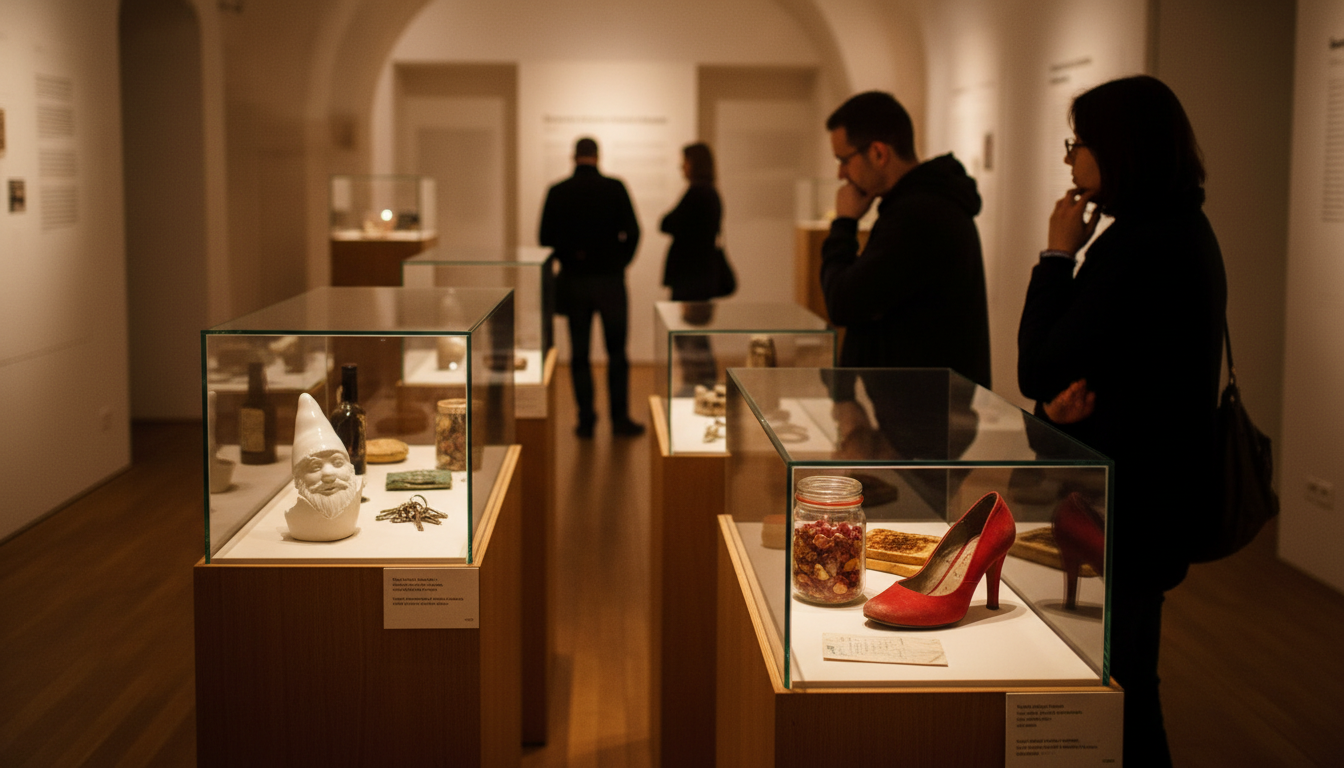
The Museum of Broken Relationships started here before expanding to Los Angeles and other cities. It's exactly what it sounds like: donated objects from failed relationships, each with a story. A wedding dress. An axe (yes, really—used to destroy an ex's furniture). It sounds gimmicky until you're standing there, unexpectedly moved by a stranger's handwritten note.
Admission is around $8 USD (60 HRK), and I'd budget 90 minutes. The gift shop sells "bad memories eraser" novelty items, which feels appropriately Zagreb—self-aware humor wrapped in genuine emotion.
 interior of the Museum of Broken Relationships showing glass display cases with personal objects, so
Zagreb Activities in Dolac Market and the Lower Town
If Upper Town is Zagreb's postcard, Dolac Market is its heartbeat. Every morning except Sunday, vendors set up their red umbrellas on a terrace above Trg bana Jelačića (the main square), selling everything from fresh cheese to lavender sachets to the gnarliest, most delicious tomatoes you've ever seen.
This is where staying in a home exchange apartment changes everything. You're not just photographing the market—you're shopping for dinner. My host's kitchen had a proper stovetop, decent knives, and a note that said "the štrukli from the woman in the corner stall is the best in the city." She was right.
Štrukli, by the way, is Zagreb's signature dish: rolled dough filled with fresh cheese, either baked or boiled. The market version costs about $3 USD and will ruin you for lesser pastries forever.
The Coffee Culture You Need to Understand
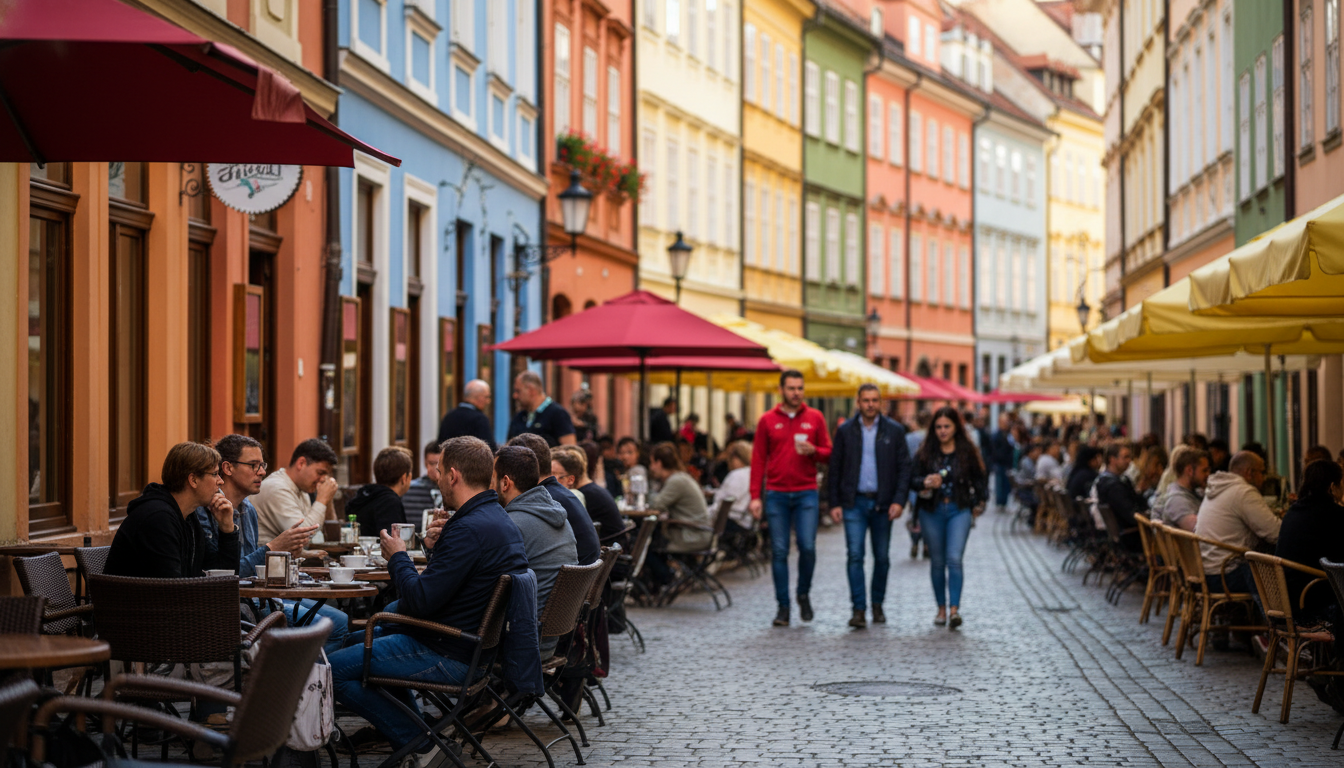
Zagreb runs on coffee. Not grab-and-go coffee—proper sit-down-for-an-hour coffee. The ritual is called špica (pronounced shpee-tsa), and it happens every Saturday morning on Tkalčićeva Street and Bogovićeva Street. People dress up—actually dress up—to drink espresso and be seen.
A coffee costs between $2-3 USD, and you're expected to linger. Nobody will rush you. Asking for the check too quickly is mildly offensive. I learned this the hard way during my first visit, when a waiter looked genuinely confused by my attempt to pay after 20 minutes.
For the best people-watching, grab a table at Kavkaz or Mali Medo. For the best actual coffee, find Cogito Coffee (they have several locations) or Eli's Caffè near the Botanical Garden.
 bustling Saturday morning pica scene on Tkalieva Street, well-dressed locals at outdoor caf tables,
What to Do in Zagreb for Nature Lovers: Parks and Day Trips
Here's something that surprised me: Zagreb is genuinely green. Like, aggressively so. The city has more park space per capita than almost any European capital, and locals use it constantly.
Maksimir Park
Maksimir is the big one—Croatia's oldest public park, dating to 1794. It's massive, slightly wild in places, and includes a small zoo (if that's your thing—I'm ambivalent about zoos, but the park itself is worth the tram ride). Pack a picnic from Dolac Market and spend an afternoon. The #11 or #12 tram gets you there in about 15 minutes from the center.
Jarun Lake
Jarun is where young Zagreb goes to play. It's an artificial lake on the city's southwest side with beaches (yes, beaches), cycling paths, and a surprising number of bars and clubs. In summer, it feels almost Mediterranean. Rent a bike for about $5 USD per hour and circumnavigate the whole thing.
The Medvednica Mountain Escape
This is the day trip that convinced me Zagreb was special. Medvednica mountain rises directly behind the city, and you can take a cable car (around $10 USD round trip) to the top in 20 minutes. From there, hiking trails range from gentle walks to serious treks.
The Medvedgrad fortress ruins sit partway up the mountain, reachable by a 45-minute hike from the Šestine tram terminus. I went on a Tuesday afternoon and saw maybe six other people. The views of Zagreb spreading toward the Sava River are genuinely spectacular.
If you're doing a home exchange in Zagreb during winter, Sljeme (the mountain's peak) has a small ski resort. It's not the Alps, but there's something charming about skiing in the morning and having dinner in the city center.
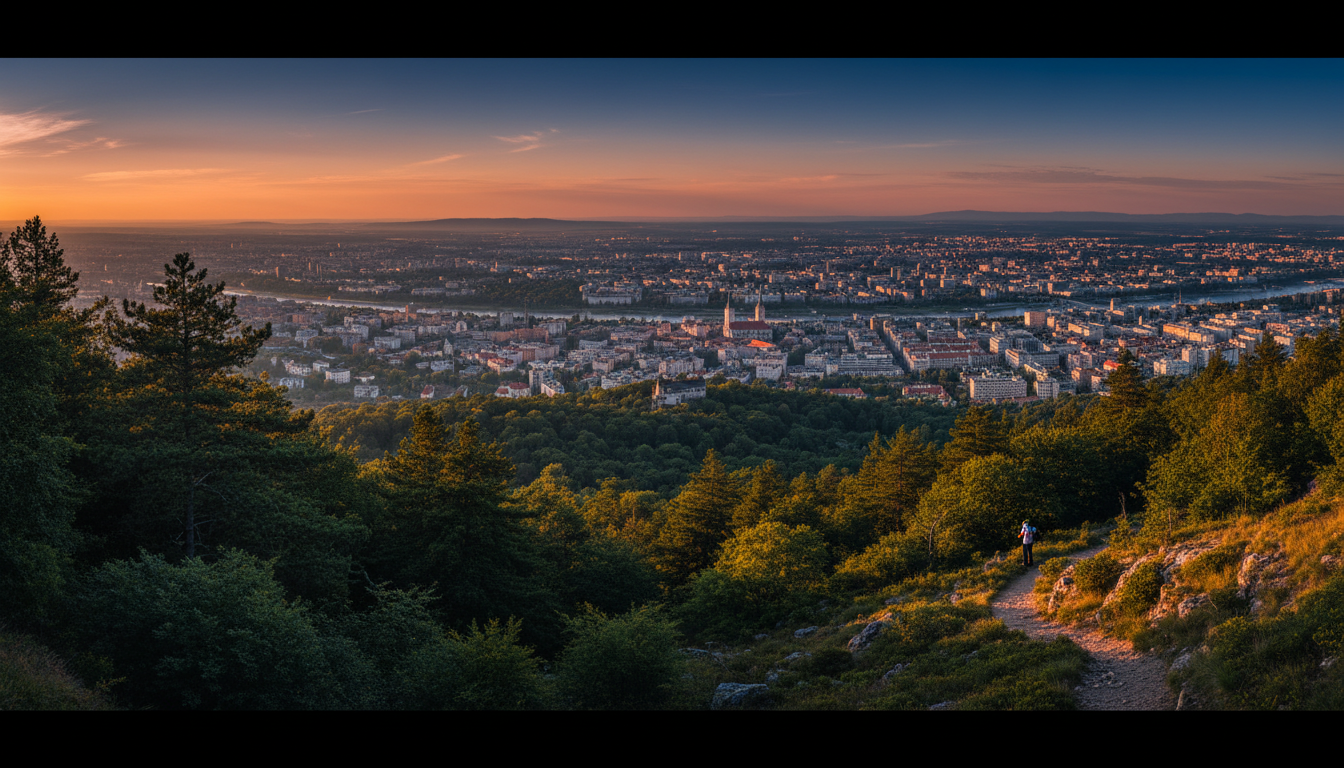 panoramic view from Medvednica mountain showing Zagreb sprawling below, forested slopes in foregroun
Zagreb Nightlife and Food Scene: A Home Exchanger's Guide
I'll be honest: Zagreb's food scene doesn't get the attention it deserves. Everyone talks about Dalmatian coast seafood (rightfully), but the capital has its own thing going on—hearty Central European influences mixed with Mediterranean lightness and a growing modern restaurant scene.
Where to Eat Like a Local
Stari Fijaker might sound intimidating (the nickname references tripe), but this is the quintessential Zagreb lunch spot. It's been serving traditional dishes since 1966, and the prices are almost absurdly low—full meals for $8-12 USD. Order the bečki odrezak (Wiener schnitzel) or, if you're feeling adventurous, the tripe stew that gives the place its nickname.
For something more contemporary, Mundoaka Street Food does incredible fusion dishes in a casual setting. Their pulled pork sandwich haunts my dreams.
And because you're staying in an apartment with a kitchen, hit up Natura Croatica for local olive oils, wines, and honey to bring home. They do tastings, and the staff actually knows where everything comes from.
The Bar Scene
Zagreb's bar culture centers on a few key areas. Tkalčićeva Street is the obvious choice—a long pedestrian strip of bars and restaurants that fills up every evening. It's touristy but fun.
For something more local, explore the courtyards. Zagreb has this incredible system of passages and hidden courtyards (called dvorišta) that house bars, galleries, and music venues. The Booksa literary club hosts readings and has a great bar. Swanky Monkey Garden is exactly as weird as it sounds—a bar in a hostel courtyard that somehow became one of the city's best spots.
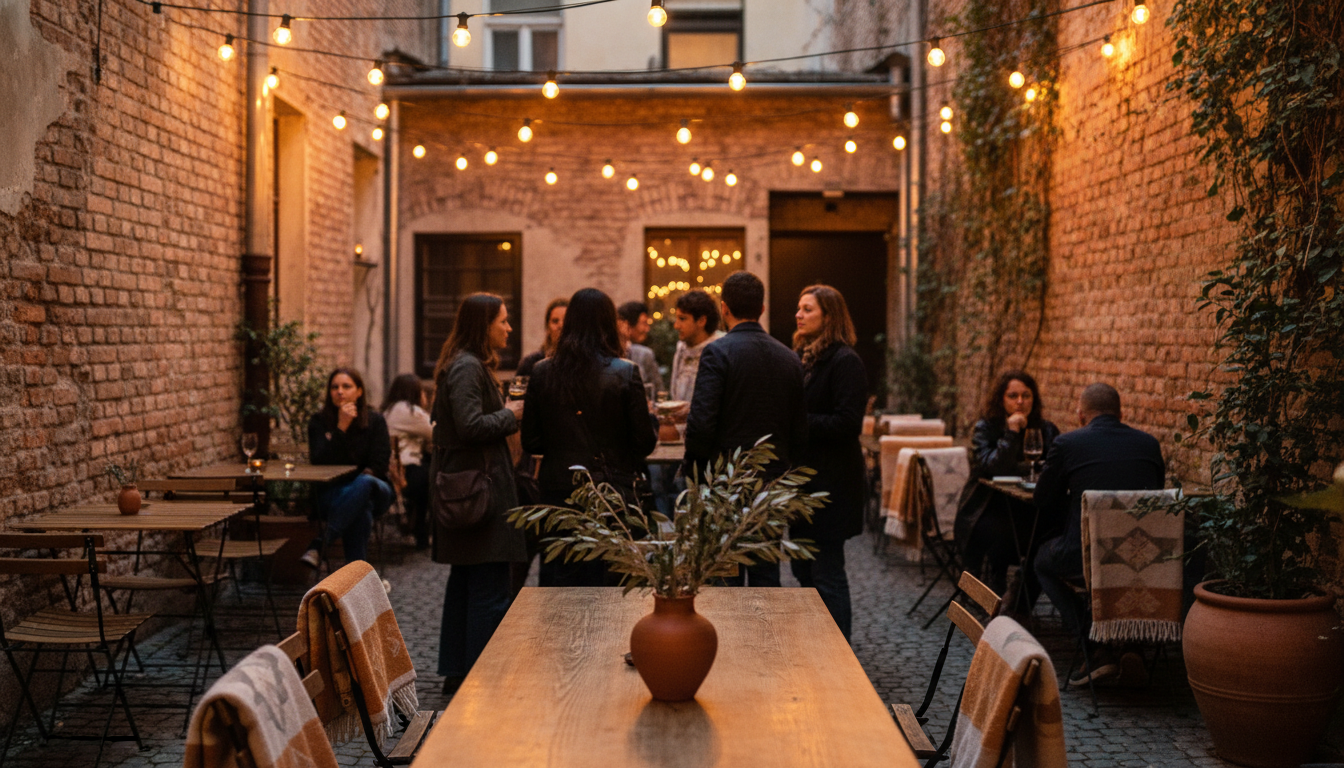 hidden courtyard bar in Zagreb at dusk, string lights overhead, exposed brick walls, locals gathered
Zagreb Home Exchange Tips: Making the Most of Your Stay
After three separate home exchanges in Zagreb (and yes, I keep going back), I've learned a few things that might help.
Best Neighborhoods for Home Swapping
Gornji Grad (Upper Town): Romantic, historic, but lots of stairs and limited parking. Perfect if you're not renting a car.
Centar: The obvious choice. Walking distance to everything, great café culture, apartments tend to be in beautiful old buildings. This is where I usually search first on SwappaHome.
Trnje/Savica: South of the river, more residential, but excellent for families. Bundek Lake has playgrounds and swimming areas.
Maksimir: Near the park, quieter, feels like a village. Good for longer stays when you want to actually live somewhere, not just visit.
Getting Around
Zagreb has an excellent tram system. A single ticket costs about $0.50 USD if you buy from a kiosk (more from the driver), and a day pass is around $4 USD. But honestly? The center is so walkable that I rarely used transit except for Maksimir and Jarun.
Bikes are increasingly popular. The city has a bike-sharing system called Nextbike, and many home exchange hosts have bikes available.
The Language Thing
Croatian is challenging, but Zagreb is cosmopolitan enough that English works almost everywhere. Learning "hvala" (thank you) and "molim" (please/you're welcome) goes a long way, though. Locals genuinely appreciate the effort.
Seasonal Zagreb Activities: When to Visit
Zagreb transforms with the seasons more dramatically than most cities I've visited.
Spring (April-May): The city wakes up. Outdoor cafés reopen, parks bloom, and there's an energy in the air. Temperatures hover around 60-70°F (15-21°C). This might be my favorite time.
Summer (June-August): Hot—often 85°F+ (30°C+). Many locals escape to the coast, which means shorter lines but also some closures. Jarun Lake becomes essential.
Fall (September-October): Gorgeous. The trees in Maksimir turn golden, the cultural season kicks off with theater and concerts, and the crowds thin out.
Winter (November-February): Cold and sometimes gray, but Zagreb's Christmas market is legitimately one of Europe's best. It's been voted #1 multiple times, and unlike some overhyped holiday markets, it delivers. Advent in Zagreb runs from late November through early January, with mulled wine, traditional food stalls, and ice skating.
Hidden Zagreb: What Most Visitors Miss
Real talk: the best Zagreb experiences aren't on any official list. They're the things you discover by staying longer, talking to locals, and wandering without a plan.
The Grič Tunnel, for instance. Built as a WWII bomb shelter under Upper Town, it's now open to pedestrians and occasionally hosts exhibitions. Walking through it feels like time travel.
The Sunday antique market on Britanski Trg is chaotic and wonderful—old cameras, communist-era memorabilia, vintage jewelry, questionable art. Get there by 9 AM for the best finds.
And if you're into street art, the neighborhood around the main train station has some incredible murals. Nobody talks about Zagreb as a street art destination, but it should be.
The Day Trips Nobody Mentions
Plitvice Lakes gets all the attention (deservedly—it's stunning), but it's also a 2+ hour drive and packed with tourists. For a home exchange stay, consider these instead:
Samobor: A small town 20 minutes west of Zagreb, famous for kremšnita (cream cake) and hiking in the surrounding hills. Take the local bus, eat cake, walk it off.
Varaždin: An hour north, this baroque town feels like stepping into the 18th century. Much quieter than Zagreb, excellent for a day trip.
Kumrovec: Tito's birthplace, now an open-air museum of traditional village life. Weird and fascinating.
Making Connections: The Social Side of Home Exchange in Zagreb
One thing I love about home swapping in Zagreb specifically: the hosts tend to be incredibly engaged. Maybe it's Croatian hospitality, maybe it's that Zagreb doesn't get as many tourists as the coast, but I've had more meaningful local connections here than almost anywhere else.
My last host, Marija, invited me to her friend's birthday party. I spent an evening in a Trnje apartment eating homemade sarma (cabbage rolls), attempting to follow conversations in Croatian, and learning that Croatians take their rakija very seriously. You can't buy that experience.
This is the whole point of home exchange, really. You're not a tourist in a hotel—you're a temporary neighbor. You shop at the same places, walk the same streets, and if you're lucky, get invited into the real life of the city.
Planning Your Zagreb Home Exchange
If I've convinced you—and I hope I have—here's how I'd approach it.
Start by browsing Zagreb listings on SwappaHome. The city has a growing community of home exchangers, and you'll find everything from compact studios in the center to family apartments in the outer neighborhoods. The credit system makes it simple: earn credits by hosting, spend them traveling. One night hosted equals one credit, one credit equals one night anywhere.
For a first Zagreb visit, I'd recommend at least five nights. Three feels rushed; a week lets you settle in. The city reveals itself slowly, and you want time to find your favorite café, your preferred market vendor, your go-to evening walk.
Best time to find available swaps? Spring and fall. Summer sees more Croatians traveling (potential hosts), but also more people wanting to visit the coast instead of the capital. Winter has fewer overall travelers but the Christmas market draws a specific crowd.
Zagreb isn't trying to impress you. It doesn't have the obvious grandeur of Vienna or the beach appeal of Dubrovnik. What it has is something rarer: authenticity. A city that's genuinely lived in, where the best experiences happen in ordinary places—a neighborhood bar, a morning market, a courtyard you discovered by accident.
That's why home exchange works so well here. You're not visiting Zagreb. You're, briefly, living in it.
And trust me—you'll want to come back.
Frequently Asked Questions
What are the best things to do in Zagreb for first-time visitors?
Start with Upper Town's medieval streets, St. Mark's Church, and the Lotrščak Tower cannon at noon. Visit Dolac Market in the morning, explore the Museum of Broken Relationships, and experience the Saturday špica coffee ritual on Tkalčićeva Street. These Zagreb activities give you a perfect introduction to the city's character in 2-3 days.
How many days do you need in Zagreb?
For a comprehensive Zagreb experience, plan 4-5 days minimum. This allows time for the main attractions, day trips to Medvednica mountain or Samobor, and—crucially—the slow café culture that defines the city. Home exchange stays of a week or more let you truly settle into local rhythms.
Is Zagreb worth visiting compared to Dubrovnik or Split?
Absolutely, though they're different experiences. Zagreb offers authentic Central European culture, lower prices (30-40% cheaper than coastal cities), fewer tourists, and excellent food and nightlife. It's ideal for travelers who want to experience how Croatians actually live, rather than resort-town tourism.
What is the best time of year to visit Zagreb?
Spring (April-May) and fall (September-October) offer ideal weather and fewer crowds. That said, Zagreb's Christmas market (late November-January) is world-renowned and worth braving the cold. Summer can be hot, but Jarun Lake provides relief and many locals travel, making home exchanges easier to arrange.
How much does a trip to Zagreb cost per day?
Budget travelers can manage on $40-50 USD daily, while mid-range visitors typically spend $70-100 USD. With home exchange accommodation, you eliminate the biggest expense—hotels average $80-120 USD nightly in the center. A coffee costs $2-3 USD, lunch $8-12 USD, and museum entries $5-10 USD.
40+
Swaps
25
Countries
7
Years
About Maya Chen
Travel Writer & Home Exchange Expert
Maya is a travel writer with over 7 years of experience in the home swapping world. Originally from Vancouver and now based in San Francisco, she has completed more than 40 home exchanges across 25 countries. Her passion for "slow" and authentic travel led her to discover that true luxury lies in living like a local, not a tourist.
Ready to try home swapping?
Join SwappaHome and start traveling by exchanging homes. Get 10 free credits when you sign up!
Related articles
Lyon Home Exchange: Your Complete Guide to France's Hidden Gem for Home Swapping
Discover why Lyon home exchange is booming among savvy travelers. From Croix-Rousse to Presqu'île, find the best neighborhoods and insider tips for your swap.
Zurich Bucket List: 47 Unforgettable Experiences to Enjoy During Your Home Swap
Discover the ultimate Zurich bucket list for home swappers—from secret swimming spots to fondue rituals locals actually do. Save thousands while living like a true Zürcher.
Dublin Home Exchange Utilities Guide: WiFi, Heating & Everything Your Guests Need
Master Dublin home exchange utilities—from dodgy WiFi fixes to heating quirks. Practical tips from 7 years of swapping homes across Ireland.