Work from Madeira: The Digital Nomad's Complete Home Swapping Guide
Maya Chen
Travel Writer & Home Exchange Expert
Discover how to work from Madeira using home swapping—save thousands while living the island dream with fast WiFi, stunning views, and zero hotel costs.
Work from Madeira: The Digital Nomad's Complete Home Swapping Guide
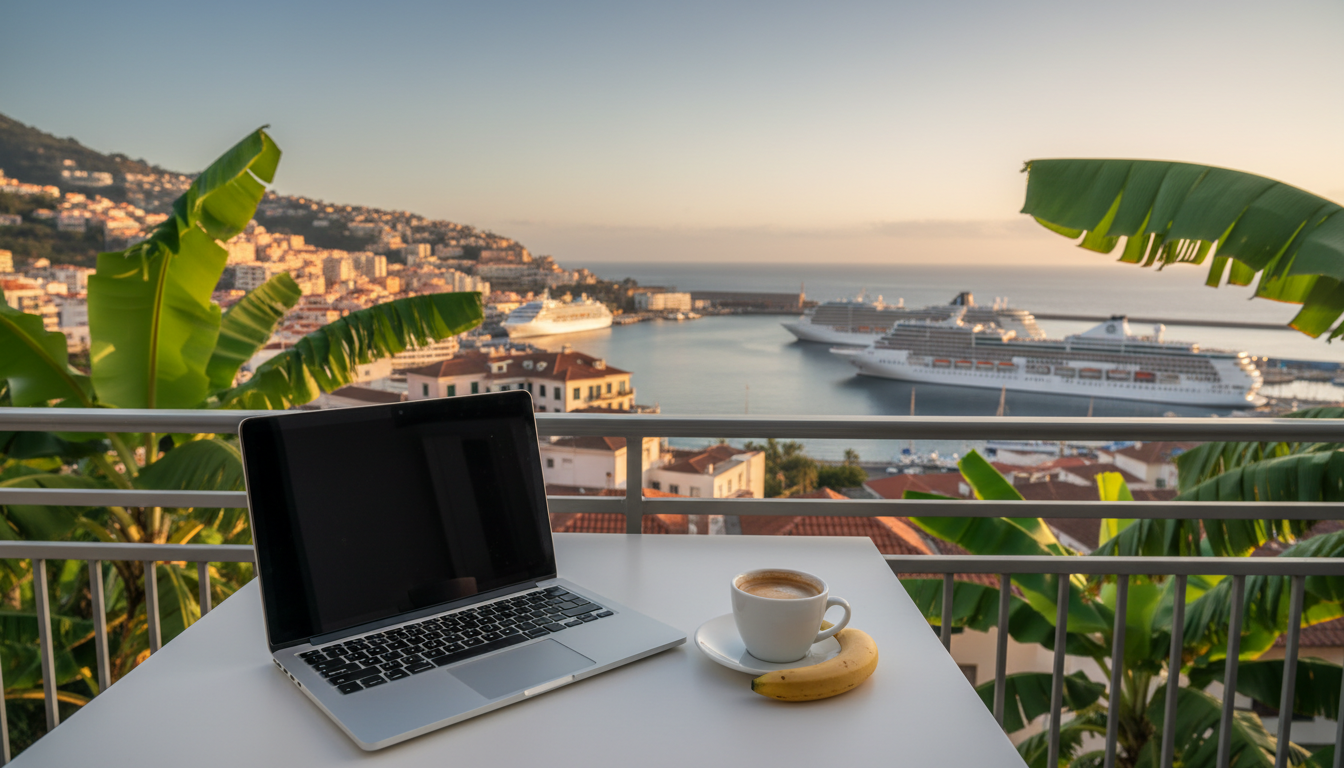
I was three Zoom calls deep into my Tuesday when I realized I'd been staring at the Atlantic Ocean for the past hour without really seeing it. That's the thing about working from Madeira—the views become so ridiculously normal that you forget most people are staring at cubicle walls. My home swap apartment in Funchal had floor-to-ceiling windows overlooking the harbor, a balcony where I took my morning coffee, and WiFi that consistently hit 200 Mbps. The kicker? I wasn't paying a cent for accommodation.
If you're a digital nomad looking to work from Madeira, home swapping might be the smartest move you haven't considered yet. This Portuguese island has become a magnet for remote workers since 2021, but most guides focus on coworking spaces and visa requirements. What they miss is how home exchange can transform a pricey island stay into an affordable long-term adventure.
 Morning view from a Funchal apartment balconylaptop on a small table, espresso cup, banana plants in
Why Madeira Has Become a Digital Nomad Hotspot
So why would you want to work from Madeira in the first place? I've worked remotely from 25+ countries, and this island consistently ranks in my top five.
The basics: Madeira is a Portuguese autonomous region about 1,000 kilometers southwest of Lisbon. It's technically Africa-adjacent—closer to Morocco than mainland Portugal—but fully European in infrastructure and culture. The weather hovers between 18-25°C (64-77°F) year-round. Locals call it "eternal spring." No brutal summers, no freezing winters. Just... pleasant.
But here's what actually matters for remote work.
Internet infrastructure that actually works. Portugal invested heavily in fiber optics, and Madeira benefited massively. Most apartments in Funchal offer 100-500 Mbps connections. I've taken video calls from mountain villages and still had stable connections. Compare that to Bali, where you're constantly praying to the WiFi gods.
The time zone advantage. Madeira runs on GMT/WET, which means you can reasonably overlap with both US East Coast mornings and European afternoons. When I was there, I'd work 10am-6pm local time and catch both my New York clients and London colleagues.
Cost of living that doesn't destroy your savings. A meal at a local tasca runs €8-12 ($9-13). A galão—Madeira's version of a latte—costs €1.50. Monthly groceries at Pingo Doce or Continente average €200-250 ($220-275) if you cook at home. It's not Lisbon-cheap anymore, but it's not Zurich either.
The Digital Nomad Village. In 2021, the government launched Madeira's Digital Nomad Village in Ponta do Sol, offering free coworking space, community events, and a built-in social scene. It's still running and has spawned a permanent remote work culture on the island.
How Home Swapping Works for Digital Nomads in Madeira
Here's where it gets interesting.
Most digital nomads default to Airbnb or monthly rentals when planning a Madeira stay. A decent one-bedroom in Funchal runs €1,200-1,800/month ($1,320-1,980). That's manageable, but it adds up fast if you're planning a three-month stay.
Home swapping flips the equation entirely. The concept is simple: you let someone stay in your home while you stay in theirs. On SwappaHome, this works through a credit system—you earn 1 credit for every night someone stays at your place, then spend those credits to book nights elsewhere. New members start with 10 free credits, which already gives you nearly two weeks in Madeira without earning anything first.
 Cozy living room in a traditional Madeiran homewooden shutters, white walls, modern couch with color
The math works beautifully for nomads. If you have an apartment back home that sits empty while you travel, you're essentially converting dead space into free accommodation worldwide. I know a designer from Austin who funded six months in Europe entirely through credits earned from hosting guests in her downtown condo.
For Madeira specifically, home swapping makes sense for a few reasons. Longer stays become affordable—when accommodation costs zero, you can actually afford to stay the three to six months that let you really experience a place. You're not rushing through because your Airbnb budget is bleeding out.
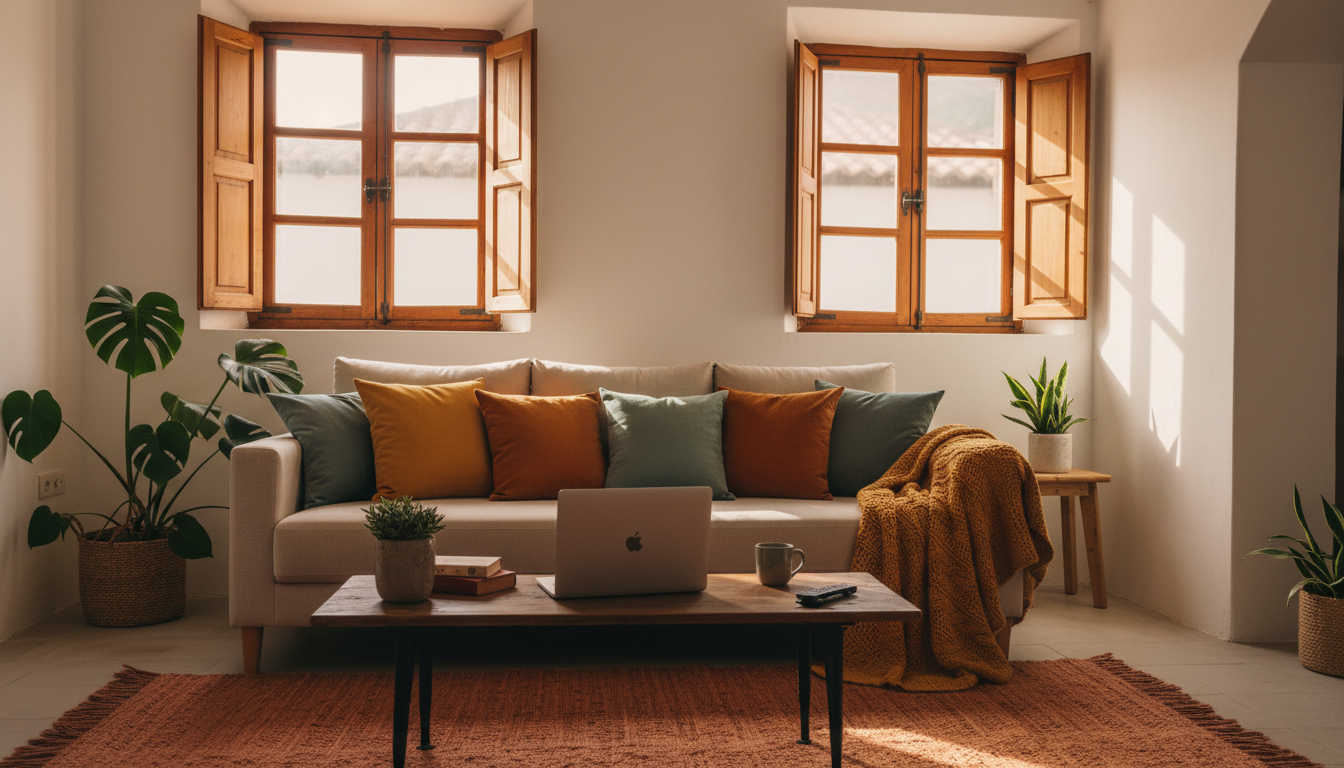
You also get real homes, not tourist rentals. Home swap properties are people's actual residences. That means proper kitchens, reliable WiFi setups (because they work from home too), comfortable furniture, and all the little things that make a space livable long-term. And most home swappers live where locals live—not in the overpriced tourist corridors. In Madeira, this might mean a quiet spot in São Martinho with ocean views, or a traditional house in Monte with a garden.
Best Neighborhoods in Madeira for Remote Work Home Swaps
Not all parts of Madeira are created equal for digital nomads. After spending three months there across two separate trips, I've developed strong opinions about where to base yourself.
Funchal Centro: The Practical Choice
Funchal's city center is where most nomads land first, and for good reason. Everything is walkable—grocery stores, pharmacies, restaurants, the main market (Mercado dos Lavradores), and several coworking spaces. The Sé district around the cathedral has the most character, with narrow cobblestone streets and traditional tiled buildings.
For home swaps, look for apartments in the Sé, Santa Maria, or São Pedro parishes. These areas have the highest concentration of residential properties and tend to have the best internet infrastructure. Expect older buildings with thick walls—great for temperature regulation, challenging for mobile signal indoors.
WiFi reality check: Most central Funchal apartments offer 100-200 Mbps fiber. Always confirm with your swap partner before booking.
São Martinho: Ocean Views Without the Tourist Crowds
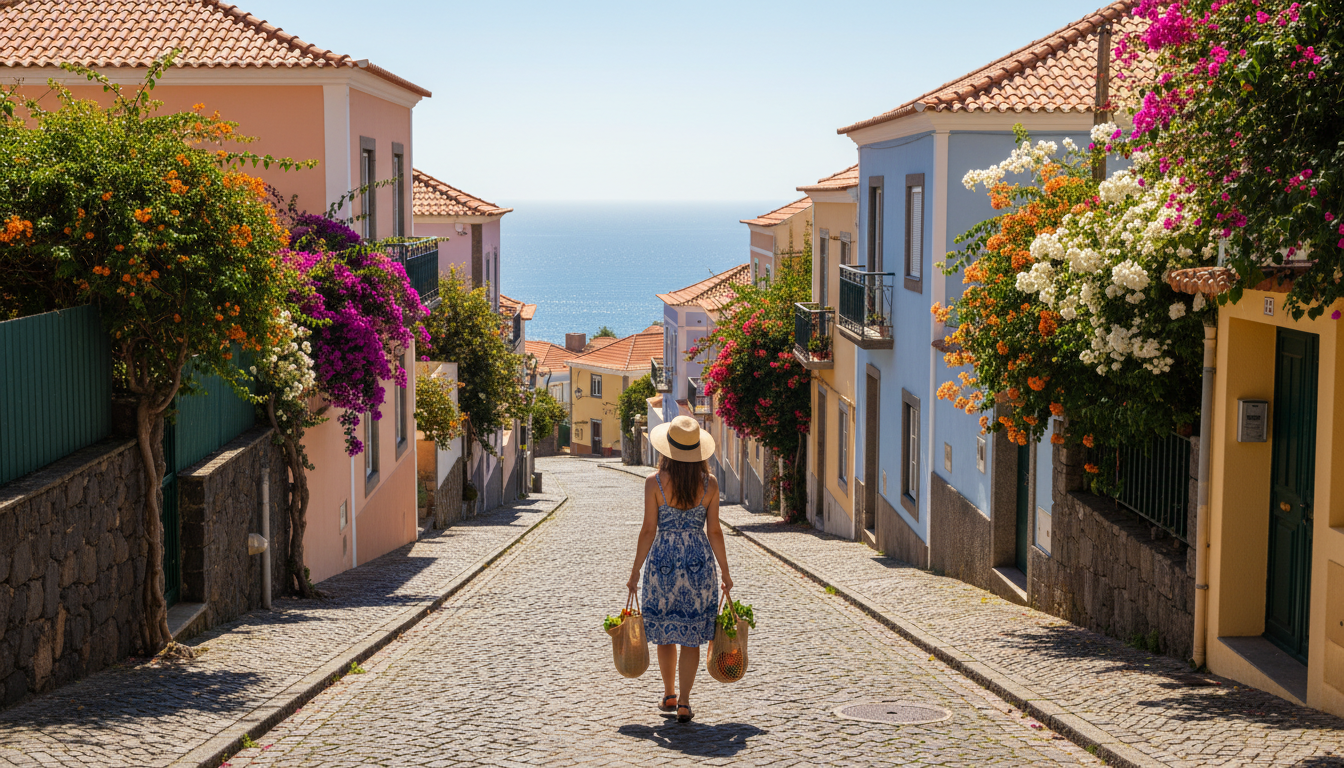
This residential neighborhood sits west of the center, climbing up the hillside with increasingly dramatic views. It's where many middle-class Madeiran families live, which means proper supermarkets, local cafés, and a quieter vibe.
The trade-off? You'll need to walk uphill constantly—Madeira's unofficial cardio program—or use the local bus system. The 1, 2, and 4 buses run frequently to the center.
I did a two-week swap in São Martinho and loved the morning routine. Coffee on the balcony watching cruise ships enter the harbor, then a 20-minute downhill walk to my favorite coworking spot.
 Residential street in So Martinhopastel-colored apartment buildings, bougainvillea cascading over wa
Ponta do Sol: The Digital Nomad Village Effect
This small town on the south coast became famous when the government launched its Digital Nomad Village here. The village itself offers free coworking space at the John dos Passos Cultural Centre, community events, and a ready-made social scene.
The vibe is different from Funchal—smaller, quieter, more community-focused. The beach is pebbly but swimmable, and the sunsets are legitimately spectacular. Ponta do Sol translates to "point of the sun," and honestly? It earns the name.
For home swaps, Ponta do Sol has fewer options than Funchal simply because it's smaller. But the properties that exist tend to be charming—traditional houses with terraces, converted quintas with gardens. Worth checking availability if community matters more to you than urban convenience.
Câmara de Lobos: The Underrated Pick
Winston Churchill used to paint here, and honestly, I get it. This fishing village 10 minutes west of Funchal has a colorful harbor, excellent seafood restaurants, and a fraction of the tourist traffic.
The espetada (beef skewers) at Vila do Peixe is worth the trip alone. So is the poncha at Coral, where fishermen drink alongside tourists.
Câmara de Lobos is starting to attract more remote workers, which means more home swap options are appearing. The internet infrastructure is solid, and you can reach Funchal in 15 minutes by bus or car.
Setting Up Your Madeira Home Swap: Step by Step
Alright, let's get practical. Here's exactly how to arrange a work from Madeira home swap.
Step 1: Optimize Your Own Listing
Before you can swap, you need a compelling profile. If you're listing a San Francisco apartment or a London flat, you're already in a strong position—Madeirans are curious about experiencing other cities too.
Your listing should include clear photos of your workspace setup (desk, chair, monitor if available), your WiFi speed (run a speed test and post the screenshot), neighborhood walkability details, and any remote work perks like a standing desk, good natural light, or a quiet environment.
Digital nomads are your ideal guests because they treat homes respectfully. They need a functional space, not a party venue.
Step 2: Search Strategically
On SwappaHome, filter for Madeira and look at properties with verified hosts and recent reviews, listings that mention WiFi speeds or remote work suitability, homes in the neighborhoods I mentioned above, and availability windows that match your travel dates.
Pro tip: Madeira's high season for tourism is December through April (Europeans escaping winter) and July through August. For home swapping, shoulder seasons—May through June, September through October—often have better availability because locals are more likely to travel then.
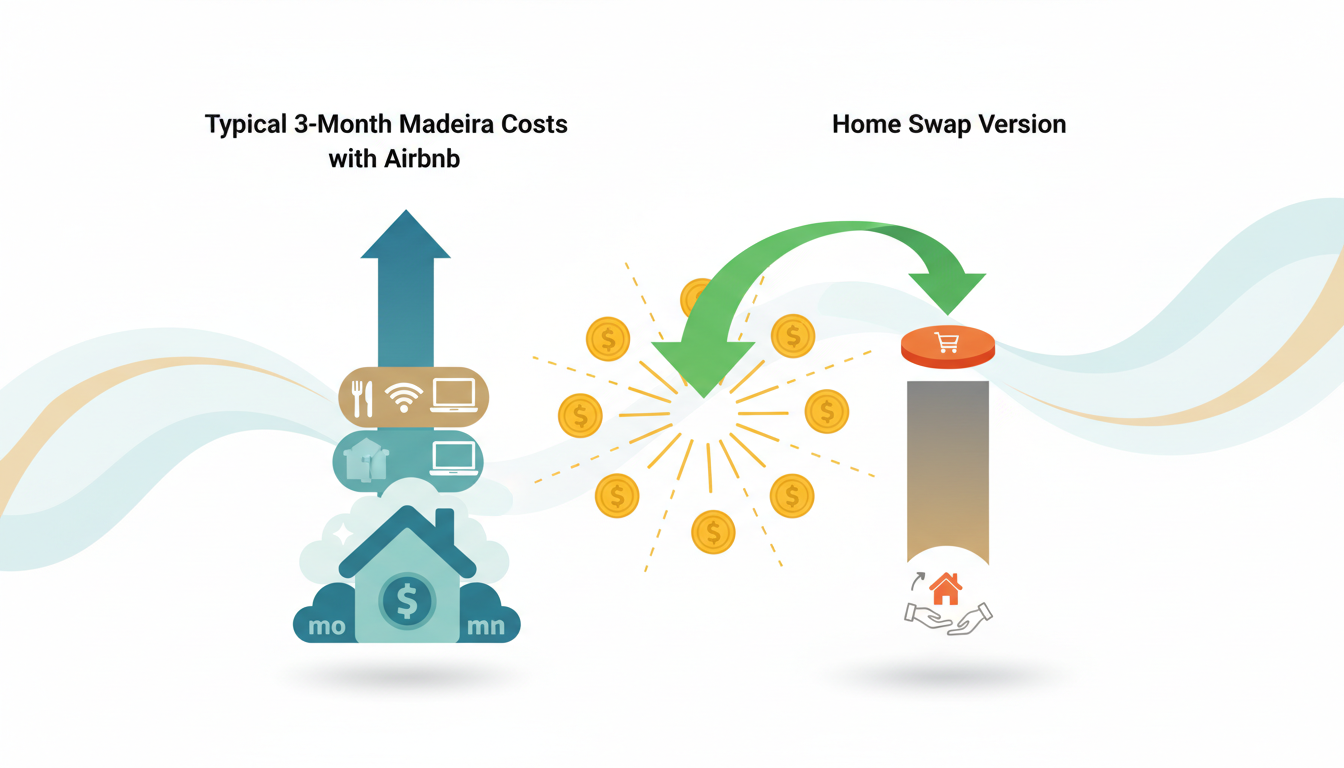 Side-by-side cost comparison infographicleft side shows typical 3-month Madeira costs with Airbnb 4,
Step 3: Communicate Like a Human
When you reach out to potential swap partners, be specific and genuine. Something like: "Hi Maria, I'm a freelance writer planning to work from Madeira for 6-8 weeks this fall. Your apartment in São Martinho looks perfect—I love that you mentioned the fast WiFi and the balcony workspace. I'd be hosting from my apartment in Vancouver, which has a similar setup. Would you be interested in exploring dates?"
Mention your work situation. Madeiran hosts appreciate knowing you're a quiet remote worker, not someone planning to throw parties.
Step 4: Confirm the Essentials
Before finalizing any swap, verify the important stuff. Ask for a recent speed test result—for video calls, you want minimum 25 Mbps upload. Check if there's a café or coworking space within walking distance if WiFi fails. Madeira rarely has power outages, but ask anyway. Find out if there's a proper desk and chair, or if you'll be working from a kitchen table. And ask about quiet hours—any construction nearby? Noisy neighbors? Dogs that bark at 6am?
Step 5: Arrange Your Own Insurance
This is important: SwappaHome connects you with hosts, but it doesn't provide insurance coverage for damages or issues. You're responsible for your own protection.
Before any home swap, I recommend getting travel insurance that covers personal liability (I use SafetyWing, around $45/month), checking if your home insurance covers guests staying in your property, and having an honest conversation with your swap partner about expectations.
The community aspect of home swapping means most exchanges go smoothly—people treat your home well because they want the same treatment. But having your own coverage gives peace of mind.
The Digital Nomad's Madeira Toolkit
Beyond accommodation, here's everything you need to know for a productive work from Madeira experience.
Coworking Spaces Worth Your Time
Cowork Funchal (Rua do Bispo 21) is the most established option. €150/month for unlimited access, or €15/day. Good community, reliable WiFi, free coffee. Gets busy in winter months.
Digital Nomads Madeira runs a community network that organizes workspace access, events, and introductions through various pop-up locations. Check their Slack channel for current meetups.
Ponta do Sol Cultural Centre offers free coworking for registered digital nomads. Yes, actually free. You need to sign up through the Digital Nomad Village website, but it's worth the paperwork.
For café working, when I needed a change of scenery, I'd rotate between Riso (great espresso, harbor views), The Snob (reliable WiFi, good pastries), and Gavião Novo (local vibe, strong bica).
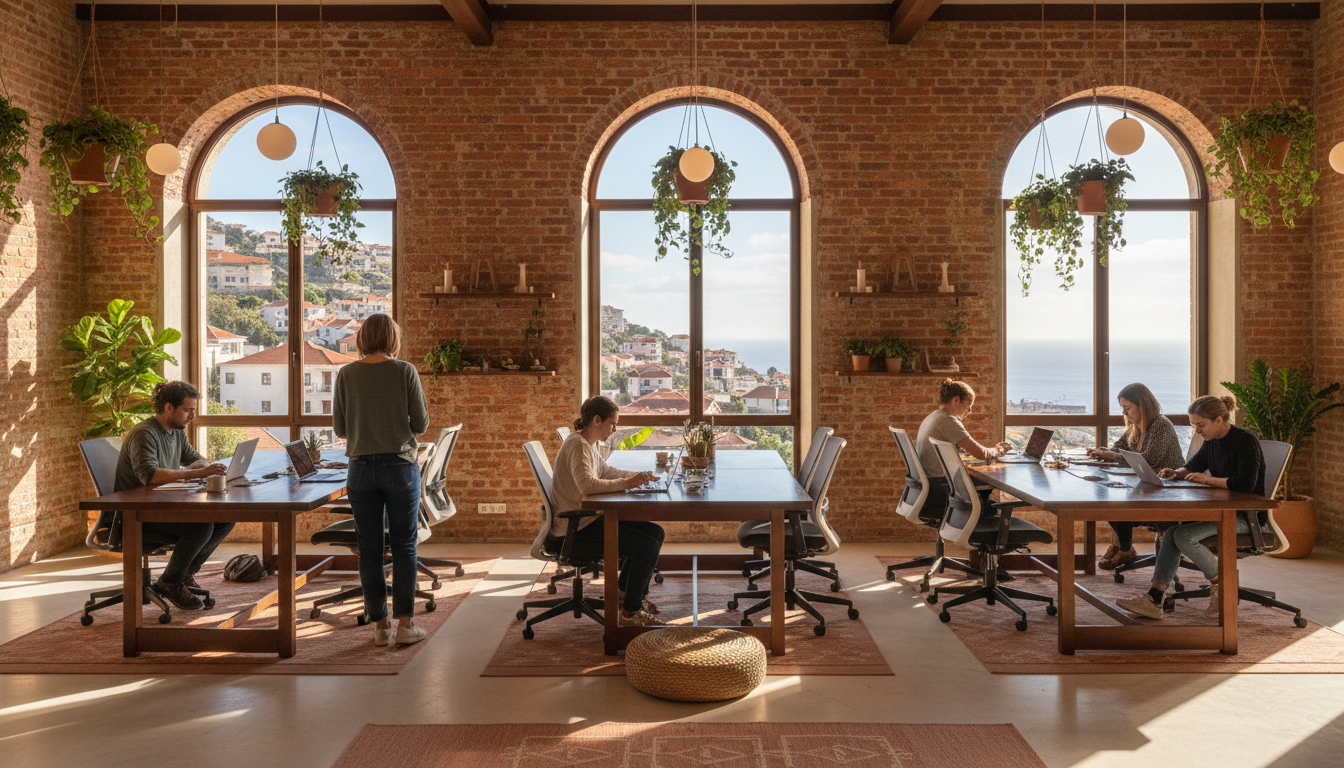 Interior of a Funchal coworking spaceexposed brick walls, large wooden tables with laptops, mix of p
The Visa Situation
If you're from the US, Canada, UK, or most EU countries, you can stay in Portugal (including Madeira) for 90 days within any 180-day period without a visa. That's plenty for most nomad stints.
For longer stays, Portugal offers the D7 Visa (Passive Income Visa) for those with regular income from investments, pensions, or remote work, with a minimum income requirement around €760/month. There's also the Digital Nomad Visa launched in 2022, which requires proof of remote work and minimum income of €3,040/month (4x Portuguese minimum wage).
Both require some paperwork and a trip to a Portuguese consulate. If you're planning a 3-month swap, you likely don't need either.
Getting Around Without a Car
Madeira's bus system—Horários do Funchal in the city, SAM and Rodoeste for the rest of the island—is functional but not fast. The yellow city buses cover Funchal well. For day trips to the north coast or mountain villages, renting a car for a day (€25-40) makes more sense than waiting for infrequent buses.
Bolt works in Funchal and is cheaper than taxis. A ride from the airport to central Funchal runs about €15-20.
The Teleférico cable car from Funchal to Monte is €12.50 one-way, €18 return—touristy but genuinely useful if you're swapping in the hills above the city.
What to Do When You Close the Laptop
Madeira isn't a sit-on-the-beach island. The beaches are mostly pebbles anyway. It's a do-things island.
Levada walks are the main attraction. These irrigation channel paths crisscross the island, offering everything from easy strolls to serious hikes. The Levada do Caldeirão Verde is the classic—a 13km round trip through laurel forest to a waterfall. I'd do a levada every weekend and never repeat a route.
Swimming happens at natural lava pools (Porto Moniz is the famous one) or at complexes like Doca do Cavacas in Funchal. Forget sand beaches. The water stays 18-22°C year-round.
Weekend escapes to Porto Santo, the smaller island 2.5 hours by ferry, give you the sandy beach Madeira lacks. Perfect for a weekend reset.
Real Talk: The Challenges of Working from Madeira
I'd be lying if I said everything is perfect. Here's what to prepare for.
The hills will destroy your legs. Funchal is built on a slope. Every errand involves either climbing or descending. I lost 5 pounds in my first month without trying.
Sundays are dead. Most shops close. Restaurants operate on limited hours. Plan your groceries accordingly.
The social scene can feel small. After a few weeks, you'll know most of the regular nomads by name. Great if you want community, potentially claustrophobic if you don't.
Seasonal weather variations exist despite the "eternal spring" marketing. Winter brings more rain, especially on the north coast. The south (Funchal side) stays drier.
Limited direct flights mean most connections route through Lisbon or Porto. Budget extra travel time.
Making the Most of Your Madeira Home Swap
After multiple stays, here's what I wish I'd known from day one.
Embrace the local schedule. Lunch is the big meal (12:30-2pm), and many places close between 2-5pm. Adjust your meeting schedule to work European morning, take a long lunch break, then finish US East Coast meetings in late afternoon.
Stock up on local products. Madeiran honey (mel de cana), passion fruit, and bolo de mel (honey cake) make excellent gifts for your swap partner back home.
Learn three Portuguese phrases. "Bom dia" (good morning), "Obrigado/Obrigada" (thank you), and "Uma bica, por favor" (an espresso, please). Locals appreciate the effort.
Join the community. The Digital Nomads Madeira Slack channel and Facebook group are active. Weekly events happen year-round—hikes, dinners, skill shares.
Don't overwork. The whole point of being here is to experience it. Block off time for levada walks, sunset watching, and long lunches at the market.
Your Next Move
Madeira isn't for everyone. If you need constant nightlife, sandy beaches, or cheap street food, look elsewhere. But if you want reliable infrastructure, stunning nature, genuine community, and a pace of life that actually allows deep work—this island delivers.
Home swapping makes it financially sustainable. Instead of burning through savings on overpriced monthly rentals, you're converting your empty apartment into months of Portuguese island life. The credits you earn hosting guests back home become sunsets in Ponta do Sol, espressos overlooking Funchal harbor, and weekends hiking through cloud forests.
I keep coming back to Madeira. The third time, I stayed four months. The home swap apartment had a terrace where I watched storms roll across the Atlantic while my code compiled. My swap partner, a Funchal architect, spent those same months in my San Francisco place, probably watching fog roll across the bay.
That's the magic of this whole thing—you're not just finding accommodation. You're trading lives, temporarily, with someone whose world is completely different from yours.
If you've been circling the idea of working from Madeira, stop researching and start doing. List your place on SwappaHome, reach out to a few Madeira hosts, and see what happens. The worst case is you make some new connections. The best case is you're sipping poncha in Câmara de Lobos by next month, wondering why you waited so long.
Frequently Asked Questions
Is Madeira good for digital nomads?
Madeira is excellent for digital nomads thanks to reliable fiber internet (100-500 Mbps in most areas), affordable living costs, year-round mild weather, and a growing remote work community. The Digital Nomad Village in Ponta do Sol offers free coworking, and Funchal has multiple paid coworking options. The GMT timezone works well for both European and US East Coast collaboration.
How much does it cost to live in Madeira as a digital nomad?
Expect monthly costs of €1,500-2,500 ($1,650-2,750) including accommodation, food, transport, and activities. With home swapping eliminating accommodation costs, this drops to €500-800 ($550-880) monthly for a comfortable lifestyle. Meals at local restaurants run €8-15, groceries average €200-250/month, and coworking costs €100-150/month.
Can I work remotely from Madeira legally?
Yes. EU citizens can work remotely from Madeira indefinitely. Non-EU citizens from visa-exempt countries (US, Canada, UK, Australia) can stay 90 days within any 180-day period. For longer stays, Portugal's Digital Nomad Visa requires proof of remote employment and minimum monthly income of €3,040.
What is the best area in Madeira for remote workers?
Funchal Centro offers the best combination of walkability, amenities, and reliable internet for remote workers. São Martinho provides ocean views and a quieter residential feel with good bus connections. Ponta do Sol suits those prioritizing community through the Digital Nomad Village. Câmara de Lobos is an underrated option with authentic local character.
How does home swapping work for long-term stays in Madeira?
Home swapping lets you exchange your home for accommodation in Madeira at no nightly cost. On platforms like SwappaHome, you earn 1 credit per night when hosting guests, then spend credits to book stays elsewhere. New members receive 10 free credits—enough for nearly two weeks. This makes extended Madeira stays (1-3+ months) financially sustainable for digital nomads.
40+
Swaps
25
Countries
7
Years
About Maya Chen
Travel Writer & Home Exchange Expert
Maya is a travel writer with over 7 years of experience in the home swapping world. Originally from Vancouver and now based in San Francisco, she has completed more than 40 home exchanges across 25 countries. Her passion for "slow" and authentic travel led her to discover that true luxury lies in living like a local, not a tourist.
Ready to try home swapping?
Join SwappaHome and start traveling by exchanging homes. Get 10 free credits when you sign up!
Related articles
Lyon Home Exchange: Your Complete Guide to France's Hidden Gem for Home Swapping
Discover why Lyon home exchange is booming among savvy travelers. From Croix-Rousse to Presqu'île, find the best neighborhoods and insider tips for your swap.
Zurich Bucket List: 47 Unforgettable Experiences to Enjoy During Your Home Swap
Discover the ultimate Zurich bucket list for home swappers—from secret swimming spots to fondue rituals locals actually do. Save thousands while living like a true Zürcher.
Dublin Home Exchange Utilities Guide: WiFi, Heating & Everything Your Guests Need
Master Dublin home exchange utilities—from dodgy WiFi fixes to heating quirks. Practical tips from 7 years of swapping homes across Ireland.