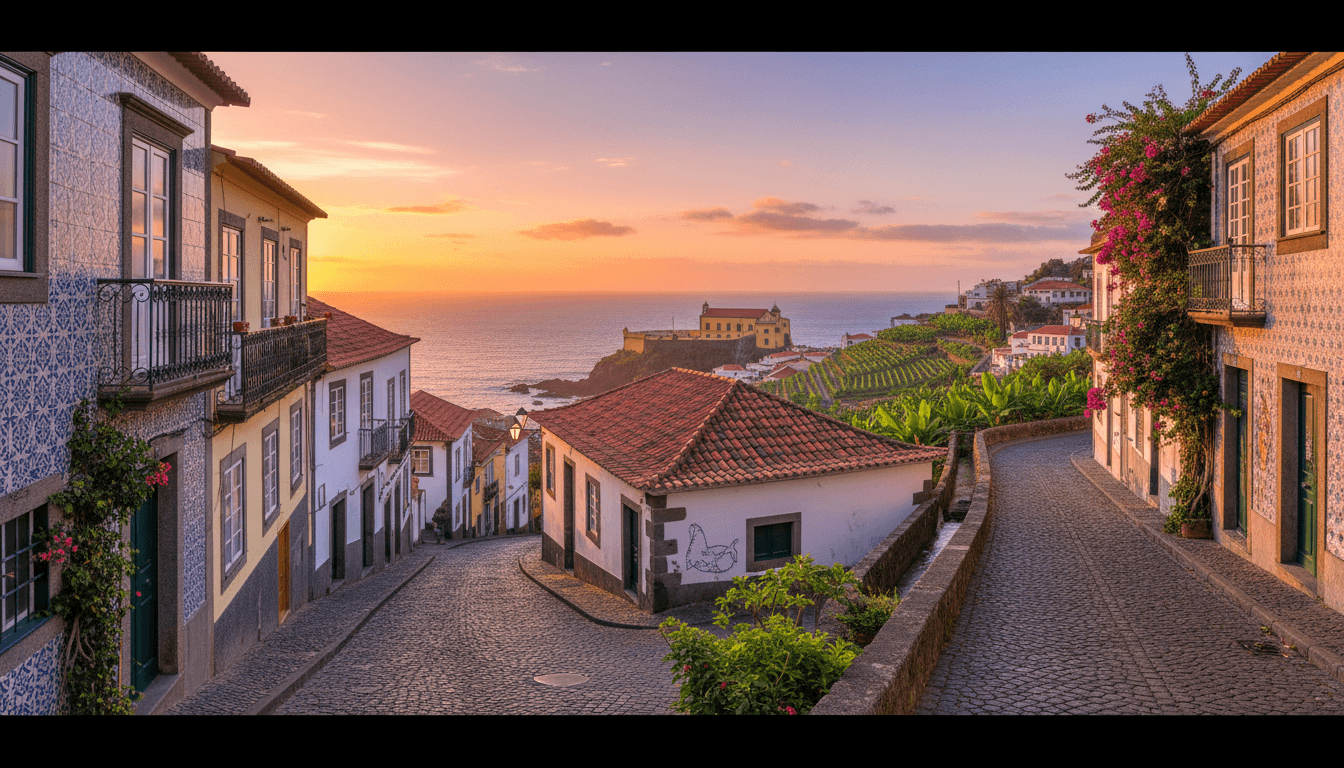
Madeira Neighborhood Guide for Home Swappers: From Trendy Funchal to Traditional Villages

SwappaHome Editorial Team
Home Exchange & Slow Travel Editorial
Discover the best Madeira neighborhoods for home exchange—from Funchal's trendy cafés to quiet mountain villages where time moves differently.
The first time I landed in Madeira, I made a rookie mistake. I'd booked a home swap in what I thought was "Funchal"—except my host's apartment was actually in São Martinho, a residential neighborhood about 20 minutes uphill from the city center. No regrets, though. That "mistake" meant I spent my mornings drinking bica coffee with my neighbor Maria, who taught me how to make bolo do caco (the island's garlic bread) and refused to let me pay for anything.
That's the thing about this Madeira neighborhood guide for home swappers—the "best" area depends entirely on what you're after. Want to stumble home from wine bars at midnight? You'll need to be in Old Town Funchal. Craving silence and levada hikes starting from your doorstep? The northern villages will change your life. Looking for that sweet spot between convenience and authenticity? There are at least four neighborhoods I'd fight for.
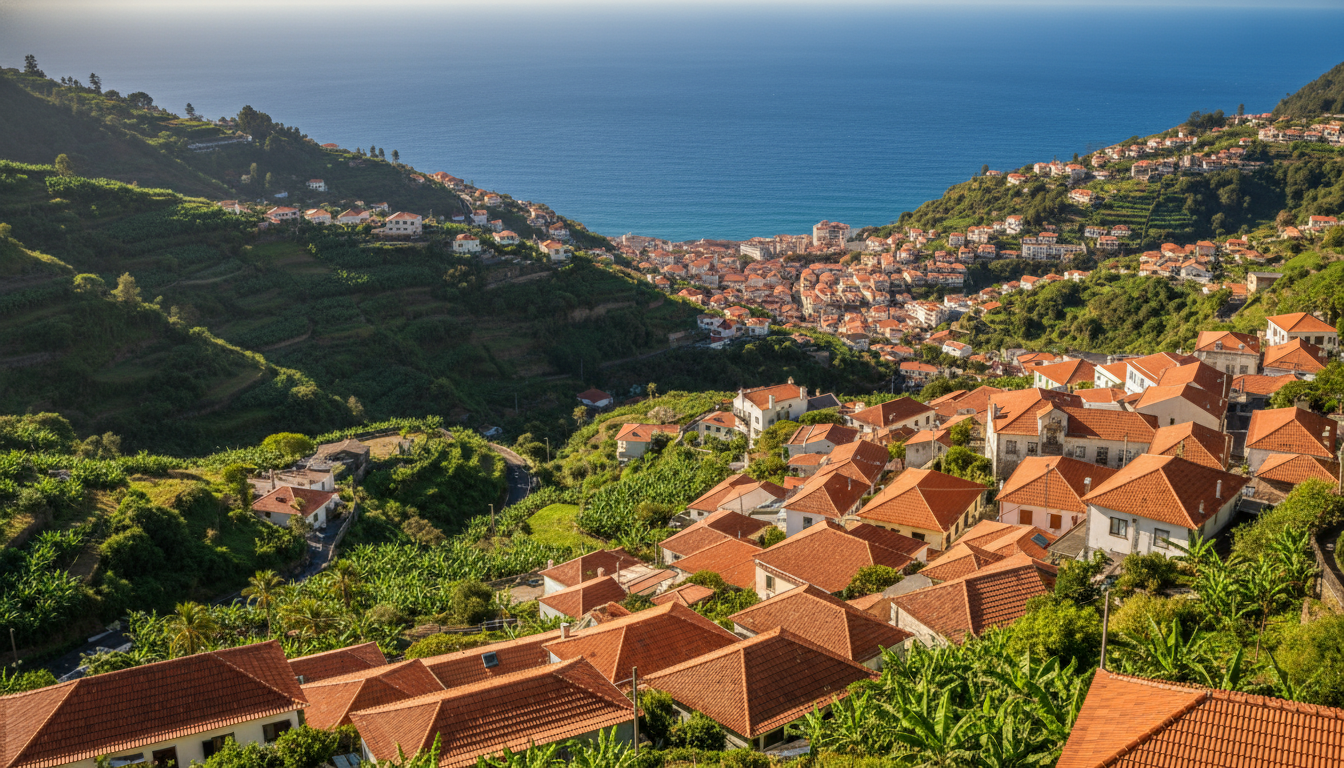 Aerial view of Funchals terracotta rooftops cascading down green hillsides toward the Atlantic Ocean
I've done three home exchanges in Madeira over the past four years—each in a completely different area—and I've spent embarrassing amounts of time on Google Maps planning future swaps. This guide covers every neighborhood worth considering, with honest takes on who each one suits, what you'll actually pay for groceries, and the stuff guidebooks never mention (like which areas have reliable parking, because trust me, that matters here).
Why Madeira Neighborhoods Matter More Than You'd Think
Madeira isn't like other islands where you just pick "beach" or "town" and call it a day. This volcanic chunk of land rises dramatically from the ocean—we're talking 1,800 meters elevation change in some places. Your neighborhood choice affects everything: your daily commute (those mountain roads are no joke), your access to hiking trails, your grocery options, and honestly, your entire vibe for the trip.
The island is roughly 57 kilometers long and 22 kilometers wide, but don't let that fool you. Driving from Funchal to Porto Moniz on the north coast takes about 90 minutes, not because of distance but because you're essentially driving up and over a mountain. Some neighborhoods have buses every 15 minutes; others see maybe three buses a day.
For home swappers specifically, here's what I've learned: the best Madeira neighborhoods for home exchange aren't necessarily the tourist hotspots. They're the residential areas where locals actually live—places with real supermarkets, pharmacies, and that one café where everyone knows everyone. These are the homes available on platforms like SwappaHome, because these are where real Madeirans live their real lives.
Funchal City Center: The Trendy Heart of Madeira Home Swapping
Let's start with the obvious. Funchal is where about 45% of Madeira's population lives, and it's where most first-time visitors want to be. But "Funchal" is massive—the municipality covers everything from the harbor to the mountains—so let me break down the actual neighborhoods.
Zona Velha (Old Town)
This is the Instagram neighborhood. Painted doors on Rua de Santa Maria, street art everywhere, rooftop bars with Atlantic views. If you're doing a home swap in Zona Velha, you're getting walkability, nightlife, and that European city energy.
The trade-off? Noise. I stayed in an Airbnb here once (before I discovered home swapping, don't judge me), and the bars don't quiet down until 2 AM on weekends. Parking is a nightmare—most homes don't include spots, and street parking costs around €1.50/hour ($1.65 USD). You'll also pay more for basics; the small grocery stores here charge tourist prices.
Best for solo travelers, couples who want nightlife, anyone who doesn't need a car. The grocery situation is rough—mini-markets with inflated prices, and the nearest full supermarket (Pingo Doce) is a 15-minute walk uphill. Home swap availability is moderate, mostly smaller apartments, often studios or one-bedrooms with modern renovations and strong WiFi.
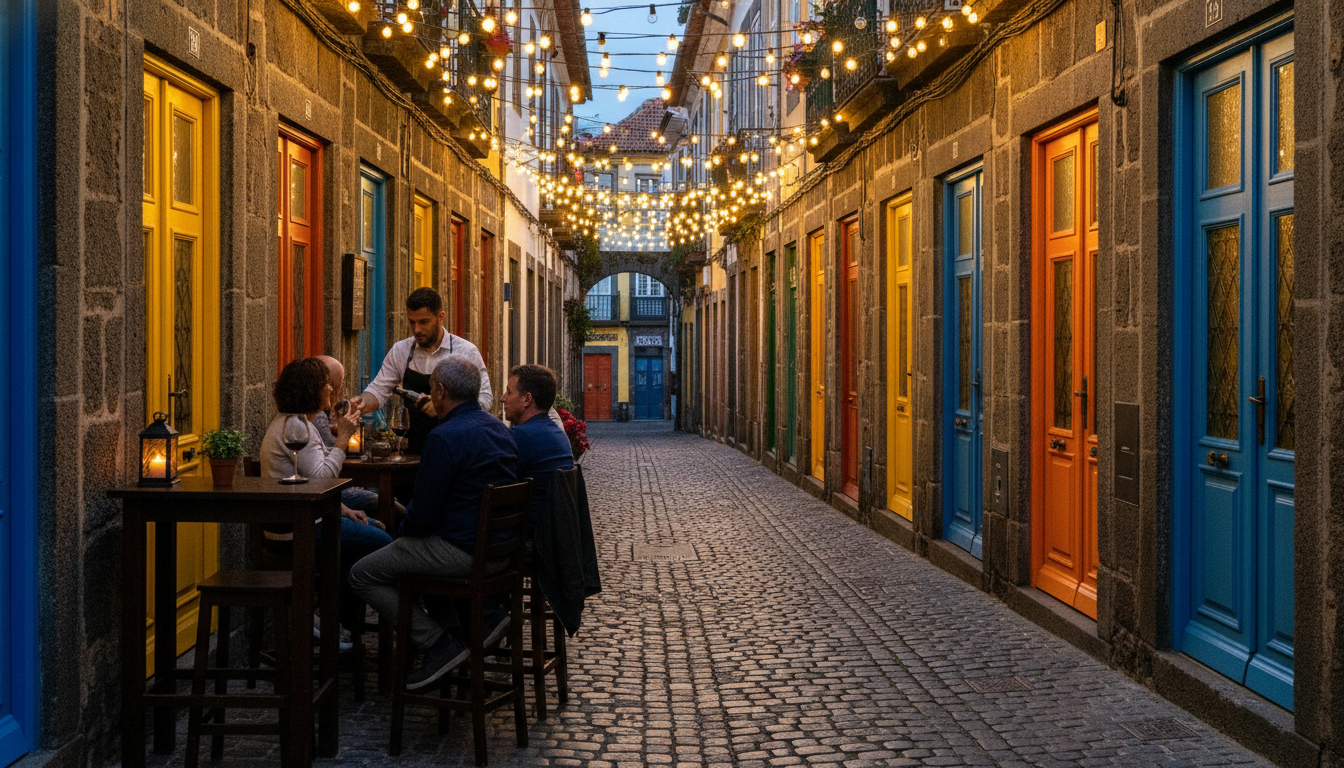 Narrow cobblestone street in Zona Velha with colorful painted doors, string lights overhead, and loc
Sé (Cathedral District)
Just uphill from Zona Velha, the Sé neighborhood centers around Funchal's 15th-century cathedral. It's calmer than Old Town but still walkable to everything. The Mercado dos Lavradores (farmers' market) is here, which means fresh passion fruit, custard apples, and flowers every morning.
This is where I'd recommend for most home swappers doing their first Madeira exchange. You get the convenience of central Funchal without the party noise. Apartments here tend to be in older buildings with character—high ceilings, wooden shutters, sometimes questionable plumbing (hey, it's authentic).
Best for first-time visitors, market lovers, anyone who wants to walk everywhere. The farmers' market is your best friend for groceries, plus there's a Continente supermarket within walking distance. Home swap availability is good here—a nice mix of traditional apartments and some renovated spaces, many with small balconies offering partial ocean views.
Lido and Praia Formosa
West of the city center, the Lido area is Funchal's "resort zone"—but it's also a real neighborhood where locals live. The promenade stretches for about 3 kilometers, perfect for morning runs or evening walks. Praia Formosa has Madeira's only real sand beach (most of the island has pebble beaches or lido pools).
Home swaps here often come with pool access, either private or in apartment complexes. The area feels more modern than central Funchal—think 1980s-2000s construction, concrete buildings with ocean-facing balconies. Not as charming, but practical.
Families and swimmers love it here, as does anyone who wants resort amenities without resort prices. Grocery situation is excellent with multiple supermarkets including a large Continente, and prices are normal (not tourist-inflated). High home swap availability with lots of family apartments and some houses—many include parking, which is a huge plus.
São Martinho and Santo António: Where Locals Actually Live
Remember my "accidental" home swap? São Martinho is the kind of neighborhood tourists drive through without stopping—and that's exactly why I loved it.
These hillside residential areas sit above central Funchal, connected by steep roads and even steeper staircases. The views are incredible (you're looking DOWN at the city and ocean), the air is noticeably fresher, and the prices are significantly lower. My host's apartment was a spacious two-bedroom with a terrace, and she told me she'd never be able to afford the same space in Zona Velha.
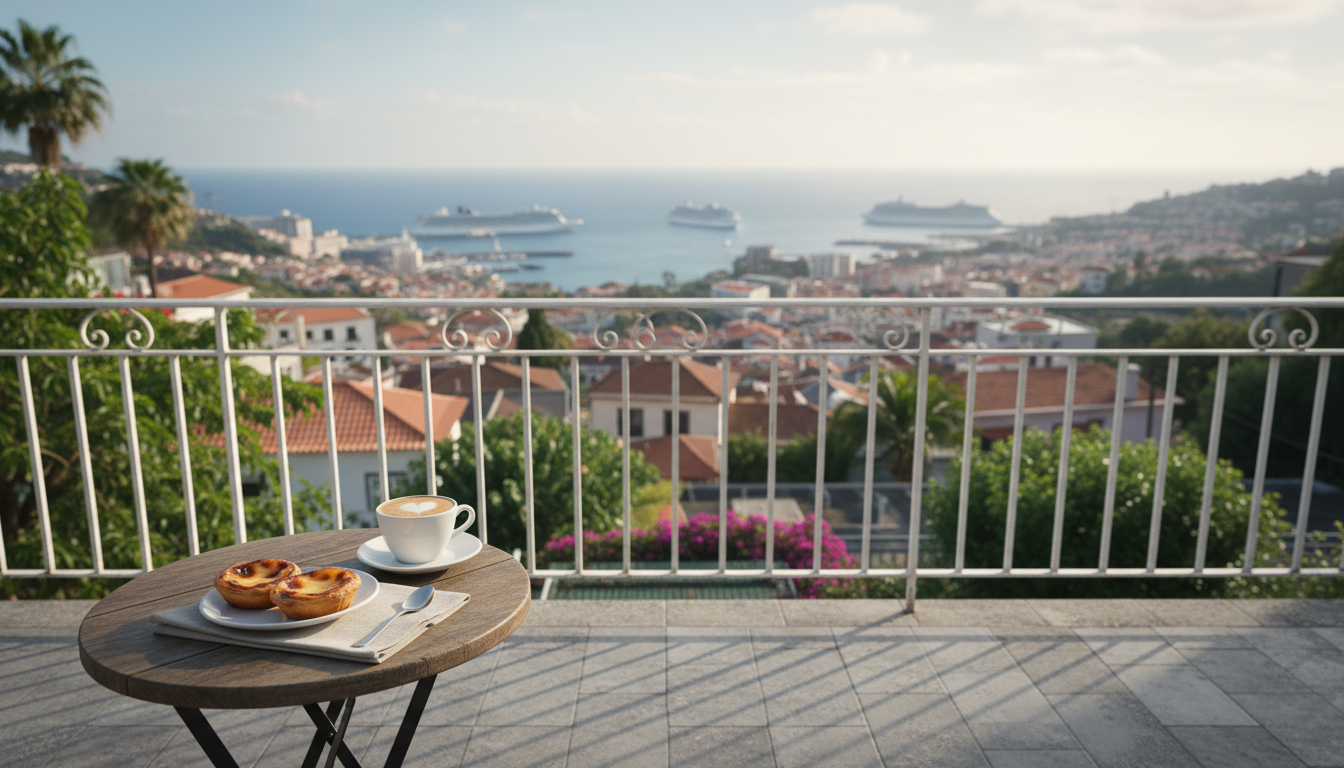 Morning view from a residential terrace in So Martinho, looking down over Funchals red rooftops towa
The downside: you need a car, or you need to be comfortable with steep walks and infrequent buses. The #29 bus runs through São Martinho, but only every 30-45 minutes. Walking down to the city center takes about 25 minutes (mostly stairs); walking back up takes... longer. Much longer.
But here's the thing—if you're planning to explore Madeira's levadas and mountain trails, you need a car anyway. And these neighborhoods have actual street parking, often free. Your host might even have a garage.
Budget-conscious travelers and hikers thrive here, as does anyone who wants authentic local life. Several supermarkets serve the area (Pingo Doce in São Martinho is solid), plus bakeries, butchers, the works. Home swap availability is high—this is where many SwappaHome members live, in real family homes with gardens, sometimes with fruit trees. Excellent value.
Monte: The Romantic Hillside Escape
Monte sits about 550 meters above Funchal, connected to the city by a cable car that costs €12.50 one-way ($13.75 USD) or €18 round-trip ($19.80 USD). The neighborhood is famous for the Monte Palace Tropical Garden, the Nossa Senhora do Monte church, and the slightly terrifying toboggan rides down wicker sleds.
But beyond the tourist attractions, Monte is a legitimate residential neighborhood with a very specific vibe: quiet, green, misty, romantic. The temperature is noticeably cooler than Funchal (bring a sweater, even in summer). Gardens here are lush—camellias, hydrangeas, subtropical plants everywhere.
A home swap in Monte means waking up to birdsong and fog rolling through the valleys. It means walking to the botanical gardens in five minutes. It also means committing to the cable car or having a car, because the walk down to Funchal is brutal on the knees.
Couples and garden lovers adore it here. Writers seeking inspiration, anyone who doesn't mind being slightly removed from city life. Grocery options are limited—there's a small supermarket, but you'll want to stock up in Funchal. Home swap availability is moderate. Homes here tend to be quintas (traditional manor houses) or cottages with gardens. Absolutely stunning properties, but fewer options than central Funchal.
Câmara de Lobos: The Fishing Village Winston Churchill Loved
About 9 kilometers west of Funchal, Câmara de Lobos is where Winston Churchill came to paint in the 1950s—and honestly, the views haven't changed much. This working fishing village has colorful boats pulled up on the pebble beach, fishermen mending nets, and some of the best poncha (Madeira's sugarcane rum cocktail) on the island.
The village has gentrified somewhat in recent years. There are now trendy wine bars alongside traditional tascas, and the waterfront promenade is popular with joggers. But it still feels authentic in a way that Funchal's Old Town doesn't anymore.
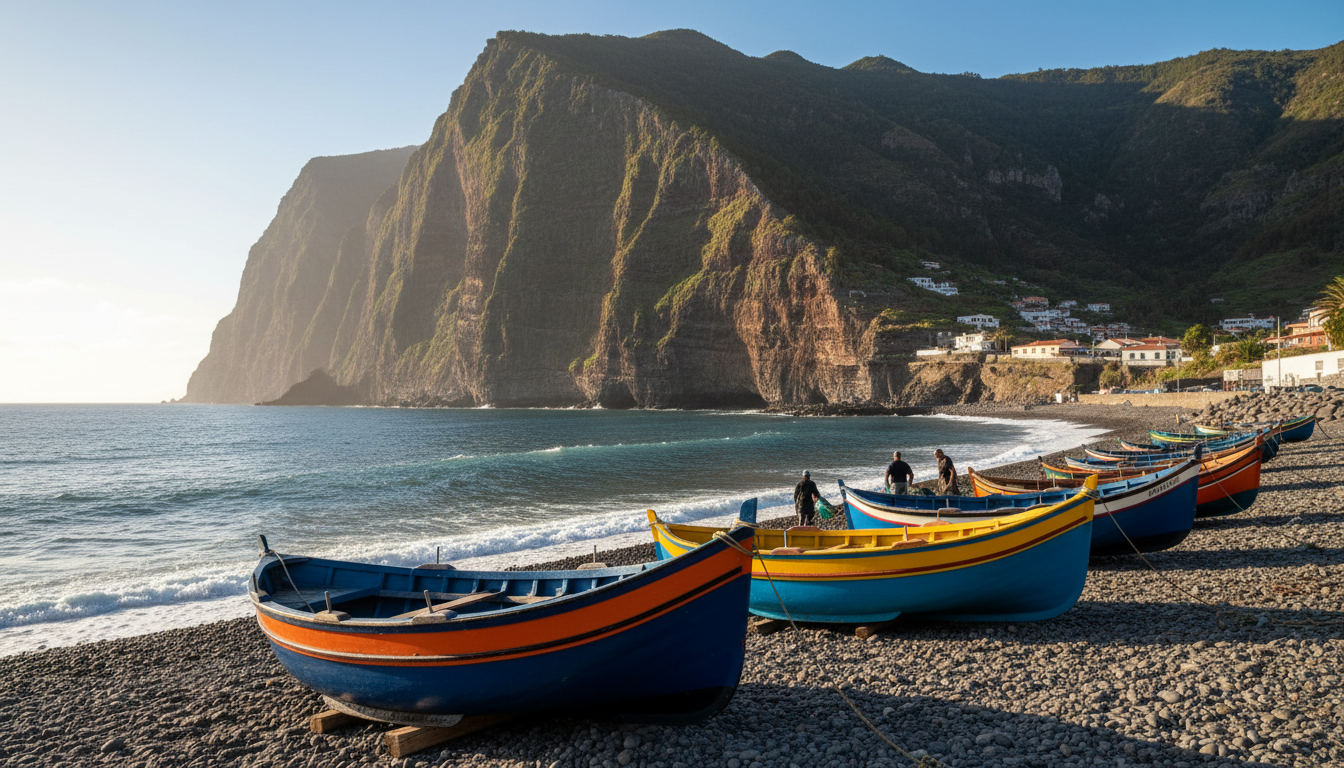 Colorful fishing boats blue, red, yellow pulled up on the pebble beach at Cmara de Lobos, with the d
For home swappers, Câmara de Lobos offers the best of both worlds: village atmosphere with easy access to Funchal (15 minutes by car, 30 minutes by bus #154). The famous Cabo Girão viewpoint—the highest sea cliff in Europe—is just a 10-minute drive away.
Photography enthusiasts and foodies love this spot, along with anyone who wants village life with city access. Grocery situation is good—full supermarket (Pingo Doce) plus local fish market where you can buy the morning's catch. Home swap availability is growing as more locals join home exchange platforms here. Expect traditional apartments and some village houses with terraces.
The North Coast: Madeira's Wild, Traditional Side
Now we're getting into the Madeira that most tourists never see. The north coast is dramatic, green, and significantly rainier than the south. Villages here feel frozen in time—not in a touristy way, but because life genuinely moves slower.
São Vicente
São Vicente is the north coast's main town, though "main" is relative—we're talking a population of about 3,000. The village sits in a valley where two rivers meet, surrounded by towering basalt cliffs. There's a volcanic caves complex (worth visiting once), a handful of restaurants, and the kind of quiet that city people find either peaceful or unsettling.
A home swap in São Vicente means committing to the north. You're 45 minutes from Funchal over mountain roads. The weather is different—more clouds, more rain, more dramatic light. But the levada hikes starting nearby are some of Madeira's best, and you'll have them almost to yourself.
Serious hikers and nature photographers thrive here. Introverts, anyone escaping crowds. Grocery situation is basic—one supermarket, limited selection. Stock up in Funchal before arriving. Home swap availability is low but growing. Homes here tend to be traditional stone houses, sometimes with land. Incredible value if you find one.
Santana
Famous for its A-frame thatched houses (called casas de colmo), Santana is the most "traditional" village on the island. The traditional houses are mostly museum pieces now, but the village itself maintains an agricultural character. People here grow vegetables, raise animals, and live close to the land.
Santana is also the gateway to some of Madeira's most spectacular hiking, including the trail to Pico Ruivo (the island's highest peak at 1,862 meters). The Queimadas Forest Park, with its mystical laurisilva forest, starts nearby.
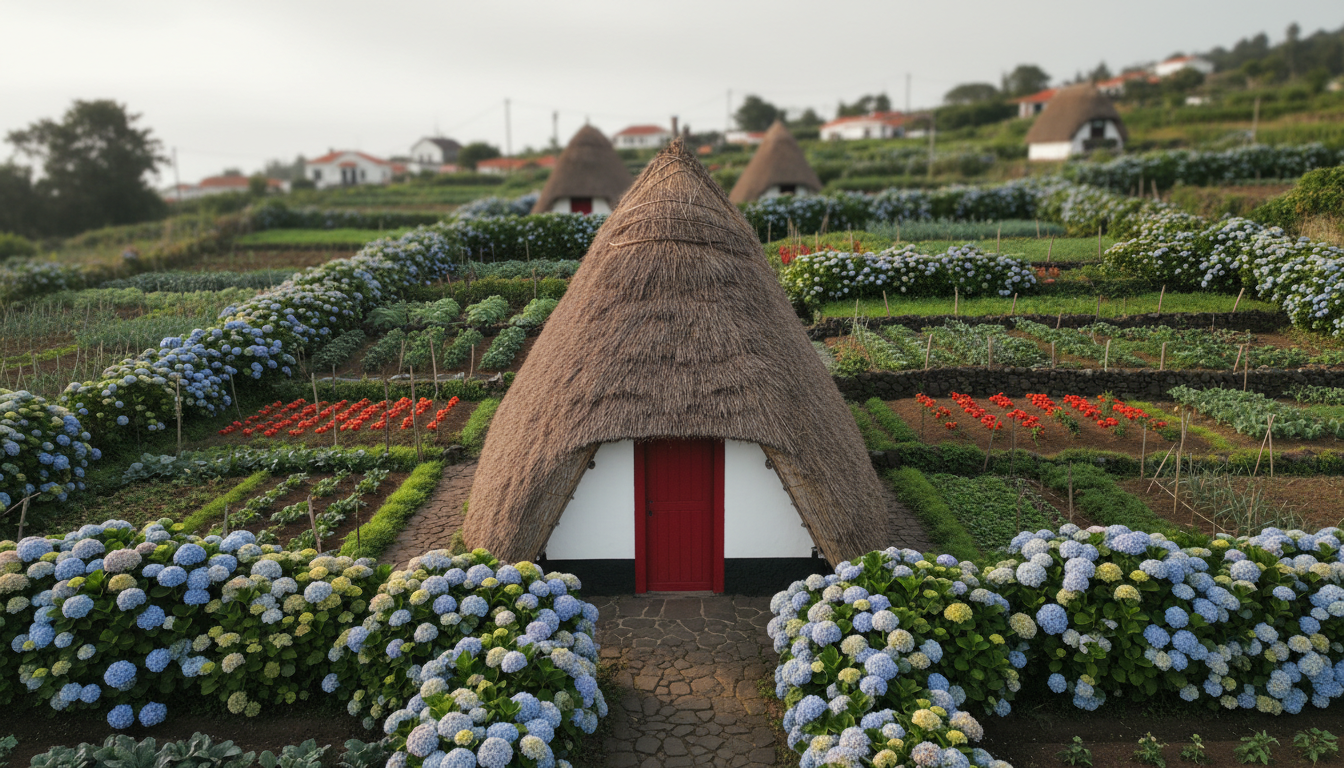 Traditional A-frame thatched house casa de colmo in Santana with red door and white walls, surrounde
Hikers and photographers flock here, along with anyone seeking deep immersion in traditional Madeiran culture. Grocery situation is very basic—plan to be self-sufficient or drive to larger towns. Home swap availability is low, but the homes that exist are special—often rural properties with gardens and mountain views.
Porto Moniz
At the northwestern tip of the island, Porto Moniz is famous for its natural volcanic swimming pools—lava rock formations filled with seawater. The pools are the main attraction, but the village itself has a rugged, end-of-the-world charm.
I'll be honest: Porto Moniz is a bit too remote for most home swappers unless you're specifically seeking isolation. The drive from Funchal takes 90+ minutes, and there's not much infrastructure. But if you want to wake up, walk to natural pools, and spend your days hiking the northwestern trails, it's paradise.
Adventurers and swimmers who genuinely want to disconnect will love it. Grocery situation is minimal—one small supermarket, so bring supplies. Home swap availability is very low, but worth checking—occasionally special properties come up.
The East: Machico and Beyond
The eastern end of Madeira feels different from the rest of the island—drier, sunnier, more exposed. Machico, the island's second-largest town, was where the Portuguese first landed in 1419. Today it's a working town with a sandy beach (imported sand, but still), good restaurants, and a fraction of Funchal's tourists.
Machico
Machico has a relaxed, unpretentious vibe. The waterfront promenade is popular with local families, the old town has genuine character (not manufactured charm), and the surrounding hillsides are covered in banana plantations and vegetable gardens.
For home swappers, Machico offers excellent value. Apartments here cost significantly less than Funchal equivalents, and you're close to some underrated attractions: the Ponta de São Lourenço hiking trail (the island's most dramatic coastal walk), the Caniçal whaling museum, and the wild eastern peninsula.
Budget travelers and beach lovers thrive here, as does anyone who wants a local town experience. Grocery situation is good with full supermarkets, local bakeries, and a fish market. Home swap availability is moderate and growing—expect practical apartments rather than luxury properties.
Caniçal
The last town before the wild Ponta de São Lourenço peninsula, Caniçal was a whaling village until 1981. Today it's a quiet fishing community with a small beach and access to incredible hiking. The Vereda da Ponta de São Lourenço trail—a 4-hour out-and-back through lunar landscapes—starts here.
This is about as off-the-beaten-path as Madeira gets while still having basic amenities. A home swap in Caniçal means waking up at the edge of the world.
Hikers and solitude seekers love it, along with anyone who prioritizes nature access over nightlife. Grocery situation is basic with a small supermarket and limited selection. Home swap availability is low, but occasionally gems appear—fishermen's cottages, hillside apartments with ocean views.
Practical Tips for Madeira Home Swappers
After three exchanges and countless hours of research, here's what I wish someone had told me:
About cars: You probably need one. Public buses exist but are infrequent outside Funchal. Rental cars cost €25-40/day ($27-44 USD) depending on season. Parking in Funchal is challenging; parking elsewhere is usually fine. If your home swap includes parking, that's a significant perk.
About weather: The south coast (Funchal side) is sunnier and drier. The north coast is greener because it's wetter. Altitude matters—Monte and mountain villages are cooler and cloudier. Pack layers regardless of season.
About groceries: Pingo Doce and Continente are the main supermarket chains. Prices are reasonable—maybe 10-15% higher than mainland Portugal. The farmers' market in Funchal is worth visiting for produce, but it's not necessarily cheaper than supermarkets.
About communication: Many older Madeirans speak limited English, especially outside Funchal. Portuguese basics go a long way. Younger people generally speak English well.
About timing: Peak season is July-August and Christmas/New Year. Shoulder seasons (April-June, September-October) offer better weather than you'd expect and fewer crowds. Winter (November-March) is mild but rainier.
How to Find the Right Madeira Home Swap
On SwappaHome, I've noticed Madeira listings have grown significantly in the past two years. The platform's credit system works well here—hosts earn credits by welcoming guests, then use those credits to travel elsewhere. It's particularly popular with Portuguese families who want to explore other parts of Europe.
When browsing listings, pay attention to parking situation (explicitly mentioned or not—ask if unclear), altitude and location ("Funchal" could mean sea level or 500 meters up), photos of the view (this tells you a lot about the actual location), and reviews mentioning noise or accessibility (previous swappers are honest).
My best advice? Message potential hosts with specific questions about the neighborhood. Ask where they buy groceries, how they get around, what they love about their area. Real residents give real answers—and those conversations often lead to the best exchanges.
The Neighborhood I'd Choose (If I Had to Pick One)
People always ask me this, so here's my honest answer: for a first Madeira home swap, I'd choose the Sé/Cathedral district of Funchal or the Lido area. Central enough to explore without a car for a few days, residential enough to feel authentic, practical enough for daily life.
For a return visit? São Martinho or Santo António—those hillside neighborhoods where tourists don't go. You get the views, the local life, the value, and the parking. Plus, you're 10 minutes from central Funchal when you want it.
And for a third visit, when you really know the island? Somewhere on the north coast. São Vicente or Santana. That's where Madeira stops being a destination and starts being a place you actually know.
Madeira isn't an island you figure out in one trip. It's layered, surprising, and different depending on where you stay. The home swap approach—living in real neighborhoods, shopping at real supermarkets, nodding at real neighbors—is the only way I'd do it now.
Maria from São Martinho still sends me photos of her garden sometimes. Last month, she harvested her first avocados. She says there's always a room for me if I come back.
I'm already checking SwappaHome for dates.
Frequently Asked Questions
What is the best neighborhood in Madeira for home swapping?
For first-time visitors, Funchal's Sé (Cathedral) district or Lido area offer the best balance of walkability, local amenities, and authentic atmosphere. These Madeira neighborhoods for home swappers provide easy access to markets, restaurants, and public transport while maintaining residential character. More experienced visitors often prefer hillside neighborhoods like São Martinho for better value and stunning views.
Do I need a car for a home swap in Madeira?
Yes, for most neighborhoods outside central Funchal. While Funchal's city center is walkable and has decent bus service, exploring Madeira's levadas, north coast villages, and mountain viewpoints requires a car. Rental cars cost €25-40/day ($27-44 USD). When searching for home swaps, prioritize listings that include parking—it's a significant advantage, especially in Funchal.
How much can I save with home swapping in Madeira versus hotels?
Significant savings. A mid-range hotel in Funchal costs €80-150/night ($88-165 USD), while home swapping through platforms like SwappaHome uses a credit system—one credit per night regardless of location. A two-week Madeira home swap could save you €1,100-2,100 ($1,200-2,300 USD) on accommodation alone, plus savings from cooking in a real kitchen versus eating out.
Which Madeira neighborhoods are best for hiking access?
Santana and São Vicente on the north coast offer direct access to Madeira's best levada walks and mountain trails. Machico and Caniçal in the east are ideal for the Ponta de São Lourenço coastal hike. Even Funchal's hillside neighborhoods like Monte provide quick access to popular trails. For serious hikers, prioritizing a home swap near trailheads saves significant daily driving time.
Is the north coast of Madeira good for home swapping?
The north coast offers exceptional value and authentic experiences but requires commitment. Villages like São Vicente and Santana are 45-90 minutes from Funchal, have limited grocery options, and experience more rainfall. However, home swaps here often feature traditional stone houses with gardens at lower credit costs. Best suited for nature lovers, experienced travelers, and those seeking genuine immersion in traditional Madeiran life.

Published by
SwappaHome
SwappaHome Editorial Team
Home Exchange & Slow Travel Editorial
The SwappaHome Editorial Team brings together travel research, home-exchange community insights, and platform data to produce practical guides for first-time and experienced home swappers. Every article cites real platforms, current market rates, and verifiable city-level facts so readers can make informed decisions without guessing.
Ready to try home swapping?
Join SwappaHome and start traveling by exchanging homes. Get 7 free credits when you sign up!
Related articles
Bachelor and Bachelorette Parties in Singapore: The Complete Home Swap Group Guide for 2026
Planning a bachelor or bachelorette party in Singapore? Discover how home swapping lets groups of 6-12 stay together in luxury condos, saving thousands while partying in Marina Bay.
Cycling in Lisbon: 7 Home Swap Bike Tour Itineraries for Every Rider
Discover the best cycling routes in Lisbon with these home swap bike tour itineraries—from waterfront paths to hilltop adventures, all starting from your borrowed home.
Graduation Trip to Barcelona: How Home Swapping Gives New Graduates the Ultimate Celebration
Planning a graduation trip to Barcelona? Discover how home swapping lets new graduates explore Spain's most vibrant city without the hostel crowds or hotel costs.