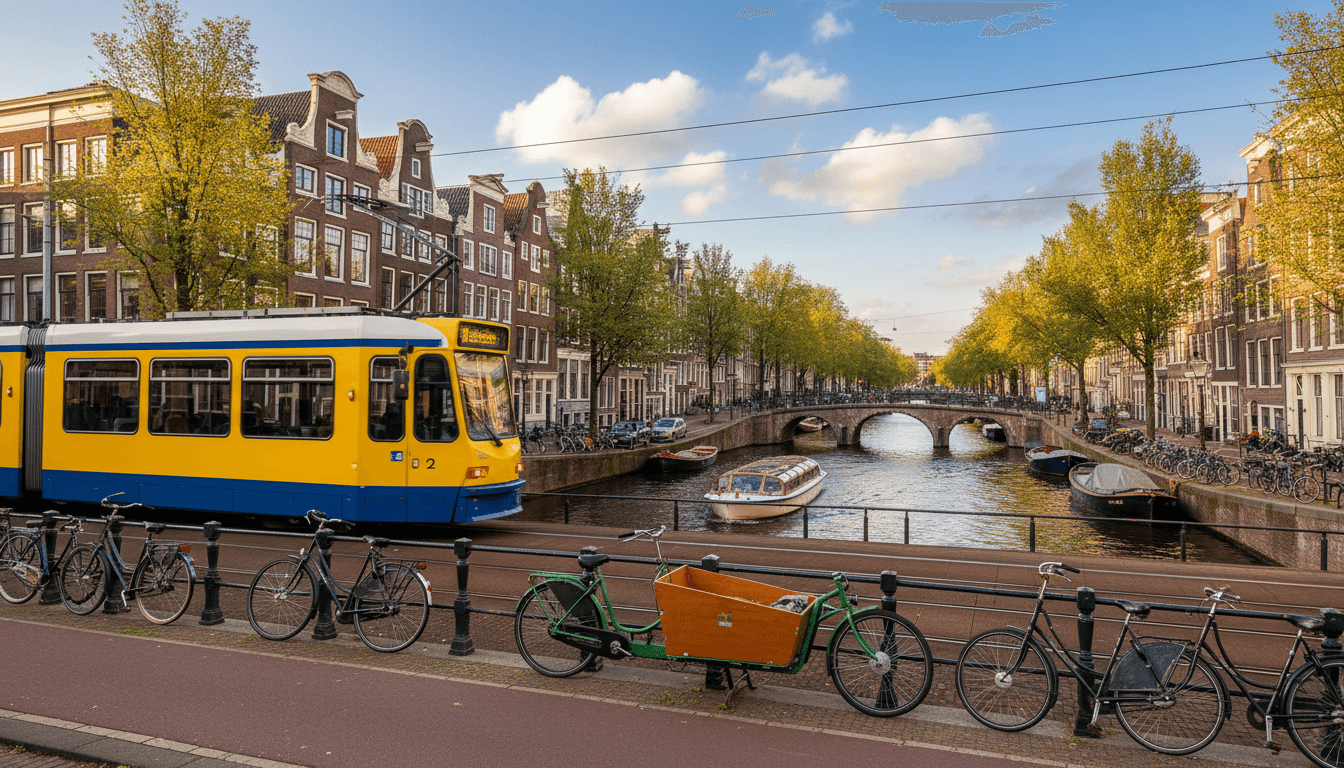
Amsterdam Transport Guide: How to Get Around During Your Home Swap

SwappaHome Editorial Team
Home Exchange & Slow Travel Editorial
Master Amsterdam transport during your home swap—from bikes to trams, ferries to walking routes. Local tips for navigating the city like a Dutch local.
I still remember standing at Amsterdam Centraal during my first home swap, completely overwhelmed by the blur of bicycles, trams, and confident locals who seemed to navigate it all with their eyes closed. A woman on a cargo bike sailed past with two kids and a golden retriever somehow balanced in the front—and I thought, there's no way I'm figuring this out.
Three home swaps later? Amsterdam transport is actually brilliantly simple once you crack the code. And cracking that code transforms your home exchange from tourist-mode to living-like-a-local mode faster than you can say "fietsen" (that's Dutch for cycling—you'll be saying it a lot).
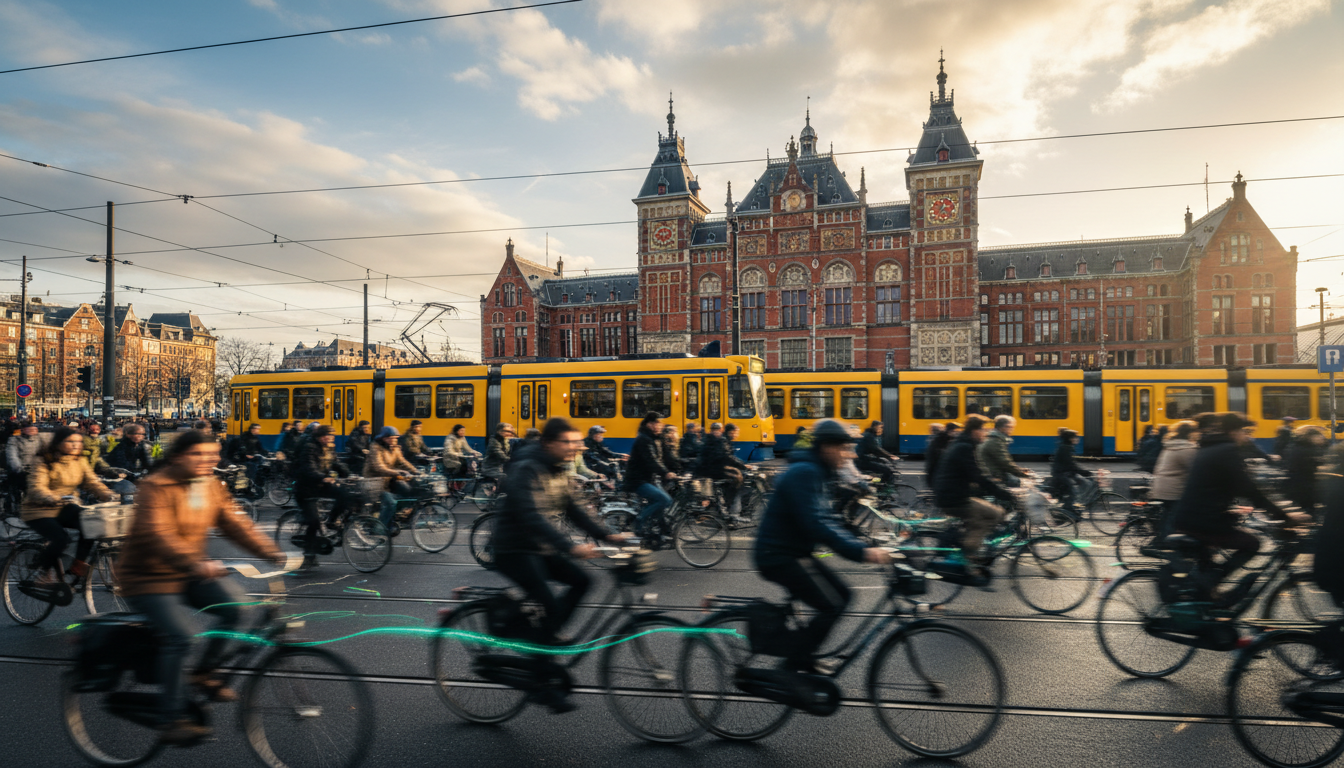 Morning rush hour at Amsterdam Centraal with streams of cyclists crossing the station plaza, trams i
Why This Matters for Home Swappers
Here's something most travel guides won't tell you: getting around Amsterdam during a home swap is fundamentally different from a hotel stay. When you're staying in someone's apartment in De Pijp or a canal house in Jordaan, you're not just visiting attractions—you're grocery shopping, finding the nearest pharmacy, maybe picking up a borrowed bike from a neighbor.
During my last swap in Amsterdam-Oost, my host left me her OV-chipkaart with €30 loaded on it. That single gesture saved me probably two hours of figuring out the system. I grabbed coffee at the corner café, hopped on tram 14, and was at the Rijksmuseum in twelve minutes. No fumbling with tickets. No standing in tourist lines. Just—belonging.
This is the magic of home swapping here. Your hosts often share their local transport wisdom, their spare bikes, their insider routes. But you still need to understand the system to make the most of it.
The OV-Chipkaart: Your Lifeline
Let me be direct: do not attempt to navigate Amsterdam transport without an OV-chipkaart.
Yes, you can buy single tickets. Yes, you can tap your contactless bank card on newer trams. But the OV-chipkaart will save you money, time, and the specific frustration of realizing at 11 PM that the ticket machine only takes cards with a PIN.
Getting Your Card
You've got two options. The anonymous OV-chipkaart is available at any train station, major metro stops, or the GVB service desk at Centraal. It costs €7.50 for the card itself, then you load credit onto it. This is what most home swappers should get—you can buy one at the yellow machines in any station, they have English options, and the whole process takes about three minutes.
The personal OV-chipkaart requires a Dutch address and bank account. If your home swap host offers to lend you theirs? Accept gratefully. Just remember to settle up the balance when you leave.
How Pricing Works
Amsterdam uses a check-in/check-out system. Tap when boarding, tap again when exiting. Forget to check out? You'll be charged the maximum fare—around €4-5 for a tram ride that should cost €1.50. I learned this the hard way. Twice.
A single GVB ride costs about €2.40 ($2.60 USD). But here's where it gets interesting for longer stays: a 24-hour pass runs €9, a 72-hour pass is €21, and a 7-day pass costs €41 ($44.50 USD). For a typical week-long swap, the 7-day pass is almost always worth it if you're exploring actively. But if your apartment is central and you're planning to walk and bike mostly? Just load €20-30 on an anonymous card and pay per ride.
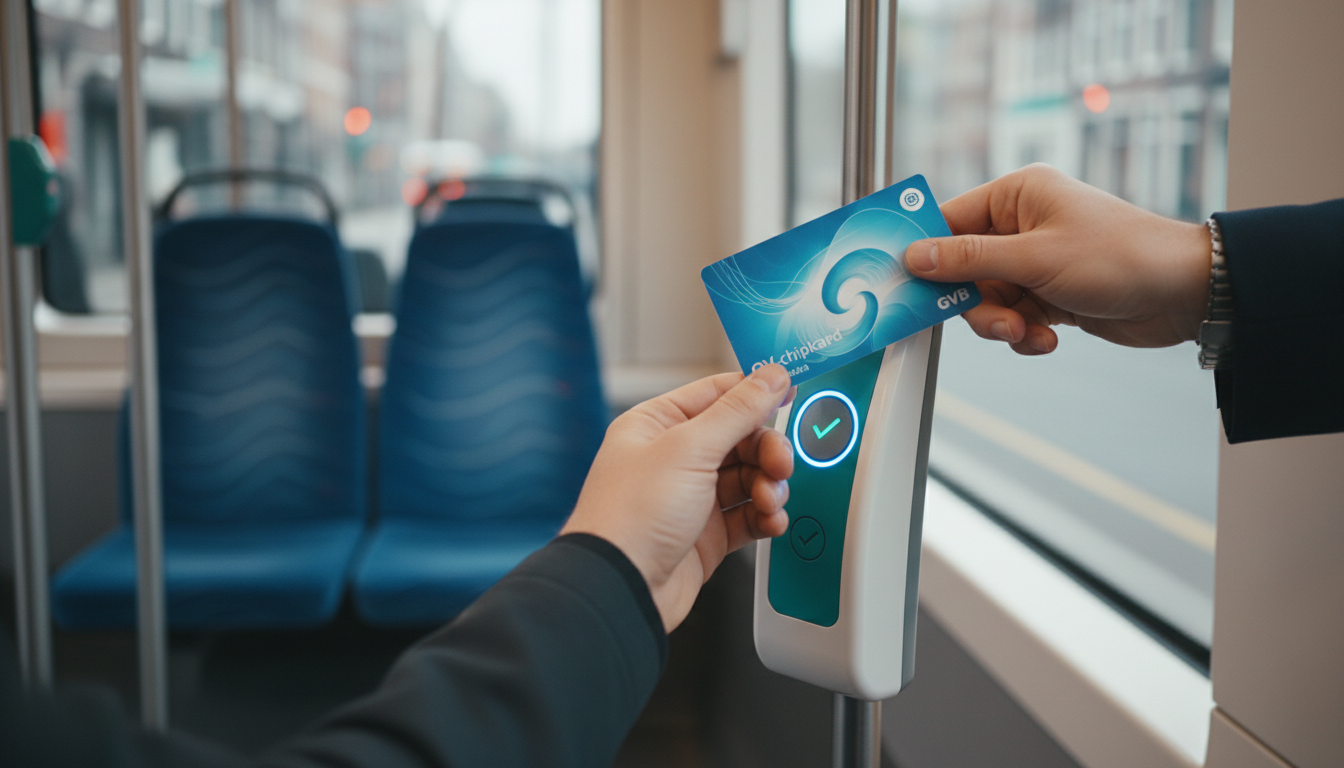 Close-up of hands tapping an OV-chipkaart on a tram validator, with the characteristic blue and whit
Cycling: The Real Way to Get Around
Real talk: if you're doing a home swap in Amsterdam and you don't cycle at least once, you're missing the entire point. I don't say this to be dramatic—I say this because cycling here isn't just transport. It's how the city breathes.
The infrastructure is extraordinary. Separated bike lanes on almost every street. Traffic lights specifically for cyclists. A cultural understanding that bikes have right of way (mostly). When I'm cycling along the Amstel at sunset, weaving past houseboats and under stone bridges, I understand why the Dutch are consistently ranked among the happiest people in Europe.
Your Bike Options
Many Amsterdam hosts will offer you use of their bicycle. This is gold—accept it. Their bike will have a proper lock (essential), working lights (legally required after dark), and that particular Dutch bike posture built in. Ask about where they park it, any quirks (my last borrowed bike had a back-pedal brake that took some getting used to), and their preferred routes to the center.
No spare bike from your host? MacBike is the most tourist-friendly option with locations at Centraal, Leidseplein, and Waterlooplein—about €12 per day or €40 for a week. They're reliable but bright red, which screams tourist. Black Bikes is slightly cheaper and less conspicuous at around €10 per day. For swaps longer than two weeks, consider Swapfiets—the monthly subscription service locals use, around €19 per month with same-day repairs included.
Safety Tips (From Someone Who's Crashed)
I'm going to be honest—I've had two minor cycling incidents here, both entirely my fault. The first time, I stopped suddenly in a bike lane and got rear-ended by a very annoyed Dutch woman. The second time, I turned without looking and nearly took out a scooter.
Never stop suddenly in a bike lane—pull to the side first. Use hand signals (left arm out for left turn, right arm out for right). Watch for scooters—they share the bike lanes and move fast. Don't cycle on the sidewalk (you will get yelled at, deservedly). And lock your bike properly—through the frame AND to something immovable. Bike theft is Amsterdam's unofficial sport.
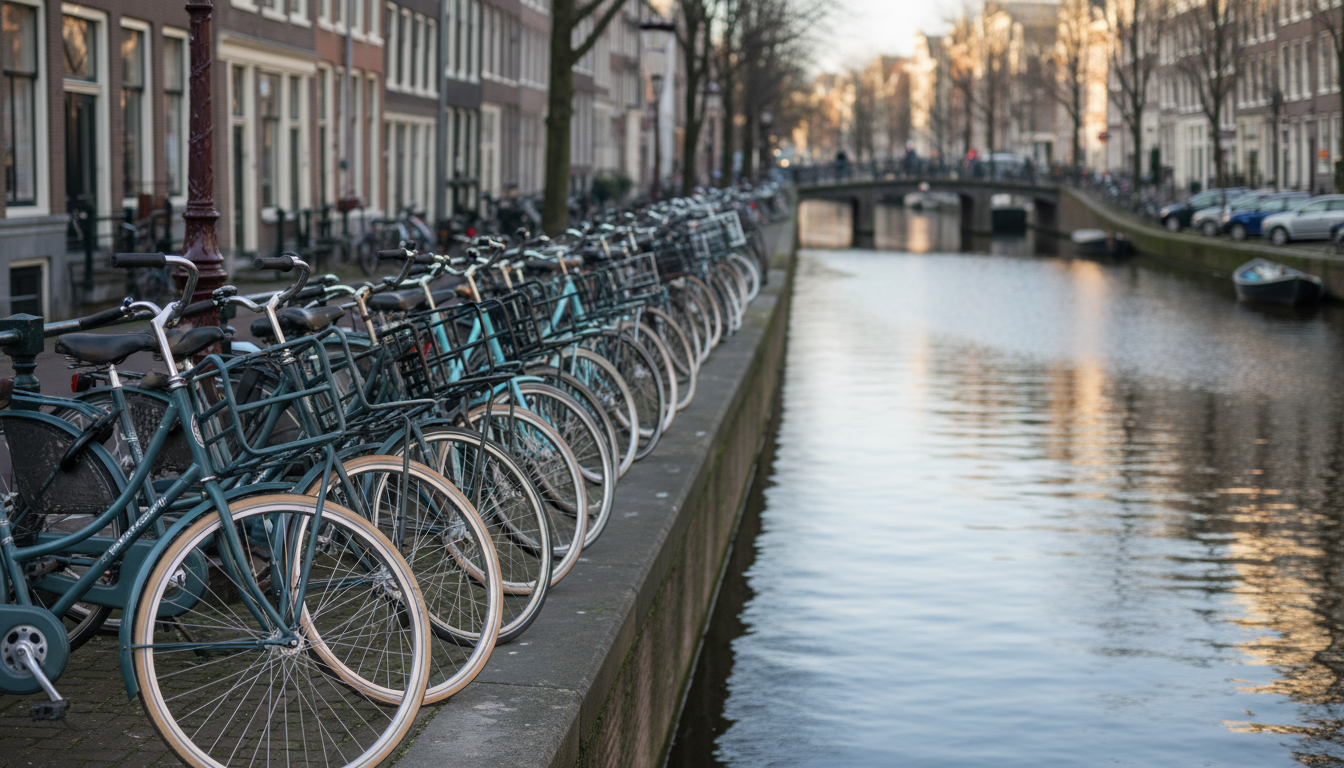 Rows of bicycles parked along a canal in Jordaan neighborhood, with traditional Amsterdam canal hous
Trams: The Scenic Option
I have a soft spot for Amsterdam's trams. They're not the fastest way to get around—cycling usually beats them—but there's something deeply pleasant about gliding through the city on tram 2, watching neighborhoods shift from the bustle of Centraal to the leafy calm of Museumplein.
For home swappers, trams are perfect for rainy days (and it rains a lot here), when you're tired from walking, getting to outer neighborhoods, or carrying groceries from Albert Heijn.
Tram 2 runs from Centraal through Dam Square, Leidseplein, and the Rijksmuseum—if your swap is near the museum district, this is your lifeline. Tram 4 connects Centraal to De Pijp via Rembrandtplein, perfect for that increasingly popular neighborhood. Tram 14 is my personal favorite, running through Amsterdam-Oost where many home swap properties are located (locals live there, tourists don't). And Tram 26 serves IJburg if your swap is on that modern island neighborhood.
Quick etiquette notes: board through any door but exit through the back when crowded, don't stand in the doorway, give up priority seats for those who need them, and keep your voice down—loud phone conversations get looks.
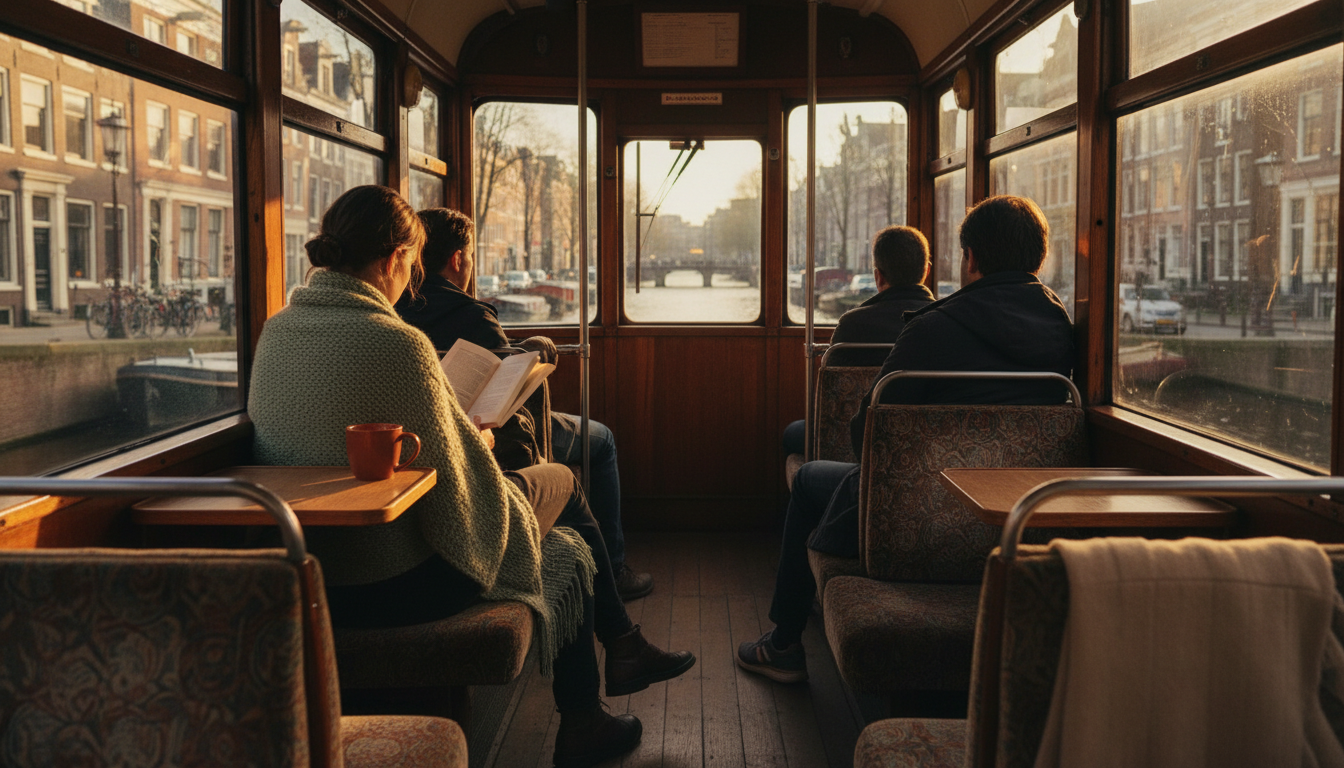 Interior of an Amsterdam tram at golden hour, passengers reading and looking out windows, the Singel
The Metro: When You Need It
Amsterdam's metro is small but mighty—just five lines covering areas the trams don't reach well. If your swap is in the canal ring or Jordaan, you might never use it. But if you're in Amsterdam-Noord, Zuidoost, or near the North-South line developments, the metro becomes essential.
The Noord Line (52) is the game-changer. It connects Centraal to Amsterdam-Noord in about four minutes via an underwater tunnel—if your swap is in the increasingly hip NDSM area, this is faster than the ferry (though less scenic). The ring lines (50, 51, 53, 54) circle the outer neighborhoods, useful for reaching Amstelveen or connecting between outer areas without going through Centraal.
Metro runs from about 6 AM to midnight on weekdays, with night buses taking over after.
Ferries: The Free Secret
Here's something that genuinely surprised me: the ferries behind Centraal Station are completely free. No ticket needed. Just walk on.
These ferries cross the IJ river to Amsterdam-Noord constantly—every few minutes during peak hours. For home swappers staying in Noord (which has some of the most interesting, affordable swap properties), this is your daily commute.
The Buiksloterweg ferry runs 24/7, taking you to the EYE Film Museum area in about 5 minutes. The NDSM ferry runs to the wharf with creative studios and warehouse restaurants—about 15 minutes, and one of my favorite sunset trips. The IJplein ferry is a shorter route to that neighborhood, running frequently during the day.
I've taken the NDSM ferry at sunset more times than I can count. Standing on the deck watching the Amsterdam skyline, seagulls wheeling overhead, the wind in my hair—it's one of those free experiences that feels like it should cost something.
 Sunset view from the NDSM ferry with Amsterdam Centraal and the city skyline silhouetted against an
Walking: More Practical Than You'd Think
Amsterdam is tiny. I mean this sincerely—the entire canal ring fits in an area you can walk across in about 40 minutes. During my swaps here, I've often found that walking is faster than figuring out the tram, especially for distances under 2 kilometers.
The city is extraordinarily walkable—flat terrain, well-maintained sidewalks, pedestrian zones throughout the center. The only challenge is the bikes. They will not stop for you, and they will ring their bells aggressively if you're in their lane.
The Nine Streets connecting the main canals are the prettiest walking area in the city, packed with independent shops and cafés. The walk from Vondelpark to Jordaan takes about 25 minutes through some of Amsterdam's most livable neighborhoods. And walking along the Amstel from the Skinny Bridge heading south is gorgeous if your swap is in the east.
Airport Transport
Your swap starts and ends with getting to and from Schiphol, and this is one area where Amsterdam really shines.
Trains run from Schiphol to Centraal every 10-15 minutes, taking about 15 minutes. A single ticket costs €5.90 if you buy at the machine. If you've already got an OV-chipkaart loaded up, just tap and go—the platforms are directly under the airport, and you'll be on a train within 10 minutes of clearing customs.
Bus 397 runs to Museumplein in about 30 minutes for €7.50—useful if your swap is near the museum district. Official taxis cost €40-50 fixed rate to the center. Honestly, unless you're arriving at 3 AM with massive luggage, the train is better.
Neighborhood Transport Guide
Where you're staying determines your transport strategy.
Jordaan is walkable to almost everything in the center, with trams 13, 17, and 19 along the edges. Bikes are the main mode here—narrow streets make driving impractical anyway. De Pijp is slightly south, connected by tram 4 to Centraal in about 12 minutes. Great for feeling like a local. Amsterdam-Oost is my favorite for swaps—trams 1, 3, and 14 serve it well, and cycling to the center takes about 15 minutes along beautiful routes. Amsterdam-Noord uses the ferry and metro line 52. Some swap properties here are in converted industrial buildings with incredible character. Oud-West sits between Jordaan and Vondelpark, with trams 7 and 17 connecting to Centraal.
Money-Saving Tips
After multiple swaps here, I've figured out some ways to minimize transport costs—which matters when you're already saving on accommodation.
Ask your host about their transport habits. They might have a spare bike, an extra OV-chipkaart, or insider knowledge about which routes to avoid. Stay central if transport costs worry you—a swap in Jordaan or De Pijp means walking to most attractions, while a swap in Amstelveen might add €5-10 daily in transport. Use the free ferries recreationally—the NDSM ferry is basically a free harbor cruise. And download the 9292 app, the Dutch journey planner covering all public transport. Essential.
What Your Host Might Not Tell You
Night buses exist but are limited—after midnight, they run every 30 minutes or so on different routes than the trams. King's Day (April 27th) changes everything—trams stop running in the center, and the city becomes one giant street party. Train strikes happen occasionally, usually announced in advance (check NS.nl). And the bike parking at Centraal is a maze holding 7,000 bikes—take a photo of your location. I once spent 20 minutes finding my borrowed bike.
Day Trips
One of the joys of a home swap here is using Amsterdam as a base. The train network is excellent. Haarlem is 15 minutes away—a smaller, quieter version of Amsterdam. Utrecht is 27 minutes, with beautiful canals and a more local feel. Rotterdam is 40 minutes, all modern architecture and a completely different vibe. The Hague is 50 minutes, with government buildings, beaches, and the Mauritshuis. Zaanse Schans is 17 minutes to Zaandijk station—the famous windmills, worth seeing once despite the crowds.
Your OV-chipkaart works on NS trains too. Just make sure you have enough balance loaded—train fares are higher than local transport.
Final Thoughts
Getting around Amsterdam during a home swap isn't about mastering a complex system—it's about embracing a different way of moving through a city. The bikes everywhere, the trams gliding past canal houses, the free ferries crossing the IJ—it all adds up to something that feels human-scaled and almost joyful.
My biggest advice? Rent or borrow a bike on day one. Get comfortable with it before tackling the busy routes. Once you're cycling confidently, Amsterdam opens up in a way that no other transport can match.
And if you're looking for a home swap here, SwappaHome has some lovely properties in neighborhoods like De Pijp, Oost, and even Noord. The credit system means you can host someone in your home city, then use those credits for a week in a canal-side apartment. It's how I've done all my Amsterdam stays, and it's transformed how I experience this city—not as a tourist passing through, but as someone temporarily living here.
Now go get lost on a bike somewhere. That's when Amsterdam really reveals itself.
Frequently Asked Questions
What is the best way to get around Amsterdam during a home swap?
Cycling is the best way—it's how locals live. Ask your host if they have a spare bike, or rent one from MacBike or Black Bikes for around €10-12 per day. For rainy days or longer distances, the tram network covers the city efficiently with an OV-chipkaart.
How much does Amsterdam public transport cost per day?
A 24-hour GVB pass costs €9 ($9.75 USD), covering unlimited tram, bus, and metro rides within Amsterdam. Individual rides cost about €2.40 each. For a week-long swap, the 7-day pass at €41 offers the best value if you plan to use public transport daily.
Do I need an OV-chipkaart for Amsterdam transport?
While not strictly required—you can use contactless bank cards on newer trams—an OV-chipkaart saves money and hassle. The anonymous card costs €7.50 plus whatever credit you load, and it works on all Amsterdam transport plus national trains.
Is it safe to cycle in Amsterdam as a tourist?
Yes, cycling here is safe thanks to excellent infrastructure with separated bike lanes on most streets. The main risks are other cyclists, not cars. Use hand signals for turns, never stop suddenly in bike lanes, and always lock your bike through the frame to something immovable.
How do I get from Schiphol Airport to my Amsterdam home swap?
The train is the best option—it runs every 10-15 minutes from directly under the airport to Centraal, taking just 15 minutes. A single ticket costs €5.90. From Centraal, trams connect to all neighborhoods, or you can cycle if your host has left a bike at the station.

Published by
SwappaHome
SwappaHome Editorial Team
Home Exchange & Slow Travel Editorial
The SwappaHome Editorial Team brings together travel research, home-exchange community insights, and platform data to produce practical guides for first-time and experienced home swappers. Every article cites real platforms, current market rates, and verifiable city-level facts so readers can make informed decisions without guessing.
Ready to try home swapping?
Join SwappaHome and start traveling by exchanging homes. Get 7 free credits when you sign up!
Related articles

Bachelor and Bachelorette Parties in Singapore: The Complete Home Swap Group Guide for 2026
Planning a bachelor or bachelorette party in Singapore? Discover how home swapping lets groups of 6-12 stay together in luxury condos, saving thousands while partying in Marina Bay.

Cycling in Lisbon: 7 Home Swap Bike Tour Itineraries for Every Rider
Discover the best cycling routes in Lisbon with these home swap bike tour itineraries—from waterfront paths to hilltop adventures, all starting from your borrowed home.

Graduation Trip to Barcelona: How Home Swapping Gives New Graduates the Ultimate Celebration
Planning a graduation trip to Barcelona? Discover how home swapping lets new graduates explore Spain's most vibrant city without the hostel crowds or hotel costs.