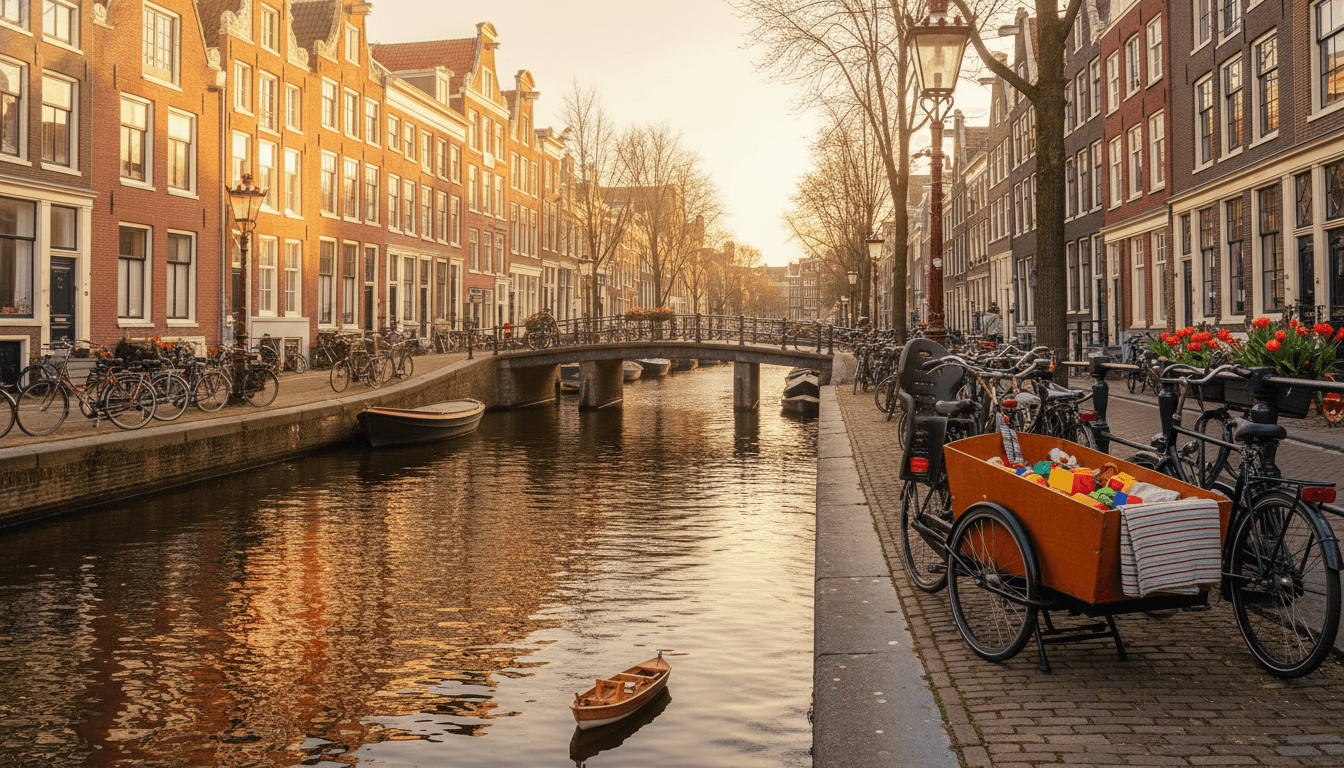
Amsterdam with Kids: Why Home Swap is the Best Way to Travel with Children

SwappaHome Editorial Team
Home Exchange & Slow Travel Editorial
Discover why home swapping in Amsterdam with kids beats hotels every time—from kitchen access to neighborhood playgrounds and thousands in savings.
My five-year-old nephew once asked me why hotel rooms don't have refrigerators for his yogurt. I didn't have a good answer. That moment stuck with me—and it's exactly why I'm convinced that traveling to Amsterdam with children through a home swap is genuinely the smartest way to do it.
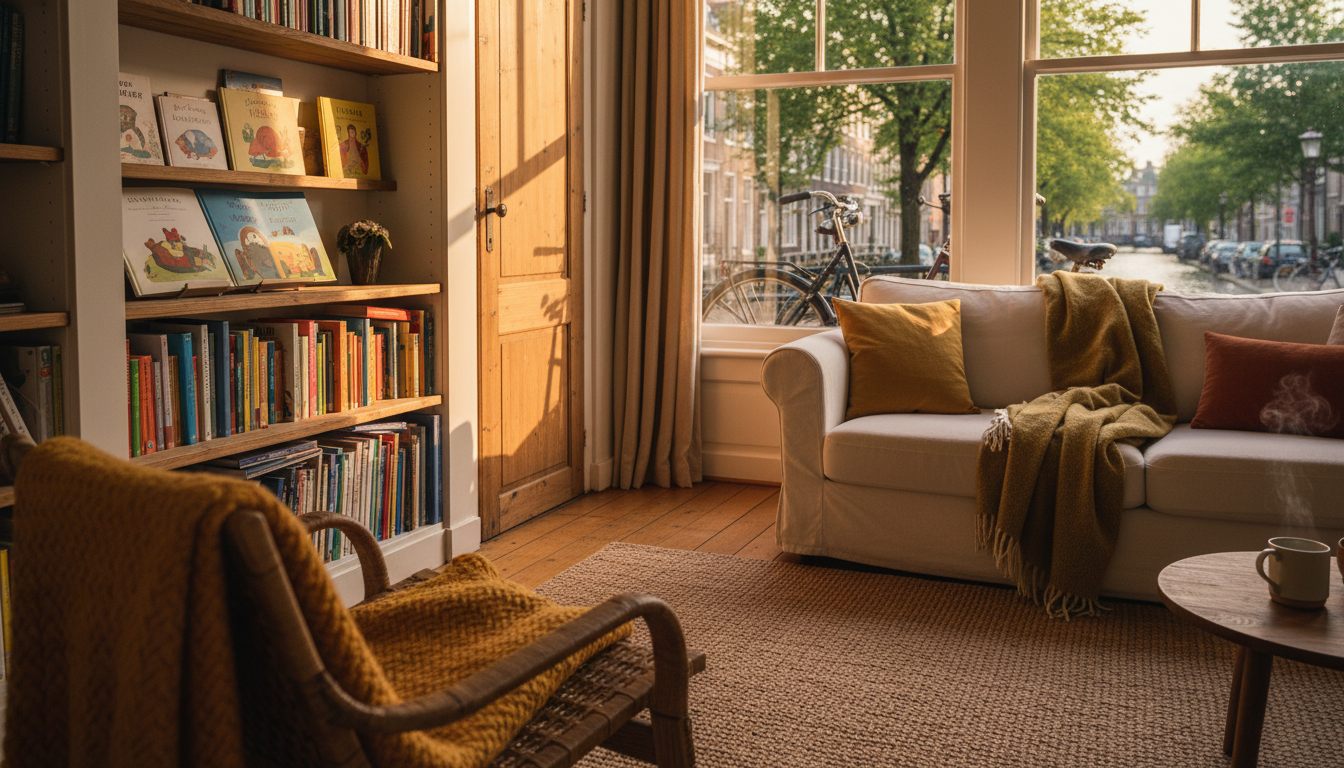
I spent two weeks in Amsterdam's Jordaan neighborhood last autumn with my sister's family. Two kids under seven, endless energy, and very specific opinions about breakfast. We stayed in a Dutch family's canal house while they explored San Francisco. No cramped hotel room. No overpriced room service. No whispered arguments about keeping the kids quiet. Just a real home in one of Europe's most family-friendly cities.
 A cozy Dutch canal house living room with large windows overlooking a tree-lined canal, childrens bo
Why Amsterdam with Kids Demands More Than a Hotel Room
Here's what nobody tells you about traveling with children: the logistics multiply exponentially. It's not just packing more stuff. It's the constant mental math of nap schedules, snack supplies, and finding bathrooms at the most inconvenient moments possible.
Amsterdam is spectacular for families. The city practically worships children—you'll see toddlers in cargo bikes, playgrounds tucked into every neighborhood, restaurants that genuinely welcome small humans. But experiencing all of this from a hotel base? That's playing the game on hard mode.
The average family hotel room here runs €200-280 ($215-300 USD) per night. For two weeks, you're looking at €2,800-3,920 ($3,000-4,200 USD) just for accommodation. And that's before the breakfast buffets, the minibar raids (kids are sneaky), and the inevitable room service orders when someone's too exhausted to leave.
With a home swap through SwappaHome, that same two weeks costs exactly zero dollars in accommodation. You earn credits by hosting guests in your home, then spend those credits anywhere in the network. One credit per night, regardless of whether you're staying in a studio or a four-bedroom house. The Amsterdam canal house we stayed in? Same credit cost as a modest flat in the suburbs.
The Kitchen Factor: Why It Changes Everything
I'm going to be honest—I didn't fully appreciate kitchens until I traveled with kids.
Children are relentless about food. They want specific things at specific times, and they want them immediately. My nephew eats exactly three vegetables, and two of them need to be prepared in ways that restaurant kitchens find baffling. My niece has a dairy sensitivity that makes ordering at restaurants a negotiation every single time.
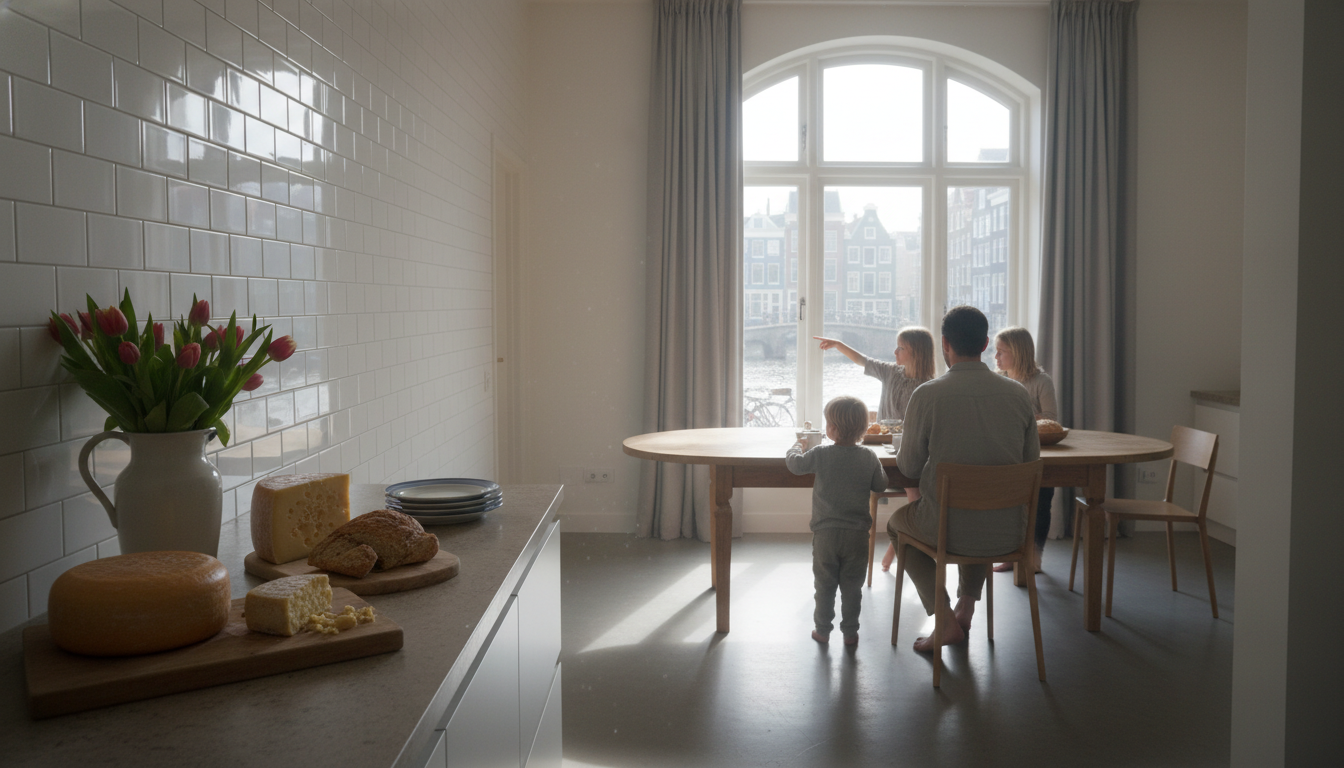
In our Amsterdam home swap, we had a full Dutch kitchen. Not a hotel kitchenette with a microwave and a sad hot plate—an actual kitchen with a proper stove, full-size refrigerator, dishwasher, and cupboards stocked with basics the host family left for us. Pasta, olive oil, Dutch stroopwafels that became everyone's obsession.
 A bright Amsterdam kitchen with white tiles, a wooden breakfast table where a family is eating, Dutc
Our morning routine became something I actually looked forward to. We'd walk to the Albert Heijn grocery store three blocks away—the kids loved the self-checkout machines—and stock up on fresh bread, hagelslag (chocolate sprinkles that Dutch kids eat on toast, which my nephew now considers essential to existence), and local cheeses. Breakfast for four cost maybe €8-10 ($9-11 USD). The hotel buffet alternative? €25-35 ($27-38 USD) per person.
Over two weeks, we saved roughly €700-900 ($750-970 USD) on breakfast alone. But honestly, the bigger win was that mornings weren't stressful. Nobody had to get dressed for a restaurant. Nobody had to negotiate with a picky eater in public. We just... had breakfast. Like normal people.
Finding the Right Amsterdam Neighborhoods for Home Swapping with Kids
Location matters differently when you're traveling with children. The tourist center around Dam Square? Gorgeous, but chaotic with little ones. The Red Light District? Obviously not your first choice for family accommodation.
Home swapping opens up neighborhoods that tourists rarely experience—and these are often the best places for families.
Jordaan: Our Personal Favorite
This is where we stayed, and I'd go back in a heartbeat. The Jordaan is a former working-class neighborhood that's become one of Amsterdam's most charming areas. Narrow streets, independent shops, and—crucially—relatively quiet compared to the center.
The Noordermarkt farmers market happens every Saturday, and it's genuinely fun with kids. Local farmers, organic produce, and the best apple cake I've ever eaten from a stall that's been there for decades. The kids ran around while we sipped coffee and felt like actual residents.
Playground situation: excellent. There's a small one tucked behind the Noorderkerk church, and a bigger one in Westerpark about a 10-minute walk away. The canals have low walls in most places, which made me nervous at first, but Dutch kids grow up around water—the locals assured us it's fine with normal supervision.
De Pijp: The Family-Friendly South
If the Jordaan is Amsterdam's artistic heart, De Pijp is its foodie soul. The Albert Cuyp Market runs daily and stretches for blocks—stroopwafels made fresh, Dutch herring if you're brave, and endless people-watching.
Sarphatipark sits right in the middle of the neighborhood. Perfect for burning off kid energy. Playgrounds, open grass, and a pond with ducks that will accept any bread-related offerings. Home swap options here tend to be slightly larger apartments, which helps when you need separate sleeping spaces.
Oud-West: The Local's Choice
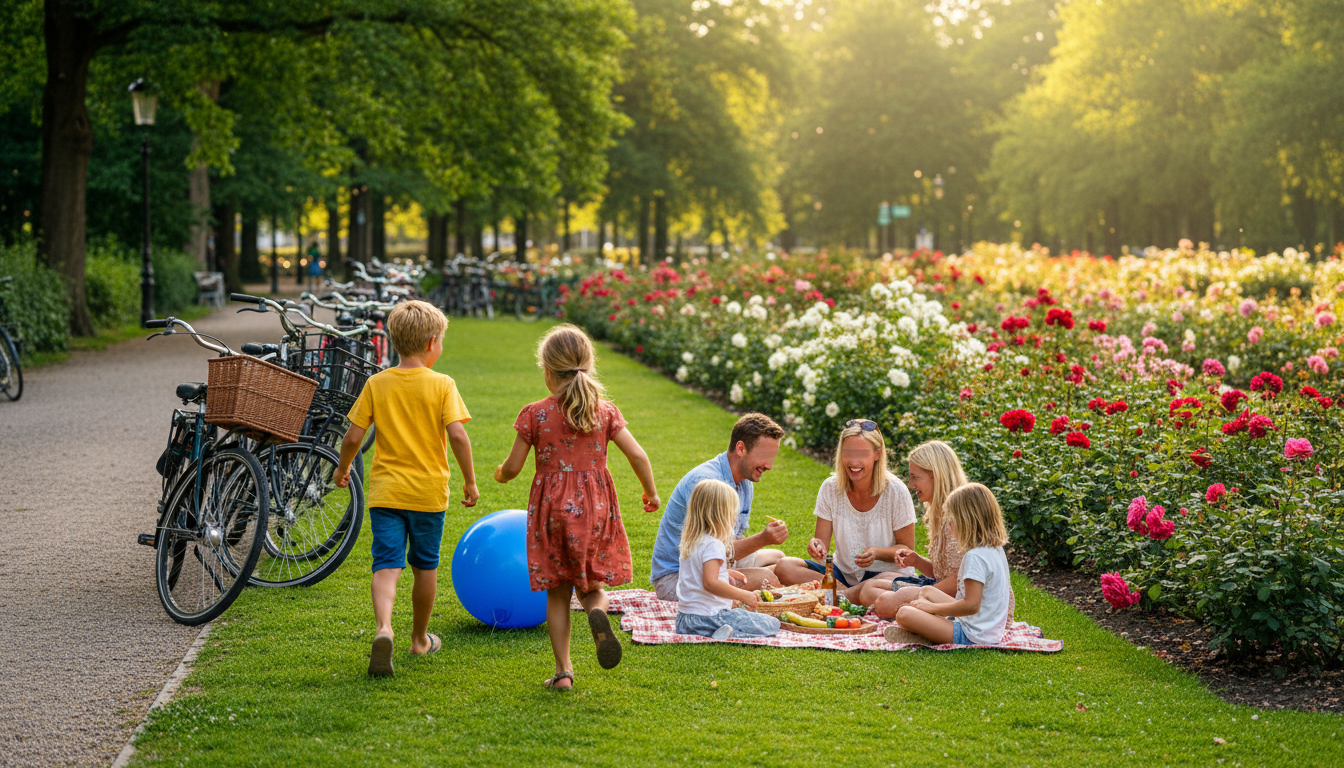
Less touristy, more residential, and genuinely lovely. Vondelpark—Amsterdam's biggest and best park—borders this neighborhood. We spent entire afternoons there. The kids discovered the free outdoor theater (summer only), the pancake house, and approximately seventeen different playgrounds.
Food options in Oud-West lean local. De Foodhallen is a covered food market with something for every palate, including the pickiest small humans. It's in a converted tram depot, which the kids found fascinating.
 Children playing in Vondelpark on a sunny afternoon, with Dutch families picnicking on the grass, bi
The Home Swap Advantage: Space That Actually Works
Hotel rooms are designed for sleeping. Home swap properties are designed for living. The difference becomes obvious within hours of arriving with children.
Our Amsterdam house had three bedrooms. The kids had their own room with bunk beds—the host family's children's room, complete with toys they'd left out for guests. This meant bedtime didn't end our evening. We could close their door, pour some wine, and actually talk without whispering.
The living room had space to spread out. Rainy afternoon? No problem. The kids built elaborate Lego structures (the hosts had an impressive collection) while we read books and watched the rain hit the canal. In a hotel, that same rainy afternoon would have meant climbing the walls.
And there was a washing machine. This sounds mundane until you've traveled with kids who go through three outfit changes daily. We did laundry twice during our two weeks. No hunting for laundromats, no paying €15 per load for hotel laundry service, no packing fourteen days worth of children's clothing.
Amsterdam Attractions That Actually Work for Kids
The city has more kid-friendly options than you'd expect from a place famous for its, uh, adult entertainment.
NEMO Science Museum
This place is spectacular. Five floors of hands-on exhibits designed specifically for children, housed in a building shaped like a ship. My nephew spent two hours in the water section alone, conducting "experiments" that were mostly just splashing. The rooftop terrace has city views and a café where parents can recover.
Tickets run about €17.50 ($19 USD) for adults, free for kids under 4. Worth every cent.
Artis Royal Zoo
One of Europe's oldest zoos, and it shows—in a good way. The grounds feel like a botanical garden that happens to have animals. The planetarium is included with admission, and the aquarium section kept my niece transfixed for ages.
Admission is €27 ($29 USD) for adults, €23 ($25 USD) for kids 3-9. Pricey, but you can easily spend a full day here.
Canal Boat Tours (The Kid-Friendly Ones)
Skip the party boats. Look for the smaller, open-top boats that let kids see over the sides. Several companies offer family-specific tours with commentary aimed at younger passengers. We did a 75-minute tour that cost about €18 ($19 USD) per adult, €10 ($11 USD) per child. The kids loved waving at people on bridges.
Vondelpark (Free and Essential)
I mentioned this earlier, but it deserves its own entry. Plan to spend multiple half-days here. Pack a picnic from your home swap kitchen, bring a ball or frisbee, and let the kids run. The playground near the Groot Melkhuis café is elaborate enough to occupy kids for hours.
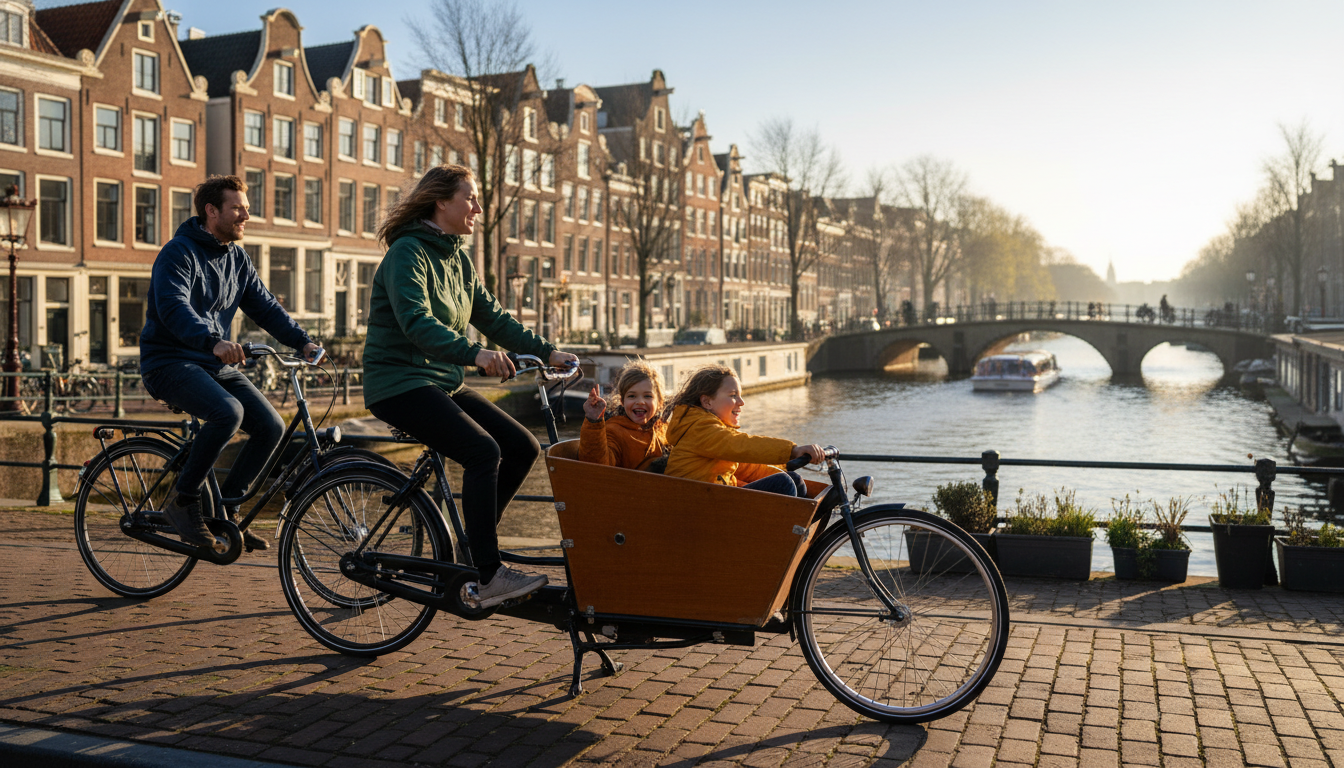 A family cycling along an Amsterdam canal on a sunny morning, parents on regular bikes and children
The Bike Situation: Yes, You Can Cycle with Kids in Amsterdam
Amsterdam is the world's cycling capital, and that includes families. You'll see parents biking with multiple children in cargo bikes (bakfietsen), toddlers in front seats, kids as young as four pedaling their own tiny bikes.
Our home swap hosts left us their family bikes—including a bakfiets that fit both kids in the front cargo area. This is common courtesy in the SwappaHome community, and it transformed our trip. We biked everywhere. To the grocery store. To museums. To parks. The kids thought it was the greatest adventure of their lives.
If your hosts don't have family bikes, rental shops throughout the city offer cargo bikes for about €35-45 ($38-48 USD) per day. MacBike and Black Bikes both have family options. Sounds expensive, but compare it to taxis or transit passes for a family of four.
One warning: Amsterdam cycling takes some adjustment. The bike lanes are busy, the rules are different, and Dutch cyclists are... confident. Start on quieter streets, practice in Vondelpark, and don't attempt rush hour until you've got the hang of it.
What to Ask Your Home Swap Host Before Arriving
The SwappaHome messaging system lets you communicate with hosts before confirming a swap. When you're traveling with kids, use this extensively.
Questions I always ask: Does the home have any child safety features? Stair gates, window locks, covered electrical outlets? Dutch homes often have steep stairs—knowing this in advance helps you prepare. Are there toys, books, or games suitable for my kids' ages? Many family homes leave out children's items for guests. Our hosts had a closet full of games and a shelf of English-language children's books. What's the sleeping arrangement? Bunk beds? A crib available? Air mattresses? How close is the nearest playground? Grocery store? Pharmacy? Locals know their neighborhoods intimately—their recommendations are gold. And are there any quirks about the home we should know? Old houses have character, which sometimes means tricky door locks or temperamental heating.
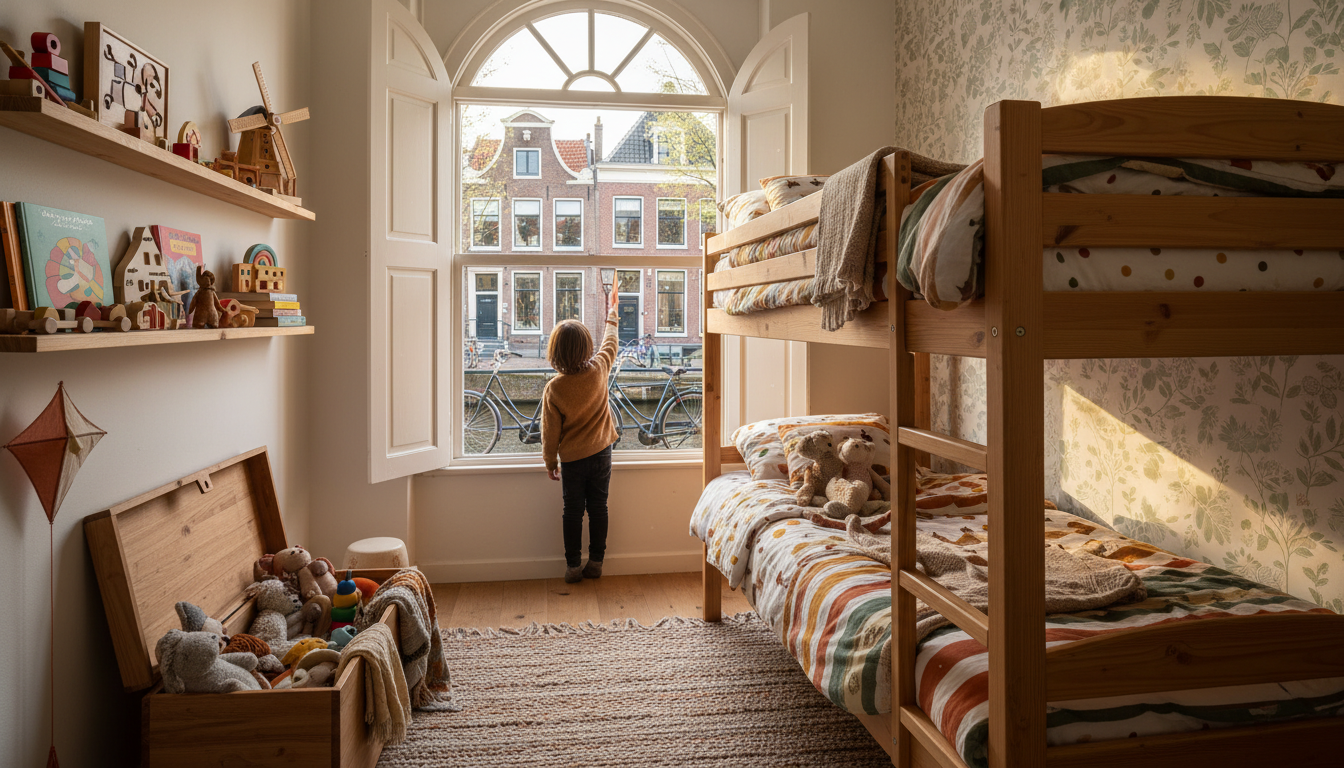 Interior of a Dutch childrens bedroom with bunk beds, colorful bedding, toys on shelves, and a windo
Managing Jet Lag and Sleep Schedules Through Home Swapping
Kids and jet lag are a brutal combination. The flexibility of a home swap property makes this significantly more manageable than a hotel.
When we arrived from San Francisco, the kids were wrecked. It was 3 PM Amsterdam time, but their bodies thought it was 6 AM. In a hotel, we'd have been stuck in a single room with exhausted, wired children. In our home swap, the kids crashed in their room while we unpacked and figured out the coffee machine. When they woke up disoriented at 2 AM, we could make them toast and warm milk without calling room service.
The first few days, we let the schedule be chaotic. Early breakfasts, afternoon naps, late dinners. Having a full kitchen and multiple rooms made this possible without losing our minds. By day four, everyone had adjusted.
The Trust Factor: Is Home Swapping Safe for Families?
I get this question constantly. You're staying in a stranger's home with your children—isn't that risky?
Here's my honest take after seven years and 40+ swaps: the home exchange community is remarkably trustworthy. SwappaHome has a verification system for member identity, and the review system creates accountability. People who trash homes or behave badly get reviewed accordingly, and their ability to swap effectively ends.
The mutual exchange aspect creates natural trust. Your host is often staying in YOUR home simultaneously, or they're part of the same community and value their reputation. It's not like renting from an anonymous corporation.
That said, I always recommend getting your own travel insurance that covers accommodation issues, and making sure your homeowner's insurance covers guests if you're hosting. SwappaHome connects members but doesn't provide insurance or damage coverage—that's on you to arrange if you want it.
In our Amsterdam swap, we met the hosts briefly during a video call before confirming. They had two kids similar in age to my niece and nephew. We exchanged tips about our respective cities. By the time we arrived, it felt like staying with friends of friends.
Budget Breakdown: What We Actually Spent
Let me get specific, because vague claims about "saving money" don't help anyone.
Our two-week Amsterdam trip with two adults and two children:
Accommodation: €0 ($0 USD) — home swap through SwappaHome
Flights: €1,800 ($1,940 USD) — SFO to Amsterdam, economy class for four
Food (groceries + restaurants): €650 ($700 USD) — we cooked most breakfasts and half our dinners
Activities: €380 ($410 USD) — NEMO, Artis Zoo, canal tour, Rijksmuseum, a few smaller attractions
Transportation: €95 ($102 USD) — mostly biking, occasional tram rides
Miscellaneous: €150 ($162 USD) — souvenirs, random treats, that one expensive coffee I couldn't resist
Total: Approximately €3,075 ($3,314 USD)
A comparable hotel-based trip? You're looking at around €5,775 ($6,230 USD) when you factor in accommodation at €3,500 and more restaurant meals without kitchen access.
The home swap saved us roughly €2,700 ($2,900 USD). That's a significant chunk of another vacation.
Making Your Amsterdam Home Swap Happen
If you're convinced—and I hope you are—here's how to actually do this.
First, list your own home on SwappaHome. Be detailed. Include photos of every room, mention your neighborhood's highlights, and specifically note if your home is kid-friendly. New members start with 7 free credits, which gives you flexibility while you build your hosting history.
Next, start browsing Amsterdam listings. Filter for properties that mention children, multiple bedrooms, or family-friendly features. Read reviews carefully—other families will mention relevant details.
Send personalized messages to potential hosts. Mention your kids, explain why their home appeals to you, and ask your questions. The best swaps start with genuine communication.
Book well in advance. Amsterdam is popular, and family-friendly properties get snapped up quickly. For summer travel, start looking six months ahead.
And finally, be a great guest. Leave the home cleaner than you found it. Write a thoughtful review. The home swap community thrives on reciprocity.
The Unexpected Benefits Nobody Mentions
Beyond the practical advantages, home swapping gave our Amsterdam trip something harder to quantify: normalcy.
Travel with kids can feel like a relentless march from attraction to attraction, punctuated by meltdowns and overpriced snacks. Staying in a real home changed the rhythm. We had slow mornings. Lazy afternoons when nobody felt like going anywhere. Family dinners at a real dining table, followed by board games while rain pattered on the windows.
The kids played with Dutch toys and looked at Dutch children's books. They learned that families in other countries live differently but also kind of the same. They asked questions about the photos on the walls and the magnets on the refrigerator.
When we left, my nephew asked if we could "live in Amsterdam sometimes." That's the highest compliment a kid can give a trip.
Home swapping isn't just about saving money or having more space—though it absolutely delivers both. It's about experiencing a place the way people actually live there. And when you're traveling with children, that authenticity makes all the difference.
Amsterdam is waiting. Your kids will love it. And somewhere in the city, a Dutch family's home is ready to welcome you.
Frequently Asked Questions
Is home swapping in Amsterdam safe for families with young children?
Home swapping through platforms like SwappaHome is generally very safe for families. The community relies on mutual trust, verified profiles, and detailed reviews from previous guests. Most family homes already have child-safety features since the hosts have kids too. I recommend a video call with your hosts beforehand and arranging your own travel insurance for extra peace of mind.
How much can families save with a home swap in Amsterdam versus hotels?
Families typically save €2,000-3,500 ($2,150-3,775 USD) on a two-week Amsterdam trip through home swapping. Hotel family rooms average €200-280 per night, while home swaps cost only SwappaHome credits (no cash). Additional savings come from cooking meals in your swap home's kitchen instead of eating every meal at restaurants.
What Amsterdam neighborhoods are best for home swapping with kids?
The Jordaan, De Pijp, and Oud-West neighborhoods are ideal for families doing home swaps in Amsterdam. These areas offer quiet residential streets, excellent playgrounds, local grocery stores, and easy access to family attractions. They're also close to Vondelpark, Amsterdam's best park for children, and have strong cycling infrastructure.
Do Amsterdam home swap properties include bikes for families?
Many Amsterdam home swap hosts leave their family bikes for guests, including cargo bikes (bakfietsen) that can carry children. This is common courtesy in the SwappaHome community but not guaranteed—always ask your hosts before arriving. If bikes aren't included, rental shops offer cargo bikes for €35-45 ($38-48 USD) per day.
What should I ask Amsterdam home swap hosts before traveling with children?
Ask about child safety features (stair gates, window locks), available toys and books for your kids' ages, sleeping arrangements (cribs, bunk beds), proximity to playgrounds and grocery stores, and any quirks about the home like steep stairs or tricky locks. Dutch canal houses often have narrow, steep staircases—knowing this helps you prepare and pack accordingly.

Published by
SwappaHome
SwappaHome Editorial Team
Home Exchange & Slow Travel Editorial
The SwappaHome Editorial Team brings together travel research, home-exchange community insights, and platform data to produce practical guides for first-time and experienced home swappers. Every article cites real platforms, current market rates, and verifiable city-level facts so readers can make informed decisions without guessing.
Ready to try home swapping?
Join SwappaHome and start traveling by exchanging homes. Get 7 free credits when you sign up!
Related articles

Bachelor and Bachelorette Parties in Singapore: The Complete Home Swap Group Guide for 2026
Planning a bachelor or bachelorette party in Singapore? Discover how home swapping lets groups of 6-12 stay together in luxury condos, saving thousands while partying in Marina Bay.

Cycling in Lisbon: 7 Home Swap Bike Tour Itineraries for Every Rider
Discover the best cycling routes in Lisbon with these home swap bike tour itineraries—from waterfront paths to hilltop adventures, all starting from your borrowed home.

Graduation Trip to Barcelona: How Home Swapping Gives New Graduates the Ultimate Celebration
Planning a graduation trip to Barcelona? Discover how home swapping lets new graduates explore Spain's most vibrant city without the hostel crowds or hotel costs.