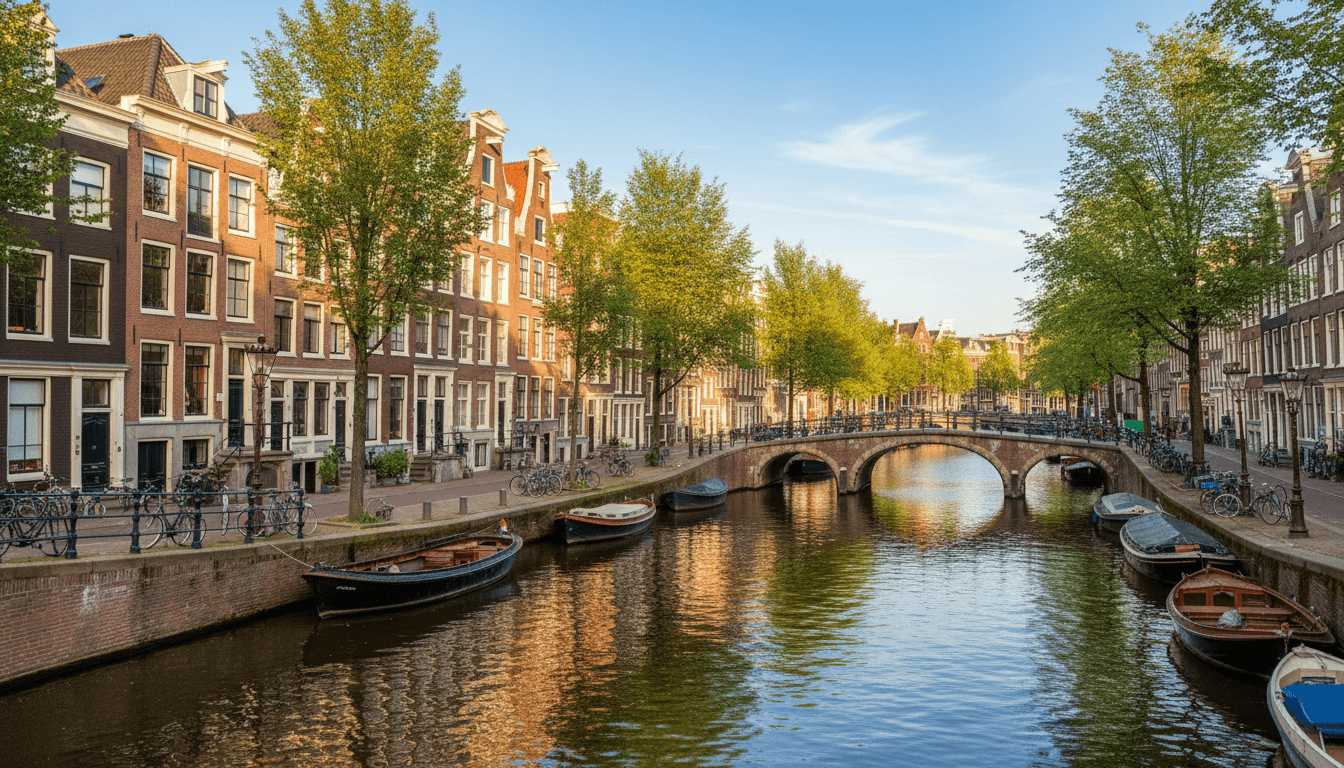
Home Swap Properties in Amsterdam: Insider Guide to Finding Your Perfect Dutch Exchange

SwappaHome Editorial Team
Home Exchange & Slow Travel Editorial
Discover where to find the best home swap properties in Amsterdam—from canal houses to cozy Jordaan apartments. Local tips from 7 years of Dutch exchanges.
I still remember the exact moment I fell in love with Amsterdam. Not the first time I visited—that was a blur of tourist crowds and overpriced hotel coffee. No, it was my third trip, when I woke up in a narrow canal house in the Jordaan, sunlight streaming through windows that hadn't changed much since the 1600s, and realized I could hear church bells mixing with bicycle bells outside. That's when I understood: finding the right home swap properties in Amsterdam isn't just about saving money. It's about actually living here.
Seven years and five Amsterdam exchanges later, I've learned that this city rewards those who know where to look. The difference between a forgettable swap and a life-changing one often comes down to neighborhood choice, timing, and knowing what questions to ask. So let me share everything I've figured out—sometimes the hard way—about scoring an incredible Amsterdam home exchange.
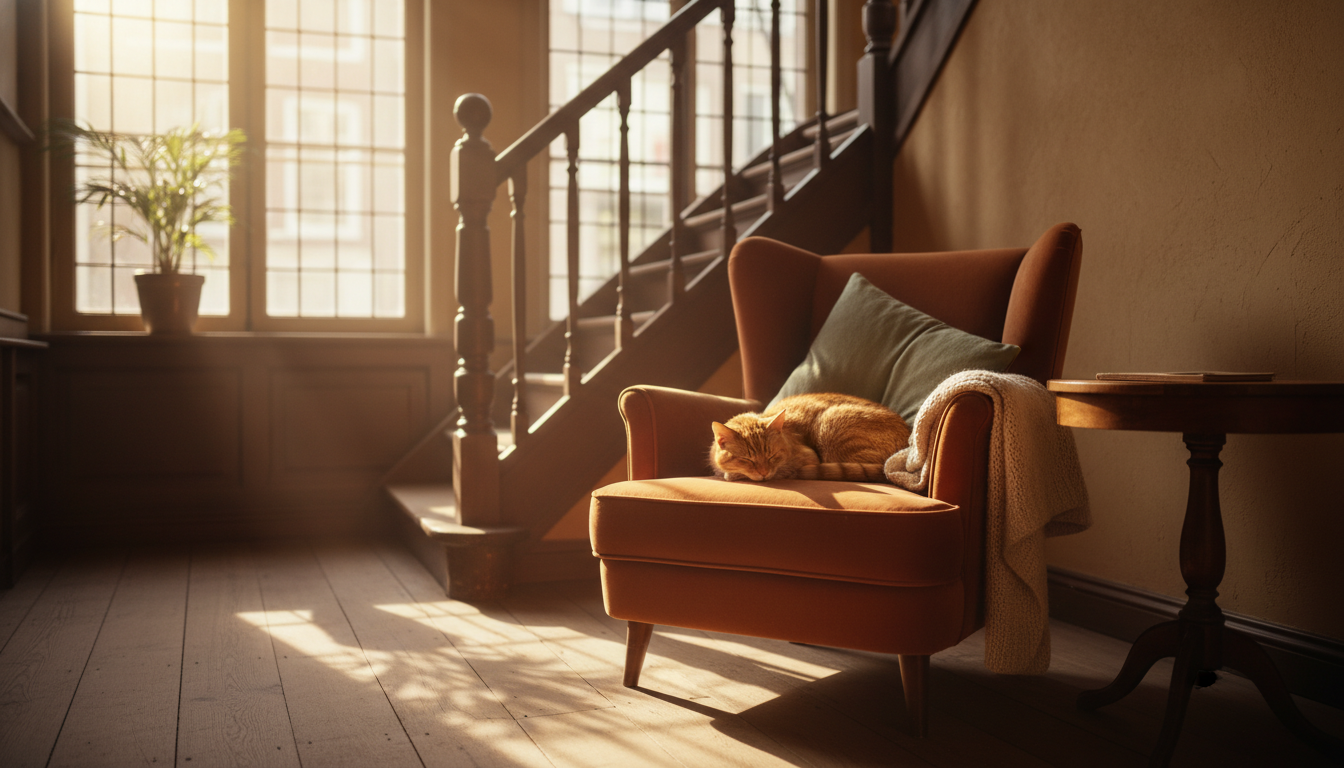 Morning light flooding through tall windows of a traditional Amsterdam canal house, with steep woode
Why Home Swap Properties in Amsterdam Are Worth the Search
Here's something most travel guides won't tell you: Amsterdam's hotel prices have gotten genuinely absurd. We're talking €250-400 per night for a decent central location, and even "budget" options in the center rarely dip below €150. During tulip season or King's Day? Forget it.
But the real issue isn't just cost—it's what you miss.
Hotels here cluster in a few tourist-heavy areas, which means you experience Amsterdam through a very narrow lens. You see the Red Light District, the Anne Frank House queue, the I Amsterdam sign crowds. You don't see the neighborhood bakeries, the hidden courtyards (hofjes), or the way locals actually spend their Saturday mornings.
Home swapping flips this entirely. My last Amsterdam exchange was in a two-bedroom apartment in De Pijp, above a cheese shop. The owner left me a hand-drawn map of her favorite spots—a café where the barista knew her order, a tiny Indonesian place with the best rijsttafel I've ever had, a secondhand bookshop that only opened on Wednesdays. None of this was in any guidebook. All of it made the trip.
And the economics? Over my 12-night stay, I would have spent roughly €3,600 at a comparable hotel. Instead, I used 12 SwappaHome credits—credits I'd earned hosting guests at my San Francisco apartment. The only cash I spent on accommodation was zero.
Best Amsterdam Neighborhoods for Home Exchange Properties
Not all Amsterdam neighborhoods are created equal for home swapping. Some have tons of inventory but feel touristy. Others are local gems but have fewer listings. Here's my honest breakdown after years of searching.
Jordaan: The Gold Standard for Amsterdam Home Swaps
If you picture the quintessential Amsterdam experience—narrow canal houses, independent boutiques, cozy brown cafés—you're picturing the Jordaan. This neighborhood in the western canal ring is hands-down the most sought-after area for home exchanges, and for good reason.
The properties here tend to be older, full of character, with those famously steep Dutch stairs (seriously, measure your suitcase before booking). You'll find everything from tiny studios in converted warehouses to multi-story canal houses with roof terraces. Expect listings to mention "gezellig" a lot—it's that untranslatable Dutch word for cozy conviviality, and Jordaan properties genuinely embody it.
What to know: Jordaan listings get snapped up fast, especially for spring and summer. I recommend reaching out to hosts 3-4 months ahead. Parking is essentially nonexistent here, so if you're planning to rent a car, look elsewhere.
Price context: Hotels in Jordaan average €280-350/night. A comparable Airbnb runs €180-250/night. Your home swap cost? Still 1 credit per night.
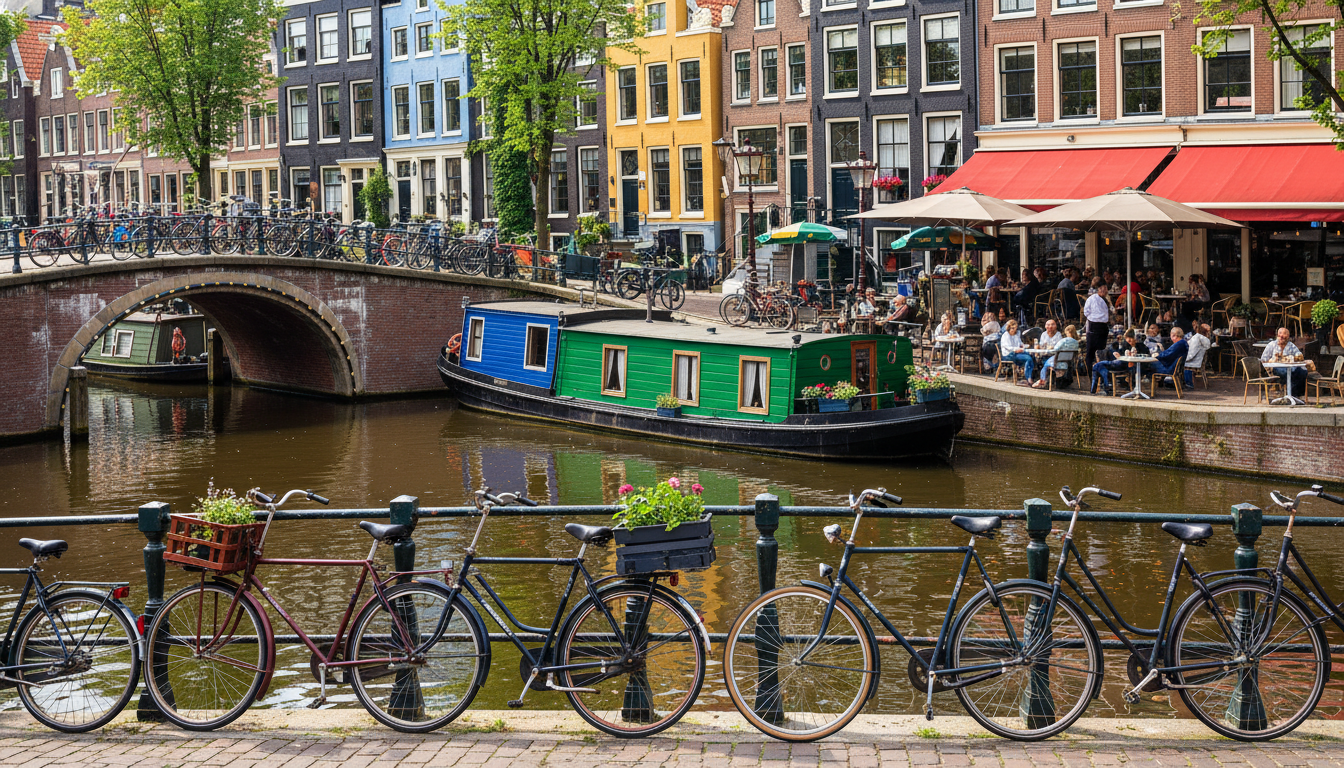 Charming Jordaan street scene with bicycles parked against a bridge railing, colorful houseboats in
De Pijp: Where Locals Actually Live
South of the center, De Pijp has transformed from a working-class neighborhood into one of Amsterdam's most vibrant areas—without losing its authentic edge. The Albert Cuypmarkt runs through its heart, a daily street market where you can buy fresh stroopwafels, Surinamese roti, Dutch cheese, and vintage clothes all within a few hundred meters.
Home swap properties in De Pijp tend to be slightly more modern than Jordaan—think early 1900s apartment buildings rather than 17th-century canal houses. You'll find more space for your money, better natural light, and easier access to Vondelpark and the museum district.
I've done two exchanges in De Pijp, and both times I found myself slipping into local rhythms surprisingly fast. Morning coffee at Scandinavian Embassy, afternoon browsing at the market, evening drinks at a neighborhood bar where nobody spoke English unless you started the conversation. That's the De Pijp experience.
What to know: The neighborhood gets lively (read: loud) on weekend nights, especially around Marie Heinekenplein. If you're a light sleeper, ask hosts about street noise.
Oud-West: The Underrated Sweet Spot
Here's my insider pick for best value in Amsterdam home exchanges: Oud-West. Sandwiched between Jordaan and Vondelpark, this neighborhood has all the charm with half the tourist traffic.
The main artery, Kinkerstraat, has undergone a renaissance in recent years—great restaurants, independent shops, and De Hallen, a converted tram depot that now houses a food hall, cinema, and boutique hotel. But wander into the residential streets and you'll find quiet, leafy blocks that feel miles from the chaos of Dam Square.
Properties here vary widely. You might find a spacious family apartment near Vondelpark, a converted artist's studio, or a traditional Dutch townhouse. The neighborhood attracts a lot of young professionals and creative types, so expect hosts who are well-traveled and enthusiastic about exchanging.
What to know: Oud-West has excellent tram connections to the center (lines 7, 17, and 19), making it practical even though it feels removed from tourist Amsterdam.
Amsterdam-Noord: For the Adventurous Swapper
Across the IJ river, Noord was industrial wasteland fifteen years ago. Now it's Amsterdam's creative frontier—think Brooklyn in 2010, but with better cycling infrastructure.
Home swap properties in Noord range from converted NDSM shipyard lofts to modern eco-friendly apartments in newly developed areas. The vibe is younger, edgier, and considerably more spacious than anything south of the river. You'll also find more houses with actual gardens, which is rare in central Amsterdam.
The catch? You're dependent on the free ferry to get to the center, which runs 24/7 but adds 15-20 minutes to every journey. For some people, that's a dealbreaker. For others (myself included), it's part of the charm—there's something magical about ending your night with a ferry ride across the moonlit IJ.
What to know: Noord is huge and varied. The areas around NDSM and the EYE Film Museum are most interesting for visitors. Avoid listings too far east unless you want a very local (read: suburban) experience.
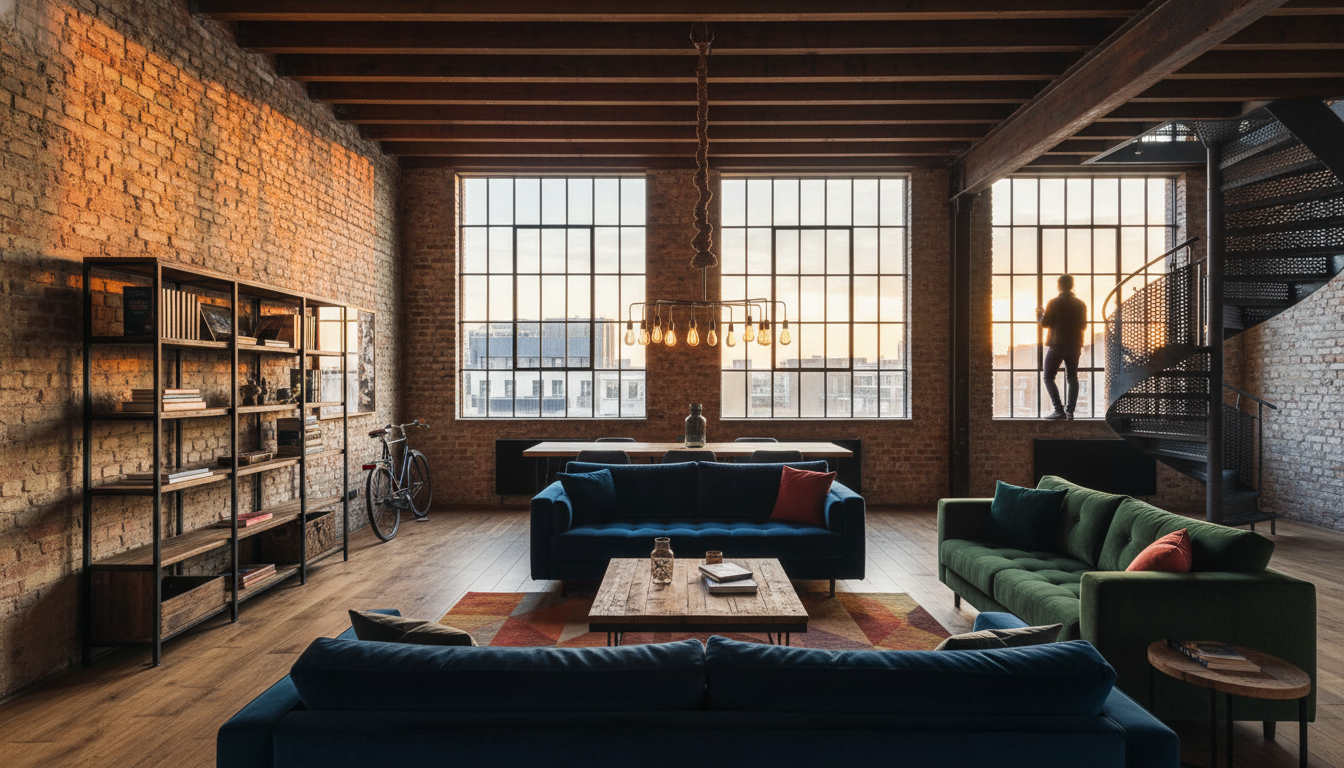 Industrial-chic interior of a converted warehouse apartment in Amsterdam-Noord, with exposed brick,
How to Find the Best Amsterdam Home Swap Listings
Alright, let's get practical. You know which neighborhoods to target—now how do you actually find great properties and convince hosts to swap with you?
Timing Your Amsterdam Home Exchange Search
Amsterdam has distinct seasons for home swapping, and your strategy should shift accordingly.
Peak season (April-August): Everyone wants to visit—tulips, warm weather, long evenings. Competition for listings is fierce. I start reaching out to potential hosts in January for April trips, February for summer. Yes, that early. The best properties get booked months ahead.
Shoulder season (March, September-October): My personal favorite time for Amsterdam. Weather is mild, crowds thin out, and you'll find more available listings. Hosts are also more flexible about dates.
Off-season (November-February): Fewer tourists means fewer hosts looking to travel, so inventory drops. But the hosts who ARE available tend to be more responsive and flexible. Plus, Amsterdam in winter has its own moody beauty—just pack layers.
King's Day (April 27): A special note here. If you want to experience Amsterdam's biggest party, you need to book your swap 4-6 months ahead. Many hosts leave town to escape the chaos, which actually increases availability—but demand from visitors is equally high.
Crafting a Request That Gets Responses
I've sent probably 200+ swap requests over the years. Here's what I've learned about what works.
First, personalize everything. I know it's tempting to copy-paste, but hosts can tell. Reference something specific about their listing—their book collection, their neighborhood, their cat. Show you actually read their profile.
Second, lead with what you offer. Before asking about their place, tell them about yours. Include your best photos, mention what's walkable from your home, highlight anything unique. You're not just requesting a favor—you're proposing a mutual exchange of experiences.
Third, be flexible on dates if you can. "We're hoping to visit Amsterdam sometime in late May or early June—what works best for you?" is much more likely to get a yes than "We need May 15-22 exactly."
Here's an actual message template I've used successfully:
Hi [Name],
Your Jordaan apartment looks absolutely perfect—I especially loved seeing your collection of vintage maps! I'm Maya, a travel writer based in San Francisco, and I'd love to propose an exchange.
My apartment is in the Mission District, walking distance to some of the city's best taquerias and coffee shops. I have a sunny one-bedroom with a small balcony overlooking a community garden. Happy to share photos and answer any questions.
I'm hoping to visit Amsterdam in late September, flexible on exact dates. Would you have any interest in visiting San Francisco around that time—or banking credits for a future trip?
Looking forward to connecting!
Notice I mentioned the credit option. On SwappaHome, hosts earn 1 credit per night when they host guests, regardless of where those guests are from. So even if a Dutch host isn't planning to visit San Francisco, they might still want to host you to earn credits for their own future travels. This opens up way more possibilities.
Red Flags to Watch For
Not every listing is what it seems. Over the years, I've learned to watch for a few things.
Vague location descriptions are a big one. If a listing says "central Amsterdam" but doesn't name the neighborhood, ask directly. "Central" can mean anything from Dam Square to a 30-minute tram ride.
Photos that look too professional can be a warning sign too. I know this sounds counterintuitive, but overly staged photos sometimes indicate a property that's primarily used for short-term rentals, not a genuine home. Look for signs of real life—books, personal photos, a jacket on a hook.
Hosts with no reviews give me pause. Everyone starts somewhere, but I'm more cautious with unreviewed hosts. I'll ask more questions, request a video call, and look them up on LinkedIn or other platforms.
And listings with strict rules lists? Some rules are reasonable, but if a host has 47 bullet points about what you can't do, that's a sign of either anxiety or bad past experiences. Either way, proceed carefully.
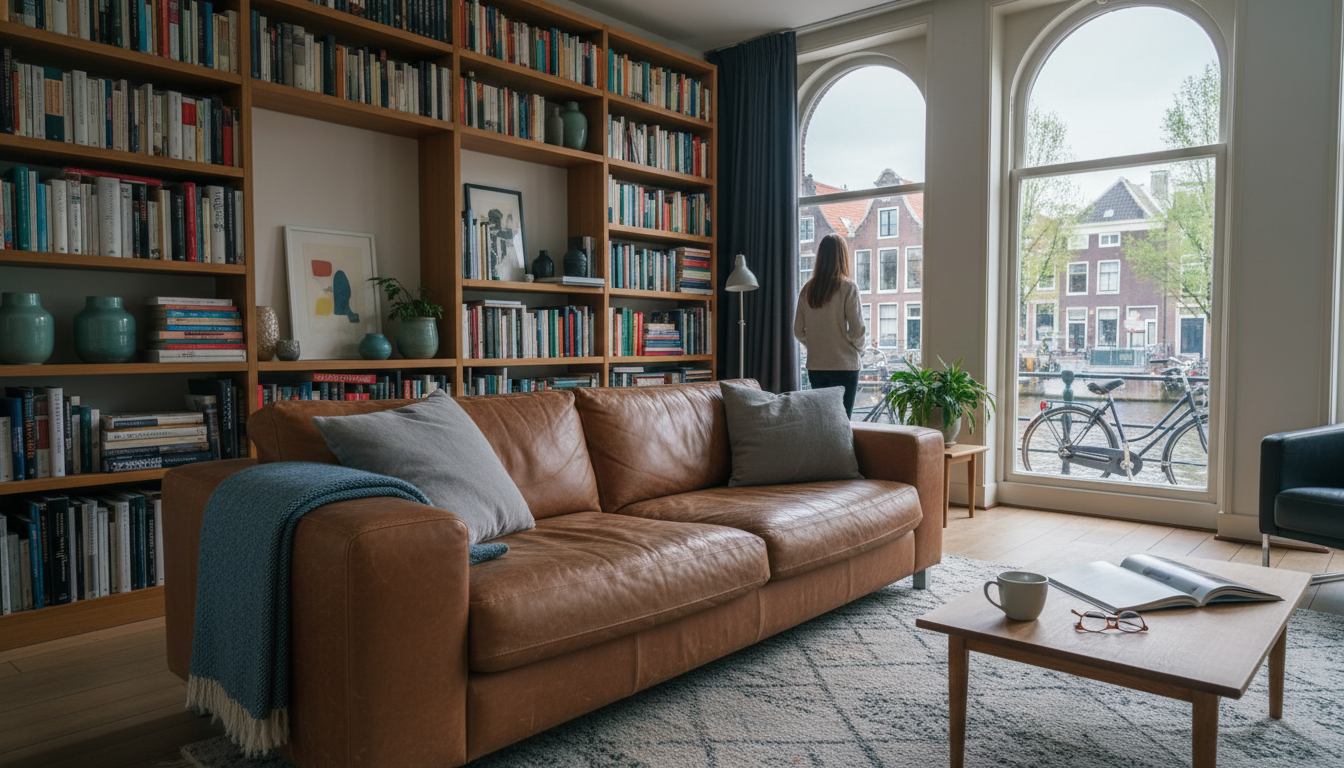 Cozy Dutch living room with built-in bookshelves, a worn leather sofa, and tall windows overlooking
What Amsterdam Home Swap Hosts Expect From You
Dutch culture has some specific norms that affect home exchanges. Understanding these will make your swap smoother and increase your chances of great reviews.
The Dutch Directness Thing
Dutch people are famously direct. This isn't rudeness—it's efficiency. If a host tells you "the shower pressure is weak" or "the neighborhood can be noisy," they're not apologizing or making excuses. They're giving you information so you can make an informed decision.
Return this directness. If you have questions or concerns, ask them plainly. Dutch hosts appreciate clarity over politeness.
Cleanliness Standards
Dutch homes tend to be immaculate, and hosts expect the same when you leave. This goes beyond basic tidying—think wiping down surfaces, taking out trash and recycling (which is sorted into multiple bins), and leaving dishes cleaner than you found them.
I always ask hosts: "What's your preference for cleaning before I leave?" Some want you to strip the beds, others don't. Some expect you to mop, others just want things tidy. Better to ask than assume.
The Bike Situation
Many Amsterdam hosts include bike access with their home swap—this is a huge perk, since bike rentals run €12-15/day. But Dutch bikes are different from what you might be used to. They're heavy, have coaster brakes (pedal backward to stop), and often no gears.
Ask your host for a quick tutorial if you're not experienced. Also ask about their lock situation—bike theft is rampant in Amsterdam, and hosts will be understandably upset if their bike disappears on your watch.
Quiet Hours and Neighbors
Amsterdam apartments have thin walls and close neighbors. Most buildings have unofficial quiet hours after 10 PM. If you're planning any kind of gathering, clear it with your host first—and keep it small.
I once had a host tell me, very directly, that their downstairs neighbor was "sensitive to noise" and that I should avoid wearing shoes inside after 9 PM. Seemed extreme at first, but I followed the guidance and had zero issues. When in Amsterdam...
Unique Amsterdam Home Swap Properties Worth Seeking Out
Beyond standard apartments, Amsterdam offers some genuinely unique home exchange opportunities. These require more advance planning but create unforgettable experiences.
Houseboats (Woonboten)
Amsterdam has roughly 2,500 houseboats, and a small but growing number are available for home swaps. Living on the water is a quintessentially Dutch experience—you'll wake to the gentle motion of passing boats, watch ducks paddle past your window, and understand why the Dutch have such a deep connection to water.
Practical considerations: houseboats are compact, often with low ceilings and narrow passages. They can be cold in winter and warm in summer. Plumbing and electricity work differently. And you'll need to be comfortable with the slight but constant movement.
I spent a week on a houseboat in the Jordaan canals two years ago and still think about it. There's nothing like having coffee on your deck while tourists on canal boats wave at you like you're a local attraction.
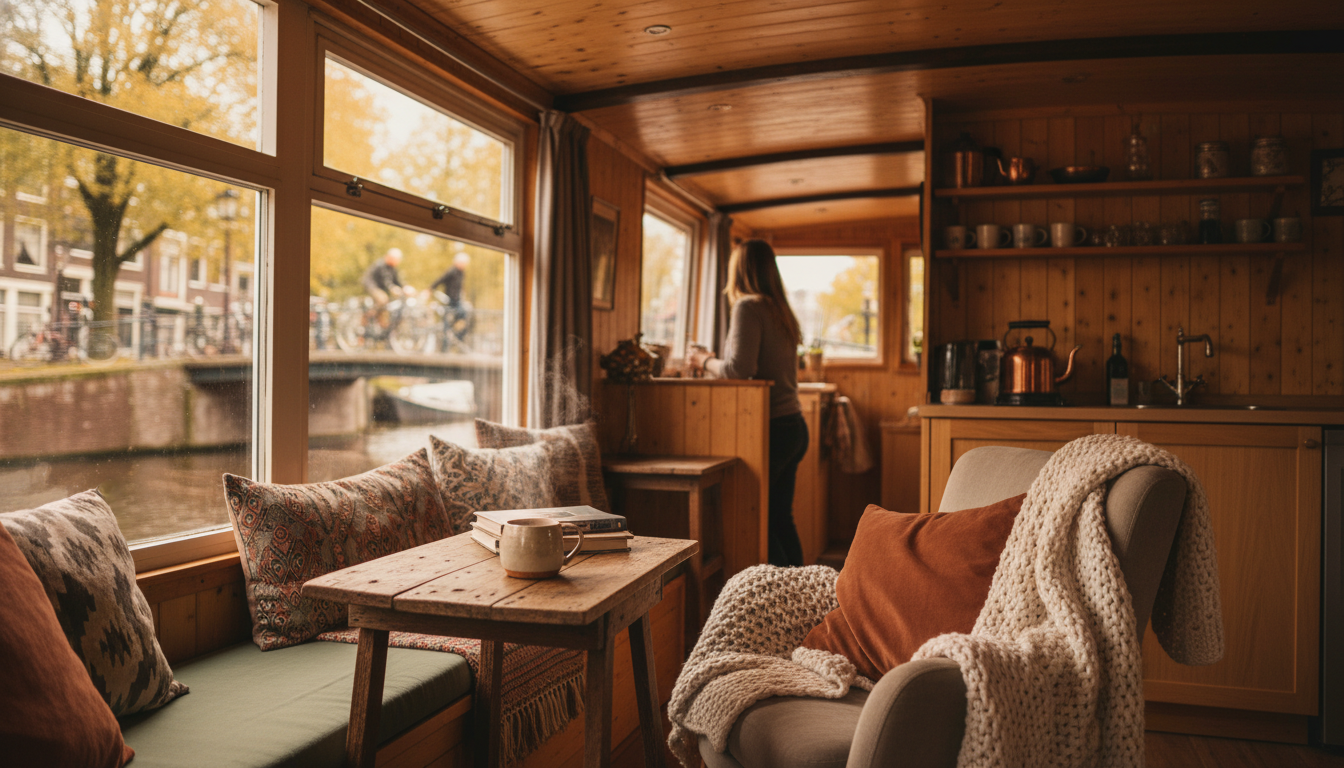 Interior of a cozy Amsterdam houseboat with wooden paneling, a small galley kitchen, and windows loo
Canal Houses with Gardens
Most Amsterdam canal houses are narrow and deep, with surprisingly large gardens hidden behind them. These back gardens are invisible from the street—private oases in the middle of the city.
If you're traveling in summer, prioritize listings that mention garden access. There's something almost surreal about sitting in a lush garden, surrounded by 17th-century buildings, hearing nothing but birds and the distant ring of bicycle bells.
Converted Industrial Spaces
Amsterdam's industrial heritage has left behind some incredible buildings now converted to residences. Former schools, factories, breweries, and even churches have become unique homes.
These tend to be in neighborhoods like Noord, Oost, or the edges of Westerpark. They offer more space than traditional Amsterdam apartments—often with dramatic high ceilings, original architectural details, and that industrial-chic aesthetic.
Amsterdam Home Swap Costs: What You'll Actually Spend
Let's talk real numbers. Home swapping eliminates accommodation costs, but Amsterdam isn't cheap for daily expenses.
Food: Budget €40-60/day for a mix of eating out and cooking at home. A coffee runs €3-4, lunch €12-18, dinner €25-45 at a mid-range restaurant. Grocery shopping at Albert Heijn is reasonable—figure €50-70/week for basics.
Transportation: Skip the tram pass if you're staying central and can borrow bikes. If you need public transit, a day pass is €8.50, or get an anonymous OV-chipkaart and load it with credit (€7.50 card + whatever you add).
Activities: Many museums offer free entry with an I Amsterdam City Card (€60/24 hours), but honestly, I rarely buy it. The Rijksmuseum is €22.50, Anne Frank House €16, Van Gogh Museum €22. Budget €50-100 for museums depending on your interests.
Total for a week: Without accommodation, I typically spend €400-600 for a week in Amsterdam, depending on how much I eat out and which museums I visit. Compare that to €2,000-3,000 including hotels, and the savings become obvious.
Making Your Amsterdam Home Swap Listing Attractive
Want to attract great Amsterdam hosts to your own home? Your listing needs to stand out.
Photos That Work
Shoot during golden hour (early morning or late afternoon) when light is warm and flattering. Show every room, including the bathroom—hosts want to know what they're getting. Include at least one shot of the view from your windows and one of your neighborhood.
Don't over-stage. A few personal items make your place feel like a home rather than a rental. But do declutter—nobody needs to see your mail pile or vitamin collection.
Description That Converts
Lead with what makes your place special, not square footage. "Wake up to hummingbirds on the balcony" beats "650 sq ft one-bedroom" every time.
Mention walkable amenities: "5-minute walk to BART, great Vietnamese restaurant on the corner, farmers market every Sunday." Dutch visitors especially appreciate knowing what's accessible without a car.
Be honest about limitations. Small kitchen? Steep stairs? Street noise? Say so. Hosts appreciate transparency and will trust your listing more.
Response Rate Matters
On SwappaHome, hosts can see your response rate and average response time. Aim to reply to inquiries within 24 hours, even if just to say you need more time to decide. A high response rate signals that you're an engaged, reliable member of the community.
My Favorite Amsterdam Home Swap Memory
I want to end with a story, because it captures why I keep coming back to home swapping in Amsterdam.
Three years ago, I exchanged with a retired Dutch couple who'd lived in the same Jordaan apartment for 40 years. Before they left for San Francisco, the husband—Willem—spent an hour walking me through the neighborhood. Not the tourist spots. His spots.
He showed me the bakery where he'd bought bread every Saturday for decades. The bench where he proposed to his wife. The hidden courtyard where elderly residents grew vegetables in shared plots. The bar where he still played cards with childhood friends.
That evening, I sat in their apartment, surrounded by their books and photos, and felt something I'd never felt in a hotel: I felt like I belonged here, temporarily, to this place and its stories.
That's what the best home swap properties in Amsterdam offer. Not just a place to sleep, but a window into how people actually live in one of the world's most remarkable cities.
If you're ready to find your own Amsterdam exchange, SwappaHome is where I'd start. The platform's credit system means you don't need to find a Dutch host who wants to visit your specific city—you can host anyone, earn credits, and use them for Amsterdam. It opens up so many more possibilities than direct swaps.
Now go find your own Willem. Your own canal house morning. Your own Amsterdam story.
Frequently Asked Questions
Is home swapping in Amsterdam safe?
Home swapping in Amsterdam is generally very safe, especially through platforms like SwappaHome where members are verified and reviewed. Dutch hosts tend to be trustworthy and direct about expectations. I recommend reading reviews carefully, communicating thoroughly before confirming, and considering personal travel insurance for extra peace of mind.
How far in advance should I book an Amsterdam home swap?
For peak season (April-August), start searching 3-4 months ahead—popular Jordaan and De Pijp listings book early. Shoulder season (March, September-October) offers more flexibility with 6-8 weeks notice. Off-season swaps can sometimes be arranged with just 2-3 weeks lead time.
Can I find family-friendly home swap properties in Amsterdam?
Absolutely. Many Amsterdam hosts have families and offer kid-friendly amenities like cribs, high chairs, and toys. Neighborhoods like Oud-West and De Pijp have parks, playgrounds, and family-oriented cafés. Filter for properties with multiple bedrooms and mention children in your request so hosts can confirm suitability.
What's included in a typical Amsterdam home swap?
Most Amsterdam home swaps include full kitchen access, linens and towels, WiFi, and often bicycle use. Some hosts leave welcome baskets with local treats. Utilities are typically included. Always confirm specifics like bike availability, parking (rare in central Amsterdam), and any house rules before finalizing your exchange.
How does the SwappaHome credit system work for Amsterdam exchanges?
SwappaHome uses a simple credit system: you earn 1 credit per night when hosting guests at your home, and spend 1 credit per night when staying elsewhere. New members receive 7 free credits to start. This means you can host visitors from anywhere, then use those credits for Amsterdam—no direct swap required.

Published by
SwappaHome
SwappaHome Editorial Team
Home Exchange & Slow Travel Editorial
The SwappaHome Editorial Team brings together travel research, home-exchange community insights, and platform data to produce practical guides for first-time and experienced home swappers. Every article cites real platforms, current market rates, and verifiable city-level facts so readers can make informed decisions without guessing.
Ready to try home swapping?
Join SwappaHome and start traveling by exchanging homes. Get 7 free credits when you sign up!
Related articles
Home Swap in Rome: Where to Find the Best Properties for Your Italian Exchange
Discover where to find the best home swap properties in Rome—from Trastevere's cobblestone charm to Testaccio's local authenticity. Real neighborhoods, real advice.

Home Swap in Bangkok: Where to Find the Best Properties for Free Stays
Discover where to find the best home swap properties in Bangkok—from riverside condos in Charoen Krung to family homes in Ari. Real neighborhoods, real savings.

Home Swap for Beach Lovers: 12 Coastal Destinations Ranked for 2026
Discover the best coastal destinations for home swapping in 2026. From Portugal's Algarve to Australia's Gold Coast, find your perfect beach exchange.