
Bali Home Swap Guide: Everything You Need to Know Before Your First Exchange

SwappaHome Editorial Team
Home Exchange & Slow Travel Editorial
Planning a Bali home swap? This complete guide covers neighborhoods, costs, timing, and insider tips to help you exchange your way to an unforgettable Indonesian adventure.
You step onto a private balcony in Ubud, coffee in hand, as the morning call to prayer drifts across the rice terraces. Mist lifts from the jungle canopy below. This isn't a resort—it's someone's actual home, and for the next two weeks, it's yours.
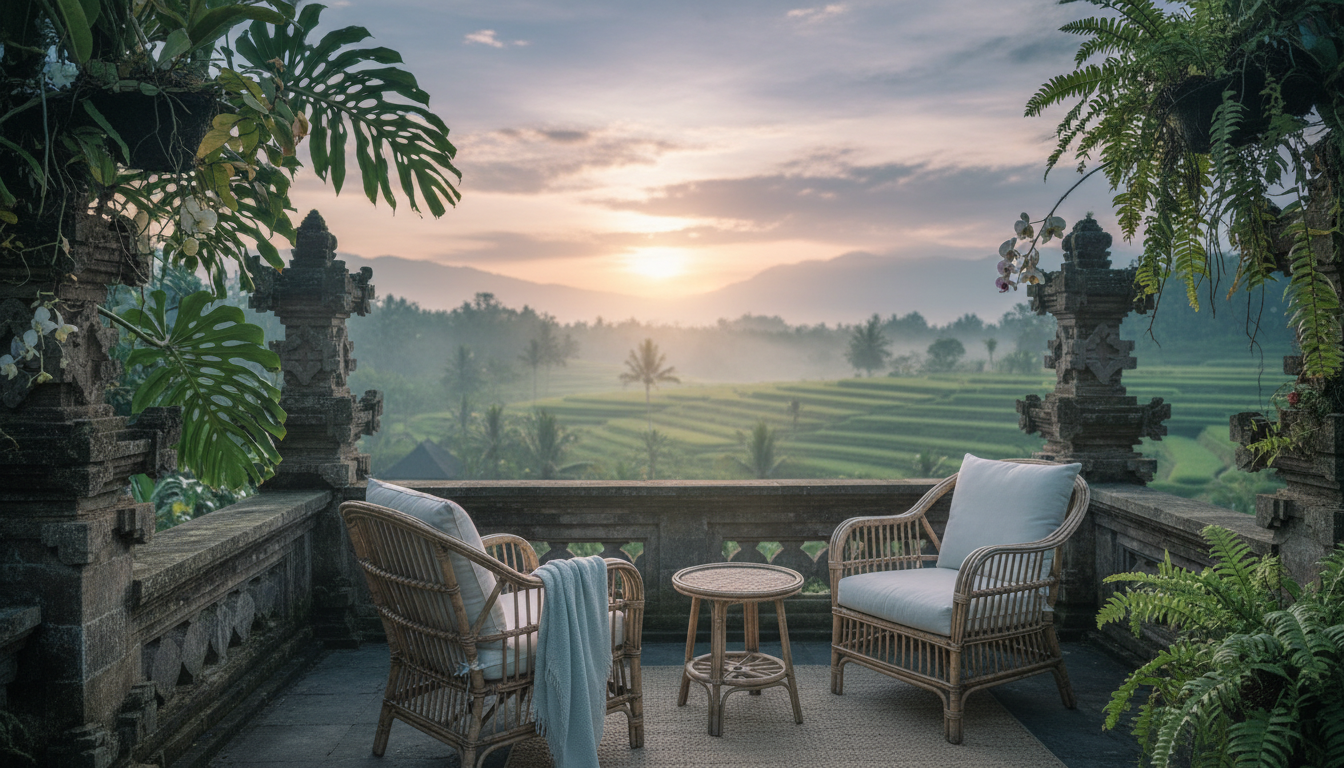 sunrise view from a traditional Balinese compound in Ubud, with terraced rice paddies in the distanc
A Bali home swap transforms the typical tourist experience into something far more intimate. You're living in a real Indonesian neighborhood, shopping at the local warung, waking to gamelan music from a nearby temple ceremony rather than a hotel alarm. Bali draws over 6 million visitors annually, yet most cycle through the same resort corridors and tourist-trap restaurants. Home exchange offers something radically different—the chance to live like a local in one of the world's most spiritually rich destinations, while saving thousands of dollars in the process.
The island currently lists 150+ active home exchange properties, ranging from traditional Balinese compounds in Sanur to sleek modern villas in Canggu's surf district. Here's everything you need to know to make your Bali home swap work.
Why Bali Works Exceptionally Well for Home Exchange
Not every destination suits the home swap model equally. Bali happens to tick nearly every box that makes exchanges successful—and a few unique ones that make it exceptional.
The practical reality: Bali has a substantial expat community. Thousands of digital nomads, remote workers, retirees, and location-independent entrepreneurs have established permanent or semi-permanent homes across the island. These residents travel frequently—back to their home countries, around Southeast Asia, for work—creating natural windows when their properties sit empty. Unlike purely tourist destinations where most properties are short-term rentals, Bali has genuine homes owned by people who actually want to travel themselves.
The cost differential makes Bali swaps particularly valuable. A mid-range villa in Seminyak—the kind with a private pool, full kitchen, and tropical garden—runs $150-250 per night on booking platforms. Over a two-week stay, that's $2,100-3,500 in accommodation alone. Through home exchange, that same villa costs nothing beyond your annual membership fee. For travelers from expensive cities like Sydney, Singapore, or San Francisco, the math becomes even more compelling: your home becomes valuable currency in a destination where your dollar (or credit) stretches remarkably far.
Then there's the cultural dimension. Bali isn't just a beach destination—it's a living spiritual landscape where daily offerings (canang sari) line every doorstep, temple ceremonies happen weekly, and the Balinese Hindu calendar dictates the rhythm of life. Staying in a real home means participating in this world rather than observing it through resort glass. Swap hosts often leave instructions for the neighborhood temple's upcoming odalan ceremony. Housekeepers sometimes invite guests to family cremation rituals—experiences no hotel concierge can arrange.
Best Neighborhoods for a Bali Home Swap
Bali isn't one place—it's a collection of radically different environments compressed into an island roughly the size of Delaware. Where you swap determines what kind of trip you'll have.
Ubud: The Cultural and Spiritual Heart
Ubud sits in the island's interior, surrounded by rice terraces, river valleys, and some of Bali's most important temples. This is where the Eat Pray Love crowd lands, but it's also where serious artists, yogis, and long-term expats have built genuine communities.
Home swap properties in Ubud tend toward traditional Balinese architecture—open-air living spaces, alang-alang thatched roofs, garden bathrooms with tropical plants growing through the shower. The Penestanan area, a short walk from central Ubud, has particularly strong exchange options: artists' compounds with studios, quiet family homes with jungle views, renovated traditional houses with modern kitchens.
Expect morning yoga classes at The Yoga Barn (drop-in 150,000 IDR, roughly $10), afternoon walks through Tegallalang rice terraces, dinners at warungs like Warung Biah Biah where nasi campur costs 35,000 IDR ($2.30). The Ubud Traditional Art Market opens daily at 8am, and the Sacred Monkey Forest is a 15-minute walk from most central properties.
Best for: travelers seeking spiritual retreat, artists, writers, yoga practitioners, those who prioritize culture over nightlife.
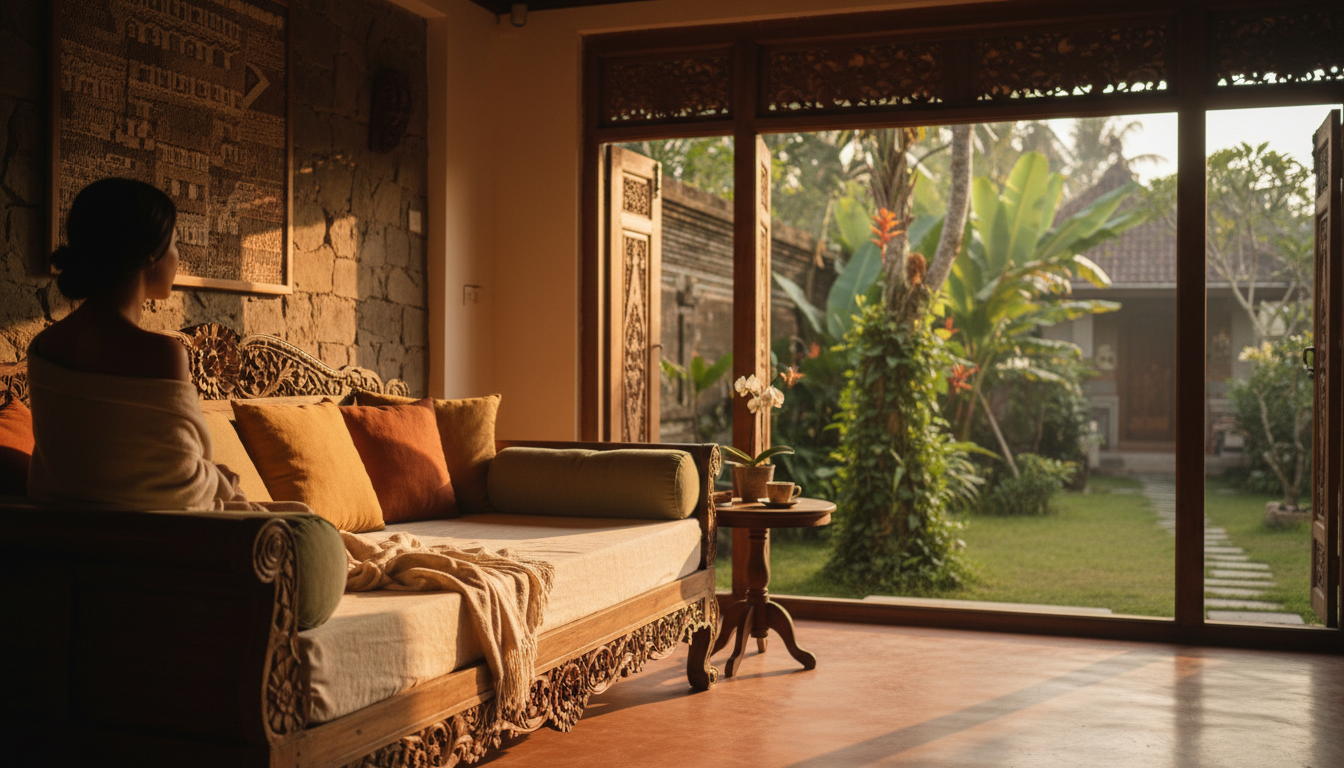 interior of a traditional Balinese house in Ubud with carved wooden furniture, open-air design, trop
Canggu: Surf Culture Meets Digital Nomad Hub
Canggu has transformed over the past decade from a quiet rice-farming village into Bali's most dynamic neighborhood for remote workers and surfers. The vibe is young, international, and perpetually caffeinated—think Melbourne coffee culture transported to the tropics.
Swap properties here range from compact apartments above surf shops to sprawling villas with infinity pools overlooking Echo Beach. The Berawa area offers the best balance: close enough to the beach and café scene (Crate Café, Milk & Madu, The Slow) but removed from the main road traffic. Pererenan, slightly north, feels more residential and has excellent value.
Expect $4-6 flat whites at specialty cafés, co-working spaces like Dojo Bali ($20/day), consistent surf breaks at Batu Bolong and Echo Beach, Saturday brunch crowds that rival any major city. The Old Man's beach bar anchors the social scene, and La Brisa offers sunset drinks with your feet in the sand.
Best for: remote workers, surfers, younger travelers, those who want Western conveniences with tropical surroundings.
Seminyak: Upscale Beach Life
Seminyak is Bali's most polished neighborhood—designer boutiques, fine dining, beach clubs, and villas that could grace architecture magazines. It's more expensive and more manicured than anywhere else on the island, but for travelers who want comfort without compromising on style, it delivers.
Home exchange properties in Seminyak tend toward the luxurious: private pools are standard, staff (housekeepers, gardeners, sometimes cooks) often come with the property, and you're walking distance to restaurants like Mama San, Sardine, and Barbacoa. The Petitenget area, named for its important temple, has the highest concentration of quality homes.
Expect beach club day passes at Potato Head ($30-50), sunset cocktails at Ku De Ta, shopping along Jalan Kayu Aya, and some of the island's best restaurants. Double Six Beach is the main swimming beach, and the Petitenget Temple holds regular ceremonies worth witnessing.
Best for: couples, design-conscious travelers, foodies, those who want beach access with urban amenities.
Sanur: Old-School Charm and Calm Waters
Sanur is where Bali tourism began—the first beachside hotels appeared here in the 1930s. Today it's the island's most relaxed coastal neighborhood, favored by families, older travelers, and anyone who finds Canggu too chaotic and Seminyak too pretentious.
The beach here is protected by a reef, creating calm, shallow waters ideal for swimming and paddleboarding (no big surf). A paved beachfront path stretches for kilometers, perfect for morning walks or bike rides. Swap properties tend toward established family homes with gardens rather than trendy villas—comfortable, unpretentious, genuinely livable.
Expect morning coffee at Genius Café, traditional Balinese dance performances at the Sindhu Beach stage, boat trips to Nusa Lembongan from the harbor, and some of the island's best-value local restaurants. The night market on Jalan Danau Tamblingan operates several evenings per week.
Best for: families with children, travelers seeking quiet, those who want easy access to the Nusa islands, anyone who prefers calm water to surf.
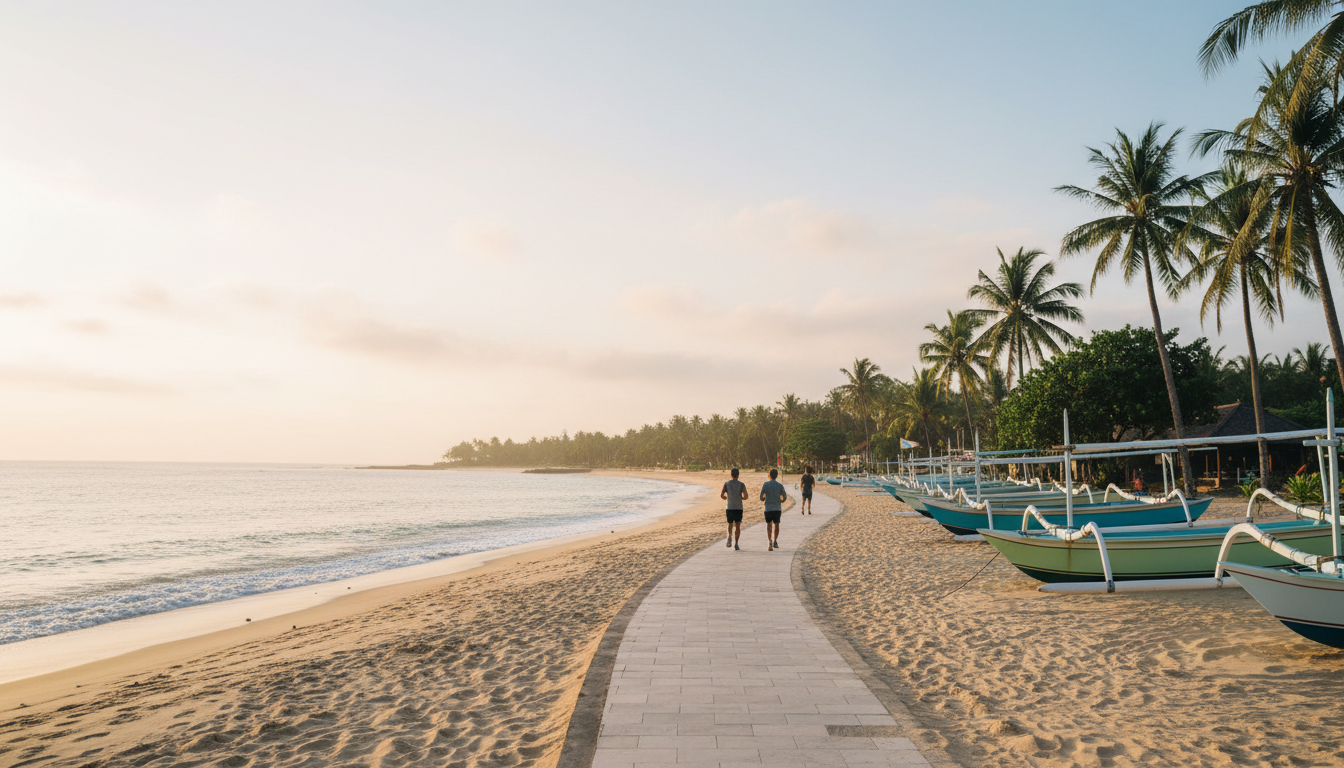 Sanur beachfront path at sunrise with local fishermens boats on the sand, calm turquoise water, palm
Uluwatu and the Bukit Peninsula: Dramatic Cliffs and World-Class Surf
The Bukit Peninsula, at Bali's southern tip, feels like a different island entirely. Dramatic limestone cliffs drop to hidden beaches, the surf breaks are legendary (Uluwatu, Padang Padang, Bingin), and the famous Uluwatu Temple perches on a cliff edge with sunset views that justify every cliché.
Swap properties here are sparser but often spectacular—cliff-edge villas with infinity pools, surfer compounds near the breaks, new developments in Pecatu offering modern design at lower density than the north. The tradeoff: you'll need a scooter or driver to get anywhere, and the area lacks the walkable café culture of Canggu or Seminyak.
Expect world-class surf (or world-class watching from cliff-top warungs), the Uluwatu Temple kecak fire dance at sunset (100,000 IDR), beach clubs at Sundays Beach Club and Omnia Dayclub, and some of the island's most dramatic natural scenery.
Best for: serious surfers, couples seeking dramatic scenery, travelers who prioritize natural beauty over convenience.
When to Plan Your Bali Home Swap
Bali's tropical climate creates distinct seasons that significantly impact your exchange experience.
Dry Season (April-October)
This is peak season for good reason. Humidity drops, rain becomes rare, and the island operates at full capacity. July and August are the busiest months—Australian school holidays, European summer vacations, and generally perfect weather create high demand.
For home swapping, dry season presents both opportunity and challenge. More travelers means more potential swap partners seeking your home. But it also means popular Bali properties get booked quickly, and you'll want to plan 3-6 months ahead for prime dates.
Expect minimal rain, lower humidity (though still tropical), crowded tourist areas, higher prices for everything from restaurants to drivers. The surf is generally better on the west coast (Canggu, Seminyak) during this season.
Wet Season (November-March)
The wet season brings daily afternoon thunderstorms, higher humidity, and dramatically lower tourist numbers. Many travelers avoid this period, but here's the thing: mornings are often beautiful, the storms pass quickly, and the island transforms into an even more lush, green paradise.
For home exchange, wet season offers advantages. Swap partners are easier to find because fewer people are competing for Bali properties. You'll have more flexibility with dates, and the island feels more authentically Indonesian without the tourist crowds. The surf shifts to the east coast (Sanur, Nusa Dua) during this season.
Expect afternoon rain (usually 1-3 hours), occasional all-day storms, lush vegetation, lower prices, thinner crowds, some beach erosion in exposed areas.
Nyepi and Balinese Holidays
Nyepi, the Balinese Day of Silence, falls in March or April (based on the lunar calendar). The entire island shuts down for 24 hours—no flights, no cars, no lights, no leaving your property. It's an extraordinary cultural experience if you're prepared, but a frustrating surprise if you're not.
Galungan and Kuningan, major Balinese Hindu holidays celebrating the victory of dharma over adharma, occur twice yearly (based on the 210-day Balinese calendar). The island decorates with penjor bamboo poles, ceremonies happen everywhere, and it's a magical time to experience authentic Balinese culture—but also busier with domestic tourism.
 Balinese penjor bamboo poles lining a village road during Galungan, decorated with offerings and pal
The Practical Side: Visas, Money, and Getting Around
Visa Requirements for Bali
Most nationalities can enter Indonesia with a Visa on Arrival (VOA), valid for 30 days and extendable once for another 30 days. The VOA costs 500,000 IDR (roughly $32) and can be paid in cash or card at Ngurah Rai International Airport.
For longer stays—which home exchange often encourages—you'll need to either do a visa run (fly to Singapore, Kuala Lumpur, or another nearby country and re-enter) or arrange a social/cultural visa (B211A) before arrival, which allows 60 days with extensions possible up to 180 days.
Worth noting: Indonesia has been tightening enforcement on visa overstays and working illegally on tourist visas. If you're planning to work remotely during your swap, understand that technically this exists in a gray area—though enforcement for quiet laptop work in your swap home is essentially nonexistent.
Money and Costs
Indonesia uses the Indonesian Rupiah (IDR). At current rates, $1 USD equals approximately 15,500 IDR. The large numbers take adjustment—a restaurant meal might cost 150,000 IDR, which sounds expensive until you realize it's about $10.
ATMs are everywhere in tourist areas, and most accept international cards (Visa and Mastercard work best). Wise or Revolut cards offer the best exchange rates. Many establishments in tourist areas accept cards, but cash remains essential for local warungs, markets, and smaller shops.
Typical costs for home swap travelers:
- Local warung meal: 30,000-50,000 IDR ($2-3.50)
- Mid-range restaurant: 150,000-300,000 IDR ($10-20)
- Fine dining: 500,000-1,000,000 IDR ($32-65)
- Scooter rental: 70,000-100,000 IDR/day ($4.50-6.50)
- Private driver: 600,000-800,000 IDR/day ($40-52)
- Yoga class: 150,000-200,000 IDR ($10-13)
- Temple entrance: 50,000-100,000 IDR ($3-6.50)
Getting Around
Bali has no public transportation system to speak of. Your options:
Scooter rental is how most long-term visitors get around. Rentals run 70,000-100,000 IDR per day, or 1,000,000-1,500,000 IDR per month. You'll need an international driving permit with motorcycle endorsement (theoretically—enforcement is inconsistent). The roads are chaotic but manageable once you adjust to the flow.
Grab and Gojek (ride-hailing apps) work throughout tourist areas. A Grab car from Canggu to Ubud costs around 200,000-250,000 IDR ($13-16). Gojek also offers motorbike taxis for shorter trips.
Private drivers make sense for day trips or airport transfers. Most expats have a regular driver they trust, and your swap host will likely have a recommendation. Full-day rates (8-10 hours) run 600,000-800,000 IDR.
Rental cars are available but often more trouble than they're worth given traffic and parking challenges. If you do rent, expect to pay 250,000-400,000 IDR per day for a basic car.
Setting Up Your Bali Home Swap: Step by Step
Creating a Listing That Attracts Bali Hosts
Bali residents receive dozens of swap requests. To stand out, your listing needs to demonstrate that you're a serious, trustworthy exchanger who will respect their home.
Photos matter enormously. Shoot in natural daylight, show every room, highlight any unique features (garden, view, workspace, kitchen equipment). Include neighborhood context—the café down the street, the nearby park, the local market.
Your description should paint a picture of daily life in your home. Don't just list amenities—describe the morning light in the kitchen, the neighbor's cat who visits the garden, the bakery that opens at 7am. Bali hosts are often experienced travelers themselves; they want to know what living in your space actually feels like.
Mention specifics that matter to Bali-based exchangers: reliable wifi (essential for remote workers), air conditioning or heating (depending on your climate), proximity to airports or transit, and any flexibility you have with dates.
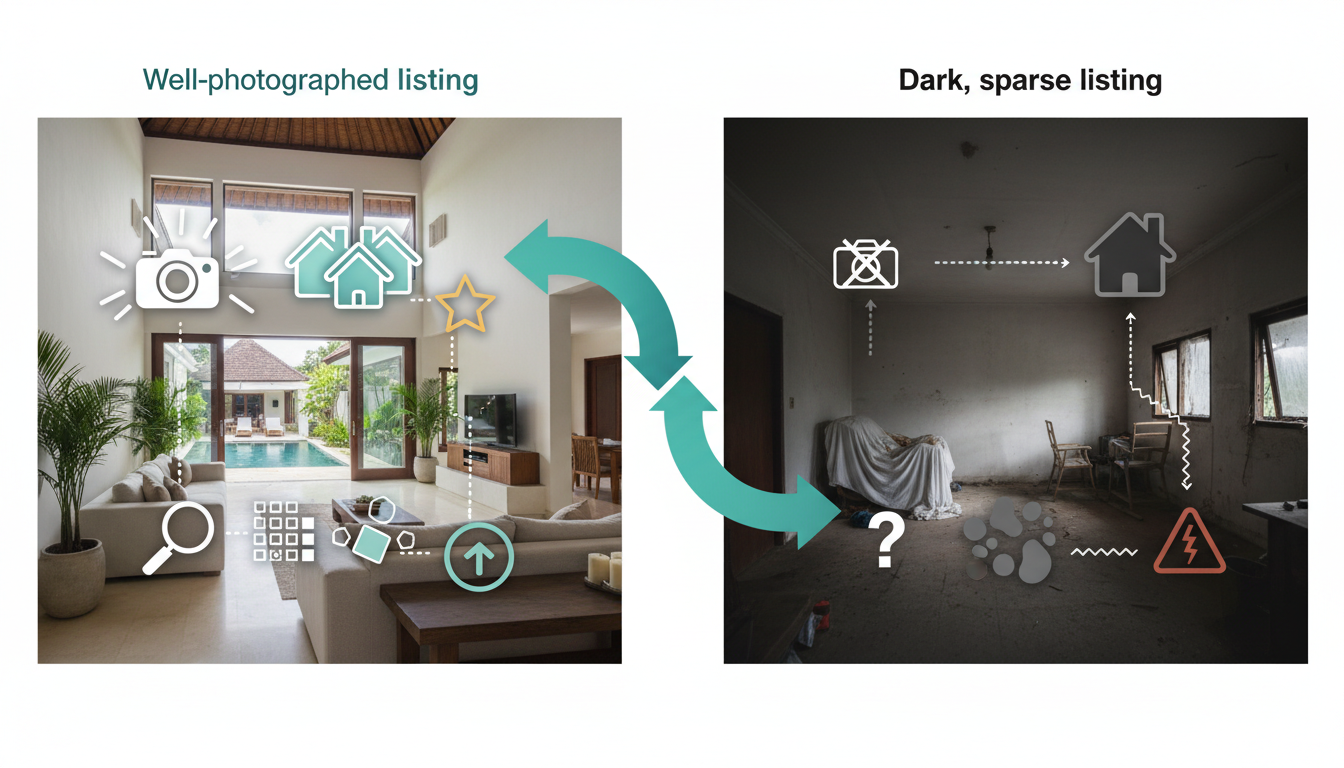 split-screen showing a well-photographed home listing with bright natural light and detailed descrip
Reaching Out to Bali Hosts
Don't wait for Bali hosts to find you—proactively search and send personalized requests. Generic messages get ignored; specific ones get responses.
A strong initial message references something specific about their property ("Your garden looks perfect for morning yoga"), explains why you want to visit Bali (not just "we love the beach"), shares relevant details about your home that might appeal to them, proposes specific dates or date ranges, and asks a question that invites dialogue.
Avoid mass-copied messages, vague requests ("sometime next year"), and focusing only on what you want without offering value.
What to Discuss Before Confirming
Once you've found a potential match, cover these specifics before committing:
Housekeeping and staff: Many Bali homes include regular housekeeping, gardening, or pool maintenance. Clarify what's included, whether you're expected to pay staff directly, and how often they come. Typical arrangements: housekeeping 2-3 times per week, gardener weekly, pool maintenance 2-3 times per week.
Utilities and bills: Electricity in Bali often runs on a prepaid token system (pulsa listrik). Understand how to top up, what typical monthly costs are (air conditioning significantly increases usage), and whether you're responsible for utilities during your stay.
Scooter or vehicle access: Some hosts include scooter use in the swap. Clarify insurance, helmet availability, and what happens if there's damage.
Emergency contacts: Get numbers for the host's regular driver, a trusted neighbor, the landlord (if the host rents), and any maintenance people for common issues.
House rules: Some properties have specific requirements—no shoes inside, no smoking, quiet hours due to neighbors. Better to know upfront than discover mid-stay.
Living Like a Local: Making the Most of Your Bali Swap
Embracing Balinese Daily Life
One of home exchange's greatest gifts is the opportunity to participate in local rhythms rather than observe them from a tourist bubble.
In Bali, this means learning to navigate the canang sari—the small palm-leaf offerings placed on doorsteps, shrines, and even car dashboards every morning. Your swap home will likely have a small shrine (sanggah) where the housekeeper or a neighbor places daily offerings. You don't need to participate, but understanding the practice enriches your experience.
Visit the local market (pasar) rather than the tourist-oriented grocery stores. Pasar Ubud opens before dawn and offers produce, spices, and prepared foods at a fraction of supermarket prices. Pasar Badung in Denpasar is the island's largest traditional market—overwhelming but fascinating. Your host can recommend the nearest pasar and the best time to visit.
Attend a temple ceremony if invited. Balinese Hinduism is remarkably open to respectful observers. Dress appropriately (sarong and sash, often available to borrow at temple entrances), stay quiet during prayers, and don't position yourself higher than the priests. The experience of witnessing a full temple ceremony—with gamelan music, elaborate offerings, and community participation—is unlike anything else in Southeast Asia.
Building Your Local Network
Your swap host's connections become your connections. Ask for recommendations for their regular driver (usually more reliable and fairly priced than random Grab drivers), favorite local warungs (not the tourist restaurants, the actual places they eat), a good massage therapist (Bali has world-class massage at remarkably low prices—expect to pay 150,000-250,000 IDR for an hour), and any regular activities—yoga studios, surf instructors, art classes, language exchanges.
We've seen this come up often in the SwappaHome community: these local connections transform trips. A recommendation from a resident carries weight that no TripAdvisor review can match.
Day Trips and Excursions Worth Your Time
With a home base established, you can explore the island without the pressure of maximizing every tourist moment.
From Ubud: Tirta Empul water temple for the purification ritual, Gunung Kawi ancient rock temples, the Tegallalang rice terraces (go early to avoid crowds), and the Campuhan Ridge walk at sunrise.
From Canggu/Seminyak: Tanah Lot temple at sunset, the Jatiluwih rice terraces (UNESCO World Heritage), and the Batukaru temple on Mount Batukaru's slopes.
From Sanur: The Nusa islands (Lembongan, Ceningan, and Penida) are 30-45 minutes by fast boat. Nusa Penida's dramatic cliffs and manta ray snorkeling justify at least a day trip, though an overnight stay allows for a more relaxed experience.
From Uluwatu: The Bukit Peninsula beaches (Padang Padang, Bingin, Dreamland), the Garuda Wisnu Kencana cultural park, and the Uluwatu Temple kecak dance at sunset.
Common Concerns About Bali Home Swaps (And Honest Answers)
"Is it safe to leave my home with strangers?"
This concern comes up constantly, and here's the honest truth: risk exists, but it's remarkably low in practice. Home exchange works because of mutual accountability—both parties have something valuable at stake. The review system creates consequences for bad behavior, and the community self-selects for responsible travelers.
That said, take sensible precautions. Lock away truly irreplaceable items (family jewelry, important documents). Consider what you'd be comfortable with a houseguest accessing, and secure anything beyond that. Leave clear instructions for your home's quirks so guests don't accidentally cause damage through ignorance.
"What about the language barrier?"
English is widely spoken in Bali's tourist areas and expat communities. Your swap host will almost certainly speak English fluently (they're listing on an international platform, after all). Basic Indonesian phrases help in local markets and warungs—"terima kasih" (thank you), "berapa?" (how much?), "tidak" (no)—but you can navigate daily life without them.
"What if something goes wrong with the property?"
Communication is your best tool. If something breaks or malfunctions, contact your host immediately. They'll know whether it's a simple fix, who to call for repairs, and how to handle the situation. Most issues—a tripped circuit breaker, a stuck door, a pool pump that needs attention—have straightforward solutions once you know who to contact.
SwappaHome facilitates the connection between members but doesn't provide insurance or damage coverage. Many experienced home exchangers recommend getting your own travel insurance that covers third-party liability, and some choose to add temporary coverage to their homeowner's insurance for the exchange period.
"How far in advance should I plan?"
For peak season (July-August, December-January), start searching 4-6 months ahead. Popular properties get booked quickly, and you'll want time to build rapport with potential hosts.
For shoulder season (April-June, September-November) or wet season (January-March), 2-3 months is usually sufficient. You'll have more options and more flexibility.
What Makes Bali Home Swap Different From Other Destinations
Certain patterns emerge about what makes destination-specific swapping work. Bali has characteristics that set it apart.
The staff question is unique to Bali and similar destinations. Many homes come with housekeepers, gardeners, or pool staff who continue working during your stay. This feels luxurious—and it is—but it also means navigating employer-employee relationships in a culture you're still learning. Tip generously (100,000-200,000 IDR per week for regular staff is appropriate), be respectful of their schedules, and understand that they may have worked for your host for years and know the property better than you ever will.
The spiritual dimension adds richness that purely secular destinations lack. You're not just staying in someone's house—you're participating in a home that exists within Bali's intricate religious and cultural framework. The offerings, the ceremonies, the relationship with neighbors and temples—all of this becomes part of your experience in ways that don't happen in, say, a Barcelona apartment swap.
The value proposition is exceptional. Bali offers first-world amenities (fast wifi, excellent restaurants, quality healthcare) at developing-world prices. A home swap here doesn't just save you accommodation costs—it gives you access to a lifestyle that would be prohibitively expensive in most Western countries.
Getting Started: Your Bali Home Swap Action Plan
Here's what actually works, based on patterns from successful Bali exchanges:
Three months before travel: Create or update your SwappaHome listing with fresh photos and detailed descriptions. Search for Bali properties in your preferred neighborhood and dates. Send personalized messages to 5-10 potential matches.
Two months before: Follow up with interested hosts, narrow down to your top choices, and confirm your exchange. Discuss all the practical details (staff, utilities, transportation, house rules). Book your flights once the swap is confirmed.
One month before: Exchange detailed arrival information, emergency contacts, and house guides. Arrange airport pickup if your host has a regular driver. Start preparing your own home for your incoming guests.
One week before: Final check-in with your host, confirm any last-minute details, and share your travel itinerary. Prepare a welcome guide for your incoming guests with local recommendations and house instructions.
The rice terraces will still be there whether you stay in a resort or a swap home. The temples will hold their ceremonies regardless. But your experience of Bali—the daily rhythms, the local connections, the sense of belonging rather than visiting—transforms completely when you have a real home to return to each evening.
Frequently Asked Questions
Is home swapping in Bali safe for first-time exchangers?
Bali is one of the more accessible destinations for first-time home swappers. The large expat community means many hosts are experienced exchangers themselves, English is widely spoken, and the island has well-developed tourist infrastructure. Start with a shorter exchange (one week) to build confidence, communicate thoroughly with your host beforehand, and take standard precautions like securing valuables and getting appropriate travel insurance.
How much can I save with a Bali home swap compared to hotels or villas?
Typical savings range from $2,000-5,000 for a two-week stay. A mid-range villa in Seminyak or Canggu costs $150-250 per night on rental platforms, while comparable Ubud properties run $100-180 per night. Through home exchange, your only cost is the annual SwappaHome membership fee, plus whatever you'd normally spend on your swap partner's utilities during their stay in your home.
What's the best time of year for a Bali home swap?
Dry season (April-October) offers the best weather, with July-August being peak demand. For easier swap matching and lower crowds, consider shoulder season—April-June or September-October. Wet season (November-March) brings afternoon storms but also dramatically fewer tourists and easier swap availability. Avoid the week of Nyepi (Balinese New Year, usually March) unless you specifically want to experience the Day of Silence.
Do I need a scooter to get around during my Bali home swap?
It depends on your neighborhood and comfort level. In walkable areas like central Ubud, Sanur, or Seminyak, you can manage with walking and occasional Grab rides. In Canggu, Uluwatu, or more spread-out areas, a scooter significantly improves quality of life. Many swap hosts include scooter access—ask during your pre-swap discussions. If you're not comfortable on a scooter, budget 200,000-400,000 IDR daily for Grab rides or arrange a regular driver.
Can I work remotely during a Bali home swap?
Bali has become a major digital nomad hub, and most swap properties have reliable wifi suitable for remote work. Confirm internet speed with your host beforehand—aim for at least 20-50 Mbps for video calls. Canggu and Ubud have the best co-working options if you need backup. Note that technically working on a tourist visa exists in a gray area, though enforcement for quiet laptop work in private homes is essentially nonexistent.

Published by
SwappaHome
SwappaHome Editorial Team
Home Exchange & Slow Travel Editorial
The SwappaHome Editorial Team brings together travel research, home-exchange community insights, and platform data to produce practical guides for first-time and experienced home swappers. Every article cites real platforms, current market rates, and verifiable city-level facts so readers can make informed decisions without guessing.
Ready to try home swapping?
Join SwappaHome and start traveling by exchanging homes. Get 7 free credits when you sign up!
Related articles
Bachelor and Bachelorette Parties in Singapore: The Complete Home Swap Group Guide for 2026
Planning a bachelor or bachelorette party in Singapore? Discover how home swapping lets groups of 6-12 stay together in luxury condos, saving thousands while partying in Marina Bay.

Cycling in Lisbon: 7 Home Swap Bike Tour Itineraries for Every Rider
Discover the best cycling routes in Lisbon with these home swap bike tour itineraries—from waterfront paths to hilltop adventures, all starting from your borrowed home.

Graduation Trip to Barcelona: How Home Swapping Gives New Graduates the Ultimate Celebration
Planning a graduation trip to Barcelona? Discover how home swapping lets new graduates explore Spain's most vibrant city without the hostel crowds or hotel costs.