
How to Visit Bali for Free with Home Exchange: The Complete 2026 Guide

SwappaHome Editorial Team
Home Exchange & Slow Travel Editorial
Skip the $150/night villas. Home exchange in Bali lets you stay in Ubud rice field houses and Seminyak beach pads for zero accommodation cost. Here's exactly how.
Picture this: you arrive at a villa in Tegallalang as roosters crow and gamelan music drifts across terraced rice paddies. On the balcony railing sits a small Balinese offering—flowers, incense, a few grains of rice. The morning mist hasn't burned off yet. And you haven't paid a single rupiah for this moment.
That's the reality of visiting Bali through home exchange. Thousands of travelers are discovering it beats the $150-300/night villa prices that have made the Island of the Gods increasingly expensive for everyone else.
Here's the thing about Bali home exchange that surprises most people: you're rarely swapping directly with a Balinese family. More often, you're hosting someone from Jakarta, Singapore, or Melbourne in your home city, earning credits, then spending those credits to stay in a Bali property listed by expats, digital nomads, or Indonesians with second homes on the island. The math is simple—one night hosting equals one credit, one credit equals one night anywhere. Including that three-bedroom villa in Canggu with the infinity pool.
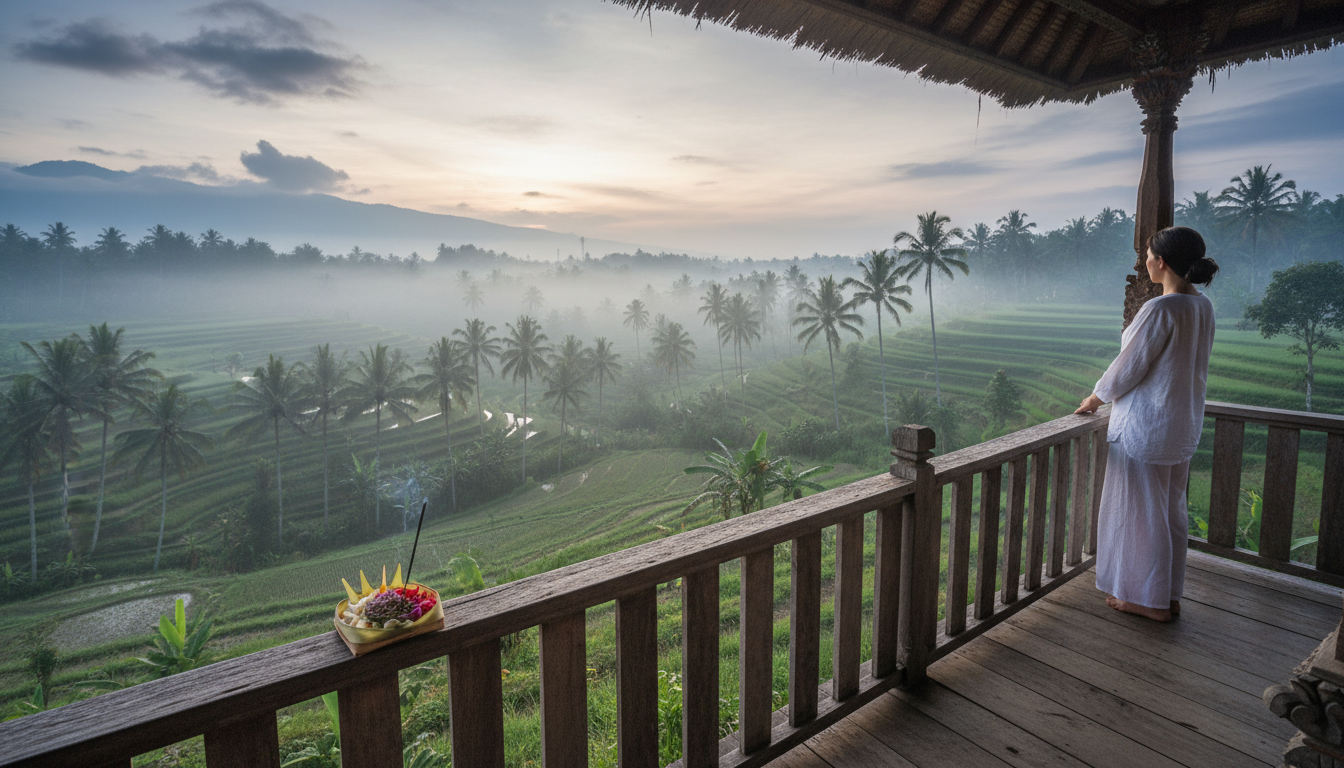 sunrise view over Tegallalang rice terraces from a traditional Balinese house balcony, with morning
Why Bali Home Exchange Beats Hotels and Villas in 2026
The honest truth about Bali accommodation costs? They've nearly doubled since 2019. A decent villa in Seminyak that ran $80/night pre-pandemic now lists at $150-180. Ubud's boutique hotels have pushed past $200. Even basic guesthouses in Sanur ask $50-70 during high season.
Home exchange sidesteps this entirely.
The SwappaHome community has over 340 active Bali listings as of early 2026, ranging from modest one-bedroom apartments in Denpasar to jaw-dropping four-bedroom compounds in Pererenan with staff quarters and private temples. All cost the same: one credit per night.
The savings compound quickly. A two-week Bali trip in a mid-range villa typically runs $2,100-2,500 in accommodation alone. Through home exchange, that same trip costs you the credits you earned by hosting travelers in your own home—plus SwappaHome's membership fee of around $150/year. Even factoring in that membership, a family of four saves $2,000+ on a single Bali trip.
But cost isn't the only advantage. Home exchange properties in Bali tend to be actual homes—with full kitchens, laundry facilities, and the kind of space that hotels simply don't offer. Travelers frequently mention having access to scooters, surfboards, yoga mats, and even relationships with local warungs where hosts have running tabs.
Best Areas in Bali for Home Exchange Properties
Bali isn't one destination—it's at least a dozen distinct regions, each with radically different vibes, prices, and home exchange availability.
Canggu: The Digital Nomad Hub
Canggu has the highest concentration of home exchange listings in Bali, and it's not close. The area between Batu Bolong Beach and Echo Beach attracts remote workers and entrepreneurs who've bought or rented properties specifically designed for temporary living—meaning they're perfectly set up for exchange.
Expect modern villas with dedicated workspaces, fast fiber internet (50-100 Mbps is standard), and proximity to the famous Canggu café scene. Crate Café, Milk & Madu, The Shady Shack—all within scooter distance of most listings.
The downside? Traffic on Jalan Raya Canggu has become genuinely terrible. Budget 30-45 minutes to reach Seminyak during rush hour, despite it being only 8 kilometers away.
Best for: remote workers, surfers, younger travelers, anyone who wants nightlife options.
Ubud: Spiritual Center with Surprising Variety
Ubud listings tend toward two extremes: budget-friendly apartments in town near the Ubud Market and Monkey Forest, and spectacular villa compounds in surrounding villages like Penestanan, Sayan, and Keliki. The latter often feature those iconic rice field views that dominate Bali Instagram feeds.
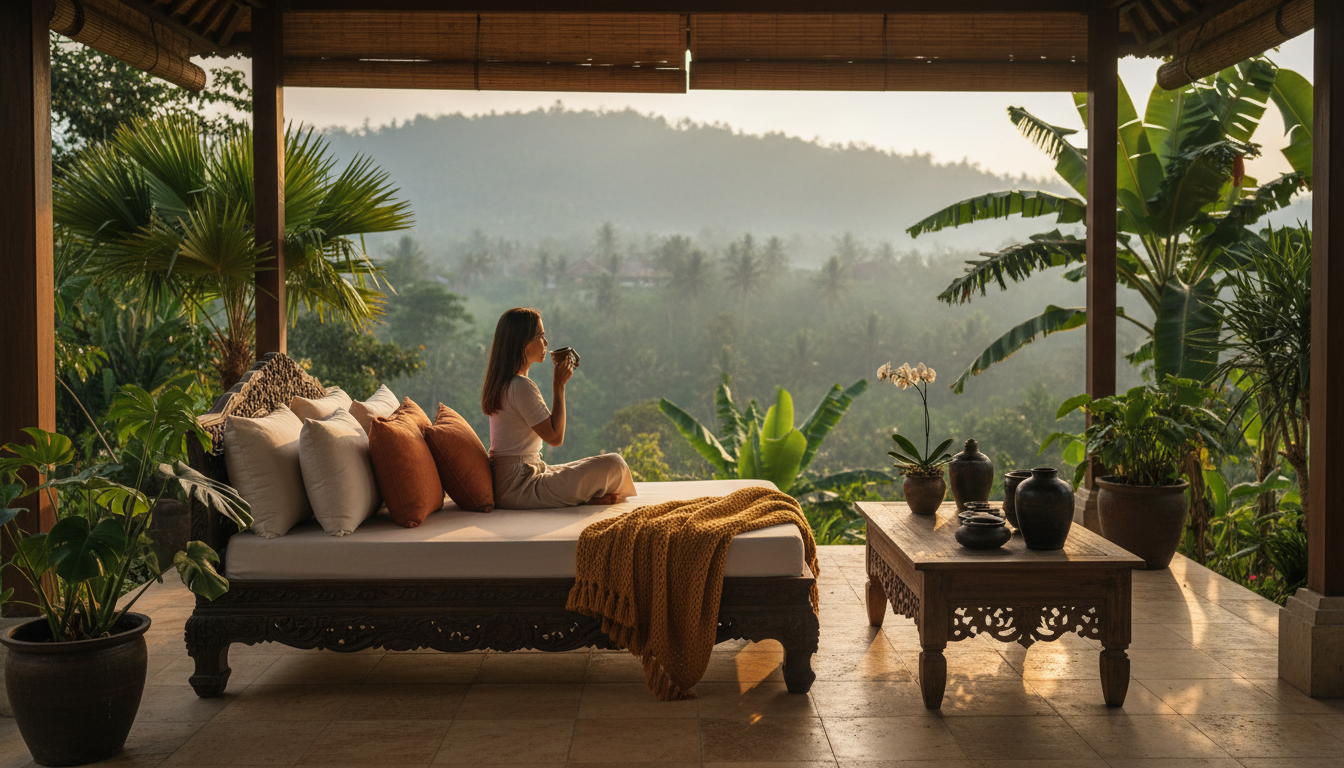 interior of a Balinese-style living room in Ubud with traditional carved wooden furniture, open-air
The trade-off is distance. You're 90 minutes from Ngurah Rai International Airport without traffic, closer to two hours during busy periods. Most Ubud hosts note that a scooter is essential—the town center is walkable, but reaching yoga studios like The Yoga Barn, restaurants in Penestanan, or the Campuhan Ridge Walk requires wheels.
Best for: yoga practitioners, artists, couples, anyone seeking quiet mornings and spiritual experiences.
Seminyak and Petitenget: Upscale Beach Living
Seminyak was Bali's first real tourist development, and the home exchange listings here reflect decades of villa construction. Properties tend to be older but well-maintained, often with larger plots than newer Canggu builds. The beach at Double Six is swimmable (unlike much of Canggu), and the restaurant scene—La Lucciola, Mama San, Sardine—remains Bali's most sophisticated.
Home exchange availability in Seminyak is moderate. Many property owners here use their villas for rental income rather than exchange, but those who do list tend to have established, well-reviewed properties. Petitenget, the northern extension, has slightly more listings and a younger, hipper vibe centered around Potato Head Beach Club.
Best for: foodies, beach lovers, anyone wanting walkable restaurants and nightlife.
Sanur: The Quiet Alternative
Sanur is where Bali's expat retirees and families with young children tend to settle. Properties here often have multiple bedrooms, family-friendly amenities, and calm beach access—the reef creates a protected lagoon perfect for swimming and paddleboarding.
The vibe is dramatically different from Canggu or Seminyak. Mornings start with elderly locals doing tai chi on the beach promenade. The restaurant scene is good but not flashy—Warung Mak Beng has served the same fried fish for 80 years. Sanur also offers the fastest boat connections to Nusa Lembongan and Nusa Penida (25-30 minutes versus 45+ from other ports).
Best for: families, older travelers, anyone wanting a mellow pace with easy island-hopping.
The Bukit Peninsula: Surf and Clifftop Views
Uluwatu, Bingin, Padang Padang—the Bukit Peninsula's southern tip has Bali's most dramatic coastline and best surf breaks. Home exchange listings here are fewer but often spectacular: clifftop properties with infinity pools overlooking the Indian Ocean, walking distance to world-class waves.
The isolation is real, though. The Bukit is 45-60 minutes from the airport, and reaching Seminyak or Canggu takes over an hour. Most guests need a scooter or car for everything, including groceries. The famous Uluwatu Temple sits nearby, as do the beach clubs at Sundays and Ulu Cliffhouse.
Best for: serious surfers, honeymooners, anyone prioritizing dramatic scenery over convenience.
How to Find and Book a Bali Home Exchange
The process is straightforward, but timing matters enormously.
Step 1: Build Your Credit Balance First
New SwappaHome members receive 7 free credits—enough for one week in Bali. But here's what catches first-timers off guard: Bali's best properties during high season (July-August, Christmas-New Year) get booked 3-6 months in advance. If you're planning a peak-season trip, start hosting guests in your home city well before you need those credits.
The community tends to be active in both directions—Bali-based members often want to visit European and North American cities during Bali's rainy season (November-March), creating natural exchange opportunities.
Step 2: Search Strategically
Bali listings can be filtered by area, but understanding the geography helps. Search for "Bali" broadly first, then narrow by specific regions once you know your priorities. Pay attention to:
- Distance to airport: critical if you're arriving late or leaving early
- Scooter/car availability: many hosts include vehicle access
- Internet speed: essential for remote workers (look for specific Mbps mentions)
- Staff arrangements: some villas include housekeeping or garden staff
- Minimum stay requirements: common in Bali, often 5-7 nights
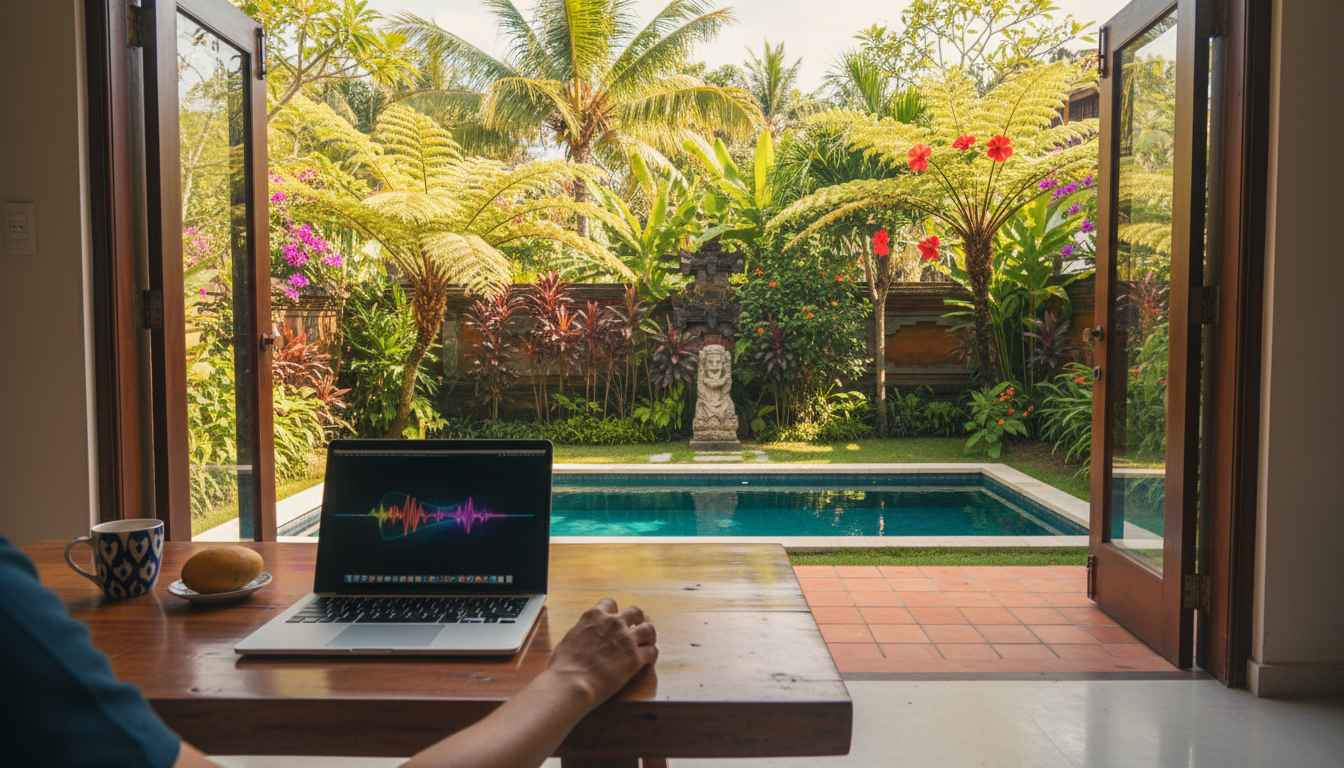 laptop open on a wooden desk with tropical garden visible through open doors, suggesting remote work
Step 3: Communicate Thoroughly Before Booking
Bali home exchanges involve more logistics than typical swaps. Worth asking:
- What's the realistic travel time to [specific destination] during morning/evening traffic?
- Is the water safe for brushing teeth, or should I use bottled?
- What's the backup power situation during outages?
- Are there any ceremonies or temple days when the property has restricted access?
- What's the arrangement with any household staff?
Bali hosts tend to be exceptionally detailed in their communication—the expat and digital nomad community here understands that visitors need more context than in a typical European or American exchange.
Step 4: Understand Visa Timing
Indonesia's visa rules affect how long you can realistically stay. As of 2026:
- Visa on Arrival (VOA): 30 days, extendable once for another 30 days (total 60 days), costs approximately 500,000 IDR ($32 USD) plus extension fees
- B211A Visa: 60 days, extendable up to 180 days total, requires application before arrival
- Second Home Visa: 5-10 year option for those with proof of funds
Most home exchange trips fall within the 30-60 day VOA window. The extension process involves a trip to the immigration office in Denpasar—budget a full morning for this.
What to Expect Living in a Balinese Home
Home exchange in Bali differs from hotel stays in ways that catch first-timers off guard.
The Creature Comforts (and Creatures)
Bali's tropical climate means most homes are designed for airflow rather than insulation. Expect open-air bathrooms, louvered windows, and the occasional gecko on your ceiling. They're harmless and eat mosquitoes—consider them roommates. Air conditioning exists in bedrooms but rarely in living areas. Ceiling fans become your best friend.
The wildlife is real. Geckos are constant companions. Mosquitoes require vigilance—use the provided nets and plug-in repellents, especially at dusk. In rural areas, you might encounter monitor lizards, snakes (mostly harmless), and the occasional monkey attempting to raid your fruit bowl.
 traditional Balinese outdoor bathroom with stone walls, tropical plants, rain shower head, and natur
Daily Rhythms and Ceremonies
Balinese Hinduism structures daily life in ways that affect your stay:
Canang sari offerings appear daily—small palm-leaf baskets with flowers and incense placed at entrances, shrines, and sometimes on your doorstep. Don't step on them. Step over carefully.
Ceremony days matter. Nyepi (Day of Silence, usually in March) means no leaving your property for 24 hours. Galungan and Kuningan bring 10 days of celebrations with possible staff absences.
Temple visits by staff are common. Household help may need time off for their banjar (village) obligations.
Most hosts provide a calendar of major ceremonies and explain any specific property protocols. Participating respectfully in these rhythms—rather than treating them as inconveniences—transforms a Bali trip from tourism into genuine cultural immersion.
Kitchen and Food Realities
Bali home exchange kitchens vary wildly. Expat-owned properties often have full Western setups: ovens, blenders, coffee machines, filtered water systems. Traditional Balinese homes might have a two-burner gas stove and minimal equipment—cooking happens at warungs, not at home.
The good news: eating out in Bali remains remarkably affordable. A nasi campur at a local warung runs 25,000-35,000 IDR ($1.60-2.25 USD). Even upscale restaurants in Seminyak rarely exceed $30-40 per person. Many home exchange travelers cook breakfast at home and eat lunch and dinner out.
Groceries are available at various price points: traditional markets like Pasar Badung offer the cheapest produce but require bargaining; Bintang Supermarket hits the mid-range; Pepito Market caters to expats with imported goods at premium prices.
Money Matters: What Bali Actually Costs Beyond Accommodation
With accommodation handled through home exchange, here's what travelers typically spend:
Budget approach (approximately $10-15 USD/day): Scooter rental runs 70,000-100,000 IDR/day. Petrol adds 10,000-15,000 IDR. Local warung meals total 75,000-100,000 IDR.
Mid-range approach (approximately $30-45 USD/day): Mix scooter with occasional Grab car at 150,000 IDR/day. Combine warung and café meals at 200,000-300,000 IDR. Add one activity or entrance fee at 100,000-200,000 IDR.
Common activity costs: Uluwatu Temple entrance: 50,000 IDR ($3.25). Tegallalang Rice Terraces: 25,000 IDR ($1.60). Tirta Empul water temple: 50,000 IDR ($3.25). Surf lesson at Kuta Beach: 350,000-500,000 IDR ($23-32). Full-day driver hire: 600,000-800,000 IDR ($39-52). Mount Batur sunrise trek: 450,000-650,000 IDR ($29-42).
The math becomes compelling quickly. A couple spending two weeks in Bali through home exchange might spend $400-600 total on everything except flights—compared to $2,500-3,500 for the same trip with hotel accommodation.
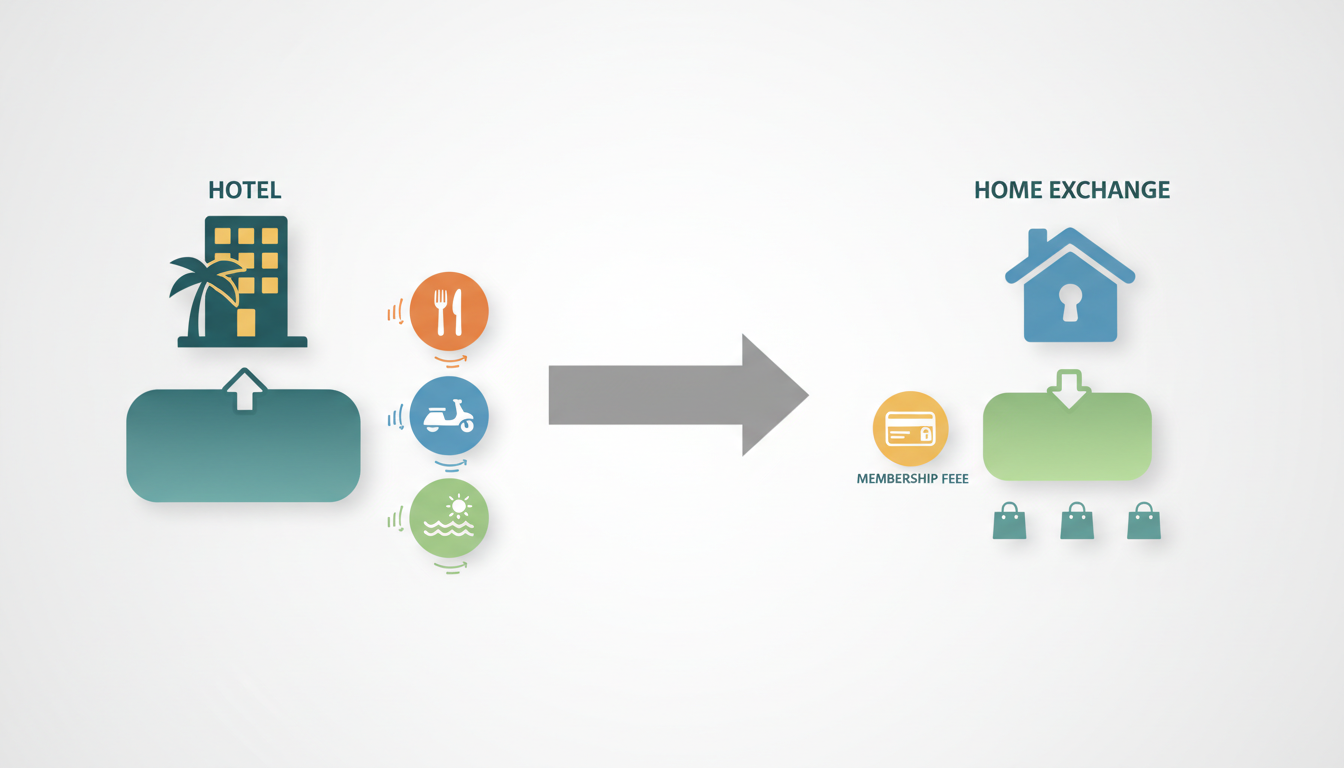 infographic showing cost comparison between 2-week Bali hotel stay 2,800 average versus home exchang
Preparing Your Home for Bali-Based Guests
Home exchange works both ways. To earn credits for Bali, you'll host travelers from around the world—including Indonesians escaping Bali's heat for cooler climates or experiencing seasons they don't have at home.
What Bali-based guests often appreciate: clear heating instructions (tropical residents may have never operated a thermostat), winter clothing storage if you have spare jackets or boots, kitchen staples like a rice cooker or familiar Asian condiments, clear recycling and waste guidance, and public transit maps—Bali has essentially no public transport, so guests may be unfamiliar with subway or bus systems.
The cultural exchange goes both ways. Hosting Indonesian guests often leads to recipe swaps, language practice, and ongoing friendships that enhance future Bali visits.
Timing Your Bali Home Exchange Trip
Bali's seasons affect everything from availability to experience quality.
Dry Season (April-October) brings peak demand for home exchange, especially July-August. Book 4-6 months ahead for popular properties. You'll get the best weather for beaches, temples, and trekking—but higher prices for everything tourist-related. Nyepi falls in March/April; check exact dates.
Wet Season (November-March) offers more home exchange availability with shorter booking windows. Afternoon thunderstorms are common, but mornings usually clear. Landscapes turn lush and green—best for photography. Tourist crowds thin out and restaurant reservations come easier. Christmas and New Year are the exception—they book out early despite the rain.
Shoulder Seasons (April-May, September-October) hit the sweet spot: good availability, good weather, fewer families traveling due to school schedules, slightly lower activity prices.
Worth noting: Bali's expat community often leaves during August and December for holidays abroad, meaning some of the best home exchange properties become available precisely when hotels are most expensive.
Common Mistakes to Avoid
Underestimating distances. Bali is small (roughly 95 x 69 miles) but traffic makes everything take longer than Google Maps suggests. A property in Ubud means you're not casually popping to Seminyak for dinner—that's a 90-minute commitment each way.
Ignoring rainy season realities. The afternoon storms are real and can be intense. If your home exchange property has outdoor-only living spaces (common in traditional Balinese design), you'll be confined during downpours. Check for covered areas.
Assuming Western standards. Hot water, reliable electricity, drinkable tap water—none of these are guaranteed in all Bali properties. Ask specifically rather than assuming.
Forgetting about Nyepi. The Balinese Day of Silence means the entire island shuts down for 24 hours. No flights land or depart, no one leaves their property, even the internet gets restricted in some areas.
Skipping travel insurance. SwappaHome connects members but doesn't provide coverage for medical emergencies, trip cancellations, or personal belongings. Bali's healthcare is adequate in Denpasar (BIMC Hospital is the expat standard) but expensive without insurance. World Nomads and SafetyWing are popular options for long-term travel.
Making the Most of Your Free Bali Accommodation
With accommodation costs eliminated, home exchange opens possibilities that budget constraints usually prevent.
Extend your stay. Two weeks becomes affordable when you're not paying $150/night. Many home exchange travelers stay 3-4 weeks, allowing time to actually settle into Balinese rhythms rather than rushing between tourist highlights.
Splurge on experiences. That $200 private cooking class in a Balinese family compound? The $150 sunrise helicopter tour over Mount Agung? Suddenly reasonable when you've saved $2,000 on accommodation.
Explore beyond the tourist zones. Rent a car for a few days and drive to Amed (black sand beaches, excellent snorkeling), Munduk (waterfalls, coffee plantations), or Sidemen (rice terraces without the Tegallalang crowds). Home exchange savings fund the adventures hotels would have prevented.
Invest in wellness. Bali's yoga, meditation, and healing scene is world-class. Week-long retreats at The Yoga Barn, Fivelements, or Blooming Lotus typically run $1,500-3,000—still a fraction of what you've saved on accommodation.
Home exchange doesn't just make Bali affordable—it makes it possible to experience the island the way long-term residents do. You shop at the same markets, navigate the same traffic, participate in the same ceremonies. The Island of the Gods reveals itself differently when you're living there rather than just staying there.
Frequently Asked Questions
Is home exchange in Bali safe for solo travelers?
Bali consistently ranks among Southeast Asia's safest destinations for solo travelers, and home exchange adds a layer of security through community verification. Members review each other, creating accountability that anonymous hotel bookings lack. Solo travelers often report feeling safer in residential neighborhoods than in tourist hotel zones, with the added benefit of local knowledge from hosts about areas to avoid and trusted transportation options.
How far in advance should I book a Bali home exchange?
For peak season (July-August, Christmas-New Year), begin searching 4-6 months ahead—popular properties in Canggu and Seminyak book quickly. Shoulder seasons allow 2-3 months lead time. Wet season outside holidays offers the most flexibility; last-minute bookings within 2-4 weeks are often possible. Start earning credits through hosting well before your intended travel dates regardless of season.
What happens if something goes wrong during my Bali home exchange?
SwappaHome facilitates connections between members but doesn't provide insurance or dispute resolution. Members communicate directly to resolve issues. For protection, the smart move is documenting the property's condition upon arrival, maintaining open communication with your host, and purchasing independent travel insurance that covers accommodation issues. Most problems stem from miscommunication—thorough pre-arrival discussions prevent the majority of concerns.
Can I do a home exchange in Bali during Nyepi?
Yes, but plan carefully. Nyepi requires everyone—including tourists—to remain indoors for 24 hours. No flights operate, shops close, and leaving your property is prohibited. If your home exchange spans Nyepi, ensure the property has adequate food supplies, indoor entertainment, and comfortable spaces for a full day inside. Many travelers find Nyepi a unique cultural experience; others prefer to schedule around it. Check exact dates annually—Nyepi follows the Balinese lunar calendar.
Is it possible to find home exchange properties in Bali with reliable WiFi for remote work?
Absolutely—Bali's digital nomad infrastructure makes it one of the best home exchange destinations for remote workers. Canggu and Seminyak properties commonly offer 50-100 Mbps fiber connections. When searching, filter for properties that specifically mention internet speeds, and ask hosts about backup options during outages. Many listings include coworking space memberships or recommendations for nearby cafés with reliable connectivity as backup.

Published by
SwappaHome
SwappaHome Editorial Team
Home Exchange & Slow Travel Editorial
The SwappaHome Editorial Team brings together travel research, home-exchange community insights, and platform data to produce practical guides for first-time and experienced home swappers. Every article cites real platforms, current market rates, and verifiable city-level facts so readers can make informed decisions without guessing.
Ready to try home swapping?
Join SwappaHome and start traveling by exchanging homes. Get 7 free credits when you sign up!
Related articles
How to Extend or Modify a Home Swap Mid-Stay: The Complete Flexibility Guide
Need to extend your home swap or change dates mid-trip? Here's exactly how to negotiate changes, handle credits, and keep both parties happy.
How to Vet Home Swap Guests: 12 Red Flags Every Host Should Know
Learn how to vet home swap guests before handing over your keys. Spot the 12 red flags experienced hosts watch for—and protect your home with confidence.

Is Rome Good for Home Swapping? An Honest Analysis for 2026
Discover if Rome is worth it for home swapping in 2026. Real neighborhood tips, cost breakdowns, and honest advice from the SwappaHome community.