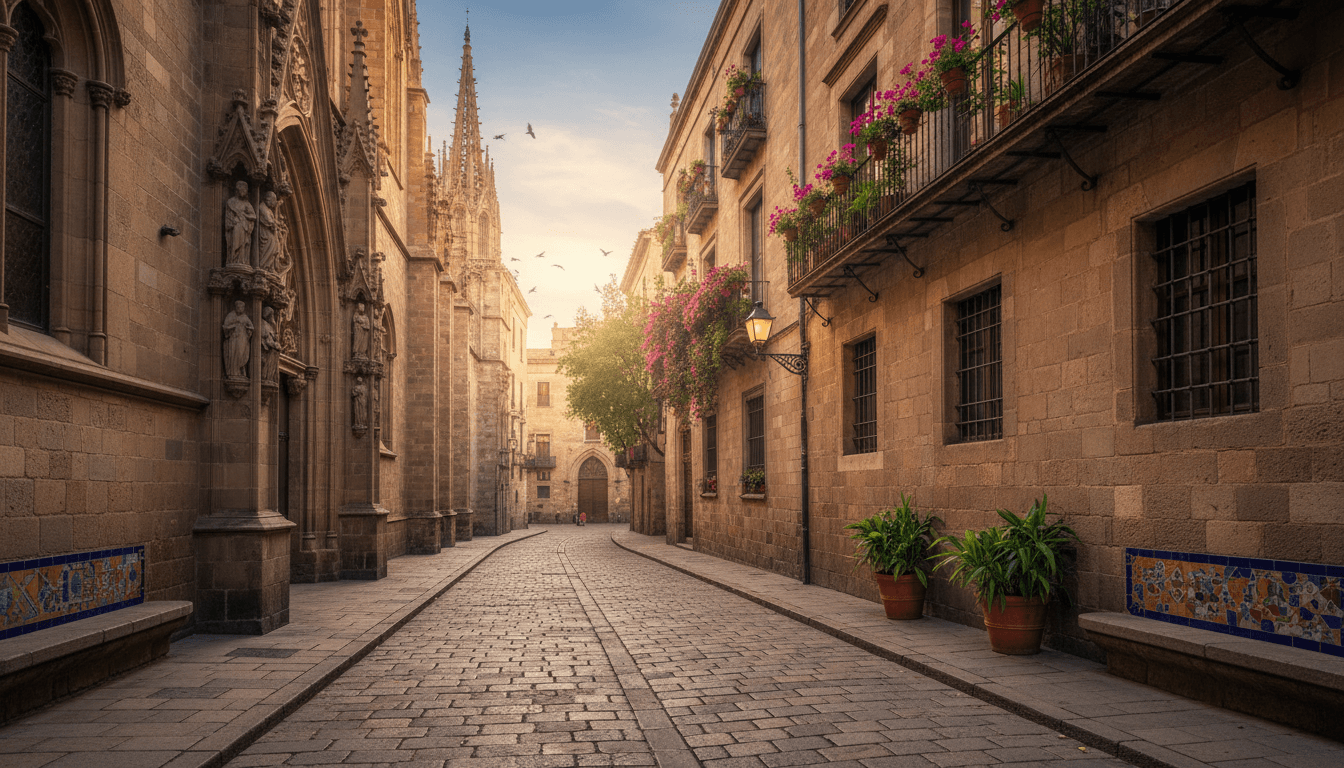
Budget Travel to Barcelona: Why Home Swapping Beats Every Other Option
Maya Chen
Travel Writer & Home Exchange Expert
Discover how budget travel to Barcelona becomes effortless with home swapping. Save €150+/night while living like a local in the city's best neighborhoods.
I still remember standing in my overpriced Airbnb near La Rambla, watching a family of four squeeze past my twin bed to reach the bathroom, thinking: there has to be a better way to do budget travel to Barcelona.
Spoiler: there absolutely is.
Three years and six Barcelona trips later, I've cracked the code. And no, it doesn't involve sleeping in hostels where someone always sets an alarm for 5 AM (why?), or booking those "charming" apartments that look nothing like their photos. Budget travel to Barcelona—real budget travel that doesn't sacrifice comfort or location—comes down to one strategy that most travelers completely overlook: home swapping.
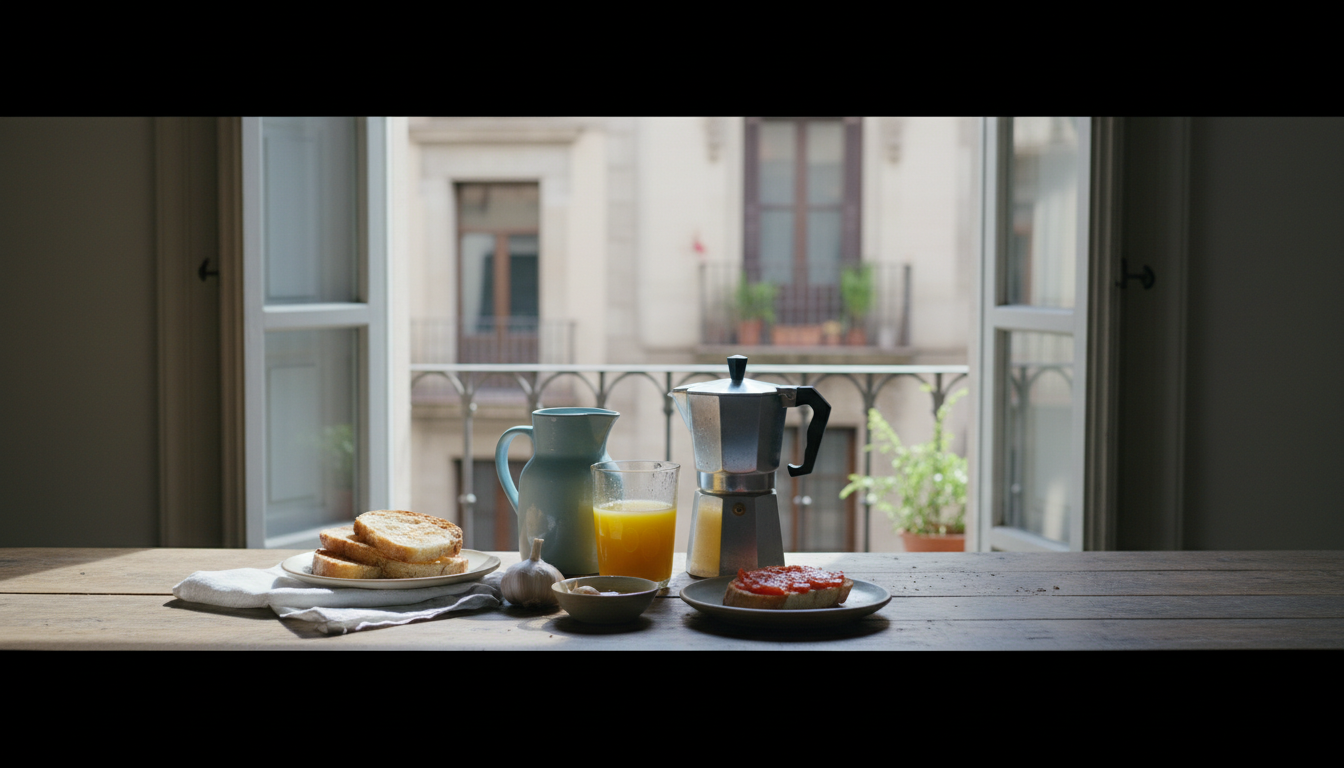 Morning light streaming through shuttered windows onto a breakfast table with pa amb tomquet, fresh
Why Traditional Budget Options in Barcelona Fall Short
Let me be blunt about something. Barcelona has a housing problem, and tourists are paying for it—literally.
The average hotel room in a decent location runs €180-250 per night ($195-270 USD). Airbnb? The city has cracked down hard on short-term rentals, which means fewer options and higher prices—expect €120-180/night ($130-195 USD) for a one-bedroom in a neighborhood you'd actually want to stay in. Hostels hover around €35-60/night ($38-65 USD) for a private room, but you're sharing kitchens with 47 people and the walls are thinner than my patience after a 10-hour flight.
I've done the math obsessively. A two-week Barcelona trip with traditional accommodation costs:
- Mid-range hotel: €2,520-3,500 ($2,730-3,780 USD)
- Airbnb apartment: €1,680-2,520 ($1,820-2,730 USD)
- Hostel private room: €490-840 ($530-910 USD)
- Home swap: €0 in accommodation costs
That last line isn't a typo.
How Home Swapping Actually Works for Barcelona Budget Travel
Here's the thing about home swapping that took me embarrassingly long to understand: you don't need a mansion to participate. You don't even need to swap with someone from Barcelona directly.
The modern home exchange model—the one I use through SwappaHome—runs on a credit system. You host travelers at your place (anywhere in the world), earn credits, then spend those credits to stay in Barcelona. One night hosted equals one credit earned. One night in Barcelona equals one credit spent. Doesn't matter if you're offering a studio in Cleveland or a three-bedroom in Sydney.
I hosted a lovely couple from Melbourne for five nights last October. Used those credits for a week in Gràcia two months later. No money changed hands. No complicated scheduling gymnastics trying to find someone who wants to visit San Francisco the exact dates I want to visit Barcelona.
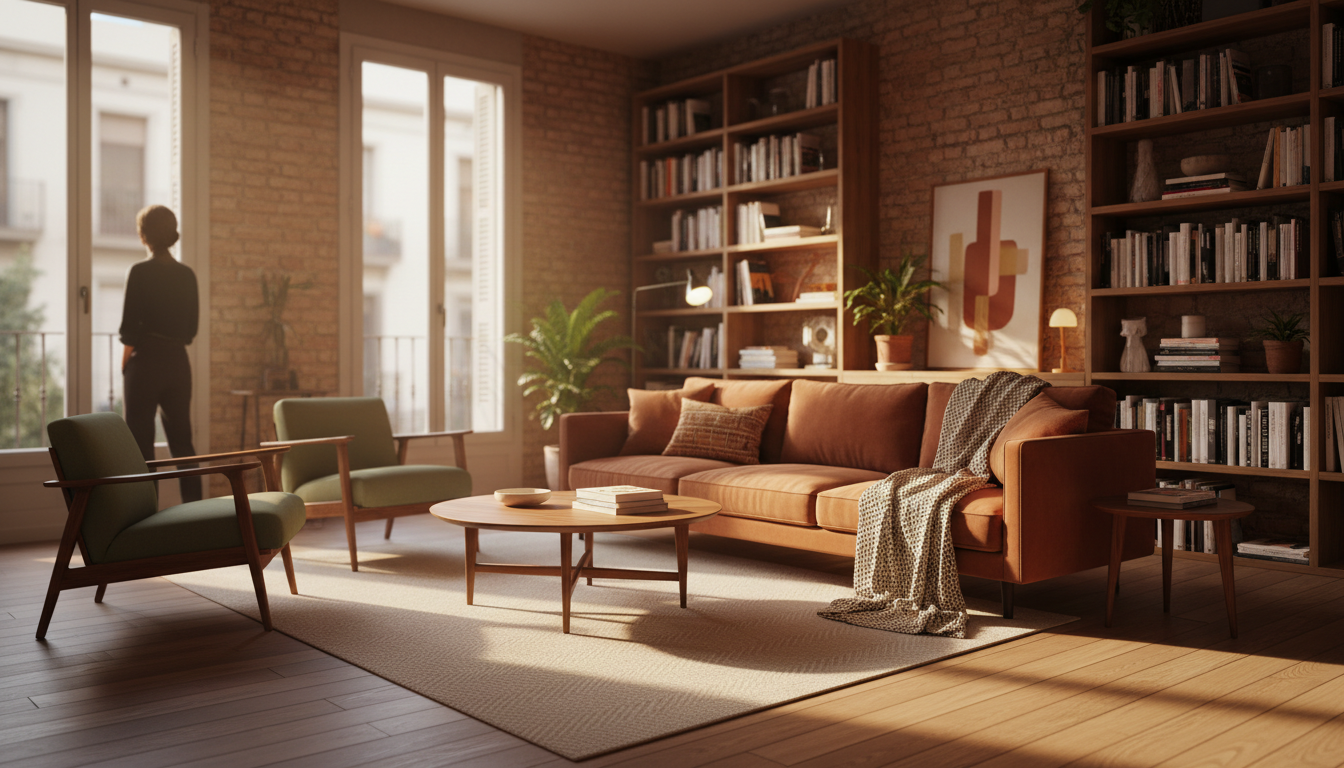 Cozy living room in a Barcelona apartment with exposed brick walls, mid-century modern furniture, fl
The Real Cost Breakdown: Budget Travel to Barcelona with Home Exchange
Let me walk you through my actual expenses from my most recent Barcelona trip—14 nights in March.
Accommodation: 0 credits spent from previous hosting (I'd banked 18 from hosting throughout the year)
Flights from SFO: $487 round-trip (booked 6 weeks out on Norwegian—not their best price, but decent)
Food: Around €280 ($303 USD) total. Having a full kitchen changes everything. I made breakfast every morning—pa amb tomàquet with tomatoes from Mercat de Sant Antoni costs maybe €2 to make versus €12-15 at a café. Dinners out happened maybe four times.
Transportation: €40 ($43 USD) for a T-Casual card (10 metro/bus rides) plus walking. Barcelona is incredibly walkable if you're not hauling luggage.
Activities: €95 ($103 USD)—Sagrada Familia tickets (€26), Picasso Museum (€12), day trip to Montserrat (€45 including rack railway), and a food tour of Barceloneta (€12 with a local guide I found through a Facebook group).
Total for 14 nights: Approximately $936 USD
Compare that to my friend who went the same month, stayed in a "budget" hotel near Plaça Catalunya, and spent over $3,200 for ten nights. She had a great time. But she also ate breakfast at the hotel buffet every day because she'd already paid for it, even though the coffee was terrible.
Best Barcelona Neighborhoods for Home Swapping
Not all Barcelona neighborhoods are created equal for home exchanges. I've learned this through trial and error.
Gràcia: My Personal Favorite for Budget Travelers
Gràcia feels like a village that Barcelona accidentally swallowed. The plaças fill with locals drinking vermut on Sunday afternoons. Restaurants haven't jacked up prices for tourists because, honestly, tourists rarely make it this far from the beach. A three-course menú del día runs €12-14 ($13-15 USD) at places like La Pepita or Federal Café.
Home swap availability here is excellent—lots of young professionals and families with apartments they're happy to exchange. The metro connects you to everything in under 20 minutes.
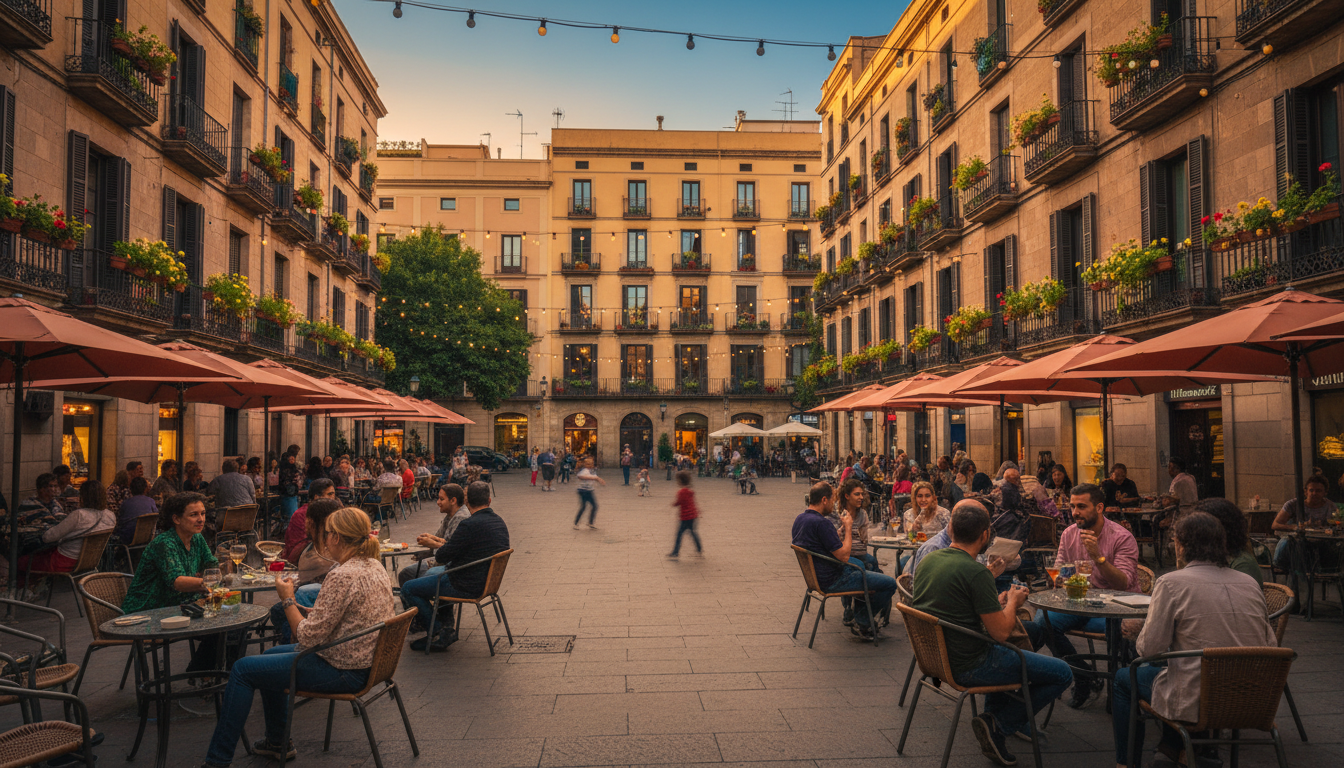 Plaa del Sol in Grcia at golden hour, locals gathered at outdoor caf tables, children playing, strin
Poble Sec: The Under-the-Radar Choice
Tucked between Montjuïc and the Raval, Poble Sec has exploded with tapas bars along Carrer de Blai—each pintxo costs €1-2, and you can eat like royalty for €15. The neighborhood attracts creative types, which means interesting home swap options in converted workshops and artist lofts.
My friend Carla did a swap here last summer. Her host left her a hand-drawn map of the best spots, including a tiny vermouth bar that doesn't appear on Google Maps. You can't buy that kind of local knowledge.
El Born: Splurge-Adjacent Without the Splurge
El Born sits right next to the Gothic Quarter but feels less chaotic. Medieval streets, the stunning Santa Maria del Mar church, and the best boutique shopping in the city. Home swaps here tend to be in older buildings with character—think exposed beams and interior courtyards.
Fair warning: El Born apartments are in high demand on SwappaHome. Book 2-3 months ahead if this is your target neighborhood.
Barceloneta: For Beach-Focused Budget Travel
If your Barcelona dreams involve waking up, walking two blocks, and being on the sand—Barceloneta is it. The neighborhood has a working-class history that's still visible in the narrow streets and local bars serving €3 cañas.
Home swap tip: many Barceloneta apartments are small. Like, really small. Check the square footage before committing. That said, when you're spending all day at the beach and all evening on a rooftop terrace, who needs a big living room?
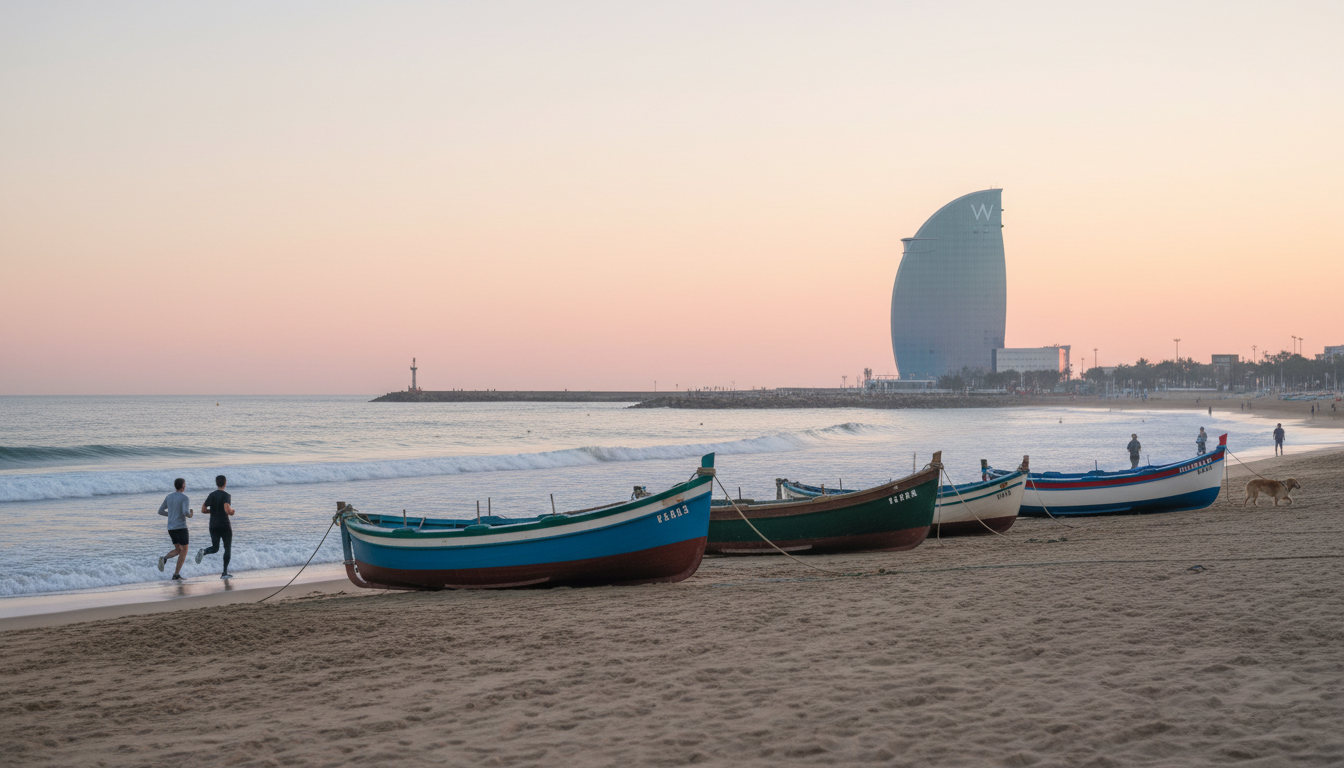 Early morning on Barceloneta beach, a few joggers and dog walkers, fishing boats pulled up on sand,
What Makes Home Swapping Smarter Than Other Budget Options
The Kitchen Factor
I cannot overstate how much money a kitchen saves. Barcelona's markets—Boqueria (touristy but still great), Sant Antoni (my favorite), Santa Caterina (gorgeous architecture)—sell incredible produce at reasonable prices. A kilo of tomatoes, fresh bread, jamón ibérico, and local cheese for €15 makes four meals.
Hostels have kitchens, technically. But have you ever tried to cook dinner when three other groups are also trying to cook dinner, someone's left their dishes in the sink for two days, and the only pan has a mysterious residue?
Space to Actually Live
Hotel rooms in Barcelona are notoriously tiny. Even "nice" ones often feel like you're sleeping in a hallway. Home swaps give you a real apartment—a couch to collapse on after walking 15,000 steps, a table to plan tomorrow's adventures, a balcony for evening wine.
During my Gràcia swap, the apartment had a small terrace with two chairs and a lemon tree. I wrote half of a travel article series sitting out there with my morning coffee. That experience isn't available at the Holiday Inn.
Local Recommendations That Actually Work
Here's something I didn't expect when I started home swapping: hosts leave notes. Not generic "visit the Sagrada Familia" notes—real recommendations.
My last Barcelona host left a Google Doc with her favorite places organized by neighborhood. The standouts: a tiny bakery in Sant Antoni that makes the best croissants I've ever had (Baluard—go early), a jazz bar in Raval that only locals know about, and a specific bench in Park Güell that avoids the crowds while still having incredible views.
You don't get that from a hotel concierge.
How to Find Your Perfect Barcelona Home Swap
Start Building Credits Early
If you're new to SwappaHome, you'll get 10 free credits when you sign up—enough for a solid week in Barcelona. But if you're planning a longer trip or want flexibility, start hosting a few months before your travel dates.
I keep my San Francisco apartment listed year-round. Even hosting just 2-3 guests per month builds up credits fast. By the time I'm ready to travel, I usually have 30+ credits banked.
Write a Real Message
When you request a swap, don't send a generic "I'd like to stay at your place" message. Mention something specific about their apartment. Explain why you're visiting Barcelona. Share a bit about yourself.
I've had hosts tell me they chose my request over others because I mentioned their book collection or asked about their neighborhood. People want to know their home is going to someone who'll appreciate it.
Be Flexible on Dates
Barcelona home swaps book up fast during peak season (June-August, major holidays). If you can travel in shoulder season—March through May, September through November—you'll have way more options and better weather for actually exploring the city.
My March trip had perfect 18-22°C (64-72°F) weather. No crowds at Sagrada Familia. Locals actually out and about instead of hiding from tourist hordes.
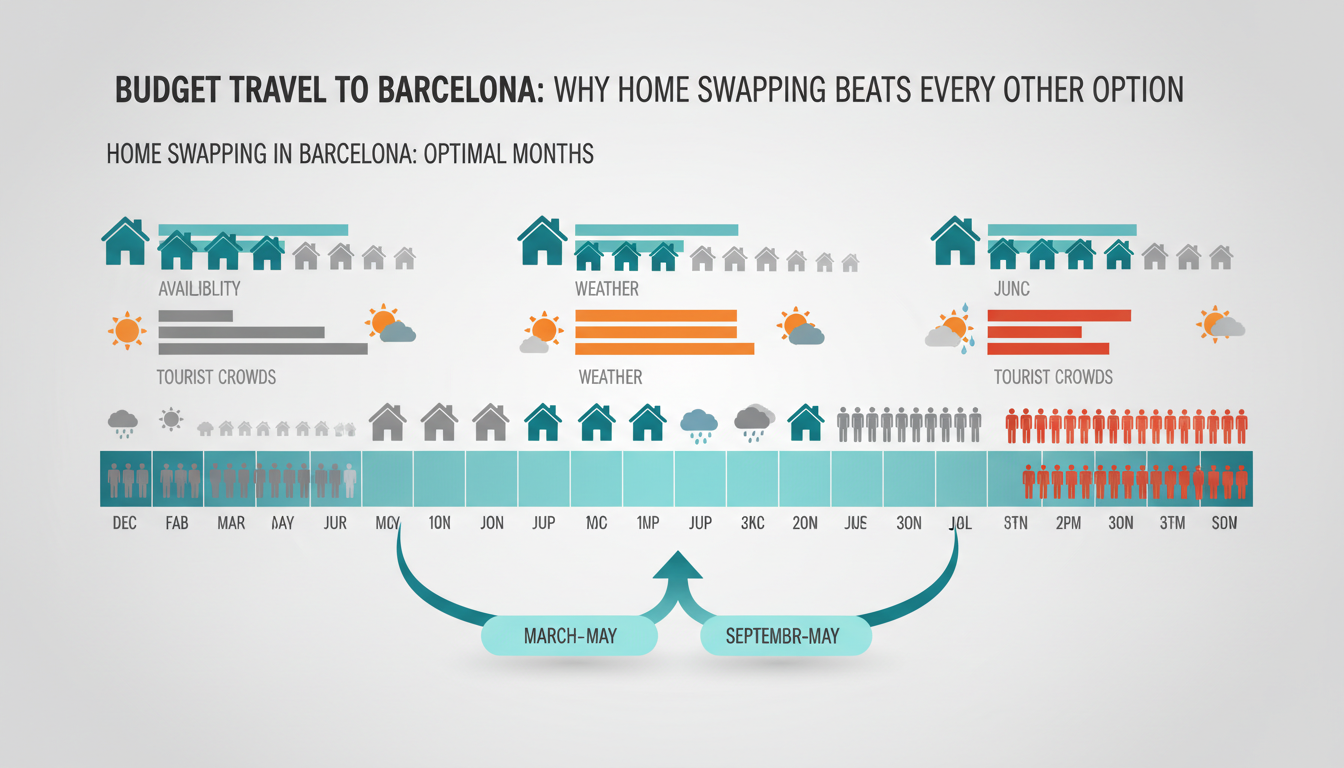 Infographic showing Barcelonas best months for home swapping bar chart comparing availability, weath
The Trust Factor: Is Home Swapping Safe?
I get this question constantly. You're letting strangers stay in your home—isn't that terrifying?
Honestly? After 40+ swaps, I've had exactly zero problems. Here's why it works:
Mutual accountability: Both parties have something at stake. If someone trashes your place, you can leave a review that follows them forever. The community self-polices remarkably well.
Verification systems: SwappaHome offers identity verification, and I only accept requests from verified members. It's not a guarantee, but it's a meaningful filter.
Communication: Before any swap, I have at least one video call with my guest or host. You get a sense of people quickly. Trust your instincts—if something feels off, decline.
Personal insurance: I carry renter's insurance that covers guests, and I'd recommend anyone doing home swaps regularly look into similar coverage. SwappaHome connects you with other members, but you're responsible for your own arrangements—which honestly, I prefer. I know exactly what my policy covers.
The Barcelona hosts I've stayed with have been universally lovely. Teachers, architects, a retired couple who spent an hour on video chat telling me about their favorite vermut bars. These aren't random strangers—they're fellow travelers who understand the exchange.
Making the Most of Your Barcelona Home Swap
Embrace the Neighborhood
Wherever you end up, commit to it. Don't just use the apartment as a hotel room you return to for sleep. Find the local bar where everyone knows each other. Figure out which bakery has the shortest line on Sunday mornings. Learn which fruit vendor at the market gives you extra when you become a regular.
My Poble Sec swap was in a building where the ground floor housed a tiny bodega. By day three, the owner was recommending wines and refusing to let me pay full price. "You're staying upstairs," he said. "You're basically a neighbor now."
Leave the Apartment Better Than You Found It
This is home swap etiquette 101, but it bears repeating. Strip the beds, run the dishwasher, take out the trash. Leave a small gift—I usually bring something from San Francisco, like Dandelion chocolate or local honey.
Good swap karma comes back around. I've arrived at apartments to find welcome wine, fresh flowers, and handwritten notes. That generosity flows from the culture of reciprocity.
Use Your Savings for Experiences
Here's the real magic of budget travel to Barcelona through home swapping: the money you save on accommodation can fund experiences you'd otherwise skip.
That €150/night you're not spending? That's a cooking class in the Gothic Quarter (€65), a day trip to the Dalí Museum in Figueres (€40 including train), sunset sailing in Port Olímpic (€45), and still having money left over for an outrageously good dinner at Can Paixano.
Budget travel doesn't have to mean budget experiences. It means being smart about where your money goes.
When Home Swapping Might Not Be Right for You
I'm a home swap evangelist, but I'll be honest about when it's not the best choice.
If you need absolute flexibility—the ability to extend your stay last-minute or switch neighborhoods on a whim—hotels offer that. Home swaps are booked in advance with specific dates.
If you're traveling with a large group, finding a single home swap that fits everyone can be challenging. You might end up booking two apartments, which complicates logistics.
If you're only staying 2-3 nights, the effort-to-payoff ratio shifts. Home swapping shines for week-long stays or longer, where the accommodation savings really add up.
And if you're genuinely uncomfortable with the idea of staying in someone's personal space—some people find it weird, and that's valid—this isn't your strategy.
But for most travelers? Especially those planning a real Barcelona immersion rather than a quick highlights tour? Home swapping is, hands down, the smartest budget move you can make.
Your Barcelona Budget Travel Action Plan
So here's what I'd do if I were planning my first Barcelona home swap:
Two to three months out: Sign up for SwappaHome, complete your profile with good photos, and start browsing Barcelona listings. Request your top three choices—not everyone will be available for your dates.
One month out: Confirm your swap, have a video call with your host, and start a shared document for recommendations and logistics. Book your flights (prices jump inside 3 weeks).
One week out: Finalize arrival details, download offline maps of Barcelona, and research your specific neighborhood. Make a rough list of markets and restaurants within walking distance of your swap.
Day of arrival: Pick up groceries on your way from the airport (there's a Mercadona in Sants station if you're taking the train). Stock the fridge. Pour yourself a glass of cava on your borrowed balcony.
Welcome to Barcelona. You just saved a thousand dollars.
I've tried every budget travel hack out there. Credit card points, last-minute hotel apps, house-sitting, couchsurfing (briefly, in my twenties). Nothing has transformed how I travel like home swapping.
Barcelona specifically rewards this approach. It's a city built for living in, not just visiting. The rhythm of morning markets and late dinners, of siestas and midnight walks along the beach—you can't experience that from a hotel room you're paying €200/night to barely use.
If you're serious about budget travel to Barcelona, give SwappaHome a look. Your future self, sipping vermut on a sunny plaça while your friends are stuck in overpriced hotel restaurants, will thank you.
Frequently Asked Questions
Is home swapping in Barcelona safe for solo travelers?
Absolutely. I've done multiple solo Barcelona swaps without issues. Use SwappaHome's verification system, read reviews carefully, and have a video call with your host beforehand. The community is built on mutual trust—members have strong incentives to be respectful since their reputation follows them. Solo travelers often find home swapping safer than hostels since you have a private, secure space.
How much money can I actually save with home swapping in Barcelona?
For a two-week Barcelona trip, expect to save €1,700-2,500 ($1,840-2,700 USD) compared to mid-range hotels, or €1,200-1,800 ($1,300-1,950 USD) compared to Airbnb. The savings multiply with longer stays. Add kitchen access reducing food costs by 40-50%, and budget travelers can cut total trip expenses nearly in half through home swapping.
Do I need a fancy home to participate in home exchanges?
Not at all. SwappaHome's credit system means a studio apartment earns the same credits as a luxury villa—one night hosted equals one credit, regardless of property size or location. I've hosted from my modest San Francisco one-bedroom and stayed in beautiful Barcelona apartments. What matters is a clean, comfortable space and being a good host.
What happens if something gets damaged during a home swap?
SwappaHome connects members but doesn't provide damage coverage—you're responsible for your own arrangements. Most experienced swappers carry renter's or homeowner's insurance that covers guests. Communicate clearly with your swap partner about house rules, and the review system keeps members accountable. In 40+ swaps, I've never had a damage issue.
When is the best time to book a Barcelona home swap?
Start browsing 2-3 months before your travel dates for the best selection. Popular neighborhoods like El Born and Gràcia book quickly. Shoulder seasons (March-May, September-November) offer more availability, better weather, and fewer tourists than summer. Avoid major events like Mobile World Congress (late February) when accommodation demand spikes citywide.
40+
Swaps
25
Countries
7
Years
About Maya Chen
Travel Writer & Home Exchange Expert
Maya is a travel writer with over 7 years of experience in the home swapping world. Originally from Vancouver and now based in San Francisco, she has completed more than 40 home exchanges across 25 countries. Her passion for "slow" and authentic travel led her to discover that true luxury lies in living like a local, not a tourist.
Ready to try home swapping?
Join SwappaHome and start traveling by exchanging homes. Get 10 free credits when you sign up!
Related articles

Lyon Home Exchange: Your Complete Guide to France's Hidden Gem for Home Swapping
Discover why Lyon home exchange is booming among savvy travelers. From Croix-Rousse to Presqu'île, find the best neighborhoods and insider tips for your swap.

Zurich Bucket List: 47 Unforgettable Experiences to Enjoy During Your Home Swap
Discover the ultimate Zurich bucket list for home swappers—from secret swimming spots to fondue rituals locals actually do. Save thousands while living like a true Zürcher.
Dublin Home Exchange Utilities Guide: WiFi, Heating & Everything Your Guests Need
Master Dublin home exchange utilities—from dodgy WiFi fixes to heating quirks. Practical tips from 7 years of swapping homes across Ireland.