Free Activities in Barcelona: 47 Things to Do That Won't Cost a Euro

SwappaHome Editorial Team
Home Exchange & Slow Travel Editorial
Discover the best free activities in Barcelona—from secret beaches to Gaudí masterpieces. A local-approved guide for home exchange travelers on a budget.
The moment Barcelona ruined me for other cities, I was standing barefoot on Barceloneta beach at 7 AM, watching an elderly man do tai chi while the Mediterranean turned gold. I hadn't spent a single euro that morning. My coffee came from the kitchen of my home exchange apartment in Gràcia, and the sunrise—well, that was complimentary.
That was three years ago, during my second home swap in Barcelona. Since then, I've returned four times, and I've developed what my friends call an "unhealthy obsession" with finding free activities in Barcelona that actually feel special—not like you're settling for the budget option.
Here's the thing: this city practically throws experiences at you. The architecture is on the streets. The culture spills out of plazas. The beaches are public. And when you're staying in someone's actual apartment through a home exchange, you're already saving €150-200 per night on hotels. That means your "budget" trip suddenly has room for that €45 tasting menu at a Michelin-starred restaurant—if you want it.
But honestly? Some of my favorite Barcelona memories cost absolutely nothing.
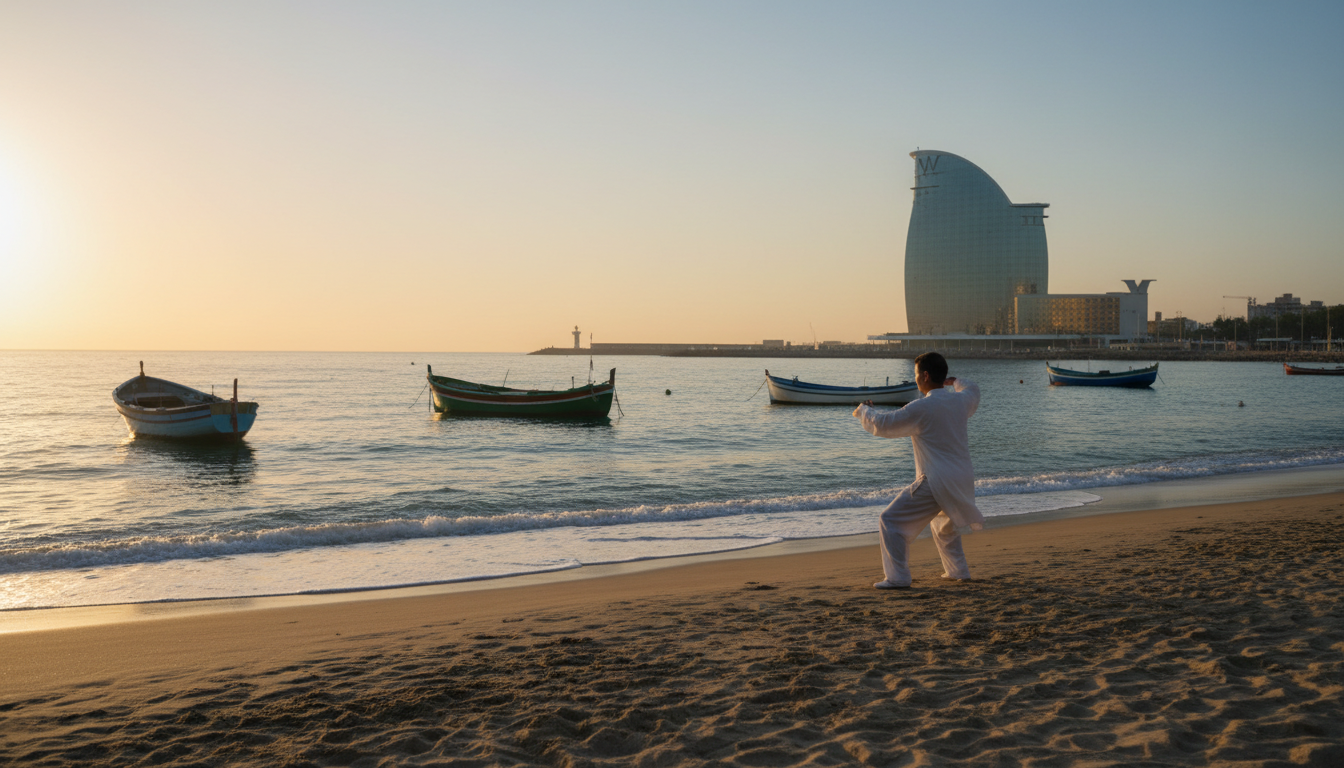 Early morning light on Barceloneta beach with a lone figure doing tai chi, fishing boats in the back
Why Free Activities in Barcelona Hit Different When You're Home Swapping
Let me explain something that took me embarrassingly long to figure out.
When you stay in a hotel, you're a tourist. You leave your climate-controlled box, you "do" Barcelona, you return to your climate-controlled box. The city exists outside your window.
Home swapping? You live somewhere. You have a neighborhood. The bakery guy starts recognizing you by day three. You know which plaza has the best morning sun for reading. You discover that the free outdoor cinema happens every Thursday in summer—because your host left you a note about it.
This changes everything about how you experience free activities in Barcelona. That beach isn't a day trip; it's your morning routine. That park isn't a tourist attraction; it's where you eat the jamón your host left in the fridge.
My home exchange hosts have pointed me toward hidden courtyards I never would have found on TripAdvisor. One left me a hand-drawn map to a secret viewpoint in Montjuïc. Another texted me about a free jazz night at a bar around the corner from "our" apartment.
You can't buy that kind of local knowledge. But you can earn it—by being part of the community, even temporarily.
The Best Free Activities in Barcelona's Gothic Quarter and El Born
The Gothic Quarter gets a bad rap from travel snobs who complain it's "too touristy." They're not wrong about La Rambla—skip that chaos—but they're missing some genuinely spectacular free experiences tucked into these medieval streets.
Barcelona Cathedral and Its Unexpected Residents
The Cathedral of Barcelona (not to be confused with Sagrada Família) is free to enter before 12:30 PM and after 5:15 PM on weekdays. But here's the thing nobody tells you: the cloister has 13 white geese living in it.
Thirteen. Just... hanging out.
They've been there since medieval times, representing Saint Eulalia's age when she was martyred. I spent an unreasonable amount of time watching those geese during my first Barcelona trip. There's something absurdly charming about Gothic architecture plus waterfowl.
The Plaça del Rei Time Warp
This square is where Columbus reportedly met Ferdinand and Isabella after returning from the Americas. Stand in the center, look up at the medieval buildings, and try to wrap your head around that. The Palau Reial Major has a stunning exterior you can admire for free, and the energy of the square at dusk—when the tour groups leave and the pigeons take over—feels genuinely ancient.
El Born's Free Cultural Circuit
El Born Cultural Centre is housed in a gorgeous 19th-century iron market building. Inside, you can see excavated ruins of 18th-century Barcelona for free. The archaeological site shows homes, streets, and shops that were demolished in 1714. Haunting and fascinating, and it costs nothing.
While you're in El Born, the Basílica de Santa Maria del Mar is free to visit during mass times (check the schedule—usually mornings and evenings). This church inspired the novel "Cathedral of the Sea," and its interior is jaw-dropping. The light through those windows at sunset? Chef's kiss.
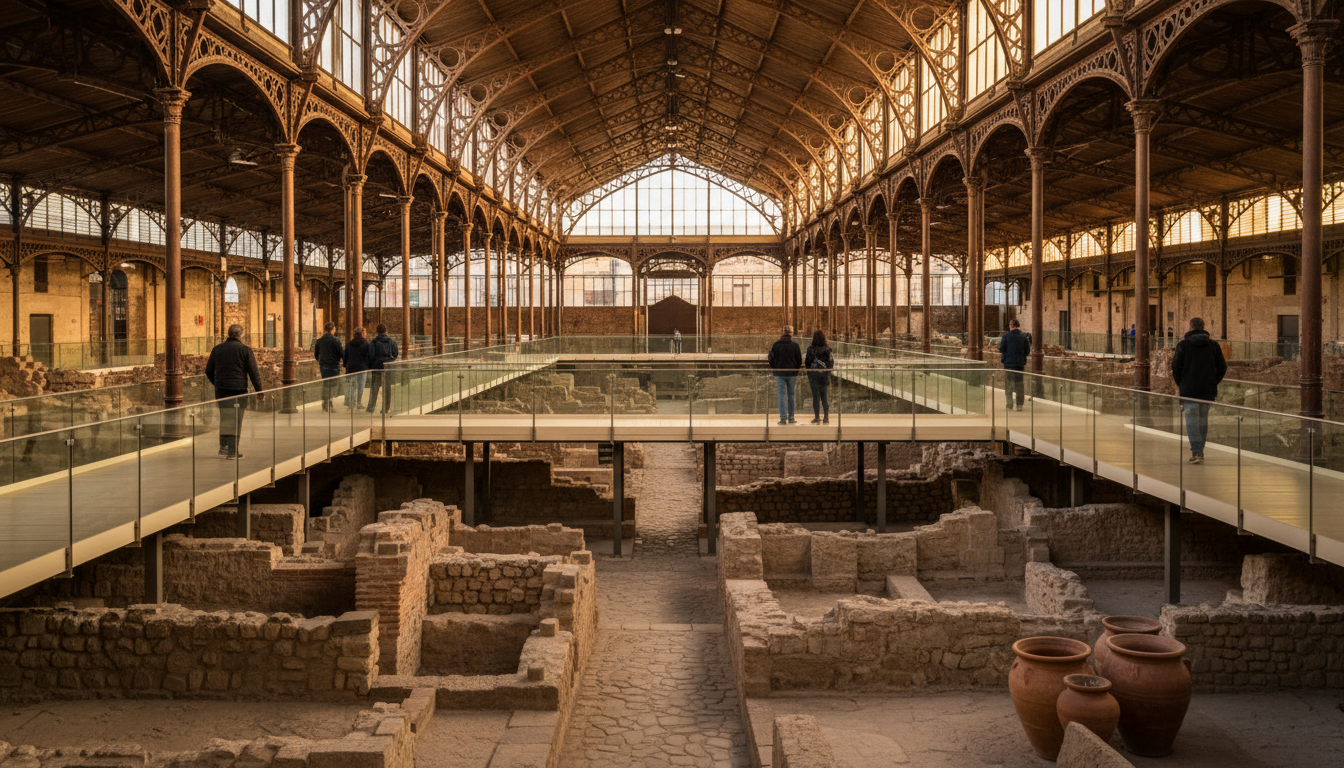 Interior of El Born Cultural Centre showing the iron market structure above excavated 18th-century B
Free Gaudí Experiences: See the Master's Work Without Paying €26
Look, I love Sagrada Família as much as anyone. I've been inside twice, cried both times (don't judge me), and I think the €26 ticket is worth it. But if you're trying to maximize free activities in Barcelona, you can experience Gaudí's genius without opening your wallet.
Casa Batlló and Casa Milà Exteriors
Passeig de Gràcia is basically a free outdoor Gaudí museum. Casa Batlló's façade—with its skull-like balconies and dragon-scale roof—is mesmerizing at any hour. But try visiting at night when it's illuminated. The colors shift, the building seems to breathe, and you'll understand why people call it the "House of Bones."
Casa Milà (La Pedrera) is a few blocks up. Its undulating stone façade looks like waves frozen mid-crash. Stand across the street, get a coffee from one of the overpriced cafés (okay, that part costs €4), and just... look.
Park Güell's Free Zones
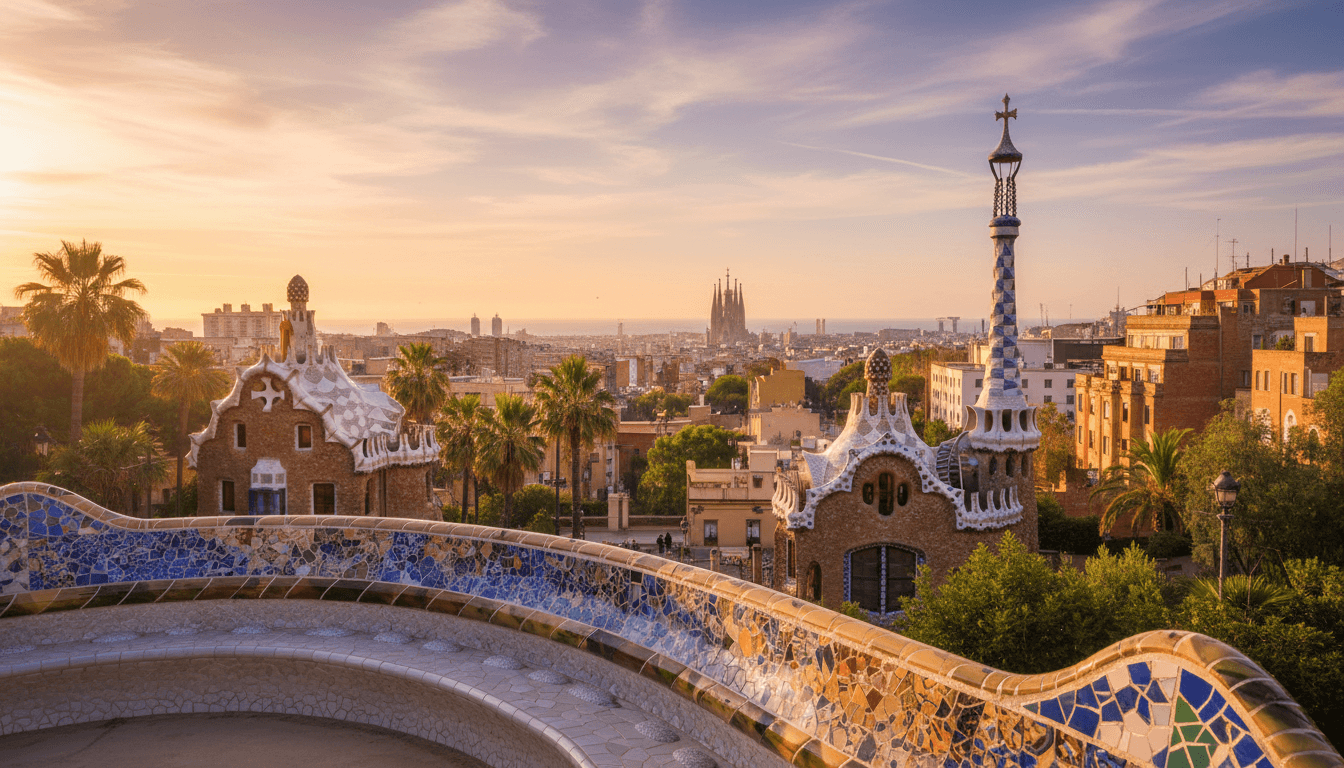
Here's a secret that saves you €10: only the Monumental Zone of Park Güell requires tickets. The rest of the park—including stunning views, Gaudí-designed pathways, and the famous Calvary viewpoint—is completely free.
Enter through the Carretera del Carmel entrance (the back way) and you'll find yourself in the free section immediately. The views over Barcelona from here are legitimately better than from the paid area. I've watched sunset from this spot multiple times, surrounded by locals walking their dogs.
The paid zone has the famous mosaic salamander and the wavy bench, which are iconic. But the free zone has the soul of the park.
Gaudí's First Major Work: The Lamp Posts
This is deep-cut Gaudí content. In Plaça Reial (Gothic Quarter), there are ornate lamp posts that were Gaudí's first public commission in 1878. He was 26. They're easy to miss among the palm trees and restaurant terraces, but once you know, you can't unsee them. The six-armed design with the winged helmet? Pure early Gaudí.
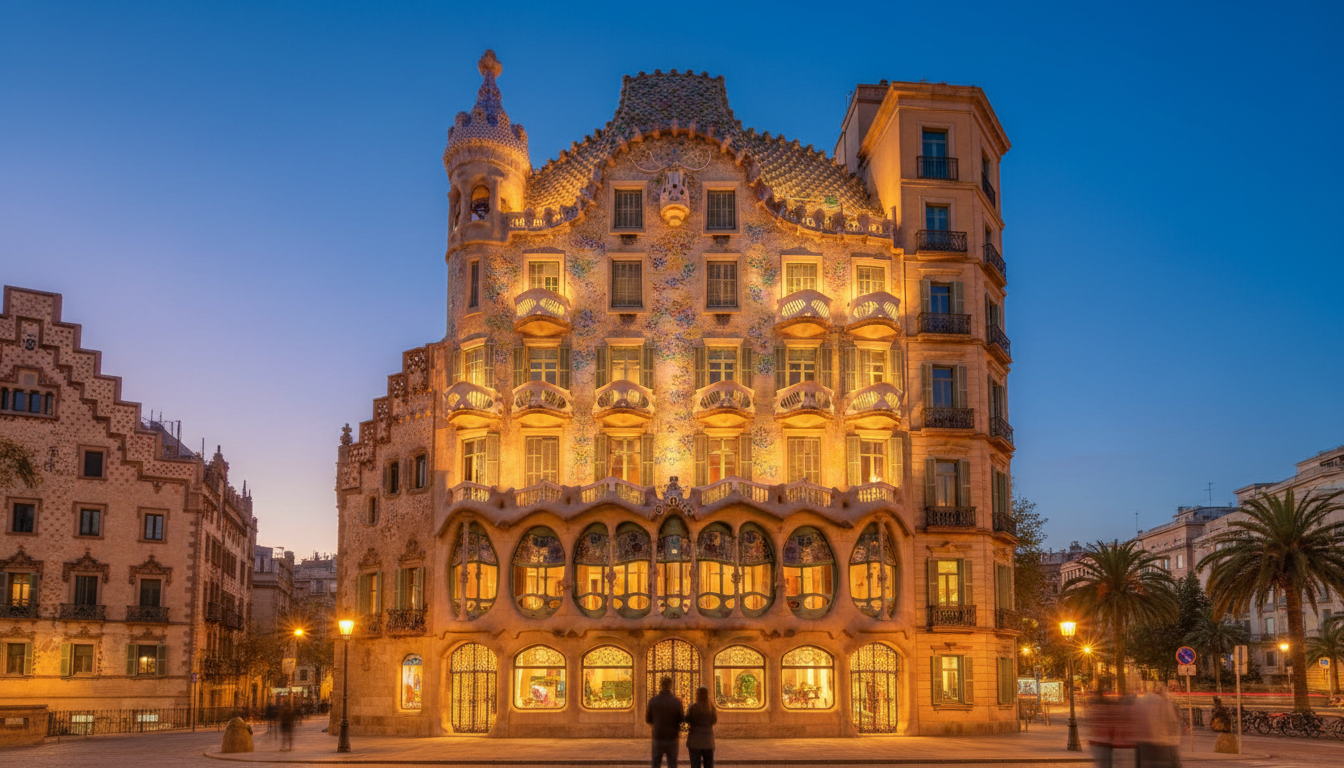 Casa Batlls faade at twilight, illuminated from within, showing the skull-like balconies and organic
Free Beaches and Waterfront Activities in Barcelona
Barcelona's beaches are public, free, and—I'll be honest—not Spain's best. The water isn't Caribbean-clear, and in July-August, you'll be packed in like sardines. But they're still pretty great, especially if you know the tricks.
Barceloneta: The Classic
This is the main beach, and yes, it gets crowded. But here's my move: go at 7 AM. Seriously. The beach is nearly empty, the light is golden, and you can swim without accidentally kicking a stranger. Bring coffee from your home exchange apartment in a thermos. Feel smug about your life choices.
The chiringuitos (beach bars) open around 10 AM if you want breakfast with a view. Prices are reasonable—expect €3-4 for a café con leche.
Bogatell and Mar Bella: The Local Favorites
Walk 15 minutes north of Barceloneta and the crowds thin dramatically. Bogatell Beach is where I actually spend my beach days—it's cleaner, calmer, and has better facilities. The water sports rental places here offer free-to-watch entertainment as tourists attempt paddleboarding for the first time.
Mar Bella has a nudist section if that's your thing. No judgment. Also excellent beach volleyball courts that are free to use.
The Waterfront Promenade
The walk from Barceloneta to the Forum (about 4 km) is one of my favorite free activities in Barcelona. You pass the Olympic Port, Frank Gehry's massive fish sculpture, and increasingly modern architecture. Pack a picnic from Mercat de Sant Josep (La Boqueria) and find a bench facing the sea.
Montjuïc: A Mountain of Free Things to Do
Montjuïc is criminally underrated by tourists who only visit for the castle (€9) or the cable car (€13 one way). The entire mountain is basically a free adventure playground.
The Magic Fountain Show
Every Thursday through Sunday evening (check seasonal schedules), the Font Màgica puts on a free light-and-music show that's genuinely spectacular. Get there 20 minutes early for a good spot. Yes, it's touristy. Yes, you'll still be impressed. The show runs about 30 minutes with water jets dancing to everything from classical music to Queen.
Montjuïc Castle Grounds
The castle interior costs money, but the grounds around it are free and offer the best panoramic views of Barcelona, the port, and the Mediterranean. Walk up (it's a solid 30-minute hike from Plaça Espanya) or take the cheap public bus (€2.40). The gardens along the way—Jardins de Mossèn Costa i Llobera with its cactus collection, Jardins del Mirador for sunset views—are all free.
Olympic Ring Area
The 1992 Olympics transformed Barcelona, and you can still feel that energy at the Olympic Ring. The stadium exterior, the Palau Sant Jordi, and the telecommunications tower are all free to admire. The Botanical Garden nearby is free on Sundays after 3 PM.
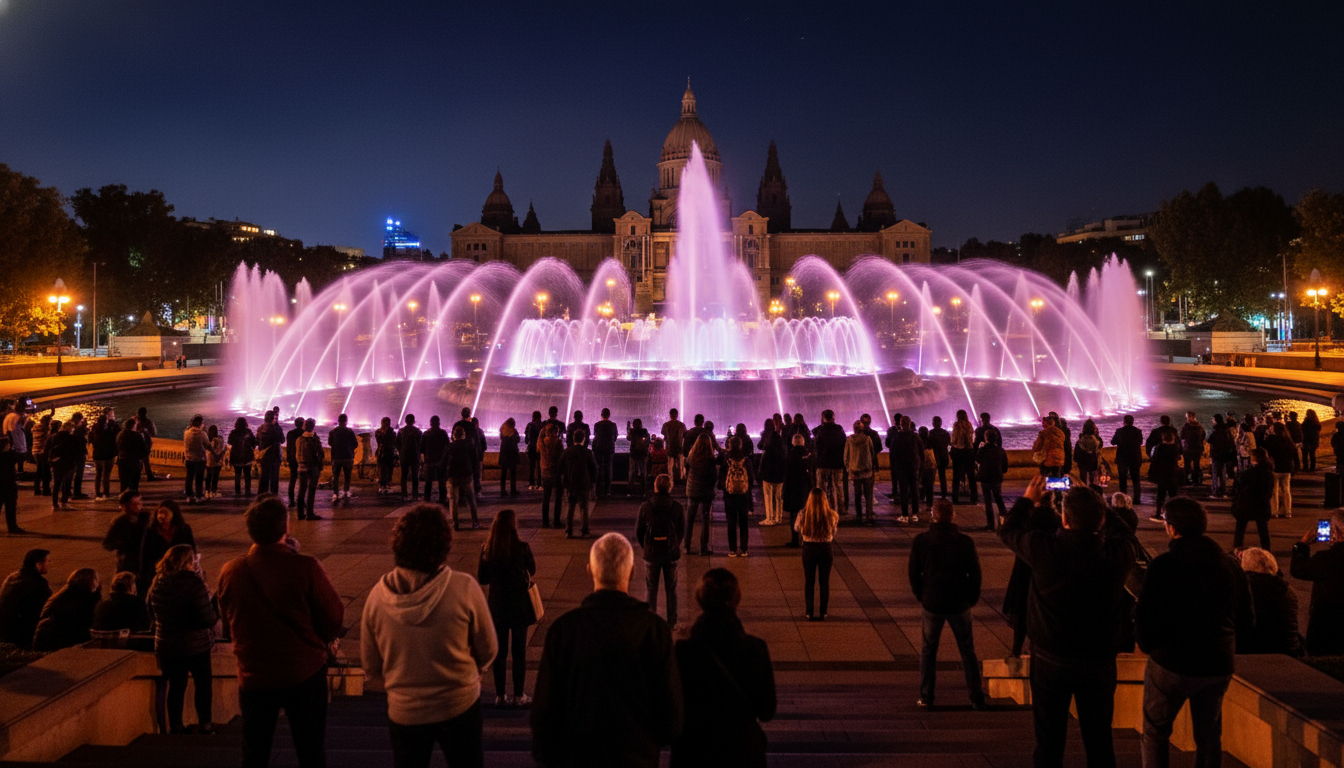 Font Mgica at night with water jets illuminated in purple and pink, the silhouette of the National P
Free Markets, Food, and Neighborhood Exploration
One of the best free activities in Barcelona is simply wandering through neighborhoods with no agenda. But if you want structure, here's my route.
Gràcia: My Favorite Barcelona Neighborhood
I've done three home exchanges in Gràcia, and I'm not remotely objective about it. This former village (absorbed into Barcelona in 1897) still feels like its own town. The plaças—Plaça del Sol, Plaça de la Vila de Gràcia, Plaça de la Virreina—are where locals actually hang out.
On weekday mornings, Mercat de l'Abaceria Central is a free sensory experience. You don't have to buy anything (though the olives are incredible, around €2 for a generous portion). Just walk through, absorb the chaos, watch grandmothers argue with fishmongers.
If you're home swapping in Gràcia during the Festa Major (mid-August), you've hit the jackpot. The streets transform into decorated wonderlands, with competitions between neighborhoods. Completely free and absolutely wild.
Sant Antoni: The Emerging Favorite
The renovated Mercat de Sant Antoni is gorgeous—a 19th-century iron structure with a modern interior. Free to wander. Sunday mornings, the streets around it host a book and coin market that's been running since 1876.
Poblenou: Post-Industrial Cool
This former industrial neighborhood is Barcelona's Brooklyn. The Rambla del Poblenou (infinitely more pleasant than the famous Rambla) is lined with cafés and leads to the beach. The street art in this area is some of the city's best—take yourself on a free walking tour.
Free Museums and Cultural Experiences in Barcelona
Barcelona's museums aren't cheap (€12-15 on average), but nearly all of them offer free admission windows.
Sunday Afternoon Museum Circuit
Most municipal museums are free on Sundays from 3 PM and all day on the first Sunday of each month. This includes the Picasso Museum (usually €12), MUHBA (Barcelona History Museum, usually €7), and the Museu Frederic Marès (usually €4.20).
The Picasso Museum free hours get crowded—like, really crowded. My strategy: arrive at 2:45 PM and wait in line. Or go on the first Sunday of the month, when it opens free all day, and arrive right at opening (10 AM).
MACBA Plaza: Free Entertainment
The plaza outside the Museum of Contemporary Art is Barcelona's unofficial skateboarding headquarters. Even if you don't go inside (€11, free Saturdays 4-8 PM), watching the skaters is free entertainment. The architecture of the building itself—Richard Meier's white modernist cube—is worth seeing.
CaixaForum: Always Free Exhibitions
This one's a cheat because it's technically a bank-sponsored cultural center, not a museum. But CaixaForum, housed in a stunning Modernista factory at the base of Montjuïc, always has free exhibitions. The building alone—designed by Josep Puig i Cadafalch—is worth the visit.
Hidden Free Gems Most Tourists Miss
After multiple home exchanges in Barcelona, I've accumulated a list of free experiences that don't appear in most guidebooks.
Bunkers del Carmel: The Best View in Barcelona
Forget the paid viewpoints. The Bunkers del Carmel—anti-aircraft batteries from the Spanish Civil War—offer 360-degree views of the entire city, the mountains, and the sea. It's free, it's spectacular, and it's become a sunset pilgrimage spot for locals and in-the-know visitors.
Getting there requires effort: a steep walk from Alfons X metro or a bus to the base of the hill. Bring drinks and snacks. Stay for sunset. Thank me later.
Laberint d'Horta: Barcelona's Oldest Garden
This 18th-century neoclassical garden has an actual hedge maze (the oldest in Spain) and is free on Wednesdays and Sundays. It's way off the tourist track in the Horta-Guinardó district, which means you might have the cypress-lined pathways to yourself.
The Cloisters of the Hospital de Sant Pau
The Modernista hospital complex (a UNESCO site) charges €15 for the full tour, but the gardens and exterior grounds are free to wander. The buildings are stunning—Lluís Domènech i Montaner's masterpiece of Catalan Art Nouveau. Early morning, before the tour groups arrive, is magical.
Free Walking Tours
Several companies offer "free" walking tours (tip-based) that are genuinely excellent. I've done the Sandeman's tour of the Gothic Quarter and was impressed. You'll spend 2-3 hours getting context that makes all the free self-exploration more meaningful. Tip what you think it's worth—€10-15 is standard.
Planning Your Free Barcelona Days: A Sample Itinerary
Here's how I'd structure a day of free activities in Barcelona, assuming you're staying in a home exchange apartment.
Morning (7-10 AM): Wake up in your borrowed apartment. Make coffee in the kitchen (one of the underrated joys of home swapping). Head to Barceloneta beach for an early swim or walk. Return via the Gothic Quarter, stopping at the Cathedral to see the geese.
Midday (10 AM-2 PM): Wander through El Born. Free visit to El Born Cultural Centre. Browse the shops (looking is free). Grab lunch ingredients at Mercat de Santa Caterina—about €8 for bread, cheese, jamón, and fruit.
Afternoon (2-6 PM): Picnic in Ciutadella Park (free, gorgeous). If it's Sunday, hit the Picasso Museum free hours at 3 PM. Otherwise, walk up Passeig de Gràcia to admire Gaudí's houses.
Evening (6-10 PM): Take the metro to Montjuïc for sunset at the castle grounds. If it's Thursday-Sunday, catch the Magic Fountain show at 9:30 PM (summer schedule). Walk back through Poble Sec for tapas—okay, that part costs money, but you've earned it.
Total cost: €8 for lunch ingredients, €2.40 for metro. Everything else? Free.
Making the Most of Your Home Exchange Base
The real secret to enjoying free activities in Barcelona isn't just knowing where to go—it's having a home base that makes everything easier.
When you're home swapping, you have a kitchen. That means breakfast costs €2 instead of €12. You have a washing machine, so you pack lighter. You have a local's perspective—their books, their maps, their neighborhood recommendations.
My last Barcelona host left me a folder with her favorite free experiences. One was a weekly free outdoor cinema in her plaza during summer. Another was a hiking route in Collserola Natural Park (free, stunning, 20 minutes from the city center). A third was simply: "The light in our living room at 5 PM is perfect for reading."
She was right.
On SwappaHome, I've found Barcelona apartments in Gràcia, Poblenou, and Sant Antoni—all neighborhoods where you can live like a local rather than a tourist. The credit system means I can host travelers in San Francisco, then use those credits to stay anywhere. No direct swap required, no money changing hands for accommodation.
It's not just about saving money (though saving €150-200/night on hotels doesn't hurt). It's about the kind of trip where you discover that the best free activity in Barcelona might just be sitting on someone's balcony, watching the neighborhood wake up, feeling—for a moment—like you belong here.
Barcelona doesn't require a big budget. It requires curiosity, comfortable shoes, and maybe an early alarm for those sunrise beach walks. The city gives so much away for free—you just have to know where to look.
And if you're staying in someone's home instead of a hotel room? You're already looking in the right places.
Frequently Asked Questions
What are the best free activities in Barcelona for families?
Barcelona's beaches are free and family-friendly, especially Bogatell with its calmer waters and clean facilities. Ciutadella Park has a free zoo-adjacent playground, rowboat lake (€6 for 30 minutes, but watching is free), and the mammoth fountain. The Magic Fountain show captivates kids of all ages, and Park Güell's free zones offer space to run around with incredible views.
Is Barcelona expensive to visit on a budget?
Barcelona can be surprisingly affordable with the right approach. Accommodation is the biggest expense—hotels average €150-200/night—but home swapping eliminates this cost entirely. Food at markets runs €8-12 for a full meal, public transport is €2.40 per ride (or €11.35 for a T-Casual 10-trip card), and dozens of attractions are free. Budget travelers can comfortably spend €30-50/day excluding accommodation.
When are Barcelona museums free to visit?
Most Barcelona municipal museums offer free admission on Sundays from 3 PM until closing and all day on the first Sunday of each month. This includes the Picasso Museum, MUHBA, and Museu Frederic Marès. CaixaForum exhibitions are always free. The MACBA offers free entry on Saturdays from 4-8 PM. Check individual museum websites for current schedules as times vary seasonally.
How much money can you save with home exchange in Barcelona?
Home exchange saves €150-200 per night compared to mid-range Barcelona hotels, totaling €1,050-1,400 for a week-long stay. Beyond accommodation, having a kitchen saves approximately €20-30 daily on meals. Over a two-week trip, home swapping can save €2,500-3,500 compared to traditional hotel stays with restaurant dining—enough to fund several return trips.
What is the best free viewpoint in Barcelona?
The Bunkers del Carmel offers Barcelona's best free panoramic views, with 360-degree vistas of the city, Mediterranean Sea, and surrounding mountains. Unlike paid viewpoints, it's free 24/7 and particularly spectacular at sunset. The Montjuïc castle grounds and Park Güell's free zone also offer excellent views, though with more limited perspectives than the Bunkers.

Published by
SwappaHome
SwappaHome Editorial Team
Home Exchange & Slow Travel Editorial
The SwappaHome Editorial Team brings together travel research, home-exchange community insights, and platform data to produce practical guides for first-time and experienced home swappers. Every article cites real platforms, current market rates, and verifiable city-level facts so readers can make informed decisions without guessing.
Ready to try home swapping?
Join SwappaHome and start traveling by exchanging homes. Get 7 free credits when you sign up!
Related articles
Bachelor and Bachelorette Parties in Singapore: The Complete Home Swap Group Guide for 2026
Planning a bachelor or bachelorette party in Singapore? Discover how home swapping lets groups of 6-12 stay together in luxury condos, saving thousands while partying in Marina Bay.
Cycling in Lisbon: 7 Home Swap Bike Tour Itineraries for Every Rider
Discover the best cycling routes in Lisbon with these home swap bike tour itineraries—from waterfront paths to hilltop adventures, all starting from your borrowed home.
Graduation Trip to Barcelona: How Home Swapping Gives New Graduates the Ultimate Celebration
Planning a graduation trip to Barcelona? Discover how home swapping lets new graduates explore Spain's most vibrant city without the hostel crowds or hotel costs.