
City Break Home Swap: 48 Hours in Europe's Capitals (2026 Guide)

SwappaHome Editorial Team
Home Exchange & Slow Travel Editorial
Plan the perfect city break home swap in Europe's capitals. Real neighborhood picks, costs, and 48-hour itineraries for Paris, Rome, Lisbon, and more.
Your phone buzzes at 6 AM. You're not in some hotel room with blackout curtains and a minibar you'll never touch—you're in a sun-filled apartment in Lisbon's Alfama district, and the smell of fresh bread is already drifting up from the padaria two floors below. This is what a city break home swap actually feels like: waking up in someone's real life, in a real neighborhood, with a real espresso machine and a handwritten note about where to find the best pastéis de nata.
The city break home swap has become one of the fastest-growing ways to experience Europe's capitals. A weekend in Paris, Rome, or Vienna hits differently when you're staying in a local's apartment rather than a cookie-cutter hotel room near the train station. You get space, a kitchen, a neighborhood—and you spend a fraction of what traditional accommodation costs.
 Morning light streaming through tall windows of a Parisian apartment, coffee cup on a marble bistro
Here's the thing most travel guides won't tell you: a 48-hour city break requires different planning than a week-long trip. You don't have time for mistakes. You can't waste half a day figuring out the metro or realizing you're staying in a soulless business district 45 minutes from anything interesting. The neighborhood you choose, the timing of your arrival, the way you structure those precious hours—it all matters more when the clock is ticking.
This guide breaks down exactly how to plan a city break home swap in Europe's most compelling capitals. Real neighborhoods. Real costs. Real 48-hour itineraries that don't require superhuman stamina or a trust fund.
Why a City Break Home Swap Beats Traditional Hotels
The math alone makes the case. A decent hotel in central Paris runs €180–280 per night in 2026. A comparable Airbnb in the same area? €150–220, plus cleaning fees that often add another €50–80. SwappaHome members exchange stays using a simple credit system—one credit per night, regardless of whether you're staying in a studio in Budapest or a three-bedroom in Amsterdam.
But cost isn't even the most compelling argument. The real advantage is where you end up.
Hotels cluster in predictable zones: near train stations, in business districts, along tourist corridors. These areas are designed for throughput, not for living. You'll find chain restaurants, souvenir shops, and that particular brand of international blandness that makes every city feel the same.
Home swaps tend to be in actual residential neighborhoods. The SwappaHome community consistently reports that their best city break experiences happen in areas most tourists never see—the quiet squares where locals drink their morning coffee, the markets where prices aren't inflated for visitors, the streets where you hear more native language than English.
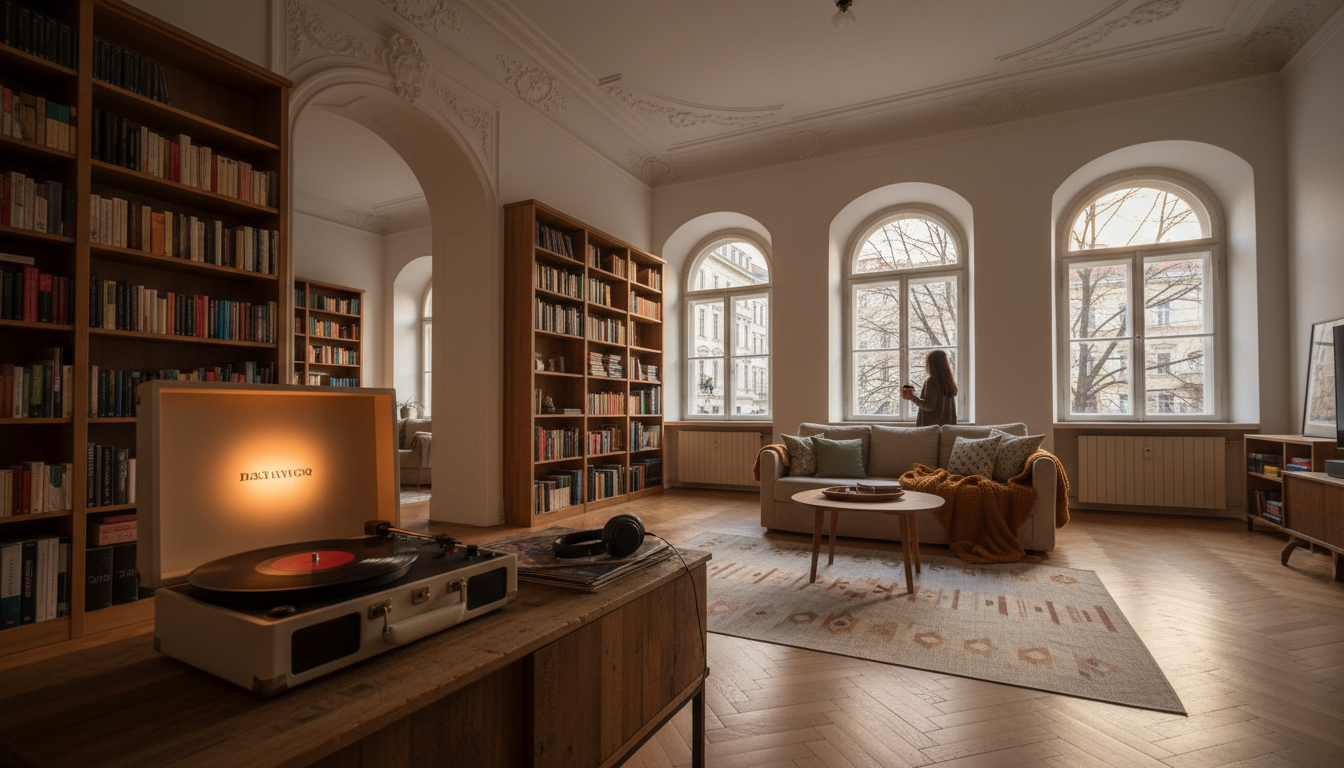 Cozy living room in a Vienna apartment with high ceilings, built-in bookshelves, a record player, an
The Space Factor
Nobody mentions this in hotel reviews: square footage. The average European hotel room runs 18–25 square meters. That's fine for sleeping, but a city break isn't just about sleeping. You want space to spread out your map, to sit with a glass of wine and plan tomorrow's route, to cook a simple meal after a long day of walking instead of facing another restaurant.
Home swaps typically offer 50–100 square meters—sometimes more. A separate kitchen. A living area. Often a balcony or terrace. After eight hours of exploring a new city, that extra space isn't a luxury. It's recovery infrastructure.
The Insider Advantage
Most SwappaHome hosts leave detailed notes about their neighborhoods. Not the generic tourist recommendations you'd find in a guidebook, but the specific intel that makes a 48-hour trip feel like a week: which bakery opens earliest, where to avoid the lunch rush, which museum has free entry on which evening, the shortcut through the park that saves 15 minutes.
This kind of local knowledge is worth more than any concierge service. When you only have 48 hours, knowing that the restaurant around the corner doesn't take reservations but has no line before 7 PM can save your entire evening.
Choosing the Right European Capital for Your City Break Home Swap
Not all city breaks are created equal. Some capitals reward a 48-hour visit; others really need more time to justify the journey. Here's an honest assessment based on what the SwappaHome community reports.
Best for First-Time City Break Swappers: Lisbon
Lisbon consistently ranks as one of the easiest European capitals for a quick home swap trip. The city is compact enough to cover significant ground in 48 hours, the public transport is excellent, and the cost of living means your non-accommodation spending goes further.
Where to swap: Alfama and Mouraria offer the classic Lisbon experience—steep streets, azulejo tiles, fado music drifting from open windows. Príncipe Real and Santos attract a younger, more design-conscious crowd. Avoid staying near Rossio or Baixa unless you enjoy being surrounded by souvenir shops.
Realistic costs: Dinner for two with wine runs €40–60 in local neighborhoods. A day pass for public transport costs €6.80. Entry to most museums is €8–15.
The 48-hour sweet spot: Lisbon rewards early mornings and late evenings. The city empties of day-trippers by 6 PM, and the magic hour light over the Tagus River is worth rearranging your schedule for.
 Narrow cobblestone street in Lisbons Alfama district at golden hour, traditional tiled buildings, la
Best for Culture Density: Vienna
If your definition of a perfect city break involves world-class museums, opera, and coffee houses with century-old traditions, Vienna delivers more per hour than almost any other European capital. The historic center is UNESCO-listed and remarkably walkable.
Where to swap: The 7th district (Neubau) offers the best balance of character and convenience—close to the MuseumsQuartier, full of independent shops and cafes, but without the tourist crowds of the 1st district. The 4th district (Wieden) is another strong option, especially for food lovers.
Realistic costs: Vienna isn't cheap, but it's not Paris either. Coffee and cake at a traditional Kaffeehaus runs €10–15. Opera standing-room tickets start at €15. The Vienna Pass (€79 for 24 hours) only makes sense if you're doing multiple museums back-to-back.
The 48-hour sweet spot: Vienna's museums are genuinely excellent but also exhausting. Pick two, maximum. Spend the rest of your time walking, eating, and sitting in coffee houses like a local.
Best for Food-Focused Trips: Rome
Rome is overwhelming if you try to see everything. It's perfect if you accept that 48 hours means choosing: either you're doing Vatican-Colosseum-Forum, or you're eating your way through Testaccio and Trastevere. The second option tends to generate better memories.
Where to swap: Trastevere is the classic recommendation for good reason—narrow streets, excellent restaurants, a neighborhood feel that survives despite the tourists. Testaccio is grittier and more authentically Roman, with the city's best food market. Monti offers a central location with boutique-neighborhood charm. Avoid anything near Termini station.
Realistic costs: A proper Roman meal (antipasto, primo, secondo, wine) runs €35–50 per person at a neighborhood trattoria. Supplì (fried rice balls) from a street vendor cost €2–3. The Roma Pass (€33 for 48 hours) includes transport and skip-the-line entry to your first museum.
The 48-hour sweet spot: Rome's rhythm matters. Restaurants don't open for dinner until 7:30 or 8 PM. The city shuts down between 1 and 4 PM. Plan around these rhythms instead of fighting them.
Best for Architecture and Design: Copenhagen
Copenhagen punches above its weight for design lovers. The city is essentially an open-air museum of Danish modernism, with world-class contemporary architecture scattered throughout. It's also flat, bikeable, and surprisingly manageable in 48 hours.
Where to swap: Vesterbro has transformed from rough to hip over the past decade—think Meatpacking District vibes with excellent restaurants and bars. Nørrebro is more diverse and slightly edgier. Frederiksberg feels like a wealthy village within the city. Avoid Indre By (the old center) unless you want to pay premium prices for a tourist experience.
Realistic costs: Copenhagen is expensive. A casual dinner runs €25–40 per person. A beer costs €7–9. The Copenhagen Card (DKK 489 / ~€65 for 48 hours) includes transport and 80+ attractions—worth it if you're museum-hopping.
The 48-hour sweet spot: Rent a bike. Copenhagen's cycling infrastructure is legendary, and you'll cover three times as much ground as on foot. Many SwappaHome hosts include bikes with their listings.
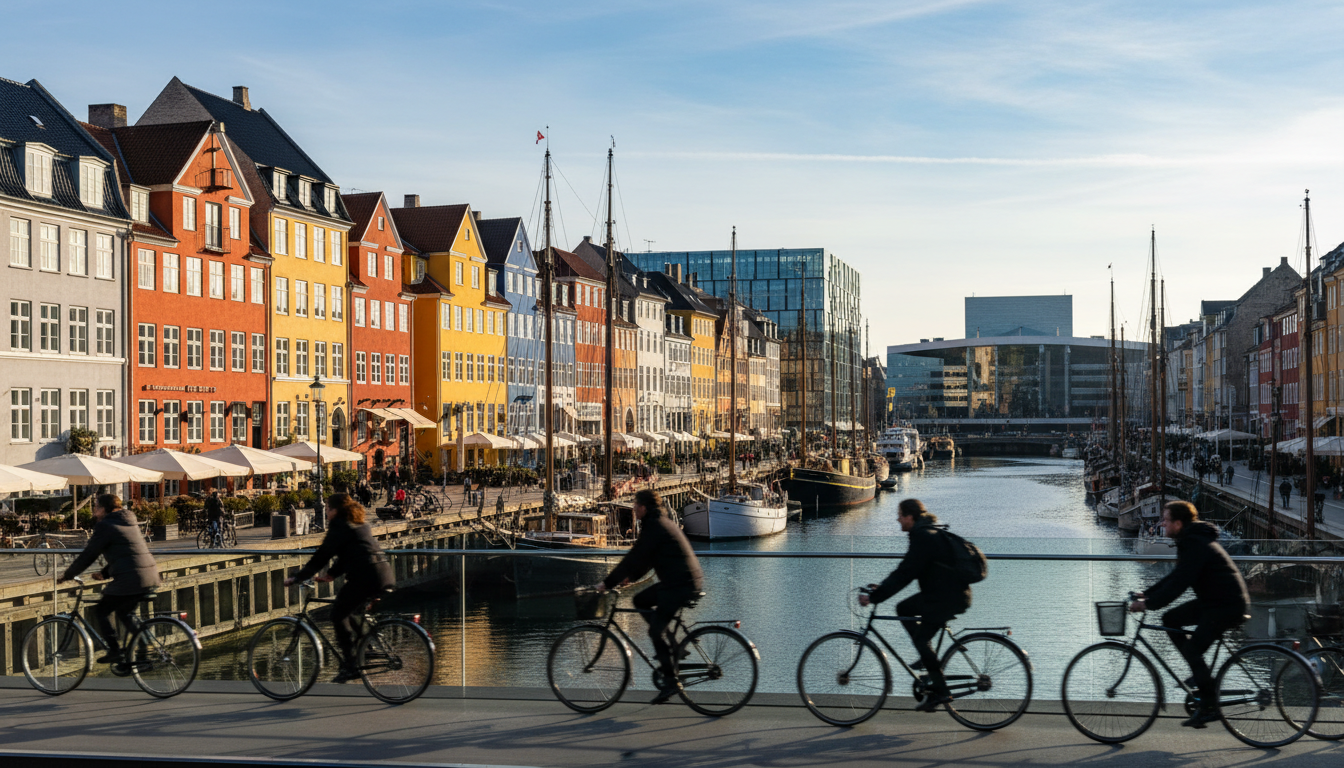 Modern Copenhagen waterfront at Nyhavn with colorful historic buildings, cyclists crossing a bridge,
Best for Budget City Breaks: Budapest
Budapest offers arguably the best value in European capitals. The city is stunning—genuinely, jaw-droppingly beautiful in parts—and your money stretches remarkably far. A city break home swap here means experiencing grandeur without the grandeur prices.
Where to swap: The 7th district (Jewish Quarter) puts you in the middle of the ruin bar scene and some of the city's best restaurants. The 5th district (Belváros) is more central and touristy but undeniably convenient. Buda side (1st and 2nd districts) offers quieter, more residential vibes with castle views.
Realistic costs: Dinner with wine runs €15–25 per person. Thermal bath entry costs €20–30. A 72-hour transport pass is about €15. You can genuinely have an excellent 48-hour trip spending under €200 on everything except flights.
The 48-hour sweet spot: Budapest is a city of two halves—literally. Don't try to see everything. Pick Pest (flat, urban, nightlife) or Buda (hilly, historic, thermal baths) as your base and explore deeply rather than broadly.
Planning Your 48-Hour City Break Home Swap: The Practical Details
The difference between a mediocre city break and an exceptional one often comes down to logistics. Here's what experienced home swappers have figured out about making short trips work.
Timing Your Arrival
Flight timing matters more for a 48-hour trip than any other kind of travel. The community consensus: arrive by early afternoon on day one, depart late evening on day two. This maximizes usable hours without requiring red-eye flights or expensive airport hotels.
Avoid Friday evening arrivals if possible. European capitals are crowded on Saturday mornings, and you'll spend your first precious hours fighting for brunch tables and museum tickets. Thursday evening arrivals let you hit the city fresh on Friday when locals are at work and tourists haven't yet flooded in for the weekend.
The Check-In Coordination
Unlike hotels, home swaps require coordination. You're staying in someone's actual home, which means check-in times are usually fixed rather than flexible. This matters enormously for a 48-hour trip.
Best practice: confirm check-in arrangements at least a week in advance. Ask about early check-in possibilities—many hosts are happy to accommodate if they know your schedule. If early check-in isn't possible, ask if you can drop bags before the official time. Losing two hours to luggage logistics is painful when you only have 48.
What to Pack (Less Than You Think)
A 48-hour city break doesn't require checked luggage. Ever. The freedom of traveling with just a carry-on transforms the entire experience: no waiting at baggage claim, no dragging a suitcase over cobblestones, no anxiety about lost bags eating into your limited time.
The essentials: two outfits that work day-to-night, comfortable walking shoes (you'll cover 15–25 km), a light layer for evening, phone charger, and whatever toiletries your host doesn't provide. That's it. Everything else is weight you'll regret.
 Small carry-on bag open on a bed with neatly rolled clothes, a guidebook, walking shoes, and a camer
Building Your 48-Hour Itinerary
The temptation with any city break is to over-schedule. Resist it. The most consistent advice from the SwappaHome community: plan for 60% of your available time. The other 40% will fill itself with unexpected discoveries, longer-than-expected meals, and the simple pleasure of wandering.
A realistic 48-hour structure:
Day 1 Afternoon: Arrive, check in, explore your immediate neighborhood on foot. Find the nearest good coffee, the closest grocery store, the park where locals walk their dogs. This grounding ritual prevents the frantic "where am I" feeling that ruins so many short trips.
Day 1 Evening: One planned activity—a restaurant reservation, a concert, a sunset viewpoint—followed by wherever the night takes you.
Day 2 Morning: Your one "must-see" item, ideally something that opens early before crowds arrive.
Day 2 Afternoon: The wandering hours. Pick a neighborhood you haven't seen and get lost in it. This is where the best city break memories come from.
Day 2 Evening: Dinner in your neighborhood, pack, early-ish night before your departure.
The Neighborhood Immersion Strategy
Here's a counterintuitive approach that seasoned city break swappers swear by: don't leave your neighborhood for the first few hours.
When you arrive somewhere new, the instinct is to immediately rush toward the famous landmarks. Fight that instinct. Instead, spend your first 2–3 hours within a 10-minute walk of where you're staying. Find the local café. Browse the neighborhood shops. Sit in the nearest park and watch people.
This does two things. First, it lets you decompress from travel and actually arrive mentally, not just physically. Second, it gives you a home base—a place that feels familiar—which makes the rest of your exploring feel like adventure rather than disorientation.
City Break Home Swap: Neighborhood Deep Dives
Generic "top things to do" lists are useless for 48-hour trips. What you need is specific, neighborhood-level intelligence. Here's what travelers in the SwappaHome community recommend for four of Europe's most popular city break destinations.
Paris: The Marais vs. Montmartre Decision
Every Paris city break swapper faces the same choice: stay central in the Marais (3rd/4th arrondissements) or go for the village atmosphere of Montmartre (18th).
The Marais puts you walking distance from Notre-Dame, the Louvre, and the Seine. The neighborhood itself is beautiful—medieval streets, Jewish bakeries, LGBTQ+ bars, some of the city's best falafel. The downside: it's popular. Weekend crowds can be intense, and you'll pay premium prices for everything.
Montmartre offers the Paris of postcards—Sacré-Cœur, artists' squares, steep staircases, panoramic views. It feels like a village, and the further you get from the basilica, the more local it becomes. The downside: it's not central. Getting to the Louvre or Saint-Germain requires metro rides that eat into your 48 hours.
The honest answer: if this is your first Paris city break, stay in the Marais. The convenience outweighs the crowds. If you've done Paris before and want a different experience, Montmartre rewards repeat visitors.
Paris 48-hour must: The Musée de l'Orangerie opens at 9 AM and is usually empty for the first hour. Monet's Water Lilies in near-solitude is worth adjusting your entire schedule for.
Amsterdam: Beyond the Center
Amsterdam's center (Dam Square, Red Light District, main canals) is beautiful but exhausting. The city's real charm lives in neighborhoods most 48-hour visitors never reach.
De Pijp is Amsterdam's most livable neighborhood—the Albert Cuyp Market runs daily, the restaurants are excellent, and the vibe is young professional rather than tourist. It's a 15-minute bike ride from Central Station.
Jordaan offers canal-house charm without the central chaos. The streets are quieter, the shops more interesting, and the cafés (brown bars) feel genuinely local.
Amsterdam-Noord is the wild card. Across the free ferry from Central Station, this former industrial area has transformed into a hub for creative spaces, waterfront restaurants, and some of the city's best nightlife. It's not pretty in the traditional Amsterdam sense, but it's exciting.
Amsterdam 48-hour must: Skip the Anne Frank House (2-hour queues even with tickets) and visit the Resistance Museum instead. It tells the same historical story with a fraction of the crowds.
Berlin: The Neighborhood That Matches Your Personality
Berlin is too big and too varied for a single neighborhood recommendation. The right choice depends entirely on what you want from your 48 hours.
Mitte is central, convenient, and increasingly generic. Good for first-timers who want easy access to Museum Island and the Brandenburg Gate. Less good for anyone seeking the "real" Berlin.
Kreuzberg is the Berlin of reputation—multicultural, political, excellent Turkish food, legendary nightlife. It's grittier than the postcards suggest but genuinely vibrant.
Prenzlauer Berg has gentrified from its post-reunification bohemian days but remains charming—tree-lined streets, excellent brunch culture, young families pushing strollers.
Neukölln is where the artists and students priced out of Kreuzberg have landed. It's the most "current" Berlin but also the least convenient for traditional sightseeing.
Berlin 48-hour must: The East Side Gallery (remaining stretch of the Berlin Wall) is free and best visited at sunrise before tour groups arrive.
Barcelona: The Neighborhood Everyone Gets Wrong
Most first-time Barcelona visitors stay in the Gothic Quarter or near La Rambla. Both are mistakes for a city break home swap.
The Gothic Quarter is atmospheric but cramped, noisy, and relentlessly touristy. La Rambla is a pickpocket corridor with overpriced restaurants. You'll spend your 48 hours fighting crowds instead of enjoying the city.
Gràcia is where Barcelona actually lives. A former independent village absorbed by the city, it retains its own squares, its own festivals, its own rhythm. The restaurants are half the price of the center, the streets are walkable and human-scaled, and you're still only 20 minutes from the Sagrada Família.
Barceloneta makes sense if beach time is essential to your trip. The neighborhood has maintained some fishing-village character despite the tourists, and waking up to Mediterranean views changes the entire city break experience.
El Born is the compromise choice—central enough to walk everywhere, hip enough to feel interesting, residential enough to have actual neighbors.
Barcelona 48-hour must: Book Sagrada Família tickets for 9 AM, the moment it opens. The morning light through those windows is worth waking up early for.
Making Your City Break Home Swap Happen: The SwappaHome Process
The mechanics of arranging a city break home swap are simpler than most people expect. Here's how it typically works.
Finding the Right Swap
SwappaHome's search function lets you filter by city, dates, and property type. For a 48-hour trip, prioritize:
- Location over size. A small apartment in the right neighborhood beats a large one in the wrong area.
- Transit access. Check walking distance to metro/tram stops. Anything over 10 minutes adds friction to short trips.
- Recent reviews. Look for hosts who've received guests in the past 6 months. Active members respond faster and maintain their spaces better.
- Detailed descriptions. Hosts who write thorough listings tend to be thorough about everything—check-in, communication, local recommendations.
The Request Process
Once you've identified potential swaps, send personalized requests. Mention your specific dates, introduce yourself briefly, and explain why their place appeals to you. Generic copy-paste messages get ignored; thoughtful requests get responses.
Expect some back-and-forth. Hosts often have questions about your travel plans, your experience with home swapping, or your own property. This isn't gatekeeping—it's the trust-building that makes the community work.
Preparing for Your Stay
Before you arrive, confirm:
- Exact check-in time and method (key lockbox, meeting in person, etc.)
- Check-out time and procedure
- WiFi password
- Any quirks about the apartment (tricky door locks, temperamental heating, etc.)
- Emergency contact information
Most hosts provide all this in advance. If they don't, ask. The five minutes spent confirming details saves hours of confusion later.
The City Break Home Swap Mindset
Here's the honest truth about 48-hour trips: they're not about seeing everything. They're about seeing something deeply enough that it stays with you.
Travelers who have the best city break experiences share a common approach. They pick one or two priorities—a museum, a neighborhood, a restaurant—and build their trip around those anchors. Everything else is bonus.
They also embrace the limitations. You're not going to understand Paris in 48 hours. You're going to understand your Paris: the café where you had that perfect morning, the street where you got lost and found something better, the view that made you stop and just look.
A home swap amplifies this approach. When you're staying in someone's actual apartment, in someone's actual neighborhood, you're not just visiting a city. You're borrowing a life for a weekend. And that borrowed life—the espresso machine, the balcony, the route to the corner bakery—becomes part of your memory of the place.
The city break home swap isn't about efficient tourism. It's about temporary belonging. Forty-eight hours of pretending you live somewhere beautiful, somewhere different, somewhere that expands your sense of what's possible.
That's worth more than any hotel minibar.
Frequently Asked Questions
How far in advance should I book a city break home swap?
For popular European capitals like Paris, Rome, and Amsterdam, booking 4–6 weeks ahead gives you the best selection of properties. Last-minute swaps (under 2 weeks) are possible but limit your neighborhood options significantly. During peak seasons—summer months and holiday periods—extend that window to 8–10 weeks for optimal choices.
Is a 48-hour city break home swap worth the travel time?
For destinations within a 2–3 hour flight, absolutely. The SwappaHome community consistently reports that even short trips feel substantial when you're staying in a real neighborhood rather than a transit-area hotel. The key is maximizing usable hours: arrive by early afternoon, depart late evening, and avoid checking bags to eliminate airport wait times.
What if something goes wrong during my city break home swap?
Communication is your first resource—most issues resolve quickly through direct messaging with your host. For anything serious, document the situation and reach out to both your host and the SwappaHome platform. Worth noting: arranging your own travel insurance that covers accommodation issues gives you backup options if a swap falls through unexpectedly.
Can I do a city break home swap if I've never home swapped before?
Yes—many SwappaHome members start with city breaks because the shorter duration feels lower-stakes than a week-long exchange. New members receive 7 free credits, enough for a full week of stays. For your first swap, consider cities with active home-swap communities (Lisbon, Amsterdam, Barcelona) where hosts are accustomed to welcoming newcomers.
How much can I realistically save with a city break home swap versus hotels?
In major European capitals, central hotels average €150–300 per night in 2026. A comparable home swap costs one credit per night regardless of location or property size. Over a 48-hour trip, that's €300–600 in accommodation savings—often enough to cover flights, leaving your entire trip nearly free compared to traditional booking methods.

Published by
SwappaHome
SwappaHome Editorial Team
Home Exchange & Slow Travel Editorial
The SwappaHome Editorial Team brings together travel research, home-exchange community insights, and platform data to produce practical guides for first-time and experienced home swappers. Every article cites real platforms, current market rates, and verifiable city-level facts so readers can make informed decisions without guessing.
Ready to try home swapping?
Join SwappaHome and start traveling by exchanging homes. Get 7 free credits when you sign up!
Related articles

Bachelor and Bachelorette Parties in Singapore: The Complete Home Swap Group Guide for 2026
Planning a bachelor or bachelorette party in Singapore? Discover how home swapping lets groups of 6-12 stay together in luxury condos, saving thousands while partying in Marina Bay.

Cycling in Lisbon: 7 Home Swap Bike Tour Itineraries for Every Rider
Discover the best cycling routes in Lisbon with these home swap bike tour itineraries—from waterfront paths to hilltop adventures, all starting from your borrowed home.

Graduation Trip to Barcelona: How Home Swapping Gives New Graduates the Ultimate Celebration
Planning a graduation trip to Barcelona? Discover how home swapping lets new graduates explore Spain's most vibrant city without the hostel crowds or hotel costs.