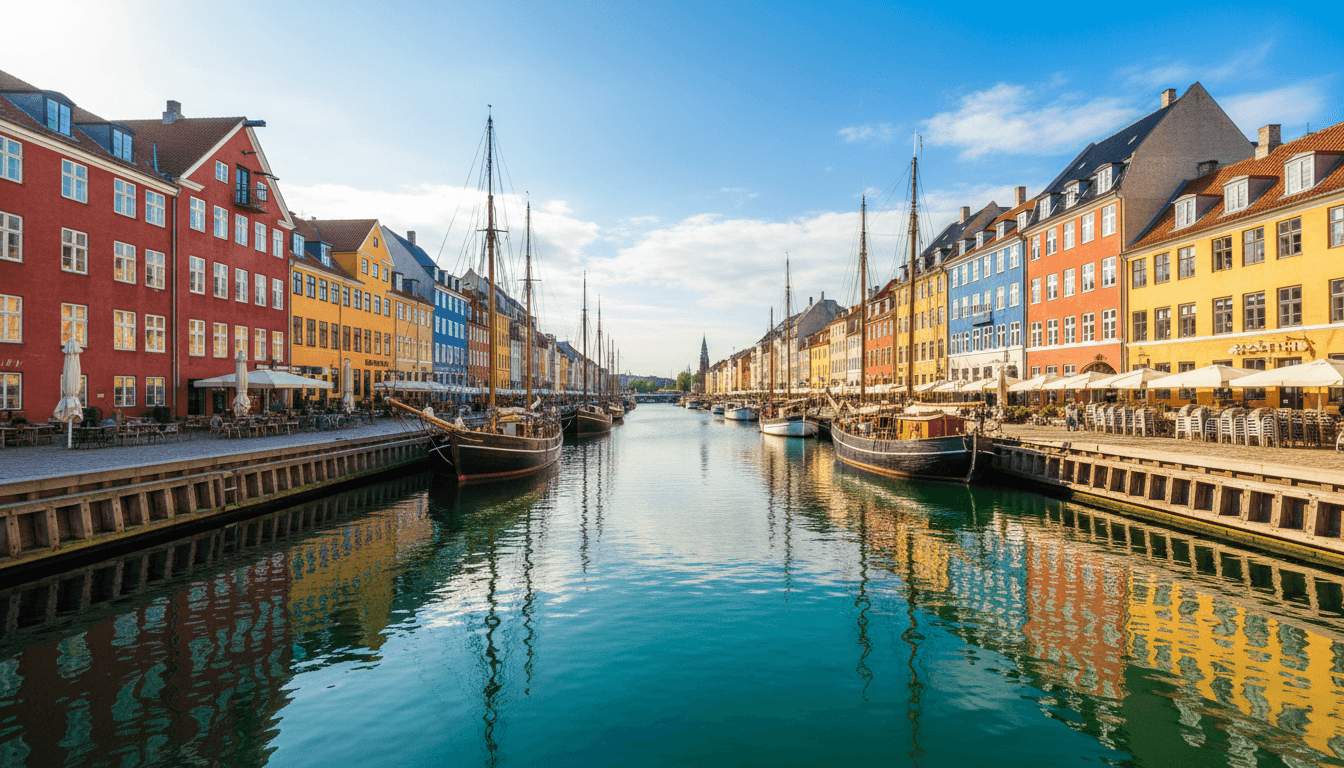
Copenhagen for Couples: Intimate Home Exchange Experiences That Transform Your Trip

SwappaHome Editorial Team
Home Exchange & Slow Travel Editorial
Discover why Copenhagen for couples becomes magical with home exchange—from cozy Nørrebro apartments to candlelit Vesterbro lofts. Real tips from 7 years of swapping.
The first morning I woke up in Copenhagen with my partner, I genuinely thought we'd made a mistake. Not about the trip—about every hotel-bound vacation we'd ever taken before.
We were staying in a third-floor apartment in Vesterbro, borrowed from a Danish architect who was crashing at our San Francisco place that same week. Sunlight poured through those impossibly tall Scandinavian windows. My partner was already up, wrestling with the Italian espresso machine, and I could hear Danes cycling past on the cobblestones below. The whole scene felt like someone else's life—except it wasn't. For the next ten days, this was ours.
That trip rewired how I think about Copenhagen for couples. And honestly? It's why I've been back four times since, always through home exchange, always stumbling onto something new about this city that seems almost engineered for two people falling deeper in love.
Why Copenhagen Works Better for Couples When You Skip the Hotels
I'll be blunt: Copenhagen is expensive. Like, genuinely jaw-dropping if you're not braced for it. A mid-range hotel in the city center? $250-350 USD a night. Dinner for two at a decent spot? Easily $150 before you've even looked at the wine list. The city doesn't apologize for any of this—it's just the cost of living somewhere with one of the world's highest standards of living.
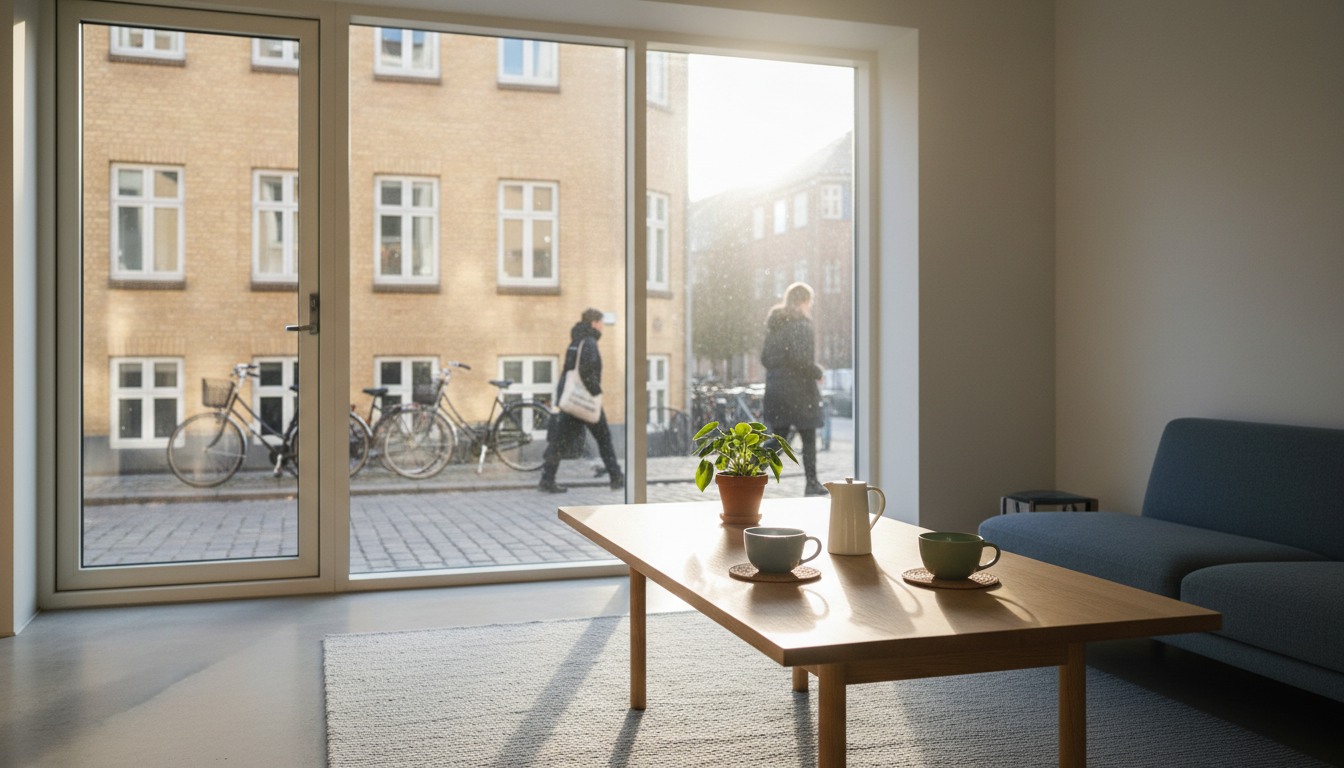 Morning light streaming through floor-to-ceiling windows in a minimalist Danish apartment, two coffe
But here's the thing I figured out: Copenhagen for couples becomes genuinely affordable—and way more romantic—when you're not hemorrhaging money on a hotel room. Through SwappaHome's credit system, you spend 1 credit per night whether you're staying in a shoebox or a designer loft. Those 7 free credits you get when joining? That's potentially 7 nights in one of the world's priciest cities. Covered.
The math is almost embarrassing when you spell it out. A week in a Copenhagen hotel: $1,750-2,450 USD. A week through home exchange: $0 in accommodation costs, plus you've got a kitchen to make those $8 supermarket breakfasts instead of $35 hotel buffets.
Real talk though—the money thing isn't even the main reason I push home exchange for couples visiting Copenhagen. It's the intimacy factor.
What Hotels Can't Give You (And Danish Apartments Can)
There's something about waking up in someone's actual home that shifts the entire dynamic of a trip. You're not guests in a sanitized, turnover-ready space. You're borrowing someone's life for a bit.
In Copenhagen specifically, this matters more than most places. Danish design isn't just an aesthetic—it's a philosophy. Hygge, that untranslatable concept of cozy contentment, is literally built into how Danes construct their living spaces. The wool throws draped over reading chairs. Candles everywhere (Danes burn more candles per capita than any other nation—I looked it up). The way furniture is arranged to encourage conversation rather than TV-watching.
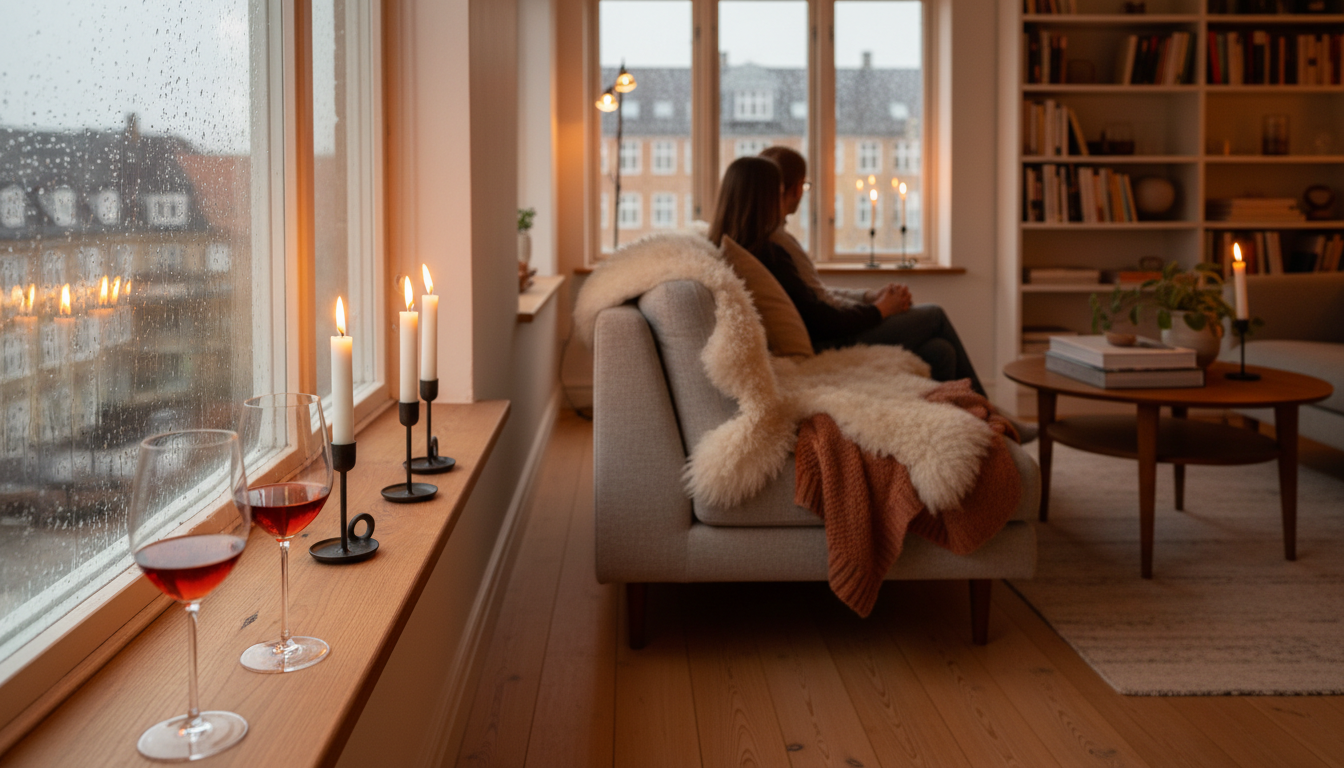 Cozy Danish living room with lit candles on a windowsill, two wine glasses, sheepskin throws on a mi
You can't experience hygge in a Marriott. I've tried.
My partner and I have this running joke now about "the Copenhagen effect"—how every home exchange there has somehow improved our relationship. Sounds cheesy, I know. But there's something about cooking together in a stranger's kitchen, figuring out their fancy coffee setup, sleeping in their thoughtfully designed bedroom that forces you into a different mode. You're playing house in the best possible way.
One swap, we stayed in a houseboat in Christianshavn. The owner had left us a handwritten note about where to watch the sunset from the deck, which wine shop to visit, how to work the wood-burning stove. We spent three evenings just... sitting there. Talking. No agenda. The water lapping against the hull. My partner said it felt like we'd been married for thirty years in the best way—comfortable, unhurried, completely ourselves.
The Neighborhood Breakdown (Honest Version)
Not all Copenhagen neighborhoods are created equal for couples, and the home exchange options vary wildly depending on where you're looking. Here's my take after multiple stays:
Vesterbro: For the Design-Obsessed Couple
This is where I'd send any couple visiting Copenhagen for the first time through home exchange. Former red-light district turned hipster paradise—the transformation is complete and the results are spectacular.
The apartments here lean industrial-chic: exposed brick, high ceilings, that Scandinavian minimalism that photographs beautifully. Meatpacking District (Kødbyen) is walking distance, which means late-night wine bars and some of the city's best restaurants. Værnedamsvej—a single street that feels like a village—has everything: bakeries, cheese shops, flower stalls, and the kind of coffee shops where you'll want to linger for hours.
Home exchange options in Vesterbro skew younger and more design-forward. Expect lots of one-bedroom apartments, some with small balconies, most with that effortless Danish style that makes you want to redecorate your entire life when you get home.
Walk to city center: 15 minutes. Vibe: Brooklyn-meets-Stockholm. Best for couples who want nightlife options but also appreciate quiet mornings.
Nørrebro: For Couples Who Want the Real Thing
Nørrebro is where actual young Copenhageners live, and it shows. More diverse, slightly grittier, infinitely more interesting than the tourist-polished areas.
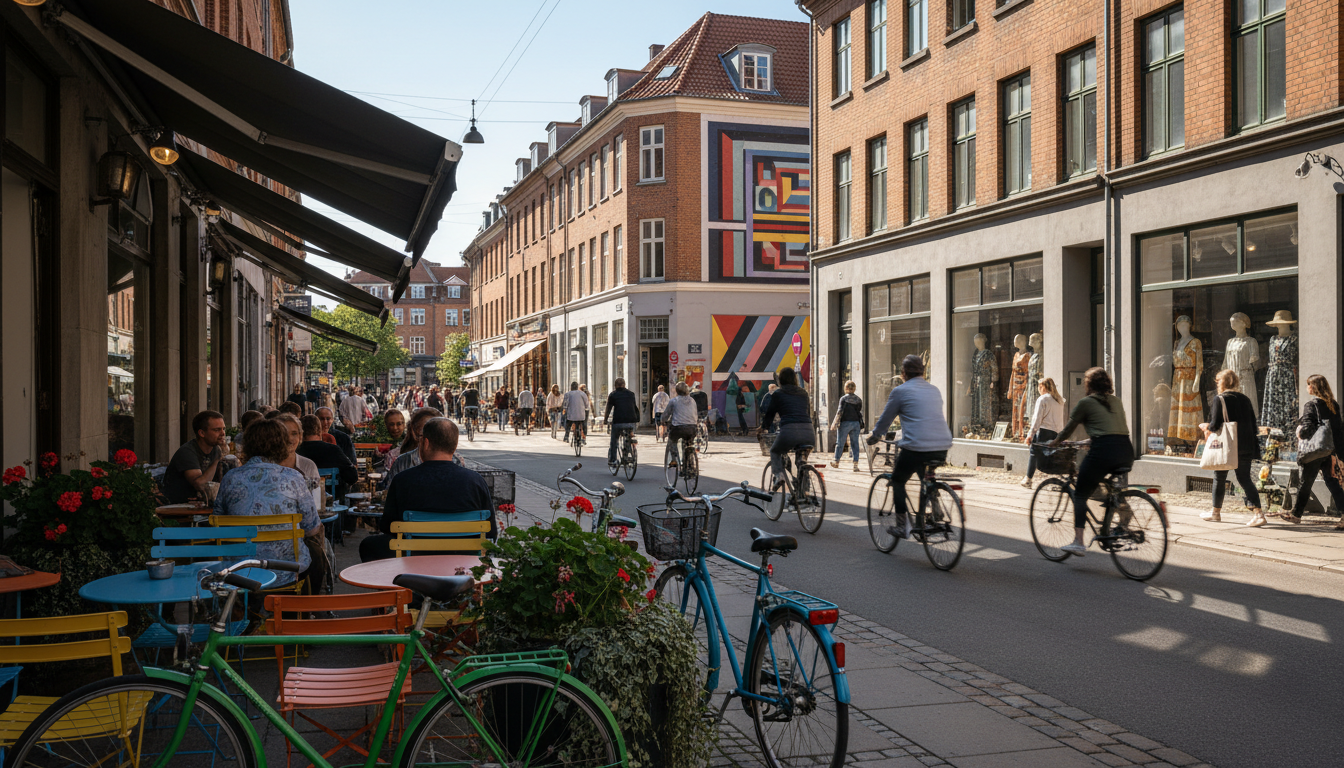 Colorful street scene in Nrrebro with cyclists, outdoor caf seating, vintage shops, and a diverse cr
Assistens Cemetery—where Hans Christian Andersen is buried—doubles as the neighborhood park. Copenhageners picnic on the graves in summer, which sounds morbid but is actually lovely. Jægersborggade is the street to know: ceramics studios, natural wine bars, a legendary ice cream shop called Istid.
Home exchanges here often come with bicycles included (a huge perk—bike rentals run $15-25 USD/day). The apartments tend to be more lived-in, less staged, which I personally prefer. You'll find more families willing to swap, meaning larger spaces but also more kid-related stuff around.
Walk to city center: 20-25 minutes, or 8 minutes by bike. Vibe: Real Copenhagen, minimal tourists. Best for couples who want neighborhood immersion over convenience.
Christianshavn: For the Romantic Splurge
Canals. Houseboats. 17th-century architecture. Christianshavn is Copenhagen's answer to Amsterdam, and it's devastatingly romantic.
The home exchange options here are rarer but worth hunting for. Houseboats come up occasionally—grab them immediately if you see one. The traditional apartments face either the canals or quiet cobblestone streets, and many have those classic Danish wood-burning stoves that make winter stays magical.
 Sunset view from a Christianshavn houseboat deck, string lights reflecting on canal water, Copenhage
Walk to city center: 10 minutes. Vibe: Postcard Copenhagen, genuinely beautiful. Best for couples celebrating something, or those who prioritize setting over scene.
Frederiksberg: The Quiet Luxury Option
Technically its own municipality within Copenhagen, Frederiksberg is where wealthy Danes raise families in gorgeous apartments with too many rooms. The home exchange opportunities here tend toward the larger end—actual houses with gardens, spacious flats with multiple bedrooms.
For couples, this might seem like overkill. But if you're planning a longer stay (two weeks or more), the extra space becomes a relationship-saver. Having room to spread out, a garden to sit in, maybe even separate bathrooms—these things matter.
Walk to city center: 25-30 minutes. Vibe: Suburban sophistication. Best for longer stays, couples who value space over location.
How to Actually Land a Copenhagen Home Exchange
Alright, let's get tactical. Here's exactly how I approach finding and securing home exchanges in Copenhagen:
Timing Matters
Copenhagen home exchanges get snapped up fast during summer (June-August) and Christmas market season (late November-December). I start looking 3-4 months ahead for peak times, 6-8 weeks for shoulder season.
The sweet spot for couples? May or September. Weather's decent, crowds are manageable, and you'll have more home exchange options since families with kids are locked into school schedules.
What to Look for in Listings
When browsing SwappaHome for Copenhagen couples stays, I filter for one-bedroom minimum (studios get cramped fast), kitchen photos that show actual cooking capability, mention of bikes included, reviews from other couples specifically, and location within biking distance of city center.
Red flags: listings with only exterior photos, hosts who haven't logged in recently, places that look too staged (sometimes means it's a rental property, not a real home).
The Message That Gets Responses
Danish hosts appreciate directness. When I reach out, I keep it short:
"Hi [Name], my partner and I are planning 8 nights in Copenhagen in September. We loved your Vesterbro apartment—especially the kitchen setup, since we're hoping to cook most breakfasts in. Our San Francisco place is available those same dates if you're interested in a simultaneous swap, but we're also happy to host you another time using the credit system. Would love to chat more if you're open to it."
No life stories. No excessive flattery. Just clear, practical, friendly.
 Overhead shot of a Copenhagen breakfast spread on a wooden tablerye bread, cheese, soft-boiled eggs,
Setting Expectations
Before confirming any Copenhagen home exchange, I always clarify check-in/check-out times (Danes are punctual—respect this), any house rules, emergency contacts, WiFi details and quirky appliance instructions, and whether they're comfortable with us having a guest over for dinner.
Danish hosts, in my experience, are incredibly organized. You'll often receive a detailed PDF or even a physical binder with everything you need. Reciprocate this energy—leave your own place equally prepared.
What to Actually Do Once You're There
Your home exchange gives you a base. Now let's fill the days.
Morning Rituals
Copenhageners take breakfast seriously, but they take it at home. Stock up at Irma (the fancy grocery) or Netto (the budget option) and make your own spread: rugbrød (dense rye bread), good butter, cheese, maybe some pickled herring if you're feeling Danish.
If you do go out, Atelier September in the city center does a perfect slow breakfast—the kind where you sit for two hours and no one rushes you. Budget $25-30 USD per person.
The Bike Thing
You have to bike. I'm not being prescriptive—I'm being practical. Copenhagen is designed for cycling, and experiencing it any other way is like visiting Venice without taking a boat.
If your home exchange doesn't include bikes, rent from Donkey Republic (app-based, $12 USD/day) or Baisikeli ($15-20 USD/day, and they're a social enterprise employing refugees—nice bonus).
Best couples bike route: Start at your apartment, ride along the harbor to the Little Mermaid (yes, it's touristy, but you have to), continue to Kastellet (the star-shaped fortress), loop back through the King's Garden, end at Torvehallerne food market for lunch. Total: maybe 10 km, completely flat, completely manageable.
Food Worth Splurging On
You're saving so much on accommodation—spend some of it on food.
Noma is the obvious answer if you can get a reservation and stomach the $500+ per person price tag. I've never been. What I have done: Amass (still excellent, $150-200 per person), and my personal favorite for couples—Admiralgade 26, a tiny natural wine bar with incredible small plates where you'll spend $80-100 each and feel like you discovered something secret.
For cheaper romance: Reffen street food market at sunset, sharing dishes from different stalls, sitting on the waterfront. Maybe $30-40 total.
The Tivoli Question
Every Copenhagen guide mentions Tivoli Gardens. Here's my honest take: go, but go at night, and go in the off-season if possible.
Summer Tivoli is crowded and feels like any amusement park. Winter Tivoli (late November-December) is genuinely magical—thousands of lights, mulled wine, that hygge feeling actually present. Spring and fall hit a nice middle ground.
Entrance is about $20 USD per person. Rides cost extra. Budget $50-70 per couple for an evening including a drink.
Day Trips for Two
Louisiana Museum of Modern Art (40 minutes north by train, $20 USD entry): Stunning building, world-class art, sculpture garden overlooking the sea. Pack a picnic from your home exchange kitchen.
Malmö, Sweden (35 minutes by train, $10-15 USD each way): Different country, different vibe, and you can say you "went to Sweden" on your trip. The Turning Torso building is wild.
Dragør (30 minutes by bus): Tiny fishing village with yellow houses and cobblestone streets. Feels like stepping back 200 years. Great for a half-day.
Things I Wish Someone Had Told Me
After four Copenhagen home exchanges, some hard-won wisdom:
Bring slippers. Danish homes are shoes-off zones, and their floors are cold. Most hosts provide guest slippers, but don't count on it.
The light situation is real. Summer means near-24-hour daylight. Winter means darkness by 3:30 PM. Pack an eye mask for summer, embrace the candles for winter. Both can be romantic if you lean into it.
Grocery stores close early on weekends. Like, 5 PM on Saturday, closed Sunday. Plan accordingly.
The tap water is excellent. Don't buy bottled.
Danish homes are often smaller than photos suggest. Those high ceilings create an illusion. Check square footage if space matters to you.
Leave a gift. This isn't required, but it's nice. We usually bring something from San Francisco—Dandelion chocolate, local wine, that kind of thing. Danish hosts often leave us wine or pastries in return.
Before You Book That Flight
Make sure you've created your SwappaHome profile with great photos of your space, started conversations with 3-5 potential Copenhagen hosts (not all will work out), confirmed dates that work for both parties, discussed the practical details (keys, bikes, house rules), arranged your own travel insurance, downloaded offline maps of Copenhagen, and made at least one restaurant reservation for a special night.
And mentally prepared to fall in love with this city. That last one isn't optional.
Copenhagen has a way of getting under your skin—especially when you're experiencing it as a couple, from the inside of a real Danish home, with nowhere to be and no one to impress.
My partner and I have been back four times now. Each trip, different neighborhood, different apartment, different season. Same feeling: that we're not tourists here. We're just... living. Temporarily, beautifully, together.
That Vesterbro morning I mentioned at the start? We've been chasing it ever since. And Copenhagen keeps delivering.
Frequently Asked Questions
Is home exchange in Copenhagen safe for couples?
Yes—Copenhagen consistently ranks among the world's safest cities, and home exchange adds a layer of community trust through SwappaHome's review system. Members build reputations over time, and you can read feedback from previous guests before committing. That said, consider getting your own travel insurance for peace of mind, as SwappaHome connects members but doesn't cover personal belongings or damages.
How much can couples save with home exchange in Copenhagen versus hotels?
Substantially. A week in a mid-range Copenhagen hotel costs $1,750-2,450 USD. Through home exchange, your accommodation cost is essentially zero—just the credits you've earned by hosting others. Add kitchen savings (cooking breakfast instead of $35 hotel buffets) and you're looking at $2,000+ saved on a week-long trip. Those savings fund better restaurants, experiences, and day trips.
What's the best time of year for a Copenhagen couples home exchange?
May and September offer the ideal balance: pleasant weather (55-65°F), manageable crowds, and more home exchange availability since families are tied to school schedules. Summer (June-August) brings long daylight hours and outdoor dining but higher demand for swaps. Winter appeals to couples seeking hygge—candlelit cafés, Christmas markets, cozy apartment evenings—though daylight is limited.
Do Copenhagen home exchanges usually include bicycles?
Many do, especially in neighborhoods like Nørrebro and Vesterbro where cycling is the primary transport. Always ask hosts directly when arranging your swap. If bikes aren't included, Donkey Republic app-based rentals cost about $12 USD/day, making cycling accessible regardless. Given Copenhagen's bike-friendly infrastructure, having wheels dramatically improves your couples experience.
How far in advance should couples book a Copenhagen home exchange?
For peak seasons (summer and Christmas markets), start searching 3-4 months ahead. Shoulder seasons (May, September, October) require 6-8 weeks lead time. Begin conversations with multiple hosts simultaneously—not every exchange works out logistically. SwappaHome's credit system means you don't need a simultaneous swap, giving you more flexibility than traditional direct exchanges.

Published by
SwappaHome
SwappaHome Editorial Team
Home Exchange & Slow Travel Editorial
The SwappaHome Editorial Team brings together travel research, home-exchange community insights, and platform data to produce practical guides for first-time and experienced home swappers. Every article cites real platforms, current market rates, and verifiable city-level facts so readers can make informed decisions without guessing.
Ready to try home swapping?
Join SwappaHome and start traveling by exchanging homes. Get 7 free credits when you sign up!
Related articles

Bachelor and Bachelorette Parties in Singapore: The Complete Home Swap Group Guide for 2026
Planning a bachelor or bachelorette party in Singapore? Discover how home swapping lets groups of 6-12 stay together in luxury condos, saving thousands while partying in Marina Bay.

Cycling in Lisbon: 7 Home Swap Bike Tour Itineraries for Every Rider
Discover the best cycling routes in Lisbon with these home swap bike tour itineraries—from waterfront paths to hilltop adventures, all starting from your borrowed home.

Graduation Trip to Barcelona: How Home Swapping Gives New Graduates the Ultimate Celebration
Planning a graduation trip to Barcelona? Discover how home swapping lets new graduates explore Spain's most vibrant city without the hostel crowds or hotel costs.