
Cultural Immersion Through Home Exchange: How to Actually Live Like a Local

SwappaHome Editorial Team
Home Exchange & Slow Travel Editorial
Discover how home exchange unlocks authentic cultural immersion—from morning markets to neighborhood secrets. Learn to travel like you belong, not like a tourist.
The moment I knew I'd never go back to hotels was standing in a stranger's kitchen in Lyon, France, at 6:47 AM.
I was making coffee in a moka pot I'd never used before, following handwritten instructions left on the counter in a mix of French and English. Outside the window, I watched the neighborhood wake up—a woman walking her ancient basset hound, the bakery across the street pulling up its metal shutters, a man in a suit arguing passionately into his phone while gesturing at nothing.
None of this would have happened from a hotel room on the Presqu'île.
Cultural immersion through home exchange isn't just a budget hack or a trendy travel concept. It's a fundamentally different way of experiencing a place—one that transforms you from observer to temporary resident. After seven years and 40+ home swaps across 25 countries, I can tell you that the difference between staying in someone's home versus a hotel is the difference between reading about a culture and actually living it.
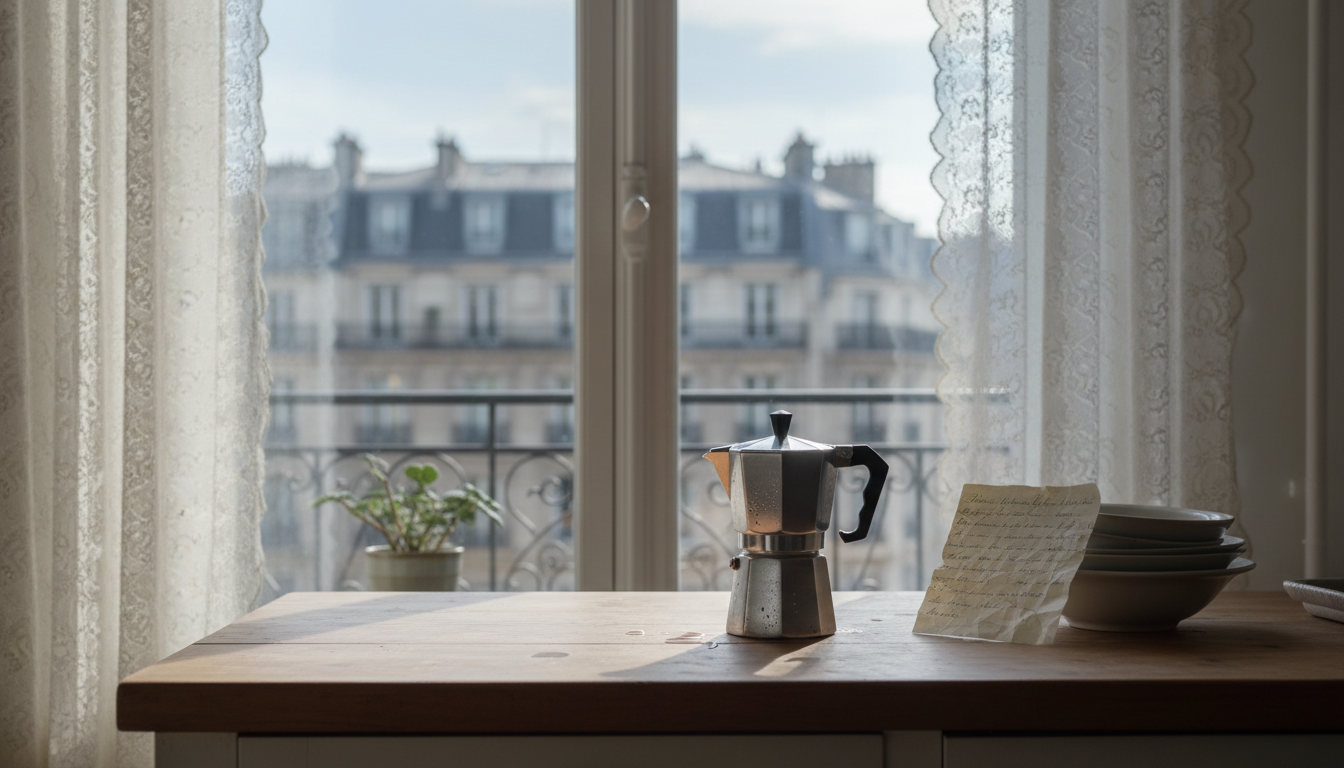 Morning light streaming through lace curtains in a Parisian apartment, moka pot on a worn wooden cou
Why Home Exchange Creates Deeper Cultural Immersion Than Any Hotel
Here's something I've learned the hard way: you can visit a place a dozen times and never really know it. I'd been to Barcelona three times before my first home swap there—stayed in boutique hotels in the Gothic Quarter, ate at recommended restaurants, hit all the Gaudí highlights. I thought I knew the city.
Then I spent two weeks in a local's apartment in Gràcia, and I realized I'd only ever seen Barcelona's costume, never its face.
The difference comes down to infrastructure. When you stay in someone's home, you inherit their life's logistics—their neighborhood café where the barista knows how they take their coffee, their favorite fruit vendor at the market who throws in extra figs, their evening walk route, their view. You're not choosing from TripAdvisor's top 10. You're living inside someone's actual routine.
My host in Gràcia had left a note about her morning ritual: coffee from the tiny roaster on Carrer de Verdi ($2.50 for a cortado), then a loop through Plaça del Sol before the tourists arrived. I followed it every morning for two weeks. By day four, the barista started my cortado when she saw me walk in. By day ten, the old men playing dominoes in the plaza nodded at me like I belonged.
That's cultural immersion you cannot buy.
How Home Exchange Works: The Basics of Living Like a Local
If you're new to this, the concept is beautifully simple. You list your home on a platform like SwappaHome, and you exchange stays with other members around the world. On SwappaHome specifically, it works on a credit system—you earn 1 credit for every night you host someone, and you spend 1 credit for every night you stay somewhere else. New members start with 7 free credits, which is enough for a solid a full week trip right out of the gate.
The magic? Swaps don't need to be simultaneous or reciprocal. I hosted a lovely couple from Copenhagen last month, earned 5 credits, and I'm using those credits for an upcoming stay in Lisbon. The Danish couple might use my credits to stay in Tokyo. It's this global network of trust and generosity that just... works.
But here's what makes it different from just booking a vacation rental: you're staying in someone's actual home, surrounded by their books, their art, their kitchen gadgets, their neighborhood relationships. They've usually left you notes about the best local spots—not the tourist traps, but the real gems. And because they're trusting you with their space, there's this beautiful mutual respect that shapes the whole experience.
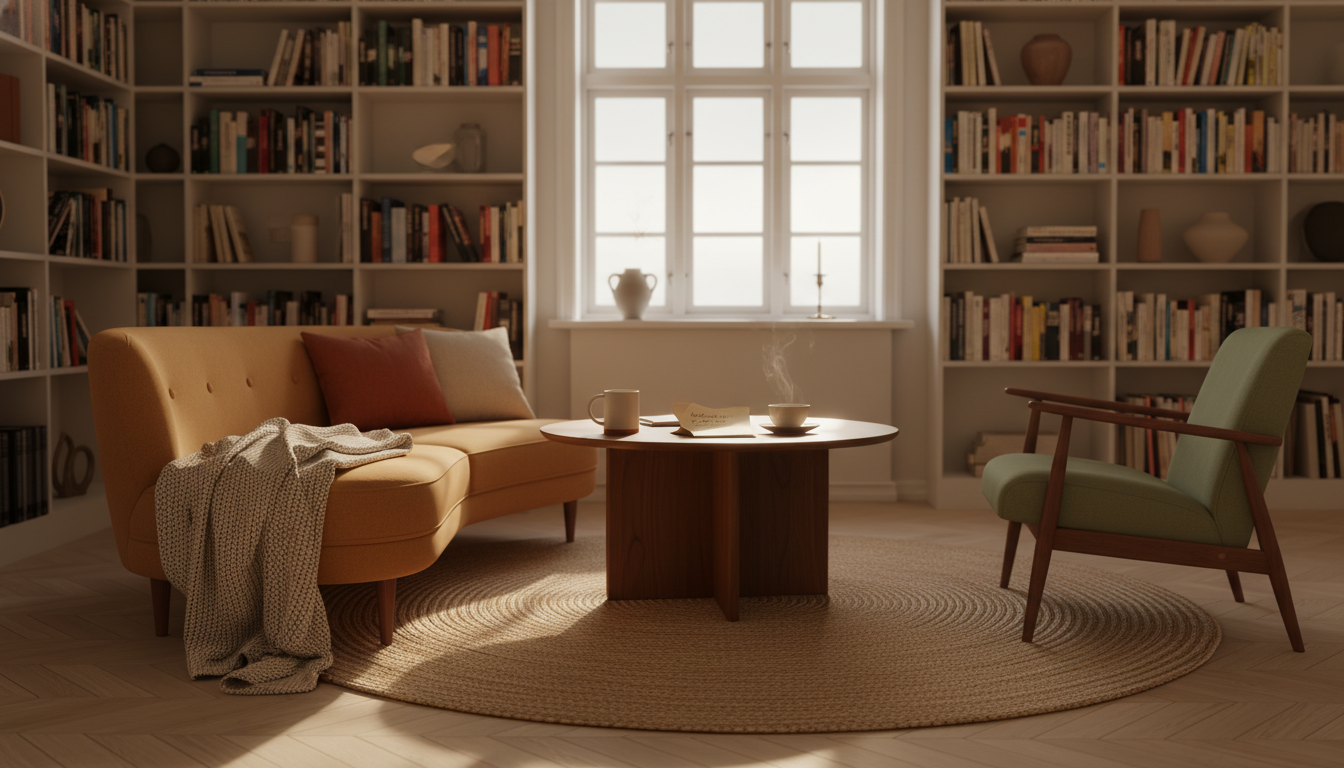 Cozy living room in a Copenhagen apartment with floor-to-ceiling bookshelves, Danish modern furnitur
Finding Neighborhoods That Offer Authentic Local Experiences
One of the biggest advantages of home exchange for cultural immersion is that you end up in actual neighborhoods, not tourist zones.
Think about it: most hotels cluster in city centers or near major attractions. That's where the demand is. But locals? They live where life is livable—where there's a good butcher, a park for morning runs, a bar where everyone knows everyone.
When I search for home exchanges, I deliberately look for listings in residential areas. Some of my favorites:
Rome: Forget Trastevere (overrun) or the Centro Storico (exhausting). My best Roman swap was in Testaccio, a working-class neighborhood that's become a foodie destination without losing its soul. The Mercato di Testaccio is where actual Romans shop—not a single selfie stick in sight. My host's apartment was above a salumeria that had been run by the same family for four generations. The nonno downstairs taught me how to pick a proper guanciale.
Tokyo: Skip Shinjuku. I stayed in Yanaka, one of the few neighborhoods that survived WWII bombing, and it felt like stepping back in time—narrow streets, family-run shops, temples tucked between houses. My host had been going to the same sento (public bathhouse) for 30 years. She left me detailed instructions, and by my third visit, the obaa-san who ran it was saving me "the good towel."
Mexico City: Roma Norte is gorgeous but gentrified. My swap in Coyoacán—yes, where Frida Kahlo lived—put me in a quiet colonia where my mornings started with fresh-squeezed orange juice from a street cart ($1) and ended with mezcal at a cantina where I was usually the only foreigner.
The pattern is clear: residential neighborhoods offer cultural immersion that tourist areas physically cannot provide.
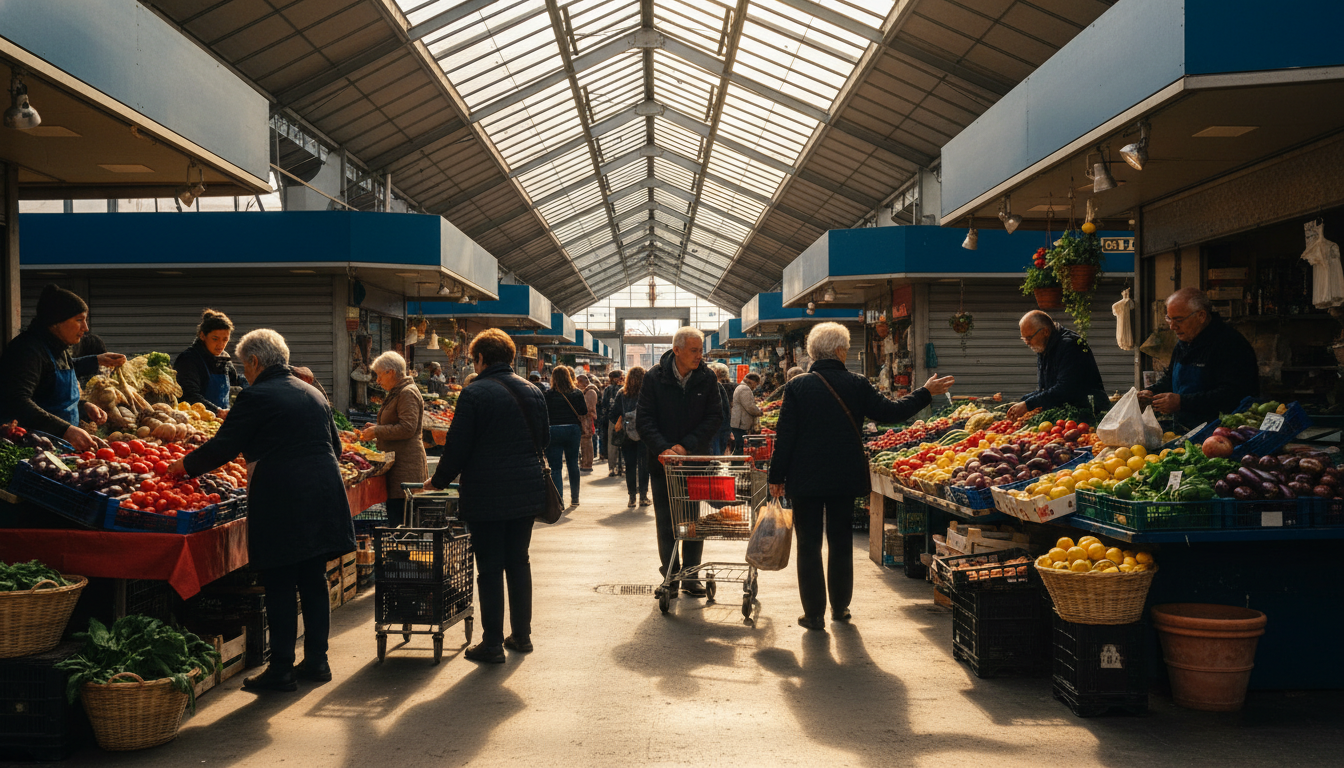 Bustling morning scene at Mercato di Testaccio in Rome, elderly Italian vendors arranging fresh prod
The Art of Using Your Host's Recommendations
Every good home exchange host leaves notes. Some leave novels.
I've received everything from a Post-it saying "coffee machine is temperamental, be patient" to a 15-page bound booklet with hand-drawn maps. The best hosts understand that their recommendations are the key to cultural immersion—they're not just telling you where to eat, they're inviting you into their life.
My approach: follow their suggestions religiously for the first few days.
This might feel weird. You've done your research, you have your own list, you read that article about the "hidden gems" everyone else also read. But trust me—your host knows things Google doesn't.
In Lisbon, my host's note said: "Tuesday and Saturday mornings, go to Feira da Ladra. Not for shopping—for watching. Bring a pastel de nata from Manteigaria and sit on the steps of São Vicente de Fora."
I did exactly that. Sat on those church steps at 9 AM with my custard tart, watching the flea market unfold below me. An elderly man set up a table of nothing but old keys. A woman sold handmade lace that had probably taken her months. Two teenagers argued over a vintage leather jacket. A stray cat wound between the stalls like it owned the place.
No guidebook told me to do this. No algorithm suggested it. A person who lived there for 12 years knew that this was how you feel Lisbon.
Building Relationships in Your Temporary Neighborhood
This is where cultural immersion through home exchange gets genuinely transformative—and also a little uncomfortable for us introverts.
When you stay somewhere for more than a few days, you have the opportunity to become a regular. A known face. Someone the neighborhood absorbs rather than observes. This requires effort, though. It means going to the same café every morning instead of trying a new one. It means learning three phrases in the local language and using them constantly, even badly. It means smiling at the same people until they smile back.
In my Tuscany barn swap—still my favorite exchange ever—I spent three weeks in a converted agricultural building surrounded by olive groves. The nearest village, Castelmuzio, had maybe 200 residents. By week two, I had a routine: morning espresso at the only bar in town ($1.10, standing at the counter like a proper Italian), afternoon walk through the olive groves, evening aperitivo at the same bar where the owner started pouring my Aperol Spritz when he saw me coming.
By week three, I was invited to a neighbor's Sunday lunch. Homemade pici pasta, wild boar ragù, wine from grapes grown 50 meters from the table. Eight people, none of whom spoke more than a few words of English. We communicated through gestures, phone translators, and a lot of laughter.
That lunch cost me nothing but time and openness. It gave me something no amount of money could buy.
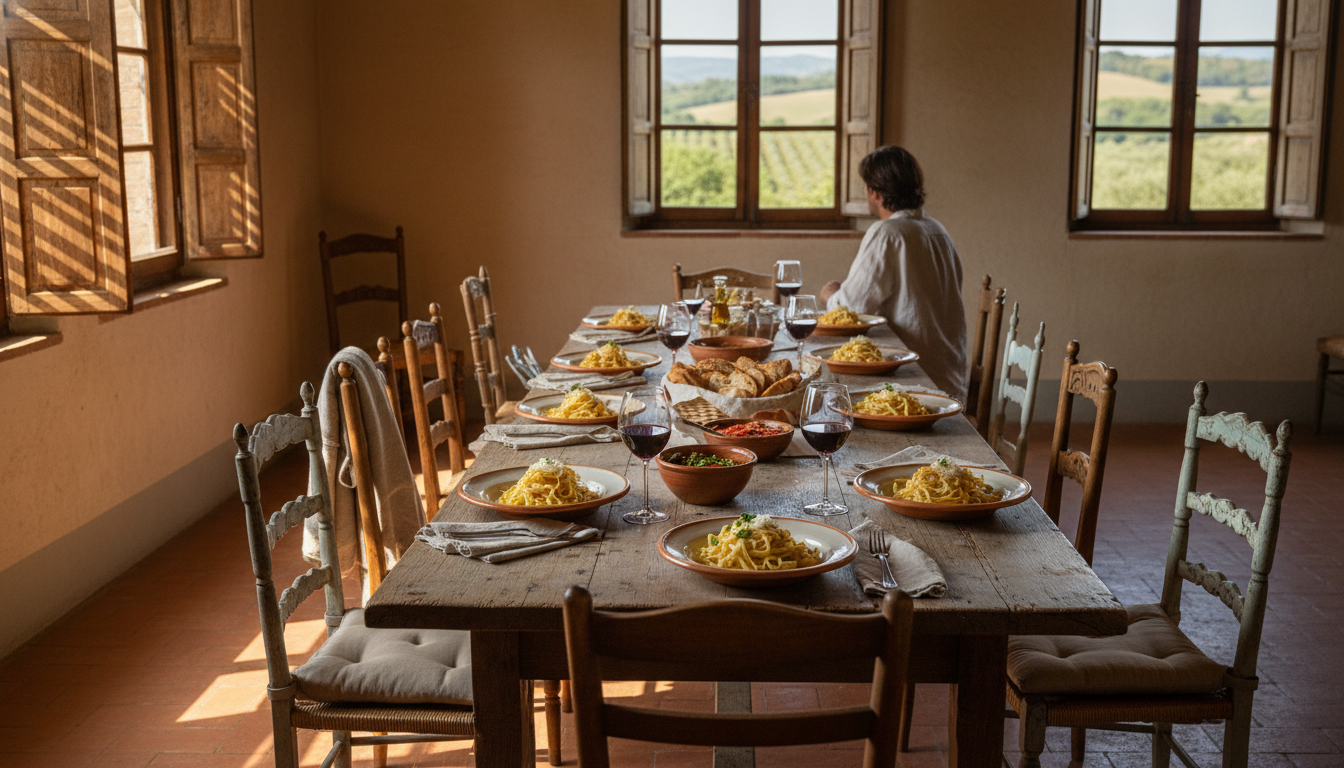 Long wooden table set for Sunday lunch in a Tuscan farmhouse, mismatched chairs, handmade pasta on c
Practical Tips for Maximizing Cultural Immersion During Your Home Exchange
After 40+ swaps, I've developed some habits that consistently deepen the experience.
Stay longer than you think you need. A weekend gives you a taste. A week lets you find your rhythm. Two weeks—that's when you start to belong. I know not everyone has that flexibility, but if you can swing it, longer stays are exponentially more immersive.
Learn the shopping rhythm. Every culture has one. In Spain, nothing happens between 2-5 PM. In Japan, grocery stores discount bento boxes after 7 PM. In France, the good bread is gone by 10 AM. Your host's notes usually reveal these patterns—follow them.
Cook at least half your meals at home. This isn't about saving money (though you will—I typically spend 40-60% less on food during home exchanges). It's about engaging with local ingredients, local markets, local rhythms. Shopping for dinner at 6 PM in a Roman alimentari teaches you more about Italian life than any museum.
Accept invitations. If your host's neighbor invites you for coffee, go. If the bartender mentions a local festival, show up. If someone offers to show you something, say yes. These moments are the whole point.
Leave your comfort zone at home. You're going to feel awkward. You're going to mispronounce things. You're going to accidentally order the wrong thing or break some unwritten social rule. This is fine. This is how immersion works.
What Cultural Immersion Through Home Exchange Actually Feels Like
I want to be honest about something: this kind of travel isn't always comfortable.
Hotels are designed to make you feel at home without being home. They smooth every edge, anticipate every need, create a bubble of familiar convenience in an unfamiliar place. There's value in that—I'm not knocking it.
Home exchange is different. You're navigating someone else's space, someone else's systems, someone else's neighborhood. The shower might be confusing. The bed might be harder than you like. The nearest grocery store might require a 15-minute walk.
But here's what you get in return: reality.
The reality of how people actually live in Kyoto, in Buenos Aires, in Amsterdam. The reality of morning routines and evening rituals. The reality of neighborhood dynamics and local economics. The reality of being somewhere, not just visiting it.
Last fall, I did a home exchange in Oaxaca City, Mexico. My host's apartment was in a residential area about 20 minutes from the centro. No restaurants within walking distance. No tourist infrastructure at all.
Every morning, I walked to a corner tienda for fresh tortillas (8 pesos, about $0.45). The woman who ran it eventually started asking about my day in Spanish that I barely understood. I'd buy tomatoes and chiles from a truck that parked nearby, then make breakfast in my host's kitchen while listening to the neighborhood sounds—dogs barking, children heading to school, someone's radio playing cumbia.
It wasn't convenient. It was real. And that reality taught me more about Oaxacan life than any mezcal tasting or cooking class ever could.
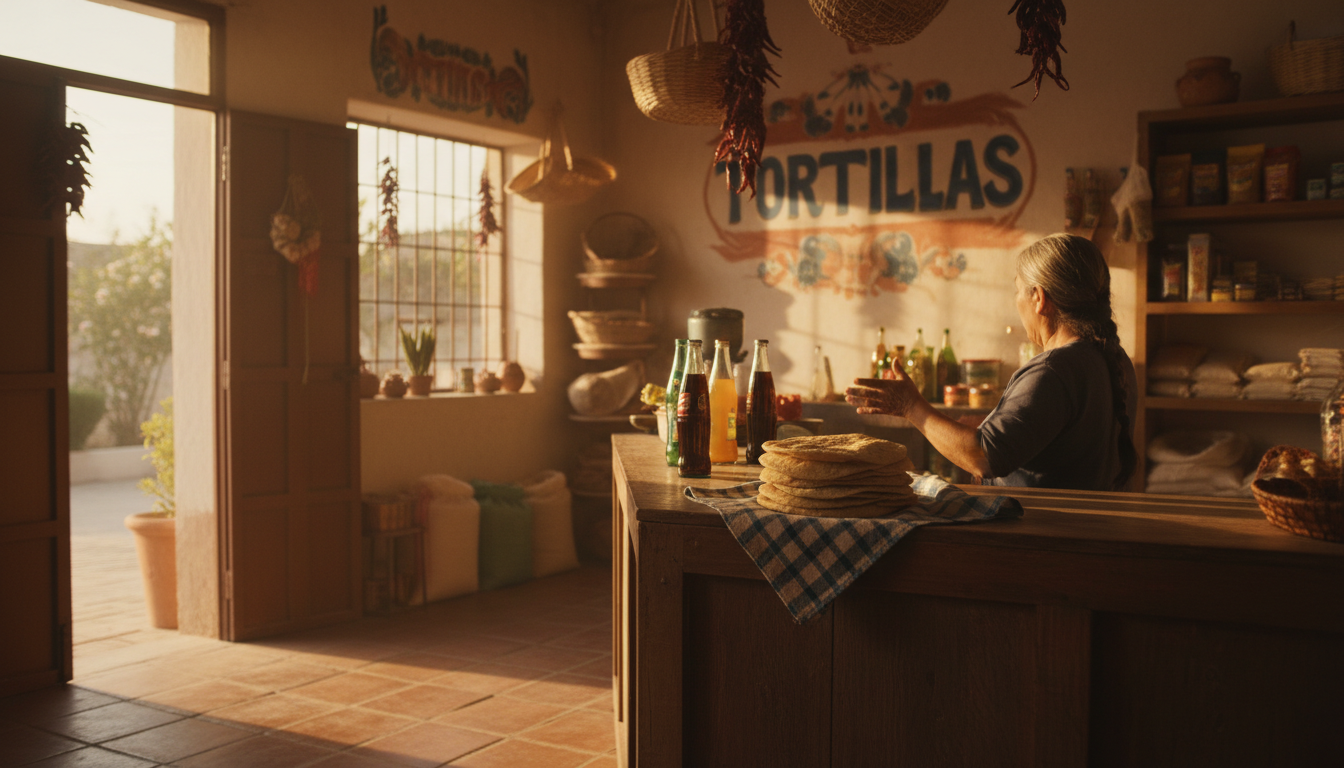 Small corner tienda in a Oaxacan neighborhood, hand-painted signs advertising tortillas and refresco
The Trust Factor: Why Home Exchange Communities Work
I get asked about this constantly: "Aren't you nervous staying in a stranger's home? Aren't you worried about letting strangers into yours?"
Honest answer: I was, at first. Now I understand why it works.
Home exchange communities are built on mutual vulnerability. Everyone has skin in the game. If I trash someone's apartment in Berlin, they can leave a review that tanks my reputation. If they're terrible guests in my San Francisco place, same thing. The system creates accountability through transparency.
On SwappaHome, members verify their identities and build reputations through reviews. Before I accept any exchange, I read every review a person has received. I look at how they describe their home, how they communicate, what previous hosts have said about them.
Real talk: I've declined exchanges that felt off. Someone whose messages were weirdly vague. Someone with no reviews who wanted to stay for a month. Trust your gut.
But in 40+ exchanges, I've never had a serious problem. What I have had: hosts who left wine in the fridge, neighbors who brought over homemade cookies, guests who cleaned my apartment better than I ever have.
The cultural immersion aspect actually strengthens this. When you're living in someone's neighborhood, shopping at their stores, sitting in their favorite café—you're not an anonymous tourist. You're a temporary resident with a reputation to maintain.
Making Your Home Exchange-Ready for Hosting
Cultural immersion isn't just about your travels—it's also about the travelers you host.
When someone stays in my San Francisco apartment, I want them to experience my city the way I experience it. That means leaving detailed notes about my neighborhood in the Mission District: the best burrito within walking distance (La Taqueria, cash only, get the carnitas), where to get coffee that isn't Starbucks (Ritual on Valencia, $4.50 for a pour-over), the taco truck that parks on 24th Street on Thursdays, my favorite morning walk route through Dolores Park, the bookstore where the owner will talk to you for an hour if you let him.
I also leave practical stuff—how the garbage system works, which drawer has the good knives, the WiFi password, the quirks of my building's front door.
The more you give, the more you get. Hosts who leave thoughtful notes tend to receive thoughtful notes in return. It's a cycle of generosity that makes the whole system work.
The Economics of Immersive Travel Through Home Exchange
So here's the thing about cultural immersion through home exchange—it also happens to be incredibly economical.
A mid-range hotel in Paris runs $200-350/night. A vacation rental in a decent neighborhood, $150-250/night. Two weeks in Paris: $2,800-4,900 for accommodation alone.
A home exchange in Paris: $0 in accommodation costs. You're spending credits you earned by hosting others, or using your starter credits.
But the real savings come from living like a local. When you have a kitchen, you're not eating every meal at restaurants. When you're in a residential neighborhood, you're not paying tourist-area prices. When you're shopping at local markets, you're paying what locals pay.
My typical daily spend during a home exchange runs about $33-60, including food, transportation, and activities. Compare that to tourist-mode travel, where $100-150/day barely covers meals and basic sightseeing.
The math is absurd. And the experience is better.
When Home Exchange Might Not Be Right for You
I'm a home exchange evangelist, but I'll be honest: it's not for everyone.
If you need hotel-style service—daily housekeeping, 24-hour front desk, room service—this isn't your thing. If you're uncomfortable with ambiguity and prefer everything pre-arranged, you might find home exchange stressful. If you only have a weekend and want to see the highlights, a central hotel might actually serve you better.
Home exchange rewards flexibility, curiosity, and a willingness to adapt. It requires communication with your host, responsibility for someone else's space, and comfort with the unexpected.
It also requires having a home to exchange. If you're a full-time traveler or don't have a stable living situation, the traditional swap model won't work (though SwappaHome's credit system helps—you can host first, then travel on accumulated credits).
But if you're the kind of traveler who wants to know a place, not just see it? If you're willing to trade convenience for authenticity? If cultural immersion matters more to you than Instagram moments?
Then home exchange might change how you travel forever. It did for me.
Getting Started: Your First Cultural Immersion Home Exchange
If you're ready to try this, here's my honest advice:
Start with a destination you've already visited. Your first home exchange has a learning curve. Make it easier by choosing somewhere you already know a bit, so you can focus on the exchange logistics without also navigating a completely unfamiliar place.
Begin with hosting. Before you stay in someone's home, let someone stay in yours. You'll learn what makes a good host, what information guests need, and how the whole system works. Plus, you'll earn credits for your first trip.
Communicate more than you think necessary. Message your host with questions. Confirm details. Share your arrival time. Ask about their neighborhood recommendations. The more you communicate beforehand, the smoother the experience.
Leave a thoughtful review. After every exchange, write a detailed, honest review. This builds your reputation and helps the community maintain trust.
On SwappaHome, you can browse listings, see how the credit system works, and start building your profile today. Those 10 free starter credits are waiting—that's more than a week of cultural immersion anywhere in the world.
The Transformation Nobody Warns You About
Seven years ago, I was a normal tourist. I stayed in hotels, ate at recommended restaurants, took the photos everyone takes, checked the boxes everyone checks. Travel was something I did between periods of real life.
Then I spent a month in a Lisbon apartment that belonged to a ceramicist named Ana. I used her dishes, walked her routes, bought fish from her fishmonger, drank wine at her neighborhood tasca. By the end, I wasn't visiting Lisbon—I was living there, temporarily, imperfectly, but genuinely.
I cried when I left. Not because Lisbon was beautiful (it is) or because I'd miss the pastéis de nata (I would). I cried because I'd experienced something I didn't know travel could offer: belonging.
Cultural immersion through home exchange isn't about saving money, though you will. It's not about avoiding tourists, though you'll find yourself in places they never reach. It's about dissolving the barrier between traveler and resident, even if just for a few weeks.
It's about standing in a stranger's kitchen at 6:47 AM, making coffee in a moka pot you've never used, watching a neighborhood wake up, and feeling—against all logic—like you're home.
That's what's waiting for you. Go find it.
Frequently Asked Questions
How does home exchange help with cultural immersion?
Home exchange places you in residential neighborhoods where locals actually live, rather than tourist zones. You inherit your host's daily infrastructure—their café, their market, their routines—which creates organic opportunities for authentic cultural experiences that hotels and vacation rentals simply cannot provide.
Is home exchange safe for solo travelers seeking cultural immersion?
Yes, with proper precautions. Read all reviews carefully, communicate thoroughly with hosts before confirming, and trust your instincts. SwappaHome's verification and review systems create accountability. Many solo travelers, myself included, find home exchange communities welcoming and trustworthy after 40+ successful exchanges.
How much money can I save with home exchange versus hotels?
Accommodation costs drop to zero (you use credits, not cash). Combined with kitchen access and local-price shopping, most travelers save 50-70% compared to traditional travel. A two-week Paris trip might cost $3,000+ in hotels—with home exchange, that same trip costs only food and activities, typically $500-800 total.
What's the minimum stay recommended for cultural immersion through home exchange?
While weekends work, I recommend at least one week for meaningful cultural immersion. Two weeks is ideal—long enough to establish routines, become a recognized face in the neighborhood, and move beyond surface-level tourism into genuine local experience.
Do I need to speak the local language for home exchange cultural immersion?
No, but learning basic phrases significantly enhances the experience. Your host's notes help bridge language gaps, and smartphone translation apps handle most situations. The effort of attempting local language—even imperfectly—opens doors and demonstrates respect that locals genuinely appreciate.

Published by
SwappaHome
SwappaHome Editorial Team
Home Exchange & Slow Travel Editorial
The SwappaHome Editorial Team brings together travel research, home-exchange community insights, and platform data to produce practical guides for first-time and experienced home swappers. Every article cites real platforms, current market rates, and verifiable city-level facts so readers can make informed decisions without guessing.
Ready to try home swapping?
Join SwappaHome and start traveling by exchanging homes. Get 7 free credits when you sign up!
Related articles

Bachelor and Bachelorette Parties in Singapore: The Complete Home Swap Group Guide for 2026
Planning a bachelor or bachelorette party in Singapore? Discover how home swapping lets groups of 6-12 stay together in luxury condos, saving thousands while partying in Marina Bay.

Cycling in Lisbon: 7 Home Swap Bike Tour Itineraries for Every Rider
Discover the best cycling routes in Lisbon with these home swap bike tour itineraries—from waterfront paths to hilltop adventures, all starting from your borrowed home.

Graduation Trip to Barcelona: How Home Swapping Gives New Graduates the Ultimate Celebration
Planning a graduation trip to Barcelona? Discover how home swapping lets new graduates explore Spain's most vibrant city without the hostel crowds or hotel costs.