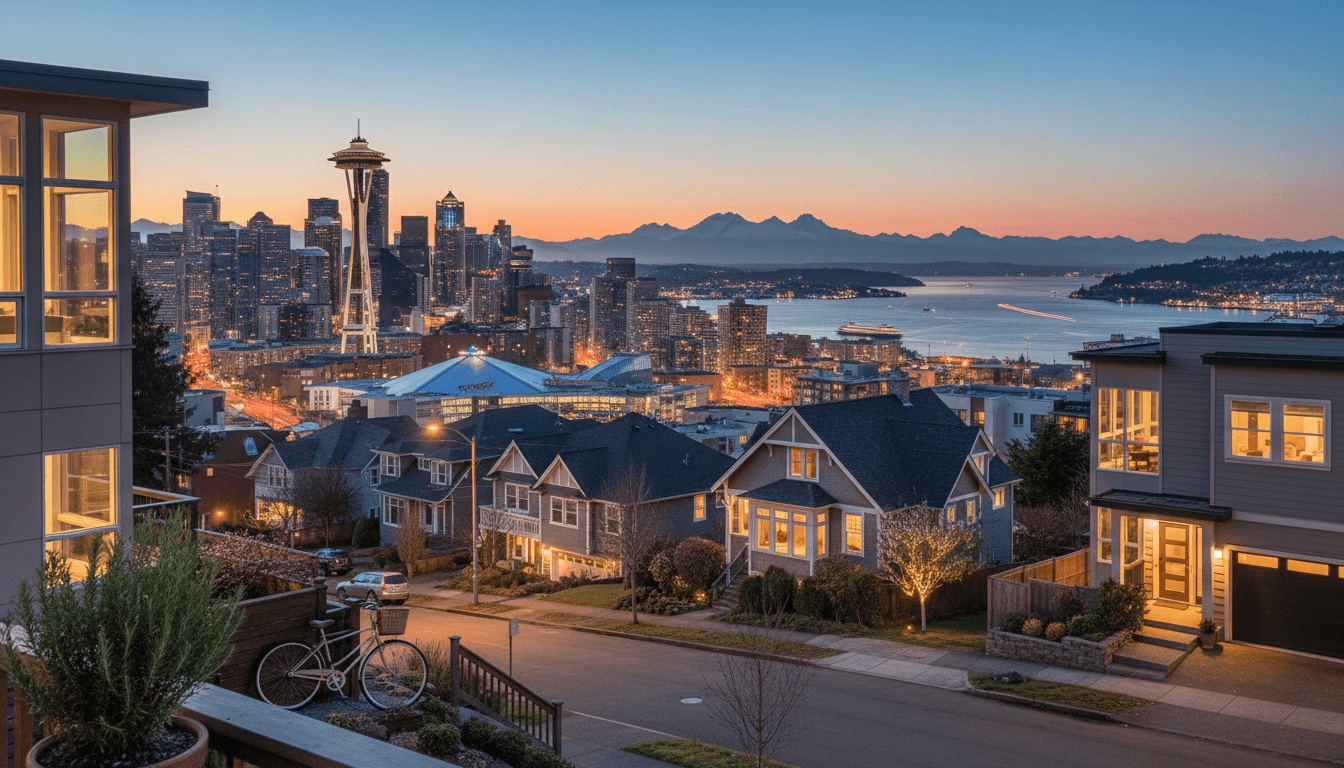
Cultural Immersion in Seattle Through Home Swapping: A Local's Guide to the Emerald City

SwappaHome Editorial Team
Home Exchange & Slow Travel Editorial
Skip the tourist traps and experience Seattle like a local through home swapping. Discover neighborhoods, hidden gems, and authentic cultural experiences.
I was standing in a stranger's kitchen in Capitol Hill, making pour-over coffee with beans from a roaster I'd never heard of, when it hit me: this is what cultural immersion in Seattle actually looks like. Not the Space Needle selfie. Not the obligatory Pike Place fish-throwing photo. But this—figuring out which drawer holds the coffee filters while rain patters against windows overlooking a street I'd never have found in a guidebook.
Home swapping changed how I experience cities. And Seattle might be the perfect place to prove why.
This Pacific Northwest gem has layers that most visitors never peel back. They hit the waterfront, maybe grab chowder, and leave thinking they've "done" Seattle. But cultural immersion through home swapping? That's a completely different trip—one where you wake up in a Fremont bungalow, walk to a neighborhood bakery the tourists don't know exists, and spend your evening at a dive bar where the bartender remembers your name by day three.
Let me show you how to actually experience this city.
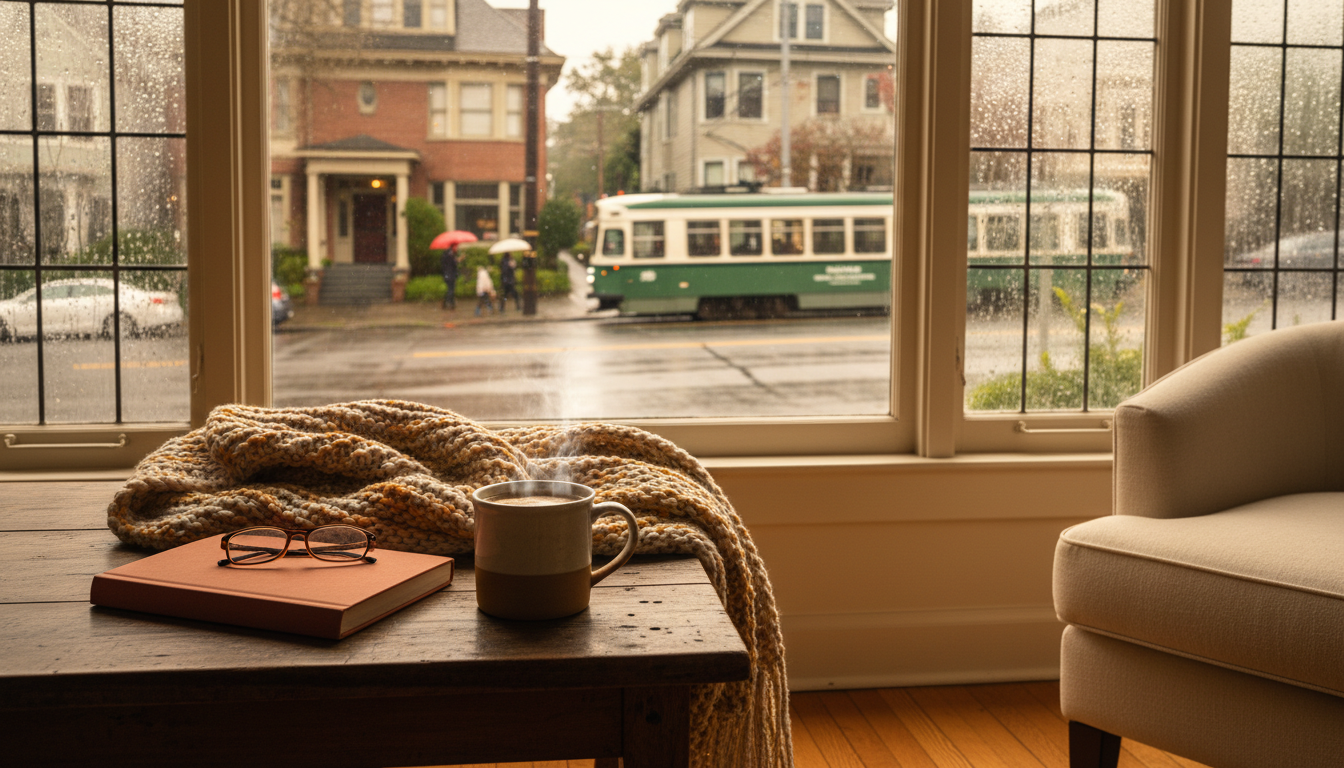 Morning light streaming through a craftsman-style home window in Seattles Capitol Hill neighborhood,
Why Home Swapping Unlocks Authentic Seattle Culture
Here's something I've learned after seven years of trading homes: hotels put you in tourist Seattle. Home swaps put you in real Seattle.
The difference matters more here than in most cities. Seattle's culture isn't concentrated in a walkable historic center—it's scattered across distinct neighborhoods, each with its own personality, coffee roasters, and fiercely loyal residents. When you stay in someone's Ballard apartment, you're not just getting a bed. You're getting their neighborhood café recommendation scribbled on a Post-it, their favorite trail in Discovery Park, the Thai place on the corner that doesn't bother with a sign because everyone already knows.
I did a home swap in Wallingford two years ago. The homeowner, a marine biologist named Dana, left me a hand-drawn map of her favorite spots. Not the tourist stuff—her actual life. The wine shop where they know her order. The taco truck that parks on 45th Street on Thursdays. The bench in Gas Works Park where she reads on Sunday mornings.
That map taught me more about Seattle in a week than any guidebook could in a month.
And the cost difference? Let's be real. A decent hotel in downtown Seattle runs $250-350 per night. A boutique spot in Capitol Hill? $300-400. With SwappaHome's credit system, you're looking at 1 credit per night—credits you earned by hosting travelers in your own home. My week in Wallingford cost me 7 credits. That's it. No hidden fees, no resort charges, no $18 continental breakfast that's just sad croissants and watery coffee.
Best Seattle Neighborhoods for Cultural Immersion Through Home Exchange
Not all Seattle neighborhoods offer the same immersion experience. Some are better for first-timers; others reward repeat visitors willing to dig deeper.
Capitol Hill: Seattle's Creative Heartbeat
If you want to understand contemporary Seattle culture, start here.
Capitol Hill is where the city's LGBTQ+ community, artists, musicians, and coffee obsessives collide. The neighborhood has gentrified significantly—longtime residents will tell you it's not what it was—but it still pulses with an energy you won't find elsewhere in the city.
Home swaps here tend to be apartments in older buildings, many with those gorgeous early-1900s details: built-in bookshelves, claw-foot tubs, windows that stick a little when it rains. You'll be walking distance from Volunteer Park, the Seattle Asian Art Museum, and more coffee shops per block than seems reasonable.
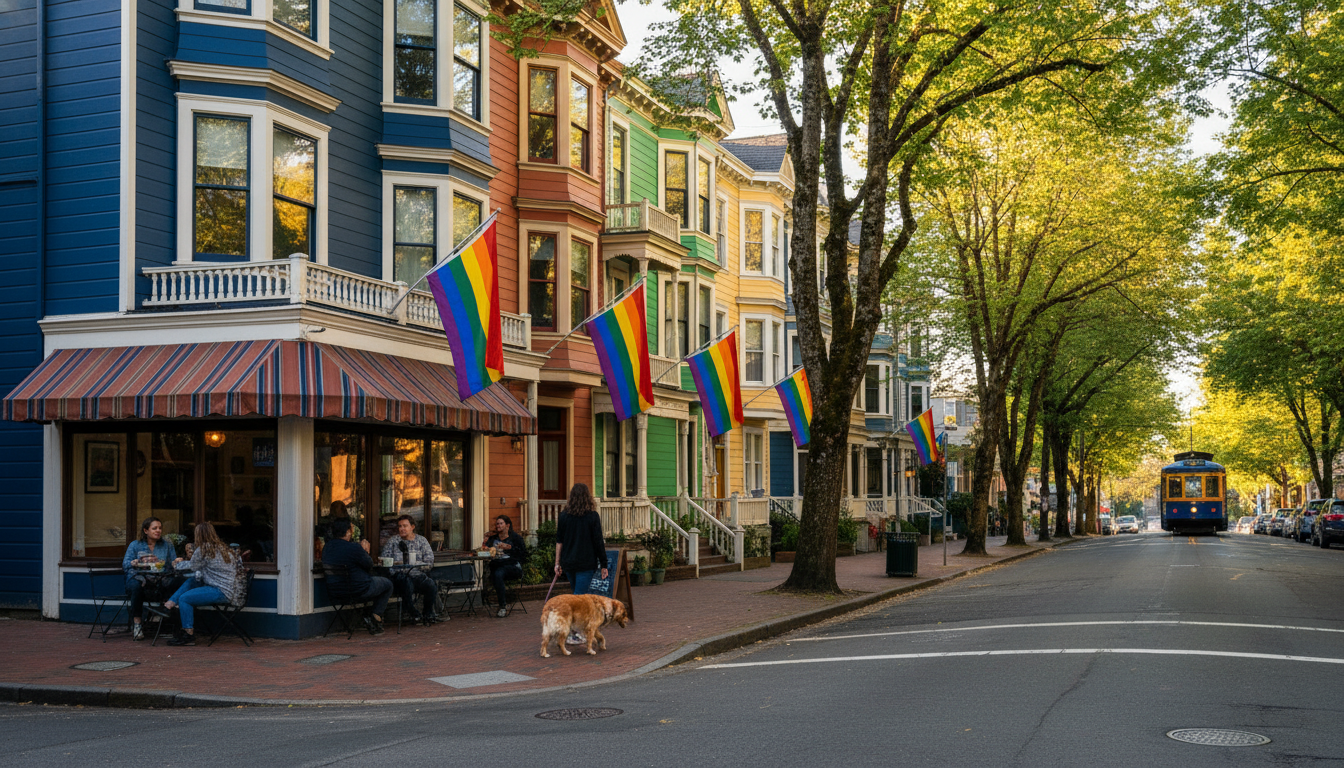 Colorful Victorian-era apartment buildings on a tree-lined Capitol Hill street, Pride flags visible
Victrola Coffee Roasters on 15th Avenue is the real deal—none of that corporate third-wave pretension. For dinner, walk to Stateside on 12th for Vietnamese-French fusion that'll ruin you for lesser pho. And if you're there on a Sunday? The farmers market in Cal Anderson Park is small but mighty.
Fremont: Weird and Proud of It
Fremont declared itself "The Center of the Universe" and erected a rocket ship and a giant troll under a bridge to prove the point. This neighborhood doesn't take itself seriously, which is exactly why it's perfect for cultural immersion.
Home swaps in Fremont often come with character—think quirky bungalows with overgrown gardens, apartments above vintage shops, houses with views of the ship canal. The neighborhood is walkable, bikeable, and has maintained more of its independent spirit than some other gentrified areas.
The Sunday Market (spring through fall) is a genuine community gathering, not a tourist trap. Locals sell everything from handmade ceramics to questionable taxidermy. Grab a breakfast burrito from one of the food trucks and wander. The Fremont Troll under the Aurora Bridge is touristy, yes, but it's also genuinely delightful—and you'll have it mostly to yourself if you go early on a weekday morning.
Ballard: Scandinavian Roots Meet Modern Seattle
Ballard's transformation from working-class Scandinavian fishing village to hip brewery district happened fast, but traces of the old neighborhood remain if you know where to look.
The Nordic Museum ($20 admission) is legitimately fascinating—I spent three hours there learning about the Norwegian immigrants who built this neighborhood. The Hiram M. Chittenden Locks are free and endlessly watchable; bring a sandwich and sit on the grass while boats navigate between Puget Sound and Lake Washington.
Home swaps here range from renovated craftsman homes to modern condos. Ballard Avenue offers a concentrated strip of restaurants, bars, and shops. Fair warning: weekend nights get rowdy with the brewery-hopping crowd.
I'm obsessed with The Walrus and the Carpenter—an oyster bar that's worth the wait (and there will be a wait; they don't take reservations). Budget around $60-80 per person. For something cheaper, Señor Moose serves Mexican breakfast that'll cure any hangover for under $15.
Columbia City: Seattle's Most Diverse Neighborhood
If you want to experience Seattle beyond its predominantly white tech-worker image, Columbia City delivers.
This South Seattle neighborhood is genuinely diverse—East African restaurants next to Vietnamese bakeries next to Mexican taquerias next to a killer pizza spot. The main drag on Rainier Avenue feels lived-in rather than curated.
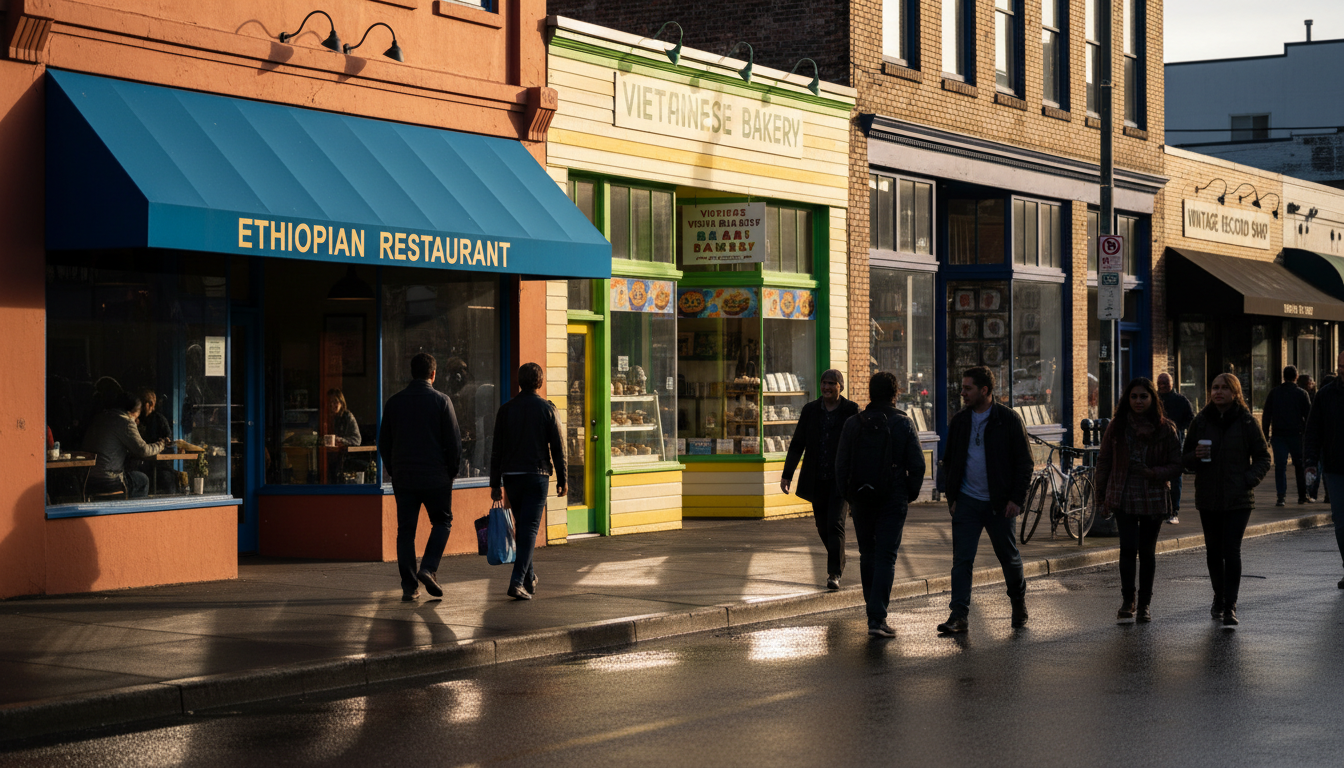 Rainier Avenue in Columbia City showing diverse storefronts including an Ethiopian restaurant, a Vie
Home swaps here often offer more space for less—larger homes with yards, a rarity in denser Seattle neighborhoods. You'll be further from downtown, but the light rail makes commuting easy (about 15 minutes to Pioneer Square).
Cafe Selam serves Ethiopian food that rivals anything I've had outside Addis Ababa. Island Soul's jerk chicken is $16 and feeds you for two meals. And on the first Thursday of each month, the Columbia City Gallery Walk turns the neighborhood into an open-air art party.
How to Find the Perfect Seattle Home Swap
Let me be practical here because I've seen people mess this up.
First, decide what kind of Seattle experience you want. Downtown proximity? Capitol Hill or First Hill. Neighborhood immersion? Fremont, Ballard, or Wallingford. Diversity and value? Columbia City or Beacon Hill. Nature access? West Seattle or Magnolia.
On SwappaHome, filter by neighborhood—not just "Seattle." The city sprawls, and staying in Shoreline (technically Seattle-adjacent) is a very different experience than staying in Pioneer Square. Read listings carefully. Look for hosts who've written detailed descriptions of their neighborhood, not just their apartment. Those are the people who'll leave you the good recommendations.
Timing matters too. Seattle's best months are July through September when the rain finally relents and the city explodes with outdoor festivals, farmers markets, and rooftop bar season. Home swap availability tightens during summer, so start your search 2-3 months out. Shoulder seasons—May-June, October—offer better availability and fewer crowds, plus you'll experience the moody, rainy Seattle that locals actually live with most of the year.
When you find a listing you like, send a personalized message. Mention specific things about their home or neighborhood that appeal to you. Ask questions about the area. Hosts can tell when someone's just copy-pasting the same request to fifty listings—and those requests often get ignored.
What to Expect from Your Seattle Host's Home
Seattle homes have quirks. Embrace them.
Many older homes in Capitol Hill, Fremont, and Wallingford lack air conditioning. This isn't a problem 90% of the year, but during those rare August heat waves, you'll understand why Seattleites talk about the weather constantly. Ask your host about fans or portable AC units.
Parking is a nightmare in most desirable neighborhoods. If you're renting a car, confirm parking availability before booking. Many hosts have street parking only, which means moving your car for street cleaning days. Better yet: skip the car entirely. Seattle's light rail, buses, and bikeshare make car-free exploration totally doable.
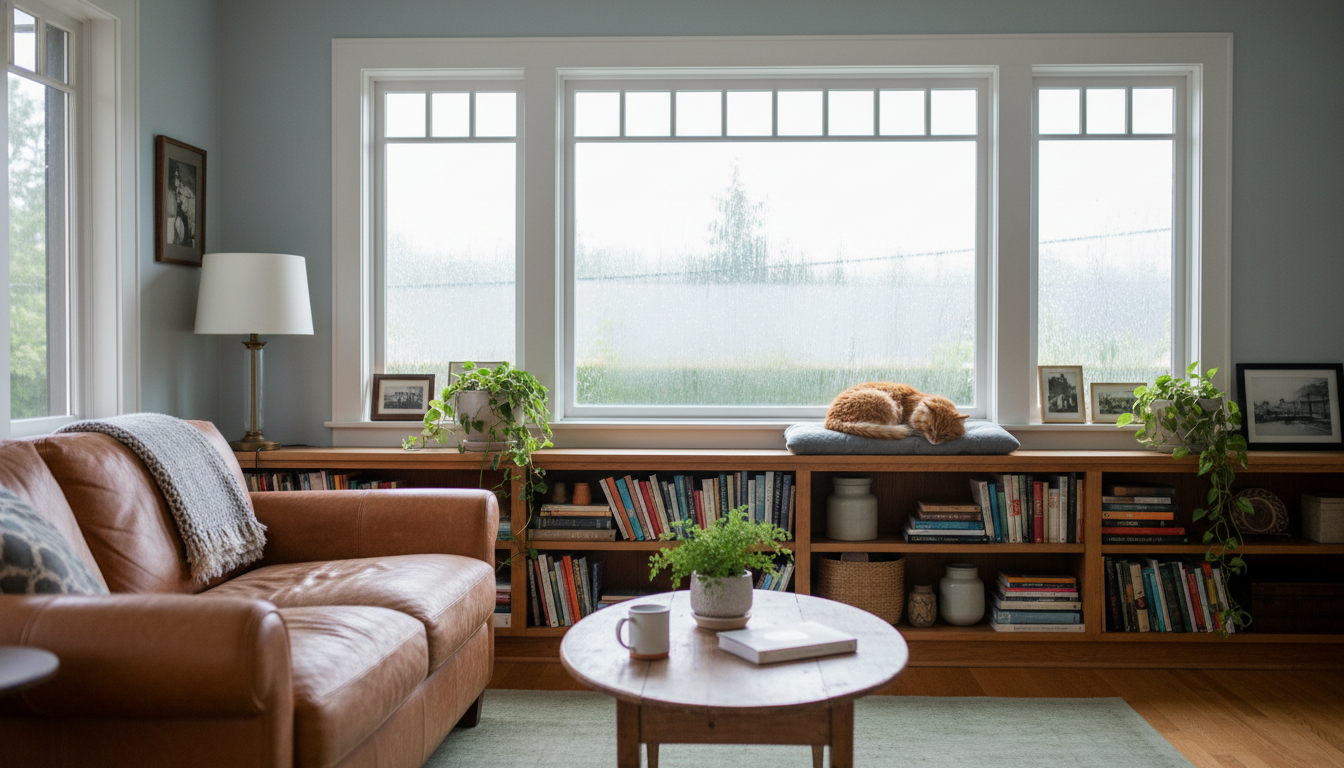 A cozy Seattle craftsman home interior showing a living room with built-in bookshelves, a worn leath
Expect coffee equipment. I'm not joking. Every Seattle home I've swapped into has had serious coffee gear—pour-over setups, AeroPress, sometimes full espresso machines. Your host will probably leave you beans from their favorite local roaster. Use them. This is part of the cultural immersion.
Also expect recycling and composting bins. Seattle takes this seriously, and your host will likely leave instructions. It's not complicated once you get the hang of it, and honestly, it feels good to participate in the city's sustainability culture rather than just observing it.
Immersive Seattle Experiences You'll Only Find Through Home Swapping
Here's where staying in a real neighborhood pays off.
The Coffee Pilgrimage
Seattle's coffee culture runs deeper than Starbucks (which locals view with complicated feelings—pride that it started here, mild embarrassment at what it became). Your host will have opinions about coffee. Listen to them.
Beyond the obvious spots, seek out Elm Coffee Roasters in Pioneer Square—minimalist, excellent espresso, $4-5. Milstead & Co. in Fremont sources from multiple roasters, which is controversial in purist circles but means you can try several styles in one visit. Broadcast Coffee in Capitol Hill is community-focused with great pastries.
The real move? Ask your host where they go on a random Tuesday morning. That's the spot.
Neighborhood Farmers Markets
Seattle has farmers markets nearly every day of the week, scattered across neighborhoods. Skip Pike Place (it's a tourist market now, let's be honest) and hit the local ones instead.
Ballard Farmers Market runs year-round on Sundays and is the city's largest. Capitol Hill's Sunday market in Cal Anderson Park is smaller but more intimate. University District's Saturday market has the best prices. Columbia City's Wednesday market is tiny but mighty.
Bring cash, bring reusable bags, and budget $30-40 for a week's worth of produce, bread, and maybe some local cheese.
The "Third Place" Hunt
Seattle invented the concept of the "third place"—somewhere between home and work where community happens. Every neighborhood has them, but you won't find them on Yelp.
In Fremont, it's the back patio at Roxy's Diner. In Ballard, it's the communal tables at Stoup Brewing. In Columbia City, it's the mismatched chairs outside Island Soul.
Your home swap host knows their neighborhood's third place. Ask them.
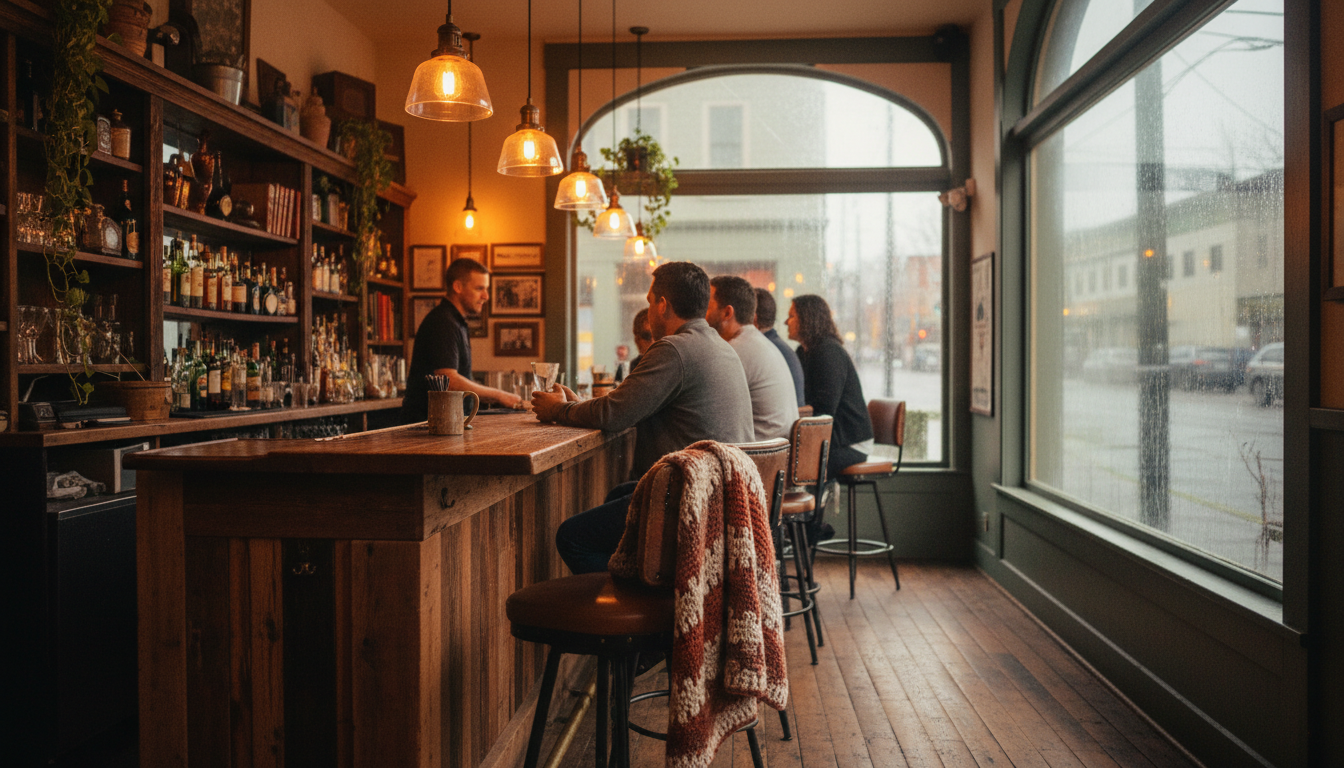 Interior of a cozy Seattle neighborhood bar with vintage decor, locals chatting at the counter, rain
Rainy Day Rituals
It will rain. Probably a lot. This is not a bug; it's a feature.
Seattleites have perfected the art of rainy-day contentment. From your home swap base, you can spend an afternoon at Elliott Bay Book Company—one of America's best independent bookstores, in Capitol Hill. Explore the Seattle Art Museum downtown ($30 admission, free first Thursdays). Or do what locals actually do: put on a rain jacket and go for a walk anyway.
The Burke-Gilman Trail is beautiful in the rain. So is Discovery Park. So is wandering through any neighborhood with a good podcast. Seattle rain is usually a drizzle, not a downpour. You'll survive.
Building Connections with Your Seattle Host Community
The best part of home swapping isn't the free accommodation—it's the connection.
Before your trip, ask your host about their neighborhood. Not in a demanding way, but genuinely curious. Most people love talking about where they live. They'll share things that never make it into the listing: the neighbor who might knock to borrow eggs, the dog that barks at 7 AM (sorry), the shortcut through the alley that saves five minutes.
Leave a small gift when you go. Something from your hometown that represents your place. I've left Vancouver maple syrup, San Francisco sourdough starters, postcards from places I've traveled. It's not about the monetary value—it's about the exchange. You stayed in someone's home, slept in their bed, used their coffee mugs. A small token of appreciation matters.
And leave a detailed review on SwappaHome. Mention specific things you loved. Future travelers will thank you, and your host will feel seen.
Practical Tips for Seattle Cultural Immersion
Let me rapid-fire some logistics that'll make your trip smoother.
Getting around: The Link Light Rail connects the airport to downtown, Capitol Hill, and the University District ($3.25 one-way). The #40 bus is your friend for getting between Fremont, Ballard, and downtown. Uber and Lyft work fine but get expensive. Lime bikes and scooters are scattered everywhere—download the app before you arrive.
Money stuff: Budget $50-75/day for food if you're eating out for most meals, less if you're cooking in your home swap kitchen. Happy hours are your friend—most restaurants do them 3-6 PM with significant discounts. Tipping culture is strong here: 20% minimum for sit-down service.
Weather prep: Layers. Always layers. A waterproof jacket is non-negotiable. Seattleites don't use umbrellas (it's a thing), but you can if you want. Temperatures rarely drop below 35°F in winter or above 80°F in summer.
Safety: Seattle is generally safe, but like any city, use common sense. The downtown core around 3rd Avenue has visible homelessness and occasional property crime. Most neighborhoods are very safe, especially during the day.
The SwappaHome Advantage for Seattle Exploration
I've tried various ways to travel—hotels, Airbnb, hostels, couchsurfing. Home swapping through SwappaHome hits differently.
The credit system means you're not calculating whether a neighborhood is "worth" the nightly rate. Every night costs the same: 1 credit. So you can stay in a Capitol Hill apartment with a view or a Columbia City bungalow with a backyard, and the only question is which experience you want. That freedom changes how you plan.
Plus, you're connecting with real people who live in Seattle. Not investors managing twenty properties. Not corporate landlords. Actual humans who chose this neighborhood, who walk these streets, who have opinions about the best pho in a five-block radius. That connection is worth more than any hotel concierge.
The verification system and reviews help build trust on both sides. I've never had a bad experience with a SwappaHome host, partly because the community self-selects for people who take this seriously. We're all invested in making it work.
Your Seattle Cultural Immersion Starts Now
I'm writing this from my apartment in San Francisco, but part of me is still in that Capitol Hill kitchen, figuring out the pour-over setup while rain streaks the windows. That's what home swapping does—it leaves pieces of you in places, and brings pieces of those places back with you.
Seattle is a city that rewards patience. It doesn't show off for tourists. The Space Needle is fine, sure. Pike Place is worth a quick walk-through. But the real Seattle—the one with the coffee obsession and the passive-aggressive driving and the genuine kindness beneath the famous freeze—that Seattle only reveals itself when you stay long enough, in the right neighborhood, living something close to a local life.
Home swapping gives you that. A week in someone's Fremont bungalow. A long weekend in a Ballard apartment. Enough time to find your coffee shop, your corner bar, your bench in the park where you read while the rain does its thing.
Start browsing Seattle listings on SwappaHome. Look for hosts who write like they love where they live. Send them a message. Tell them what you're hoping to find.
The Emerald City is waiting. And trust me—it's so much better from the inside.
Frequently Asked Questions
Is home swapping in Seattle safe for first-time travelers?
Yes—home swapping in Seattle is safe, especially through platforms like SwappaHome with verification and review systems. Seattle's neighborhoods are generally welcoming, and the home swap community tends to be trustworthy since members have mutual accountability through ratings. I'd recommend getting your own travel insurance for peace of mind, and always communicate clearly with your host beforehand.
How much money can I save with home exchange in Seattle versus hotels?
Significant savings. Downtown Seattle hotels average $250-350 per night, while boutique spots in popular neighborhoods run $300-400. A week-long stay costs $1,750-2,800 in hotels versus 7 credits on SwappaHome. Plus, having a kitchen means you can cook some meals, saving another $30-50 daily on restaurant costs.
What's the best Seattle neighborhood for cultural immersion through home swapping?
Capitol Hill offers the most concentrated cultural experience—walkable, diverse, with excellent food, coffee, and nightlife. For a quieter immersion, Fremont and Ballard provide neighborhood charm with strong local identity. Columbia City is best for experiencing Seattle's multicultural side and offers more space for your money.
When is the best time to do a home swap in Seattle?
July through September offers the best weather with minimal rain and temperatures around 70-80°F. But summer means tighter home swap availability. May-June and October provide good balance—mild weather, fewer tourists, and better availability. Book 2-3 months ahead for summer swaps.
Do I need a car for a Seattle home swap trip?
Nope, a car isn't necessary for most Seattle neighborhoods. The Link Light Rail, buses, and bikeshare options make car-free exploration easy. Capitol Hill, Fremont, Ballard, and Columbia City are all walkable with good transit connections. Skip the car unless you're planning day trips to Mount Rainier or the San Juan Islands.

Published by
SwappaHome
SwappaHome Editorial Team
Home Exchange & Slow Travel Editorial
The SwappaHome Editorial Team brings together travel research, home-exchange community insights, and platform data to produce practical guides for first-time and experienced home swappers. Every article cites real platforms, current market rates, and verifiable city-level facts so readers can make informed decisions without guessing.
Ready to try home swapping?
Join SwappaHome and start traveling by exchanging homes. Get 7 free credits when you sign up!
Related articles
Bachelor and Bachelorette Parties in Singapore: The Complete Home Swap Group Guide for 2026
Planning a bachelor or bachelorette party in Singapore? Discover how home swapping lets groups of 6-12 stay together in luxury condos, saving thousands while partying in Marina Bay.
Cycling in Lisbon: 7 Home Swap Bike Tour Itineraries for Every Rider
Discover the best cycling routes in Lisbon with these home swap bike tour itineraries—from waterfront paths to hilltop adventures, all starting from your borrowed home.
Graduation Trip to Barcelona: How Home Swapping Gives New Graduates the Ultimate Celebration
Planning a graduation trip to Barcelona? Discover how home swapping lets new graduates explore Spain's most vibrant city without the hostel crowds or hotel costs.