
Wine-Lover's Home Swap Guide to Lisbon: Explore Portugal's Best Wine Regions from a Local's Kitchen

SwappaHome Editorial Team
Home Exchange & Slow Travel Editorial
Discover how a home swap in Lisbon unlocks Portugal's wine regions—from Alentejo reds to Vinho Verde whites—with local kitchens, neighborhood wine bars, and savings of €150+ per night.
Wine-Lover's Home Swap Guide to Lisbon: Explore Portugal's Best Wine Regions from a Local's Kitchen
Morning light hits the azulejo tiles of a borrowed Alfama apartment. You're already uncorking yesterday's find—a 2019 Quinta do Vallado Reserva from the Douro Valley that cost €14 at Garrafeira Nacional. This is what a wine-lover's home swap in Lisbon actually looks like: not a sterile hotel minibar with overpriced half-bottles, but a proper kitchen with local glassware, a corkscrew that's seen hundreds of bottles, and a balcony where you can watch the Tagus River turn gold while tasting something extraordinary.
Portugal produces some of Europe's most underrated wines—from the mineral-driven whites of Vinho Verde to the bold, age-worthy reds of the Alentejo—and Lisbon sits at the perfect crossroads. Within two hours, you can reach five distinct wine regions. Here's what most wine tourists miss: the best way to experience Portuguese wine isn't through expensive hotel-based tours or rushed day trips. It's by living like a local, with a home base that has a proper kitchen, a neighborhood wine shop owner who learns your palate, and the freedom to bring back cases without worrying about luggage fees on a short hotel stay.
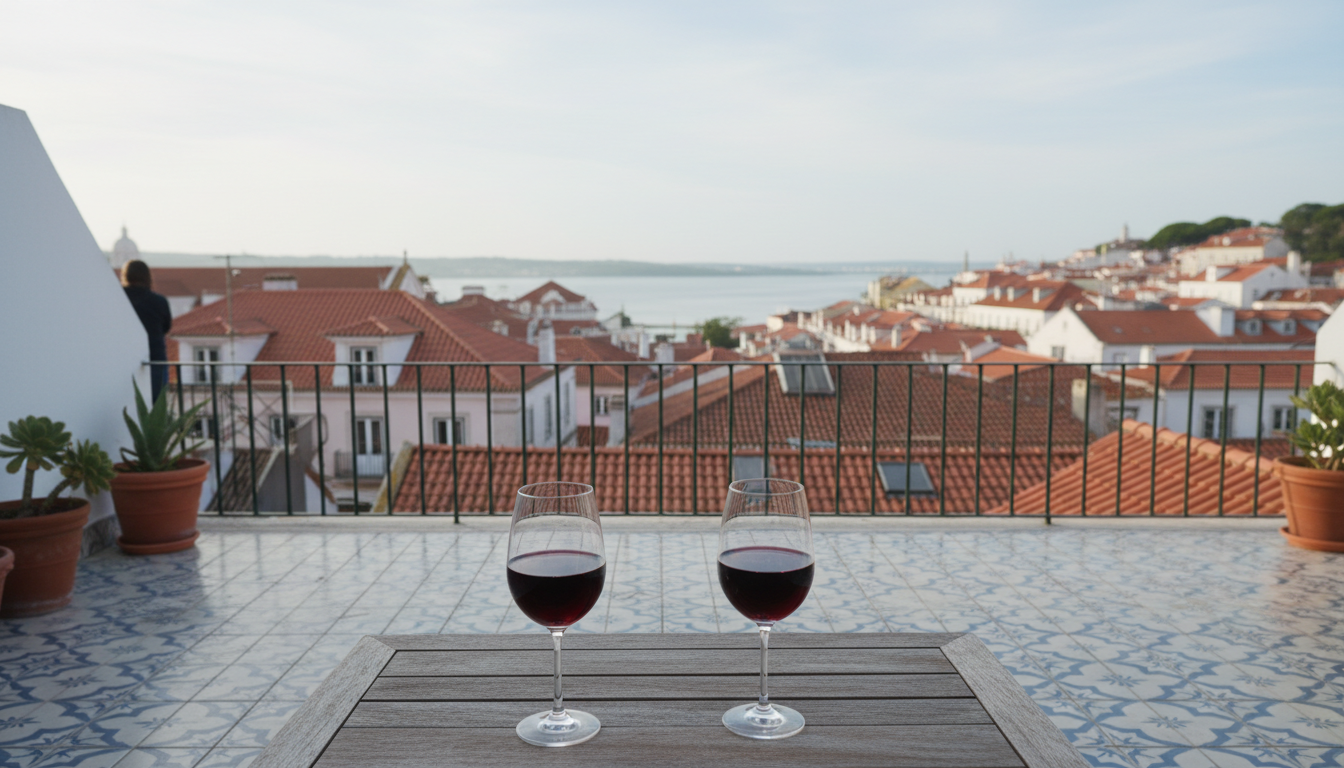 Sun-drenched apartment terrace in Lisbons Alfama neighborhood with traditional azulejo tiles, two gl
Why Lisbon Is the Perfect Base for Portuguese Wine Exploration
Lisbon isn't just Portugal's capital—it's the country's wine gateway. The city itself sits within the Lisboa wine region (yes, there are vineyards within city limits), but more importantly, it's the hub from which every major Portuguese wine region becomes accessible.
The geography tells the story. The Setúbal Peninsula, famous for its Moscatel dessert wines and increasingly impressive reds from the Palmela DOC, is a 45-minute drive across the Ponte 25 de Abril. The Alentejo—Portugal's largest wine region, producing nearly a third of the country's wine—starts about 90 minutes southeast. The Douro Valley, a UNESCO World Heritage site and the birthplace of Port wine, is reachable by a scenic three-hour train ride from Santa Apolónia station. Even Vinho Verde country in the north is just 3.5 hours by car or train.
But geography alone doesn't explain why home swapping transforms a Lisbon wine trip. The real advantage is economic and experiential.
Hotel stays in central Lisbon run €150–250 per night for anything decent in neighborhoods like Chiado or Príncipe Real. A week's accommodation easily hits €1,200—money that could buy 80+ bottles of excellent Portuguese wine, or fund three full winery day trips with private tastings. Through SwappaHome's credit system, that accommodation cost drops to zero (beyond your annual membership). You earn credits by hosting travelers in your own home, then spend those credits—always one credit per night, regardless of the property's location or size—to stay in Lisbon.
The SwappaHome community in Lisbon tends toward exactly the kind of properties wine lovers need: apartments with full kitchens, proper wine storage, and hosts who often leave recommendations for their favorite local garrafeiras (wine shops). Many listings explicitly mention wine-friendly features—temperature-controlled storage, decanting equipment, even curated lists of nearby producers.
Best Lisbon Neighborhoods for Wine-Focused Home Swaps
Not all Lisbon neighborhoods serve wine lovers equally. Here's where to focus your search.
Alfama and Graça: Traditional Character, Neighborhood Wine Bars
These adjacent hillside neighborhoods offer the most authentically Lisbon experience. The streets are steep, the buildings are old, and the tasca culture is alive—small, family-run taverns where the wine list might be "red or white" but both options are surprisingly good and cost €2–3 per glass.
For wine lovers, Alfama's appeal is its concentration of traditional ginjinha bars (serving the cherry liqueur that's been made in Lisbon since the 19th century) and its proximity to Feira da Ladra, the Tuesday and Saturday flea market where vintage Port bottles from estate sales occasionally surface. The neighborhood wine shop to know is Garrafeira da Sé, a tiny spot near the cathedral with a curated selection of small-producer Portuguese wines and an owner who speaks enough English to guide visitors toward hidden gems.
Home swaps in Alfama typically feature older buildings with character—exposed stone walls, traditional wooden floors—but smaller kitchens. Properties range from studios to two-bedroom apartments, many with those iconic Lisbon views that make sunset wine drinking feel ceremonial.
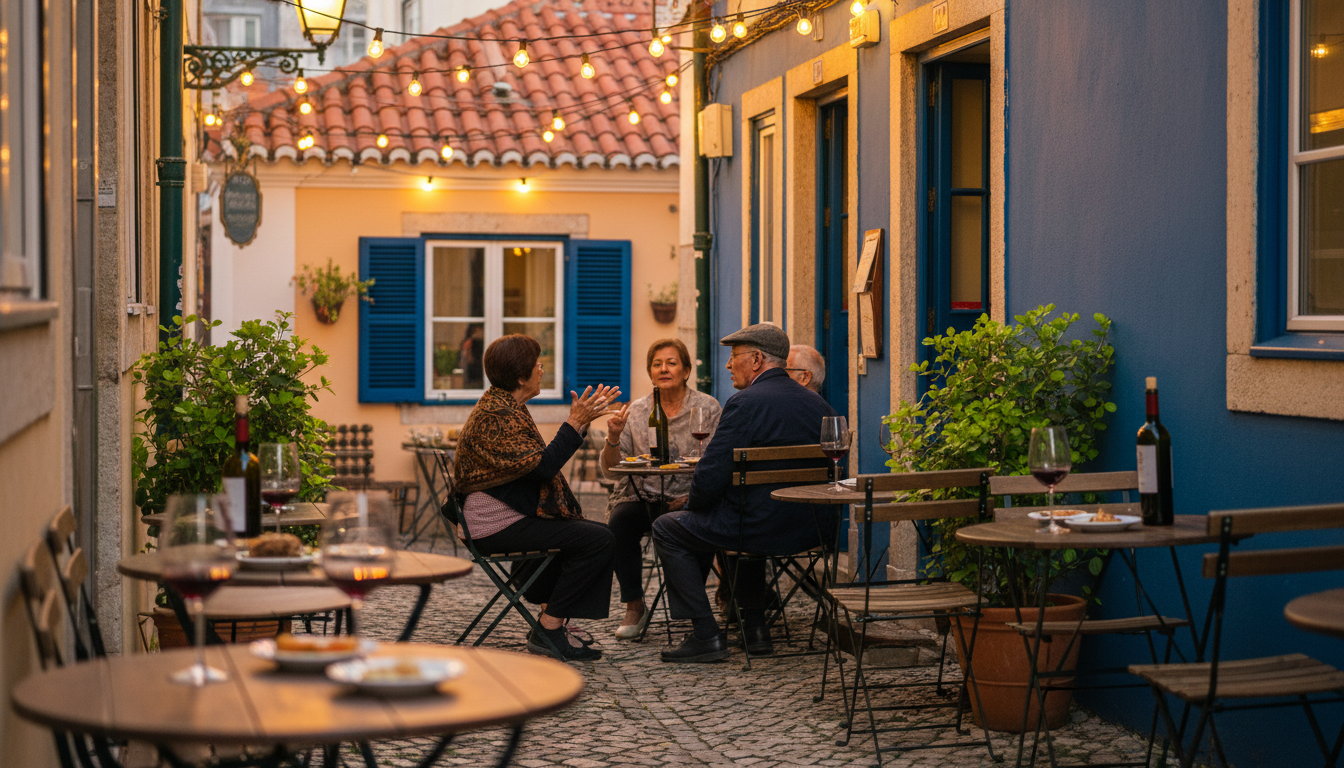 Narrow cobblestone street in Alfama with traditional Portuguese tasca, string lights, outdoor tables
Príncipe Real and Santos: Upscale Wine Culture
If your wine interests skew toward natural wines, orange wines, and the Portuguese producers pushing boundaries, Príncipe Real is your neighborhood. This is where Lisbon's wine bars cluster—places like By the Wine, the José Maria da Fonseca-owned bar where you can taste through the historic producer's full range, or Wines of Portugal Tasting Room in the nearby Praça do Comércio, which offers flights organized by region.
Santos, just downhill toward the river, has emerged as Lisbon's natural wine epicenter. Bars like Comida Independente and Senhor Uva pour selections from Portuguese natural wine pioneers like Aphros, Niepoort's Nat'Cool line, and the cult-status Bairrada producer Filipa Pato.
Home swaps in Príncipe Real tend toward renovated apartments in 19th-century buildings—higher ceilings, larger kitchens, and often dedicated wine storage. These properties command more credits on some platforms, but remember: SwappaHome's system is always one credit per night, so you get the same value whether you're in a Príncipe Real penthouse or a Mouraria studio.
Cais do Sodré and Santos: River Access, Easy Day Trips
For wine lovers planning frequent excursions to Setúbal or the Alentejo, the riverside neighborhoods offer practical advantages. Cais do Sodré is home to the Fertagus train station (for trips across the river to Setúbal) and the bus terminal for Alentejo-bound coaches. The famous Time Out Market is here too, with several wine-focused stalls including Garrafeira Nacional's outpost.
The neighborhood has gentrified significantly—it's no longer the rough sailors' quarter of decades past—but retains a grittier energy than Príncipe Real. Home swaps here often feature industrial-style renovations in former warehouse buildings, with open-plan kitchens perfect for hosting wine dinners.
Planning Wine Region Day Trips from Your Lisbon Home Swap
The home swap advantage for wine tourism isn't just about where you sleep—it's about how you travel. With a local base, you can structure day trips that would be impossible or prohibitively expensive from a hotel.
The Setúbal Peninsula: 45 Minutes to Moscatel Country
This is the easiest wine day trip from Lisbon, and one of the most underrated. The Setúbal Peninsula produces Portugal's finest Moscatel—a fortified dessert wine that rivals any Muscat de Beaumes-de-Venise—plus increasingly serious reds from the Palmela DOC.
Start at José Maria da Fonseca in Vila Nogueira de Azeitão, the historic producer that's been making wine since 1834. Their Periquita red is Portugal's best-selling wine, but the real treasures are in the Moscatel cellar—bottles dating back to the 1800s, and tastings that include 20- and 30-year-old examples for €15–25. The estate is open daily, no reservation needed for standard tastings.
From there, drive 15 minutes to Bacalhôa Vinhos de Portugal, a modern operation with an on-site art collection (including works by Picasso and Andy Warhol) and a broader wine range. Their Quinta da Bacalhôa red, a Cabernet-Merlot blend, consistently ranks among Portugal's best Bordeaux-style wines.
The practical advantage of a home swap: you can buy cases directly from producers (José Maria da Fonseca offers shipping, but buying on-site saves 30–40%) and store them in your apartment. Try doing that from a hotel.
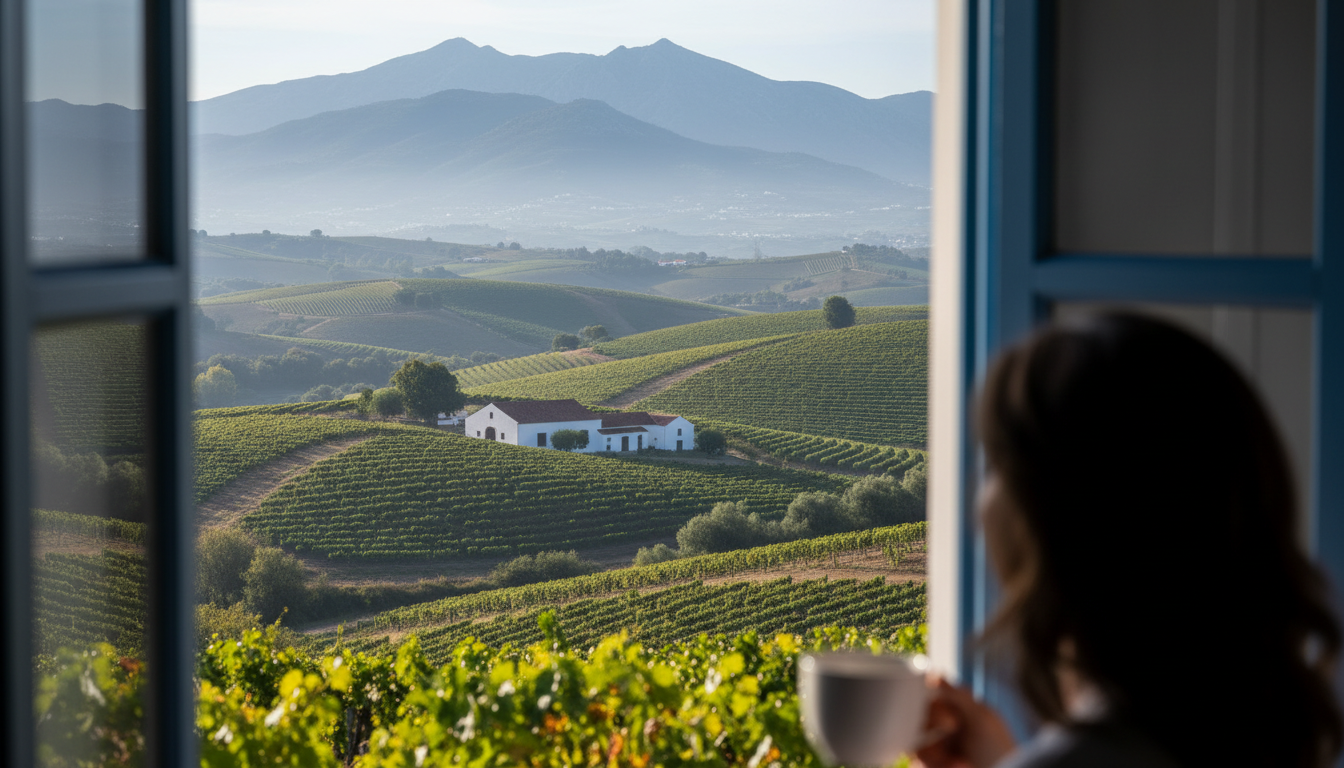 Rolling vineyard hills of the Setbal Peninsula with the Serra da Arrbida mountains in the background
The Alentejo: Portugal's Wine Heartland
The Alentejo produces more wine than any other Portuguese region, and the quality revolution of the past two decades has made it internationally competitive. The landscape is dramatic—cork oak forests, vast wheat fields, medieval hilltop towns—and the wines are bold, fruit-forward, and often exceptional value.
From Lisbon, the wine town of Évora makes the best base. It's 1.5 hours by car or 1 hour 40 minutes by train (the Intercidades service from Lisbon-Oriente runs several times daily, tickets around €15 each way). Évora itself is a UNESCO World Heritage site, with Roman ruins, a bone chapel, and some of Portugal's best regional restaurants.
The must-visit producer is Herdade do Esporão, about 45 minutes south of Évora. This massive estate (over 700 hectares of vineyards) offers everything from entry-level wines to the flagship Esporão Reserva, which regularly scores 90+ points from international critics. Their restaurant, also called Esporão, serves a tasting menu paired with estate wines for around €75—one of the Alentejo's finest dining experiences.
For smaller-production wines, seek out Adega Mayor in Campo Maior (near the Spanish border) or João Portugal Ramos in Estremoz. Both accept visitors with advance booking and offer tastings in the €10–20 range.
Here's the smart move for the Alentejo: do it as an overnight trip. The region deserves two days, and SwappaHome members sometimes arrange secondary swaps in Alentejo towns like Évora or Monsaraz. Even if you stay in a guesthouse for one night (€60–80), you're still saving massively compared to a hotel-based Lisbon trip.
The Douro Valley: Worth the Journey
The Douro is Portugal's most famous wine region—the terraced vineyards along the river are a UNESCO World Heritage landscape, and this is where Port wine has been made for over 300 years. It's also where Portugal's finest dry red wines now come from, as producers like Quinta do Crasto, Quinta do Vale Meão, and Niepoort have shifted focus from fortified to table wines.
From Lisbon, the Douro requires commitment. The scenic option is the train from Santa Apolónia to Pinhão (about 3.5 hours, changing in Porto), which follows the river through increasingly dramatic scenery. The practical option is driving (3 hours to Peso da Régua, the region's main town) or flying to Porto and renting a car there.
For a day trip, focus on the western Douro around Peso da Régua and Pinhão. Quinta do Vallado, just outside Régua, offers excellent tastings (€15–30 depending on the tier) and has a stunning modern wine hotel if you decide to extend. Quinta do Bomfim, owned by the Symington family (makers of Graham's and Dow's Port), sits right in Pinhão and offers walk-in tastings with views over the river.
The home swap advantage for the Douro: use your Lisbon base for the bulk of your trip, then spend two nights in the Douro itself. The region has numerous quintas (wine estates) offering accommodation, and the experience of waking up surrounded by terraced vineyards is worth the splurge. Your Lisbon home swap savings fund the upgrade.
 Dramatic terraced vineyards of the Douro Valley cascading down to the river, traditional rabelo boat
Lisbon's Essential Wine Shops and Bars
A proper wine trip isn't just about visiting producers—it's about the urban wine culture that surrounds you daily. Lisbon delivers here, with a density of excellent wine shops and bars that rivals any European capital.
Wine Shops (Garrafeiras)
Garrafeira Nacional (Rua de Santa Justa, 18) is the reference point. Operating since 1927, this shop stocks over 3,000 Portuguese wines plus an impressive international selection. The staff are knowledgeable without being pretentious, and they'll happily guide you toward €8 bottles that drink like €25 wines. Their vintage Port selection is museum-quality—if you want a birth-year bottle, this is where to find it.
Napoleão (Rua dos Fanqueiros, 70) is the more accessible alternative, with multiple locations and a focus on value-driven selections. Their house wines (bottled under the Napoleão label) are reliable everyday drinkers at €4–6.
Wines & Companhia (Rua do Alecrim, 39) specializes in small producers and natural wines. If you want to discover the Portuguese wine scene beyond the famous names, start here. The owner sources directly from winemakers and can tell you the story behind every bottle.
Wine Bars for Tasting and Learning
By the Wine (Rua das Flores, 41-43) is the most educational option—owned by José Maria da Fonseca, it offers flights organized by region, grape variety, or style. The €15–25 tasting sets are essentially structured wine courses with knowledgeable staff.
Wines of Portugal Tasting Room (Praça do Comércio) is the official showcase for Portuguese wines, with a rotating selection that covers all major regions. The €5–10 tastings are excellent value, and the riverside terrace location is hard to beat.
Senhor Uva (Rua do Instituto Industrial, 6) is where Lisbon's natural wine obsessives gather. The selection changes constantly, the vibe is casual, and you'll taste things here that never make it to export markets.
Povo (Rua Nova do Carvalho, 32) combines wine with petiscos (Portuguese tapas) in the Pink Street nightlife area. It's livelier than the dedicated wine bars, with a younger crowd and a focus on easy-drinking wines by the glass.
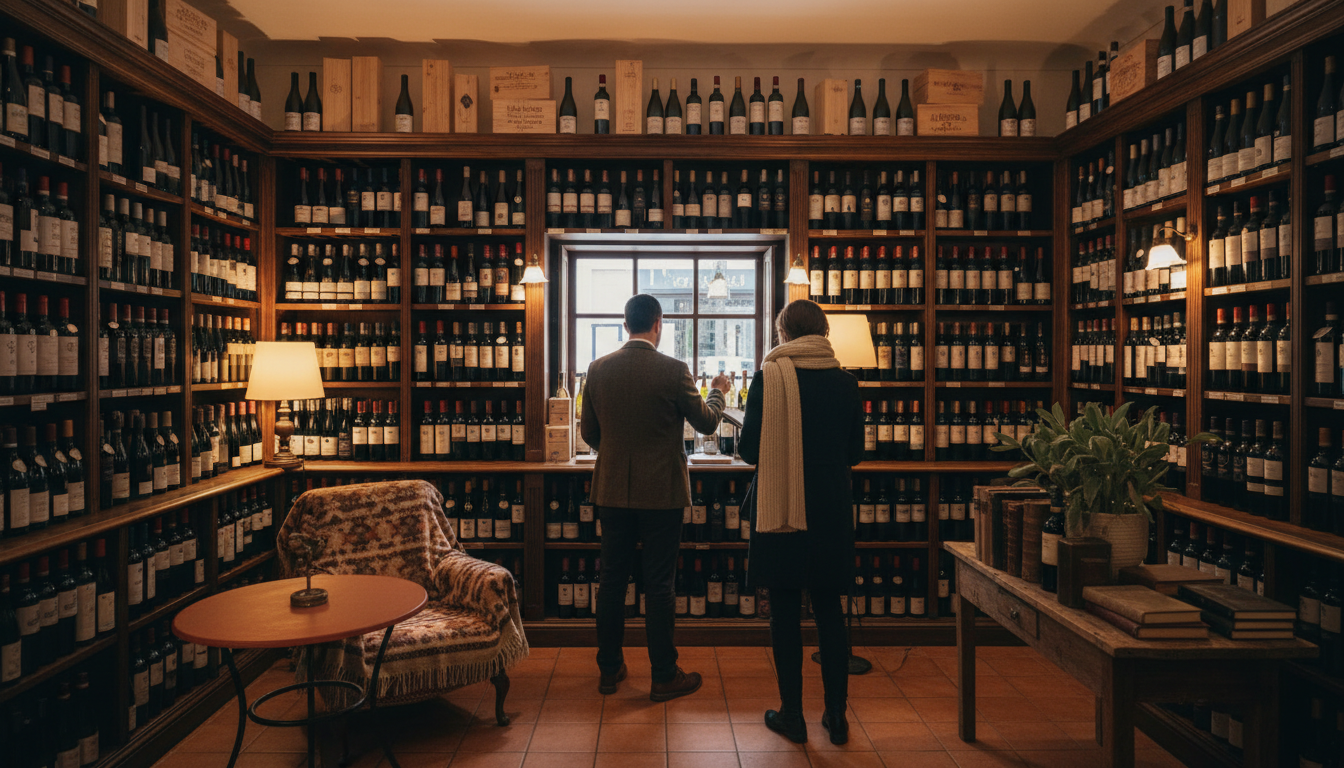 Interior of a traditional Lisbon garrafeira wine shop with floor-to-ceiling wooden shelves filled wi
The Kitchen Advantage: Why Home Swaps Transform Wine Travel
Here's something wine tourists rarely discuss: the best food and wine pairings happen at home, not in restaurants.
Portuguese cuisine is built for wine—grilled sardines, bacalhau (salt cod) prepared a hundred different ways, cured meats from the Alentejo, Serra da Estrela cheese that's been aged for months. But restaurant wine markups in Lisbon typically run 200–300%. That €12 bottle of Quinta dos Roques Touriga Nacional you bought at Garrafeira Nacional? It's €35 on a restaurant list.
With a home swap kitchen, you flip the economics. The Mercado da Ribeira (Time Out Market's more authentic neighbor, the actual market hall) sells fresh fish, cured meats, cheeses, and produce at local prices. The butchers in Mouraria offer cuts of black Iberian pork that would cost €40 in a restaurant for €8. The cheese counter at Manteigaria Silva (operating since 1890) stocks properly aged Portuguese cheeses that pair magnificently with Douro reds.
A routine that works well for wine-focused travelers goes something like this: spend the morning at a producer or wine region, buy bottles directly, return to Lisbon by late afternoon, shop the market for dinner ingredients, cook a simple meal, and taste your purchases with proper food pairings. The cost of a restaurant dinner for two (€60–80 with modest wine) instead becomes a €25 market haul plus €15–30 in wine you actually want to drink.
Over a week, this shift adds up. A hotel-based wine trip with restaurant dinners might run €2,500–3,500 for two people. A home swap approach—with the same winery visits, better wine, and more authentic food—comes in under €1,200, and that's being generous.
Practical Logistics for Wine-Focused Home Swaps
What to Look for in a Lisbon Listing
When searching SwappaHome for Lisbon properties, filter for these wine-friendly features:
- Full kitchen (not kitchenette): You need a proper stovetop for cooking, counter space for prep, and ideally a dishwasher for wine glasses
- Wine storage mention: Some hosts explicitly note wine fridges, cool storage areas, or temperature-controlled spaces
- Neighborhood location: Prioritize Alfama, Príncipe Real, Santos, or Cais do Sodré for wine bar access
- Balcony or terrace: Not essential, but sunset wine drinking on a Lisbon terrace is a specific kind of magic
- Host reviews mentioning wine: SwappaHome's review system often reveals hosts who are wine enthusiasts themselves—they'll leave better recommendations
Getting Wine Home
Portuguese wine is cheap enough that buying cases makes sense, but logistics matter.
Checked luggage: Most airlines allow wine in checked bags. Wrap bottles in clothes, use wine skins (available at Garrafeira Nacional for €3–5), and distribute weight across bags. Budget airlines like TAP charge €25–40 for checked bags; factor this into your wine math.
Shipping: For larger quantities, producers like Esporão and José Maria da Fonseca ship internationally. Expect €15–25 per case to the US or UK, plus import duties (which vary by country—check your local regulations).
Carry-on: You can't bring wine through security, but duty-free shops at Lisbon airport (Aeroporto Humberto Delgado, code LIS) stock a decent Portuguese selection. Prices are higher than city shops but lower than your home country.
Transportation for Winery Visits
A rental car is essential for serious wine tourism. Lisbon's public transit is excellent within the city, but wineries are rural by definition. Expect €25–40 per day for a basic rental; book through Lisbon airport for convenience.
If you're not driving, organized tours exist. Companies like Wine Tourism in Portugal offer day trips to the Alentejo (€120–150 per person including tastings and lunch) and the Douro (€180–220 for full-day trips from Lisbon). These aren't cheap, but they solve the designated driver problem.
Seasonal Considerations for Wine Travel
Portugal's wine tourism calendar matters more than you might expect.
Harvest season (September–October): The most exciting time to visit wineries, with grape picking and fermentation in full swing. Many producers offer harvest experiences—stomping grapes, working a morning in the vineyard—that are unavailable the rest of the year. The downside: wineries are busy, and some limit visitor access during the crush.
Spring (April–May): Ideal weather for Lisbon (20–25°C, minimal rain), vineyards are green and photogenic, and wineries have full attention for visitors. This is when serious wine tourists tend to visit.
Summer (June–August): Lisbon gets hot (30–35°C) and crowded with general tourists. Wineries are open but the heat makes day trips less pleasant. If you visit in summer, prioritize early morning winery appointments and spend afternoons in air-conditioned wine bars.
Winter (November–March): Fewer tourists, lower home swap demand (easier to find great properties), and cozy wine bar season. Some smaller wineries close or reduce hours, but the major producers remain open. This is when Lisbon locals actually drink the most wine—the city's tasca culture comes alive on rainy winter evenings.
What Your Lisbon Host Might Leave Behind
The SwappaHome community has a culture of generous hosting, and wine-loving members often leave particularly thoughtful touches. Common reports from travelers include:
- Bottles of local wine with tasting notes
- Lists of favorite wine shops with specific bottle recommendations
- Restaurant reservations at places that require advance booking
- Maps marked with neighborhood wine bars
- Corkscrews, decanters, and proper wine glasses (many Lisbon apartments come equipped)
- Contacts for wine tour guides or driver services
This isn't guaranteed—it depends on your host—but the reciprocal nature of home swapping tends to encourage generosity. When you host travelers in your own home, you'll likely do the same.
Making the Most of Your Wine-Focused Home Swap
Travelers who get the most from wine-focused home swaps in Lisbon share a few habits.
They research before arriving—identifying which producers they want to visit, making reservations where required, and mapping out logistics. Winery visits in Portugal are generally casual, but the best experiences come with advance booking.
They balance structure and spontaneity. Plan two or three winery day trips, but leave room for the discoveries that happen when you wander into an unfamiliar wine bar or strike up a conversation with a garrafeira owner.
They embrace the kitchen. Even if you're not a confident cook, simple preparations—grilled fish, cured meats and cheese, fresh bread—pair beautifully with Portuguese wine and cost a fraction of restaurant equivalents.
They connect with their hosts. SwappaHome's messaging system allows pre-trip communication, and hosts who know your wine interests can offer tailored recommendations that no guidebook provides.
And they think long-term. A home swap in Lisbon isn't just a single trip—it's the beginning of a reciprocal relationship. The travelers who stay in your home might become future hosts themselves, in wine regions you haven't yet discovered.
Frequently Asked Questions
Is Lisbon a good base for exploring Portuguese wine regions?
Lisbon is arguably the best base for Portuguese wine exploration. The city sits within two hours of five major wine regions—Setúbal, Alentejo, Lisboa DOC, Tejo, and even the southern Douro. The train and road connections are excellent, the city itself has world-class wine shops and bars, and the home swap options provide the kitchen access that transforms wine tourism economics.
How much can I save on a Lisbon wine trip with home swapping versus hotels?
Typical savings run €1,000–1,500 per week compared to hotel stays. Central Lisbon hotels average €150–250 per night; through SwappaHome's credit system, accommodation costs nothing beyond your membership fee. That savings funds approximately 70–100 bottles of excellent Portuguese wine, or three to four full winery day trips with private tastings and meals.
What's the best time of year for a wine-focused home swap in Lisbon?
Spring (April–May) offers ideal weather and full winery access. Harvest season (September–October) provides the most exciting winery experiences but busier conditions. Winter (November–March) means fewer tourists, easier home swap availability, and Lisbon's cozy tasca culture at its best. Summer works but brings heat and crowds.
Can I bring wine back from Portugal in my luggage?
Yes—most airlines allow wine in checked luggage with no special restrictions. Wrap bottles carefully in clothes or wine skins (available at Lisbon wine shops for €3–5), distribute weight across bags, and factor in checked bag fees for budget airlines (€25–40 typically). For larger quantities, producers like Esporão and José Maria da Fonseca offer international shipping.
Do I need a car for wine tourism from Lisbon?
For serious wine exploration, yes. While Lisbon's public transit is excellent, wineries are rural and often inaccessible by bus or train. Rental cars cost €25–40 per day from Lisbon airport. Alternatives include organized wine tours (€120–220 per day depending on region) or hiring private drivers, though these add significant cost.
What should I look for in a Lisbon home swap listing for wine travel?
Prioritize full kitchens (not kitchenettes), wine storage mentions, and locations in wine-friendly neighborhoods like Alfama, Príncipe Real, Santos, or Cais do Sodré. Check reviews for mentions of wine-loving hosts who leave recommendations. Balconies or terraces are a bonus for sunset tastings. SwappaHome listings often note specific amenities like wine fridges or decanting equipment.

Published by
SwappaHome
SwappaHome Editorial Team
Home Exchange & Slow Travel Editorial
The SwappaHome Editorial Team brings together travel research, home-exchange community insights, and platform data to produce practical guides for first-time and experienced home swappers. Every article cites real platforms, current market rates, and verifiable city-level facts so readers can make informed decisions without guessing.
Ready to try home swapping?
Join SwappaHome and start traveling by exchanging homes. Get 7 free credits when you sign up!
Related articles

Bachelor and Bachelorette Parties in Singapore: The Complete Home Swap Group Guide for 2026
Planning a bachelor or bachelorette party in Singapore? Discover how home swapping lets groups of 6-12 stay together in luxury condos, saving thousands while partying in Marina Bay.

Cycling in Lisbon: 7 Home Swap Bike Tour Itineraries for Every Rider
Discover the best cycling routes in Lisbon with these home swap bike tour itineraries—from waterfront paths to hilltop adventures, all starting from your borrowed home.

Graduation Trip to Barcelona: How Home Swapping Gives New Graduates the Ultimate Celebration
Planning a graduation trip to Barcelona? Discover how home swapping lets new graduates explore Spain's most vibrant city without the hostel crowds or hotel costs.