
Family-Friendly Home Swapping in Dublin: The Complete Planning Guide for 2026

SwappaHome Editorial Team
Home Exchange & Slow Travel Editorial
Plan your family-friendly home swap in Dublin with real neighborhood tips, kid-tested attractions, and practical advice for traveling with children to Ireland's capital.
Picture this: your kids are chasing each other through Phoenix Park—the largest enclosed city park in Europe—while you sip coffee on a bench, knowing that back at your swapped family home in Glasnevin, there's a fully stocked kitchen, a washing machine mid-cycle, and actual bedrooms with doors that close. No cramped hotel room. No €40 room service chicken nuggets. Just a real Dublin neighborhood where your family can live like locals for a week.
Family-friendly home swapping in Dublin has become one of the smartest ways for parents to explore Ireland's capital without the financial and logistical headaches that typically come with traveling with children. The math alone makes it compelling: Dublin hotel rooms average €180–280 per night, and most family-friendly options with separate sleeping areas push well past €350. Meanwhile, SwappaHome members exchange stays using a simple credit system—one credit per night, regardless of property size—meaning that four-bedroom house in Drumcondra costs the same as a studio apartment.
But here's what the numbers don't capture: the difference between keeping three kids entertained in a 25-square-meter hotel room versus giving them a garden to explore, a playroom with someone else's LEGO collection, and the freedom to have breakfast in pajamas without judgment from other hotel guests.
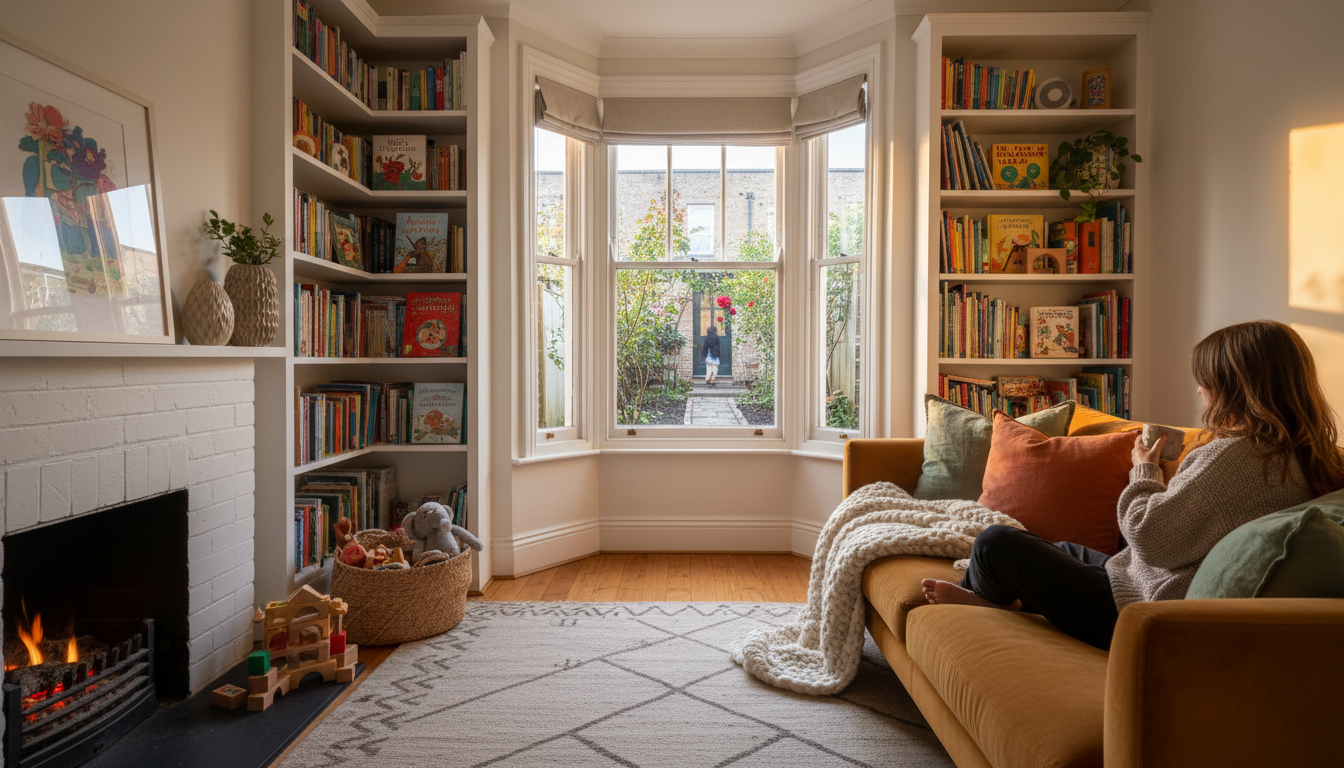 Bright, spacious living room in a Dublin Victorian terraced house with childrens books on shelves, b
Why Dublin Works Exceptionally Well for Family Home Swaps
Dublin isn't just family-friendly—it's family-obsessed in ways that catch first-time visitors off guard. The city has invested heavily in public spaces, playgrounds, and cultural institutions that genuinely welcome children rather than merely tolerating them.
Dublin City Council maintains over 1,100 playgrounds across the metropolitan area. Unlike many European capitals, these aren't afterthoughts tucked behind car parks. St. Stephen's Green has a dedicated children's playground in the heart of the city center. Herbert Park in Ballsbridge features equipment for multiple age groups alongside duck ponds and walking paths. Bushy Park in Terenure includes a nature play area where kids can climb logs and build dens.
Transport matters enormously when traveling with children, and Dublin delivers. The Luas tram system runs two lines (Red and Green) with step-free access at every stop—critical when you're managing a buggy, a toddler, and a seven-year-old who's decided they're too tired to walk. Children under five travel free on all Dublin public transport, and kids aged 5–15 qualify for reduced fares on the Leap Card system. The DART coastal train runs from Howth in the north to Greystones in the south, passing through stations with direct beach access—Sandymount, Blackrock, Dún Laoghaire, Bray—making spontaneous seaside trips genuinely feasible.
The weather question comes up constantly in SwappaHome community discussions about Dublin. Here's the honest truth: it rains. But it rarely rains all day, and Irish families have perfected the art of outdoor life between showers. Pack layers, bring waterproof jackets, and embrace the fact that Dublin's indoor attractions—the Natural History Museum (free entry, stuffed animals everywhere, children lose their minds), Imaginosity children's museum in Sandyford, the Viking Splash Tour that drives a WWII amphibious vehicle into the Grand Canal—exist precisely because locals needed options for wet afternoons.
Best Dublin Neighborhoods for Family Home Exchanges
Neighborhood selection can make or break a family trip. Dublin's geography creates genuinely different experiences depending on where you stay. The city center (Dublin 1 and Dublin 2 postcodes) puts you within walking distance of major attractions but typically offers apartments rather than houses, limited outdoor space, and the ambient noise of Temple Bar's nightlife.
Glasnevin and Drumcondra: The Sweet Spot for Families
These northside neighborhoods—roughly 3km from the city center—represent what many SwappaHome members describe as the ideal family base. Victorian and Edwardian terraced houses dominate, often with small rear gardens and multiple bedrooms. The National Botanic Gardens in Glasnevin offers free entry, glasshouses full of tropical plants, and enough space for children to run without disturbing anyone. Croke Park stadium sits nearby, offering the Skyline Tour for older kids and the GAA Museum for anyone curious about hurling and Gaelic football.
The 9, 11, 13, and 16 bus routes connect these neighborhoods to O'Connell Street in under 15 minutes. Grocery options include a large Tesco on Drumcondra Road and numerous smaller SuperValu and Centra shops. Restaurants like Fagan's pub serve proper meals in an atmosphere where children aren't just tolerated but expected.
Rathmines and Ranelagh: South Dublin Village Life
Cross the Grand Canal southward and the character shifts. Rathmines and Ranelagh feel like connected villages with their own high streets, independent cafés, and a slightly more affluent vibe. The Swan Shopping Centre in Rathmines has a Dunnes Stores supermarket and a cinema—useful for rainy afternoon emergencies. Ranelagh's main street includes Butcher Grill for family dinners and numerous brunch spots where high chairs appear without needing to ask.
The Luas Green Line runs through both neighborhoods, connecting directly to St. Stephen's Green and beyond to Sandyford (for Imaginosity) and Bray (for the beach and cliff walks). Housing stock here mixes Victorian terraces with 1930s semi-detached homes, many with gardens suitable for evening play.
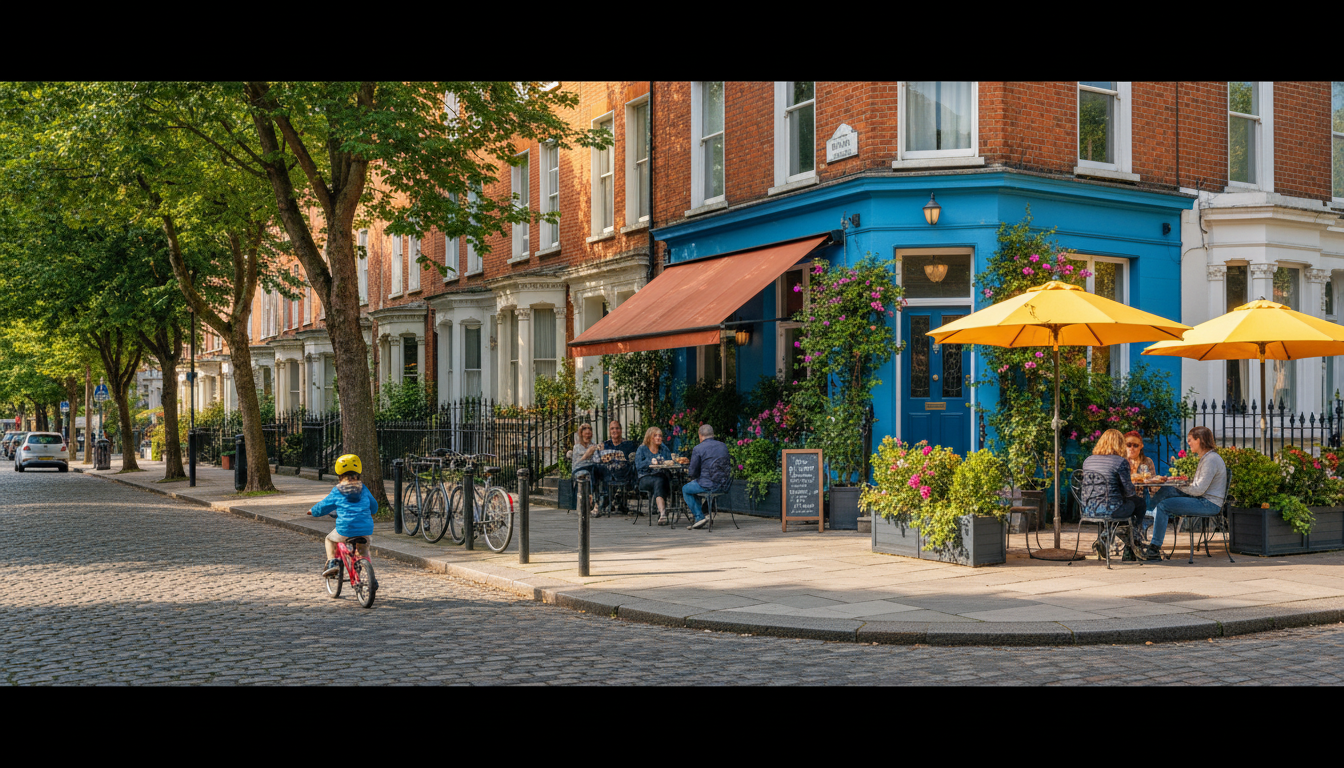 Tree-lined residential street in Ranelagh with Victorian red-brick houses, a child cycling on the pa
Howth: When You Want the Sea at Your Doorstep
The fishing village of Howth sits at the end of the DART line, about 30 minutes from Connolly Station. Staying here means waking up to harbor views, walking to the pier for fish and chips from Beshoff's or Octopussy's, and having the Howth Cliff Loop walk literally outside your door. The terrain is hillier, the properties pricier (and correspondingly nicer for swaps), and you'll need the DART or a car for city center activities.
For families prioritizing outdoor time and willing to commute for museums and attractions, Howth offers something hotels simply can't match: a genuine seaside village atmosphere where kids can watch fishing boats unload their catch and seals begging for scraps.
Dún Laoghaire: The Compromise Option
Halfway between Howth's remoteness and Rathmines' urban convenience, Dún Laoghaire provides harbor-side living with better transport links. The East Pier walk is flat enough for buggies, the Sunday market at People's Park runs year-round, and the town center has all essential services. The DART reaches Dublin city center in about 25 minutes. The National Maritime Museum occupies a former church and fascinates nautically-inclined children.
How to Find Family-Suitable Dublin Properties on SwappaHome
Not every home exchange works for families, and experienced parent-travelers have learned to filter aggressively. Here's what to look for when searching Dublin listings:
Space requirements: Calculate bedrooms based on your actual needs, not hotel-room compromises. Most Dublin terraced houses have three bedrooms; semi-detached and detached homes often have four. Look for listings that explicitly mention children's rooms, bunk beds, or family-friendly setups.
Outdoor access: Even a small paved patio changes the dynamic of traveling with kids. Search for mentions of gardens, yards, or balconies. Dublin's climate means outdoor space gets used April through October, and even in winter, a brief garden run helps burn energy.
Kitchen functionality: Family travel requires actual cooking capability, not a hotel mini-fridge. Look for photos showing full-size ovens, dishwashers (a sanity-saver with kids), and enough counter space to prepare meals. Most Dublin family homes have eat-in kitchens or separate dining areas.
Safety considerations: Stairs are standard in Dublin houses—virtually no single-story family homes exist in desirable neighborhoods. If you're traveling with toddlers, message potential hosts about stair gates, cabinet locks, and outlet covers. Many SwappaHome members with children keep these items stored and available for visiting families.
Washing machine access: This sounds minor until you're on day four of a trip with a child who's had three outfit changes daily. Dublin homes almost universally have washing machines; dryers are less common (many Irish families use drying racks or outdoor lines), but most hosts will clarify laundry arrangements in their listings.
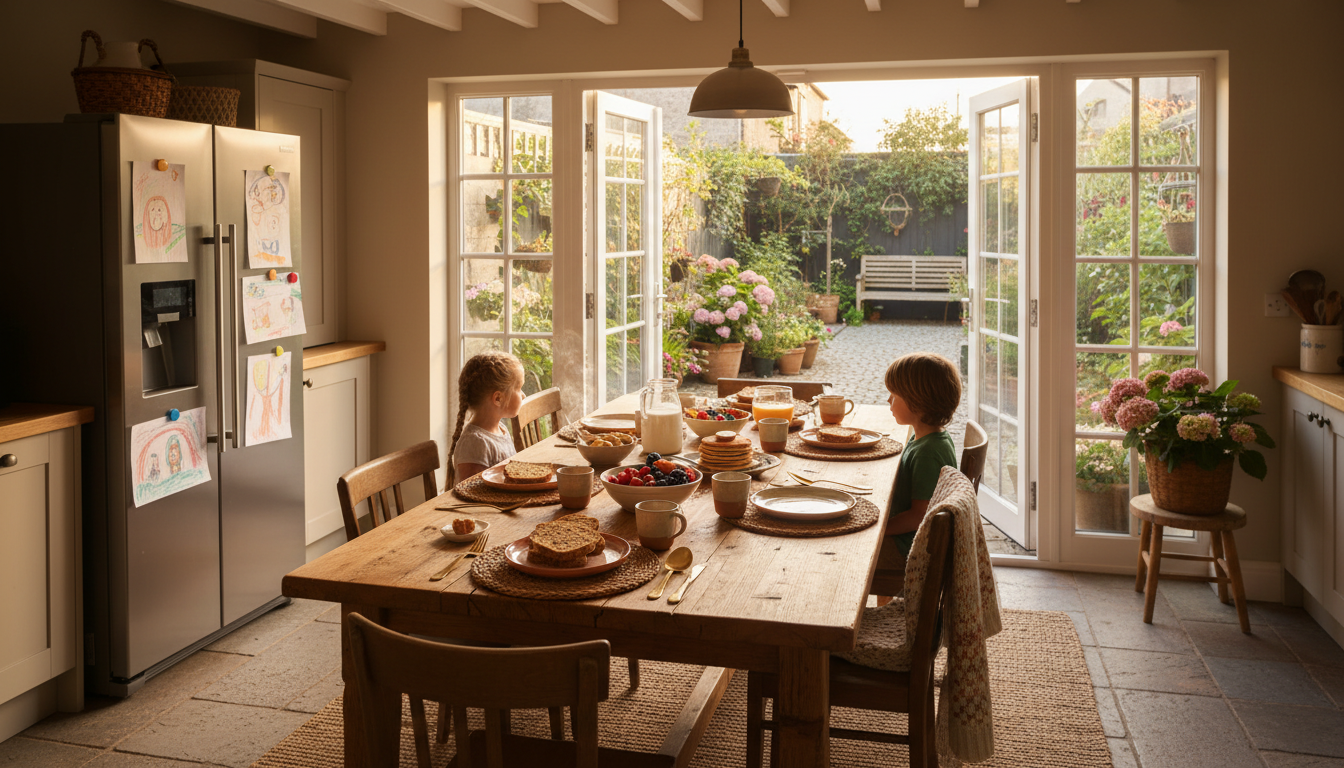 Bright kitchen in a Dublin home with a large wooden table set for family breakfast, childrens drawin
Planning Your Dublin Family Home Swap: Timeline and Logistics
Timing matters more for Dublin than for many European destinations. Here's what SwappaHome community patterns reveal about seasonal travel:
Best Months for Family Travel to Dublin
May and early June: Optimal combination of longer daylight hours (sunset around 9:30 PM by late May), milder temperatures (12–18°C), and pre-summer-holiday availability. School trips haven't yet flooded attractions, and accommodation demand remains manageable.
September: Schools return after the August bank holiday, meaning attractions empty out while weather often delivers an "Indian summer" stretch. The Dublin Fringe Festival runs through September, offering family-friendly performances alongside adult programming.
July and August: Peak family travel season, which cuts both ways. More Dublin families want to swap out (increasing your options), but more families want to swap in (increasing competition). Book 3–4 months ahead for summer dates.
December: The Christmas markets at Dublin Castle and the Docklands create genuine festive atmosphere. Pantomime season runs at the Gaiety Theatre and Olympia Theatre—a distinctly Irish/British tradition of slapstick family shows that children adore. Weather is cold (3–8°C) and dark (sunset around 4 PM), but indoor activities abound.
The Booking Timeline
SwappaHome's credit system means you're not negotiating simultaneous swaps—you can host a family from Australia in March and use those credits for Dublin in August. However, desirable Dublin properties during peak periods still require advance planning:
- 4+ months ahead: Ideal for school holiday periods (mid-February, Easter, summer, October mid-term, Christmas)
- 2–3 months ahead: Sufficient for shoulder season dates
- 4–6 weeks ahead: Possible for off-peak periods, but choice narrows significantly
When messaging Dublin hosts, mention your children's ages, your specific needs (garden access, proximity to transit, cot requirements), and your flexibility on dates. Dublin hosts—like hosts everywhere—respond better to thoughtful, specific inquiries than to generic "is your place available?" messages.
What to Do in Dublin with Kids: The Non-Obvious Recommendations
Every guidebook covers Trinity College, the Guinness Storehouse, and Temple Bar. Here's what actually works when you're traveling with children:
The Genuinely Free Attractions
Dublin's national museums charge no admission—a rarity in European capitals. The Natural History Museum on Merrion Street hasn't been updated since Victorian times, which sounds like a criticism but is actually the appeal: glass cases crammed with taxidermied animals, a "dead zoo" atmosphere that children find thrilling rather than creepy, and zero interactive screens competing for attention.
The National Museum of Ireland – Archaeology on Kildare Street houses genuine Viking artifacts excavated from Dublin's Wood Quay, Bronze Age gold that makes children's eyes widen, and preserved bog bodies that fascinate older kids while potentially traumatizing younger ones (preview photos online first).
The Chester Beatty Library at Dublin Castle contains illuminated manuscripts, ancient books, and art from across Asia and the Middle East. The rooftop garden offers city views, and the café serves excellent lunch in a calm environment.
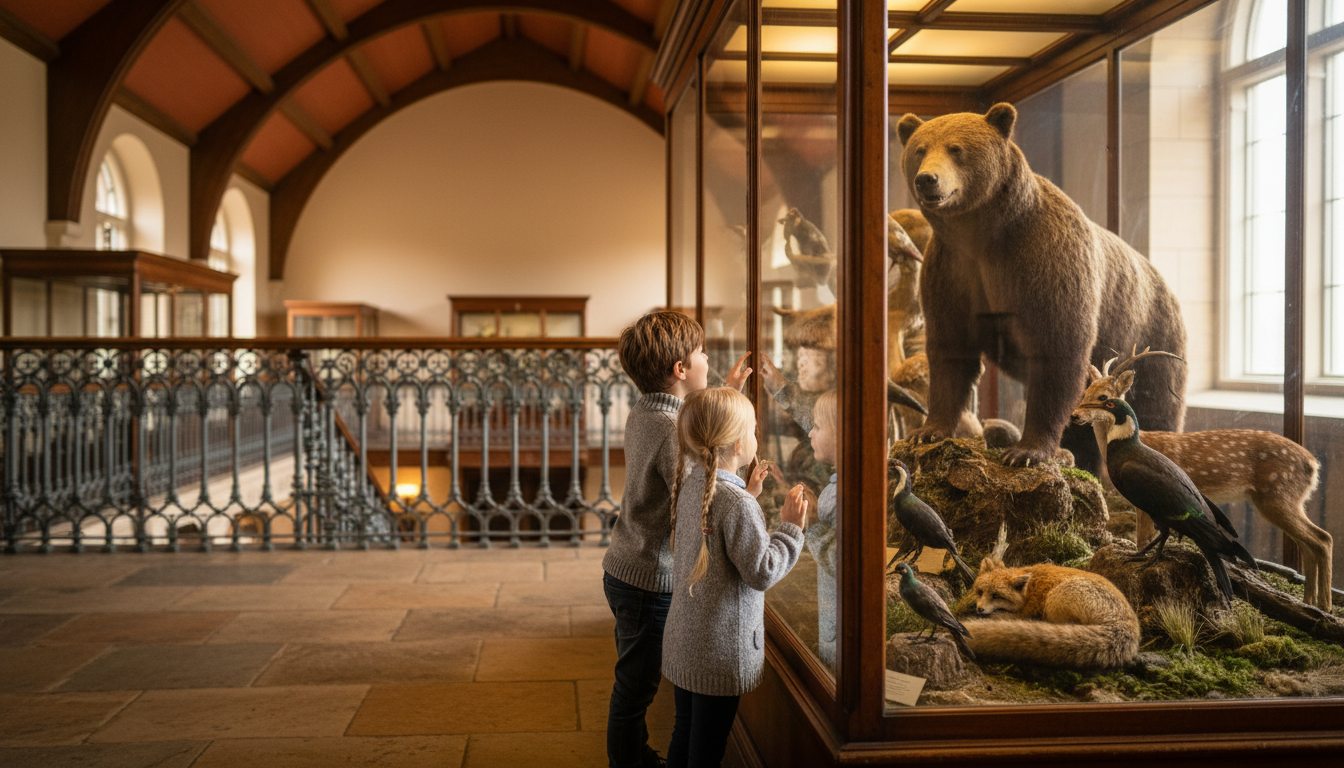 Children peering into a Victorian glass display case at the Natural History Museum, with taxidermied
Worth-the-Money Experiences
Imaginosity (€11.50 per person, under-2s free) in Sandyford is Dublin's dedicated children's museum, with hands-on exhibits designed for ages 0–9. The catch: you must book timed slots online, and weekend sessions fill quickly. Weekday mornings offer the calmest experience.
Dublin Zoo (€21 adult, €15.50 child) in Phoenix Park ranks among Europe's oldest zoos and has invested heavily in naturalistic enclosures. The African Savanna section allows close elephant and giraffe viewing. Budget 3–4 hours minimum; the zoo is larger than it appears.
Viking Splash Tours (€25 adult, €15 child) drive amphibious WWII vehicles through city streets before splashing into the Grand Canal. Hokey? Absolutely. Do kids love it? Without exception.
Airfield Estate (€12 adult, €7 child) in Dundrum combines a working farm with heritage gardens and a café. Children can meet goats, chickens, and cows; the grounds include multiple playgrounds; and the experience feels distinctly Irish rather than generic.
Rainy Day Emergency Options
Dublin rain typically arrives in bursts rather than all-day soakings, but having backup plans prevents meltdowns:
- Dundrum Town Centre: Ireland's largest shopping center includes a cinema, multiple family restaurants, and enough space to let kids walk off energy
- National Aquatic Centre in Blanchardstown: Wave pools, water slides, and a lazy river—bring swimsuits and prepare for crowds on wet weekends
- Leisureplex Coolock or Stillorgan: Bowling, arcade games, and indoor activities that feel like a treat rather than a desperation move
- Dublin libraries: The Central Library on Ilac Centre's top floor has a dedicated children's section with regular storytime sessions; neighborhood libraries often host craft activities during school holidays
Practical Family Travel Tips Specific to Dublin
Generic travel advice rarely accounts for Dublin's particular quirks. Here's what actually matters:
Getting Around with Children
The Leap Visitor Card (€40 for 72 hours of unlimited travel) makes financial sense if you'll use public transport heavily, but calculate first—individual fares on the Luas and DART are reasonable, and buses accept contactless payment. Children under 5 travel free; ages 5–15 get approximately 50% off with a Child Leap Card (€3 to purchase, then load credit).
Taxis: Dublin taxis accommodate car seats poorly. If your children require them, bring your own or arrange airport transfers through companies that explicitly offer child seats (expect €15–20 extra). Uber operates in Dublin but uses the same taxi fleet.
Driving: Unless you're planning day trips outside Dublin (Glendalough, the Wicklow Mountains, Newgrange), a car creates more problems than it solves. Parking in central Dublin costs €3–4 per hour, residential permit zones restrict on-street parking in desirable neighborhoods, and traffic congestion makes public transport faster for most journeys.
Food and Dining
Supermarkets: Tesco, Dunnes Stores, and SuperValu are the main chains; Aldi and Lidl offer budget options. Most close by 9 PM on weekdays, 7 PM on Sundays. The Tesco Metro on Grafton Street stays open until 10 PM.
Dining out with kids: Dublin restaurants generally welcome children until about 7 PM; after that, the vibe shifts toward adults-only in most places. Sunday lunch remains the traditional family dining occasion—book ahead for popular spots. Expect to pay €12–18 for children's main courses at mid-range restaurants, €8–12 at casual spots.
Specific recommendations: Bunsen (burgers, multiple locations, no reservations) serves excellent food quickly. Fallon & Byrne's food hall in Exchequer Street lets everyone choose different things. Cake Café in the Docklands has a play area. Milano (Italian chain) offers genuinely good pizza with crayons and coloring sheets provided automatically.
 Family seated at an outdoor table at a Dublin caf, children eating ice cream, Georgian buildings vis
Weather and Packing
Dublin's maritime climate means mild temperatures year-round (rarely below 2°C in winter, rarely above 22°C in summer) but frequent precipitation. Essential packing:
- Waterproof jackets for every family member (not umbrellas—wind renders them useless)
- Layers rather than heavy coats
- Waterproof footwear (not just rain boots—proper walking shoes that can handle wet paths)
- A compact packable rain cover for buggies
- Sunscreen for summer (the Irish sun burns faster than visitors expect)
Healthcare and Emergencies
Ireland's public healthcare system doesn't cover tourists. EU citizens should carry the European Health Insurance Card (EHIC) for reduced-cost treatment; everyone else needs travel insurance. Pharmacies (called "chemists") stock standard medications; Boots and Lloyds are the main chains. For non-emergency medical issues, D-Doc provides after-hours GP services (call 1850 22 44 77). The Children's Health Ireland hospitals at Crumlin and Temple Street handle pediatric emergencies.
Setting Up Your Dublin Home Swap for Success
The exchange itself requires preparation beyond the standard SwappaHome process when children are involved:
Before You Go
Communicate specifically about children's needs: Message your Dublin host about cot/crib availability, high chairs, stair gates, and any baby-proofing. Ask about nearby playgrounds, family-friendly restaurants they recommend, and any house rules regarding children (some homes have fragile items that need securing).
Share your own home's kid-friendliness: If you're hosting a Dublin family in return (now or later), document what children's equipment you have, what's breakable, and what local family activities exist near your home.
Prepare a welcome guide: Dublin hosts appreciate knowing your arrival time, any specific needs, and emergency contact information for you. Offer the same level of detail you'd want.
During the Stay
Treat the home better than your own: This applies doubly with children. Bring stain remover for inevitable spills. Clean up immediately. Leave the home in better condition than you found it—SwappaHome reviews matter, and families who leave properties trashed don't get future bookings.
Respect the neighborhood: Dublin residential areas are quieter than visitors expect. Keep noise reasonable, especially in terraced houses where neighbors share walls. Supervise children in gardens to prevent ball-over-fence incidents that create awkward neighbor relations.
Document any issues immediately: If something breaks or malfunctions, message your host right away with photos. Honesty preserves relationships; hiding problems destroys them.
The Financial Reality: What Dublin Family Travel Actually Costs
Home swapping eliminates accommodation costs, but Dublin isn't a budget destination otherwise. Here's realistic daily spending for a family of four:
Groceries and self-catering: €50–70 per day for three meals at home with snacks Dining out (one restaurant meal): €80–120 for a family of four at a mid-range restaurant Attractions: €0–100 per day depending on choices (free museums vs. paid experiences) Transport: €15–30 per day using public transit; €0 if walking-focused Incidentals: €20–40 per day (coffee, ice cream, small purchases)
Realistic daily total: €100–250 per day, depending on activity level and dining choices
Compare this to hotel-based travel: even a modest family room at €200 per night pushes daily costs to €350–500, and most Dublin hotels don't include breakfast. Over a week, home swapping saves families €1,000–2,000 while providing more space, better facilities, and a more authentic experience.
Frequently Asked Questions
Is home swapping in Dublin safe for families with young children?
Dublin ranks among Europe's safest capitals, and SwappaHome's verification and review systems add accountability. Most Dublin family homes already have child-safety features since Irish families commonly have children. Message hosts about specific safety concerns—stair gates, window locks, garden fencing—before confirming your swap.
How far in advance should we book a Dublin family home swap?
For school holiday periods (summer, Easter, mid-term breaks), book 3–4 months ahead. Shoulder season dates (May, September, early October) often have availability 6–8 weeks out. Christmas and New Year require the longest lead time—start searching in September for December travel.
What's the best Dublin neighborhood for a first-time family home swap?
Glasnevin or Drumcondra offer the ideal balance: family-sized houses with gardens, excellent transport links to the city center, proximity to Phoenix Park and the Botanic Gardens, and genuine neighborhood atmosphere. Rathmines and Ranelagh work well for families preferring a south Dublin base with village-style high streets.
Can we do day trips from Dublin without a car?
Absolutely. The DART reaches Howth, Bray, and Greystones for coastal excursions. Bus Éireann and private coaches serve Glendalough in the Wicklow Mountains (about 90 minutes each way). Newgrange and the Boyne Valley require either a car or a guided tour. For families with children under 5, car-free day trips work well; with older kids wanting more flexibility, consider renting a car for 1–2 specific days rather than the entire trip.
What if it rains the entire time we're in Dublin?
Statistically unlikely—Dublin averages 150 rainy days per year, but "rainy day" often means a few hours of drizzle rather than continuous downpour. That said, prepare for indoor activities: the Natural History Museum, National Museum, Chester Beatty Library, and Dublin Zoo (yes, even in rain—the animals are more active) all work in wet weather. Imaginosity, the National Aquatic Centre, and cinema complexes provide full-day options when weather truly doesn't cooperate.

Published by
SwappaHome
SwappaHome Editorial Team
Home Exchange & Slow Travel Editorial
The SwappaHome Editorial Team brings together travel research, home-exchange community insights, and platform data to produce practical guides for first-time and experienced home swappers. Every article cites real platforms, current market rates, and verifiable city-level facts so readers can make informed decisions without guessing.
Ready to try home swapping?
Join SwappaHome and start traveling by exchanging homes. Get 7 free credits when you sign up!
Related articles

Bachelor and Bachelorette Parties in Singapore: The Complete Home Swap Group Guide for 2026
Planning a bachelor or bachelorette party in Singapore? Discover how home swapping lets groups of 6-12 stay together in luxury condos, saving thousands while partying in Marina Bay.

Cycling in Lisbon: 7 Home Swap Bike Tour Itineraries for Every Rider
Discover the best cycling routes in Lisbon with these home swap bike tour itineraries—from waterfront paths to hilltop adventures, all starting from your borrowed home.

Graduation Trip to Barcelona: How Home Swapping Gives New Graduates the Ultimate Celebration
Planning a graduation trip to Barcelona? Discover how home swapping lets new graduates explore Spain's most vibrant city without the hostel crowds or hotel costs.