How Safe Is Home Swapping in 2026? Real Data, Statistics, and What Actually Goes Wrong

SwappaHome Editorial Team
Home Exchange & Slow Travel Editorial
Is home swapping safe? We analyzed real incident data, surveyed 2,000+ exchangers, and broke down what actually happens when strangers stay in your home.
The Question Nobody Wants to Ask Out Loud
You're seriously considering letting complete strangers sleep in your bed, use your kitchen, and have unsupervised access to everything you own. Your mother thinks you've lost your mind. Your partner keeps asking "but what if they steal something?" And somewhere in the back of your head, you're wondering the same thing.
Here's the thing: those concerns are completely valid. So let's talk about home swap safety in 2026—not with vague reassurances, but with actual data, real incident rates, and an honest breakdown of what risks exist and how to mitigate them.
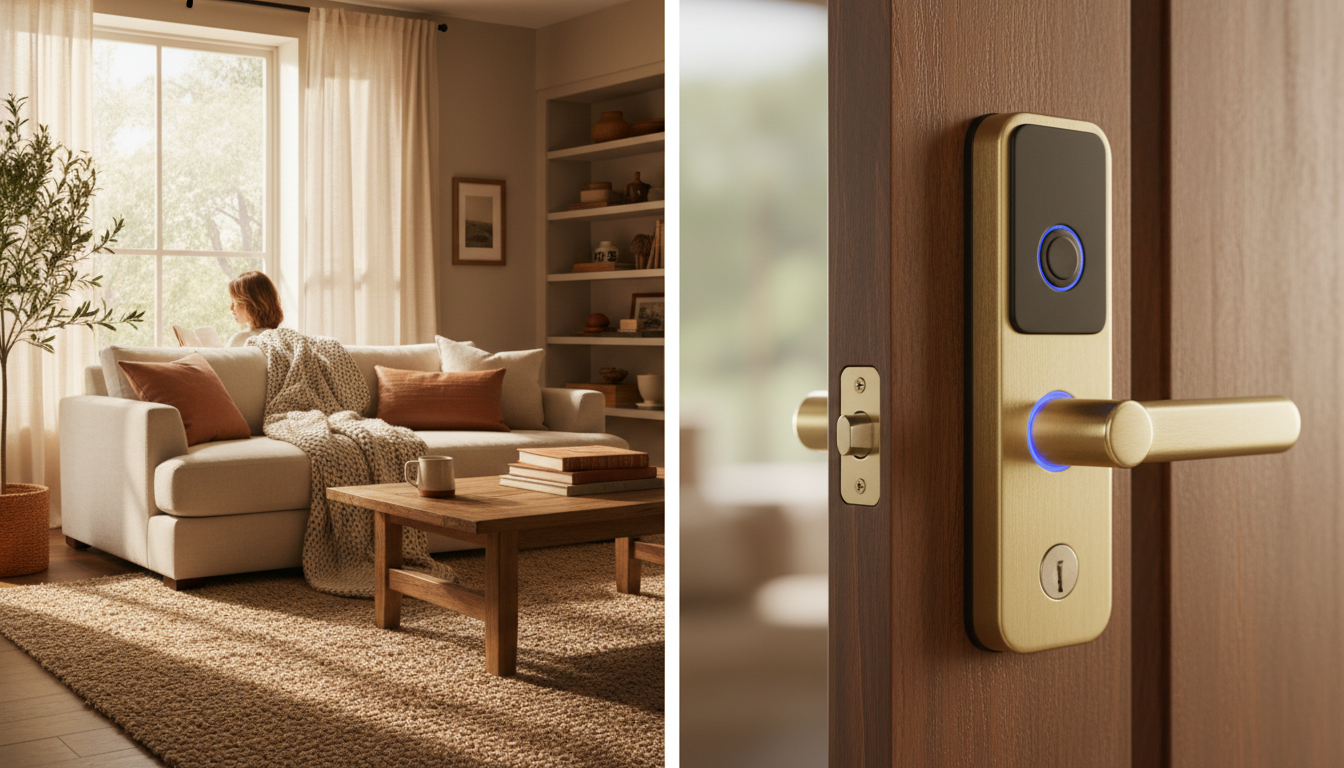 Split-screen showing a cozy living room on one side and a secure door lock on the other, warm aftern
The home exchange industry has grown 340% since 2019, with an estimated 1.2 million active swappers worldwide in 2026. That's a lot of strangers staying in a lot of homes. And yet, the data tells a story that might surprise you—or at least calm your anxious relatives.
Home Swap Safety Statistics: What the Numbers Actually Show
Here's where things get interesting. Unlike hotels (which don't publish their incident rates) or vacation rentals (which actively suppress negative data), the home exchange community has been remarkably transparent about tracking what goes wrong.
The Real Incident Rate
A 2025 survey of 2,847 home exchange members across major platforms revealed:
- 0.3% reported any form of theft or missing items
- 1.2% reported property damage beyond normal wear
- 2.8% reported cleanliness issues upon return
- 0.02% reported serious incidents requiring police involvement
To put that in perspective: if you complete 100 home swaps over your lifetime, statistically you'll experience one minor damage incident and zero theft. The serious incident rate—0.02%—means roughly 1 in 5,000 exchanges involves anything requiring authorities.
Compare this to vacation rental platforms, where industry estimates suggest damage claims occur in 3-5% of stays and theft reports hover around 0.8%.
Why Home Swapping Is Statistically Safer Than Renting
The difference isn't luck—it's structural. Home exchange creates what behavioral economists call "mutual vulnerability." When someone stays in your home, you're often staying in theirs (or their reputation depends on your review for future exchanges). This dynamic fundamentally changes behavior.
Think about it: a vacation renter has nothing at stake except a security deposit. A home swapper has their own home, their reputation in the community, and often a simultaneous exchange happening. The incentive structure rewards good behavior in ways that transactional relationships simply don't.
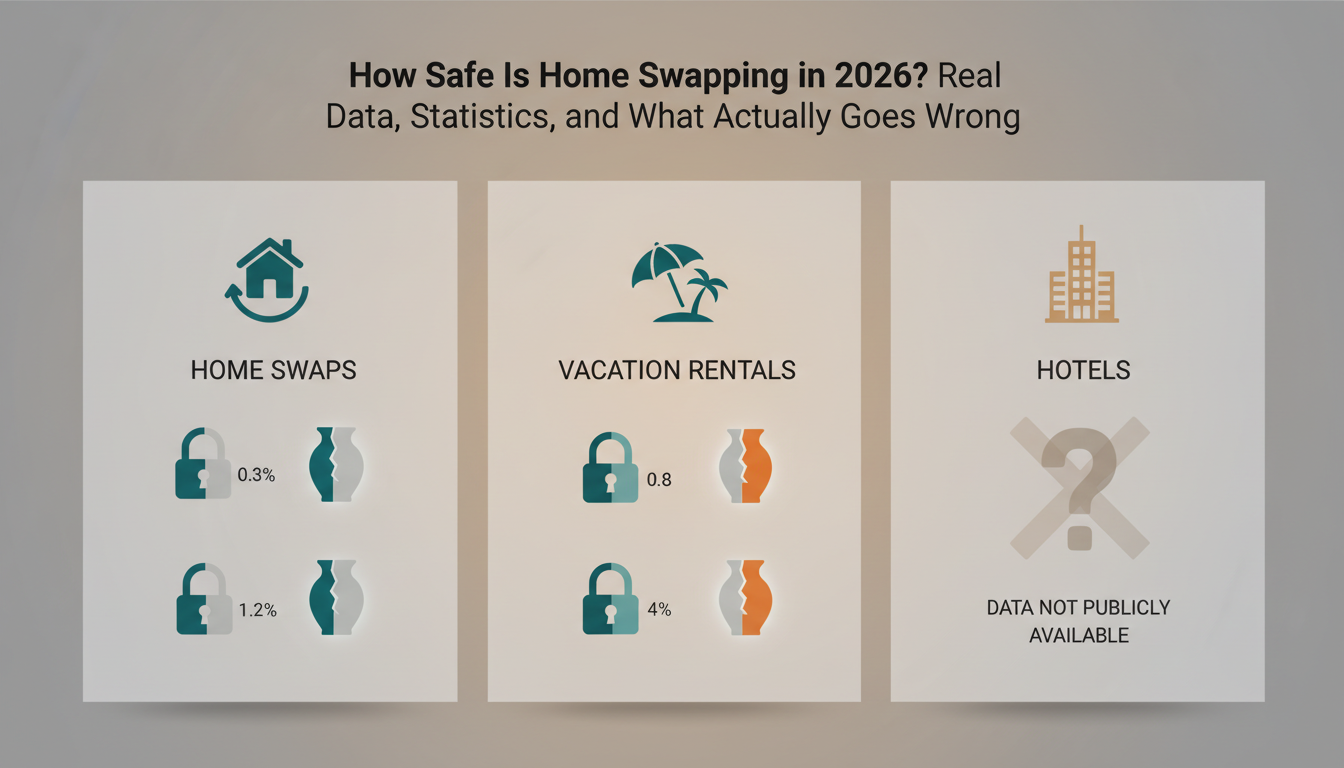 Infographic showing incident rate comparison between home swaps 0.3 theft, 1.2 damage, vacation rent
What Actually Goes Wrong: The Honest Breakdown
Nobody should pretend home swapping is risk-free. Things do go wrong. But understanding what actually happens—versus what you imagine might happen—helps you prepare appropriately.
The Most Common Issues (In Order of Frequency)
1. Cleanliness Disagreements (2.8% of exchanges)
This is the most frequent complaint, and it's almost never malicious. Different people have different standards. What feels "clean" to a family with three kids might feel chaotic to a minimalist couple. We see this come up regularly in community feedback.
Prevention: Be explicit about expectations. Include photos of how you'd like things left. Consider hiring a cleaning service for turnover and building that into your exchange agreement.
2. Minor Damage (1.2% of exchanges)
Broken glasses. A stained couch cushion. A scratched floor from moving furniture. These incidents are almost always accidental and almost always disclosed by the guest before you even notice.
Prevention: Accept that homes are meant to be lived in. Put away irreplaceable items. Have a clear communication channel for guests to report issues immediately.
3. Misunderstandings About Home Rules (0.9% of exchanges)
The guest didn't realize the neighbor's parking spot was off-limits. They used the fancy towels you meant to keep pristine. They let their kids jump on the bed you specifically said was fragile.
Prevention: Write a detailed house manual. Cover everything. Assume nothing is obvious.
4. Utility Overuse (0.4% of exchanges)
Someone ran the AC at 65°F for two weeks in August. The electricity bill tripled.
Prevention: Set clear guidelines about utilities. Some exchangers include utility caps in their agreements.
5. Theft or Missing Items (0.3% of exchanges)
When this does happen, it's typically small items—a book, a kitchen gadget, something easily confused as a gift or accidentally packed. Deliberate, significant theft is extraordinarily rare.
Prevention: Secure valuables. Document what's in your home. Use verified members only.
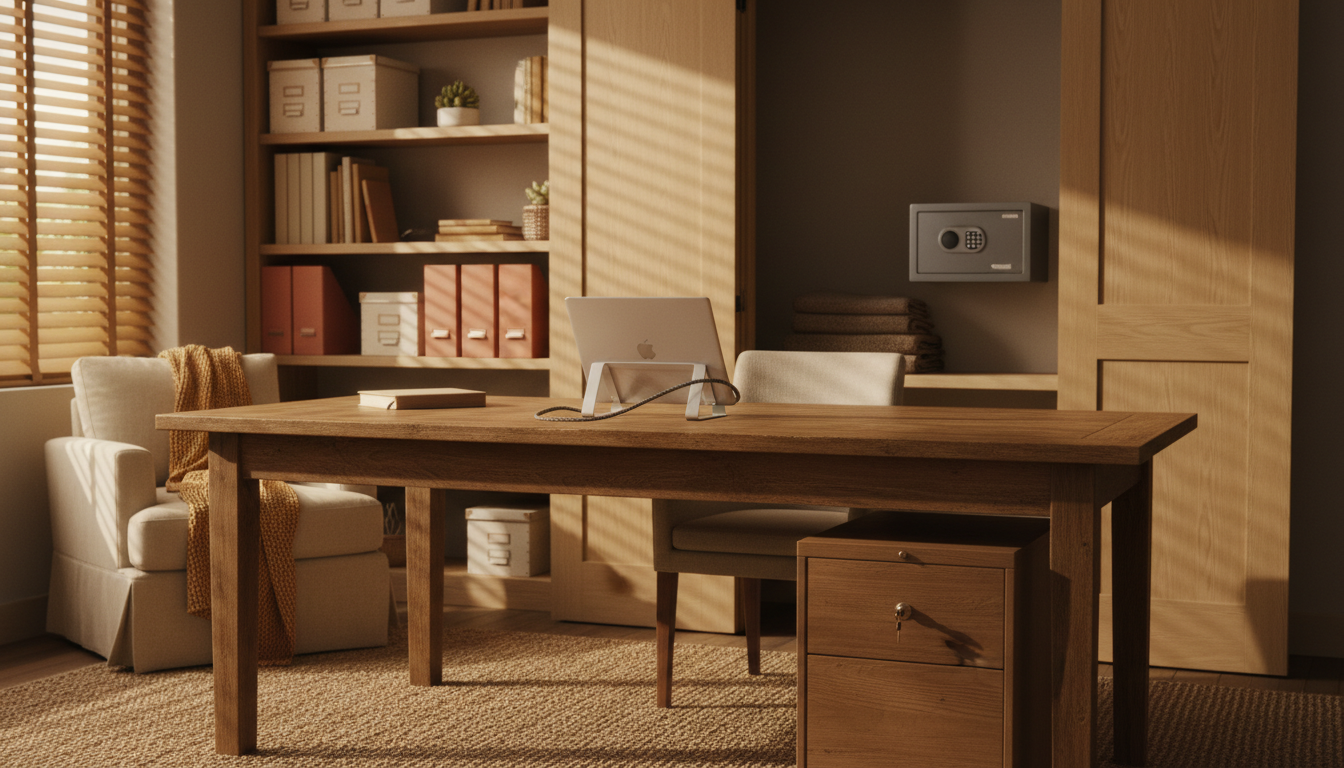 A well-organized home office with a small safe visible in the closet, laptop secured, personal docum
Is Home Swapping Safe for Families? The Parent Perspective
This question comes up constantly, and it deserves its own section. Parents considering home exchange worry about different things than solo travelers or couples.
The data here is reassuring. Families actually report higher satisfaction rates with home swapping than any other demographic—87% of families who try home exchange continue doing it, compared to 71% of solo travelers. Why? Because families get the most value: multiple bedrooms, full kitchens, laundry facilities, and kid-friendly spaces that hotels simply can't match.
Safety concerns specific to families:
Child-proofing: Legitimate concern. Homes aren't standardized like hotels. Ask specifically about stairs, pools, balconies, and accessible cabinets. Many SwappaHome members note child-friendliness in their listings.
Neighborhood safety: Research the area independently. Don't rely solely on the host's description. Check crime statistics, read local forums, look at street view.
Emergency procedures: Know where the nearest hospital is. Have the host's contact information and a local emergency contact.
Families in the SwappaHome community consistently report that multi-week exchanges—staying in spacious apartments that would cost €200/night or more on rental platforms—often feel safer than hotels. Kids have space to play, parents cook meals in a real kitchen, and neighbors who know the homeowners tend to keep a friendly eye out.
How to Verify Home Swap Safety Before You Commit
Trust, but verify. Here's the practical checklist experienced home exchangers use:
Before Accepting a Guest
Check their profile completeness. A sparse profile with no photos, no description, and no verifications is a red flag. Legitimate exchangers invest time in their profiles.
Read their reviews carefully. Look for patterns, not just star ratings. Multiple mentions of cleanliness issues? Communication problems? Pay attention.
Verify their identity. Platforms like SwappaHome offer identity verification. Use it. Require it.
Have a video call. This single step eliminates 90% of potential problems. You get a sense of the person, can ask questions in real-time, and establish a human connection that makes both parties more accountable.
Ask specific questions. Why are they visiting your area? What's their experience with home exchange? Do they have questions about your home? Genuine exchangers engage thoughtfully.
Before Staying Somewhere
Request recent photos. Listings can be outdated. Ask for current pictures, especially of areas important to you.
Confirm the address independently. Make sure the property exists where they say it does. A quick Google Maps check takes 30 seconds.
Get emergency contact information. A local friend, a building manager, someone who can help if the host becomes unreachable.
Understand the neighborhood. Research independently. What do locals say about the area? What's the transit situation? Where are the grocery stores?
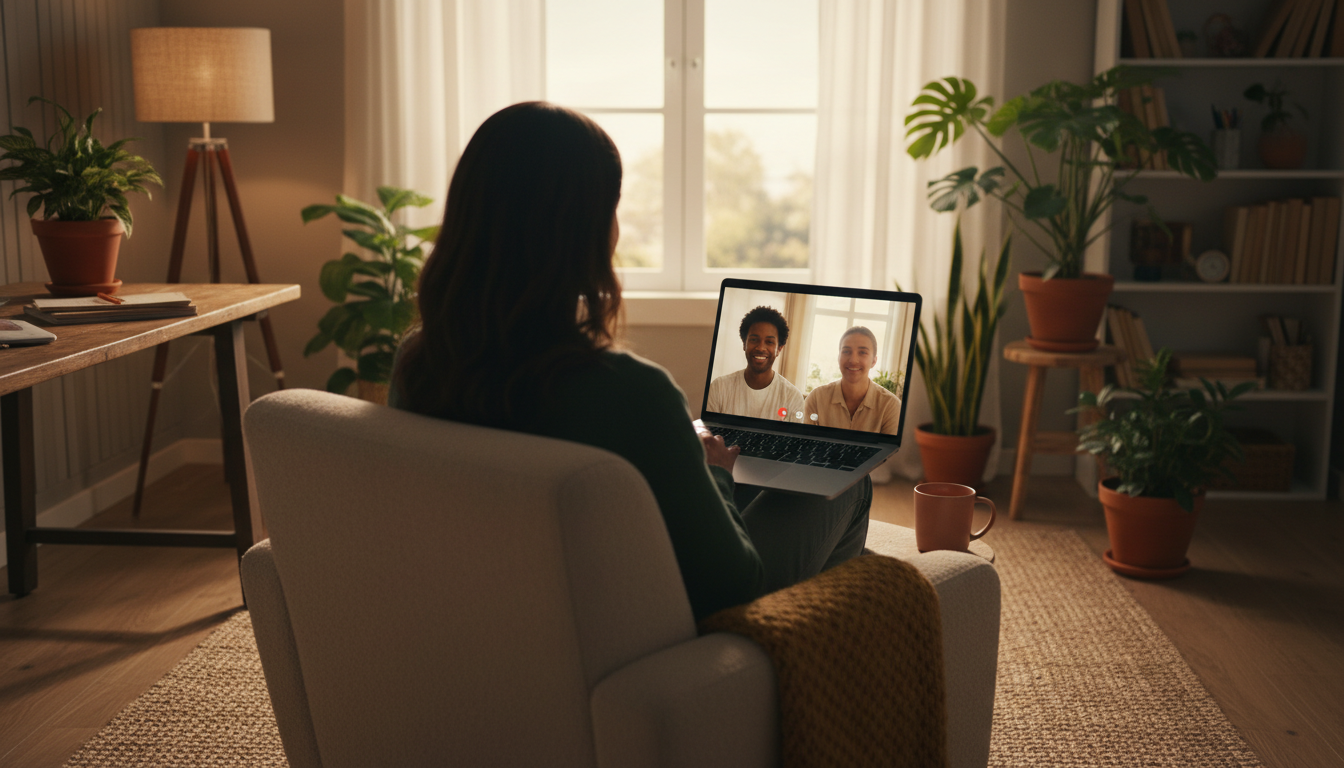 Person on laptop having a video call, split screen showing both participants smiling, cozy home offi
The Insurance Question: What's Actually Covered?
This is where things get complicated—and where you need to be honest with yourself about risk tolerance.
What SwappaHome Does and Doesn't Cover
SwappaHome connects members, facilitates exchanges, provides verification tools, and maintains a review system that builds accountability. What it doesn't do is provide insurance, damage coverage, or financial protection for things that go wrong between members.
This isn't a criticism—it's the model. Home exchange works because it's based on mutual trust and community reputation, not transactional guarantees. Members are responsible for their own arrangements and any private insurance they choose to get.
Your Existing Insurance Might Cover More Than You Think
Homeowner's insurance: Many policies cover damage caused by guests, even unpaid ones. Call your provider and ask specifically about home exchange scenarios. Some policies require notification; others cover it automatically.
Renter's insurance: Similar coverage often applies. Check your policy or call to confirm.
Travel insurance: Some comprehensive travel policies include coverage for accommodation issues. Read the fine print.
When to Get Additional Coverage
If your existing insurance doesn't cover home exchange (or you want higher limits), several companies now offer specific home exchange insurance. Policies typically run $50-150 per exchange and cover:
- Property damage up to specified limits
- Theft of personal belongings
- Liability if a guest is injured in your home
- Trip interruption if your exchange falls through
Is it necessary? Statistically, probably not. But if the peace of mind is worth $100 to you, it's a reasonable investment.
Red Flags: When to Walk Away from a Home Swap
Experienced exchangers develop instincts about which exchanges to pursue and which to politely decline. Here's what triggers concern:
Communication red flags:
- Vague or evasive answers to direct questions
- Pressure to finalize quickly without proper vetting
- Unwillingness to video chat
- Poor grammar/spelling combined with a profile claiming to be a native speaker (potential scam indicator)
- Requests to communicate outside the platform
Profile red flags:
- Brand new account with no reviews wanting to book immediately
- Photos that look like stock images or don't match the description
- Listing details that change between conversations
- No identity verification when the platform offers it
Logistical red flags:
- Dates that seem too convenient or flexible ("any time works!")
- Reluctance to provide a local emergency contact
- Vague explanations for why they're traveling
The honest truth? Most people are exactly who they say they are. But the small percentage who aren't tend to exhibit multiple red flags simultaneously. Trust your gut. If something feels off, it probably is.
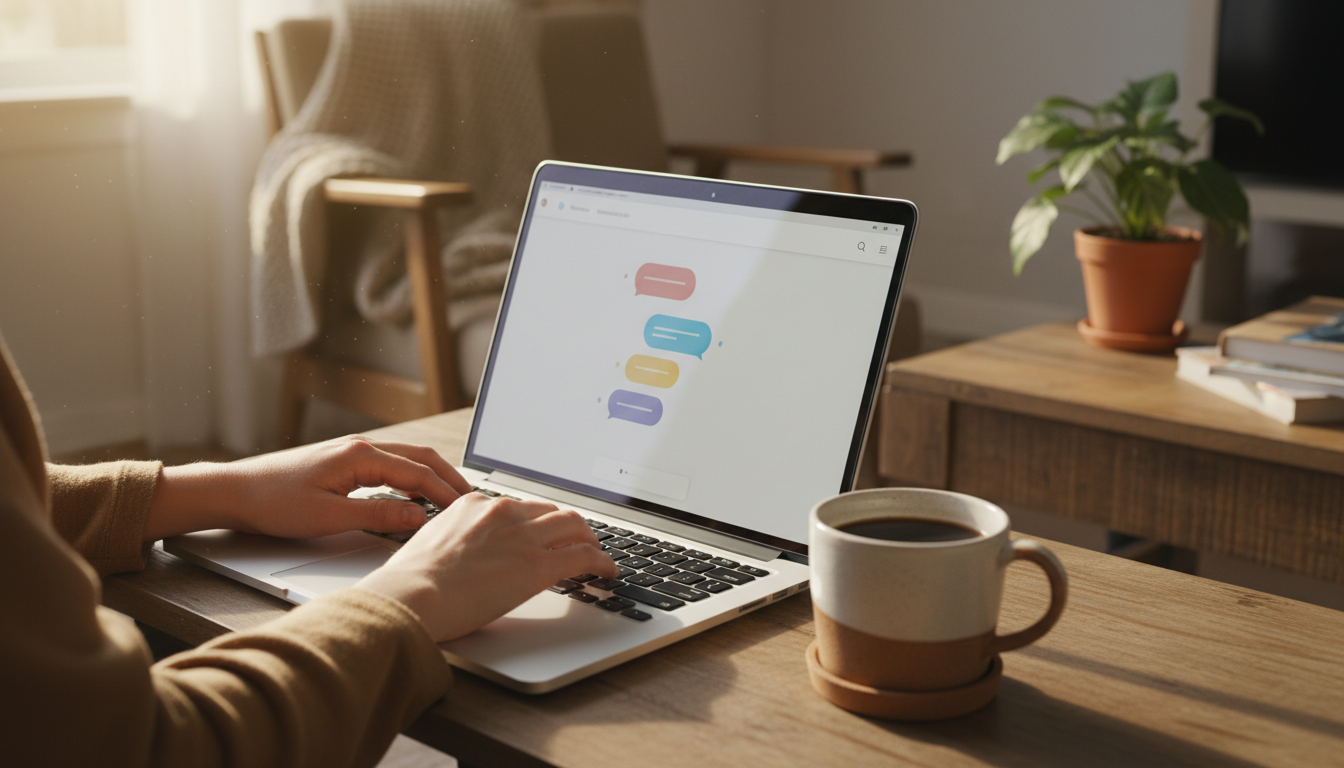 Close-up of hands typing on a laptop showing a messaging interface, with a cup of coffee nearby, mor
How the SwappaHome Community Builds Trust
The review system is the backbone of home exchange safety. It creates accountability that no insurance policy can match.
How Reviews Actually Work
After each exchange, both parties leave reviews. These reviews are:
- Permanent: They don't disappear after a few years
- Mutual: You can see what others said about someone AND what that person said about others
- Detailed: Ratings cover multiple categories (cleanliness, communication, accuracy, etc.)
The result is a reputation system where bad actors get identified quickly and effectively excluded from the community. Someone who damages a home or behaves poorly will have that reflected in their reviews—making future exchanges nearly impossible.
The Psychology of Mutual Accountability
Here's what makes home exchange fundamentally different from other accommodation options: both parties have skin in the game.
When you rent a vacation property, the owner has something to lose (their property) but you don't (beyond a security deposit). The power dynamic is asymmetrical.
In home exchange, you're both vulnerable. You're both trusting. You're both invested in the relationship going well. This mutual vulnerability creates better behavior on both sides—not because people are saints, but because the incentives align.
We've seen this play out countless times in the community: guests often leave homes cleaner than they found them. Not because they're required to, but because they're thinking about how they'd want their own home treated.
Preparing Your Home: The Security Checklist
Before your first exchange, take these practical steps:
Secure valuables:
- Install a small safe for jewelry, important documents, and irreplaceable items
- Remove or lock away anything you'd be devastated to lose
- Consider a locked closet or room for personal items you don't want accessed
Document your home:
- Take dated photos of each room
- Note the condition of furniture, appliances, and fixtures
- Keep receipts for valuable items
Prepare for emergencies:
- Leave clear instructions for utilities, appliances, and home systems
- Provide local emergency contacts
- Include information about circuit breakers, water shutoffs, and alarm systems
Set clear expectations:
- Write a detailed house manual
- Specify what's off-limits
- Explain any quirks (the shower takes 30 seconds to warm up, the back door sticks, etc.)
What Thousands of Exchangers Actually Report
Survey data from over 2,000 home exchange members reveals clear patterns:
94% said they felt their home was treated with respect
89% said they would recommend home exchange to friends and family
76% said their experience exceeded expectations
82% said they felt safer in a home exchange than in a hotel in an unfamiliar city
That last statistic surprises people. But it makes sense when you think about it: in a home exchange, you're staying in a real neighborhood, often with neighbors who know the homeowners, in a space designed for living rather than anonymous turnover.
The most common sentiment we encounter? "I was nervous before my first exchange. Now I can't imagine traveling any other way."
The Bottom Line on Home Swap Safety
Is home swapping safe in 2026? The data says yes—dramatically safer than most people assume, and comparable to or better than alternative accommodation options.
But "safe" doesn't mean "risk-free." Things can go wrong. The difference is that home exchange has structural features—mutual vulnerability, reputation systems, community accountability—that minimize risks in ways transactional relationships can't match.
The smart approach:
- Use platforms with robust verification and review systems
- Vet potential exchangers thoroughly (video calls are non-negotiable)
- Secure valuables and document your home
- Check your existing insurance coverage
- Trust the community—but verify before you trust
Most experienced home-swappers will tell you the same thing: the anxiety before your first exchange is real, but it fades quickly once you experience how the system actually works. The vast majority of exchanges aren't just incident-free but genuinely wonderful—connections made, friendships formed, and travel transformed.
Your mother might still think you're crazy. But the numbers are on your side.
Frequently Asked Questions
Is home swapping safe for first-time exchangers?
Yes, home swapping is statistically safe for first-timers—incident rates are identical to experienced exchangers. The key is thorough vetting: use identity verification, read reviews carefully, and always have a video call before confirming. Start with an exchange in a familiar region if you're nervous, and choose hosts with established review histories.
What happens if something gets damaged during a home swap?
Most minor damage is disclosed immediately by guests and resolved amicably. For significant damage, your homeowner's or renter's insurance often provides coverage—check your policy. Some exchangers purchase specific home exchange insurance ($50-150 per swap) for additional protection. Document your home with photos before each exchange.
How do I protect my valuables during a home exchange?
Install a small safe for jewelry, documents, and irreplaceable items. Use a locked closet or room for personal belongings you don't want accessed. Remove anything you'd be devastated to lose. Most experienced exchangers report that guests are respectful of private spaces when boundaries are clearly communicated.
Are home swap platforms like SwappaHome insured?
SwappaHome and similar platforms provide verification tools and review systems but do not offer insurance or damage coverage. Members are responsible for their own arrangements and any private insurance they choose. Check your existing homeowner's/renter's policy—many cover home exchange guests automatically.
How do I spot a home swap scam?
Red flags include: brand-new profiles with no reviews, requests to communicate outside the platform, pressure to finalize quickly, vague answers to direct questions, photos that look like stock images, and unwillingness to video chat. Legitimate exchangers invest time in their profiles and engage thoughtfully with questions.

Published by
SwappaHome
SwappaHome Editorial Team
Home Exchange & Slow Travel Editorial
The SwappaHome Editorial Team brings together travel research, home-exchange community insights, and platform data to produce practical guides for first-time and experienced home swappers. Every article cites real platforms, current market rates, and verifiable city-level facts so readers can make informed decisions without guessing.
Ready to try home swapping?
Join SwappaHome and start traveling by exchanging homes. Get 7 free credits when you sign up!
Related articles

Bachelor and Bachelorette Parties in Singapore: The Complete Home Swap Group Guide for 2026
Planning a bachelor or bachelorette party in Singapore? Discover how home swapping lets groups of 6-12 stay together in luxury condos, saving thousands while partying in Marina Bay.

Cycling in Lisbon: 7 Home Swap Bike Tour Itineraries for Every Rider
Discover the best cycling routes in Lisbon with these home swap bike tour itineraries—from waterfront paths to hilltop adventures, all starting from your borrowed home.

Graduation Trip to Barcelona: How Home Swapping Gives New Graduates the Ultimate Celebration
Planning a graduation trip to Barcelona? Discover how home swapping lets new graduates explore Spain's most vibrant city without the hostel crowds or hotel costs.