Free Activities in São Paulo: Your Ultimate Guide to Budget-Friendly Adventures During a Home Exchange

SwappaHome Editorial Team
Home Exchange & Slow Travel Editorial
Discover the best free activities in São Paulo during your home exchange—from world-class museums to hidden street art and vibrant markets locals love.
I was sitting on a cracked plastic chair at a boteco in Vila Madalena, nursing a R$8 beer, when the guy next to me—a retired professor named Carlos—asked why I looked so stressed. I told him I'd just realized my São Paulo trip budget was basically gone after three days. He laughed so hard he almost knocked over his caipirinha.
"Paulistana," he said, shaking his head, "this city gives you everything for free. You just don't know where to look."
That conversation changed my entire trip. And honestly? It changed how I approach free activities in São Paulo whenever I'm doing a home exchange in this chaotic, magnificent, overwhelming city of 12 million people. Because here's what I've learned after three separate stays: São Paulo isn't expensive unless you make it expensive. The best stuff—the stuff that actually makes you feel this city—costs nothing.
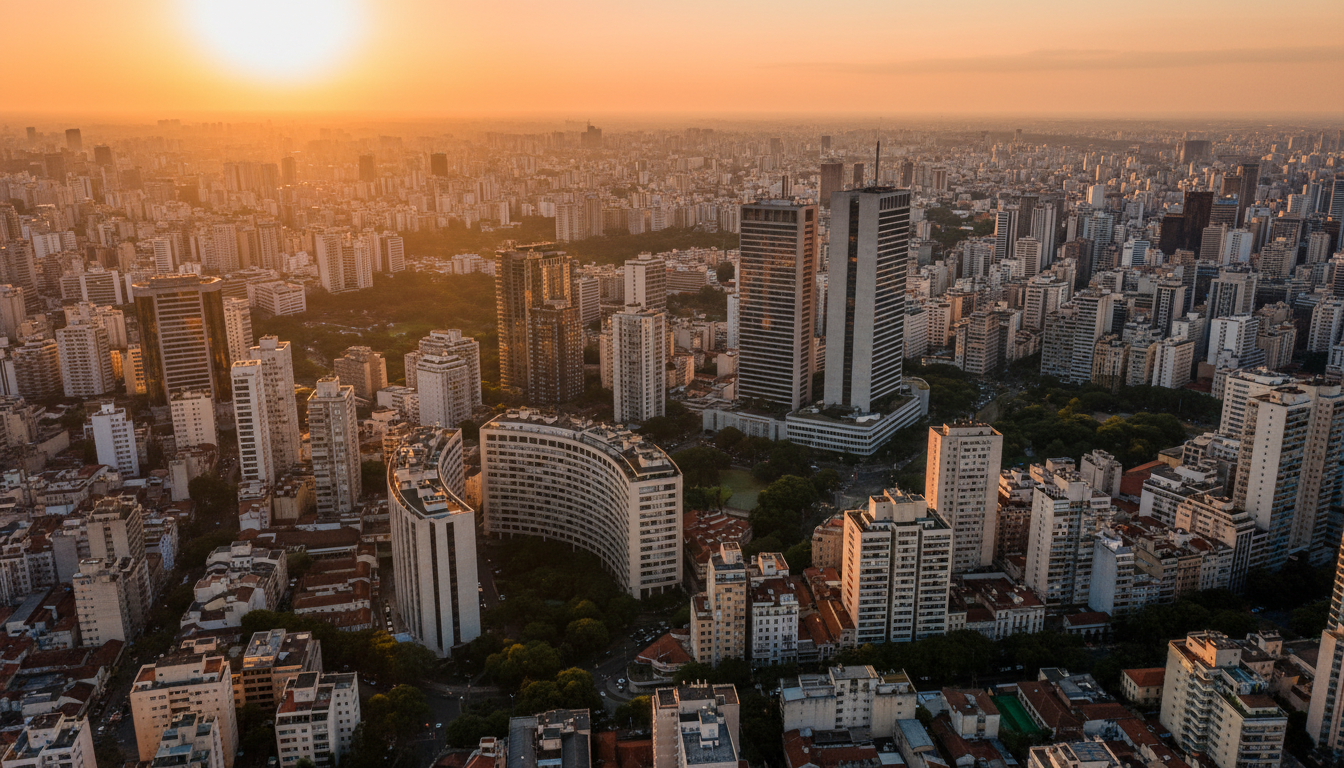 Aerial view of So Paulos endless urban sprawl at golden hour, with the distinctive Edifcio Itlia and
Why São Paulo Works So Well for Budget-Minded Home Exchangers
I'll be straight with you—São Paulo doesn't have beaches. It doesn't have Rio's dramatic mountains or Salvador's colonial charm. What it has is culture. Layers and layers of it, built up over centuries of immigration from Italy, Japan, Lebanon, Germany, and everywhere else. The wild thing? Most of this cultural wealth is completely free to experience.
When you're doing a home exchange through SwappaHome, you're already saving a fortune on accommodation. A decent hotel in Jardins or Pinheiros runs R$400-600 ($80-120 USD) per night. That's money you're not spending. So the question becomes: what do you do with all that extra budget freedom?
My answer, after logging probably 45 days total in this city across multiple home swaps: you don't need to spend it at all. São Paulo's free activities aren't consolation prizes—they're the main event.
World-Class Museums That Won't Cost You a Centavo
I'm going to say something controversial: São Paulo has better free museums than most European capitals. Fight me.
Pinacoteca do Estado: The Crown Jewel
Every Saturday, the Pinacoteca—São Paulo's oldest art museum—opens its doors for free. We're not talking about some dusty regional gallery here. This is a stunning 19th-century building in the Luz district housing Brazilian art from the colonial period to contemporary works. The Rodin sculptures in the garden alone are worth the metro ride.
I spent four hours here during my last swap, completely losing track of time in front of Almeida Júnior's "Caipira Picando Fumo." There's something about seeing Brazilian art in Brazil that hits different than seeing it in a foreign museum.
Go early. By 11 AM on Saturdays, the line wraps around the building. Arrive at 9:30 when doors open and you'll have the galleries almost to yourself.
MASP and Its Underground Secret
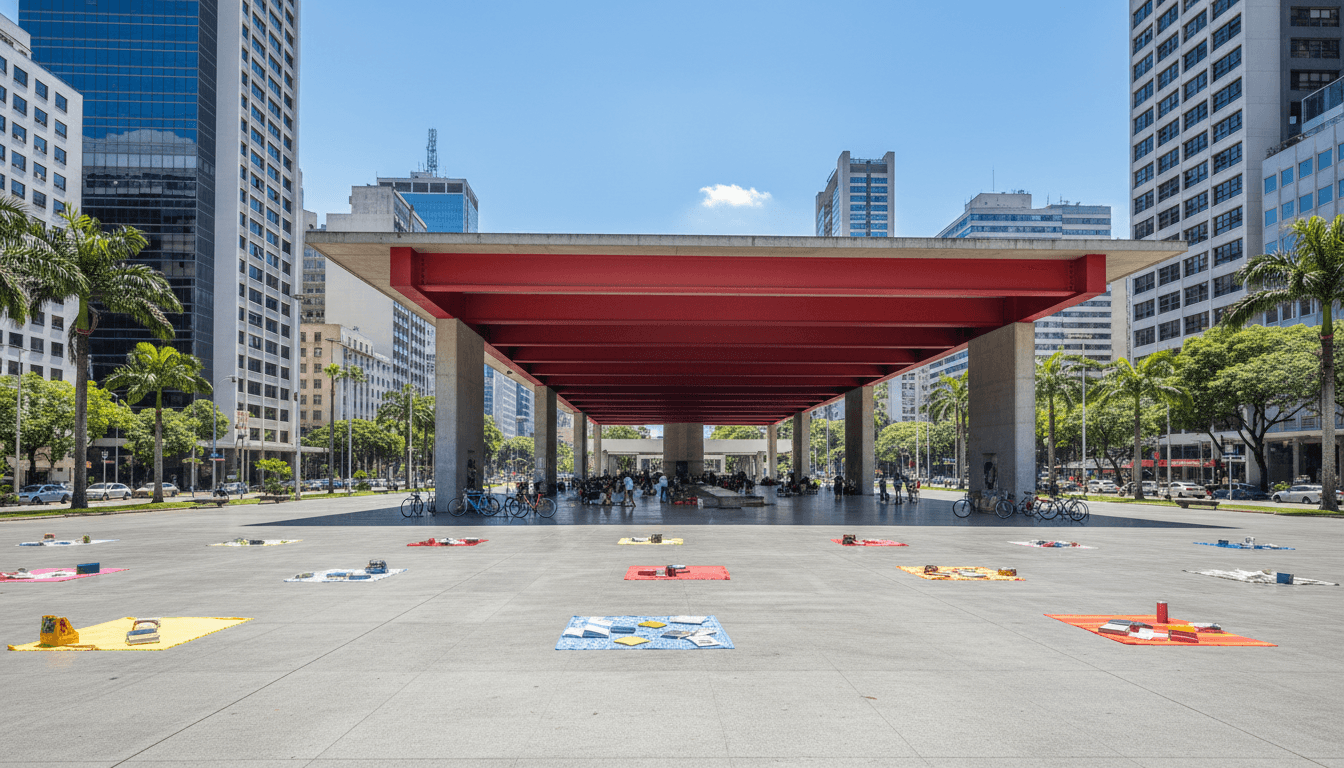
The Museu de Arte de São Paulo—that iconic building suspended on red pillars over Avenida Paulista—is free every Tuesday. The permanent collection includes Raphael, Monet, Van Gogh, and Picasso. Yes, really. For free.
But here's what most tourists miss: the underground galleries. Take the escalator down and you'll find rotating exhibitions that are often more interesting than the famous European paintings upstairs. During my October visit, there was a retrospective on Brazilian modernist Tarsila do Amaral that genuinely moved me.
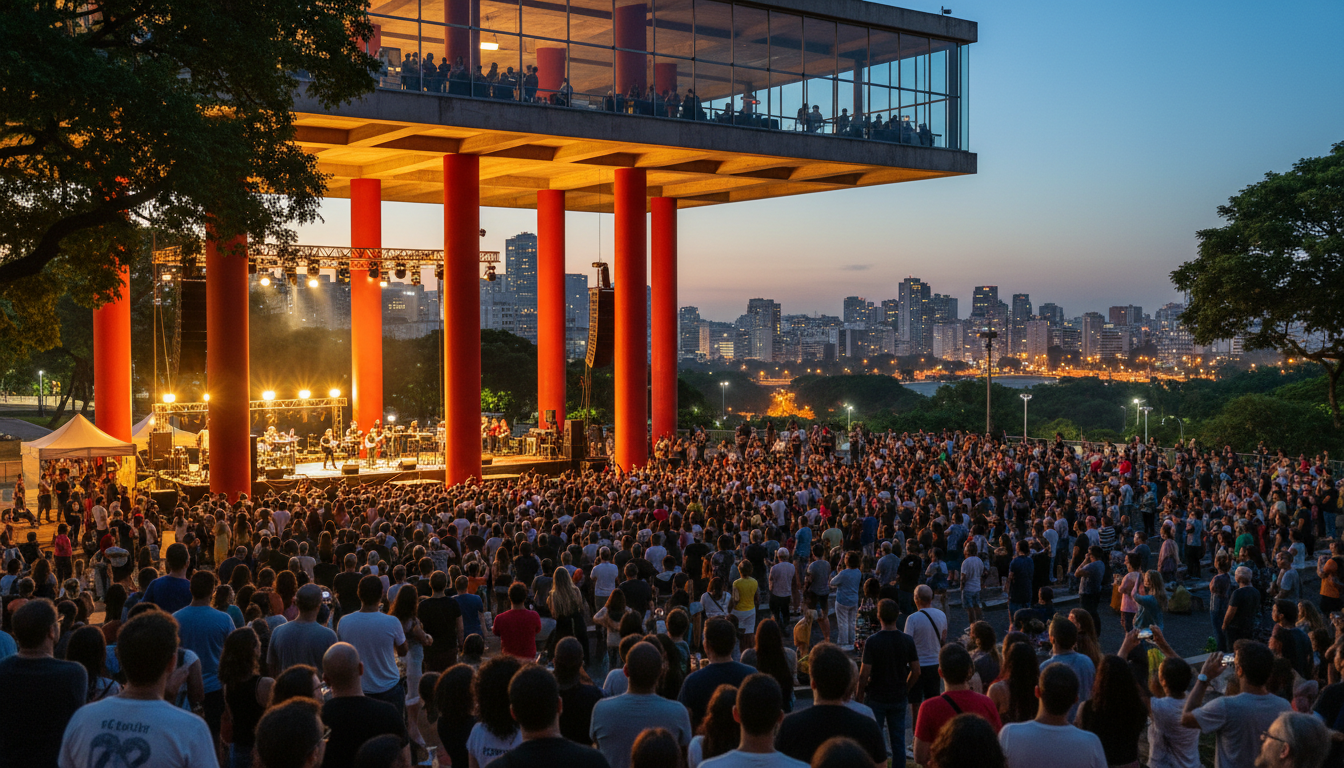 MASPs distinctive red-pillared architecture at dusk with crowds gathering underneath for a free outd
Itaú Cultural: The Sleeper Hit
Nobody talks about this place and I don't understand why. Itaú Cultural on Avenida Paulista is always free and always has something fascinating—digital art installations, photography exhibitions, film screenings, live music. The programming is relentlessly good.
The building itself is worth visiting just for the architecture. And there's a library on the upper floors where you can escape the chaos of Paulista for an hour of air-conditioned quiet.
São Paulo's Street Art Scene
Forget the galleries for a minute. São Paulo's real museum is its streets.
Beco do Batman: The Instagram Spot (But Actually Worth It)
Yeah, it's touristy. Yeah, you'll see people posing for photos. But Beco do Batman in Vila Madalena is legitimately spectacular—an entire alley covered floor-to-ceiling in constantly evolving graffiti and murals. The art changes every few months as artists paint over each other's work, so even if you've been before, it's different now.
Go on a weekday morning before 10 AM. You'll have maybe five minutes of relative solitude before the tour groups arrive.
The Real Street Art: Walking Vila Madalena
Beco do Batman is the appetizer. The main course is wandering the surrounding streets of Vila Madalena without a map—Rua Gonçalo Afonso, Rua Harmonia, Rua Fidalga. Every block has murals that would be major attractions in other cities. Here, they're just... there. Part of the landscape.
I once spent an entire afternoon following a trail of work by the artist Kobra (you'll recognize his kaleidoscopic portraits). It cost nothing except comfortable shoes and a willingness to get slightly lost.
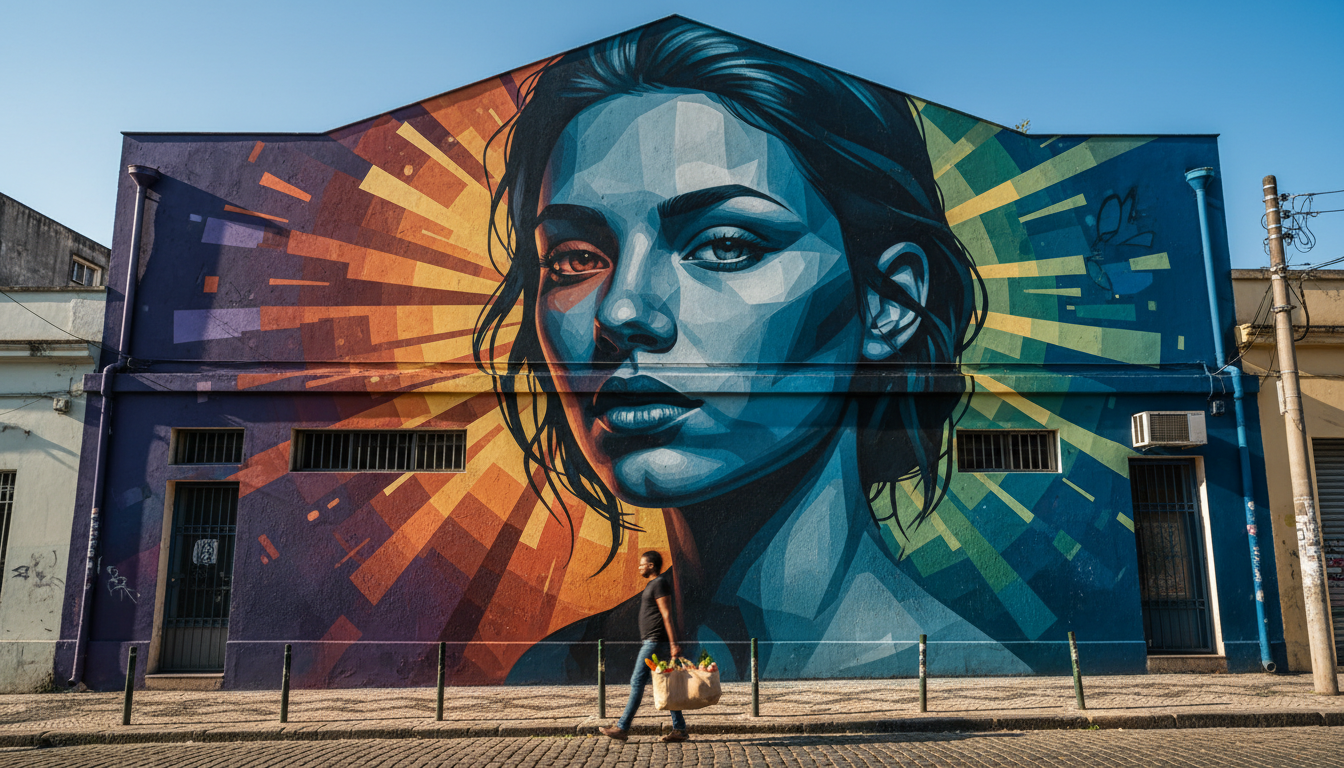 Massive colorful mural covering an entire building facade in Vila Madalena, depicting a womans face
Avenida 23 de Maio: The Highway Gallery
This one requires a car or taxi, but the art itself is free. The 23 de Maio highway cutting through the city center is lined with enormous murals—some stretching 50 meters long. It's like driving through an open-air gallery at 80 kilometers per hour. Ask your home exchange host if they can drive you through during off-peak hours, or take an Uber and ask the driver to go slow.
Parks and Green Spaces in São Paulo's Urban Jungle
São Paulo is often described as a concrete jungle, but that's only half the story. The city has more green space than you'd expect—and all of it is free.
Ibirapuera Park: The Essential Experience
If you do nothing else on this list, go to Ibirapuera. This 158-hectare park is São Paulo's Central Park, but honestly? I think it's better. The Oscar Niemeyer-designed buildings, the lakes, the running paths, the families having Sunday picnics—it's where you see Paulistanos actually living rather than just surviving.
Rent a bike from one of the free bike-share stations (you'll need to download the Bike Sampa app and register, but there's no charge for the first 60 minutes). Cycle the entire perimeter. Stop at the Japanese Pavilion. Watch the skateboarders at the plaza. Buy a coconut water from a vendor for R$8 ($1.60 USD) and sit by the lake.
The museums inside the park—MAM (Museu de Arte Moderna) and the Afro Brasil Museum—have free admission days too. Check their schedules before your visit.
Parque da Água Branca: Where Locals Actually Go
Tourists go to Ibirapuera. Paulistanos go to Água Branca. This agricultural park in Barra Funda has farm animals (yes, really—chickens, goats, horses), a farmers market on weekends, and the most gloriously unpolished vibe. Kids run around screaming. Old men play cards under trees. Someone is always playing acoustic guitar badly.
I discovered this place because my home exchange host in Perdizes mentioned it offhand. "It's where my grandmother used to take me," she said. That's the kind of recommendation you only get when you're staying in someone's actual home.
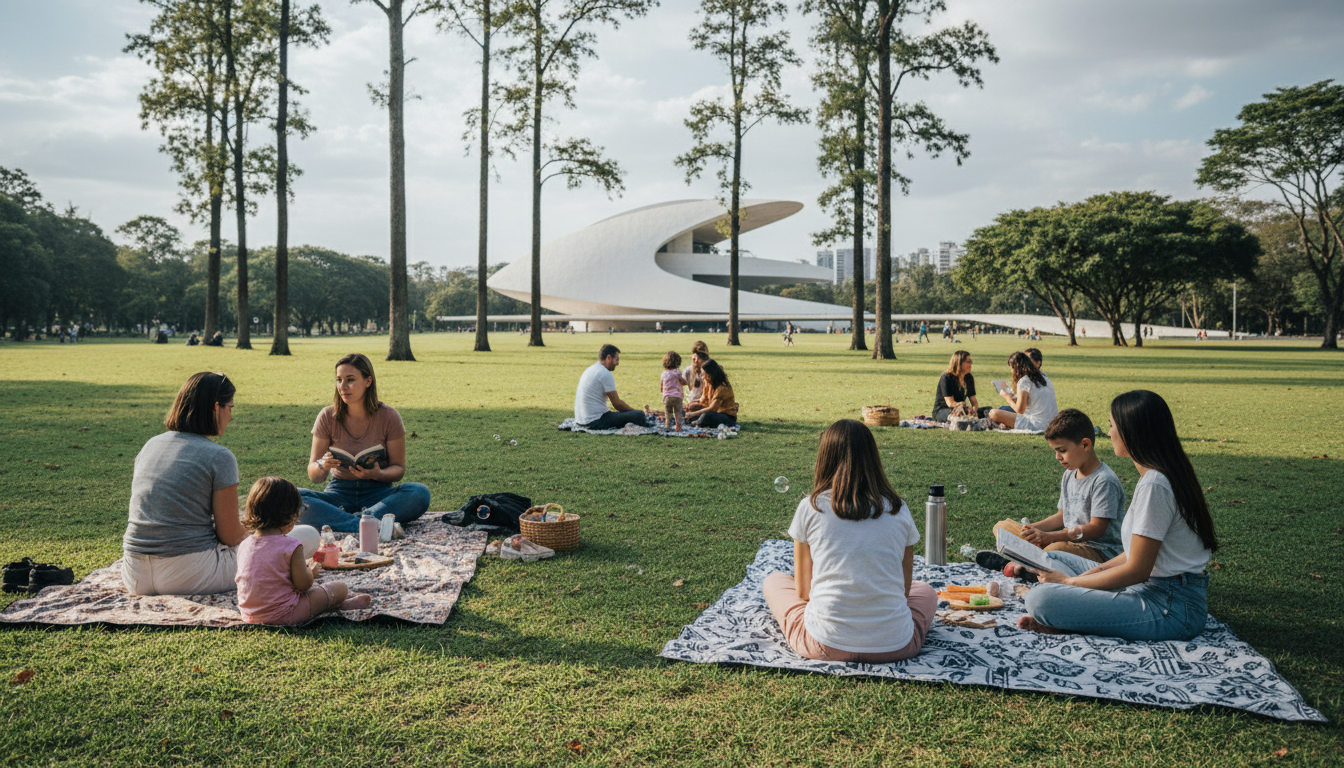 Families relaxing on blankets in Ibirapuera Park on a sunny Sunday afternoon, with Niemeyers curved
Parque Villa-Lobos: The Active Option
If you're the type who needs to move, Villa-Lobos in Alto de Pinheiros has the best running and cycling infrastructure—wide, flat paths, outdoor exercise equipment, a dog park where you can watch Brazilian dog owners be hilariously overprotective of their pets.
Sunday mornings here feel like a community gathering. Everyone's out—joggers, cyclists, families with strollers, couples walking golden retrievers. It's free, it's wholesome, and it's the antidote to São Paulo's reputation as a stressful megacity.
Free Markets and Neighborhood Exploration
Some of my favorite São Paulo memories cost literally nothing because I was just... walking around. Looking at things. Talking to people.
Feira da Liberdade: Asia in South America
Every Sunday, the Liberdade neighborhood—home to the largest Japanese community outside Japan—hosts a massive street fair. The food isn't free (though it's cheap—R$15-25 for a full meal), but wandering the stalls, watching taiko drum performances, and soaking in this unique cultural fusion costs nothing.
Liberdade is also home to the Japanese Immigration Museum, which has free admission on Saturdays. The story of how Japanese immigrants built a community in Brazil is genuinely fascinating—and weirdly moving.
Mercado Municipal: Look, Don't Buy
Okay, the famous mortadella sandwiches at Mercado Municipal cost R$50+ ($10 USD). But walking through this gorgeous 1933 building with its stained-glass windows and mountains of tropical fruit? Free. The architecture alone is worth the visit. Just don't let anyone pressure you into buying anything—the vendors can be aggressive.
Feira da Benedito Calixto: Saturday Morning Ritual
Every Saturday in Pinheiros, this antique and craft fair takes over Praça Benedito Calixto. Live chorinho music (traditional Brazilian jazz), vintage furniture, handmade crafts, and some of the best people-watching in the city. I bought nothing during my last visit and still consider it one of my best São Paulo mornings.
Free Cultural Events and Performances
São Paulo's cultural calendar is absurdly packed, and much of it is free if you know where to look.
Avenida Paulista on Sundays
Every Sunday, São Paulo's most famous avenue closes to cars and opens to people. From 8 AM to 6 PM, Avenida Paulista becomes a massive pedestrian zone filled with street performers, food vendors, artists, protesters, religious groups, and just regular Paulistanos enjoying their city.
This is free São Paulo at its purest—just showing up and being part of the scene. Bring your camera. Bring your curiosity. Don't bring any expectations except that something interesting will happen.
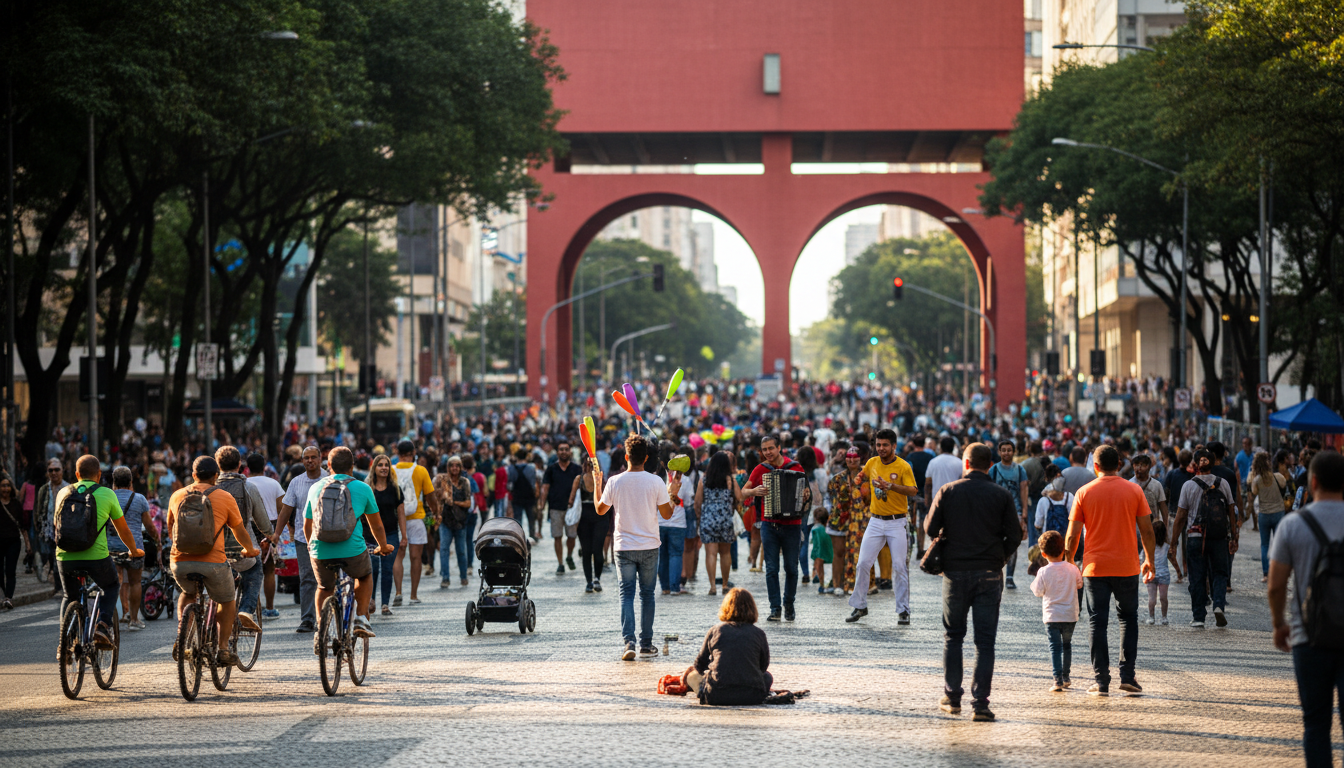 Avenida Paulista on a car-free Sunday, packed with pedestrians, cyclists, and street performers, wit
SESC: The Secret Weapon
SESC (Serviço Social do Comércio) is a network of cultural centers across São Paulo that offers free or extremely cheap events—concerts, theater, film screenings, art exhibitions, lectures. The SESC Pompeia, designed by Lina Bo Bardi, is an architectural masterpiece worth visiting even if nothing's happening.
Check the SESC website before your trip. There's almost always something free happening at one of their locations.
Sala São Paulo: Free Concerts
The Sala São Paulo—home of the São Paulo State Symphony Orchestra—occasionally offers free concerts and open rehearsals. The building itself, a converted train station, is stunning. Even if you can't catch a free event, you can take a free guided tour on Mondays and Wednesdays.
Neighborhood Walks: The Best Free Activity in São Paulo
Honestly? My favorite São Paulo experiences have been just walking through neighborhoods and letting the city reveal itself.
Centro Histórico: Faded Glory
Downtown São Paulo is gritty, chaotic, and absolutely fascinating. The Edifício Itália observation deck costs R$62, but walking the streets below—past the Theatro Municipal, through the Galeria do Rock, around the Praça da República—is free and arguably more interesting.
Go during business hours on a weekday. The energy of millions of people hustling, selling, arguing, living is intoxicating. Just keep your phone in your pocket and stay aware of your surroundings.
Jardins: Window Shopping as Sport
The Jardins neighborhood is São Paulo's wealthiest, and wandering Rua Oscar Freire looking at things you can't afford is a legitimate activity. The architecture, the people-watching, the absurdly fancy pet stores—it's entertainment.
Stop at the Livraria da Vila on Alameda Lorena. It's a bookstore, but the architecture—rotating wooden doors that open the entire facade—makes it feel like a public space. You can browse for hours without buying anything.
Pinheiros: My Favorite
If I could only recommend one neighborhood for a home exchange in São Paulo, it would be Pinheiros. The Beco do Aprendiz street art, the Mercado de Pinheiros, the countless bars and restaurants that spill onto sidewalks—it's walkable, vibrant, and endlessly interesting.
I did a two-week home swap in Pinheiros last year and barely scratched the surface. Every evening walk revealed something new: a hidden courtyard, a tiny gallery, a bar playing live forró music.
Making the Most of Your Home Exchange Base
Here's the thing about free activities in São Paulo: they're spread across a massive city. Having a home exchange base in the right neighborhood makes everything easier.
When you're browsing listings on SwappaHome, consider location carefully. A home in Pinheiros or Vila Madalena puts you within walking distance of street art, parks, and the Sunday Paulista closure. A home in Jardins gives you easy access to MASP and the cultural corridor. A home near the metro—anywhere on the green or yellow lines—gives you mobility to reach everything else.
The beauty of home exchange is that you're not just getting free accommodation—you're getting local knowledge. Every host I've had in São Paulo has given me recommendations that weren't in any guidebook. Carlos, the professor from the boteco? I met him because my host said, "Go to Bar do Jô on Tuesday nights. That's where the interesting people are."
Practical Tips for Free São Paulo Adventures
A few things I've learned the hard way:
Transportation: The metro is cheap (R$4.40 per ride, about $0.90 USD) and safe. Download the "Metrô de São Paulo" app for real-time updates. For anywhere the metro doesn't reach, Uber is affordable and widely available.
Safety: São Paulo has a reputation, and it's not entirely undeserved. But I've never had a problem in tourist areas during daylight hours. Keep valuables hidden, don't flash expensive phones, and trust your instincts. The same common sense you'd use in any major city.
Weather: São Paulo's weather is unpredictable. Carry a light rain jacket even if the morning looks clear. And in summer (December-February), the afternoon thunderstorms are intense but brief—duck into a museum or café and wait them out.
Language: English isn't widely spoken outside tourist areas. Download Google Translate's Portuguese language pack for offline use. Learning "obrigado/obrigada" (thank you) and "com licença" (excuse me) goes a long way.
The Real Cost of a São Paulo Home Exchange
Let me break this down. During my last two-week home exchange in São Paulo:
- Accommodation: 0 credits spent hosting before my trip, 14 credits to stay (SwappaHome's system means I'd earned those credits hosting guests in San Francisco)
- Museums: R$0 (hit all the free days)
- Parks: R$0
- Street art: R$0
- Markets: R$0 (okay, I bought a R$15 pastel at Benedito Calixto, but that was a choice)
- Transportation: ~R$200 ($40 USD) for two weeks
- Food: ~R$700 ($140 USD)—but I was cooking in my host's kitchen most nights
Total for two weeks: roughly $180 USD, plus the credits I'd already earned. Compare that to a hotel at $100/night minimum, and you start to see why home exchange is a game-changer for budget travel.
Why São Paulo Rewards the Budget Traveler
I've been to cities where being broke means missing out. São Paulo isn't one of them.
This city was built by immigrants who couldn't afford to wait for permission. The street art exists because artists couldn't afford gallery space. The free museum days exist because culture shouldn't be gated by wealth. The Sunday Paulista closure exists because people demanded public space in a city that often feels like it belongs to cars and commerce.
When you explore São Paulo's free activities during a home exchange, you're not doing budget travel as a compromise. You're experiencing the city the way its most creative, passionate residents do. You're walking the same streets, visiting the same parks, seeing the same art.
That retired professor Carlos was right. São Paulo gives you everything for free. You just have to know where to look—and be willing to look.
Frequently Asked Questions
What are the best free activities in São Paulo for first-time visitors?
Start with MASP on Tuesday (free admission), walk Avenida Paulista on Sunday when it's car-free, explore the street art in Vila Madalena, and spend an afternoon in Ibirapuera Park. These four activities give you a solid introduction to São Paulo's culture, art, and lifestyle without spending anything.
Is São Paulo safe for tourists exploring free attractions?
São Paulo is generally safe in tourist areas during daylight hours. Stick to neighborhoods like Jardins, Pinheiros, Vila Madalena, and Paulista. Keep valuables hidden, avoid displaying expensive electronics, and use common urban awareness. The metro system is safe and well-monitored.
How much money do I need per day in São Paulo with free activities?
With a home exchange covering accommodation, you can comfortably explore São Paulo on $15-25 USD per day. This covers metro transportation ($3-5), street food or market meals ($10-15), and occasional small purchases. Many visitors spend even less by focusing on free museums, parks, and walking tours.
When is the best time to visit São Paulo for free outdoor activities?
April through October offers the most pleasant weather for outdoor exploration—mild temperatures and less rain. Avoid December through February when afternoon thunderstorms are common. Sundays year-round are ideal for Avenida Paulista's car-free celebration and Ibirapuera Park's community atmosphere.
Can I do a home exchange in São Paulo as a first-time swapper?
Absolutely. São Paulo has an active home exchange community on SwappaHome, with listings across neighborhoods like Pinheiros, Vila Madalena, Jardins, and Perdizes. New members receive 7 free credits to start, enough for a 10-night stay. The city's home exchangers tend to be welcoming and eager to share local recommendations.

Published by
SwappaHome
SwappaHome Editorial Team
Home Exchange & Slow Travel Editorial
The SwappaHome Editorial Team brings together travel research, home-exchange community insights, and platform data to produce practical guides for first-time and experienced home swappers. Every article cites real platforms, current market rates, and verifiable city-level facts so readers can make informed decisions without guessing.
Ready to try home swapping?
Join SwappaHome and start traveling by exchanging homes. Get 7 free credits when you sign up!
Related articles
Bachelor and Bachelorette Parties in Singapore: The Complete Home Swap Group Guide for 2026
Planning a bachelor or bachelorette party in Singapore? Discover how home swapping lets groups of 6-12 stay together in luxury condos, saving thousands while partying in Marina Bay.
Cycling in Lisbon: 7 Home Swap Bike Tour Itineraries for Every Rider
Discover the best cycling routes in Lisbon with these home swap bike tour itineraries—from waterfront paths to hilltop adventures, all starting from your borrowed home.
Graduation Trip to Barcelona: How Home Swapping Gives New Graduates the Ultimate Celebration
Planning a graduation trip to Barcelona? Discover how home swapping lets new graduates explore Spain's most vibrant city without the hostel crowds or hotel costs.