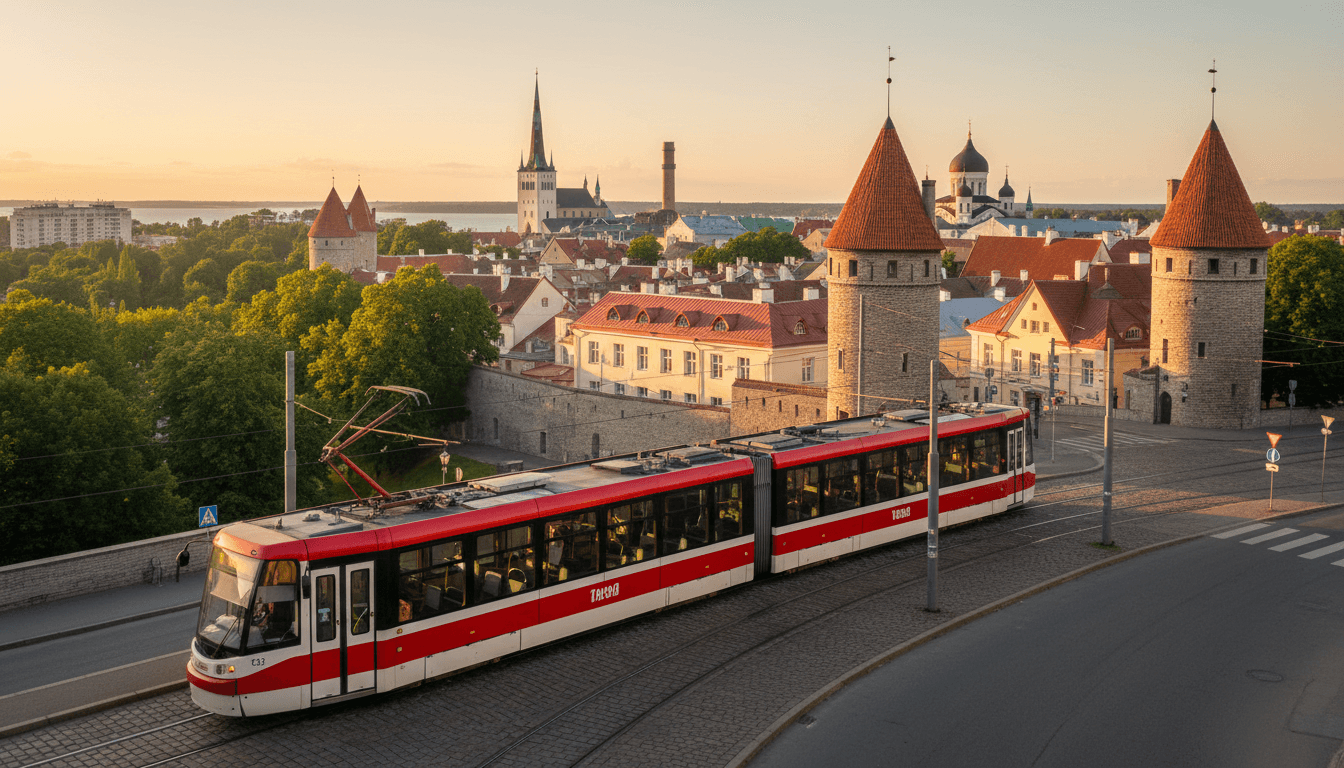
Getting Around Tallinn: Complete Transport Guide for Home Swap Travelers

SwappaHome Editorial Team
Home Exchange & Slow Travel Editorial
Master Tallinn transport like a local during your home swap. From free public transit tricks to hidden bike routes, here's everything you need to know.
I'll never forget standing at Tallinn's Viru Keskus bus terminal at 7 AM, jet-lagged and clutching a paper map like some kind of time traveler from 1998. Getting around Tallinn seemed intimidating at first—all those tram lines, the Estonian language on signs, the locals rushing past like they had somewhere very important to be. But here's what I discovered during my three-week home swap in Kalamaja: this city is absurdly easy to navigate once you crack the code.
And that code? It's simpler than you'd think.
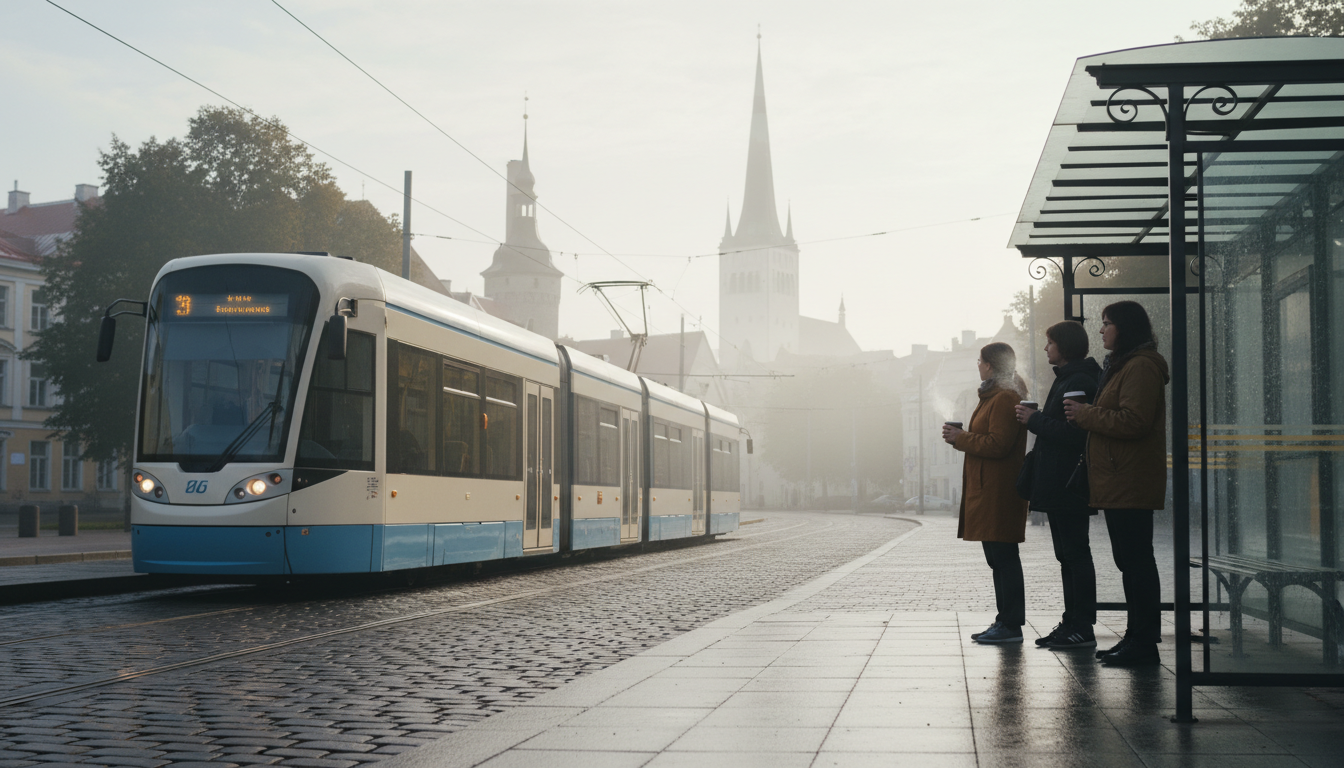 Early morning tram gliding through Tallinns Old Town cobblestone streets, medieval spires in misty b
Why Tallinn Transport Is Perfect for Home Swap Travelers
Most tourists stick to the Old Town, maybe venture to Kadriorg Park, then call it a day. But when you're doing a home swap in Tallinn, you're living in actual neighborhoods—Põhja-Tallinn, Kristiine, Nõmme—places where real Estonians go about their lives. This means you need to actually understand how locals move through the city.
The good news? Tallinn has one of Europe's most underrated public transit systems. It's clean, punctual, and—here's the kicker—potentially free for you.
Yes, free. I'll explain.
The city runs an integrated network of buses, trams, trolleybuses, and even a suburban train system. Everything connects. Everything runs on time. And unlike some European cities where the transit map looks like someone spilled spaghetti on a page, Tallinn's layout actually makes sense.
During my home swap, I was staying in a gorgeous 1930s wooden house in Kalamaja (the hipster neighborhood, basically Tallinn's Brooklyn). My host had left detailed notes about which tram to catch, which bus was faster, and which routes had the best views. That personal knowledge—the kind you only get from staying in someone's actual home—transformed my entire experience of getting around Tallinn.
The Tallinn Card vs. Pay-As-You-Go: What Actually Makes Sense
Let's talk money, because this is where most transport guides get it wrong.
The Tallinn Card is heavily marketed to tourists. It bundles unlimited public transport with museum entries and discounts. Sounds great, right? Here's my honest take: it's designed for people cramming everything into 48 hours.
For home swap travelers staying a week or more? Skip it.
Instead, get yourself a Ühiskaart (Green Card)—the smart card that Tallinners actually use. You can buy one at any R-Kiosk (they're everywhere—think 7-Eleven but Estonian) for €2, then load it with credit. A single ride costs €1.50 ($1.65), but here's where it gets interesting: rides are capped at €3 per day and €23 per month. So even if you're tapping on and off all day exploring, you'll never pay more than about $3.30 daily.
Compare that to the Tallinn Card at €32 for 24 hours or €54 for 72 hours. The math isn't even close.
Now for the thing that blew my mind. Tallinn offers FREE public transport for registered residents. Some home swap hosts will actually register you as a temporary resident if you're staying long enough (usually 30+ days). My host did this for me during a month-long swap, and I rode trams for free the entire time. It felt almost illegal, but it's completely legitimate. Ask your host about this before you arrive—not everyone will do it since it requires a trip to the city office, but it's worth asking.
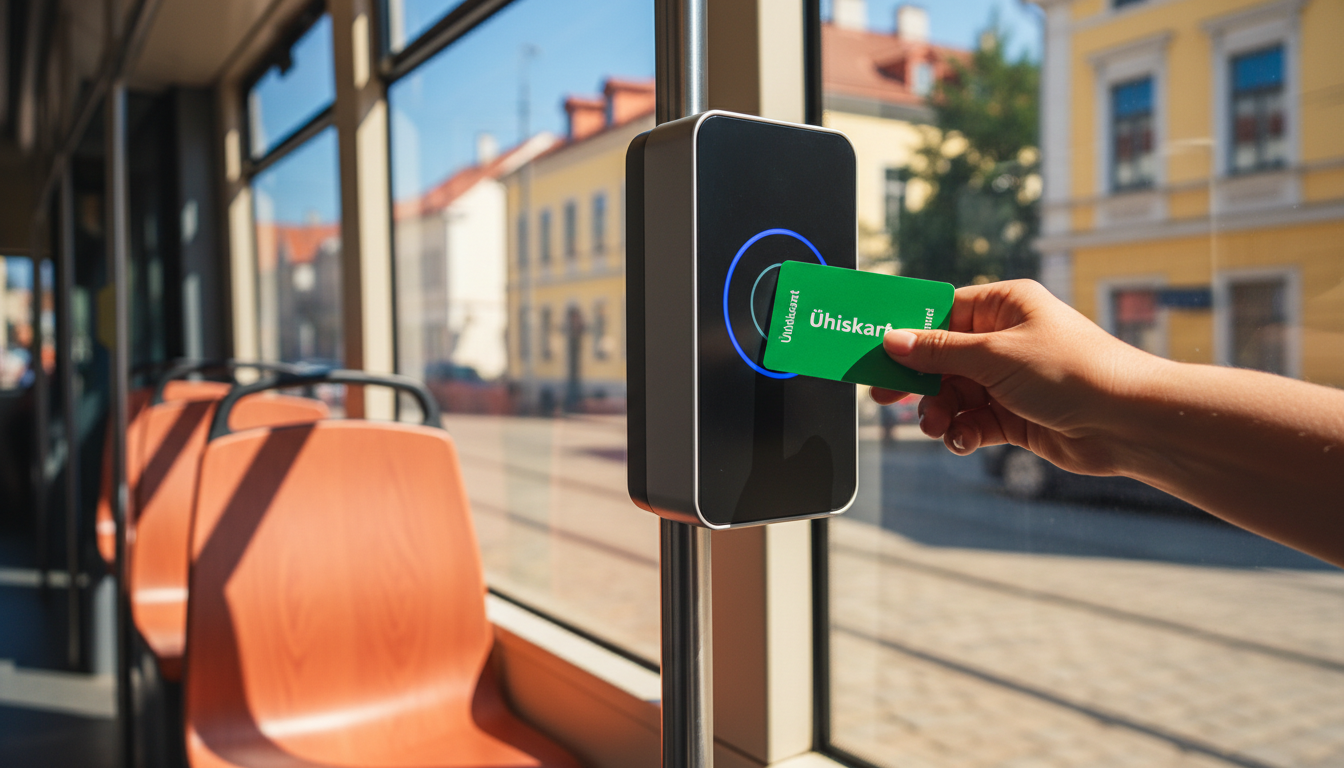 Close-up of a hand tapping a green hiskaart on a tram validator, modern tram interior visible with w
Trams: The Backbone of Tallinn Transport
Tallinn's tram network is small but mighty—just four lines covering the central areas. And honestly? Trams are my favorite way to get around Tallinn.
There's something meditative about them. They're slower than buses, sure, but you get to actually see the city. The windows are huge. The routes pass through the most interesting neighborhoods. And unlike the bus, you're never stuck in traffic.
Line 1 runs from Kopli (the up-and-coming industrial-chic area) through Kalamaja, past the train station, and into Kadriorg. This is probably the most useful line for visitors—it connects the hipster coffee shops of Telliskivi with the palace gardens of Kadriorg in about 20 minutes. Line 2 goes from Kopli to Suur-Paala, cutting through the city center. Less scenic, but useful if you're staying in the eastern districts. Lines 3 and 4 share much of the same route through the center, then split off toward different suburbs. Line 4 is your ticket to the Ülemiste area near the airport.
Pro tip from my host: the trams get crowded between 8-9 AM and 5-6 PM. If you're heading to Old Town for sightseeing, leave either before 8 or after 10. You'll have the tram practically to yourself, and the morning light on those medieval walls is worth the early start.
Trams run from about 6 AM to midnight, with frequencies of 10-15 minutes during the day. After midnight, you're looking at night buses or taxis.
Buses and Trolleybuses: Reaching Every Corner
While trams cover the central arteries, buses fill in everything else. Tallinn has over 60 bus routes, which sounds overwhelming until you realize you'll probably only use three or four.
The bus system is how you reach neighborhoods like Pirita (the beach area), Nõmme (the leafy garden suburb), and Lasnamäe (the Soviet-era district that's actually fascinating to explore). These are places tourists rarely visit, but as a home swapper, you might be living there.
Trolleybuses are basically electric buses connected to overhead wires—quieter and smoother than regular buses. Lines 1, 2, 3, and 4 are the most useful, running from Viru Keskus (the central hub) out to various residential areas.
For real-time info, download the Tallinn Transport app. It shows real-time arrivals, route planning, and even lets you buy tickets if you forget your card. Google Maps also works well for route planning, though the local app is more accurate for real-time delays.
One thing that surprised me: buses in Tallinn are genuinely punctual. Coming from cities where "the bus will arrive in 5 minutes" means "maybe 20 minutes, maybe never," this was refreshing. If the app says 3 minutes, you've got 3 minutes.
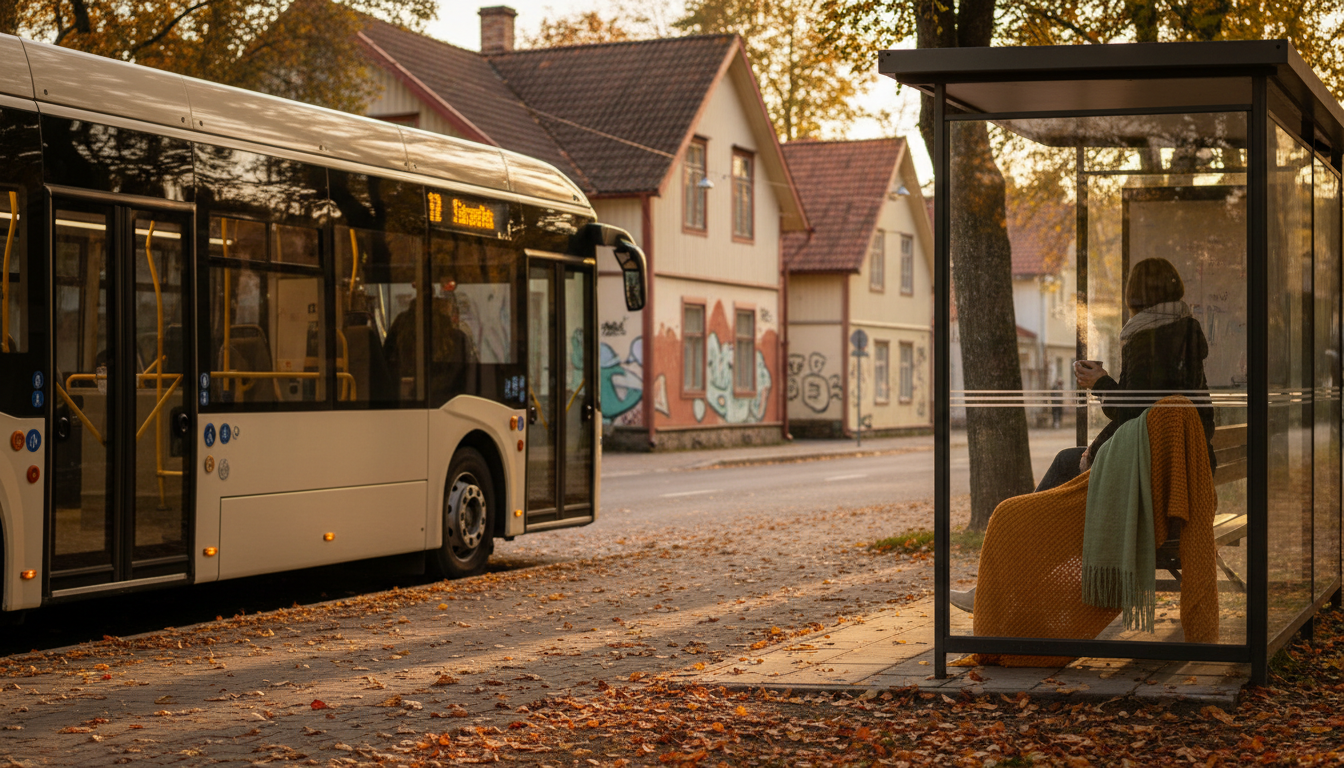 Modern Tallinn bus at a shelter in Kalamaja neighborhood, wooden houses and street art visible in ba
Cycling in Tallinn: The Secret Best Option
Here's what most transport guides won't tell you: Tallinn is becoming an incredible cycling city.
The terrain is flat. Like, pancake flat. The bike infrastructure has exploded in recent years, with dedicated lanes connecting most major areas. And the distances are manageable—you can cycle from one end of the interesting parts to the other in about 30 minutes.
During my home swap, my host had two bikes in the courtyard. "Take them whenever," she said. I ended up cycling almost everywhere.
If your host doesn't have bikes, Bolt Bikes is your answer. Bolt (the Estonian ride-sharing company—yes, it started here) operates an e-bike sharing system. You'll see the green bikes parked all over the city. Download the Bolt app, scan the QR code, and you're off. Pricing is €1 to unlock plus €0.15 per minute—so a 20-minute ride costs about €4 ($4.40). Not the cheapest option for daily use, but perfect for occasional trips.
The real crown jewel? The Coastal Bike Path. A dedicated cycling path runs from Pirita Beach all the way through the city center and out to Rocca al Mare. It's mostly car-free, hugging the coastline with views of the Baltic Sea. I did this ride on a September morning, and I'm not exaggerating when I say it was one of the most beautiful urban cycling experiences I've ever had. The path passes through Kadriorg Park, along the Song Festival Grounds, and through the Kalamaja harbor area. You can stop for coffee at one of the seaside cafés, watch the ferries heading to Helsinki, and feel genuinely smug about not being stuck on a tour bus.
A few cycling tips: always lock bikes, even briefly—theft happens, though less than in other European capitals. The bike lanes are well-marked, but some are shared with pedestrians, so ring your bell politely. Helmets aren't legally required for adults, but I'd recommend one anyway. And in winter (November-March), cycling becomes tricky due to ice—stick to transit unless you're experienced with winter cycling.
 Cyclist on Tallinns coastal bike path at golden hour, Baltic Sea on one side, Kalamaja wooden houses
Taxis and Ride-Sharing: When You Need Door-to-Door
Sometimes you just need a car. Maybe it's late, maybe you're hauling luggage, maybe you're just tired.
Bolt is the hometown hero here. It started in Tallinn (originally called Taxify), and it's by far the most popular ride-sharing app. Prices are reasonable—a ride from the airport to the city center runs about €10-15 ($11-16.50), depending on traffic and time. From Old Town to Kalamaja? Usually under €5. The app works exactly like Uber: set your pickup and destination, see the price upfront, pay through the app. I used Bolt maybe five times during my three-week stay, mostly for airport runs or late-night returns from Telliskivi.
Traditional taxis exist, but honestly, there's no reason to use them. Prices are higher, you have to negotiate or watch the meter, and the experience is just... less smooth. Yandex Go also operates in Tallinn with sometimes slightly cheaper prices, but the app defaults to Russian, which can be confusing.
For airport transfers, Tallinn Airport is absurdly close to the city center—about 4 km. A Bolt costs €10-15, but Bus 2 runs from the airport to Viru Keskus every 20-30 minutes and costs €2 with your Ühiskaart. The ride takes about 20 minutes. Unless you're arriving at 2 AM with heavy bags, take the bus.
Walking: Don't Underestimate Your Feet
I know this is a transport guide, but I'd be doing you a disservice if I didn't mention: Tallinn is a walking city.
The Old Town is entirely pedestrianized. You literally can't drive there. And it's compact enough that you can walk from one end to the other in 15 minutes, stopping to gawk at medieval towers and peer into cellar restaurants along the way.
But beyond the tourist zone, walking remains viable. From Old Town to Kalamaja? 15 minutes. To Telliskivi Creative City? 10 minutes. To Kadriorg Park? 25 minutes through pleasant residential streets.
During my home swap, I walked more than I expected. The distances that look significant on a map shrink when you're actually moving through them. And walking lets you discover things—the hidden courtyard cafés, the street art, the tiny vintage shops that don't show up on Google.
My host had marked up a paper map with her favorite walking routes. "The blue line is my morning coffee walk," she'd written. "The red one is for when you need to think about things." I followed both, multiple times.
That's the home swap difference, isn't it? You're not just getting a place to sleep. You're getting someone's life, their routines, their secret paths through the city.
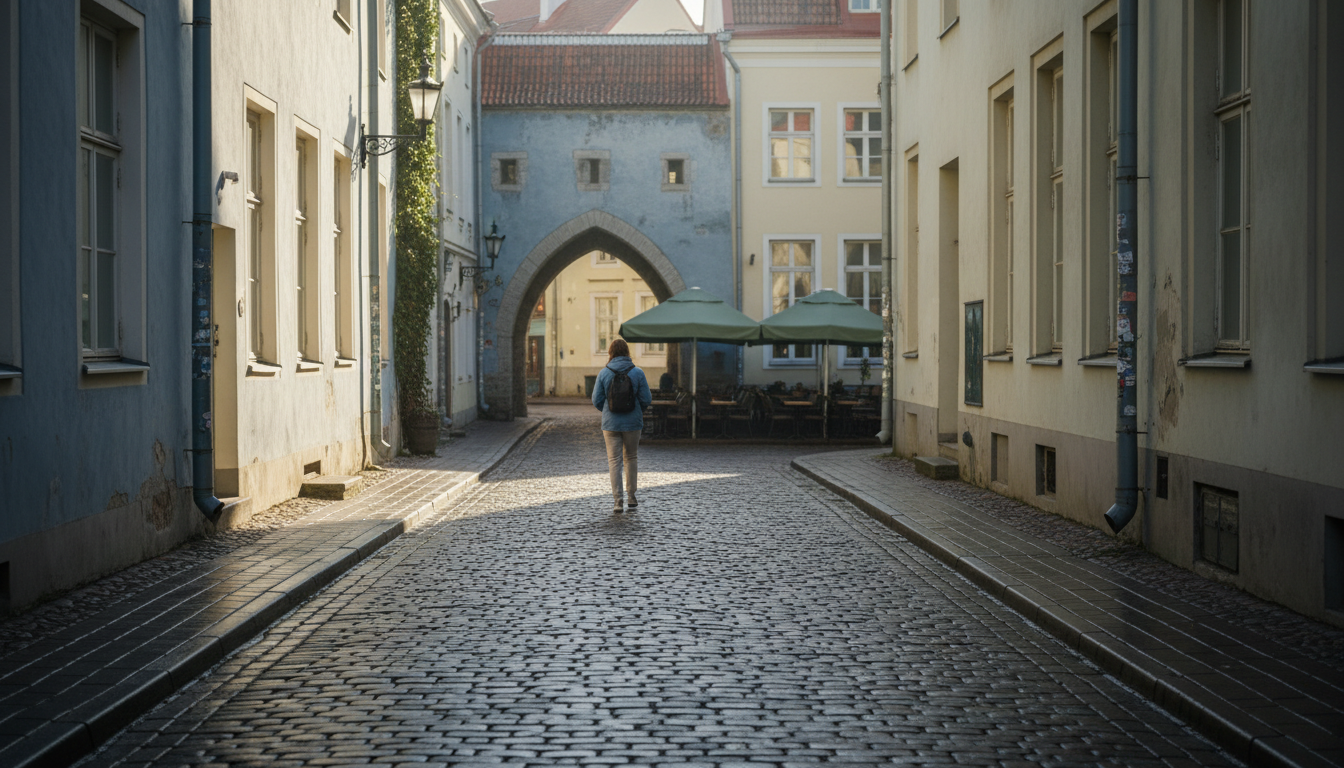 Narrow cobblestone alley in Tallinn Old Town, morning light casting long shadows, a single person wa
Suburban Trains: Day Trip Gateway
Tallinn's suburban train network is tiny—just three lines—but it's useful for certain day trips.
The Balti Jaam (Baltic Station) is the main hub, located right at the edge of Old Town near Kalamaja. From here, trains run to Paldiski (a former Soviet military town on the coast, now quietly atmospheric—about 50 minutes, €3.20), Keila (a small town with a waterfall at Keila-Joa—about 35 minutes, €2.40), and Aegviidu (gateway to Lahemaa National Park—about 1 hour, €4).
Trains are modern, clean, and rarely crowded. You can buy tickets at the station, on the train, or through the Elron app. The same Ühiskaart you use for city transit works here too—just make sure it's loaded with enough credit.
For Lahemaa National Park specifically, the train gets you to Aegviidu, but you'll need to arrange onward transport to reach the park's highlights. Some home swap hosts have cars and might let you borrow one—always worth asking.
Ferries: The Helsinki Connection
Okay, this is technically leaving Tallinn, but it's too good not to mention.
Helsinki is just 2 hours away by ferry. Two hours! You can have breakfast in your Tallinn home swap, catch a morning ferry, spend the day exploring the Finnish capital, and be back for a late dinner.
Tallink and Viking Line operate multiple daily crossings from Tallinn's D-Terminal (reachable by tram 1 or 2, or a short Bolt ride). Prices start around €20-30 ($22-33) each way for foot passengers, though they fluctuate based on season and demand.
I did this day trip twice during my stay. The ferry itself is an experience—massive ships with restaurants, shops, and panoramic lounges. Pack a book, grab a coffee, watch the Baltic islands slide past. By the time you've settled in, you're approaching Helsinki.
The return ferry often has cheaper alcohol than either country's shops, which is why you'll see Finns loading up on beer and wine. It's a whole cultural phenomenon.
Seasonal Considerations for Tallinn Transport
Tallinn transforms dramatically between seasons, and so does the transport experience.
Summer (June-August) is the best time for cycling and walking. Days are incredibly long—it barely gets dark in June. The coastal bike path is at its most beautiful, and ferries to Helsinki run more frequently. Downside: peak tourist season means Old Town gets crowded.
Autumn (September-November) was my favorite, honestly. The crowds thin, the leaves turn golden in Kadriorg, and the weather is usually mild enough for walking. Rain becomes more frequent in November—pack a good jacket and consider the tram over cycling.
Winter (December-February) is cold. Like, properly cold—temperatures regularly drop below -10°C (14°F). The transit system handles it well with heated trams and buses and cleared stops, but waiting outside becomes unpleasant. This is when Bolt becomes your best friend. The Christmas market in Old Town is magical, though, and totally worth the cold.
Spring (March-May) is transitional and unpredictable. March can still be icy, while May feels almost summery. The city wakes up, café terraces reopen, and cycling becomes viable again by late April.
During my autumn swap, I experienced the full range—sunny September days perfect for the coastal bike path, and grey November mornings where I was grateful for the heated tram.
Practical Tips From a Home Swapper
After three weeks of getting around Tallinn daily, here's what I wish someone had told me:
Validate every time. Even if you have a monthly pass or free resident transit, you need to tap your card when boarding. Inspectors do check, and fines are €40. I saw a confused tourist get fined on my second day.
Learn the stop names. Stops are announced in Estonian only. The names can sound like tongue twisters at first (Vabaduse väljak, anyone?), but you'll pick them up quickly. Having Google Maps open helps you track your location.
Ask your host for their routes. Seriously, this is the home swap advantage. Your host knows which bus is always late, which tram stop has the best shelter, which route has the nicest views. My host's handwritten notes were more valuable than any guidebook.
Download apps before you arrive. Tallinn Transport, Bolt, and Google Maps are the holy trinity. Get them set up with payment methods while you still have reliable wifi.
The Viru Keskus hub is the nerve center of Tallinn transport—trams, buses, and trolleybuses all converge at this underground transit station beneath the Viru shopping center. If you're ever lost or confused, make your way to Viru and you can get anywhere.
Night transport exists but is limited. After midnight, most regular lines stop. Night buses run on weekends, but frequencies drop to every 30-60 minutes. Plan accordingly, or budget for a Bolt.
Making the Most of Your Home Swap Location
Here's the thing about home swapping in Tallinn: where you stay shapes everything about how you'll get around.
If your swap is in Old Town or Vanalinn, you barely need transit at all. Everything is walkable. The downside? You're in the tourist zone, which can feel less authentic.
In Kalamaja or Telliskivi, you're in the creative heart of the city. Tram 1 and 2 connect you to everywhere, and you can walk to Old Town in 15 minutes. This is where I stayed, and I'd choose it again.
Kadriorg is elegant and leafy, with the palace and park right there. Tram 1 and 3 run through, and it's a pleasant 25-minute walk to Old Town along the coastal path.
Pirita is the beach neighborhood—great in summer, a bit isolated otherwise. You'll rely on buses (1A, 8, 34A) more heavily here.
Nõmme is the garden suburb, full of wooden houses and pine forests. It's connected by suburban train and several bus lines, but you'll feel further from the action. Perfect if you want peace and quiet.
When browsing home swaps, I always check the transit connections. A beautiful apartment means nothing if you're spending an hour each way getting to the interesting parts of the city. Most hosts mention nearby transit in their listings—if they don't, ask.
The Real Advantage of Home Swapping for Transport
I want to end on something that took me a while to articulate.
When you stay in a hotel, you're a visitor. You take taxis because you don't know the buses. You stick to the tourist areas because that's what's easy. You experience the city from the outside.
When you do a home swap, you inherit someone's daily life—including their transport routines. You take the tram they take to work. You shop at the grocery store they walk to. You discover the shortcut through the park that isn't on any map.
My Tallinn host had left her bike, her transit card (loaded with credit—she insisted), and a hand-drawn map of her favorite routes. By week two, I wasn't getting around Tallinn like a tourist. I was getting around like someone who lived there.
That's the magic of home exchange. It's not just free accommodation. It's a different way of experiencing a place entirely.
If you're considering a home swap in Tallinn—or anywhere, really—I can't recommend it enough. The transport will figure itself out. The adventure is in the living.
Frequently Asked Questions
Is public transport in Tallinn free for tourists?
Public transport in Tallinn is free only for registered residents. As a tourist, you'll need to purchase a Ühiskaart (€2) and load it with credit. Single rides cost €1.50, capped at €3 per day. However, if you're doing a long-term home swap (30+ days), your host may be able to register you as a temporary resident, making transit genuinely free.
How do I get from Tallinn Airport to the city center?
The cheapest option is Bus 2, which runs every 20-30 minutes and costs €2 with a Ühiskaart. The journey takes about 20 minutes to Viru Keskus, the central hub. Alternatively, a Bolt ride costs €10-15 and takes 10-15 minutes depending on traffic. The airport is only 4 km from the center.
What is the best transport app for getting around Tallinn?
Download the Tallinn Transport app for real-time bus and tram arrivals, route planning, and ticket purchases. For taxis and ride-sharing, Bolt is the most popular and reliable option—it's actually an Estonian company that started in Tallinn. Google Maps also works well for route planning.
Can you walk everywhere in Tallinn Old Town?
Yes, Tallinn's Old Town is entirely pedestrianized and very compact. You can walk from one end to the other in about 15 minutes. Most major attractions, restaurants, and shops are within easy walking distance. Beyond Old Town, the city remains walkable—Kalamaja is 15 minutes on foot, Kadriorg about 25 minutes.
How much does a taxi cost in Tallinn?
Using Bolt, expect to pay €5-8 for rides within the central area, €10-15 from the airport to city center, and €15-25 for longer trips to suburbs. Prices are shown upfront in the app. Traditional taxis are more expensive and less transparent—stick with Bolt for the best experience and pricing.

Published by
SwappaHome
SwappaHome Editorial Team
Home Exchange & Slow Travel Editorial
The SwappaHome Editorial Team brings together travel research, home-exchange community insights, and platform data to produce practical guides for first-time and experienced home swappers. Every article cites real platforms, current market rates, and verifiable city-level facts so readers can make informed decisions without guessing.
Ready to try home swapping?
Join SwappaHome and start traveling by exchanging homes. Get 7 free credits when you sign up!
Related articles

Bachelor and Bachelorette Parties in Singapore: The Complete Home Swap Group Guide for 2026
Planning a bachelor or bachelorette party in Singapore? Discover how home swapping lets groups of 6-12 stay together in luxury condos, saving thousands while partying in Marina Bay.

Cycling in Lisbon: 7 Home Swap Bike Tour Itineraries for Every Rider
Discover the best cycling routes in Lisbon with these home swap bike tour itineraries—from waterfront paths to hilltop adventures, all starting from your borrowed home.

Graduation Trip to Barcelona: How Home Swapping Gives New Graduates the Ultimate Celebration
Planning a graduation trip to Barcelona? Discover how home swapping lets new graduates explore Spain's most vibrant city without the hostel crowds or hotel costs.