Tallinn Home Exchange: Your Complete Guide to Estonia's Hidden Gem Market

SwappaHome Editorial Team
Home Exchange & Slow Travel Editorial
Discover why Tallinn home exchange is booming among savvy travelers. From medieval Old Town apartments to trendy Kalamaja lofts, here's your insider guide.
I still remember the exact moment I fell for Tallinn. Six in the morning, jet-lagged out of my mind, wandering through Rotermann Quarter when I stumbled into this tiny bakery. An elderly Estonian woman handed me a still-warm kohupiimakook—a curd cake that tasted like someone's grandmother had been perfecting the recipe for decades. She didn't speak English. I didn't speak Estonian. And somehow we spent twenty minutes communicating through smiles and gestures about her grandchildren.
That's the thing about Tallinn home exchange that no hotel can replicate. You don't just visit this city—you slip into its rhythm. And right now? The Tallinn home exchange market is experiencing something remarkable: a perfect storm of opportunity for travelers who know where to look.
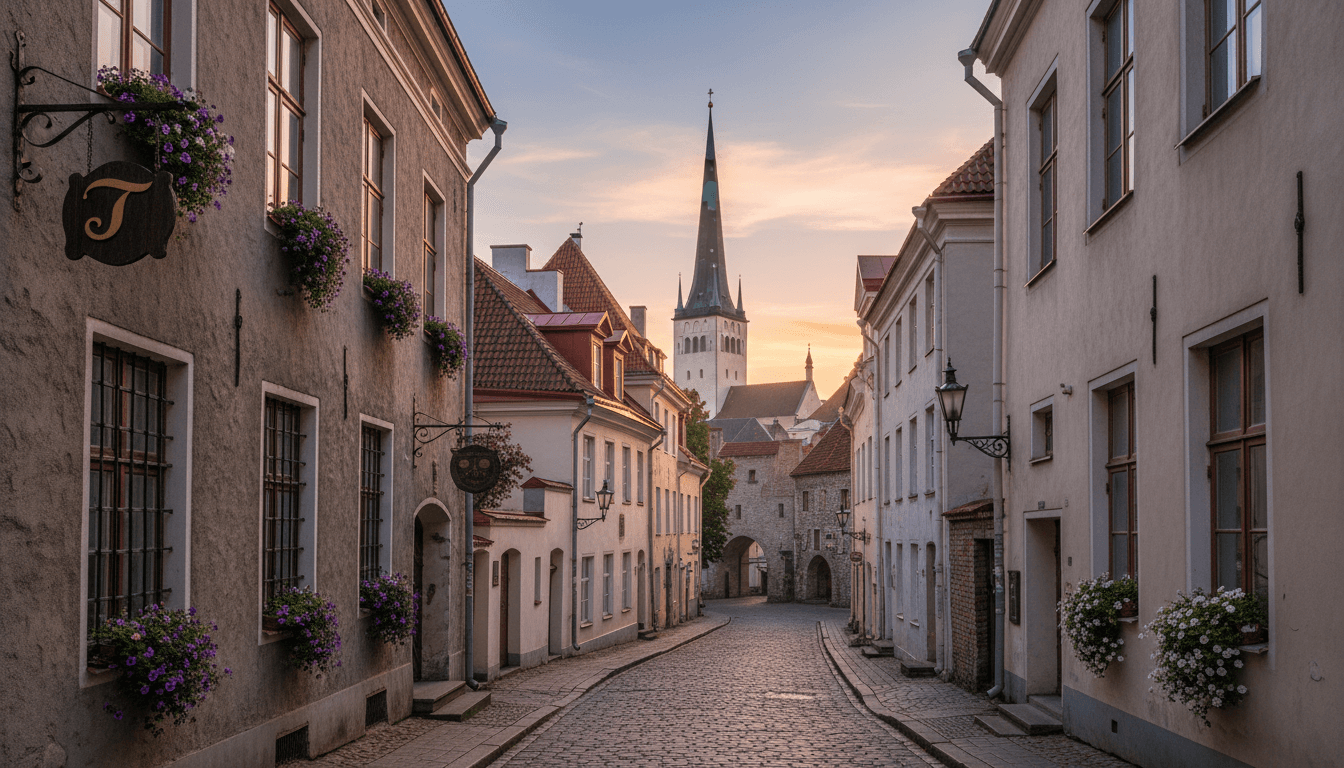
 Early morning light filtering through cobblestone streets of Tallinns Old Town, medieval spires silh
Why Tallinn Home Exchange Is Exploding Right Now
Here's what most travel guides won't tell you: Estonia has quietly become one of Europe's most digitally advanced nations. The same country that gave us Skype now has a population that's incredibly comfortable with platform-based sharing. This cultural shift has transformed the Tallinn home exchange scene from a niche curiosity into a thriving community.
The numbers tell a story. Hotel prices in central Tallinn have climbed 34% since 2019, with average nightly rates now hitting €120-180 ($130-195 USD) for anything decent near Old Town. Meanwhile, home exchange offers the same—often better—locations for the cost of hosting someone in return. No cash changes hands. Just mutual trust and a shared love of authentic travel.
But it's not just about savings.
Tallinn's architecture creates homes you simply can't find elsewhere. We're talking converted medieval merchant houses with original wooden beams. Soviet-era apartments transformed into minimalist Scandinavian retreats. Art Nouveau gems in Kadriorg with ceiling heights that make you gasp. I've stayed in a lot of places through home swapping—forty-plus exchanges across twenty-five countries—and Tallinn properties consistently punch above their weight in terms of character and thoughtful design.
The Best Tallinn Neighborhoods for Home Exchange
Let me save you hours of research. Not all Tallinn neighborhoods are created equal for home exchange, and the right choice depends entirely on what kind of trip you're after.
Old Town (Vanalinn): Medieval Magic, Tourist Reality
Yes, it's touristy. Yes, cruise ship passengers flood the main squares from May through September. But here's the thing—Old Town residents have a secret Tallinn that visitors never see. The courtyard gardens hidden behind heavy wooden doors. The rooftop terraces overlooking church spires. The basement wine bars that don't bother with English menus.
Home exchange properties here tend to be smaller—think cozy studios and one-bedrooms in buildings that predate Columbus. Expect thick stone walls (amazing for summer cool, challenging for winter heating), steep spiral staircases, and the kind of atmosphere that makes you feel like you're living inside a fairy tale.
A comparable Airbnb in Old Town runs €90-150/night ($98-163 USD). Through SwappaHome's credit system, you're looking at 1 credit per night regardless of the property's market value.
Kalamaja: Where Cool Kids and Young Families Collide
This is my personal favorite. Honestly, it's not even close.
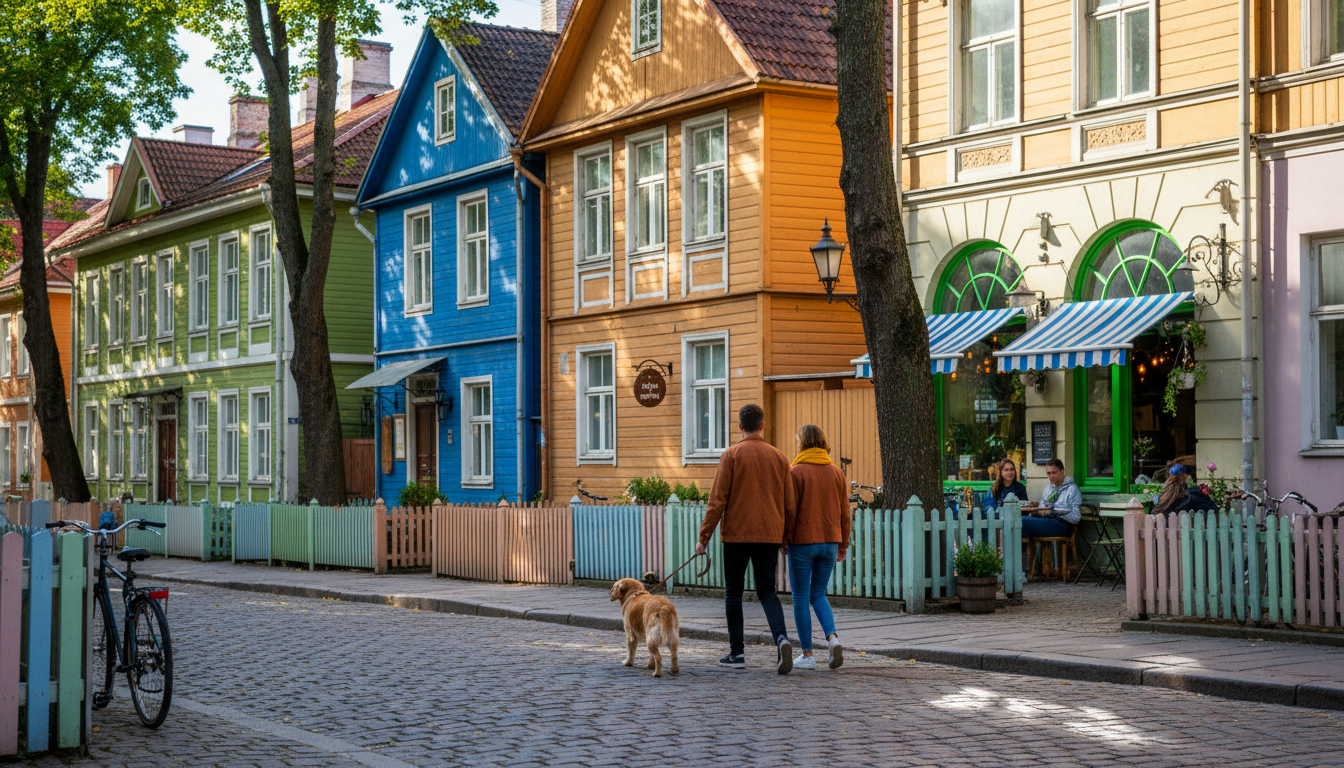 Colorful wooden houses lining a quiet Kalamaja street, bicycles leaning against pastel-painted fence
Kalamaja was Tallinn's working-class district a century ago—fishermen, factory workers, craftspeople. The wooden houses they built have survived wars, Soviet occupation, and now gentrification, emerging as some of the most sought-after real estate in the Baltics.
What you'll find: converted industrial spaces, houses with private gardens (rare in European capitals), and a neighborhood culture that genuinely values community. The Telliskivi Creative City complex anchors the area with restaurants, galleries, and weekend markets that locals actually attend.
For home exchange, Kalamaja offers the best balance of space, authenticity, and livability. Properties here often include features unthinkable in Old Town: full kitchens, washing machines, outdoor space, parking. My Kalamaja exchange last October—a two-bedroom wooden house with a tiny garden—would have cost €110/night on the rental market. Through home exchange? Same credit system. One credit per night.
Kadriorg: Elegance and Green Space
Traveling with kids? Or simply craving nature without leaving the city? Kadriorg deserves serious consideration. Peter the Great built a palace here for his wife Catherine, and the neighborhood has maintained that aristocratic energy ever since.
The Kadriorg Park stretches for acres—formal gardens, forested walking paths, playgrounds, and KUMU, Estonia's flagship art museum. Properties in this area tend toward elegant apartments in early 20th-century buildings, many with original parquet floors and ceramic stoves that still work.
The trade-off? You're a 20-minute tram ride from Old Town. For some travelers, that's a dealbreaker. For others—especially those planning longer stays—it's a feature, not a bug.
Põhja-Tallinn: The Emerging Edge
I'm including this neighborhood because it represents where Tallinn home exchange is heading, not where it's been.
Põhja-Tallinn (North Tallinn) encompasses the Noblessner quarter—a former submarine factory transformed into a waterfront district of restaurants, a yacht harbor, and converted industrial lofts. It's still rough around the edges. Some streets feel gentrified, others feel forgotten.
But the home exchange properties emerging here? Spectacular. Think exposed brick, massive windows, that industrial-chic aesthetic that photographs beautifully. Availability is limited but growing.
Tallinn Home Exchange Trends You Need to Know
The market here moves differently than Western European capitals. Understanding these patterns gives you a genuine advantage.
Seasonality Creates Opportunity
Tallinn's tourist season is compressed and intense. June through August brings long white nights (the sun barely sets), cruise ships, and peak demand. December draws Christmas market crowds. The rest of the year? Surprisingly quiet.
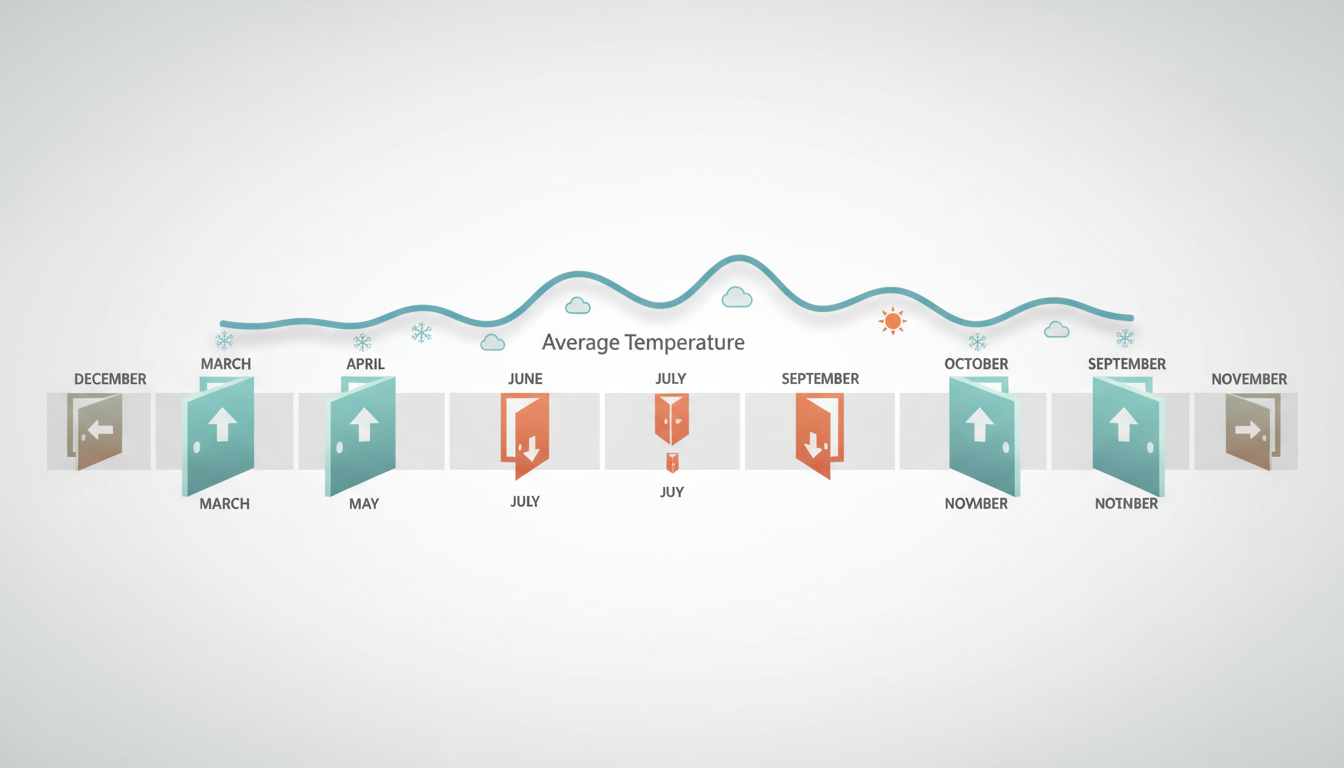 Infographic showing Tallinn home exchange availability by month - high availability March-May and Se
This seasonality creates a strategic opportunity. Estonian homeowners often travel during shoulder seasons—May, September, October—when they can escape before or after the tourist crush. These months also happen to be when Tallinn is arguably at its best: fewer crowds, golden autumn light, reasonable temperatures.
If you're flexible, targeting September or early October gives you the highest chance of finding quality Tallinn home exchange listings with responsive hosts.
The Digital Nomad Effect
Estonia's e-Residency program and startup culture have attracted a significant digital nomad population. Many of these remote workers have settled in Tallinn, purchasing or renting apartments they're willing to exchange when they travel.
What this means for you: an unusually high concentration of well-equipped, workspace-friendly properties. Fast wifi, proper desks, ergonomic chairs—the kind of setup that makes working remotely actually pleasant.
Multi-Week Exchanges Are Rising
I've noticed a distinct trend toward longer exchanges in Tallinn. The city rewards slow travel—there's enough to discover that a week feels rushed, but not so much that a month feels overwhelming.
Local hosts increasingly prefer guests staying 10-14+ nights. It's less turnover, more meaningful connection, and frankly, Tallinn's charm reveals itself gradually. The café owner who remembers your order. The market vendor who sets aside the good stuff. The neighbor who invites you for coffee.
How to Find the Perfect Tallinn Home Exchange
Let's get practical. Here's exactly how I'd approach finding a Tallinn exchange if I were planning a trip today.
Start your search 3-4 months ahead for summer dates, 6-8 weeks for shoulder season. Tallinn's home exchange community is active but not massive—early birds genuinely get better options.
When browsing listings on SwappaHome, filter for your preferred neighborhood first. Then look for these signals of a great exchange partner:
Detailed descriptions matter. Hosts who write specifically about their neighborhood—mentioning the bakery on the corner, the best sunset-watching spot, the tram line to take—tend to be engaged community members who'll make your exchange smooth.
Photo quality reveals care. Not professional photography necessarily, but photos that show the space honestly, including imperfections. I trust a listing with a slightly cluttered bookshelf more than one that looks staged for a magazine.
Review history tells the real story. On SwappaHome, members review each other after exchanges. Look for patterns in feedback—consistent mentions of cleanliness, communication, and accurate descriptions.
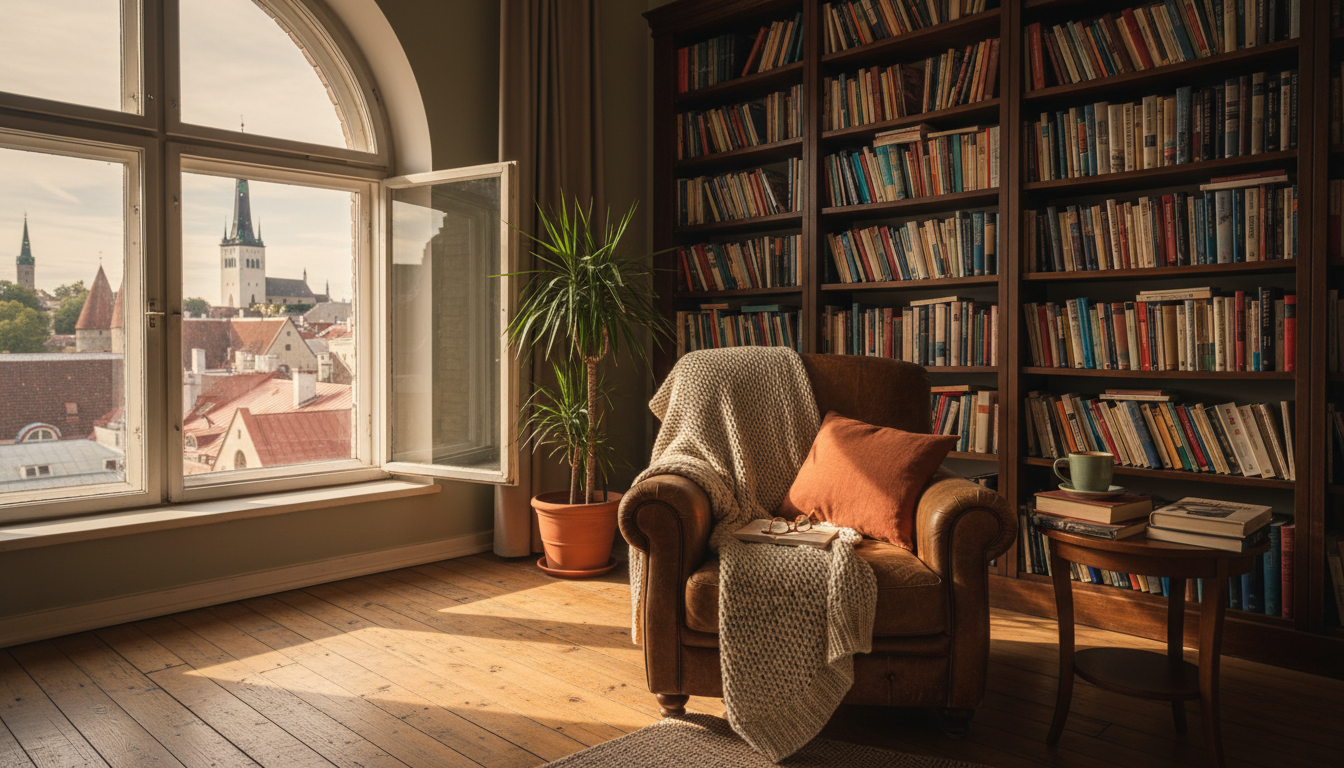 Cozy Tallinn apartment interior with large windows overlooking rooftops, a worn leather reading chai
Once you've identified promising listings, craft a personalized message. Generic requests get generic responses (or none). Mention something specific from their listing. Share a bit about yourself and why Tallinn. Propose specific dates but signal flexibility.
The SwappaHome credit system makes this straightforward—you earn 1 credit for each night you host, spend 1 credit for each night you stay. No negotiating rates, no money exchanging hands between members. New members start with 7 free credits, enough for a solid Tallinn exploration.
What Estonian Hosts Expect (And What to Offer)
Cultural expectations shape every home exchange, and Estonia has its own unwritten rules.
Estonians value privacy and directness. Don't expect effusive warmth in initial messages—it's not coldness, it's cultural. Clear, straightforward communication is appreciated. Say what you mean, ask what you need to know, skip the excessive pleasantries.
Shoes off at the door. Always. This isn't negotiable.
Sauna etiquette matters if the property includes one (many do). Estonians take sauna seriously—it's meditative, not social. If your hosts leave sauna instructions, follow them precisely.
Reciprocity extends beyond the physical exchange. Many Estonian hosts appreciate small gestures: a handwritten note, a specialty food item from your home region, leaving the apartment cleaner than you found it.
For your own listing, emphasize what makes your home genuinely useful. Estonians travel frequently—often to warmer climates in winter, nature destinations in summer. If your home offers something Tallinn doesn't (beach access, mountain proximity, reliable sunshine), highlight it.
The Real Costs: Tallinn Living on a Home Exchange Budget
Accommodation solved, let's talk about everything else.
Tallinn is remarkably affordable by Northern European standards. A quality lunch in Kalamaja runs €8-12 ($9-13 USD). Dinner at a well-regarded restaurant: €25-40 ($27-43 USD) per person with wine. Coffee culture is strong—expect €3-4 ($3.25-4.35 USD) for an excellent flat white.
Groceries at Rimi or Selver supermarkets cost roughly 30% less than equivalent items in Stockholm or Helsinki. The Balti Jaama Turg market offers local produce, Estonian cheese, and smoked fish at prices that feel almost apologetic.
Public transport is free for Tallinn residents and €2 ($2.17 USD) per ride for visitors, or €5 ($5.43 USD) for a day pass. The tram network is excellent, buses fill gaps, and the city center is genuinely walkable.
 Bustling Balti Jaama Turg market hall with vendors selling fresh bread, local honey, and smoked fish
Here's a realistic daily budget breakdown for a home exchange stay:
- Accommodation: 1 SwappaHome credit (no cash cost)
- Breakfast at home: €5 ($5.43 USD) in groceries
- Coffee and pastry: €6 ($6.52 USD)
- Lunch out: €12 ($13 USD)
- Transport: €4 ($4.35 USD)
- Dinner and drinks: €35 ($38 USD)
- Museum/activity: €10 ($10.87 USD)
Daily total: approximately €72 ($78 USD)
Compare that to a hotel-based trip where accommodation alone runs €130-180 ($141-195 USD) per night. Home exchange doesn't just save money—it fundamentally changes what's financially possible.
Timing Your Tallinn Home Exchange
Let me be specific about when to visit, because Tallinn's character shifts dramatically with the seasons.
May-June: The city awakens. Outdoor terraces open, daylight stretches past 10 PM, locals emerge from winter hibernation. Early June brings the White Nights period—eerie, beautiful, and slightly disorienting. Home exchange availability is moderate; book 2-3 months ahead.
July-August: Peak season. Cruise ships, tour groups, crowded Old Town. But also: outdoor concerts, beach weather at Pirita, the legendary Song Festival grounds coming alive. Home exchange is competitive—start searching 4+ months early.
September-October: My favorite window. Tourist crowds thin, autumn colors transform Kadriorg into something magical, cultural season kicks off with theater and concerts. Estonian hosts travel frequently during this period, making home exchange availability excellent.
November-February: Dark, cold, and honestly magical if you embrace it. Christmas markets in December draw crowds, but January-February offers Tallinn at its most authentic. Prices drop, availability increases, and you'll have cafés and museums nearly to yourself.
March-April: Shoulder season's shoulder season. Snow melts, days lengthen, but it's not quite spring. Fewer tourists than any other time. Great for focused work trips or travelers who prioritize solitude.
Making Your Tallinn Exchange Unforgettable
A few final thoughts from someone who's done this enough to know what matters.
Ask your host for their actual recommendations—not the tourist list, but where they personally go. The neighborhood pub. The bakery with the best bread. The park bench with the best view. These details transform a trip.
Learn a few Estonian phrases. "Tere" (hello), "Aitäh" (thank you), "Palun" (please). Estonians don't expect foreigners to speak their language, which makes the effort more meaningful.
Plan at least one day trip. Lahemaa National Park (an hour east) offers pristine Baltic coastline, Soviet-era fishing villages, and forests that feel prehistoric. The islands—Saaremaa, Hiiumaa—deserve their own trip but can be sampled in a long day.
And perhaps most importantly: slow down. Tallinn rewards patience. The best experiences I've had here came from unscheduled hours—wandering without a destination, accepting invitations from strangers, letting the city reveal itself on its own timeline.
That's what home exchange makes possible. You're not racing through a checklist, anxious about maximizing your expensive hotel nights. You're living somewhere, temporarily. And Tallinn is a very good place to live.
If you're ready to explore the Tallinn home exchange market, SwappaHome's community includes Estonian hosts across all the neighborhoods I've mentioned. The credit system keeps things simple—host guests at your place, earn credits, spend them in Tallinn or anywhere else members have listed homes. No complicated negotiations, no money changing hands between members.
I'll be honest: I didn't expect to fall for Tallinn as hard as I did. It's not the most famous European capital, not the most obvious choice. But standing in that bakery at 6 AM, sharing curd cake with a stranger who became something like a friend—I understood why some places grab you and don't let go.
Tallinn might just do that to you too.
Frequently Asked Questions
Is Tallinn home exchange safe for first-time swappers?
Tallinn is exceptionally safe for home exchange newcomers. Estonia ranks among Europe's lowest-crime nations, and the local home exchange community tends toward experienced, respectful travelers. SwappaHome's review system helps you identify trustworthy hosts—look for members with consistent positive feedback. Getting your own travel insurance adds extra peace of mind.
How much can I save with Tallinn home exchange versus hotels?
The savings are substantial. Central Tallinn hotels average €130-180 ($141-195 USD) nightly, while home exchange costs 1 credit per night regardless of property value. For a two-week stay, you're looking at potential savings of €1,800-2,500 ($1,950-2,700 USD) on accommodation alone—money that transforms your entire trip budget.
What's the best time of year for Tallinn home exchange availability?
September through November offers the sweet spot of high availability and pleasant conditions. Estonian hosts frequently travel during autumn, and you'll avoid summer tourist crowds. For Christmas market visits, book December exchanges 3-4 months ahead. January-February sees lowest demand and highest availability.
Do I need to speak Estonian for home exchange in Tallinn?
No—English proficiency in Tallinn is excellent, especially among the demographic likely to participate in home exchange. Younger Estonians and professionals communicate comfortably in English. Learning basic phrases (tere, aitäh) is appreciated but not required. All SwappaHome communication happens in English.
Which Tallinn neighborhood is best for home exchange with families?
Kadriorg stands out for family-friendly home exchanges. The neighborhood offers expansive parkland, playgrounds, the KUMU children's programs, and properties with more space than cramped Old Town apartments. Kalamaja is a close second, with its village-like atmosphere and family-oriented cafés. Both neighborhoods provide the kitchen access and laundry facilities families need.

Published by
SwappaHome
SwappaHome Editorial Team
Home Exchange & Slow Travel Editorial
The SwappaHome Editorial Team brings together travel research, home-exchange community insights, and platform data to produce practical guides for first-time and experienced home swappers. Every article cites real platforms, current market rates, and verifiable city-level facts so readers can make informed decisions without guessing.
Ready to try home swapping?
Join SwappaHome and start traveling by exchanging homes. Get 7 free credits when you sign up!
Related articles

Bachelor and Bachelorette Parties in Singapore: The Complete Home Swap Group Guide for 2026
Planning a bachelor or bachelorette party in Singapore? Discover how home swapping lets groups of 6-12 stay together in luxury condos, saving thousands while partying in Marina Bay.

Cycling in Lisbon: 7 Home Swap Bike Tour Itineraries for Every Rider
Discover the best cycling routes in Lisbon with these home swap bike tour itineraries—from waterfront paths to hilltop adventures, all starting from your borrowed home.

Graduation Trip to Barcelona: How Home Swapping Gives New Graduates the Ultimate Celebration
Planning a graduation trip to Barcelona? Discover how home swapping lets new graduates explore Spain's most vibrant city without the hostel crowds or hotel costs.