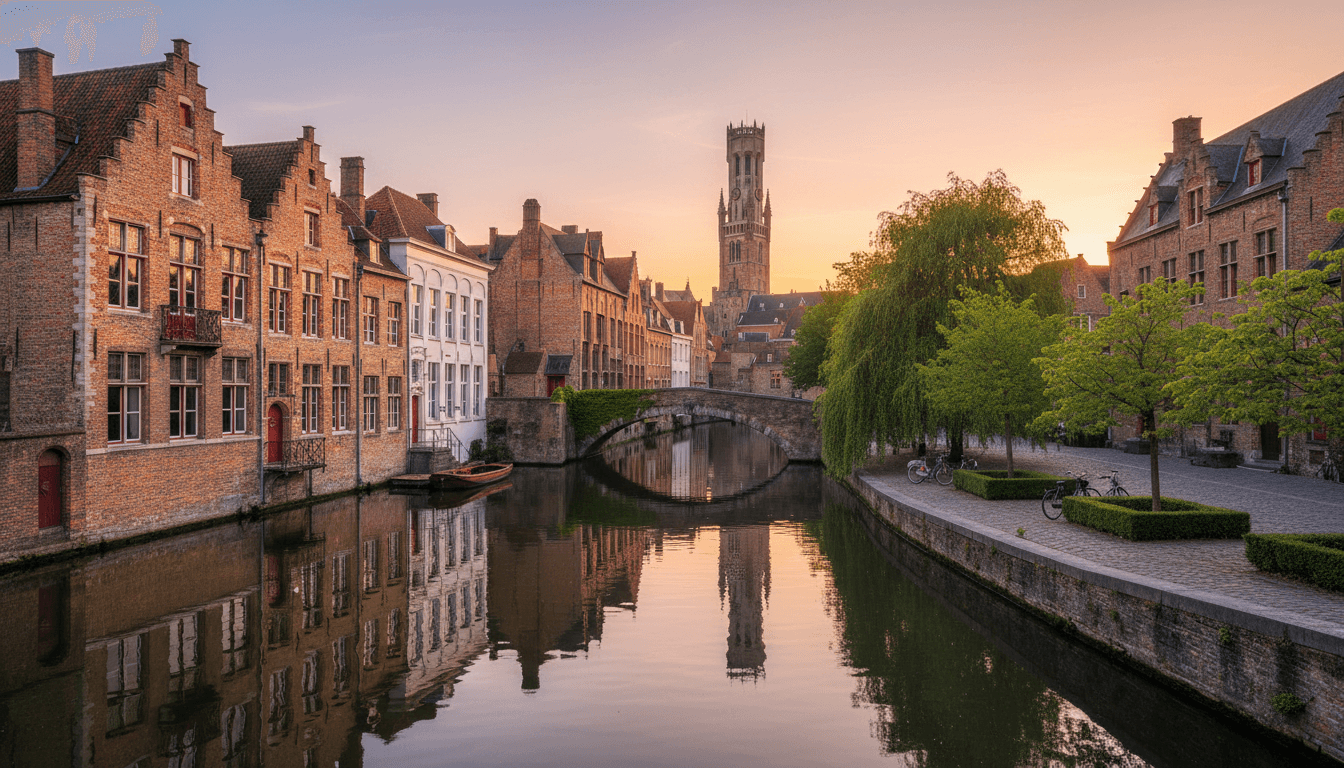
Hidden Gems in Bruges for Home Exchange: 7 Underrated Neighborhoods Locals Love

SwappaHome Editorial Team
Home Exchange & Slow Travel Editorial
Skip the tourist crowds and discover Bruges' best-kept secrets. These underrated neighborhoods offer authentic Belgian life and perfect home swap opportunities.
The first time I visited Bruges, I made the classic mistake. I booked a hotel steps from the Markt, congratulated myself on the "perfect location," and spent three days dodging selfie sticks while paying €7 for a mediocre coffee. The medieval architecture was stunning, sure, but I felt like I was walking through a theme park rather than a living city.
Three years later, I returned for a home exchange in Sint-Anna—a neighborhood I'd never even heard of—and discovered an entirely different Bruges. My host's 17th-century townhouse sat on a quiet canal where the only sounds were church bells and the occasional duck. The nearest tourist was a fifteen-minute walk away. I paid nothing for accommodation and finally understood why Belgians roll their eyes when people call their city "touristy."
Here's the thing: the hidden gems in Bruges for home exchange aren't hidden at all. They're just ignored by travelers who don't know to look beyond the chocolate shops and lace stores of the historic center. If you're considering a home swap in this fairy-tale city, these underrated neighborhoods will give you the authentic experience—and the kind of stay you'll actually remember.
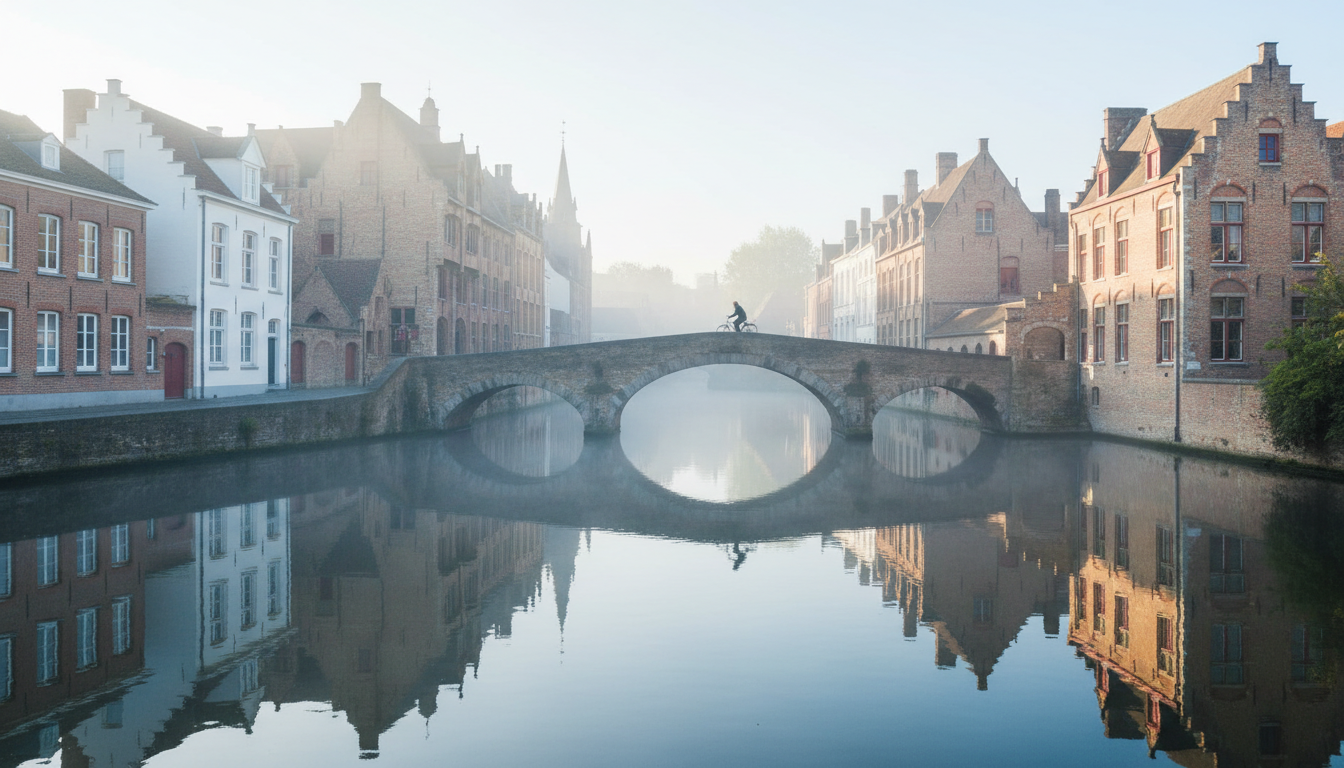 Early morning mist rising over a quiet canal in Sint-Anna, Bruges, with a lone cyclist crossing a st
Why Underrated Bruges Neighborhoods Make Better Home Exchanges
Let me be honest with you: the historic center of Bruges is genuinely magical. Those stepped-gable houses, the Belfry tower, the canals threading between ancient buildings—it's all real, and it's spectacular. But living there? That's a different story.
Home exchanges in Bruges' tourist core come with trade-offs most travelers don't anticipate. You'll hear horse carriages clattering past at 7 AM. Restaurant prices assume you're a day-tripper who won't notice the markup. And good luck finding a parking spot if your host leaves you their car.
The underrated areas I'm about to share flip that script entirely. You get the same proximity to Bruges' highlights—nothing in this city is more than a 20-minute walk or 8-minute bike ride from anywhere else—but you also get neighborhood bakeries where a perfect croissant costs €1.50 instead of €4. Actual Belgians as neighbors who might invite you for an aperitif. Quiet evenings on a terrace without tour group chatter. Parking. Glorious, free, abundant parking. And homes with gardens, spare bedrooms, and the kind of character that Airbnbs in the center can't match.
On SwappaHome, I've noticed that listings in these neighborhoods often sit longer than center properties—which is wild, because they're objectively better for anyone staying more than two nights. Their loss, your gain.
Sint-Anna: The Authentic Bruges Home Exchange Sweet Spot
If I had to pick one neighborhood for a first-time Bruges home swap, Sint-Anna wins without hesitation. It's where I stayed during that transformative second visit, and it's where I send everyone who asks me about hidden gems in Bruges.
Sint-Anna sits just east of the historic center, separated by the ring canal but connected by several picturesque bridges. The transition is almost comical—one minute you're in postcard Bruges, the next you're in a residential quarter where locals actually live, work, and argue about whose turn it is to sweep the sidewalk.
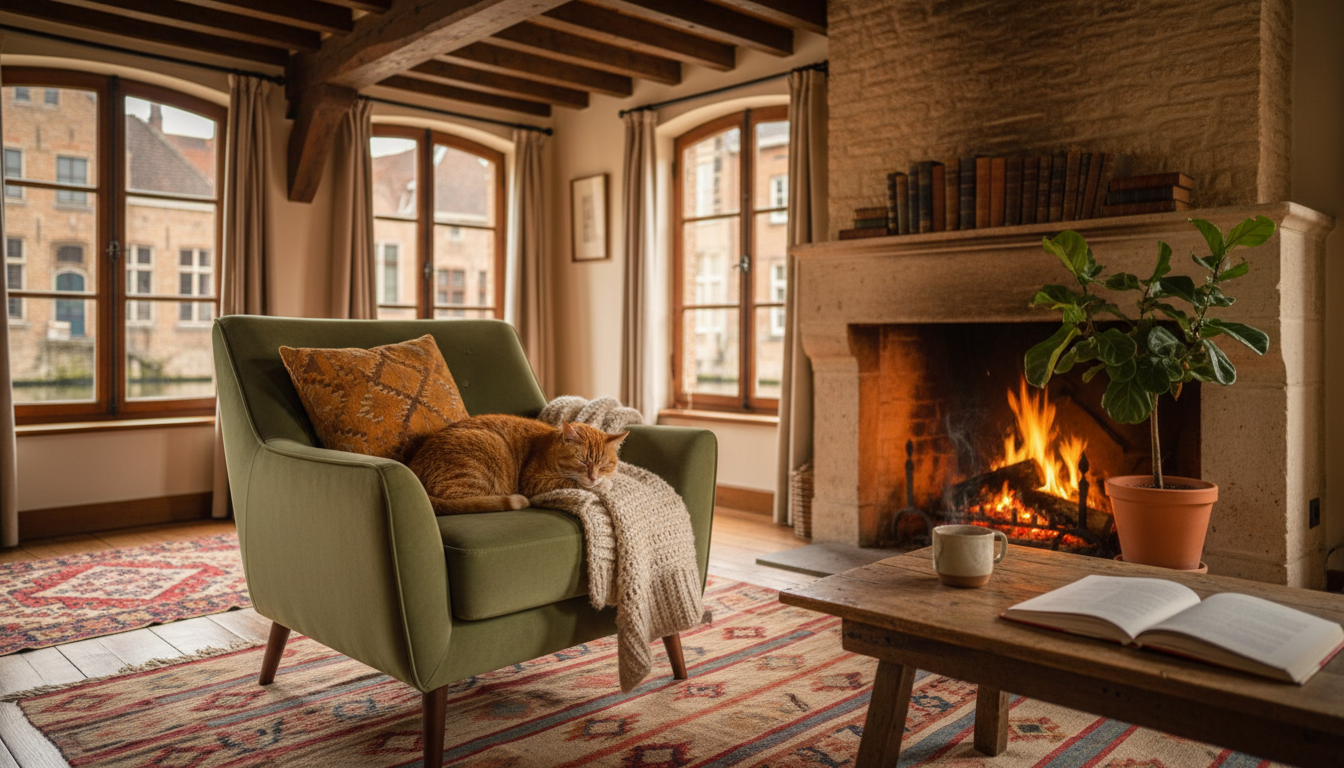 A cozy living room inside a traditional Bruges townhouse with exposed wooden beams, a fireplace, tal
What Makes Sint-Anna Special for Home Exchange
The architecture here is just as historic as the center—we're talking 16th and 17th-century guild houses, almshouses (called "godshuizen"), and converted warehouses. But because there are no major museums or attractions, most tourists never cross the canal to explore.
During my stay, I discovered the Jerusalem Church, this bizarre, beautiful 15th-century church built by a wealthy family after their pilgrimage to Jerusalem. It's one of the oldest private churches in Europe, and I had it entirely to myself on a Tuesday morning. Then there's the Lace Centre—okay, this sounds touristy, but it's actually a working lace school where elderly Belgian women practice a dying art. Watching them work in silence, their bobbins clicking rhythmically, was unexpectedly moving.
And Café Vlissinghe? Allegedly the oldest pub in Bruges (since 1515), with a garden terrace that locals guard jealously. A Brugse Zot beer here costs €4; the same beer in the Markt costs €7.
Sint-Anna Home Exchange Practicalities
Properties here range from compact canal houses to larger family homes with gardens. You'll find 2-3 bedroom homes averaging 80-120 square meters, many with private terraces or small gardens. Street parking is usually available and free, the closest supermarket (Delhaize) is a 5-minute walk, and you're 12 minutes on foot from the Markt—8 minutes by bike.
On SwappaHome, Sint-Anna listings tend to be owned by professionals in their 30s-50s. The kind of people who chose the neighborhood deliberately and take pride in sharing it with fellow travelers.
Sint-Gillis: The Creative Bruges Neighborhood Nobody Talks About
South of the center, across the Coupure canal, Sint-Gillis feels like a different city entirely. This is where Bruges' artists, musicians, and young families have gravitated as the center became increasingly devoted to tourism.
I stumbled onto Sint-Gillis during a home exchange research trip last year. My host in Sint-Anna had mentioned it offhandedly—"Oh, Sint-Gillis has the best coffee in Bruges"—and I spent an afternoon exploring. She wasn't wrong.
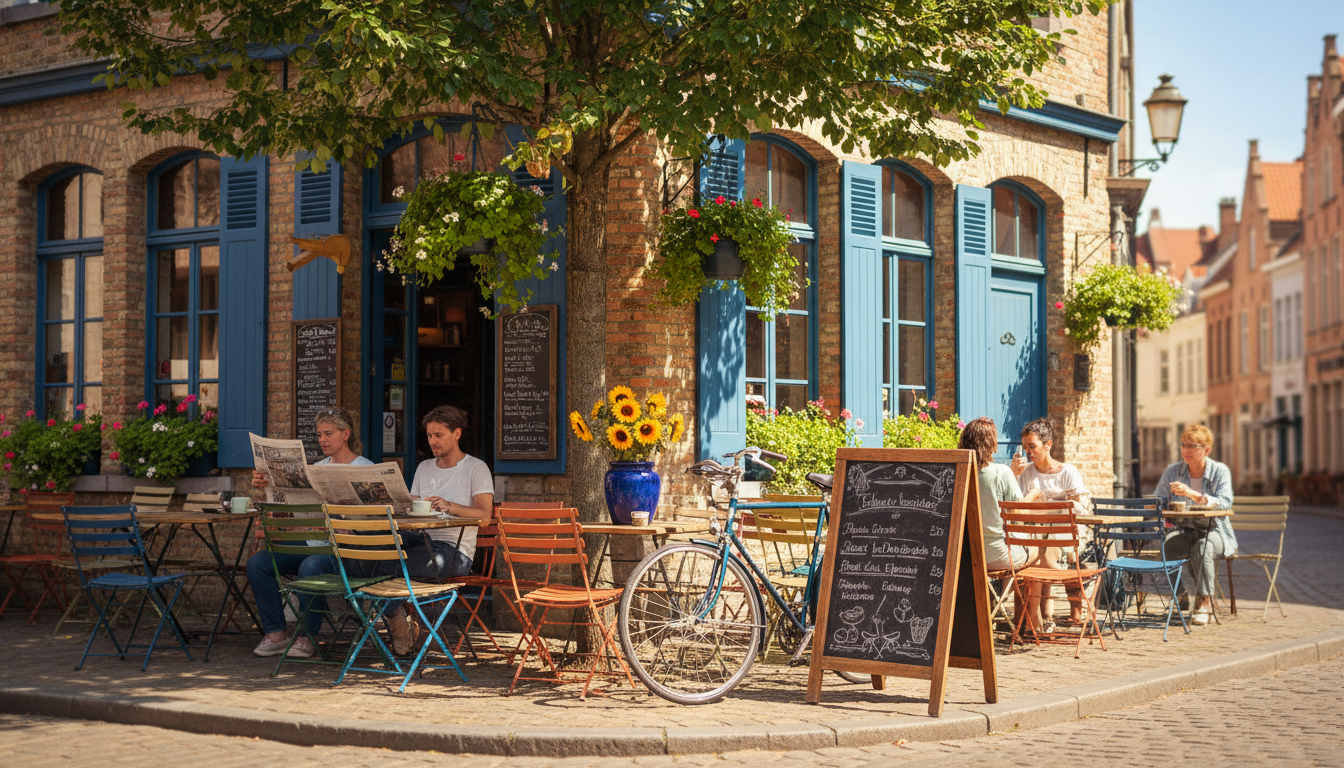 A sunny corner caf terrace in Sint-Gillis with mismatched vintage furniture, locals reading newspape
The Sint-Gillis Vibe
Imagine a neighborhood where the butcher knows everyone's name, where the wine bar hosts poetry readings, and where the most exciting thing that happens on a Saturday is the weekly market in the church square. That's Sint-Gillis.
Koffieboontje is a third-wave coffee roaster that would fit seamlessly into Portland or Melbourne. Their filter coffee (€3.50) is genuinely excellent, and the owner will happily spend twenty minutes explaining bean origins if you're interested. Sint-Gillis Church is a Gothic beauty that hosts classical concerts throughout the year—I caught a Bach recital for €15 that would have cost €40 in the center. And the Saturday Market? Farmers, cheese makers, bread bakers, and flower sellers set up around the church every Saturday morning. This is where locals do their actual shopping, not the tourist-oriented market near the Burg.
Why Home Exchange Works Here
Sint-Gillis attracts a slightly younger demographic than Sint-Anna. Many homes here are renovated workers' cottages or converted industrial spaces—think exposed brick, high ceilings, and the kind of design-forward interiors that photograph beautifully.
The neighborhood is 15 minutes walking to the Markt, 5 minutes cycling to the train station, surrounded by excellent local restaurants where dinner for two with wine runs €50-70. Quieter than quiet—I've never heard a tourist here.
Christus-Koning: Bruges' Best-Kept Home Exchange Secret
I'll admit I hadn't heard of Christus-Koning until a SwappaHome member mentioned it in a forum thread. "Best neighborhood in Bruges," she wrote, "and nobody from outside Belgium knows it exists." She was right on both counts.
Christus-Koning (Christ the King) sits northwest of the center, a residential district developed primarily in the early 20th century. The architecture is Art Deco and interwar modernism—a striking contrast to the medieval center—and the streets are lined with mature trees that form green tunnels in summer.
What You'll Find in Christus-Koning
This is suburban Bruges in the best possible way. Families with children, retirees tending immaculate gardens, professionals who commute to Brussels but refuse to leave their hometown. The pace is slow, the neighbors are friendly, and the housing stock is exactly what makes home exchange worthwhile: spacious homes with multiple bedrooms, gardens, garages, and all the amenities that hotels and center apartments lack.
The Boeveriepoort is a medieval city gate that marks the boundary between old and new Bruges—walking through it feels like time travel. Tillegem Castle Park is a 10-minute bike ride from Christus-Koning, this stunning park with a moated castle, forest trails, and almost no tourists. Perfect for morning runs or afternoon picnics. And the local bakeries? Christus-Koning has at least four excellent ones within a 5-minute radius. My favorite, Bakkerij Vandaele, makes a speculoos tart that I still dream about.
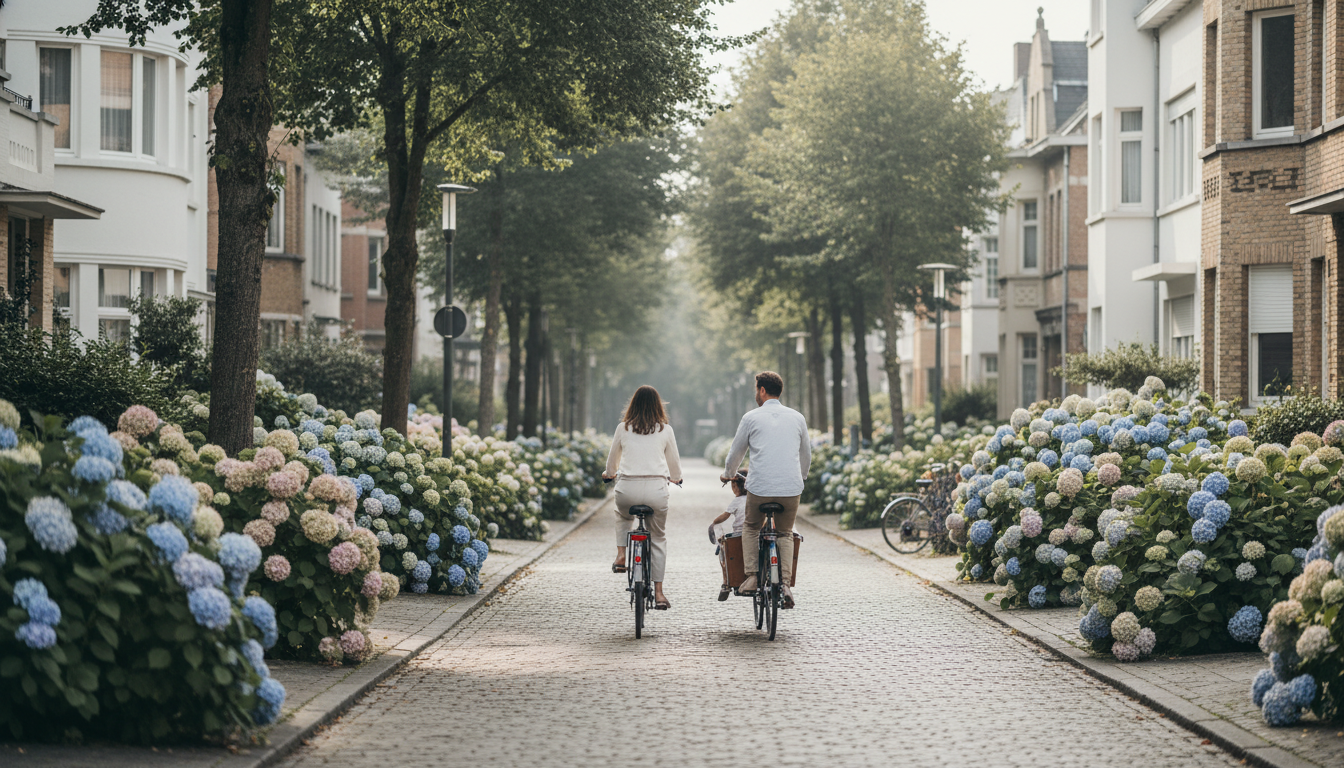 A tree-lined residential street in Christus-Koning with Art Deco houses, front gardens full of hydra
The Christus-Koning Home Exchange Profile
Homes here tend to be larger than anywhere else I'm mentioning—think 3-4 bedrooms, proper gardens, sometimes even swimming pools. If you're traveling with family or a group, this neighborhood offers space that simply doesn't exist in the historic center.
You're 20 minutes walking to the Markt (or 7 minutes by bike), with excellent bus connections to the center and train station. Multiple supermarkets within walking distance, free parking everywhere. Very safe, very quiet, very residential.
Sint-Pieters: The Student Quarter with Surprising Home Exchange Potential
Bruges has a small but vibrant university presence, and Sint-Pieters is where much of that academic energy concentrates. Located south of the station, this neighborhood might seem an unlikely home exchange destination—but hear me out.
Sint-Pieters offers something the other neighborhoods don't: genuine urban energy. There are late-night bars, international restaurants, vintage shops, and the kind of creative chaos that comes with a young population. If you're under 40 and find the historic center a bit... sleepy, Sint-Pieters might be your speed.
Sint-Pieters Highlights
The Concertgebouw is Bruges' contemporary concert hall, a striking piece of modern architecture that hosts everything from classical performances to electronic music. It's a 5-minute walk from Sint-Pieters. The station area itself is worth exploring—Bruges' train station is a beautiful Art Nouveau building, and the surrounding streets have some of the city's best international food. Thai, Vietnamese, Turkish, Ethiopian—all at local prices. And yes, Minnewater Park—the famous "Lake of Love"—is technically at the edge of Sint-Pieters. Touristy? Yes. Still romantic at sunset? Also yes.
Home Exchange Considerations
Sint-Pieters homes tend to be apartments rather than houses—often in converted mansions or purpose-built buildings from the early 20th century. The trade-off for less space is more urban convenience and a livelier atmosphere.
This neighborhood works best for solo travelers or couples, people arriving by train (the station is right there), anyone who wants nightlife options, and travelers who don't need a car.
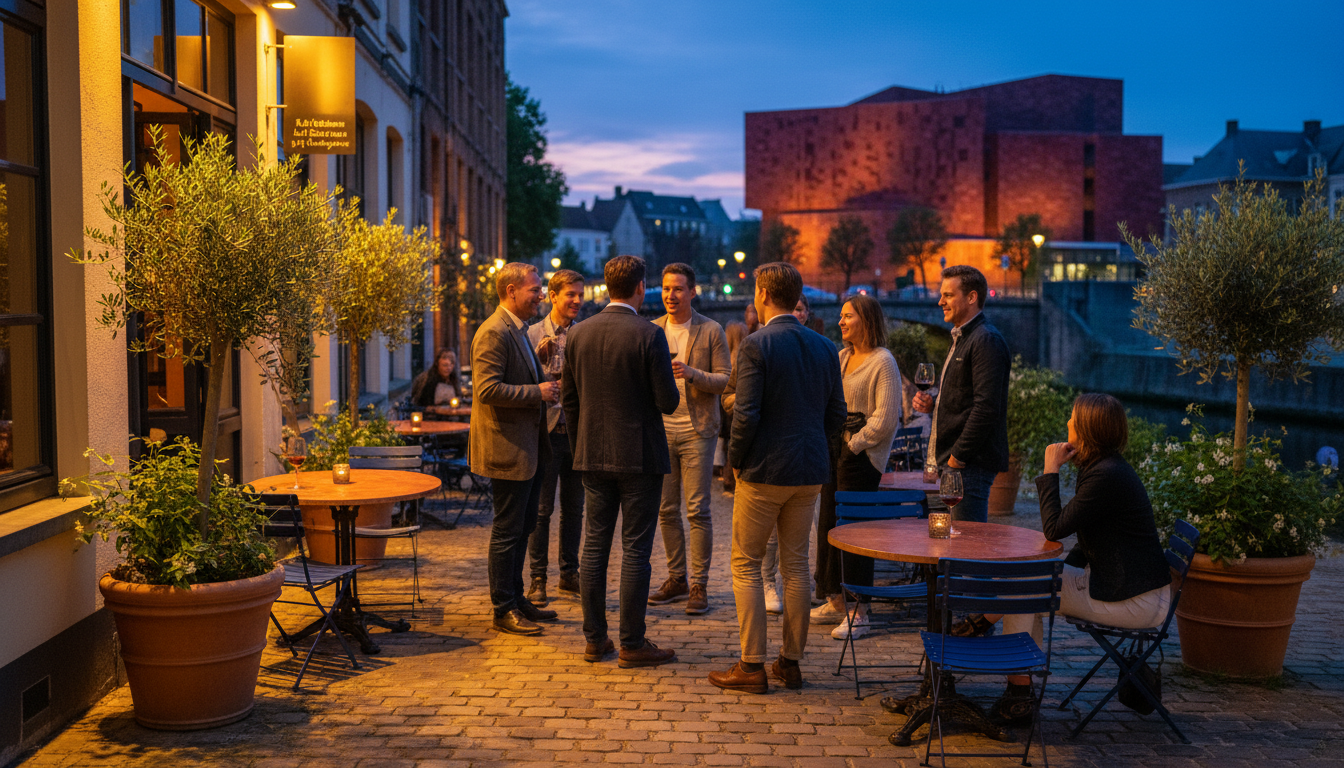 Evening scene outside a cozy wine bar in Sint-Pieters, with warm light spilling onto the sidewalk, y
Assebroek: The Underrated Bruges Suburb for Family Home Exchanges
Okay, I'll be honest: Assebroek isn't technically Bruges. It's a separate municipality that was absorbed into Greater Bruges in 1971, and it retains a distinct village identity. But for families doing home exchanges, it's worth serious consideration.
Assebroek sits about 3 kilometers east of the center, connected by excellent cycling infrastructure and regular buses. The vibe is quintessentially Flemish suburban: tidy houses with manicured lawns, children playing in the streets, and a village center with everything you need.
Why Families Love Assebroek
The homes here are built for Belgian family life. Large gardens (often with trampolines, swing sets, or pools), multiple bedrooms and bathrooms, garages and ample parking, quiet, safe streets where kids can roam, and prices significantly lower than anything closer to the center.
My friends from Portland did a home exchange in Assebroek with their three kids last summer. They raved about the space—their hosts' house had four bedrooms, a huge garden, and a dedicated playroom. Their kids made friends with the neighbors' children within hours, despite speaking no Dutch. "We barely went into the center," my friend admitted. "The kids just wanted to play in the garden and bike around the neighborhood."
Assebroek Practicalities
You'll need transportation here—either bikes (which most hosts provide) or a car. The cycling infrastructure is excellent, with dedicated paths connecting Assebroek to central Bruges in about 15 minutes.
The village center has a large supermarket (Colruyt), several bakeries and butchers, a weekly market, parks and playgrounds, and a community swimming pool.
How to Find Hidden Gem Home Exchanges in Bruges
Now that you know where to look, let's talk about how to actually secure these swaps. The underrated Bruges neighborhoods I've described aren't overflowing with home exchange listings—which is precisely what makes them special.
Be Specific in Your Search
When browsing SwappaHome, don't just search "Bruges." Look at the map view and zoom into specific neighborhoods. Many hosts list their exact location, and you can quickly identify properties outside the tourist core.
Reach Out Proactively
Some of the best home exchanges I've done started with me messaging hosts whose listings weren't available for my dates. "I noticed your home in Sint-Anna—I'd love to stay there in October if you're ever looking for a San Francisco swap." This kind of direct outreach has about a 30% success rate in my experience, which is excellent.
Mention the Neighborhood
When you contact hosts in these areas, mention specifically why you're interested in their neighborhood. "I've heard Sint-Gillis has the best coffee in Bruges" or "I'm looking for somewhere quiet where I can write" shows you've done your research and aren't just mass-messaging every Bruges listing.
Be Flexible on Dates
Bruges is a year-round destination, but the hidden gem neighborhoods are especially appealing in shoulder seasons. Spring (April-May) and fall (September-October) offer mild weather, fewer tourists, and hosts who are more likely to travel themselves.
The Economics of Hidden Gem Home Exchanges in Bruges
Let's talk money, because the savings from home exchange in these neighborhoods are genuinely significant.
A hotel in central Bruges runs €150-250/night for anything decent. Airbnbs in the historic center average €120-180/night. Even budget options rarely dip below €80.
With home exchange, you're spending credits—on SwappaHome, it's 1 credit per night regardless of the property. New members get 7 free credits, which means your first week in Bruges could cost you literally nothing for accommodation.
But the hidden gem neighborhoods add another layer of savings. Restaurant meals run €15-25/person versus €30-45 in the center. Coffee is €2-3.50 versus €5-7. Groceries are normal Belgian prices versus tourist markup. Parking is free versus €20-30/day. And bikes? Often provided by hosts versus €15/day rental.
During my Sint-Anna stay, I calculated that I spent about €40/day on food, drinks, and activities—roughly half what I'd spent during my first Bruges trip staying in the center. Over a week, that's €200+ in savings on top of the accommodation.
Making the Most of Your Hidden Gem Home Exchange
A few final tips from someone who's done this.
Ask your hosts for recommendations. People who live in these neighborhoods have strong opinions about the best bakeries, the quietest canal walks, the restaurants where locals actually eat. Their suggestions will be infinitely better than any guidebook.
Get a bike. Bruges is tiny and flat, and cycling is how locals get around. Most hosts in residential neighborhoods have bikes you can borrow. If not, rental shops charge about €12/day.
Embrace the rhythm. The beauty of staying in a residential neighborhood is experiencing daily life. Go to the bakery in the morning. Have an aperitif at the local café. Chat with the neighbors if your Dutch is up to it (or just smile and wave). This is what travel should feel like.
Don't skip the center entirely. Yes, I've spent this entire article telling you to avoid the tourist core—but Bruges' historic center is genuinely magnificent. Visit it like a local: early morning for empty streets, late evening for golden light, and never during cruise ship hours (10 AM - 4 PM).
Your Hidden Bruges Awaits
I think about that first Bruges trip sometimes—the crowded squares, the overpriced waffles, the feeling that I was seeing a city performing for tourists rather than living its actual life. It wasn't bad, exactly. Just hollow.
The Bruges I discovered through home exchange is a completely different place. It's a city of quiet canals and neighborhood bakeries, of elderly men playing cards in corner cafés and children biking to school along tree-lined paths. It's a place where you can wake up to church bells, make coffee in someone's sunny kitchen, and spend the day exploring without ever feeling like a tourist.
These hidden gems—Sint-Anna, Sint-Gillis, Christus-Koning, Sint-Pieters, Assebroek—aren't really hidden. They're just waiting for travelers curious enough to look beyond the postcard.
If you're ready to discover the real Bruges, SwappaHome has listings in all these neighborhoods. Browse the map, reach out to hosts, and start planning. Your fairy-tale city is waiting—just not where you expected to find it.
Frequently Asked Questions
Is home exchange in Bruges safe for first-time swappers?
Absolutely. Bruges is one of the safest cities in Europe, and home exchange adds another layer of security through community accountability. SwappaHome's review system means hosts have reputations to maintain. I'd recommend getting your own travel insurance for peace of mind, but I've never had a safety concern in any Bruges neighborhood.
How far are the hidden gem Bruges neighborhoods from the city center?
All the neighborhoods I've mentioned are within 20 minutes walking or 10 minutes cycling from the Markt. Sint-Anna is closest (12 minutes walk), while Assebroek is furthest (15 minutes by bike). Bruges is genuinely tiny—nothing feels far away.
What's the best time of year for a Bruges home exchange?
Spring (April-May) and fall (September-October) offer the best combination of pleasant weather, manageable crowds, and available home swaps. Summer is beautiful but busier, while winter has magical Christmas markets but cold, damp weather. Hosts in residential neighborhoods travel year-round, so you'll find options in any season.
Do I need a car for home exchange in Bruges' outer neighborhoods?
Not really. Bruges has excellent cycling infrastructure, and most hosts provide bikes. Christus-Koning and Assebroek are slightly more car-friendly, but even there, you can manage perfectly well with bikes and occasional buses. Only consider a car if you're planning extensive day trips to other Belgian cities.
How much money can I save with home exchange versus hotels in Bruges?
A week in central Bruges hotels costs €1,000-1,750 for accommodation alone. Add tourist-area restaurant prices, and you're looking at €1,500-2,500 total. With home exchange in a hidden gem neighborhood, your accommodation costs nothing (just SwappaHome credits), and local prices save you another 30-40% on food and activities. Realistic savings: €1,000-1,500 per week.

Published by
SwappaHome
SwappaHome Editorial Team
Home Exchange & Slow Travel Editorial
The SwappaHome Editorial Team brings together travel research, home-exchange community insights, and platform data to produce practical guides for first-time and experienced home swappers. Every article cites real platforms, current market rates, and verifiable city-level facts so readers can make informed decisions without guessing.
Ready to try home swapping?
Join SwappaHome and start traveling by exchanging homes. Get 7 free credits when you sign up!
Related articles

Bachelor and Bachelorette Parties in Singapore: The Complete Home Swap Group Guide for 2026
Planning a bachelor or bachelorette party in Singapore? Discover how home swapping lets groups of 6-12 stay together in luxury condos, saving thousands while partying in Marina Bay.
Cycling in Lisbon: 7 Home Swap Bike Tour Itineraries for Every Rider
Discover the best cycling routes in Lisbon with these home swap bike tour itineraries—from waterfront paths to hilltop adventures, all starting from your borrowed home.
Graduation Trip to Barcelona: How Home Swapping Gives New Graduates the Ultimate Celebration
Planning a graduation trip to Barcelona? Discover how home swapping lets new graduates explore Spain's most vibrant city without the hostel crowds or hotel costs.