Home Exchange in Bangkok: The Complete First-Timer's Guide to Thailand's Capital

SwappaHome Editorial Team
Home Exchange & Slow Travel Editorial
Discover how home exchange in Bangkok lets you experience Thailand's capital like a local—from Sukhumvit condos to Thonglor townhouses—while saving thousands on accommodation.
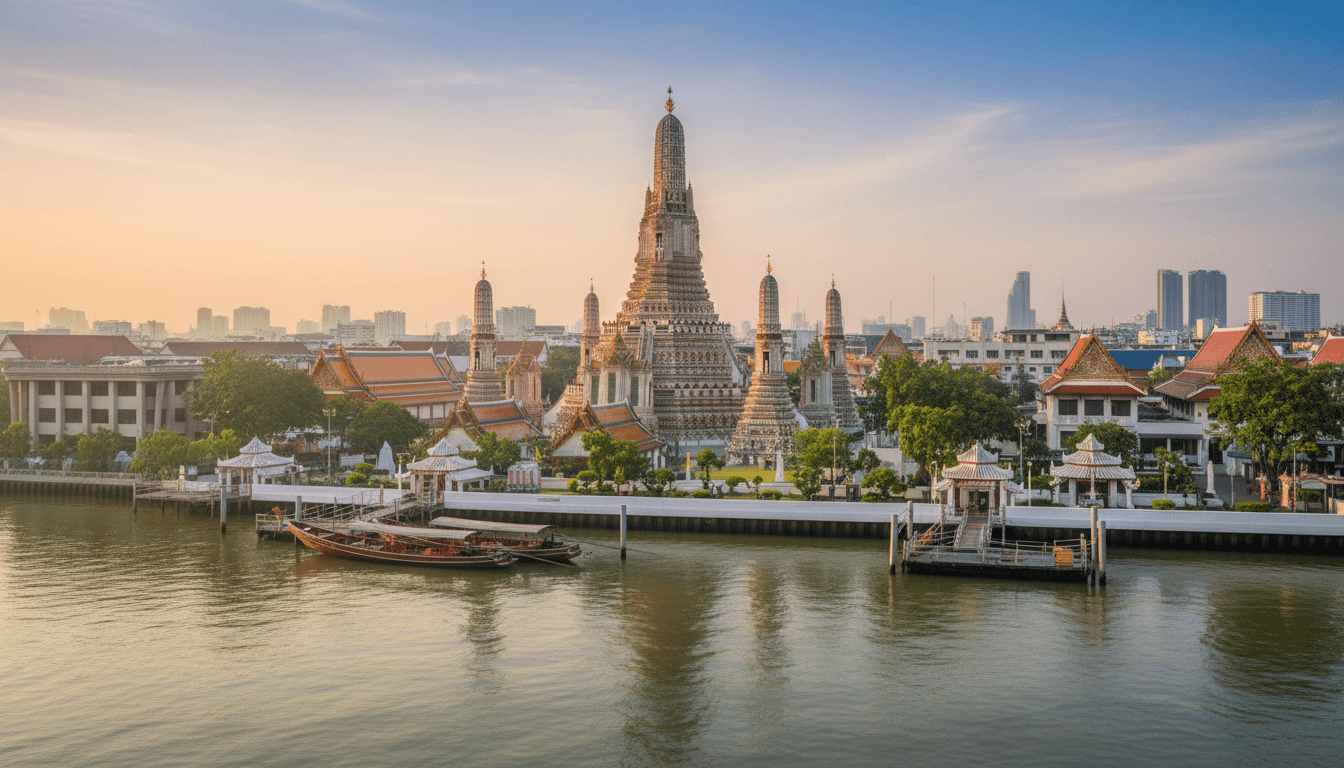
Picture yourself stepping onto a 32nd-floor balcony in Sukhumvit, watching the BTS Skytrain snake between glass towers while the golden spires of Wat Phra Kaew glint in the distance. The air smells of jasmine from the rooftop garden next door, and the host's note says the best pad kra pao in the neighborhood is a seven-minute walk toward Soi 38. This isn't a hotel view—it's your home for the next two weeks, courtesy of a home exchange in Bangkok that cost exactly zero baht in accommodation fees.
That's the reality of home swapping in Thailand's capital, and it's reshaping how travelers experience one of Southeast Asia's most visited cities. While 22 million tourists descended on Bangkok in 2023—most paying ฿3,500–8,000 ($100–230 USD) nightly for decent hotels in central locations—a growing community of home exchangers has discovered a different path entirely.
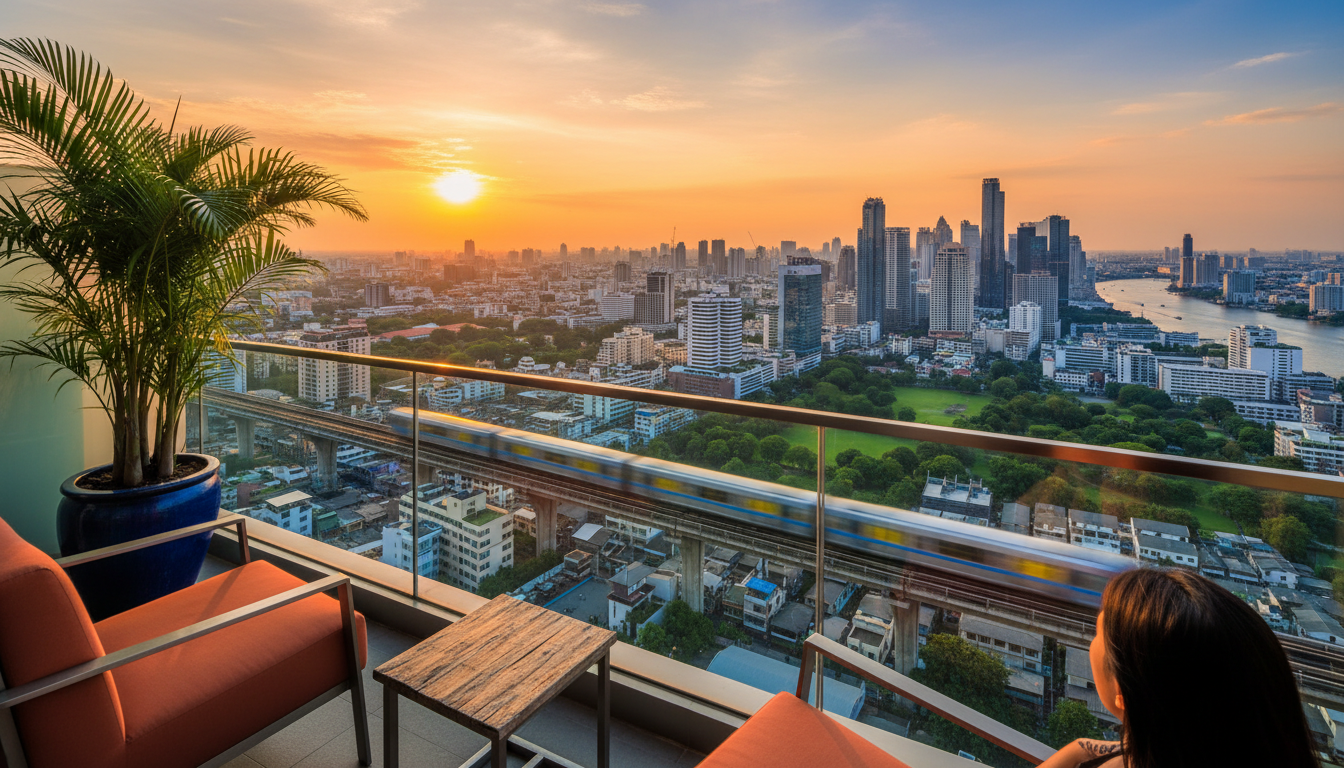 panoramic view from a high-rise condo balcony in Sukhumvit at golden hour, BTS train visible below,
Why Bangkok Works Exceptionally Well for Home Exchange
Bangkok presents a fascinating paradox for home swappers. On one hand, it's one of the world's most affordable major cities for tourists—street food runs ฿40–80 ($1.15–2.30 USD), taxis are cheap, and you can have a legendary night out for under $30. On the other hand, central accommodation remains stubbornly expensive, with anything walkable to the BTS or MRT commanding premium rates.
This creates perfect conditions for home exchange value. A two-bedroom condo in Ari—one of Bangkok's most liveable neighborhoods for expats—might cost ฿55,000 ($1,600 USD) monthly to rent, or ฿2,500–4,000 ($72–115 USD) nightly on short-term platforms. Through home exchange, that same space costs nothing beyond your SwappaHome membership.
The math becomes almost absurd for longer stays. A three-week Bangkok home exchange saves roughly $2,100–4,800 compared to equivalent hotel accommodation in the same neighborhoods. That's enough to fund daily Thai massages, cooking classes, island-hopping trips to Koh Samet—and still come home with money left over.
The Expat Factor: Bangkok's Secret Advantage
Here's something most first-timers don't realize: Bangkok has one of the largest Western expat populations in Asia, estimated at 200,000+ permanent residents from Europe, North America, and Australia. Many own or long-term lease condos in desirable neighborhoods—and they travel frequently.
This creates an unusually robust home exchange inventory compared to other Southeast Asian cities. While Kuala Lumpur or Ho Chi Minh City might have limited listings, Bangkok typically shows 150–200+ active properties on major home-swap platforms, concentrated in exactly the neighborhoods travelers want: Sukhumvit, Silom, Sathorn, Thonglor, Ekkamai, and Ari.
The SwappaHome community in Bangkok skews toward professionals in their 30s–50s, digital nomads with established bases, and retirees who've made Thailand their winter home. Their properties tend to be well-maintained, genuinely lived-in (not sterile investment units), and come with the accumulated wisdom of people who've figured out how to live well in Bangkok.
Best Bangkok Neighborhoods for Home Exchange (Ranked by First-Timer Friendliness)
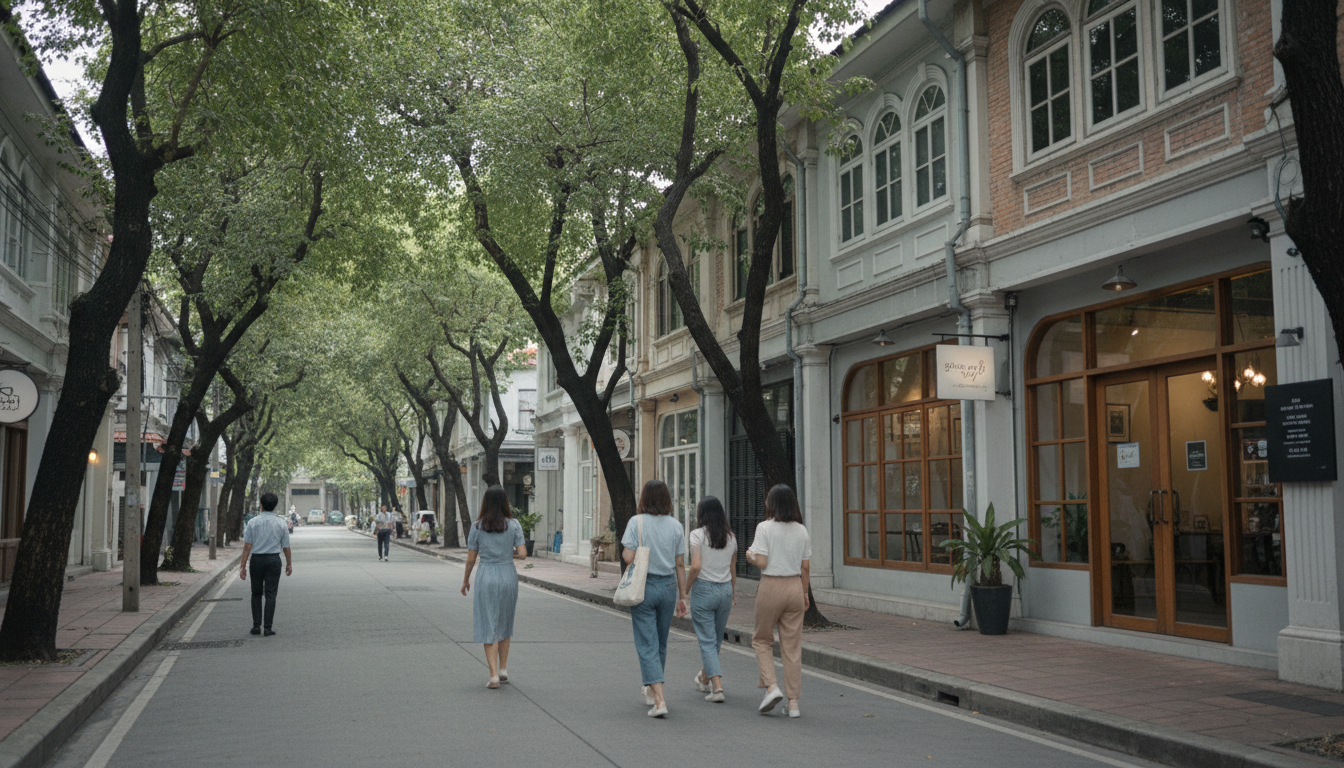 tree-lined street in Ari neighborhood with local coffee shops, vintage shophouses, and young Thai pr
Sukhumvit (Sois 1–63): The Reliable Choice
Sukhumvit Road stretches from central Bangkok to the Cambodian border, but the home-exchange sweet spot lies between Nana (Soi 3) and Ekkamai (Soi 63). This corridor offers the highest concentration of swap-friendly condos, direct BTS access, and the infrastructure first-timers need: 24-hour 7-Elevens, international restaurants, and English-speaking service providers.
The vibe shifts dramatically every few sois. Lower Sukhumvit (Sois 1–21) feels more tourist-oriented, with Nana's nightlife scene and Asok's business hotels. Mid-Sukhumvit (Sois 23–39) hits a sweet spot of local-expat balance, with Emporium and EmQuartier malls providing air-conditioned refuge. Upper Sukhumvit (Sois 49–63) turns increasingly residential and Thai, with Thonglor and Ekkamai offering Bangkok's trendiest café and restaurant scenes.
For first-time home exchangers, the Phrom Phong area (Sois 24–39) offers the best combination of walkability, safety, and access. Condos here typically feature pools, gyms, and 24-hour security—standard amenities that make the adjustment to Bangkok living smoother.
Thonglor (Sukhumvit Soi 55): For the Design-Conscious
Thonglor has evolved into Bangkok's creative class headquarters, packed with specialty coffee roasters (Roots, Rocket Coffeebar), Japanese-influenced restaurants, and boutique fitness studios. Home exchanges here tend toward newer, architect-designed condos with Instagram-worthy interiors.
The trade-off: Thonglor sits between BTS stations (Thong Lo and Ekkamai), making the walk to transit 10–15 minutes in Bangkok's heat. Most residents rely on motorcycle taxis (฿20–40) or the free shuttle vans that many condos operate. Travelers comfortable with this minor friction will find Thonglor's lifestyle offerings unmatched.
Ari: The Neighborhood That Feels Like a Village
Ari consistently tops "best neighborhoods in Bangkok" lists, and for good reason. This low-rise enclave near Victory Monument has resisted the high-rise development that transformed much of central Bangkok, preserving tree-lined streets, vintage shophouses, and a genuinely walkable scale.
The home exchange inventory in Ari skews toward townhouses and low-rise condos rather than the 30-story towers common in Sukhumvit. Properties often include small gardens, rooftop terraces, or balconies large enough for actual outdoor living. The BTS Ari station provides direct access to Siam and Silom, making this an excellent base for first-timers who want neighborhood immersion without sacrificing connectivity.
Local favorites within walking distance: Porcupine Café (excellent brunch), Ari Soi 1's vintage market (weekends), and the cluster of Thai restaurants on Soi Ari 4 that locals queue for at lunch.
Sathorn and Silom: The Business District Option
Bangkok's financial district offers a different home exchange experience: sleek corporate condos, rooftop bars with skyline views, and proximity to some of the city's best Thai restaurants. The area around BTS Chong Nonsi and Surasak stations has seen significant condo development, creating inventory that appeals to business travelers and those who prefer a more polished urban environment.
The trade-off is atmosphere—Sathorn empties out on weekends, and the street-level energy that makes Bangkok special is harder to find here. But if your priority is a modern, well-appointed condo with excellent transit access and proximity to the Chao Phraya River, Sathorn delivers.
Old Town (Rattanakosin, Chinatown, Talat Noi): For the Adventurous
Bangkok's historic core—encompassing the Grand Palace, Wat Pho, and the tangle of alleys around Yaowarat (Chinatown)—offers the most culturally immersive home exchange experience. Properties here tend toward renovated shophouses and heritage buildings, often with character that newer condos can't match.
Here's the honest truth: Old Town requires more adaptation. The MRT Blue Line extension has improved access, but you'll still rely on boats, tuk-tuks, and walking more than in Sukhumvit. Air conditioning may be less robust in older buildings. And the sensory intensity—incense from spirit houses, wok smoke from street vendors, temple bells at dawn—isn't for everyone.
But for travelers who want to feel the weight of Bangkok's 240-year history, who want to wake up to monks collecting alms on their soi, who consider navigating Chinatown's maze of gold shops and noodle stalls an adventure rather than an obstacle—Old Town home exchanges offer something irreplaceable.
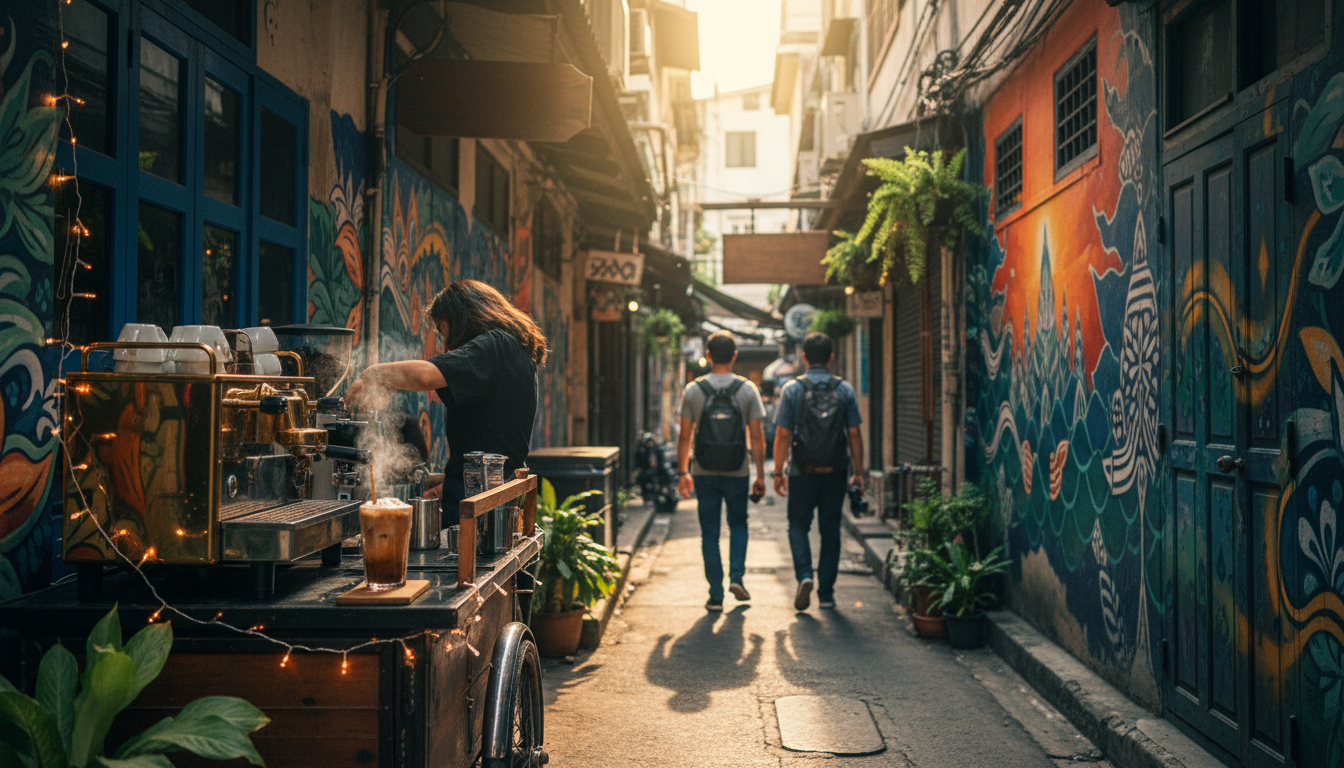 narrow alley in Talat Noi with street art murals, vintage shophouse facades, and a local coffee cart
How Home Exchange in Bangkok Actually Works: A Practical Walkthrough
Step 1: Building Your Bangkok Search Strategy
Start your search 2–3 months before intended travel dates. Bangkok's home exchange market has distinct seasons: high demand from November through February (cool season), moderate from March through May (hot season), and lowest from June through October (rainy season—though "rainy" means afternoon thunderstorms, not all-day drizzle).
The SwappaHome credit system means you're not limited to simultaneous swaps. Earn credits by hosting guests in your home, then spend them on Bangkok stays whenever you're ready. This flexibility proves particularly valuable for Bangkok, where many hosts are expats who travel during specific windows—Christmas/New Year, Songkran (Thai New Year in April), and summer months.
Filter your search by neighborhood, but stay open to adjacent areas. A listing in Phra Khanong (one BTS stop past Ekkamai) might be half as competitive as Thonglor, with nearly identical access and a fraction of the tourist density.
Step 2: Evaluating Bangkok Properties
Bangkok condos vary wildly in quality, even within the same building. When reviewing listings, pay attention to:
Floor level: Lower floors mean more street noise and potentially more mosquitoes. Above floor 15, you'll notice a significant improvement in both.
Building age: Condos built before 2010 may have smaller kitchens (cooking at home wasn't traditional in Thailand), older air conditioning units, and lower ceilings. Post-2015 buildings generally meet international expectations.
Pool and gym access: Most Bangkok condos include these amenities, but quality ranges from rooftop infinity pools to cramped basement facilities. Photos tell the story.
Laundry situation: In-unit washing machines are increasingly common, but many older buildings require using a shared laundry room or the neighborhood laundromat. Dryers remain rare—Thais hang-dry everything, and so will you.
Kitchen reality: "Fully equipped kitchen" in Bangkok might mean a two-burner hot plate and a microwave. If cooking matters to you, ask specifically about the stove, oven (rare), and refrigerator size.
Step 3: Communication and Expectations
Bangkok hosts tend toward warmth and hospitality—it's cultural. Expect detailed arrival instructions, recommendations for local restaurants, and possibly an offer to have their housekeeper continue weekly cleaning during your stay (a common arrangement, usually ฿500–800 per visit).
Key questions to ask before confirming:
- What's the best way to reach the condo from Suvarnabhumi Airport? (Answer should include BTS/Airport Rail Link details, taxi cost estimate around ฿400–500, and any building-specific arrival procedures)
- Is there 24-hour security/reception? (Important for late arrivals and package deliveries)
- What's the wifi speed? (Critical for remote workers—ask for a speed test screenshot if needed)
- Are there any building rules about guests, noise, or pool hours?
- What's the nearest BTS or MRT station, and how long is the walk?
Step 4: Preparing for Your Bangkok Exchange
Visa considerations: Most Western passport holders receive 30-day visa-free entry to Thailand (60 days for some nationalities as of 2024 policy changes). For longer stays, the 60-day tourist visa from a Thai embassy before departure is straightforward. Digital nomad visas and longer-term options exist but require more planning.
Health preparation: No vaccinations are legally required for Thailand entry, but hepatitis A, typhoid, and routine boosters are recommended by most travel health clinics. Dengue fever exists in Bangkok—pack mosquito repellent with DEET.
Money matters: Thailand runs on cash more than you'd expect for a major city. ATMs dispense baht with a ฿220 ($6.30 USD) foreign card fee per transaction—withdraw larger amounts less frequently. Credit cards work at malls and upscale restaurants but not at street food stalls, local markets, or most taxis.
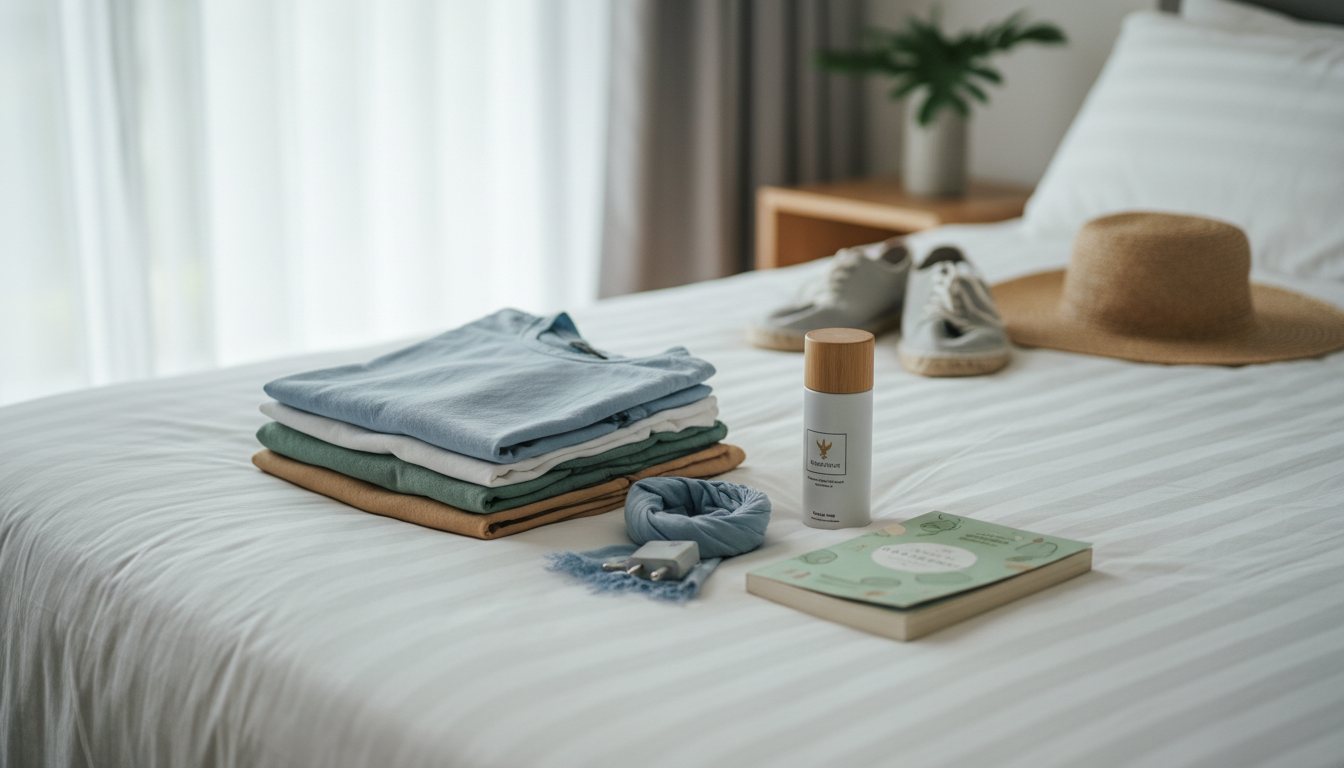 organized packing scene with lightweight clothing, universal adapter, mosquito repellent, and a Thai
Living Like a Local: What Your Bangkok Home Exchange Enables
The Morning Routine You Won't Get in Hotels
Here's what a typical morning looks like from a home exchange in Ari:
6:30 AM: You wake to the sound of monks' bells from Wat Ari, three blocks away. The building's rooftop pool is empty—perfect for laps before the heat sets in.
7:30 AM: You walk to the corner for jok (rice porridge) at a stall that's been there 30 years. The owner starts to recognize you, adds extra ginger without asking. Total cost: ฿45 ($1.30 USD).
8:15 AM: You stop at Porcupine Café for proper coffee, grab a seat on the terrace, and watch the neighborhood come alive—school kids in uniforms, office workers on motorcycles, monks returning to the temple.
9:00 AM: Back to the condo for remote work, air conditioning cranked, the city sprawling 25 floors below.
This rhythm—local breakfast, specialty coffee, productive work hours—simply doesn't exist in hotel stays. The infrastructure of a real home (kitchen, desk, reliable wifi, laundry) combined with neighborhood integration creates a fundamentally different Bangkok experience.
The Economics of Eating In vs. Eating Out
One of Bangkok's delightful contradictions: eating out is so cheap that cooking at home rarely makes financial sense. A plate of pad thai from a street vendor runs ฿50–80 ($1.45–2.30 USD). A home-cooked version, after buying noodles, tamarind paste, dried shrimp, and the rest, costs nearly the same and takes an hour.
But home exchange changes the calculation in subtle ways. Having a kitchen means:
- Breakfast at home (fruit from Tops Market, yogurt, coffee) instead of hotel buffets or café meals
- Late-night snacks without leaving the building
- The ability to store leftovers from the massive portions at Thai restaurants
- Hosting new friends for drinks on your balcony instead of paying bar prices
Most Bangkok home exchangers settle into a hybrid pattern: breakfast at home, lunch from street vendors or food courts, and dinner at restaurants—with the occasional ambitious cooking project using ingredients from Or Tor Kor Market (Bangkok's finest fresh market, near Chatuchak).
Building Neighborhood Connections
The longer you stay in one Bangkok neighborhood, the more it opens up. The security guard starts greeting you by name. The laundry lady sets aside your shirts without a ticket. The som tam vendor remembers you like it "pet mak" (very spicy).
These micro-relationships transform Bangkok from overwhelming to manageable, from tourist destination to temporary home. They're nearly impossible to build from a hotel, where you're one of hundreds of faces passing through. But from a home exchange, where you're walking the same streets daily, buying from the same vendors, nodding to the same neighbors—the fabric of local life starts to include you.
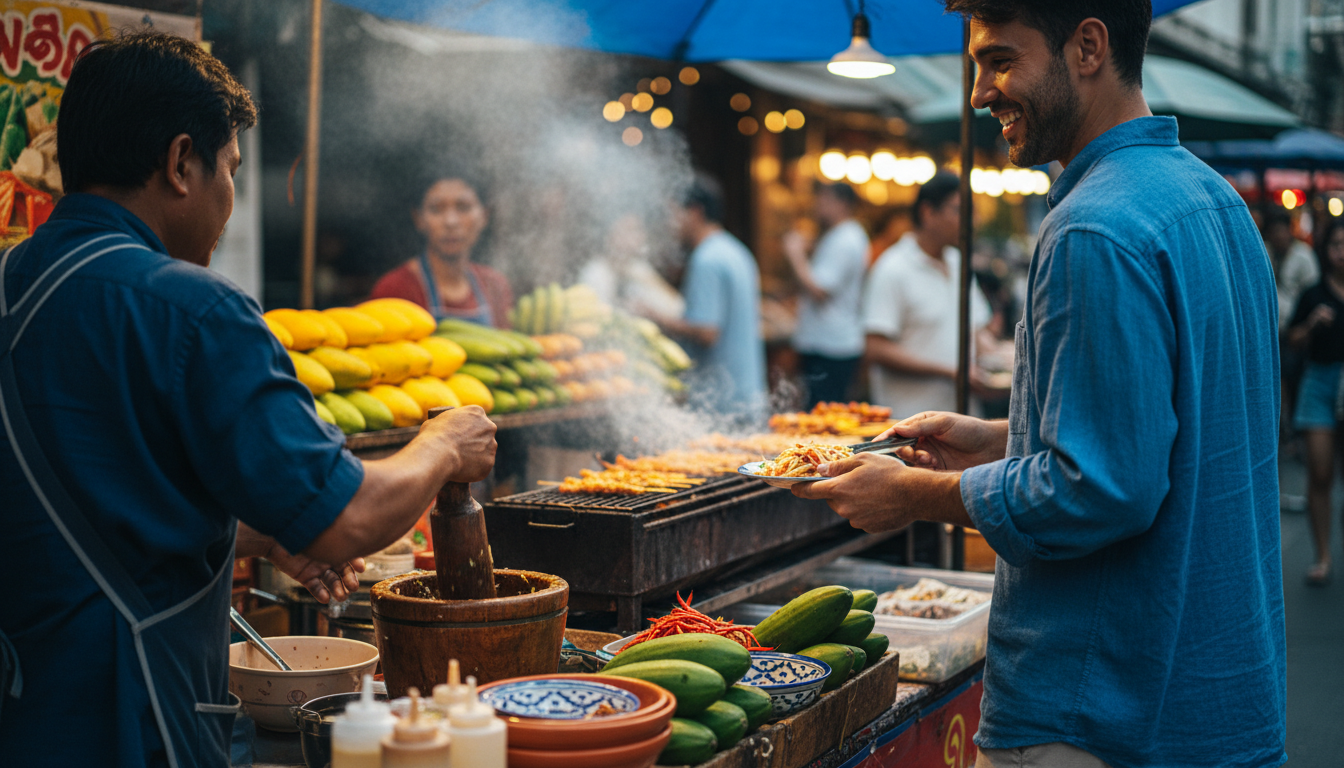 friendly interaction at a street food stall in Sukhumvit, vendor serving som tam to a smiling custom
Bangkok-Specific Home Exchange Considerations
Navigating the Heat and Air Conditioning
Bangkok's heat is relentless—average highs of 33–35°C (91–95°F) year-round, with humidity that makes it feel hotter. Air conditioning isn't a luxury here; it's survival infrastructure.
Before confirming any exchange, verify:
- How many AC units, and do they cover all sleeping areas?
- What's the typical electricity bill? (Hosts should disclose this—expect ฿3,000–6,000 monthly for normal use, more if you run AC 24/7)
- Is there an agreement about electricity costs? (Some hosts include utilities; others ask guests to pay the difference above normal usage)
Most Bangkok residents keep AC at 25–26°C (77–79°F) and use fans to circulate air. Running it at 20°C like a Western hotel will triple electricity consumption and potentially strain older units.
The Rainy Season Reality
June through October brings Bangkok's monsoon, but the reality is less dramatic than the name suggests. Typical pattern: clear mornings, clouds building by early afternoon, dramatic thunderstorm from 3–6 PM, clear evening. Rain rarely lasts more than 2–3 hours.
The upside of rainy season home exchanges: lower demand means more inventory, hosts are more flexible on dates, and Bangkok's parks and gardens turn impossibly green. The downside: occasional flooding in low-lying areas (Sukhumvit sois with odd numbers tend to drain poorly), and the humidity between storms can feel suffocating.
Security and Safety Considerations
Bangkok is remarkably safe for a city of 10+ million. Violent crime against tourists is rare; the main concerns are petty theft (watch your phone in tuk-tuks), scams (ignore anyone who approaches you near tourist sites), and traffic (crossing the street requires courage and timing).
For home exchange specifically:
- Most Bangkok condos have 24-hour security, key card access, and CCTV throughout common areas
- Building staff often know residents by sight and will notice unfamiliar faces
- Ground-floor units in older buildings warrant more caution than high-rise condos
- Keep valuables in the safe (most condos have one) rather than leaving them visible
The SwappaHome verification system adds another layer—you're exchanging with verified members who have reviews and reputation to protect. In thousands of Bangkok exchanges facilitated through home-swap platforms, serious security incidents remain vanishingly rare.
Getting Around from Your Bangkok Base
Bangkok's transit system has improved dramatically over the past decade, but it still requires strategy:
BTS Skytrain: The elevated rail system covers Sukhumvit, Silom, and extends to the northern suburbs. Clean, air-conditioned, and efficient—but brutally crowded during rush hours (7:30–9 AM, 5–7 PM). Single rides ฿16–59 depending on distance; stored-value Rabbit cards save time.
MRT: The underground system connects Sukhumvit to Chinatown, the train station, and northern Bangkok. Interchanges with BTS at Asok/Sukhumvit and Sala Daeng/Silom stations.
Boats: The Chao Phraya Express and canal boats remain the fastest way to reach Old Town and avoid traffic. Tourist boats run ฿60 per ride; local orange-flag boats cost ฿15–20.
Taxis: Metered taxis start at ฿35, with most cross-city trips running ฿100–200. Always insist on the meter ("meter, krap/ka"). Grab (Southeast Asia's Uber equivalent) often costs slightly more but eliminates negotiation.
Motorcycle taxis: The orange-vested riders at every soi entrance will zip you through traffic for ฿20–50 for short trips. Terrifying the first time. Addictive by the third.
From a well-located home exchange, you can reach most Bangkok attractions within 30–45 minutes. The city's notorious traffic primarily affects car travel—trains and boats operate on their own timelines.
Making Your Bangkok Home Exchange Exceptional
Pre-Arrival Preparation That Pays Off
Download essential apps: Grab (transport), Foodpanda/GrabFood (delivery), Google Translate (Thai script recognition), and Line (Thailand's dominant messaging app—your host likely prefers it over WhatsApp).
Learn five Thai phrases: "Sawadee krap/ka" (hello), "Khop khun krap/ka" (thank you), "Mai pet" (not spicy), "Tao rai?" (how much?), and "Check bin" (the bill, please). Thais appreciate any effort, and these cover 80% of daily interactions.
Bring specific items: A universal power adapter (Thailand uses Type A, B, and C outlets inconsistently), reef-safe sunscreen (hard to find locally), any prescription medications with documentation, and comfortable shoes for Bangkok's uneven sidewalks.
Being an Excellent Guest in Thai Culture
Thai culture emphasizes harmony, respect, and "saving face"—avoiding embarrassment for yourself or others. As a home exchange guest:
- Remove shoes before entering the condo (this is non-negotiable in Thai homes)
- Keep noise levels reasonable, especially after 10 PM
- Treat any Buddha images or spirit houses with respect (don't point feet at them, don't move them)
- If using a housekeeper, tip appropriately (฿200–300 per visit is standard)
- Leave the space cleaner than you found it—Thais notice these details
Extending Your Exchange Value
Bangkok serves as an ideal hub for regional exploration. With accommodation costs eliminated, consider:
Weekend trips: Koh Samet (3 hours by bus and ferry, ฿600 round trip), Ayutthaya (1.5 hours by train, ฿20–300 depending on class), Kanchanaburi (3 hours by bus, ฿150)
Longer excursions: Chiang Mai (1-hour flight, ฿1,500–3,000), Krabi/Phuket beaches (1.5-hour flight, ฿2,000–4,000), Cambodia's Angkor Wat (1-hour flight to Siem Reap, ฿3,000–5,000)
Your Bangkok home exchange becomes a base camp, a place to return to between adventures, a refrigerator to stock before the next trip. This hub-and-spoke approach maximizes both the exchange value and your Thailand experience.
What First-Time Bangkok Exchangers Get Wrong (And How to Avoid It)
Mistake #1: Underestimating Distances
Bangkok sprawls across 1,500+ square kilometers. What looks close on Google Maps might be an hour away in traffic. First-timers often book exchanges in "central Bangkok" without realizing that Sukhumvit Soi 71 and Sukhumvit Soi 11 are both technically central but 45 minutes apart.
The fix: Prioritize BTS/MRT proximity over everything else. A slightly smaller condo next to Phrom Phong station beats a palatial apartment requiring a 15-minute walk and a taxi to reach transit.
Mistake #2: Arriving Without Cash
Bangkok's ATMs charge ฿220 ($6.30 USD) per withdrawal on foreign cards, and airport exchange rates are predatory. Arriving with no baht means overpaying immediately.
The fix: Exchange $100–200 at a competitive rate before departure (or at SuperRich exchange counters in central Bangkok, not the airport). Withdraw larger amounts (฿10,000–20,000) less frequently to minimize fees.
Mistake #3: Ignoring the Calendar
Thai holidays transform Bangkok. During Songkran (April 13–15), the entire city becomes a water fight—streets flood, businesses close, and getting anywhere dry is impossible. Chinese New Year packs Chinatown beyond capacity. Royal holidays may close major attractions.
The fix: Check the Thai holiday calendar before finalizing exchange dates. Either embrace the chaos (Songkran is genuinely fun if you're prepared) or plan around it.
Mistake #4: Over-Scheduling
Bangkok rewards slow exploration more than aggressive sightseeing. The temples and markets will still be there tomorrow; the unexpected conversation with a noodle vendor, the perfect sunset from your balcony, the afternoon thunderstorm watched from a café—these moments require unscheduled time.
The fix: Plan 2–3 activities per day maximum. Leave space for Bangkok to surprise you.
The SwappaHome Advantage for Bangkok Exchanges
The credit-based system works particularly well for Bangkok for several reasons. Earning credits by hosting travelers in your home city, then spending them on extended Bangkok stays, means the exchange economics favor longer visits. One credit equals one night, regardless of whether you're staying in a modest Phra Khanong studio or a luxury Sathorn penthouse.
New SwappaHome members start with seven free credits—enough for a full week in Bangkok to test whether home exchange suits your travel style. That's a $700–1,600 value in avoided accommodation costs, depending on neighborhood and property type.
The verification system matters in Bangkok's context. You're not booking a random Airbnb from an anonymous host; you're connecting with verified community members who have their own homes at stake in the exchange ecosystem. Reviews and ratings create accountability that pure rental platforms lack.
Frequently Asked Questions
Is home exchange in Bangkok safe for solo travelers?
Bangkok ranks among Asia's safest major cities for tourists, and home exchange adds security layers that hotels lack. Most exchange properties are in guarded condo buildings with 24-hour security, key card access, and CCTV. The SwappaHome verification system means you're staying in homes of vetted community members with established reputations. Solo travelers—particularly women—often report feeling safer in residential Bangkok neighborhoods than in tourist hotel zones.
How much can I realistically save with a Bangkok home exchange versus hotels?
A two-week Bangkok home exchange typically saves $1,400–3,200 compared to equivalent hotel accommodation. Mid-range hotels in central Sukhumvit run ฿3,500–5,500 ($100–160 USD) nightly; comparable home exchange condos cost only your SwappaHome membership. For a month-long stay, savings can exceed $4,000–6,000. The longer you stay, the more dramatic the value—exactly the opposite of hotel pricing, where extended stays rarely offer proportional discounts.
What's the best time of year for a home exchange in Bangkok?
November through February offers Bangkok's most comfortable weather—lower humidity, temperatures around 25–32°C (77–90°F), and minimal rain. This is also peak tourist season, so book exchanges 2–3 months ahead. March through May brings intense heat (35–40°C) but thinner crowds and more available inventory. The June–October rainy season offers the best exchange availability and dramatic afternoon storms that clear the air, though humidity stays high.
Do I need to speak Thai for a successful Bangkok home exchange?
No—Bangkok's tourism infrastructure means English works for most situations, especially in central neighborhoods. However, learning basic phrases (hello, thank you, how much, not spicy) dramatically improves daily interactions. The Google Translate app with Thai camera translation helps decode menus and signs. Your exchange host's notes and recommendations will bridge most communication gaps, and building staff in upscale condos typically speak functional English.
Can I extend my Bangkok home exchange if I want to stay longer?
Extensions depend on your host's availability and your visa status. Many Bangkok hosts are flexible about extending by a few days or weeks if their calendar allows—communicate early if you're considering it. Visa-wise, most Western visitors get 30–60 days on arrival; extensions of 30 days are available at immigration offices for ฿1,900 ($55 USD). The SwappaHome credit system accommodates extensions seamlessly—you simply use additional credits for extra nights.
Bangkok doesn't reveal itself to tourists passing through. The city's real magic lives in the quiet moments: morning light hitting a temple spire, the first bite of mango sticky rice from a vendor who starts to recognize your order, the view from a borrowed balcony as thunderclouds roll in from the Gulf of Thailand.
Home exchange makes these moments possible by giving you what hotels never can—a place in the neighborhood fabric, a routine that feels like living rather than visiting, and the economic freedom to stay long enough for Bangkok to stop being a destination and start being, temporarily, home.
The SwappaHome community in Bangkok keeps growing, with new listings appearing monthly as more travelers discover this alternative to the hotel-hostel binary. Your first exchange might feel like a leap of faith. By your third morning, walking to your regular noodle stall, nodding to the security guard who knows your name, you'll wonder why you ever traveled any other way.

Published by
SwappaHome
SwappaHome Editorial Team
Home Exchange & Slow Travel Editorial
The SwappaHome Editorial Team brings together travel research, home-exchange community insights, and platform data to produce practical guides for first-time and experienced home swappers. Every article cites real platforms, current market rates, and verifiable city-level facts so readers can make informed decisions without guessing.
Ready to try home swapping?
Join SwappaHome and start traveling by exchanging homes. Get 7 free credits when you sign up!
Related articles
Bachelor and Bachelorette Parties in Singapore: The Complete Home Swap Group Guide for 2026
Planning a bachelor or bachelorette party in Singapore? Discover how home swapping lets groups of 6-12 stay together in luxury condos, saving thousands while partying in Marina Bay.
Cycling in Lisbon: 7 Home Swap Bike Tour Itineraries for Every Rider
Discover the best cycling routes in Lisbon with these home swap bike tour itineraries—from waterfront paths to hilltop adventures, all starting from your borrowed home.
Graduation Trip to Barcelona: How Home Swapping Gives New Graduates the Ultimate Celebration
Planning a graduation trip to Barcelona? Discover how home swapping lets new graduates explore Spain's most vibrant city without the hostel crowds or hotel costs.