
Home Exchange in Montevideo for Couples: Your Guide to Romantic Stays in Uruguay's Capital

SwappaHome Editorial Team
Home Exchange & Slow Travel Editorial
Discover intimate home exchange experiences in Montevideo for couples—from sunset wine on private terraces to waking up in charming Pocitos apartments.
The first time my partner and I stayed in Montevideo through a home exchange, we almost missed our flight home. Not because of logistics—because we genuinely didn't want to leave the sun-drenched apartment we'd borrowed in Ciudad Vieja, with its wrought-iron balcony overlooking Plaza Matriz and the church bells that woke us each morning at precisely 8 AM.
Home exchange in Montevideo for couples isn't just about saving money on accommodation (though you absolutely will). It's about experiencing this underrated South American capital the way locals do—sipping mate on your own terrace, walking to the corner panadería in your pajamas, and falling into the gentle rhythm of a city that refuses to rush.
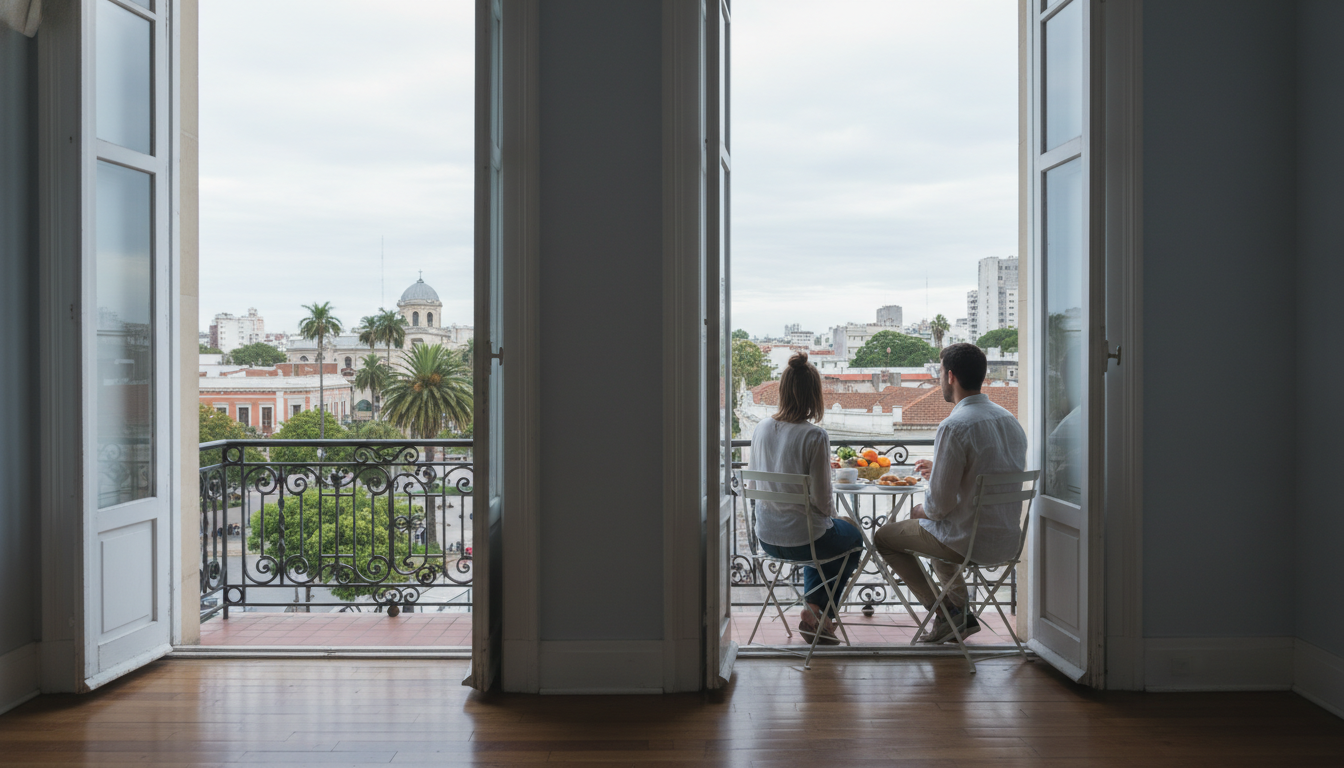 Morning light streaming through floor-to-ceiling windows of a Ciudad Vieja apartment, showing a coup
I've done home swaps in Buenos Aires, São Paulo, and Santiago. But Montevideo? It hits different for couples. The city has this intimate scale—small enough to feel like your secret discovery, sophisticated enough to keep you fascinated. And when you're staying in someone's actual home rather than a hotel room, that intimacy multiplies.
Why Home Exchange Works Perfectly for Couples in Montevideo
Here's something I've noticed after seven years of swapping homes: couples travel differently than families or solo adventurers. We want privacy without isolation. Romance without the manufactured hotel version of it. Space to cook a late dinner after too much wine at a bodega, or to spend a lazy morning doing absolutely nothing.
Montevideo delivers on all of this—but only if you're staying in the right place.
Hotels here range from $80-150 USD per night for anything decent, and they cluster in predictable tourist zones. Fine for a business trip. But for a romantic getaway? You end up eating breakfast in a fluorescent-lit buffet room instead of on a private rooftop with views of the Río de la Plata.
Through home exchange, my partner and I have stayed in a converted warehouse loft in Barrio Sur with exposed brick and a record collection we actually used. A 1920s apartment in Pocitos with original tile floors and a kitchen stocked with local yerba mate. A modern penthouse in Punta Carretas with a terrace hot tub—yes, really.
Total cost for accommodation? Zero dollars. Just credits on SwappaHome—one credit per night, regardless of how fancy the place is.
The math becomes almost absurd when you think about it. A two-week romantic trip to Montevideo in hotels runs $1,400-2,100 for accommodation alone. Through home exchange? Fourteen credits, which you earn by hosting travelers in your own place back home.
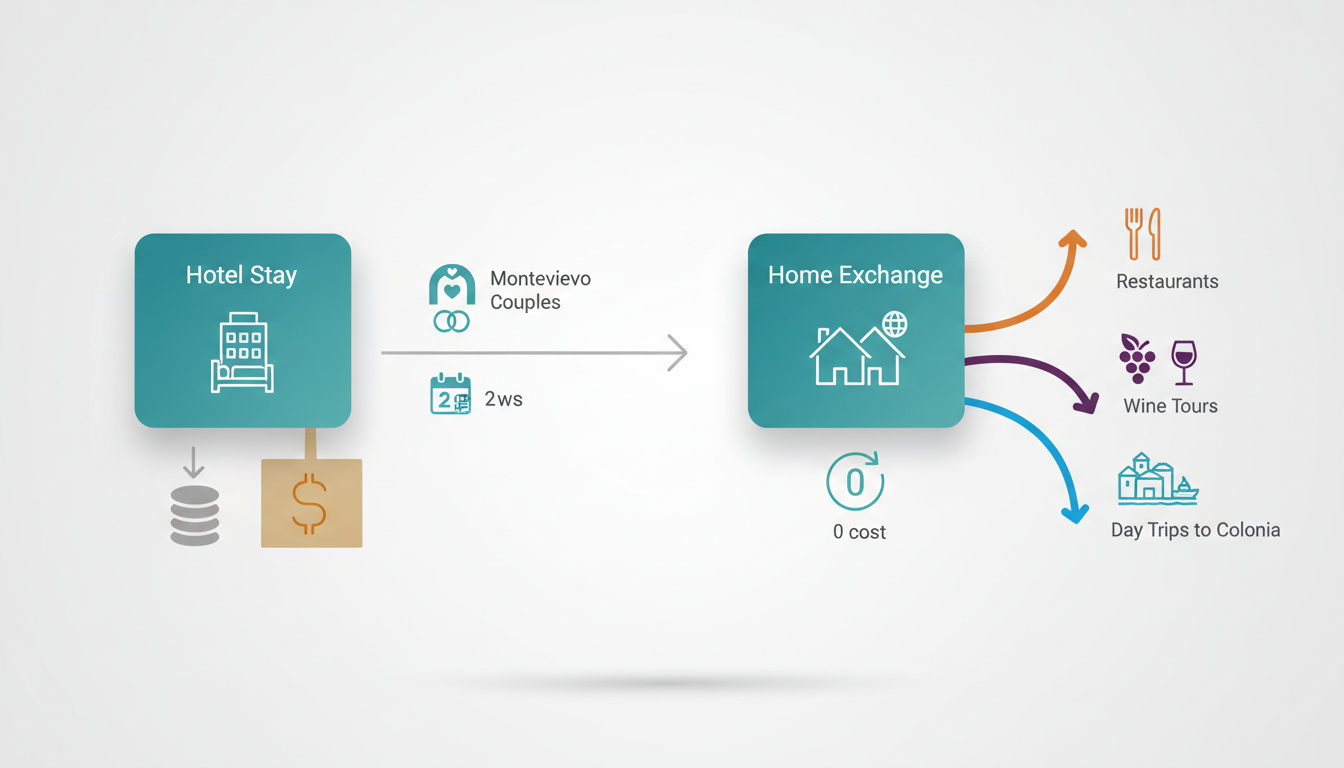 Infographic showing cost comparison between 2-week hotel stay in Montevideo 1,680 average versus hom
Best Montevideo Neighborhoods for Romantic Home Exchanges
Not all neighborhoods are created equal when you're traveling as a couple. After multiple trips and conversations with local hosts, here's my honest breakdown.
Ciudad Vieja: For History-Loving Couples
The old town. Colonial architecture, cobblestone streets, and that European-meets-Latin-American vibe that makes Montevideo so distinctive. This is where you want to be if you're the kind of couple who'd rather discover a hidden wine bar than hit a club.
You'll find renovated historic apartments with high ceilings, interior courtyards, and proximity to the port market (Mercado del Puerto). The neighborhood empties out after business hours, which means you'll have the streets almost to yourselves for evening walks. Picture this: walking hand-in-hand through gaslit streets at 10 PM, stopping for spontaneous glasses of tannat at whatever bar catches your eye.
One thing to know—some buildings are genuinely old, which can mean quirky plumbing or steep stairs. Ask your host about specifics before booking.
Pocitos: For Beach-Loving Couples
This is where young Montevideans live, and it shows. The rambla (waterfront promenade) stretches for miles, perfect for sunset runs or lazy afternoon walks. Pocitos has the best balance of residential charm and access to restaurants, cafés, and nightlife.
Modern apartments with ocean views, buildings with rooftop pools, and that particular South American combination of urban density and beach town vibes—that's what you're looking at here. Most home exchange listings come with balconies, which I honestly consider non-negotiable for couples. There's nothing quite like morning mate on your balcony watching the sunrise over the water, then walking to the beach in your sandals.
Fair warning: Pocitos is popular, which means more competition for home exchanges during peak season (December-February). Book early.
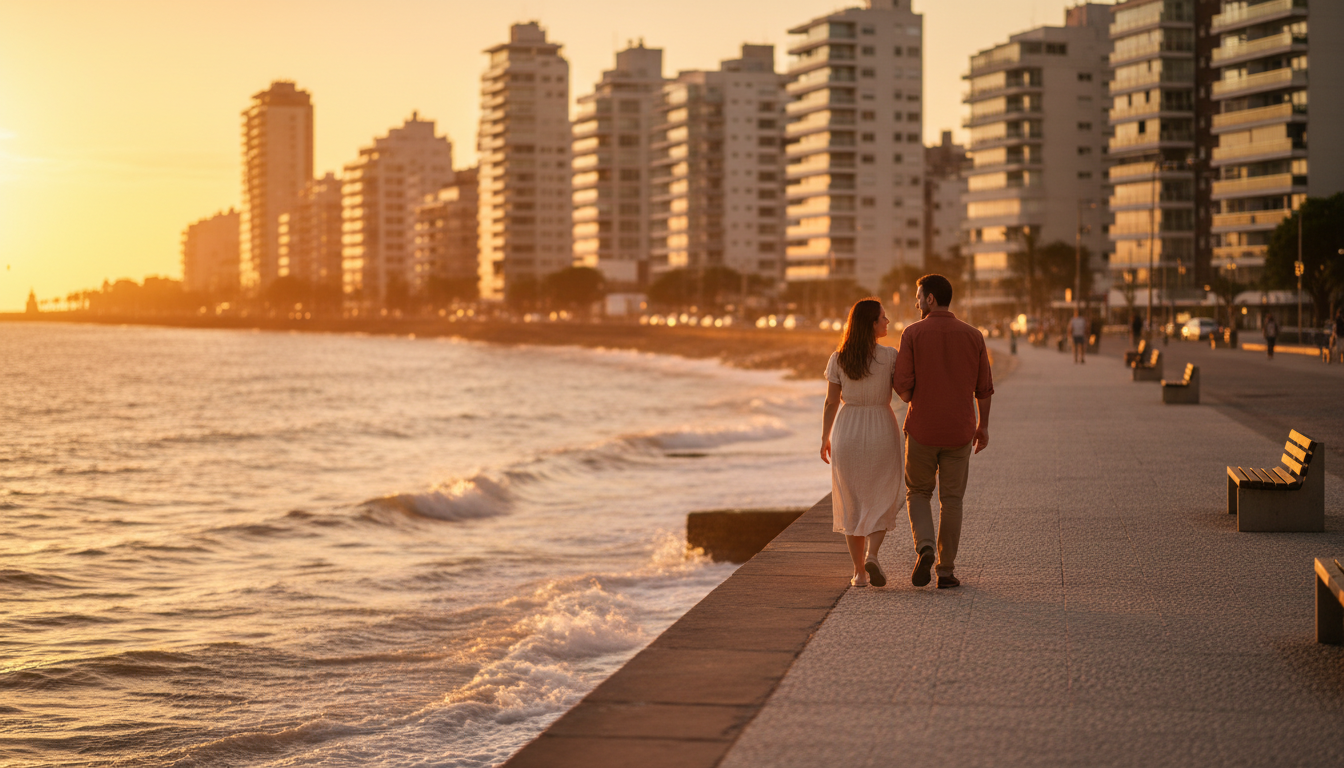 Couple walking along the Pocitos rambla at golden hour, waves gently hitting the seawall, high-rise
Punta Carretas: For Couples Who Want It All
Slightly more upscale than Pocitos, Punta Carretas offers the best of both worlds—beach access plus proximity to the city's best shopping and dining. The neighborhood surrounds a former prison that's been converted into a gorgeous shopping mall (Punta Carretas Shopping), which sounds weird but actually works.
Larger apartments here, often with parking if you're planning day trips. More families live in this area, so the vibe is quieter than Pocitos but still walkable to everything. The lighthouse at Punta Brava, a 10-minute walk from most apartments, is legitimately one of the most romantic sunset spots I've found anywhere in South America.
The tradeoff? Slightly fewer restaurant options within immediate walking distance compared to Pocitos or Ciudad Vieja.
Carrasco: For Couples Seeking Luxury
This is Montevideo's most exclusive neighborhood, where the city's old money lives. Tree-lined streets, mansions, and a completely different pace than the rest of the city. The beach here is wider and less crowded.
Expect standalone houses rather than apartments, often with gardens. These are the home exchanges that feel like you've borrowed a wealthy friend's vacation home. The Sofitel Casino Carrasco is here—even if you're not staying there, it's worth visiting for cocktails in the most beautiful building in Uruguay.
You'll need a car or be comfortable with Uber (readily available and cheap—about $8-12 USD to get downtown). The neighborhood is quiet, which is either perfect or boring depending on your style.
How to Find the Perfect Montevideo Home Exchange for Your Trip
I'll be real with you: finding a great home exchange takes more effort than booking a hotel. But the payoff is exponentially better.
Start Your Search 3-4 Months Early
Montevideo isn't Barcelona or Paris—the home exchange inventory is smaller, which means the best places get snapped up. I've learned this the hard way. For peak season (December through February, when Uruguayans and Argentines take their summer holidays), start looking in September.
Use Specific Search Filters
On SwappaHome, filter by location (be specific—"Pocitos" rather than just "Montevideo"), amenities that matter for couples (balcony, air conditioning, full kitchen), and availability that matches your dates.
Read Between the Lines of Listings
Here's what I've learned to look for in couple-friendly exchanges. Good signs include photos showing actual living spaces rather than just staged shots, mentions of "quiet neighborhood" or "perfect for two," reviews from other couples, and hosts who mention their own travel style.
Yellow flags? Listings that emphasize sleeping capacity ("sleeps 6!") over ambiance, no photos of the bedroom or bathroom, or hosts who haven't logged in recently.
Craft a Personal Message
Don't send generic requests. Montevideo hosts—like most South Americans—value personal connection. Mention why you're visiting, what attracted you to their specific home, and a bit about yourselves as a couple.
Something like: "Hi! My partner and I are planning our first trip to Uruguay for our anniversary. Your apartment in Pocitos caught our eye because of the balcony—we're imagining morning coffee with that view. We're from San Francisco and would love to host you if you ever visit California."
 Cozy interior of a Montevideo apartment showing a small dining table set for two with wine glasses,
What to Actually Do as a Couple in Montevideo
Having a home base changes how you experience a city. Instead of feeling pressure to maximize every moment (you're paying for that hotel room!), you can settle into a rhythm.
Morning Rituals Worth Adopting
Walk to a local panadería for medialunas—Uruguayan croissants, smaller and sweeter than the Argentine version. My favorite in Pocitos is La Cigale on Avenida Brasil, about $3 USD for coffee and pastries for two.
Then: mate. Your host will likely have a mate gourd and thermos. If they've left yerba mate in the kitchen, use it. This is the most intimate Uruguayan ritual, traditionally shared between close friends and lovers. Sitting on your borrowed balcony, passing the mate back and forth, watching the neighborhood wake up—this is why home exchange beats hotels.
Afternoon Wandering
Montevideo rewards aimless exploration. The city is safe, walkable, and full of unexpected discoveries.
Mercado del Puerto deserves a late lunch, around 2 PM when the crowds thin. Share a parrillada (mixed grill) and a bottle of tannat. Budget about $40-50 USD for two, including wine.
Museo Torres García is small, manageable, and genuinely interesting. The rooftop café has great views. Entry runs about $8 USD per person.
Feria de Tristán Narvaja happens Sunday only. This massive street market stretches for blocks. Go early (before 11 AM) and have breakfast at one of the pop-up food stalls. It's chaotic and wonderful.
Evening Romance
This is where having a kitchen changes everything. Instead of eating out every night (which gets exhausting and expensive), you can pick up fresh pasta from a local shop and cook dinner together. Buy a bottle of Uruguayan tannat ($8-15 USD for something excellent) and drink it on your terrace. Order delivery from one of the city's excellent restaurants and eat in your pajamas.
When you do go out, try Jacinto in Punta Carretas for farm-to-table Uruguayan cuisine (reservations essential, about $60-80 USD for two with wine). Escaramuza in Ciudad Vieja is part bookshop, part restaurant—incredibly romantic, about $50-70 USD for two. La Pulpería in Carrasco offers traditional asado in an upscale setting, worth the taxi ride at about $70-90 USD for two.
 Overhead shot of a couples hands reaching for grilled meats and vegetables on a rustic wooden table
Day Trips That Work Better from a Home Base
One of the best things about home exchange is the flexibility. You're not checking out at 11 AM, dragging luggage to your next destination. You can take day trips and come back to your home base.
Colonia del Sacramento (1.5 hours by car, 2.5 by bus)
This UNESCO World Heritage town is almost mandatory for couples. Cobblestone streets, Portuguese colonial architecture, and sunsets that look photoshopped. Go for the day, or stay overnight if you can arrange a separate exchange. Bus tickets from Tres Cruces terminal run about $15 USD round trip.
José Ignacio (3 hours by car)
Uruguay's answer to the Hamptons, but less pretentious. Beautiful beaches, excellent restaurants, and a famous lighthouse. This works best as an overnight trip, but you can do it as a long day if you leave early.
Punta del Este (2 hours by car)
The famous resort town is worth seeing, even if it's not your style. Visit off-season (March-November) for a completely different experience—empty beaches, lower prices, and a melancholy beauty.
The Trust Factor: What Couples Should Know About Home Exchange
I get asked about safety and trust constantly. Here's my honest take.
Home exchange works because of mutual accountability. You're staying in someone's home; they might be staying in yours (or earning credits to stay somewhere else). This creates a built-in incentive for everyone to behave respectfully.
SwappaHome has a review system that builds reputation over time. Before accepting any exchange, I always read all of a member's reviews (both as host and guest), check their verification status, exchange messages to get a sense of who they are, and ask specific questions about the property.
One thing to be clear about: SwappaHome connects members, but the platform doesn't provide insurance or damage coverage. If you're concerned about liability, get your own travel insurance and home insurance that covers hosting guests. Most standard policies can be extended for this purpose—call your provider and ask.
For couples specifically, I'd also recommend having a video call with your host before confirming, exchanging phone numbers for emergencies, and being crystal clear about expectations around cleaning, key exchange, and house rules.
In seven years and 40+ exchanges, I've never had a serious problem. But I've also been selective and communicative.
Making Your Montevideo Home Exchange Romantic
The space is only part of the equation. Here's how to maximize the romance factor.
Before You Arrive
Ask your host where to buy flowers nearby (a small bouquet on the table transforms any space), their favorite local restaurant for a special dinner, and any romantic spots in the neighborhood that tourists miss.
Stock the Kitchen
On your first day, hit a local supermarket. Disco and Tienda Inglesa are the main chains—both have good wine selections. Grab good coffee or yerba mate, breakfast supplies, cheese, olives, and crackers for impromptu terrace picnics, and at least two bottles of tannat.
Create Rituals
The best trips have rhythms. Maybe it's morning coffee on the balcony. Or evening walks along the rambla. Or cooking together every other night. Having a home—rather than a hotel room—makes these rituals possible.
Disconnect Together
I know, I know. But seriously: put your phones away for at least part of each day. You're in someone's home in a beautiful city with the person you love. Be there.
Practical Stuff You Need to Know
Best time to visit: March-May (autumn) or September-November (spring). Summer (December-February) is peak season—beautiful but crowded and hot.
Currency: Uruguayan peso. As of 2024, roughly 40 pesos = 1 USD. Credit cards widely accepted, but carry some cash for markets and small shops.
Language: Spanish. English is less common than in Buenos Aires, but you'll manage with basic Spanish and translation apps.
Getting around: Uber works great and is cheap. The city is also very walkable if you're staying in central neighborhoods.
Safety: Montevideo is one of the safest cities in South America. Normal urban precautions apply, but you can walk around at night without worry in most neighborhoods.
The Real Reason to Choose Home Exchange in Montevideo
I've stayed in nice hotels. Some of them have been genuinely lovely. But I've never left a hotel room and felt like I'd actually lived somewhere.
That apartment in Ciudad Vieja I mentioned at the beginning? We cooked in that kitchen. We figured out the quirky shower. We knew which floorboard creaked. We waved to the neighbor across the courtyard who always seemed to be watering her plants at the same time we had our morning coffee.
For couples, this matters. Travel can either bring you closer together or stress you out. Home exchange, done right, creates the conditions for connection—a shared space that's yours for a while, a rhythm that you build together, a city that reveals itself slowly because you're not rushing to check things off a list.
Montevideo is perfect for this kind of travel. It's not trying to impress you. It's just being itself—a little melancholy, deeply cultured, unexpectedly romantic. And when you're staying in a real home, you get to be yourself too.
If you're curious about trying home exchange for your next couples trip, SwappaHome is where I've found the best Montevideo listings. The credit system is simple (one credit per night, always), and the community tends to attract the kind of travelers who take care of spaces and appreciate the gift of staying in someone's home.
Start browsing, send some messages, and maybe—like us—you'll find yourself almost missing your flight home because you're not ready to leave.
Frequently Asked Questions
Is home exchange in Montevideo safe for couples?
Yes, home exchange in Montevideo is generally very safe. The city itself ranks among South America's safest, and the home exchange community operates on mutual trust and accountability. SwappaHome's review system helps you vet potential hosts, and most exchangers are experienced travelers who respect others' homes. For extra peace of mind, get travel insurance and communicate thoroughly with your host before arrival.
How much can couples save with home exchange versus hotels in Montevideo?
Couples typically save $1,400-2,100 USD on a two-week trip by using home exchange instead of hotels. Mid-range Montevideo hotels average $80-150 per night, while home exchange costs only SwappaHome credits (one credit per night). Those savings can fund incredible dinners, wine tours, and day trips to Colonia or José Ignacio.
What's the best neighborhood in Montevideo for a romantic home exchange?
Pocitos offers the best balance for romantic home exchanges—beach access, sunset walks along the rambla, and plenty of restaurants within walking distance. For history lovers, Ciudad Vieja provides colonial charm and intimate wine bars. Punta Carretas suits couples wanting upscale quiet with beach proximity. Your choice depends on whether you prioritize nightlife, beaches, or historic atmosphere.
When should couples book a Montevideo home exchange?
Book your Montevideo home exchange 3-4 months in advance, especially for peak season (December-February). The city has fewer home exchange listings than major European destinations, so desirable apartments—particularly those with balconies and ocean views—get claimed quickly. For shoulder seasons (March-May or September-November), 6-8 weeks advance booking usually suffices.
Do I need to speak Spanish for home exchange in Montevideo?
Basic Spanish helps significantly for home exchange in Montevideo, as English is less common than in Buenos Aires. However, most SwappaHome hosts communicate well in English for booking arrangements. Download a translation app for daily interactions, learn key phrases for markets and restaurants, and don't worry—Uruguayans are patient and appreciative when visitors attempt Spanish.

Published by
SwappaHome
SwappaHome Editorial Team
Home Exchange & Slow Travel Editorial
The SwappaHome Editorial Team brings together travel research, home-exchange community insights, and platform data to produce practical guides for first-time and experienced home swappers. Every article cites real platforms, current market rates, and verifiable city-level facts so readers can make informed decisions without guessing.
Ready to try home swapping?
Join SwappaHome and start traveling by exchanging homes. Get 7 free credits when you sign up!
Related articles

Bachelor and Bachelorette Parties in Singapore: The Complete Home Swap Group Guide for 2026
Planning a bachelor or bachelorette party in Singapore? Discover how home swapping lets groups of 6-12 stay together in luxury condos, saving thousands while partying in Marina Bay.

Cycling in Lisbon: 7 Home Swap Bike Tour Itineraries for Every Rider
Discover the best cycling routes in Lisbon with these home swap bike tour itineraries—from waterfront paths to hilltop adventures, all starting from your borrowed home.

Graduation Trip to Barcelona: How Home Swapping Gives New Graduates the Ultimate Celebration
Planning a graduation trip to Barcelona? Discover how home swapping lets new graduates explore Spain's most vibrant city without the hostel crowds or hotel costs.