
Home Exchange in Rome: The Complete Guide for First-Time Visitors

SwappaHome Editorial Team
Home Exchange & Slow Travel Editorial
Everything first-time visitors need to know about home exchange in Rome—from the best neighborhoods to insider tips that'll make you feel like a local.
You step off the tram at Largo Argentina, where stray cats lounge among Roman ruins older than most countries. No hotel lobby awaits. Instead, you're walking toward a set of wooden shutters on Via dei Giubbonari, fishing out keys left by a Roman family currently enjoying your apartment back home. This is home exchange in Rome—and it changes everything about how you experience the Eternal City.
Home exchange here isn't just about free accommodation (though saving €150–300 per night doesn't hurt). It's about waking up in Trastevere to church bells from Santa Maria rather than a hotel alarm, buying fresh supplì from the corner rosticceria, and having a local's refrigerator stocked with Lazio wines. For first-time visitors, this approach transforms Rome from a museum you walk through into a city you actually live in.
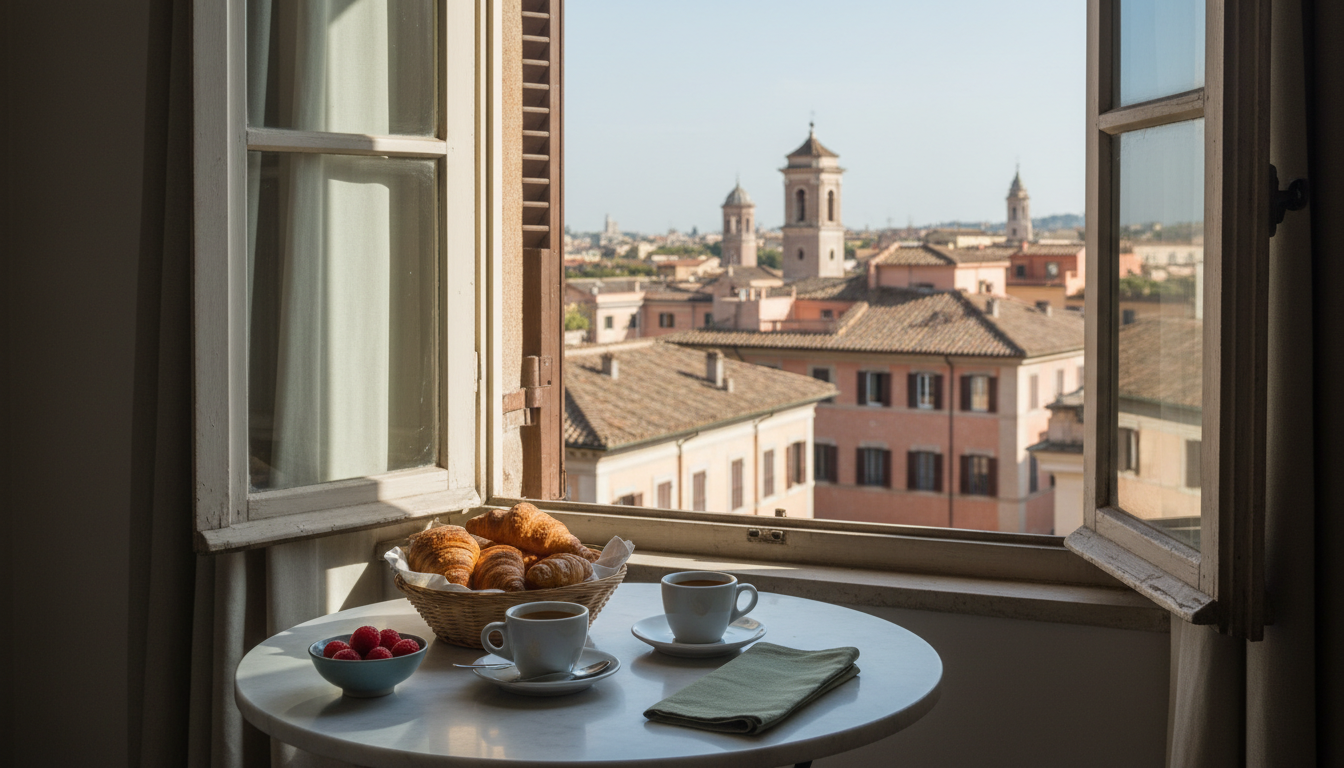 Morning light streaming through wooden shutters onto a small breakfast table with espresso and corne
Why Home Exchange Works Better Than Hotels in Rome
Rome's hotel scene has a problem. Centro storico properties charge €250–500 per night for rooms the size of a modest closet, and anything affordable tends to be a 40-minute metro ride from the Colosseum. Home exchange flips this equation entirely.
Rome consistently ranks among the top five most-requested European destinations in the SwappaHome community, with over 200 active listings across the city. That demand means variety—from a two-bedroom apartment overlooking Campo de' Fiori to a converted artist's studio in Testaccio.
Here's what the math actually looks like. A mid-range hotel near Piazza Navona runs €180–250 per night. A vacation rental in the same area? €120–180. A home exchange? Zero euros for the accommodation itself, plus you get a kitchen, a washing machine, and usually a local's handwritten guide to the neighborhood.
The kitchen alone changes your trip. Roman restaurants are extraordinary, but eating out three meals a day for two weeks will cost more than your flights. With a home exchange, you can grab breakfast supplies from the Mercato di Testaccio, make pasta with fresh porcini from Campo de' Fiori, and save your restaurant budget for the meals that matter—like that seven-course tasting menu at Roscioli.
Best Neighborhoods for Home Exchange in Rome
Not all Roman neighborhoods are created equal. Where you stay shapes your entire experience. Here's the honest breakdown of where most home exchangers end up—and why.
Trastevere: The Sweet Spot for First-Timers
Trastevere sits across the Tiber from the centro storico, which historically made it the "other side of the tracks." Today, that separation is exactly why it works. The narrow cobblestone streets feel authentically Roman without the cruise-ship crowds of the Trevi Fountain area.
Home exchange listings here tend to be character-filled apartments in ochre-colored buildings, many with small terraces or rooftop access. The neighborhood has everything within walking distance: the Sunday Porta Portese flea market, excellent pizza al taglio at Pizzarium (technically in Prati, but Romans consider it worth the trek), and some of the city's best aperitivo spots along Piazza Trilussa.
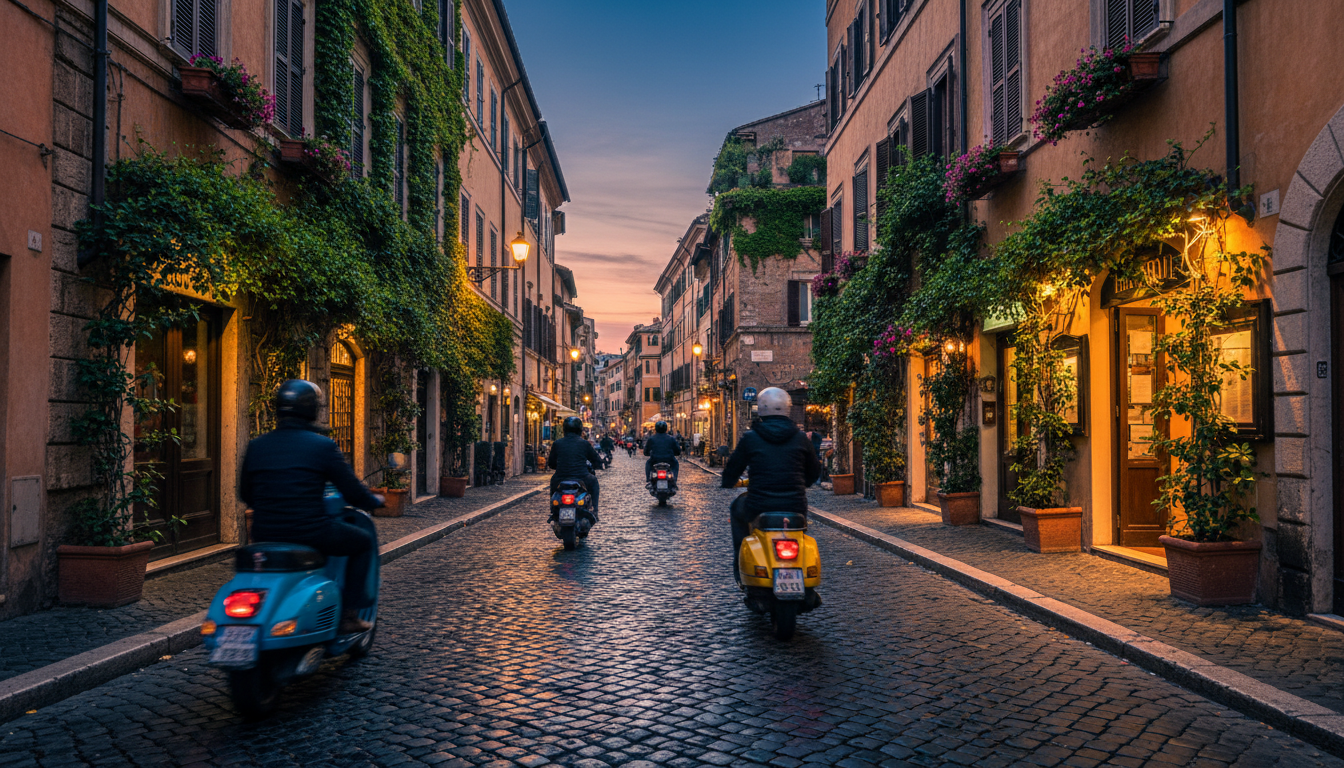 Evening scene on a Trastevere cobblestone street, ivy-covered buildings with warm light glowing from
The catch? Trastevere gets loud at night, especially on weekends when Italian university students flood the piazzas. Light sleepers should ask their exchange partner about street noise before confirming.
Monti: Boutique Charm Near Ancient Rome
Monti is Rome's smallest rione (historic district), wedged between the Colosseum and Termini station. It's walkable to the major ancient sites but feels like a village—local butchers, vintage shops, and the kind of wine bars where the owner remembers your name by day three.
Home exchanges here often occupy buildings that were once artisan workshops, meaning quirky layouts with high ceilings and original architectural details. Via del Boschetto and Via Panisperna are the main arteries, lined with independent boutiques and cafés that haven't been replaced by international chains.
The neighborhood's proximity to Termini station makes it ideal for day trips to Pompeii, Florence, or Orvieto. You can walk to the train platform in fifteen minutes.
Testaccio: Where Romans Actually Live
Testaccio rarely appears in guidebooks. That's precisely the point. This working-class neighborhood south of the Aventine Hill is where Romans go when they want to eat well without tourists. The Mercato di Testaccio is one of the city's best food markets—not the Instagram-friendly kind, but the kind where elderly nonnas argue with vendors over artichoke prices.
Home exchange listings in Testaccio tend toward larger apartments (families have lived here for generations) at lower demand than central neighborhoods. The trade-off is a 20-minute walk or short bus ride to the Colosseum.
If you care about food—really care, beyond checking off restaurant recommendations—Testaccio should be your first choice. Da Felice, Flavio al Velavevodetto, and Checchino dal 1887 are all within stumbling distance.
Prati: Quiet Elegance Near the Vatican
Prati is the neighborhood Romans move to when they have children and want good schools. It's residential, tree-lined, and almost entirely devoid of tourist infrastructure. The Vatican Museums are a fifteen-minute walk; St. Peter's Basilica is visible from many apartment windows.
Home exchanges in Prati often feature larger, more modern apartments than you'd find in the centro storico. The neighborhood is also home to some of Rome's best food shops: Franchi for prepared foods, Castroni for imported goods, and Pizzarium for what many consider Italy's best pizza al taglio.
The downside? Prati can feel suburban after dark. The nightlife is virtually nonexistent, and you'll need to cross the river for evening entertainment.
 Wide tree-lined boulevard in Prati with elegant apartment buildings, a few locals walking dogs, the
How to Find and Secure a Home Exchange in Rome
Rome is competitive. The city attracts home exchangers from around the world, which means desirable listings get snatched up quickly—especially for peak seasons (April–June, September–October). Here's how to improve your odds.
Start Your Search 3–4 Months Ahead
Roman families plan their vacations early, particularly if they're traveling during school holidays (August, Christmas, Easter). Anyone hoping to swap during Rome's high season should begin reaching out to potential hosts at least three months before travel dates.
SwappaHome's credit system means you don't need to find a simultaneous swap—you can host a family from Rome at your place in March and use those credits to stay in Rome in October. This flexibility dramatically expands your options.
Craft a Profile That Romans Actually Want to Read
Your profile is your pitch. Roman hosts receive dozens of exchange requests, and they're looking for guests who'll treat their home with respect. Include:
- Clear photos of your home's best features
- Specific details about your neighborhood (what's walkable, what's nearby)
- A personal note about why you're excited to visit Rome—not generic tourism enthusiasm, but something specific ("We've been studying Italian for two years and want to practice at local markets")
- Any relevant experience hosting guests or traveling through home exchange
Profiles with local restaurant recommendations and neighborhood guides receive significantly more positive responses. Show that you're the kind of guest who leaves a home better than they found it.
Send Personalized Messages, Not Templates
Roman hosts can spot a copy-paste message instantly. Reference something specific from their listing—their rooftop terrace, their proximity to a particular piazza, the books visible on their shelves. Ask a question that shows you've actually read their profile.
A message like "We noticed you're near Piazza Santa Maria in Trastevere—is the fountain still the neighborhood gathering spot in the evenings?" signals genuine interest. A message like "We would love to stay in your beautiful home in Rome" signals that you've sent the same note to thirty listings.
What to Expect From Your Roman Host
Home exchange etiquette varies by culture, and Italian hosts tend toward warmth and generosity. Here's what travelers typically experience in Rome.
The Welcome Package
Most Roman hosts leave basics: coffee, milk, perhaps some pasta and olive oil. Many go further—a bottle of local wine, fresh bread, handwritten notes about the neighborhood. This isn't universal, but it's common enough that you should plan to reciprocate when hosting.
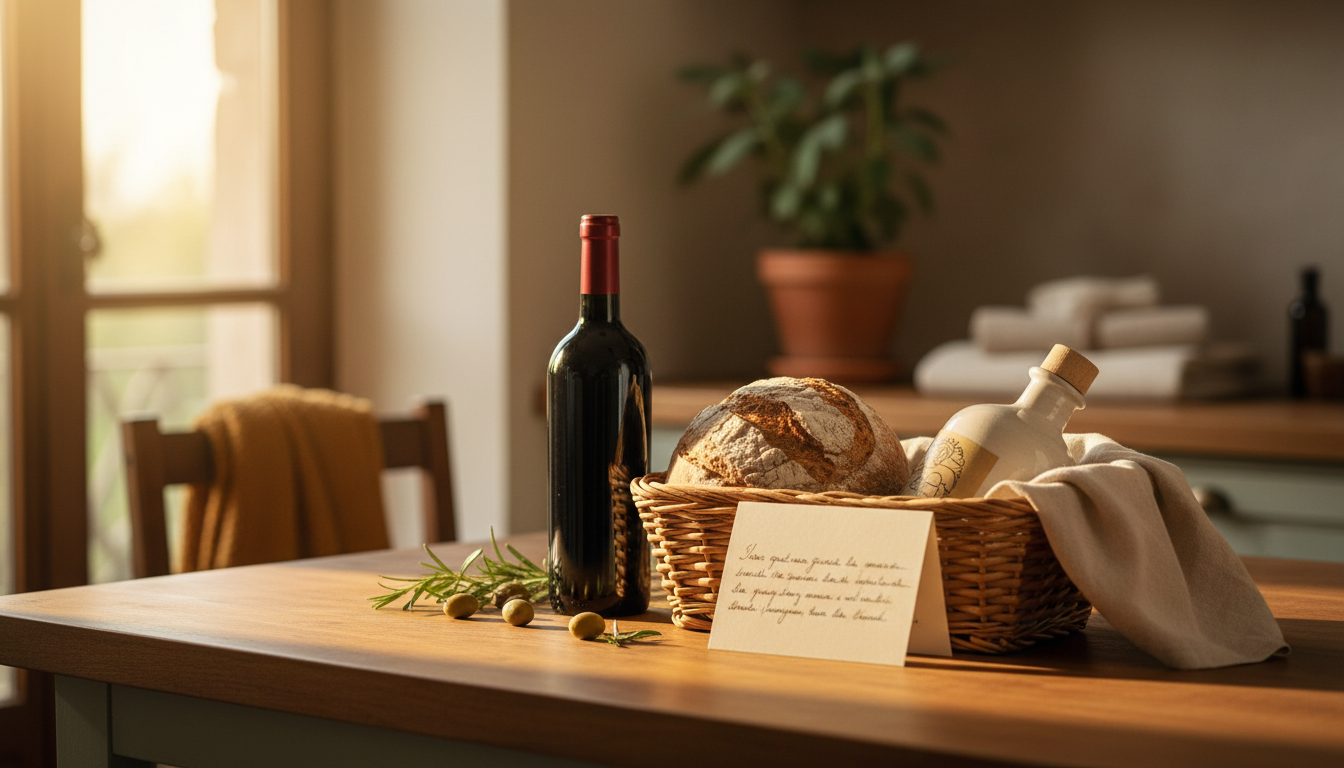 Kitchen counter with a welcome basket containing Italian wine, fresh bread, local olive oil, and a h
The House Manual
Italian apartments have quirks. The hot water heater might need to be switched on manually. The shutters might require a specific technique. The building's front door might have a code that changes monthly. Expect a detailed house manual—and actually read it.
Common Rome-specific notes include:
- Garbage sorting (Rome has strict recycling rules; the wrong bag on the wrong day results in fines)
- Noise regulations (many buildings prohibit noise after 10 PM and during afternoon riposo)
- Water pressure issues (older buildings in the centro storico often have temperamental plumbing)
Communication During Your Stay
Most hosts are happy to answer questions via WhatsApp or the SwappaHome messaging system. Don't abuse this—they're on vacation too—but reasonable questions about the washing machine or the nearest pharmacy are fair game.
Some hosts offer to meet you in person for a handover. If this is offered, take it. A thirty-minute walkthrough prevents days of frustration with unfamiliar appliances.
Practical Tips for First-Time Home Exchangers in Rome
Rome rewards preparation. These tips come from years of SwappaHome community feedback about what works—and what doesn't—in the Eternal City.
Navigate Like a Local
Rome's public transit is... functional. The metro has only three lines (A, B, and C), and they don't cover the centro storico well. Buses are more useful but notoriously unreliable. Most Romans walk or use scooters.
For a home exchange stay, walking is usually the answer. Rome is smaller than it looks on a map—you can walk from the Vatican to the Colosseum in about 45 minutes. Download Citymapper or Moovit for real-time transit updates when walking isn't practical.
Taxis are expensive (€15–25 for most in-city trips) but sometimes necessary. Use the IT Taxi app to avoid the language barrier and ensure you're getting the metered rate.
Shop Where Romans Shop
Skip the tourist-trap minimarkets near major attractions. They charge €4 for a bottle of water that costs €0.50 at a normal supermarket. Instead:
- Conad and Carrefour Express are the most common supermarket chains—there's one in virtually every neighborhood
- Mercato Trionfale near the Vatican is Rome's largest covered market, with better prices than the more famous Campo de' Fiori
- Eataly Roma at Ostiense is pricey but excellent for specialty items and prepared foods
For wine, skip the enotecas in tourist areas and head to Trimani near Termini or Enoteca Ferrara in Trastevere. Both have knowledgeable staff and fair prices on local wines.
Understand the Rhythm of Roman Life
Rome operates on a schedule that confuses first-time visitors:
- Breakfast: 7–10 AM, standing at a bar (cornetto and cappuccino, €2–3 total)
- Lunch: 12:30–2:30 PM, often the main meal
- Riposo: 2–4 PM, when many small shops close
- Aperitivo: 6–8 PM, drinks with free snacks at many bars
- Dinner: 8–10 PM start time (earlier and you'll dine alone with tourists)
Your home exchange gives you the flexibility to follow this rhythm naturally. Make a big lunch, nap during riposo, and don't rush to dinner.
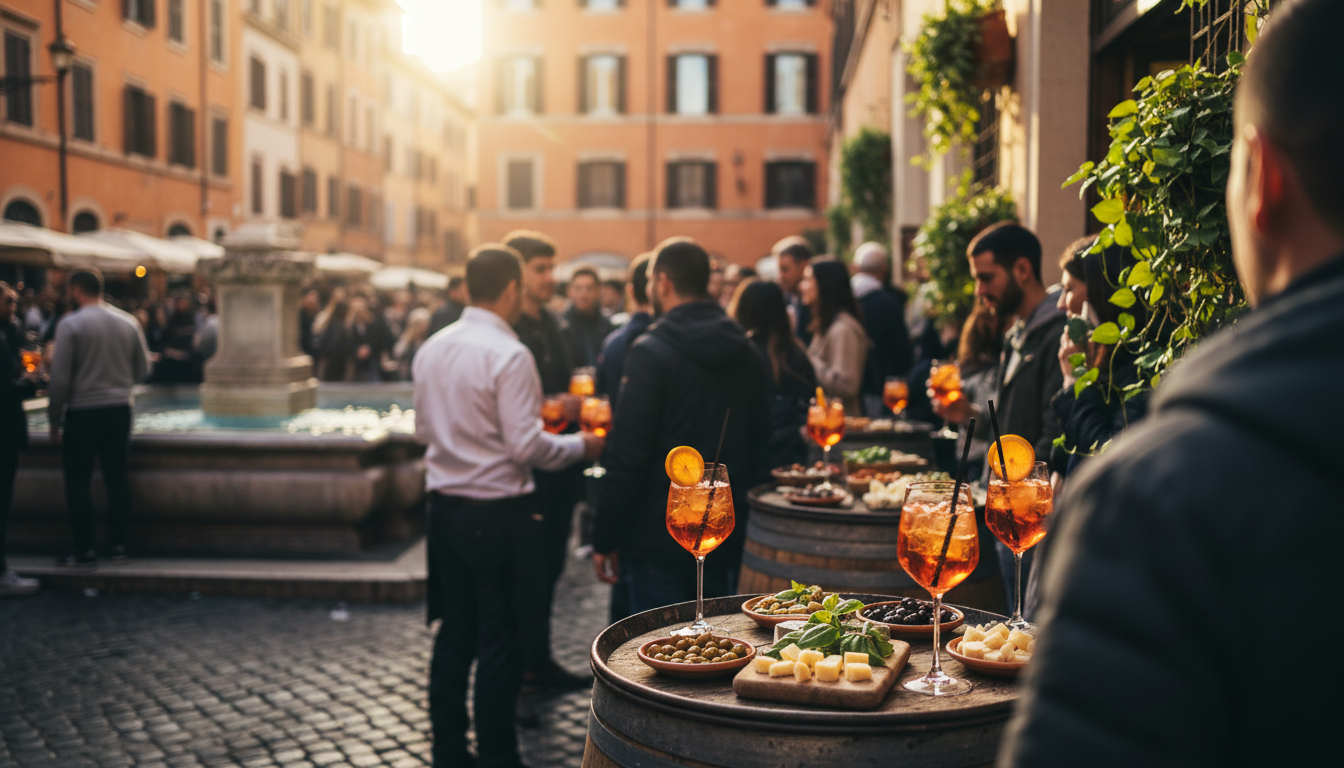 Crowded aperitivo scene at a Trastevere bar, people spilling onto the piazza with Aperol spritzes an
Handle the Bureaucratic Stuff
Italy requires tourists to register with local police within 48 hours of arrival. Hotels handle this automatically; home exchanges require your host to submit a notification. Most experienced hosts know this—confirm with yours before arrival.
Rome also charges a tourist tax (tassa di soggiorno): €3.50–7 per person per night depending on accommodation type. For home exchanges, this technically applies but is rarely collected. Discuss with your host to understand local practice.
Common Mistakes First-Time Home Exchangers Make in Rome
These errors come up repeatedly in the SwappaHome community. Learn from others' experiences.
Overpacking for Italian Weather
Rome's climate is mild but variable. Spring and fall can swing from warm afternoons to chilly evenings. Pack layers, not bulk. Your home exchange gives you access to a washing machine—use it. A week's worth of clothes is plenty for a two-week stay.
Underestimating August
August in Rome is a paradox. The city empties as Romans flee to the coast, leaving behind closed restaurants, shuttered shops, and temperatures above 35°C (95°F). Some travelers love the quiet; others find a ghost town.
If you're exchanging in August, confirm that your host's neighborhood has open restaurants and shops. Some areas (particularly Testaccio and Trastevere) maintain more summer activity than others.
Forgetting About Siesta Culture
That charming boutique you wanted to visit? Closed from 1–4 PM. The pharmacy you need? Same. Rome's riposo tradition is real, and planning your day around it prevents frustration.
Major attractions and chain stores stay open, but small shops, family restaurants, and neighborhood services observe the afternoon break. Use those hours for a long lunch, a nap in your exchange apartment, or visiting the big museums (which tend to be less crowded during riposo).
Skipping the Neighborhoods for the Sights
First-time visitors often spend their entire trip in the tourist triangle (Vatican–Colosseum–Trevi Fountain) and miss what makes Rome actually special. Your home exchange puts you in a real neighborhood—use it.
Spend at least one full day without visiting a single attraction. Drink coffee at the local bar. Browse the neighborhood market. Sit in the piazza and watch Roman life unfold. This is why you chose home exchange over a hotel.
Making Your Rome Home Exchange Unforgettable
The best home exchanges transcend accommodation. They create connection—with a place, with a family, with a way of life different from your own.
Leave the Apartment Better Than You Found It
Basic etiquette, but worth emphasizing. Strip the beds, run the dishwasher, take out the trash. Leave a small gift—something from your home region that your hosts can't easily find in Rome.
Many SwappaHome members maintain ongoing relationships with their exchange partners, returning to the same Roman apartment year after year. These relationships start with respect.
Document What You Discover
Your hosts will appreciate a note about what you found in their neighborhood—the bakery that makes exceptional maritozzi, the wine bar with the €8 aperitivo spread, the shortcut through the courtyard that saves ten minutes walking to the metro.
This kind of reciprocal knowledge-sharing is what makes home exchange communities work. You benefit from your hosts' local expertise; pay it forward.
Plan Your Next Exchange Before You Leave
The best time to arrange future home exchanges is while you're actively traveling. You'll have fresh enthusiasm, recent photos, and compelling stories to share with potential hosts. Many experienced exchangers book their next destination before returning home.
Rome often serves as a gateway to Italian home exchange. Once you've experienced staying in a Roman apartment, Florence, the Amalfi Coast, and Sicily start calling. The SwappaHome community is particularly strong throughout Italy—your Roman hosts may have recommendations for their favorite exchange partners in other regions.
The Honest Truth About Home Exchange in Rome
Home exchange isn't for everyone. It requires flexibility, trust, and comfort with uncertainty. You're staying in someone's actual home, with their furniture, their art, their particular way of organizing a kitchen. Some travelers find this intimate and enriching; others find it stressful.
But for visitors who want more than a tourist experience—who want to feel, even briefly, what it might be like to actually live in this ancient, chaotic, sun-drenched city—home exchange offers something hotels simply cannot.
You'll wake up to the sound of the neighborhood coming alive. You'll know which café makes the best cappuccino within a three-block radius. You'll have a favorite bench in the local piazza. And when you leave, you'll leave behind a piece of yourself—in the notes you write for future guests, in the small improvements you make to the apartment, in the relationship you've built with a Roman family you may never meet in person.
That's the magic of home exchange in Rome. It's not just free accommodation. It's a different way of traveling—slower, deeper, more human.
SwappaHome makes this possible with a simple credit system: one credit per night, whether you're hosting or staying. New members start with seven free credits—enough for a full week in Rome. And because you don't need a simultaneous swap, you can host guests from Rome at your convenience and travel whenever works for you.
The Eternal City has been welcoming visitors for millennia. Home exchange just offers a better way to arrive.
Frequently Asked Questions
Is home exchange in Rome safe for first-time visitors?
Home exchange in Rome is generally very safe. The SwappaHome verification system and review process create accountability between members. Most experienced exchangers recommend reviewing a potential host's profile thoroughly, communicating clearly before arrival, and trusting your instincts. Rome itself is a safe city for tourists, with typical urban precautions applying.
How much can I save with home exchange versus hotels in Rome?
A mid-range hotel in central Rome costs €150–250 per night. Over a two-week stay, that's €2,100–3,500 in accommodation alone. Home exchange costs zero for the accommodation itself (just your SwappaHome membership), meaning savings of 70–90% compared to hotels. Add kitchen access reducing meal costs, and total trip savings often exceed €3,000.
What's the best time of year for a home exchange in Rome?
Spring (April–June) and fall (September–October) offer ideal weather and manageable crowds. August sees many Romans leaving the city, which means more available listings but closed neighborhood businesses. Winter (November–February) is quietest, with lower demand making exchanges easier to arrange but shorter daylight hours limiting sightseeing.
Do I need to speak Italian for a home exchange in Rome?
Italian isn't required but is deeply appreciated. Most Roman hosts in the SwappaHome community speak some English, and communication about practical matters works fine. Basic Italian phrases ("buongiorno," "grazie," "permesso") open doors in neighborhood shops and markets. Your home exchange experience will be richer with even minimal language effort.
Can I do a home exchange in Rome with children?
Absolutely—Rome is excellent for family home exchanges. Many Roman apartments are family-sized with multiple bedrooms, and hosts often leave children's books, toys, and equipment. Neighborhoods like Prati and Monteverde are particularly family-friendly, with parks, playgrounds, and quieter streets. Specify your family composition when searching to find appropriate listings.

Published by
SwappaHome
SwappaHome Editorial Team
Home Exchange & Slow Travel Editorial
The SwappaHome Editorial Team brings together travel research, home-exchange community insights, and platform data to produce practical guides for first-time and experienced home swappers. Every article cites real platforms, current market rates, and verifiable city-level facts so readers can make informed decisions without guessing.
Ready to try home swapping?
Join SwappaHome and start traveling by exchanging homes. Get 7 free credits when you sign up!
Related articles

Bachelor and Bachelorette Parties in Singapore: The Complete Home Swap Group Guide for 2026
Planning a bachelor or bachelorette party in Singapore? Discover how home swapping lets groups of 6-12 stay together in luxury condos, saving thousands while partying in Marina Bay.

Cycling in Lisbon: 7 Home Swap Bike Tour Itineraries for Every Rider
Discover the best cycling routes in Lisbon with these home swap bike tour itineraries—from waterfront paths to hilltop adventures, all starting from your borrowed home.

Graduation Trip to Barcelona: How Home Swapping Gives New Graduates the Ultimate Celebration
Planning a graduation trip to Barcelona? Discover how home swapping lets new graduates explore Spain's most vibrant city without the hostel crowds or hotel costs.