Rome Home Exchange: 2026 Market Trends, Neighborhoods, and How to Score the Best Swaps

SwappaHome Editorial Team
Home Exchange & Slow Travel Editorial
Rome home exchange demand jumped 47% in 2025. Here's where to find swaps in Trastevere, Testaccio, and beyond—plus what Roman hosts actually want.
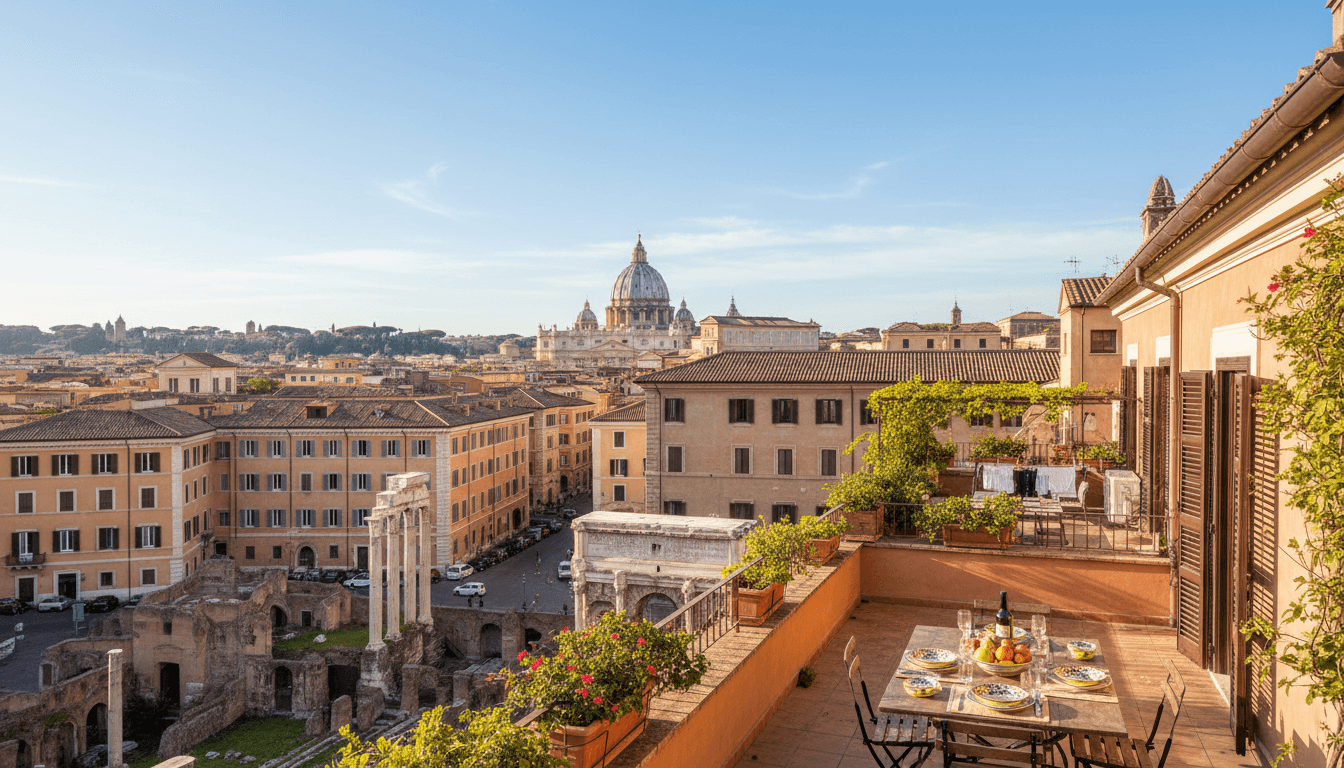
The morning light hits differently in Trastevere. You're standing on a third-floor terrace overlooking ochre-washed buildings, espresso in hand, while the bells of Santa Maria in Trastevere echo across cobblestones worn smooth over two millennia. This isn't a €400-a-night boutique hotel experience—it's a Tuesday morning during your Rome home exchange, and you've paid exactly zero euros for accommodation.
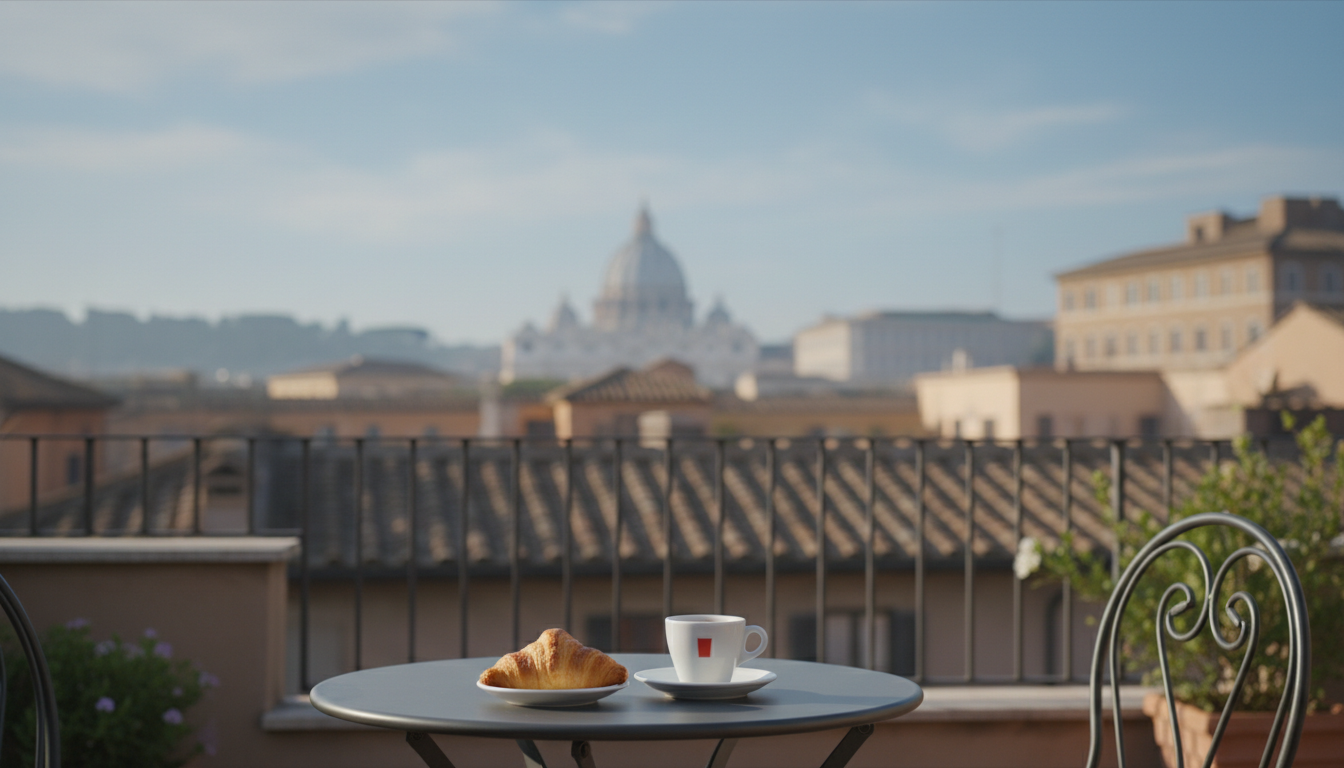 Early morning view from a Trastevere apartment terrace, terracotta rooftops stretching toward the do
Rome's home exchange market has transformed dramatically since 2023. What was once a niche option for budget-conscious academics on sabbatical has become one of the most active home-swap markets in Southern Europe. The numbers tell a striking story: listings in Rome grew 47% between January 2024 and December 2025, with the most significant growth concentrated in neighborhoods that tourists rarely discover through conventional booking platforms.
Here's what's actually happening in the Eternal City's home exchange scene—and how to position yourself to land the best swaps in 2026.
Why Rome Home Exchange Demand Exploded (And Keeps Growing)
Rome has always been expensive. That's not news. But the gap between what hotels charge and what travelers actually get has widened into a canyon.
Consider the math that SwappaHome members frequently cite: a mid-range hotel in Centro Storico runs €180-320 per night in 2026. A "budget" Airbnb in a decent neighborhood? €120-200, plus cleaning fees, plus the city's tourist tax of €3-7 per person per night depending on accommodation type. For a two-week Roman holiday, a family of four easily spends €3,500-5,000 on accommodation alone.
Home exchange flips this equation entirely. The only costs are your SwappaHome membership and Rome's tourist tax—which, notably, doesn't apply to home exchanges in many interpretations of Italian tax law, since no commercial transaction occurs. Most home-swap travelers in Rome report total accommodation costs under €200 for extended stays.
But cost savings alone don't explain the 47% growth. Three other factors matter more.
Roman apartments are genuinely spectacular. The city's housing stock includes Renaissance-era buildings with original frescoed ceilings, Art Nouveau palazzos in Prati, and converted monasteries in Aventino. These aren't available on hotel booking sites at any price. Home exchange unlocks inventory that simply doesn't exist in the commercial market.
Remote work changed everything. The "work from Rome" crowd discovered that a month in Monteverde costs the same as a week at the Hotel de Russie. Extended stays of 2-4 weeks now represent 34% of Rome home exchange bookings, up from 12% in 2021.
Italian hosts want to travel too. Italy's outbound tourism recovered faster than inbound after 2022, and Roman homeowners discovered that their apartments—which feel ordinary to them—are extraordinarily desirable to visitors from London, Sydney, and San Francisco. The supply side caught up with demand.
Rome Home Exchange Neighborhoods: Where to Look in 2026
The neighborhood you choose shapes your entire Roman experience. Most first-time visitors default to Centro Storico (the historic center around Piazza Navona and the Pantheon), but experienced home-swappers know that's rarely the best strategy.
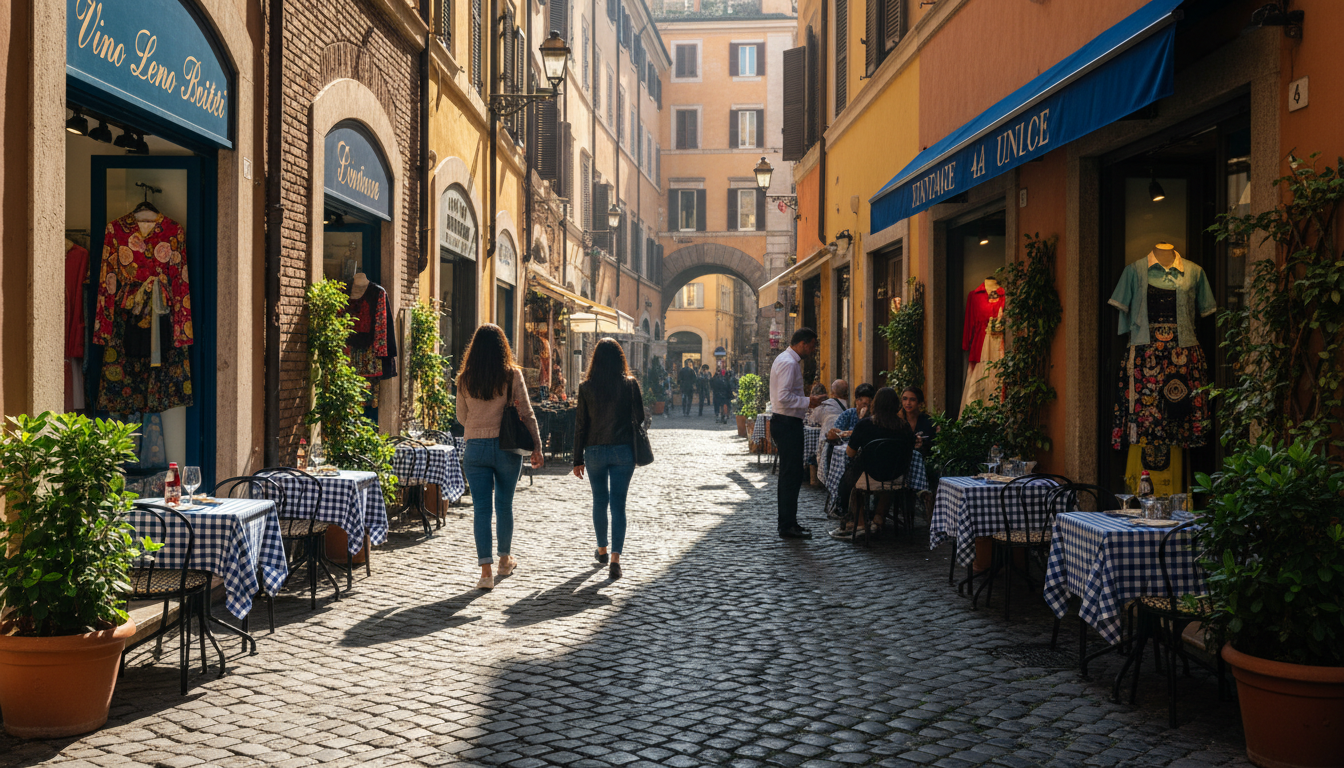 Narrow cobblestone street in Monti neighborhood, vintage clothing shops and wine bars with outdoor s
Trastevere: The Obvious Choice (For Good Reason)
Trastevere remains the most requested neighborhood for Rome home exchange, and the competition reflects it. Listings here receive 3-4x more booking requests than comparable properties in other neighborhoods.
The appeal is obvious: medieval streets, excellent restaurants (Da Enzo al 29 for cacio e pepe, Tonnarello for late-night pasta), proximity to the historic center via a 15-minute walk across Ponte Sisto, and a village-within-a-city atmosphere that makes you feel like a local rather than a tourist.
Here's the honest truth, though—Trastevere has become somewhat victim to its own popularity. Summer evenings bring crowds of tourists and pub-crawl groups that can feel overwhelming. The neighborhood works best for home exchanges in shoulder seasons (March-May, October-November) or for travelers who don't mind the bustle.
Typical Trastevere home exchange listings: 60-90 square meter apartments, often with small terraces or balconies, in buildings dating from the 17th-19th centuries. Many lack elevators—prepare to climb. Air conditioning is common but not universal, so confirm before booking June-September stays.
Testaccio: The Insider's Pick
Ask Roman food writers where they'd live, and most name Testaccio. This working-class neighborhood south of Aventino Hill has the city's best market (Mercato di Testaccio, open Monday-Saturday until 2pm), some of its most authentic trattorias, and a fraction of Trastevere's tourist density.
Testaccio home exchange listings have grown 62% since 2024—the fastest growth of any Roman neighborhood. The demographic skews toward food-focused travelers, often couples in their 40s-60s who prioritize culinary experiences over monument-hopping.
The neighborhood's signature dishes originated here: coda alla vaccinara (oxtail stew), pajata (intestine pasta), and the original Roman-style pizza at Da Remo. If your home exchange host leaves restaurant recommendations, follow them religiously.
Testaccio connects to the rest of Rome via the B line metro (Piramide station) and multiple bus routes. Piramide also serves Fiumicino airport via the Leonardo Express, making airport transfers simple.
Monti: Best for First-Time Visitors
Monti threads the needle between location and livability. It's a 10-minute walk from the Colosseum, 15 minutes from Termini station, and 20 minutes from the Trevi Fountain—yet it maintains a neighborhood feel with local shops, wine bars, and the Via del Boschetto vintage scene.
Home exchange listings in Monti tend toward smaller apartments (40-70 square meters) in buildings from the late 1800s to early 1900s. Many have been recently renovated, meaning modern kitchens and reliable wifi—important for remote workers.
The neighborhood's main drawback: noise. Monti's popularity means busy streets until late evening, and some buildings on Via dei Serpenti or Via Leonina face significant traffic sounds. Ask hosts about noise levels before confirming.
Prati: The Practical Choice
Prati doesn't appear on most tourist itineraries, which is precisely why it works for home exchange. This residential neighborhood near Vatican City offers wide boulevards, excellent everyday shopping (try the covered market at Mercato Trionfale), and apartments with space that's rare in central Rome.
Families gravitate toward Prati home exchanges. Apartments here average 80-120 square meters, often with multiple bedrooms and full-sized kitchens. The neighborhood is safe, quiet after 9pm, and well-connected via the A line metro (Ottaviano and Lepanto stations).
The trade-off: Prati feels more like living in Rome than visiting it. There's less Instagram-worthy scenery, fewer historic churches per block, and a distinctly residential atmosphere. For travelers who want to experience Roman daily life—morning cappuccino at the corner bar, evening passeggiata along Via Cola di Rienzo—it's ideal.
Emerging Neighborhoods Worth Watching
Garbatella: This 1920s garden-suburb south of Testaccio has seen listing growth of 89% in two years. The architecture is unique (workers' housing designed with courtyards and communal spaces), the restaurants are excellent and cheap, and the B line metro provides easy access to central Rome.
San Lorenzo: The university district near Termini has a younger, grittier energy. Home exchange listings here tend toward smaller apartments at lower credit costs, and the neighborhood's street art, live music venues, and late-night pizzerias attract a specific traveler profile.
Ostiense: Former industrial zone now filling with galleries, restaurants, and converted warehouse apartments. The neighborhood includes the stunning Centrale Montemartini museum (Roman sculptures displayed among industrial machinery) and some of Rome's most interesting contemporary architecture.
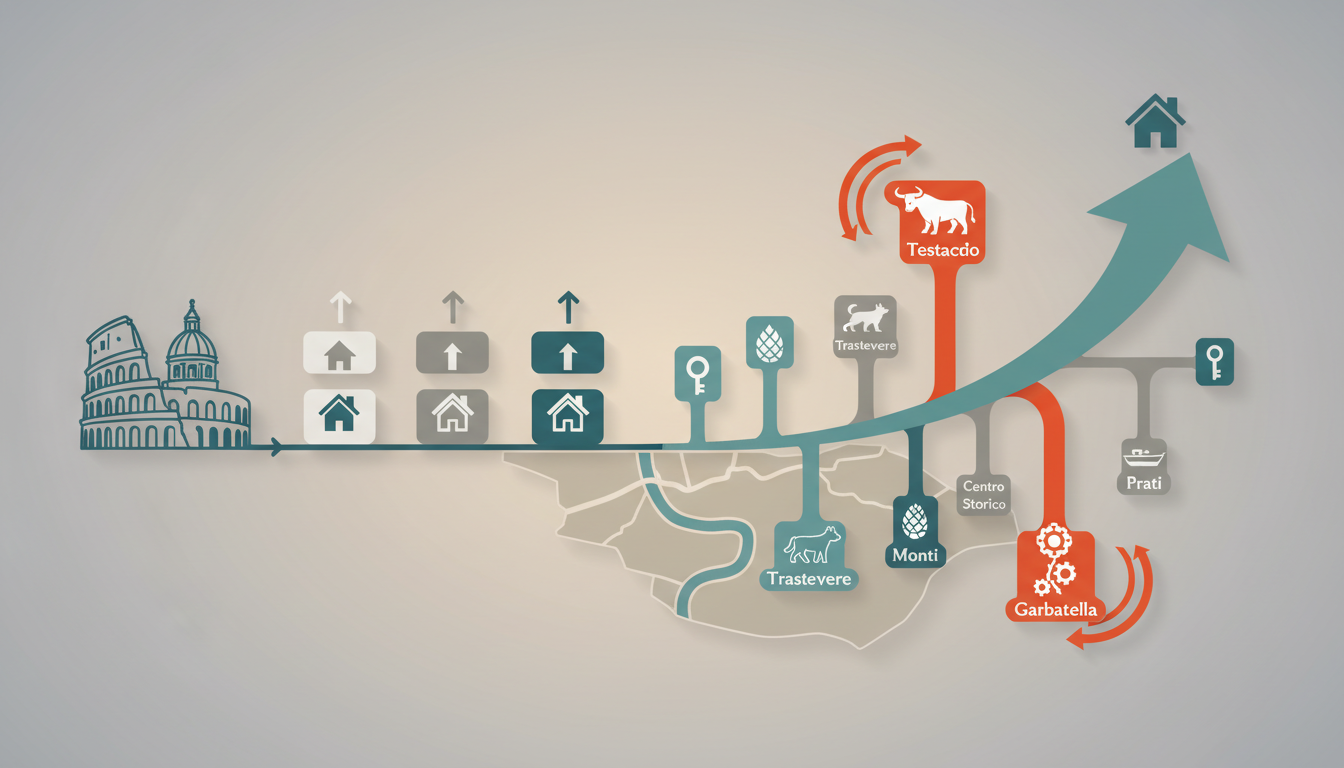 Infographic showing Rome home exchange growth by neighborhood from 2023-2026, with Testaccio and Gar
What Roman Hosts Actually Want (And How to Get Accepted)
Rome home exchange isn't just about finding a listing—it's about convincing a Roman homeowner to accept your request. The acceptance rate for first-time SwappaHome members requesting Roman properties hovers around 35%. Experienced members with complete profiles and positive reviews see rates above 70%.
The difference isn't luck. It's understanding what Roman hosts prioritize.
Your Profile Matters More Than Your Request
Roman hosts consistently report that they decide whether to accept a request based on the requester's profile before reading the message. A sparse profile with no photos, incomplete home description, and zero reviews triggers immediate skepticism.
The SwappaHome community has identified several profile elements that Roman hosts specifically look for:
Verified identity: Hosts in Rome strongly prefer members who've completed identity verification. Italy has had well-publicized issues with short-term rental fraud, and verification signals legitimacy.
Complete home listing: Even if a Roman host has no interest in visiting your city, they want to see that you're a real homeowner who maintains their property. Detailed descriptions and quality photos demonstrate this.
Review history: Any reviews help. Even a single positive review from a previous exchange increases acceptance rates significantly.
Specific interests: Hosts respond better to profiles that mention specific interests ("we're particularly interested in Roman cuisine" or "my partner is an architecture student") than generic travel enthusiasm.
The Request Message Formula That Works
SwappaHome members who successfully book Rome home exchanges report using a consistent message structure:
Paragraph 1: Brief introduction—who you are, where you're from, your travel dates, and party composition. Keep it to 3-4 sentences.
Paragraph 2: Why their specific neighborhood or property appeals to you. This cannot be generic. "We chose Testaccio because we want to cook with ingredients from Mercato di Testaccio" works. "We love Rome" doesn't.
Paragraph 3: What you offer in return. This isn't about reciprocal swaps (though those help)—it's about demonstrating that you'll care for their home. Mention your own hosting experience, your profession if relevant, or specific ways you'll respect their space.
Paragraph 4: Practical details—arrival/departure times, any questions about the property, flexibility on dates if applicable.
Avoid overly long messages (hosts skim), excessive flattery (feels insincere), and any hint of treating the exchange as a budget hotel alternative rather than a home-sharing arrangement.
Timing Your Request
Rome home exchange demand peaks during Easter week (variable dates, extremely high demand), late April through early June, September through mid-October, and the Christmas/New Year period.
For peak periods, send requests 3-4 months in advance. Competition is fierce, and the best listings book early.
Shoulder season requests (January-February, November, late July-August) can be sent 4-6 weeks out. August in particular is underrated—many Romans leave the city for beach vacations, creating unusual availability in otherwise competitive neighborhoods.
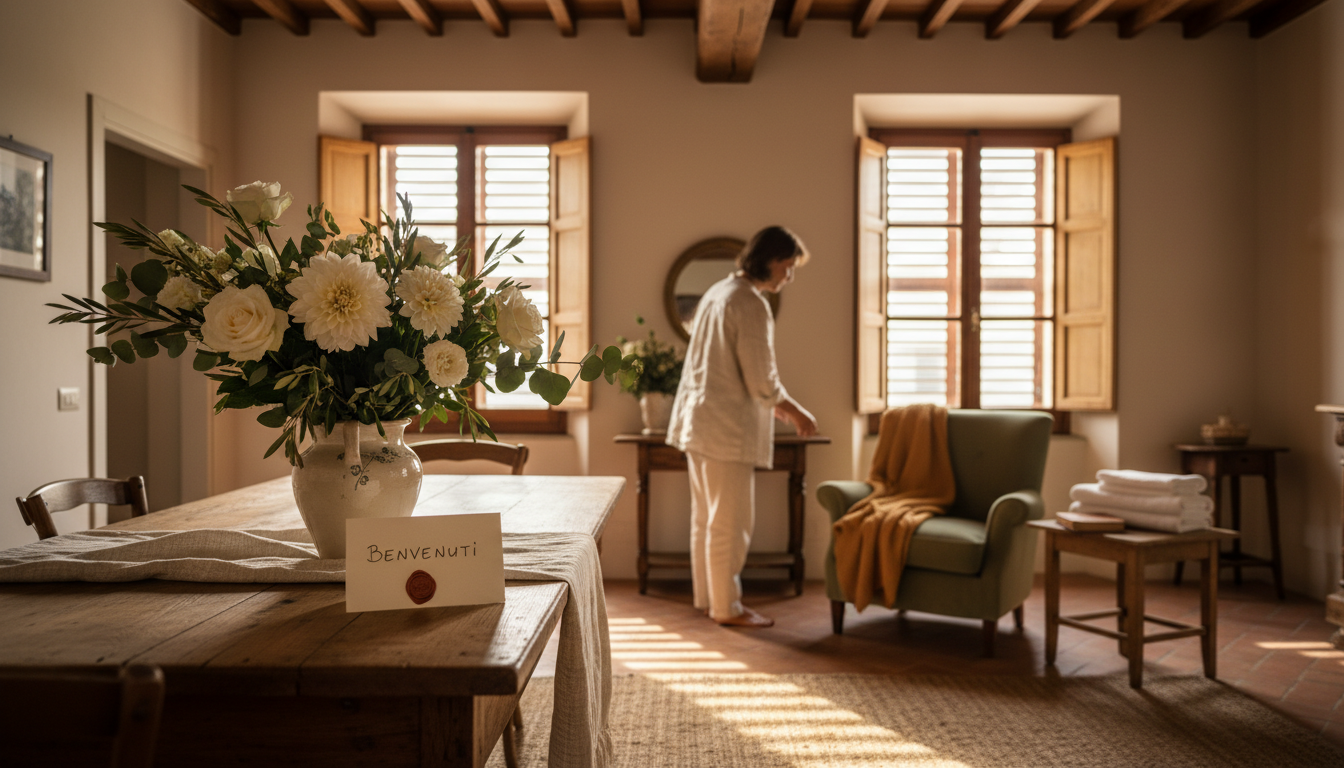 Roman host preparing an apartment for incoming guests, fresh flowers on the table, handwritten welco
The Economics of Rome Home Exchange in 2026
Let's get specific about money, because vague claims about "saving thousands" don't help anyone plan.
What You'd Pay Otherwise
Rome accommodation costs in 2026, based on current market rates:
Hotels:
- Budget (2-star near Termini): €80-120/night
- Mid-range (3-star in decent location): €150-250/night
- Upscale (4-star in Centro Storico): €280-450/night
- Luxury (5-star): €500-1,200/night
Short-term rentals:
- Studio in peripheral neighborhood: €70-100/night
- 1-bedroom in central area: €120-180/night
- 2-bedroom in desirable neighborhood: €180-280/night
- Large apartment in prime location: €300-500/night
Add to these: cleaning fees (€50-150), tourist tax (€3-7/person/night for rentals), and service fees (10-15% on most platforms).
What Rome Home Exchange Actually Costs
SwappaHome membership: Annual fee provides unlimited exchanges.
Credits: 1 credit per night, regardless of property size or location. A penthouse in Parioli costs the same credits as a studio in San Lorenzo.
Out-of-pocket costs: Tourist tax may or may not apply (interpretations vary—some argue home exchanges aren't commercial accommodation). Even if applied, it's €3-7/person/night.
Real-world example: A two-week stay for a couple in a 2-bedroom Trastevere apartment:
- Short-term rental: €200/night × 14 = €2,800, plus €100 cleaning, plus €84 tourist tax, plus 12% service fee = approximately €3,320
- Home exchange: 14 credits + potential €84 tourist tax = €84 maximum out-of-pocket
The savings are substantial. But the economic logic only works if you have a home to offer in return. Home exchange isn't a one-way transaction—it's a community of people who both host and travel.
Preparing Your Home for Roman Visitors
Here's a perspective shift that improves Rome home exchange success rates: focus as much on making your home appealing to Romans as on finding the perfect Roman apartment.
Roman travelers have specific preferences that differ from other nationalities. Understanding these helps you attract more requests and build the review history that unlocks better exchanges.
What Roman Travelers Look For
Kitchen quality matters enormously. Italians cook. A home with a well-equipped kitchen, quality cookware, and decent coffee-making equipment (Moka pot at minimum, espresso machine preferred) attracts Roman guests. A kitchen with only a microwave and basic utensils signals that you don't understand Italian food culture.
Space to gather. Roman social life centers on meals with friends and family. Homes with dining tables that seat 6+, outdoor space for aperitivo, or living rooms configured for conversation perform better than homes optimized for solo travelers.
Location context. Romans care less about being "central" than about neighborhood character. A home in an interesting neighborhood with good local restaurants appeals more than a generic suburban location, even if the suburb is technically closer to tourist attractions.
Practical information. Leave detailed notes about your neighborhood: where to get coffee, which bakery has the best bread, where locals eat dinner. This kind of insider knowledge is exactly what Romans seek when traveling.
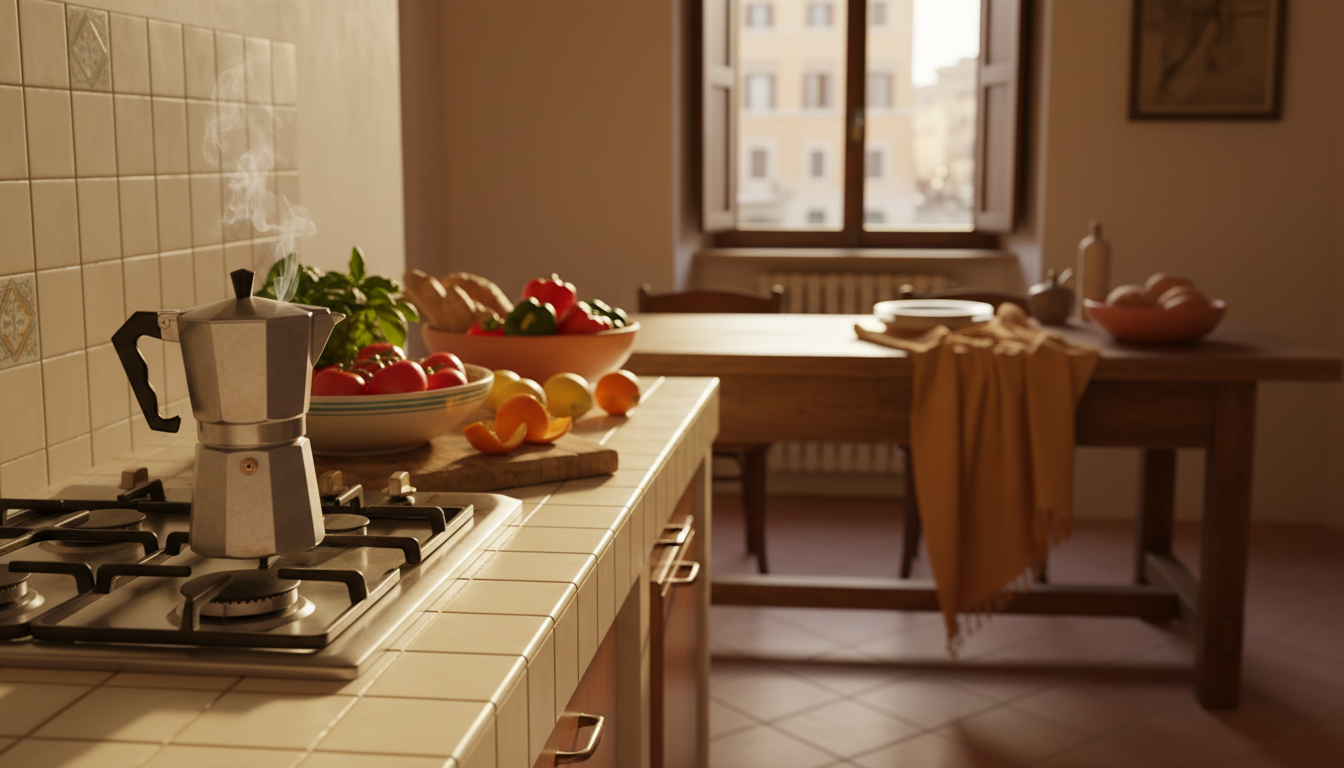 Well-equipped Italian-style kitchen in a home exchange property, Moka pot on the stove, fresh produc
Navigating Rome Home Exchange Logistics
Airport Transfers and Arrival
Rome has two airports: Fiumicino (FCO), the main international hub, and Ciampino (CIA), used primarily by budget carriers.
From Fiumicino:
- Leonardo Express train to Termini: €14, 32 minutes, runs every 15 minutes
- Regional train to Trastevere/Ostiense stations: €8, 30-45 minutes
- Taxi (fixed rate to center): €50
- Private transfer: €50-80 depending on service
From Ciampino:
- Bus to Termini: €6-7, 40 minutes
- Taxi: €31 (fixed rate)
Coordinate arrival times with your host. Unlike hotels, home exchanges don't have 24-hour reception. Most Roman hosts prefer arrivals between 2pm-8pm, though flexibility varies.
Key Handoff Arrangements
Roman home exchanges typically use one of three key arrangements:
In-person handoff: Host meets you at the apartment, shows you around, explains quirks (Italian plumbing always has quirks). This is ideal but requires schedule coordination.
Key lockbox: Increasingly common. Host leaves keys in a coded lockbox, sends detailed arrival instructions. Works well for late arrivals or when host travel schedules don't align.
Neighbor or portiere handoff: Many Roman buildings have a portiere (doorman/building manager) who can hold keys. Some hosts arrange for a trusted neighbor to meet guests.
Confirm the arrangement at least one week before arrival. Have a backup communication method (WhatsApp is universal in Italy) in case of delays.
Italian Apartment Quirks
Roman apartments operate differently than North American or Northern European homes.
Electricity: Italian outlets use Type L plugs (three round pins in a row). Bring adapters. Many apartments have limited electrical capacity—running the air conditioning, hair dryer, and washing machine simultaneously may trip the breaker.
Water heating: Many apartments have small water heaters (boilers). Long showers may exhaust hot water. Ask your host about capacity.
Shutters (persiane): Most Roman windows have exterior shutters that block light completely. Learn how to operate them—they're essential for sleeping in summer.
Garbage sorting: Rome has strict waste sorting requirements. Your host should explain the system: organic, plastic/metal, paper, glass, and undifferentiated waste go in separate bins with specific collection days.
Building rules: Many Roman buildings prohibit noise after 10pm and during the afternoon riposo (roughly 1-4pm). Some restrict washing machine use to certain hours. Ask about building-specific rules.
Rome Home Exchange Etiquette: What Experienced Swappers Know
The home exchange community runs on trust and reciprocity. Certain unwritten rules separate experienced swappers from newcomers.
Communication Cadence
Before arrival: Confirm arrival time 2-3 days before. Share your mobile number and flight details if relevant.
During stay: Send a brief message after arrival confirming everything is fine. If any issues arise, communicate immediately rather than waiting until departure.
At departure: Leave the home as clean as you found it (or cleaner). Take out garbage, strip beds, run the dishwasher. Send a departure message confirming you've left and locked up.
After return home: Write your review within one week. Detailed, honest reviews help the community and build your own reputation.
The Reciprocity Question
SwappaHome's credit system means direct reciprocal swaps aren't required—you can host guests from Berlin and use those credits in Rome. However, Roman hosts often prefer members who've demonstrated hosting experience.
If you're new to home exchange and haven't hosted yet, acknowledge this in your request message. Explain that you're committed to the community and plan to host. Some experienced members specifically enjoy introducing newcomers to home exchange and will take a chance on first-time swappers with complete profiles.
Handling Problems
Most home exchanges proceed without issues. When problems arise, the community expectation is direct, respectful communication between members.
Common issues and typical solutions:
Something breaks: Notify your host immediately. For minor items, offer to replace or reimburse. For major issues (plumbing, appliances), ask your host for their preferred repair service.
Cleanliness concerns: If the home isn't as clean as expected, document with photos and message your host. Most hosts are mortified and offer solutions (professional cleaning, credit toward future stays).
Neighbors or building issues: Your host should be your first contact. They know the building dynamics and can often resolve issues with a phone call.
SwappaHome provides the platform for connection but doesn't mediate disputes between members. The community self-regulates through reviews and reputation. This works because most home-swappers are conscientious people who care about maintaining their standing in the community.
Rome Home Exchange: Seasonal Strategies
Spring (March-May)
Prime season. Weather ranges from mild (March, average highs 15°C/59°F) to warm (May, average highs 23°C/73°F). Easter brings peak demand and crowds. Book 3-4 months ahead for April-May stays.
Best for: First-time Rome visitors, those who want to see major sites without summer heat.
Summer (June-August)
June remains pleasant. July-August bring serious heat (35°C/95°F common) and humidity. Many Romans leave for August vacations, creating unusual availability but also meaning some neighborhood restaurants and shops close.
Best for: Travelers who don't mind heat, those seeking August availability, visitors planning day trips to coastal areas (Sperlonga, Santa Marinella).
Critical: Confirm air conditioning before booking summer stays. Many historic buildings lack it.
Fall (September-November)
September rivals spring as the ideal Rome month—warm but not hot, crowds thinner than summer, full restaurant and cultural calendars. October brings occasional rain but remains excellent. November turns cooler and quieter.
Best for: Food-focused travelers (fall produce is exceptional), those seeking shoulder-season value, visitors who prefer fewer crowds.
Winter (December-February)
Rome doesn't get harsh winters (average January highs 12°C/54°F), but it's not beach weather either. Christmas markets and holiday atmosphere appeal to some. January-February are the quietest months, with the lowest home exchange competition.
Best for: Budget-conscious travelers, those who enjoy winter atmosphere, visitors who want major sites without crowds.
The Future of Rome Home Exchange
Three trends will shape Rome's home exchange market through 2026 and beyond.
Regulatory pressure on short-term rentals: Rome has implemented stricter regulations on commercial short-term rentals, including registration requirements and rental caps in certain areas. Home exchange, as a non-commercial activity, faces less regulatory burden—potentially increasing its relative attractiveness.
Continued growth in extended stays: The 2-4 week stay segment continues growing faster than short visits. Expect more listings optimized for longer exchanges: better-equipped kitchens, dedicated workspaces, monthly utility arrangements.
Neighborhood diversification: As Centro Storico and Trastevere listings reach saturation, growth will concentrate in emerging neighborhoods. Garbatella, Ostiense, and even further-out areas like EUR may develop significant home exchange communities.
The fundamental appeal remains unchanged: Rome is one of the world's great cities, Roman apartments are extraordinary, and home exchange makes extended stays financially accessible. The market is maturing, not peaking.
Getting Started with Rome Home Exchange
If you're convinced—and you should be—here's the practical path forward.
Complete your SwappaHome profile thoroughly. Photos of your home, detailed description, verified identity. This matters more than any single request message.
Start hosting. Even one successful hosting experience transforms your profile. Consider hosting guests from Italy specifically—it builds connections and demonstrates your commitment to the community.
Research neighborhoods based on your priorities. Don't default to Centro Storico because it's famous. Think about what you actually want from a Roman stay.
Send requests early. For peak periods, 3-4 months ahead. For shoulder season, 6-8 weeks.
Write specific, thoughtful request messages. Show that you've read the listing carefully and explain why this particular exchange appeals to you.
The Rome home exchange community is active, welcoming, and growing. The city itself is inexhaustible—you could spend years exploring and still discover new neighborhoods, restaurants, and hidden corners. Home exchange makes that kind of deep exploration financially possible.
That terrace in Trastevere is waiting. The morning espresso, the afternoon passeggiata, the late dinner at the neighborhood trattoria—it's all there, and it costs nothing but your willingness to share your own home in return.
Frequently Asked Questions
Is Rome home exchange safe for first-time swappers?
Rome has one of the most established home exchange communities in Europe, with thousands of verified members and years of successful exchanges. The SwappaHome verification system, review history, and community accountability create multiple layers of trust. First-time swappers should complete their profiles thoroughly and consider starting with shorter exchanges to build experience and reviews.
How far in advance should I request a Rome home exchange?
For peak seasons (Easter, April-June, September-October), request 3-4 months ahead. Desirable neighborhoods like Trastevere and Monti book quickly. For shoulder seasons (November-March, excluding Christmas) and August, 4-6 weeks is typically sufficient. Last-minute requests occasionally succeed but limit your neighborhood options significantly.
What's the best neighborhood for a Rome home exchange with kids?
Prati offers the best combination of space, safety, and convenience for families. Apartments average 80-120 square meters with multiple bedrooms, the neighborhood is quiet and residential, and the A line metro provides easy access to major sites. Villa Borghese park is accessible via the Flaminio station, and the Vatican Museums are within walking distance.
Do I need to speak Italian for a Rome home exchange?
No, but basic phrases help. Most Roman hosts in the home exchange community speak English, and communication happens primarily through SwappaHome's messaging system. Learning "buongiorno," "grazie," and "scusi" improves daily interactions. Google Translate handles complex situations adequately. Restaurant menus and signage increasingly include English in tourist-frequented areas.
Can I do a Rome home exchange during August when Romans leave the city?
August is actually an underrated time for Rome home exchange. Many Roman homeowners travel during Ferragosto (mid-August holiday period), creating unusual availability in competitive neighborhoods. The trade-off: some neighborhood restaurants and shops close for vacation, temperatures are hot (35°C+), and the city has a quieter, slightly emptier atmosphere. Confirm air conditioning before booking.
What's the typical size of a Rome home exchange apartment?
Roman apartments in the home exchange market typically range from 50-100 square meters (540-1,080 square feet). Centro Storico and Monti trend smaller (40-70 sqm), while Prati and residential neighborhoods offer larger spaces (80-120 sqm). Historic buildings often have high ceilings that make spaces feel larger than the square footage suggests. Elevators are not universal in older buildings—confirm if mobility is a concern.

Published by
SwappaHome
SwappaHome Editorial Team
Home Exchange & Slow Travel Editorial
The SwappaHome Editorial Team brings together travel research, home-exchange community insights, and platform data to produce practical guides for first-time and experienced home swappers. Every article cites real platforms, current market rates, and verifiable city-level facts so readers can make informed decisions without guessing.
Ready to try home swapping?
Join SwappaHome and start traveling by exchanging homes. Get 7 free credits when you sign up!
Related articles

Bachelor and Bachelorette Parties in Singapore: The Complete Home Swap Group Guide for 2026
Planning a bachelor or bachelorette party in Singapore? Discover how home swapping lets groups of 6-12 stay together in luxury condos, saving thousands while partying in Marina Bay.

Cycling in Lisbon: 7 Home Swap Bike Tour Itineraries for Every Rider
Discover the best cycling routes in Lisbon with these home swap bike tour itineraries—from waterfront paths to hilltop adventures, all starting from your borrowed home.

Graduation Trip to Barcelona: How Home Swapping Gives New Graduates the Ultimate Celebration
Planning a graduation trip to Barcelona? Discover how home swapping lets new graduates explore Spain's most vibrant city without the hostel crowds or hotel costs.