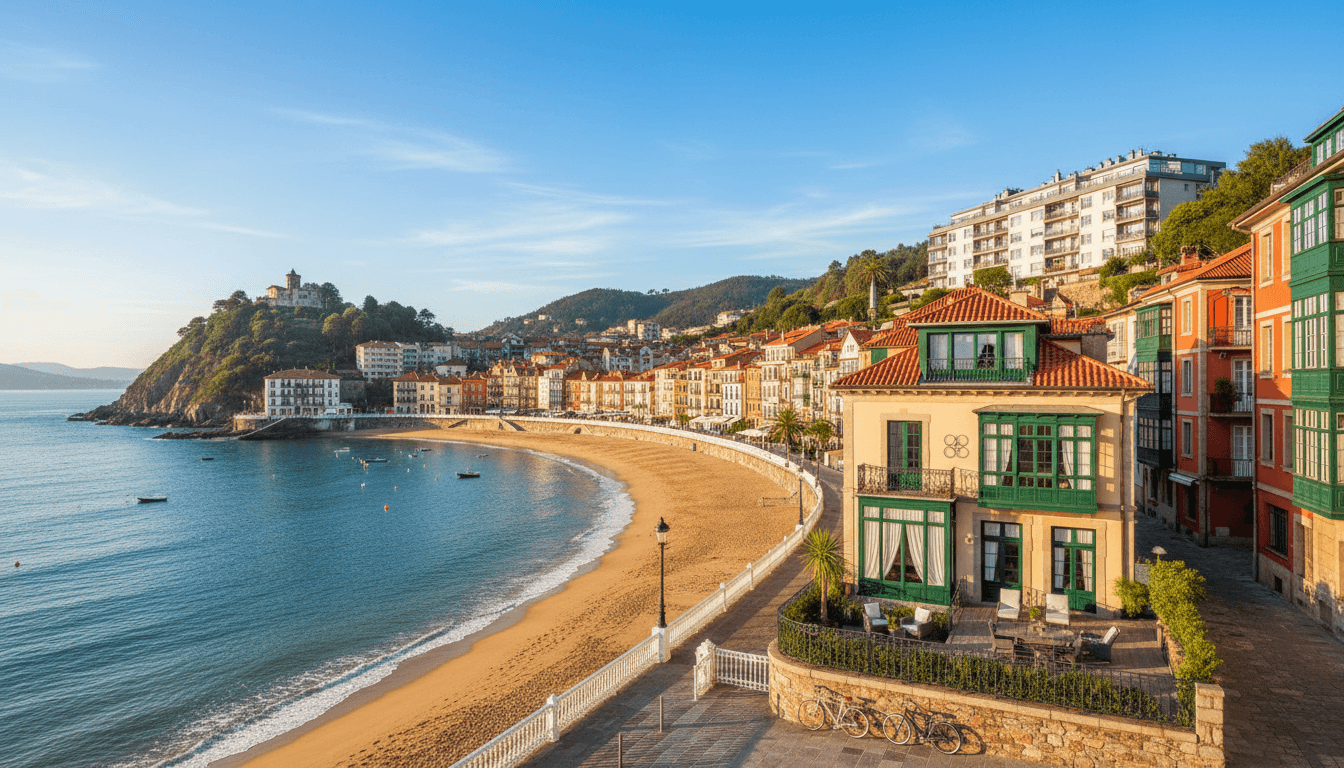
Home Exchange in San Sebastián: 7 Hidden Gem Neighborhoods the Tourists Miss

SwappaHome Editorial Team
Home Exchange & Slow Travel Editorial
Skip the crowded Parte Vieja. These underrated San Sebastián neighborhoods offer authentic Basque living, better home swaps, and locals who'll actually talk to you.
The first time I tried to book a home exchange in San Sebastián, I made the classic mistake. I filtered for properties near La Concha beach, in the postcard-perfect Old Town, within stumbling distance of the famous pintxos bars. Every listing was either unavailable, had a waitlist, or—let's be honest—looked like it was designed more for Instagram than for actually living.
Then a SwappaHome member named Iker messaged me. His apartment wasn't in any neighborhood I'd heard of. "Amara Berri," he wrote. "15 minutes to the beach by foot. My neighbors are mostly families. There's a market on Thursdays."
I almost said no. I'd come this far to stay in the "real" San Sebastián, after all.
Three weeks later, I was eating homemade tortilla española at his neighbor María's kitchen table while her grandkids practiced English on me. That swap changed how I think about this city entirely—and honestly, how I approach home exchange in San Sebastián to this day.
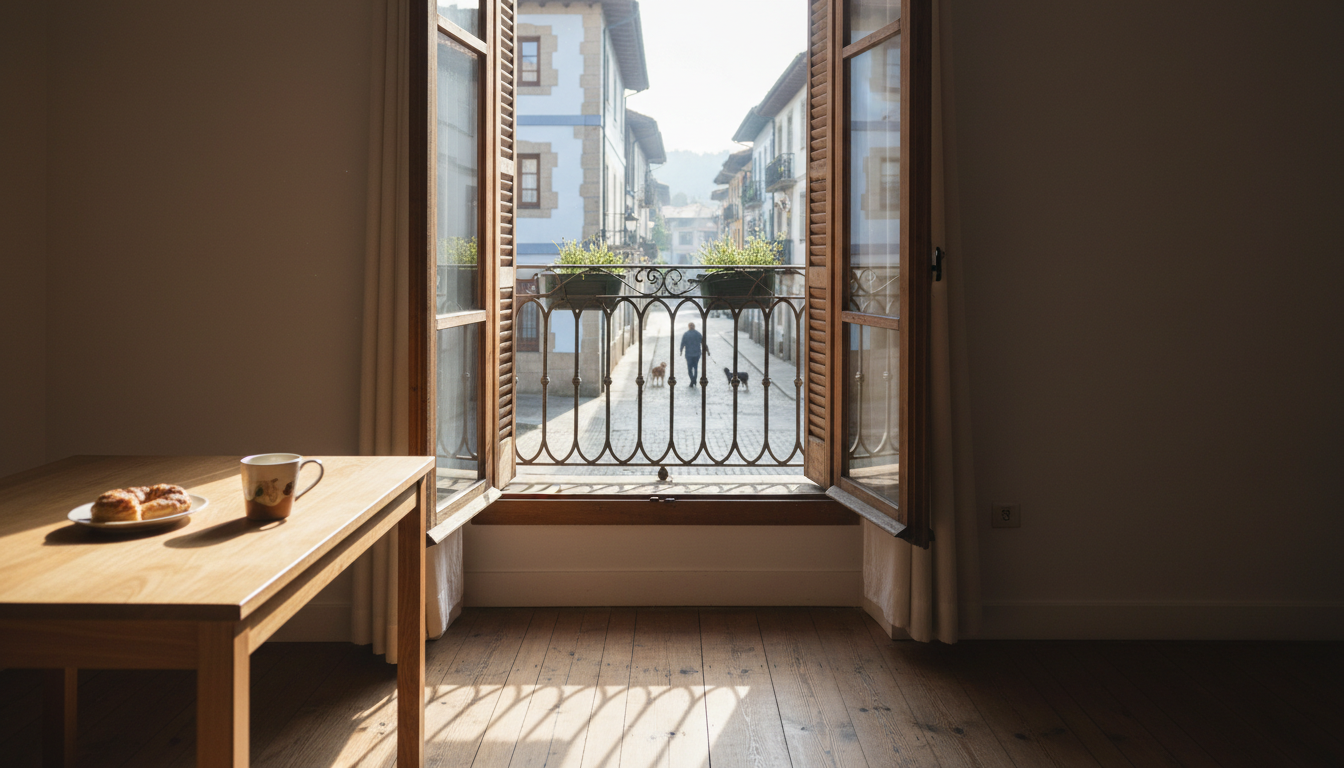 Morning light streaming through a traditional Basque apartment window with wooden shutters, a small
Why the Hidden Neighborhoods Beat the Tourist Centers for Home Exchange
So here's the thing nobody tells you about San Sebastián's famous areas: the people who actually live there are increasingly rare. The Parte Vieja (Old Town) has become so dominated by tourist apartments and seasonal rentals that finding a genuine home exchange—with a real person's life embedded in it—is like finding a parking spot during Semana Grande. Technically possible, but you'll age considerably in the attempt.
The underrated neighborhoods? That's where the magic actually happens.
I'm talking about waking up to the sound of a bread delivery truck instead of drunk tourists. Corner bars where the bartender knows your coffee order by day three. Home exchanges where your host leaves you their favorite butcher's number and a hand-drawn map to "the beach locals use."
The practical benefits stack up too. Home swap listings in these areas tend to be more available—less competition from the Instagram crowd. The apartments are often larger (San Sebastián's historic center has notoriously tiny flats). And your hosts? They're usually people who've lived in their neighborhoods for years, sometimes decades. They know things.
Let me walk you through seven neighborhoods that transformed my understanding of this Basque coastal city. Some are 10 minutes from the beach. Others are a bit further. All of them will give you a San Sebastián experience that the guidebook tourists will never find.
Amara Berri: The Local's Living Room
I have to start here because Amara Berri is where I had my conversion experience. This neighborhood sits south of the Urumea River, technically in "new" San Sebastián—meaning it was developed in the mid-20th century, which in European terms is basically yesterday.
The architecture won't make your heart skip. These are practical apartment blocks, built for Basque families who needed space for three generations under one roof. But that practicality is exactly what makes it gold for home exchange.
The apartments here tend to be genuinely spacious—I'm talking separate bedrooms, actual kitchens with room to cook, sometimes even a small office or extra bathroom. Compare that to the converted fisherman's cottages in the Old Town where you can touch both walls while sitting on the toilet.
 A bustling Thursday morning market in Amara Berri with elderly Basque women selecting vegetables, co
What I love about Amara Berri for home exchange in San Sebastián: the Thursday market on Plaza Amara is the real deal—not a tourist market, but where actual residents buy their week's produce. Your host might leave you a tote bag and a list of which vendors have the best tomatoes. There's a genuine neighborhood bar culture here too. Bars like Hidalgo (Calle San Martín, 52) serve €2.50 pintxos that rival anything in the Old Town at half the price and none of the elbow-throwing.
You're a 15-minute walk to Ondarreta beach (the western end of La Concha, where families and surfers hang out) or a 20-minute walk to the Parte Vieja. Close enough. Far enough.
The Anoeta stadium is here too, so if your swap coincides with a Real Sociedad match, you'll experience the neighborhood transformed—blue and white flags everywhere, families streaming toward the stadium, that electric pre-game energy that makes you feel like you're part of something.
Typical home swap here: 2-3 bedroom apartment, often with a balcony, fully equipped kitchen. Hosts tend to be working professionals or retirees who've raised families in the neighborhood.
Gros: The Surfer's Secret (That's Getting Less Secret)
Okay, Gros isn't exactly hidden anymore—it's been "discovered" by the younger, hipper crowd over the past decade. But here's the thing: most tourists still don't stay here. They visit for dinner, maybe catch a surf lesson at Zurriola beach, then retreat to their overpriced Old Town rental.
Which means the home exchange opportunities in Gros remain genuinely excellent.
Gros sits on the east side of the Urumea River, facing the open Atlantic rather than the protected bay of La Concha. The vibe is completely different—more casual, more creative, younger but not exclusively so. Think Brooklyn to the Old Town's Manhattan, if Brooklyn had world-class waves breaking 50 meters from your door.
The neighborhood developed in the late 19th century as a working-class residential area, and that DNA still shows. The streets are gridded and practical. The buildings are handsome but not precious. There are actual hardware stores and laundromats mixed in with the craft cocktail bars.
 Sunset over Zurriola beach in Gros, surfers in wetsuits walking with boards, the distinctive Kursaal
For home exchange, Gros offers a sweet spot: you get beach access (Zurriola is right there), a thriving food and bar scene (Calle Peña y Goñi is lined with excellent spots), and that lived-in neighborhood feel. The apartments here often have that coveted combination of historic bones with modern updates—high ceilings, original tile floors, but renovated kitchens and decent wifi.
My friend Lucia did a home swap in Gros last summer. Her host, a graphic designer named Ainhoa, left her a list of the best times to surf ("before 10am, the schools take over after"), which bakery does the best croissants ("Goxua, but only on weekdays"), and where to watch the sunset with a vermouth ("anywhere on the Paseo de Zurriola, but the third bench from the Kursaal has the best angle").
That's the kind of local knowledge you just don't get from a hotel concierge.
One heads up: Gros can get lively at night, especially on weekends. If you're a light sleeper, ask your potential host about street noise. The apartments facing the beach or the river tend to be quieter than those on the main bar streets.
Egia: The Authentic Basque Experience
Now we're getting into truly under-the-radar territory. Egia sits behind the train station, climbing up the hillside toward Mount Ulía. Most tourists have never heard of it. Many don't even realize it exists.
Which is exactly why I love it for home exchange.
Egia is working-class Basque Country in its most authentic form. The neighborhood has strong historical ties to the Basque independence movement, and you'll see ikurriña flags (the Basque flag) on balconies, murals with Basque-language slogans, and a general sense of cultural pride that's palpable but not performed for tourists.
The home exchanges here tend to be with hosts who are deeply rooted in Basque culture. I swapped with a retired schoolteacher named Joseba who'd taught Basque language (Euskara) for 40 years. His apartment was modest—a 1960s building, nothing fancy—but his knowledge was extraordinary. He left me a hand-annotated map of the neighborhood's history, including which buildings had hidden people during the Franco dictatorship.
You can't buy that experience.
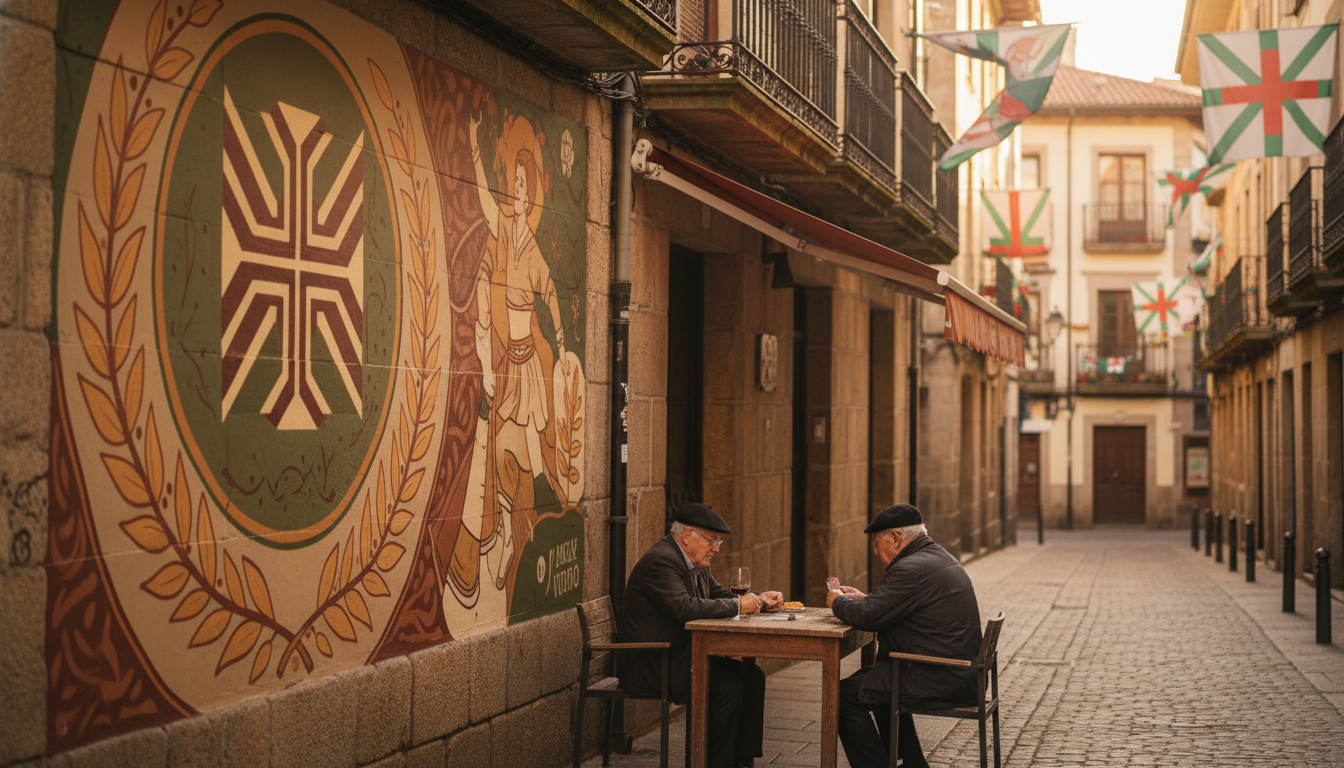 A narrow street in Egia with colorful Basque flags hanging from wrought-iron balconies, elderly men
Practically speaking, Egia is about a 25-minute walk to La Concha beach, or you can take the bus (Line 5, about €1.75) in 10 minutes. The neighborhood has its own rhythm—morning coffee at Bar Txiki (Calle Egia, 23), groceries at the small supermarket on the main street, evening pintxos at one of several no-frills bars where the portions are huge and the prices are local.
The apartments here are generally affordable for hosts, which means the people offering home exchanges tend to be long-term residents rather than investment property owners. You're more likely to find a home that's actually someone's home—family photos on the walls, a well-used kitchen, books in Basque and Spanish on the shelves.
Fair warning: Egia requires a bit more effort. You'll need to be comfortable navigating a neighborhood where English is rare, where the streets are steep, and where the aesthetic is gritty-authentic rather than polished-charming. But if you want to understand the Basque Country beyond the beach and the pintxos, this is where to do it.
Antiguo: Old Money Meets Family Beach
At the opposite end of the spectrum—both geographically and socially—is Antiguo. This neighborhood wraps around Ondarreta beach, the western extension of La Concha bay, and it's where San Sebastián's established families have lived for generations.
Antiguo has a completely different energy than the neighborhoods I've described so far. It's quieter, more manicured, with elegant early-20th-century buildings and tree-lined streets. The beach here is more family-oriented than the main stretch of La Concha—you'll see grandparents with grandchildren, not bachelor parties.
For home exchange in San Sebastián, Antiguo offers something unique: space, calm, and genuine elegance without the tourist circus. The apartments here tend to be larger and more traditionally decorated—think parquet floors, formal dining rooms, balconies with sea views. The hosts are often older, established professionals or retirees who travel frequently and appreciate the home exchange model for its reciprocity and community.
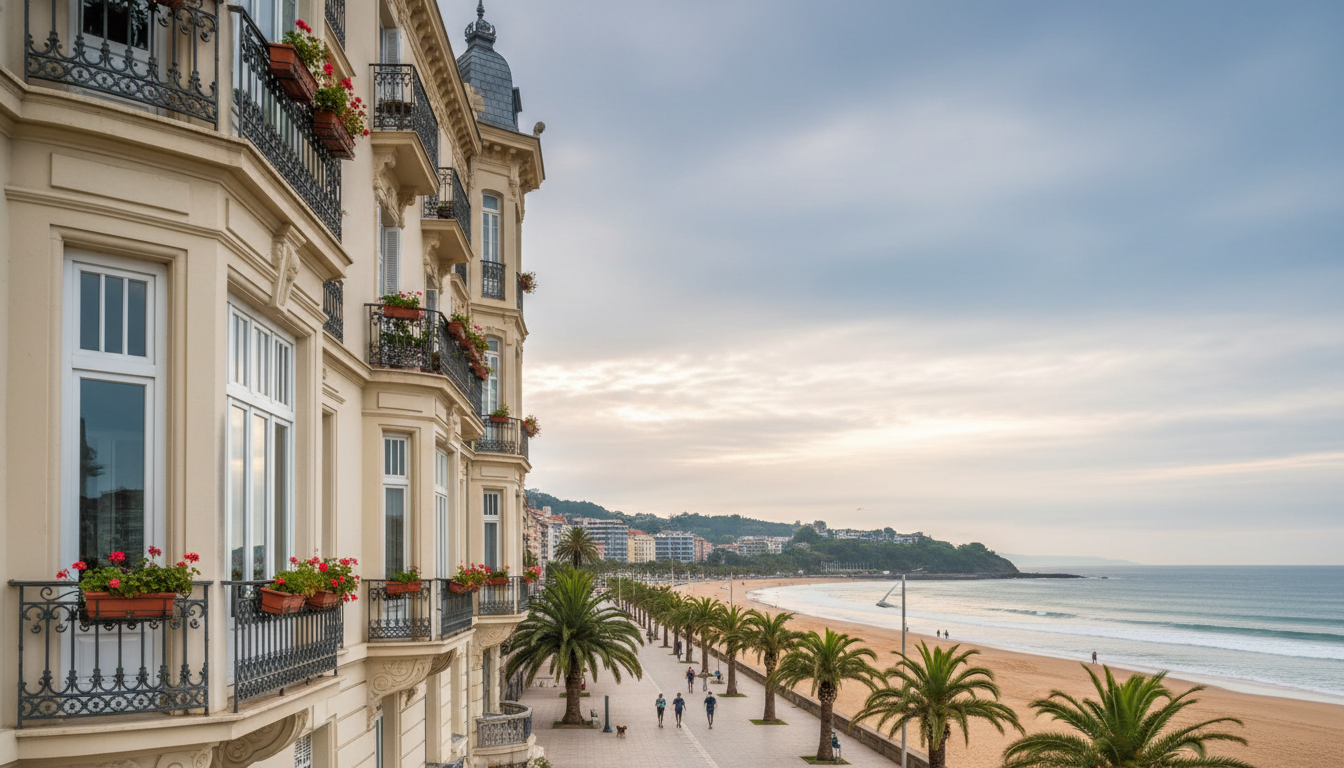 An elegant Belle poque apartment building in Antiguo with ornate balconies, a palm-lined promenade l
I did a swap here with a retired architect named Carmen. Her apartment was stunning—original 1920s details, a library filled with art books, a kitchen that had been updated with that perfect blend of modern function and period charm. She left me a key to the building's rooftop terrace, which wasn't mentioned in her listing. "For sunsets," her note said. "Bring wine."
Antiguo is also home to the Peine del Viento (Comb of the Wind) sculptures by Eduardo Chillida, one of San Sebastián's most iconic landmarks. Having that as your neighborhood landmark, rather than fighting through crowds to see it as a tourist attraction, changes your relationship with the city entirely.
The downside? Antiguo is about a 30-minute walk from the Old Town and its famous pintxos bars. You'll probably want to take the bus (Line 16, or the scenic route along the promenade) if you're planning a big night out. But honestly, after a few days of Antiguo's peaceful rhythms, you might find yourself preferring the neighborhood's quieter restaurants anyway.
Intxaurrondo: The Real Hidden Gem
If Egia is under-the-radar, Intxaurrondo is practically invisible to tourists. This neighborhood sits on the eastern edge of the city, past Gros, climbing up toward Mount Ulía. It's almost entirely residential, with zero tourist infrastructure—no pintxos crawl, no beach access, no Instagram spots.
So why would you want to do a home exchange here?
Because Intxaurrondo offers something increasingly rare in San Sebastián: affordability and authenticity without compromise on quality of life.
The neighborhood was developed in the 1970s and 80s to house working families, and it still serves that purpose. The apartments are modern by Spanish standards, often with features like built-in storage, proper heating, and layouts designed for actual living rather than tourist appeal. Many have parking—a genuine luxury in San Sebastián—and small balconies or terraces.
The hosts here tend to be young families or working professionals who've discovered home exchange as a way to afford travel without giving up their homes to short-term rentals. They're often enthusiastic about the swap model and generous with their local knowledge.
My colleague did a swap in Intxaurrondo with a young couple who had two kids. They left an incredibly detailed guide to the neighborhood—which playground had the best equipment, where to get the kids' haircuts, the bakery that did the best birthday cakes. Even though she was traveling solo, that guide gave her an intimate window into daily Basque family life that she still talks about.
Getting to the beach from Intxaurrondo takes about 20 minutes by bus (Line 28) or a healthy 35-minute walk through Gros. But the neighborhood itself has everything you need for daily life: supermarkets, pharmacies, cafés, a weekly market. You can easily spend a few days just exploring the immediate area before venturing to the tourist zones.
Aiete: Garden District Tranquility
Aiete is San Sebastián's green lung—a hillside neighborhood of villas, gardens, and the stunning Aiete Park, which was once the summer residence of Franco (a complicated history the Basques haven't forgotten, but the park itself is now a beautiful public space).
Home exchanges in Aiete are relatively rare, but when they come up, they're special. The properties here tend to be houses rather than apartments—sometimes full villas with gardens, sometimes townhouses in small complexes. If you're traveling with family or a group, Aiete offers space and privacy that's hard to find elsewhere in the city.
The neighborhood is quiet—really quiet. You'll hear birds, not traffic. The streets are lined with mature trees, and many properties have their own green space. It's a different San Sebastián entirely, one that feels almost suburban but is still only 20 minutes from the beach by bus or car.
I haven't done a full swap in Aiete myself, but I visited a SwappaHome member there while passing through. Her house was a 1930s villa that had been in her family for three generations. The garden alone was worth the visit—fruit trees, a vegetable patch, a small swimming pool. She does home exchanges primarily with other families who have children, creating a network of trusted swappers who understand the particular needs of traveling with kids.
Aiete is best suited for travelers who have a car or don't mind relying on buses. The neighborhood isn't walkable to the beach or the city center in any practical sense. But if you're looking for a home base from which to explore the wider Basque Country—day trips to Bilbao, the wine country, the French border—Aiete's tranquility and space make it an excellent choice.
Altza: The Up-and-Coming Edge
I'll be honest: Altza is a stretch for most tourists. This neighborhood sits at the far eastern edge of San Sebastián, past Intxaurrondo, in an area that was historically industrial and is now in transition. It's not pretty in the conventional sense. The architecture is utilitarian. The streets can feel a bit rough.
But Altza is where I've seen some of the most interesting home exchange opportunities emerge in recent years.
The neighborhood is attracting young artists, musicians, and creative types who've been priced out of Gros and the center. There's a DIY energy here—community gardens, artist studios in converted warehouses, bars that feel genuinely underground rather than calculated-cool. The home exchanges reflect this: you might find a loft in a former factory, or an apartment that doubles as a small gallery, or a house with a backyard studio.
Altza is also significantly more affordable than other parts of San Sebastián, which means hosts here are often younger and more diverse than in traditional neighborhoods. I've seen listings from musicians, teachers, social workers—people for whom home exchange isn't just a travel hack but a genuine economic necessity.
The practical challenges are real. You're 30-40 minutes from the beach by public transport. The neighborhood amenities are basic. You won't find the charming cafés and pintxos bars that define the San Sebastián experience elsewhere.
But if you're the kind of traveler who values authenticity over convenience, who wants to see a city's future as well as its past, Altza might be exactly what you're looking for. Just go in with realistic expectations and a sense of adventure.
How to Find the Best Home Exchange in San Sebastián's Hidden Neighborhoods
Now that you know where to look, let's talk about how to actually secure a great swap in these areas.
Timing matters enormously. San Sebastián's peak season runs from June through September, with absolute chaos during the film festival (late September) and Semana Grande (mid-August). If you're flexible, shoulder seasons—May, early June, October—offer the best combination of good weather and available swaps.
When you're browsing listings on SwappaHome, don't just search for "San Sebastián." Try searching for specific neighborhood names: Amara, Gros, Egia, Antiguo. Many hosts include their neighborhood in their listing title or description, and this targeted search will surface options that get buried in broader searches.
Reach out to hosts with personalized messages. Mention why their specific neighborhood interests you. If you've read this article (or done other research), reference something specific—"I'm particularly interested in Egia because I want to experience authentic Basque culture" will get a much better response than "Your place looks nice."
Ask questions that show you understand the neighborhood dynamics. For Gros: "How's the noise level on weekend nights?" For Egia: "Is there a local market within walking distance?" For Antiguo: "What's the best way to get to the Old Town for dinner?"
And here's a tip that's served me well: if you find a host you connect with, ask if they know anyone else in the neighborhood who does home exchanges. The SwappaHome community is genuinely communal—hosts often know each other, especially in tight-knit neighborhoods like Egia or Intxaurrondo. A personal referral can open doors that cold browsing never will.
Making the Most of Your Neighborhood Home Swap
Once you've secured your swap, the real adventure begins.
Ask your host for their "local's list." Not the tourist recommendations—the places they actually go. The bakery for Sunday morning pastries. The bar where they watch football. The beach access point that's never crowded. Most hosts are delighted to share this knowledge; you just have to ask.
Learn a few words of Basque. Even "kaixo" (hello) and "eskerrik asko" (thank you) will earn you genuine warmth in neighborhoods like Egia and Intxaurrondo where Basque identity runs deep. Your host can probably teach you the basics before you arrive.
Embrace the neighborhood rhythm. If there's a Thursday market, go to the Thursday market. If the local bar fills up at 8pm for pintxos, be there at 8pm. If your neighbors are friendly, be friendly back. The whole point of staying in a residential neighborhood is to live like a resident, not to use it as a cheap hotel base.
Don't be afraid to venture out of your comfort zone. Take the bus to a neighborhood you haven't heard of. Walk up a hill just to see what's there. Get lost on purpose. San Sebastián is small enough that you can't get too lost, and the discoveries you make—the hidden viewpoint, the family-run cider house, the beach cove with no name—will be the stories you tell for years.
The Real San Sebastián Is Waiting
I think about that first swap in Amara Berri often. Not because the apartment was special (it was nice, but nothing extraordinary) or because the location was convenient (it wasn't, really). I think about it because of María's tortilla, and the Thursday market, and the way Iker's neighbors waved at me on the street by day three like I belonged there.
That's what home exchange in San Sebastián's hidden neighborhoods offers: belonging. Not the transactional belonging of a hotel, where you're a guest as long as your credit card clears. Real belonging, the kind that comes from sleeping in someone's bed, cooking in their kitchen, walking their daily routes.
The tourists will keep crowding into the Parte Vieja, fighting for tables at the famous pintxos bars, taking the same photos from the same viewpoints. Let them. The real San Sebastián—the one with the Thursday markets and the neighborhood bars and the grandmothers who'll teach you to make tortilla—is waiting in Amara Berri, Gros, Egia, Antiguo, Intxaurrondo, Aiete, and Altza.
You just have to know where to look.
SwappaHome has dozens of listings in these neighborhoods, many from hosts who've been members for years and genuinely love connecting with travelers. Start browsing, send some messages, and see what opens up. Your San Sebastián adventure—the real one—is closer than you think.
Frequently Asked Questions
Is home exchange in San Sebastián safe for solo travelers?
Absolutely. San Sebastián is one of Spain's safest cities, and the neighborhoods I've described—while off the tourist track—are all residential areas with strong community ties. The SwappaHome review system helps you verify hosts before committing, and the platform's messaging lets you get a feel for someone before agreeing to swap. I've done multiple solo swaps in San Sebastián without any concerns.
How much can I save with home exchange versus hotels in San Sebastián?
Significant savings. A decent hotel in central San Sebastián runs €150-300 per night in peak season; even budget options are €80-120. With SwappaHome's credit system (1 credit per night, regardless of location), a two-week stay costs you 14 credits—which you can earn by hosting guests at your own home. For a family or group, the savings multiply since you're getting an entire apartment rather than multiple hotel rooms.
What's the best neighborhood for home exchange in San Sebastián with kids?
Antiguo and Amara Berri are both excellent for families. Antiguo offers Ondarreta beach (calmer waters, more family-oriented) and spacious apartments in a quiet setting. Amara Berri has parks, playgrounds, and a genuine neighborhood feel where kids can explore safely. Both areas have hosts who are often families themselves and understand the particular needs of traveling with children.
How far in advance should I book a home exchange in San Sebastián?
For peak season (July-August), start reaching out 3-4 months ahead. The hidden neighborhoods have less competition than the Old Town, but popular dates still fill up. For shoulder season (May-June, September-October), 6-8 weeks is usually sufficient. Off-season, you can sometimes arrange swaps with just a few weeks' notice, though your options will be more limited.
Do I need a car for home exchange in San Sebastián's outer neighborhoods?
Not necessarily, but it depends on the neighborhood. Gros, Amara Berri, and Antiguo are all well-connected by bus and walkable to the beach. Egia and Intxaurrondo require more reliance on public transport but are still manageable without a car. Aiete and Altza are easier with a car, especially if you want to explore the wider Basque Country. San Sebastián's bus system is reliable and affordable (around €1.75 per ride), and many hosts can advise on the best routes from their specific location.

Published by
SwappaHome
SwappaHome Editorial Team
Home Exchange & Slow Travel Editorial
The SwappaHome Editorial Team brings together travel research, home-exchange community insights, and platform data to produce practical guides for first-time and experienced home swappers. Every article cites real platforms, current market rates, and verifiable city-level facts so readers can make informed decisions without guessing.
Ready to try home swapping?
Join SwappaHome and start traveling by exchanging homes. Get 7 free credits when you sign up!
Related articles

Bachelor and Bachelorette Parties in Singapore: The Complete Home Swap Group Guide for 2026
Planning a bachelor or bachelorette party in Singapore? Discover how home swapping lets groups of 6-12 stay together in luxury condos, saving thousands while partying in Marina Bay.
Cycling in Lisbon: 7 Home Swap Bike Tour Itineraries for Every Rider
Discover the best cycling routes in Lisbon with these home swap bike tour itineraries—from waterfront paths to hilltop adventures, all starting from your borrowed home.
Graduation Trip to Barcelona: How Home Swapping Gives New Graduates the Ultimate Celebration
Planning a graduation trip to Barcelona? Discover how home swapping lets new graduates explore Spain's most vibrant city without the hostel crowds or hotel costs.