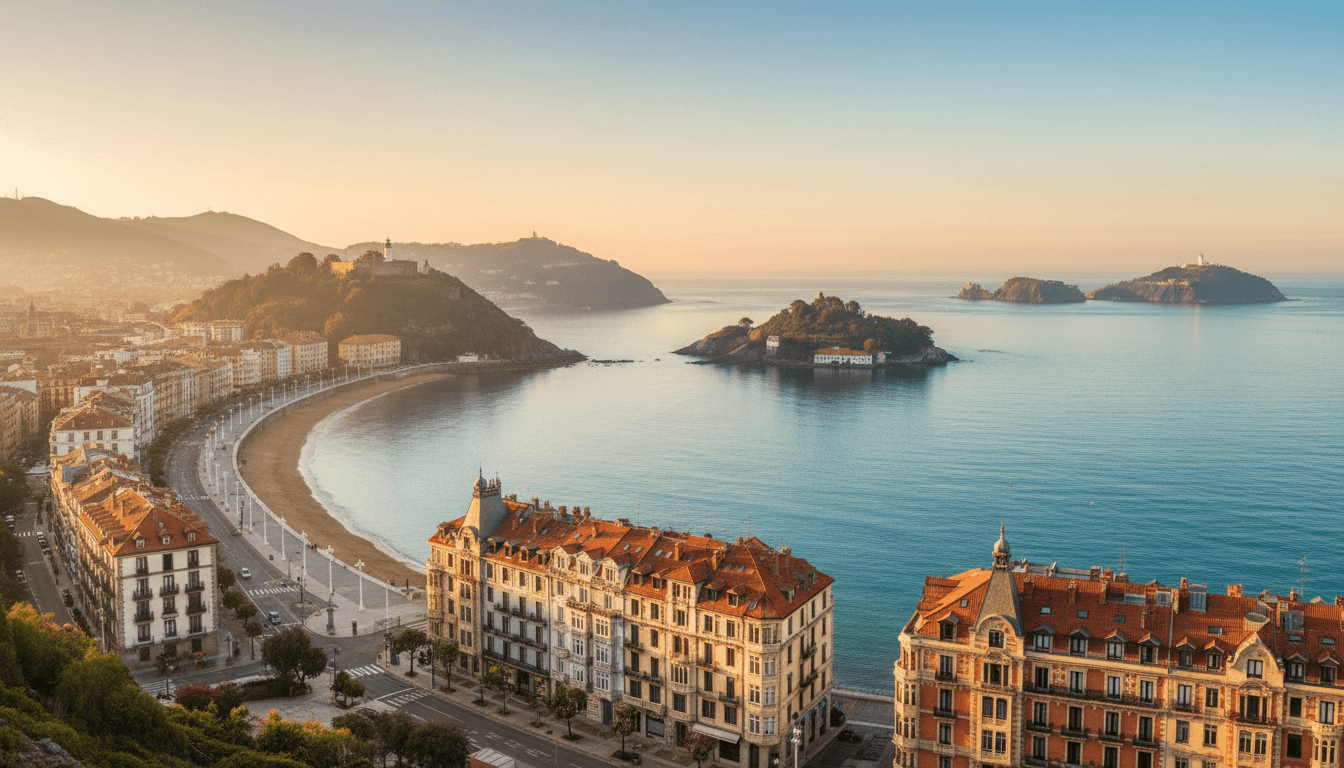
Retirement Travel to San Sebastián: Why Home Exchange is the Perfect Way to Experience Basque Country

SwappaHome Editorial Team
Home Exchange & Slow Travel Editorial
Discover why retirement travel to San Sebastián through home exchange offers retirees the authentic Basque experience—world-class pintxos, stunning beaches, and a slower pace of life without hotel costs.
I was standing in the kitchen of a third-floor apartment in San Sebastián's Parte Vieja, watching the morning light hit the terracotta rooftops, when it hit me. The retired couple who owned this place had cracked something most travelers never figure out. They'd found a way to actually live in destinations around the world—without hemorrhaging money on endless hotel nights or feeling like a ghost in some sterile vacation rental.
Retirement travel to San Sebastián through home exchange isn't just some clever budget hack. It's a completely different way to experience one of Europe's most captivating cities.
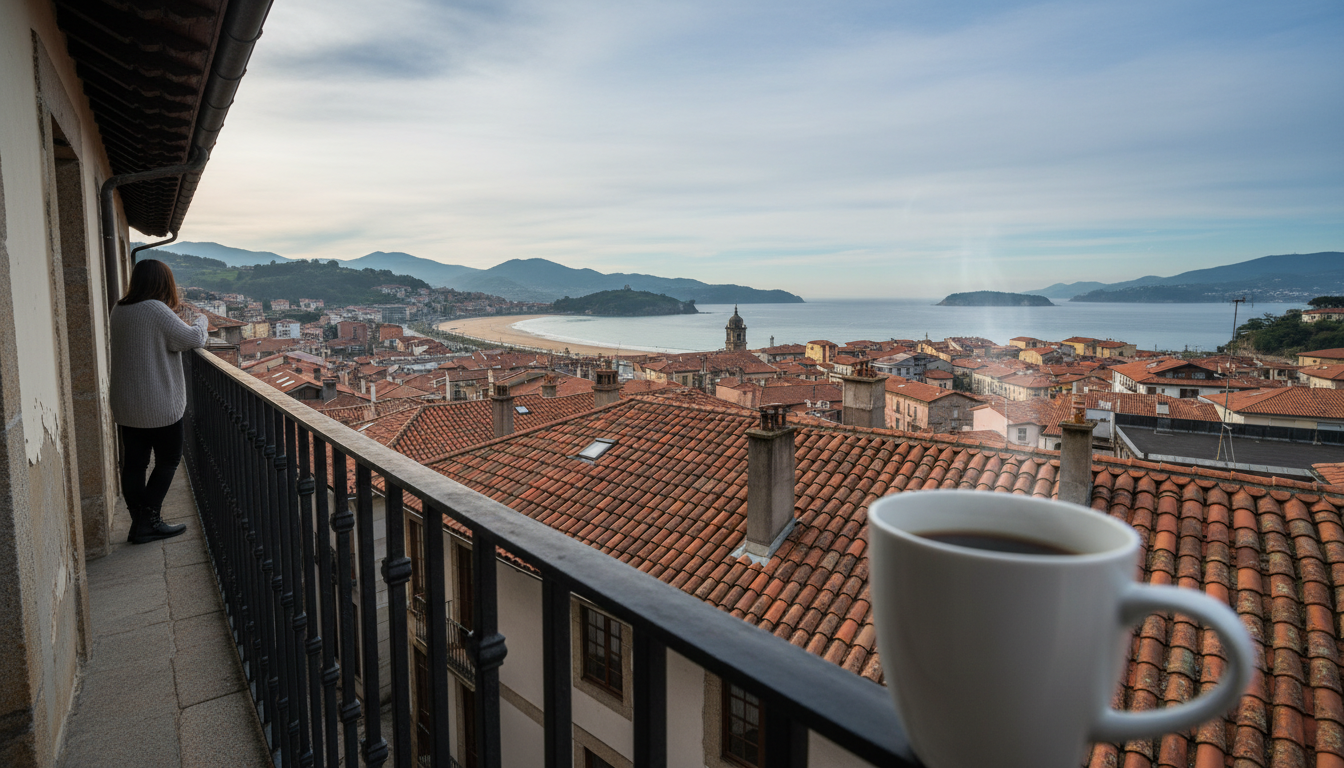 Morning view from a traditional Basque apartment balcony overlooking the old towns terracotta roofto
I've been writing about home swapping for seven years now, and retirees keep telling me the same thing: they finally have the time to travel properly, but hotels drain their savings way faster than they'd imagined. A decent room in San Sebastián during summer? You're looking at €180-250 ($195-270) per night. Stay for a month—which is exactly what retirement travel should let you do—and that's $6,000-8,000 just for a place to sleep. Before you've eaten a single pintxo.
Home exchange flips that whole equation on its head. And San Sebastián, with its walkable neighborhoods, food-obsessed culture, and gentle climate, might just be the perfect city to try it.
Why Retirement Travel to San Sebastián Works So Well
Let me be honest here. Not every destination suits the home exchange model for retirees. Some cities are too sprawling, too car-dependent, or frankly too exhausting for extended stays. San Sebastián? None of those things.
The city is genuinely compact—walkable in a way that many supposedly "walkable" European cities really aren't. Getting from the Parte Vieja (old town) to the Gros neighborhood takes maybe 20 minutes on foot, and that walk crosses the stunning Zurriola beach. You don't need a car. You barely need public transport. The municipal buses cost €1.85 ($2) if you want them, and they're clean and reliable.
For retirees, this matters enormously. You can settle into a neighborhood, learn its rhythms, become a regular at the corner café. The woman who makes your morning coffee starts recognizing you. The fishmonger saves you the good txangurro (spider crab) because he knows you'll be back on Thursday.
This doesn't happen in a hotel. It barely happens in a two-week vacation rental. But a month-long home exchange? That's when San Sebastián really opens up.
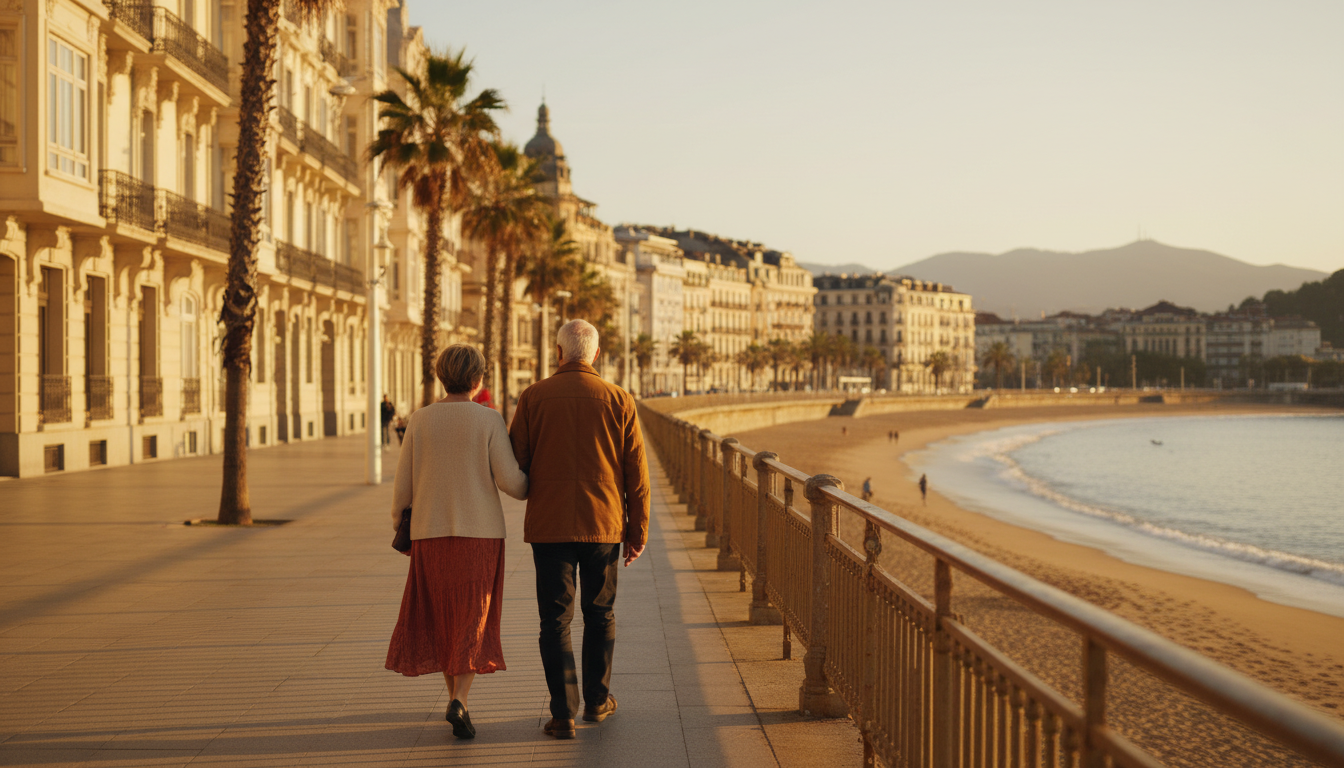 Elderly couple walking arm-in-arm along La Concha promenade at golden hour, Belle poque buildings on
The Economics of Extended Stays: Home Exchange vs. Traditional Accommodation
I want to get specific here because vague promises about "saving money" don't help anyone actually plan.
A month in San Sebastián in a mid-range hotel during shoulder season (May or October) will run you roughly:
- Hotel room: €150/night × 30 = €4,500 ($4,860)
- Restaurant meals (no kitchen, remember): €50-70/day × 30 = €1,500-2,100 ($1,620-2,270)
- Total: approximately $6,500-7,100
Now, a month through home exchange:
- Accommodation: 30 credits (earned by hosting others, or from your starter credits as a new member)
- Groceries and market shopping: €25-35/day × 30 = €750-1,050 ($810-1,135)
- Occasional restaurant splurges: €200-300 ($215-325)
- Total: approximately $1,025-1,460
That's roughly $5,500 difference. Do four month-long exchanges over a year of retirement travel, and you're looking at $20,000+ in savings. That's not pocket change. That's an extra year of travel.
The credit system on SwappaHome is straightforward: earn one credit for each night you host someone, spend one credit for each night you stay elsewhere. New members get 7 free credits to start. No money changes hands between members—ever.
Best San Sebastián Neighborhoods for Retirement Home Exchange
Not all neighborhoods work for every traveler. Here's my honest take for retirees specifically.
Parte Vieja (Old Town): The Heart of Pintxo Culture
This is where most people picture themselves when they dream of San Sebastián. Narrow pedestrian streets, pintxo bars packed next to each other, conversation spilling out of every doorway.
The reality? More complicated. Parte Vieja is loud. Really loud. Weekend nights, the streets don't quiet down until 2 or 3 AM. The apartments tend to be older, often without elevators, and those staircases are steep. If you have mobility concerns or value your sleep, this might not be your spot.
That said—if you're a night owl who wants to be right in the thick of things, nothing compares. You can literally walk downstairs and be at Ganbara (my favorite pintxo bar, their txangurro is transcendent) in 30 seconds.
Typical apartment: 60-80 square meters, 2 bedrooms, no elevator, balcony overlooking the street.
Gros: The Local's Choice
This is where I'd stay. Gros sits across the Urumea River from the old town, fronting Zurriola beach (the surfing beach, with way more character than La Concha). It's where young San Sebastián families actually live, which means excellent everyday infrastructure: pharmacies, supermarkets, hardware stores.
The pintxo scene here is just as good as Parte Vieja—arguably better because it's less touristy. Bar Bergara does a foie gras pintxo that I still think about. Bodegón Alejandro has been serving traditional Basque food since 1948.
Gros is flatter than the old town, with more modern buildings that actually have elevators. The beach is right there. The morning market at Mercado de San Martín is walking distance.
Typical apartment: 70-100 square meters, 2-3 bedrooms, elevator common, often with a small terrace.
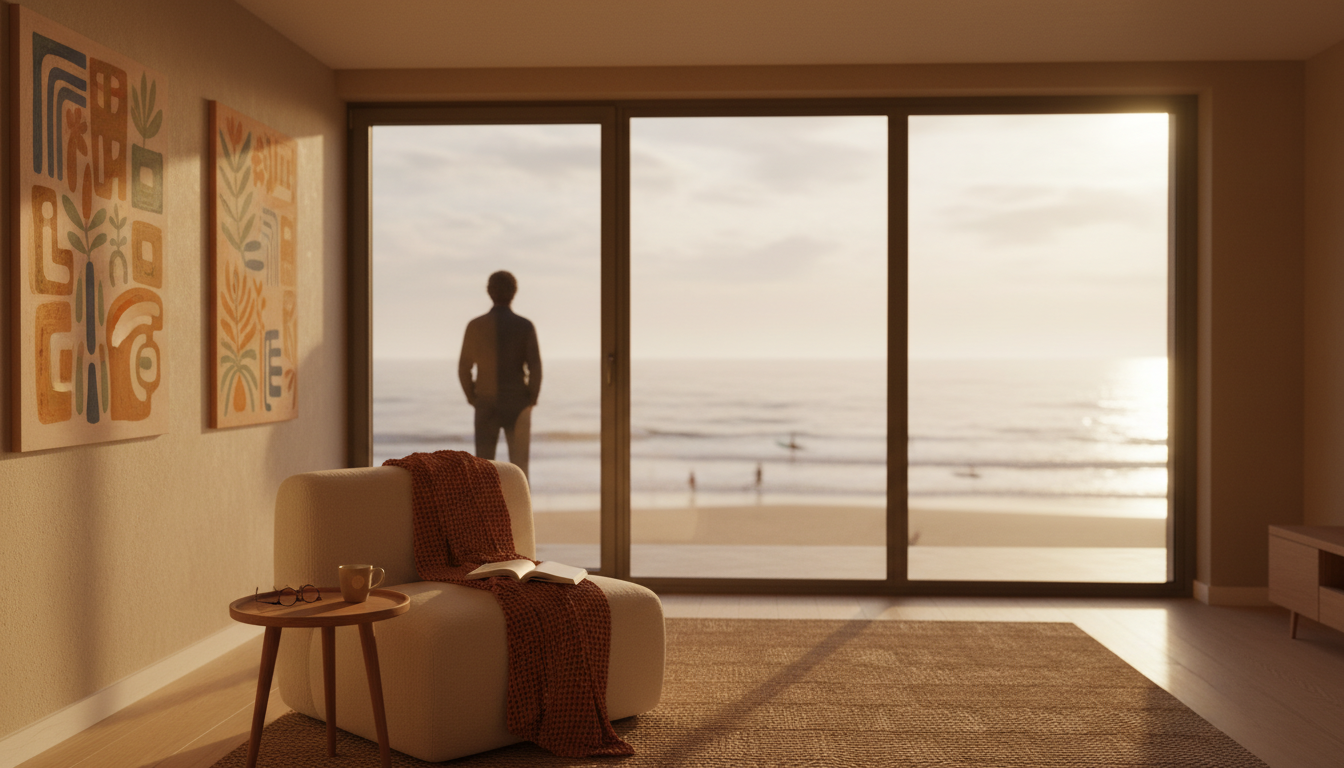 Interior of a bright, modern apartment in Gros neighborhood with large windows showing Zurriola beac
Centro/Área Romántica: Belle Époque Elegance
The area around La Concha beach and the grand hotels has a completely different character. This is where wealthy Madrileños have kept summer apartments for generations. The buildings are gorgeous—wrought-iron balconies, marble lobbies, those distinctly Spanish high ceilings.
The trade-off: it can feel a bit formal. Fewer casual neighborhood bars, more upscale restaurants. Grocery shopping requires more walking. But if you want to feel like you're living in a Hemingway novel (he loved this city), this is the place.
Typical apartment: 80-120 square meters, often beautifully maintained, elevator, sea views possible.
Antiguo: Quiet Residential Living
On the western end of La Concha, Antiguo is genuinely residential. This is where you go for peace and quiet—a slower pace even by San Sebastián standards. The Peine del Viento sculptures by Eduardo Chillida are here, and watching the waves crash around them never gets old.
The neighborhood has excellent access to Monte Igueldo (take the funicular for €4.50/$4.85 round trip) and some surprisingly good restaurants catering to locals rather than tourists. It's about a 25-minute walk to the old town, though.
Typical apartment: 70-90 square meters, family-oriented buildings, very quiet at night.
How to Find the Perfect San Sebastián Home Exchange as a Retiree
Here's where I get practical. Finding a home exchange isn't like booking a hotel—you're entering into a relationship with another person, and that takes some finesse.
Start your search 3-4 months before you want to travel. San Sebastián is popular, and the best apartments get snapped up. On SwappaHome, you can filter by location, amenities, and availability. Look specifically for elevator access (listed in amenities), kitchen photos showing real cooking equipment, reviews from other retirees or long-term stayers, and hosts who mention being flexible with dates.
When you reach out to potential hosts, be specific about who you are and why you want to visit. Mentioning you're retired and looking for a slower-paced trip actually helps—hosts know you'll be respectful of their space and neighborhood.
Try something like: "We're a retired couple from [city] who've been dreaming of spending a month exploring Basque cuisine. We're early risers, quiet, and would treat your home like our own. We'd love to tell you about our apartment if you're ever interested in visiting [your area]."
That last part matters. Home exchange is reciprocal. Even if you're using credits rather than doing a simultaneous swap, hosts appreciate knowing their home is going to someone who gets the exchange community.
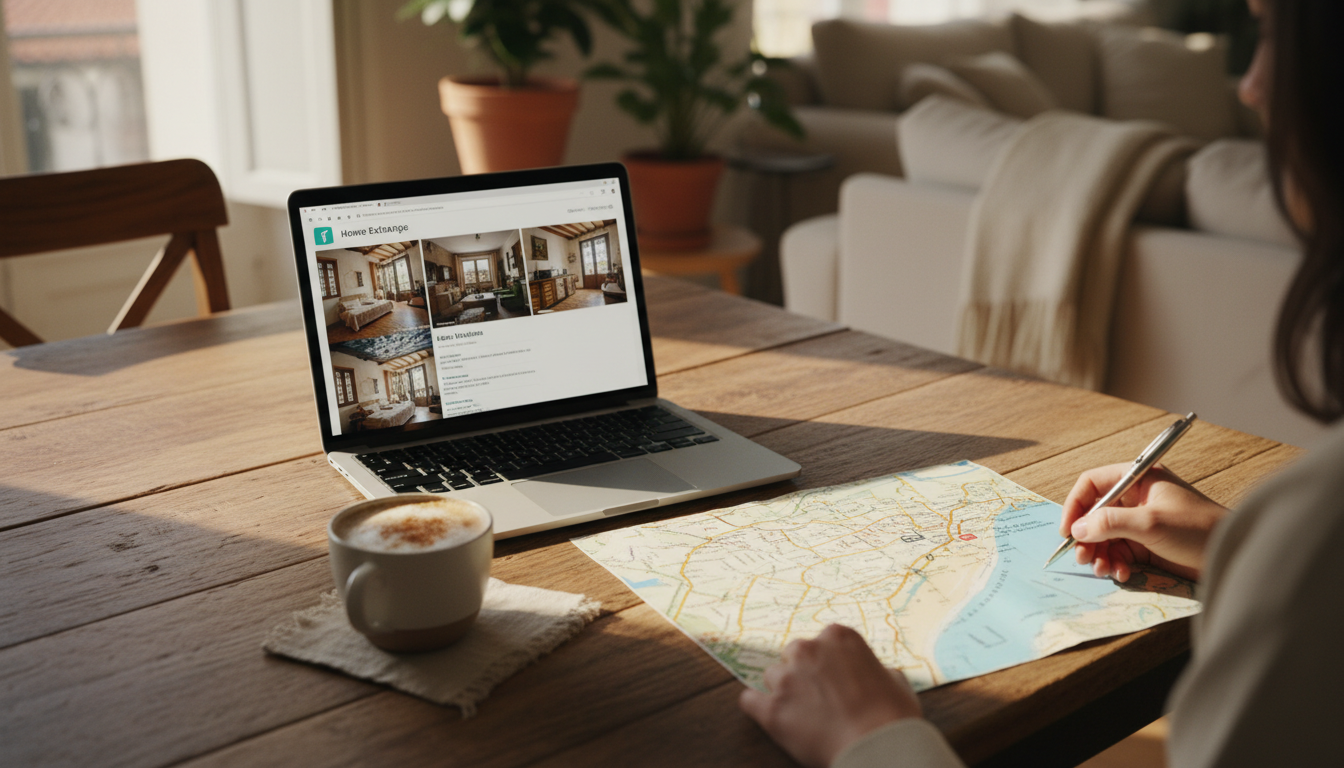 Laptop open on a wooden dining table showing a home exchange listing, with a cup of Basque coffee an
Living Like a Local: The Daily Rhythm of Retirement in San Sebastián
This is the part hotel guests never experience. Honestly? It's the best part.
Mornings in San Sebastián start late by American standards. Cafés open around 8 AM, but the city doesn't really wake up until 9 or 10. This suits retirement perfectly—no alarm clocks, no rushing. Walk to a neighborhood café, order a café con leche (€1.80-2.50/$1.95-2.70) and a croissant, read the paper or just watch the street come alive.
The markets open by 8 AM if you're an early riser. La Bretxa in the old town is the famous one, but I prefer Mercado de San Martín in Gros—smaller, less touristy, and the vendors actually have time to chat. Buy fish for dinner, some Idiazabal cheese, a few tomatoes. Shopping becomes entertainment, not a chore.
Lunch is the big meal here, typically from 1:30-3:30 PM. Most restaurants offer a menú del día (fixed-price lunch) for €15-22 ($16-24) including multiple courses and wine. This is the best value eating in the city. Dinner comes late—9 or 10 PM—and often it's just pintxos and a glass of txakoli (the local slightly sparkling white wine, €3-4/$3.25-4.30 per glass).
Evenings are for the paseo—the traditional evening stroll. Everyone does it. Families, couples, groups of friends walking along La Concha or through the old town. It's social, it's healthy, and it costs nothing.
The Pintxo Culture: A Retiree's Dream
I need to talk about food because San Sebastián is, per capita, possibly the greatest food city in the world. It has more Michelin stars per square meter than anywhere except Kyoto. But here's the thing—you don't need Michelin stars.
Pintxos—the Basque version of tapas—are the heart of the food culture. These aren't the sad olives-on-a-toothpick you might be imagining. We're talking seared foie gras on brioche, spider crab in its shell, slow-cooked pork cheeks, anchovy-stuffed peppers that somehow taste like the sea and the earth at once.
The tradition is to go "de pintxos"—hopping from bar to bar, having one or two at each. Each pintxo runs €2.50-5 ($2.70-5.40) depending on complexity. A full dinner of four or five pintxos plus drinks might cost €25-30 ($27-32) per person.
For retirees, this setup is perfect. You eat when you want, what you want, in whatever quantity you want. No fixed menus, no reservations needed (for most places), no pressure to order a full meal. Make it an elaborate evening or a quick snack—your call.
My favorites for first-timers: Gandarias (for the steak pintxos), Bar Nestor (get there at 1 PM or 8 PM sharp for the legendary tortilla), La Cuchara de San Telmo (everything, but especially the pork cheeks), and Txepetxa (anchovy specialists—trust me on this).
 Close-up of a marble bar counter covered with elaborate pintxos on small plates, elderly hands reach
Practical Considerations for Retirement Home Exchange in San Sebastián
Let me address some concerns I hear from retirees thinking about this.
Healthcare Access
Spain has excellent healthcare, and San Sebastián specifically has Hospital Universitario Donostia, a major regional hospital. EU citizens can use their EHIC card. Americans should get travel insurance covering medical expenses—this is non-negotiable for any extended trip.
Pharmacies (farmacias) are everywhere, marked by green crosses. Spanish pharmacists can advise on minor ailments and sell many medications that would require prescriptions in the US.
Language
Spanish is essential for daily life; English is less common than in Barcelona or Madrid. But Donostiarras (San Sebastián locals) are genuinely warm and patient with visitors who try. Learn basic phrases: "Egunon" (good morning in Basque), "Eskerrik asko" (thank you in Basque), and the Spanish basics.
Google Translate on your phone handles most situations. Menus are often only in Spanish and Basque, but pointing works fine.
Weather
San Sebastián is in "Green Spain"—it rains. A lot. The Basque Country is lush and beautiful precisely because it gets 1,500mm of rain annually. Pack layers and a good rain jacket. The upside: it's never too hot (summer highs around 25°C/77°F) and never too cold (winter lows rarely below 5°C/41°F).
Best months for retirement travel: May-June and September-October. July and August are peak season—crowded and pricier.
Getting There and Around
San Sebastián's airport (EAS) is small with limited connections. Most travelers fly into Bilbao (BIO), about 100km away, then take a bus (€17/$18, 1.5 hours) or rent a car. The bus station is in the city center.
Once there, you won't need a car. The city is walkable, buses cover anywhere you'd want to go, and taxis are reasonable (€8-12/$8.65-13 for most trips within the city).
Day Trips That Make a Month Feel Full
One advantage of a longer stay: you can explore the region without rushing.
Hondarribia (25 minutes by bus, €2.70/$2.90): A perfectly preserved medieval fishing village on the French border. Wander the old town, eat at one of the pintxo bars near the harbor, take the small ferry across to Hendaye in France for coffee.
Getaria (35 minutes by bus, €3.50/$3.80): Another fishing village, famous for grilled turbot cooked over open coals. The Cristóbal Balenciaga Museum is here—the fashion designer was born in this tiny town.
Bilbao (1.5 hours by bus, €7.50/$8.10): The Guggenheim alone is worth the trip, but the city has transformed into a genuinely interesting place. The old town pintxo scene rivals San Sebastián's.
French Basque Country: Biarritz and Saint-Jean-de-Luz are just across the border. The landscape shifts slightly—more French, obviously—but the Basque culture continues.
What to Look for in a San Sebastián Home Exchange Listing
Not all listings are created equal. When browsing SwappaHome for San Sebastián properties, pay attention to:
Kitchen equipment: You'll be cooking. Look for photos showing a proper stove, oven, and basic equipment. Basque cooking isn't complicated, but you need decent pans.
Natural light: San Sebastián apartments can be dark, especially in the old town. Look for south-facing windows or explicit mentions of good light.
Laundry facilities: For a month-long stay, you need a washing machine. Most Spanish apartments have them, but confirm.
Storage space: You'll accumulate things—market finds, wine, books. Make sure there's room.
The host's communication style: Read their listing carefully. Do they sound warm and helpful? Are they detailed about the neighborhood? Hosts who write thorough listings tend to be better communicators overall.
Building Trust in the Home Exchange Community
Real talk: home exchange requires trust. You're staying in someone's home, surrounded by their belongings, their books, their family photos. They're trusting you with something meaningful.
SwappaHome's review system helps build this trust over time. Members review each other after stays, and those reviews are public. A host with twenty positive reviews has demonstrated, repeatedly, that they're reliable.
For your first exchange, consider starting with a shorter stay—maybe a week—to get comfortable with the process. Communicate clearly and often with your host. Send photos of how you've left the place. These small gestures build reputation and make future exchanges easier.
One thing to know: SwappaHome doesn't provide insurance for damages or disputes. If you want coverage for your belongings while hosting, or protection while traveling, arrange your own policies. Most homeowner's insurance can be extended, and travel insurance is wise regardless.
The Emotional Case for Retirement Home Exchange
I've focused a lot on practicalities, but there's something deeper going on here.
Retirement is supposed to be freedom. Freedom from schedules, from obligations, from the relentless forward motion of working life. But traditional travel often doesn't feel free—it feels like tourism, like consumption, like checking boxes.
Home exchange offers something different. When you stay in someone's apartment in San Sebastián, shopping at their market, cooking in their kitchen, sleeping in their neighborhood, you're not a tourist. You're a temporary local. You have a place in the city's daily rhythm.
The retired couple whose apartment I stayed in—the one with the terracotta rooftop view—told me they'd done home exchanges in Portugal, Scotland, Japan, and Argentina over the past five years. Each time, they said, they came home with something more than photos. They came home with the feeling of having lived somewhere, however briefly.
That's what San Sebastián offers, and it's what home exchange makes possible. Not a vacation from your life, but an expansion of it.
Getting Started: Your First Steps
Ready to try retirement travel to San Sebastián through home exchange? Here's what to do:
Create your SwappaHome profile first. Be thorough—include good photos of your home, write honestly about your neighborhood, mention what kind of traveler you are. The more complete your profile, the more likely hosts are to accept your requests.
Then start hosting. Even if you're not ready to travel yet, hosting guests earns you credits and builds your reputation. Each night you host earns one credit. Those credits never expire.
Browse San Sebastián listings. Save ones that appeal to you. Read reviews. Get a sense of what's available and when.
Reach out to hosts. Be personal, be specific, be genuine. Ask questions about the neighborhood, the kitchen, the noise level. Good hosts appreciate engaged guests.
Plan your timing. May-June and September-October are ideal. Book 3-4 months ahead for the best selection.
The first exchange is always the hardest—the most uncertain, the most nerve-wracking. But every experienced home exchanger I know says the same thing: after that first one, you're hooked.
San Sebastián is waiting. Not the San Sebastián of guidebooks and day-trip itineraries, but the real one—the city of morning markets and evening paseos, of neighborhood bars where the bartender knows your order, of slow lunches that stretch into the afternoon.
This is what retirement travel can be. Not rushing through bucket lists, but settling in. Living. And home exchange is how you get there.
Frequently Asked Questions
Is retirement travel to San Sebastián through home exchange safe for seniors?
Yes, home exchange is generally very safe for retirees. SwappaHome's review system creates accountability—members with positive reviews have proven track records. The city itself is exceptionally safe, with low crime rates and excellent healthcare access. For added peace of mind, arrange your own travel insurance covering medical expenses and consider home insurance extensions while hosting.
How much can retirees save with home exchange in San Sebastián compared to hotels?
A month-long stay through home exchange saves approximately $5,000-6,000 compared to hotel accommodation. Hotels average €150-200 ($162-216) per night, totaling $4,800-6,500 monthly. Home exchange costs only credits you've earned by hosting—no cash for accommodation. Add kitchen savings of $1,500+ by cooking instead of eating every meal out.
What's the best time of year for retirement home exchange in San Sebastián?
May-June and September-October offer the ideal combination of pleasant weather (18-23°C/64-73°F), fewer crowds, and better availability of home exchange properties. July and August are peak tourist season with higher demand and packed pintxo bars. Winter months (November-March) are rainy but atmospheric, with excellent availability and the most authentic local experience.
Do I need to speak Spanish for a home exchange stay in San Sebastián?
Basic Spanish significantly improves your experience, though you can manage with limited language skills. English is less common here than in Barcelona or Madrid. Learn essential phrases, use translation apps, and don't be afraid to point at pintxos. Locals appreciate any effort with Spanish or Basque greetings. Markets, restaurants, and daily interactions become much richer with even basic communication.
How far in advance should retirees book a San Sebastián home exchange?
Start your search 3-4 months before your intended travel dates for the best selection. Popular neighborhoods like Gros and well-reviewed apartments book quickly, especially for May-June and September-October. Earlier booking also gives you time to communicate thoroughly with hosts and build rapport before your stay.

Published by
SwappaHome
SwappaHome Editorial Team
Home Exchange & Slow Travel Editorial
The SwappaHome Editorial Team brings together travel research, home-exchange community insights, and platform data to produce practical guides for first-time and experienced home swappers. Every article cites real platforms, current market rates, and verifiable city-level facts so readers can make informed decisions without guessing.
Ready to try home swapping?
Join SwappaHome and start traveling by exchanging homes. Get 7 free credits when you sign up!
Related articles

Bachelor and Bachelorette Parties in Singapore: The Complete Home Swap Group Guide for 2026
Planning a bachelor or bachelorette party in Singapore? Discover how home swapping lets groups of 6-12 stay together in luxury condos, saving thousands while partying in Marina Bay.
Cycling in Lisbon: 7 Home Swap Bike Tour Itineraries for Every Rider
Discover the best cycling routes in Lisbon with these home swap bike tour itineraries—from waterfront paths to hilltop adventures, all starting from your borrowed home.

Graduation Trip to Barcelona: How Home Swapping Gives New Graduates the Ultimate Celebration
Planning a graduation trip to Barcelona? Discover how home swapping lets new graduates explore Spain's most vibrant city without the hostel crowds or hotel costs.