Home Exchange Success Stories: Real Travelers Share How Swapping Changed Everything

SwappaHome Editorial Team
Home Exchange & Slow Travel Editorial
Real home exchange success stories from travelers who've saved thousands and found authentic connections. Discover how swapping homes transformed their adventures.
I still remember sitting in Maria's kitchen in Lisbon, watching the morning light hit the blue azulejo tiles while her cat wound between my ankles. She was 3,000 miles away in my San Francisco apartment, probably making coffee in my kitchen at that exact moment. We'd never met in person, but her handwritten note on the counter—recommending her favorite pastelaria around the corner—made me feel like I'd known her for years.
That was my first home exchange, seven years ago. Since then, I've collected dozens of these stories—my own and those of travelers I've met along the way. These aren't sanitized testimonials. They're real experiences from real people who took a leap of faith and discovered something unexpected: that swapping homes isn't just about free accommodation. It's about living differently.
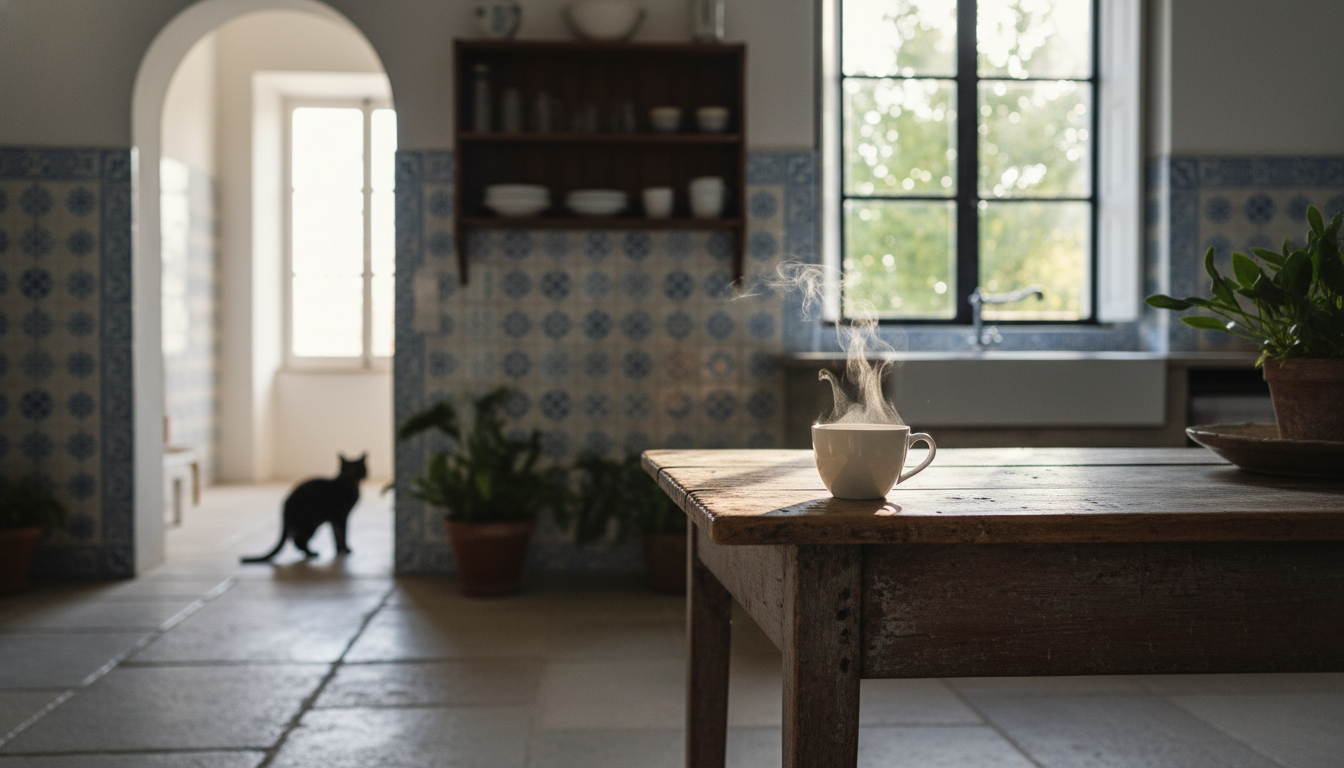 Morning light streaming through traditional Portuguese kitchen with blue and white azulejo tiles, a
Why Stories Matter More Than Reviews
You can read a hundred five-star reviews and still not understand what home swapping actually feels like. Numbers tell you it works. Stories tell you how it works—the nervous anticipation before your first swap, the moment you realize you're grocery shopping like a local instead of hunting for tourist restaurants, the unexpected friendships that form across continents.
I've been writing about travel for over a decade, and here's what I've noticed: the travelers who stick with home exchange aren't doing it just for the savings (though saving $200-400 per night doesn't hurt). They're hooked on the experience itself.
So I reached out to members of the SwappaHome community and asked them to share their unfiltered stories. What worked. What surprised them. What they'd do differently.
Sarah and Tom's Amsterdam Awakening
Sarah, a 45-year-old teacher from Portland, Oregon, had been skeptical about home exchange for years.
"I kept thinking about all the things that could go wrong," she told me over a video call. "Strangers in my house? Using my dishes? Sleeping in my bed?"
Her husband Tom finally convinced her to try it for a two-week trip to Amsterdam. They listed their three-bedroom craftsman on SwappaHome, uploaded photos, and waited. The first inquiry came from a Dutch couple in their 60s. They messaged back and forth for weeks before confirming anything. By the time they agreed to swap, Sarah felt like she knew them.
The exchange happened in April 2023. Sarah and Tom arrived at a canal-side apartment in the Jordaan neighborhood—a location that would have cost them $350+ per night at a hotel. Instead, they spent nothing on accommodation for 14 nights.
"But here's what I didn't expect," Sarah continued. "Their apartment had a full kitchen, so we bought groceries at the Albert Heijn down the street. We made breakfast every morning. We had wine and cheese on their tiny balcony overlooking the canal. It didn't feel like a vacation—it felt like we lived there."
The Dutch couple, meanwhile, fell in love with Portland's food scene. They left a detailed review praising Sarah's local recommendations (she'd created a custom Google Map with her favorite spots).
Sarah's biggest takeaway? "The preparation matters. We spent hours writing a house manual with everything from WiFi passwords to our favorite coffee shop. Our guests did the same. That mutual effort created trust before we even arrived."
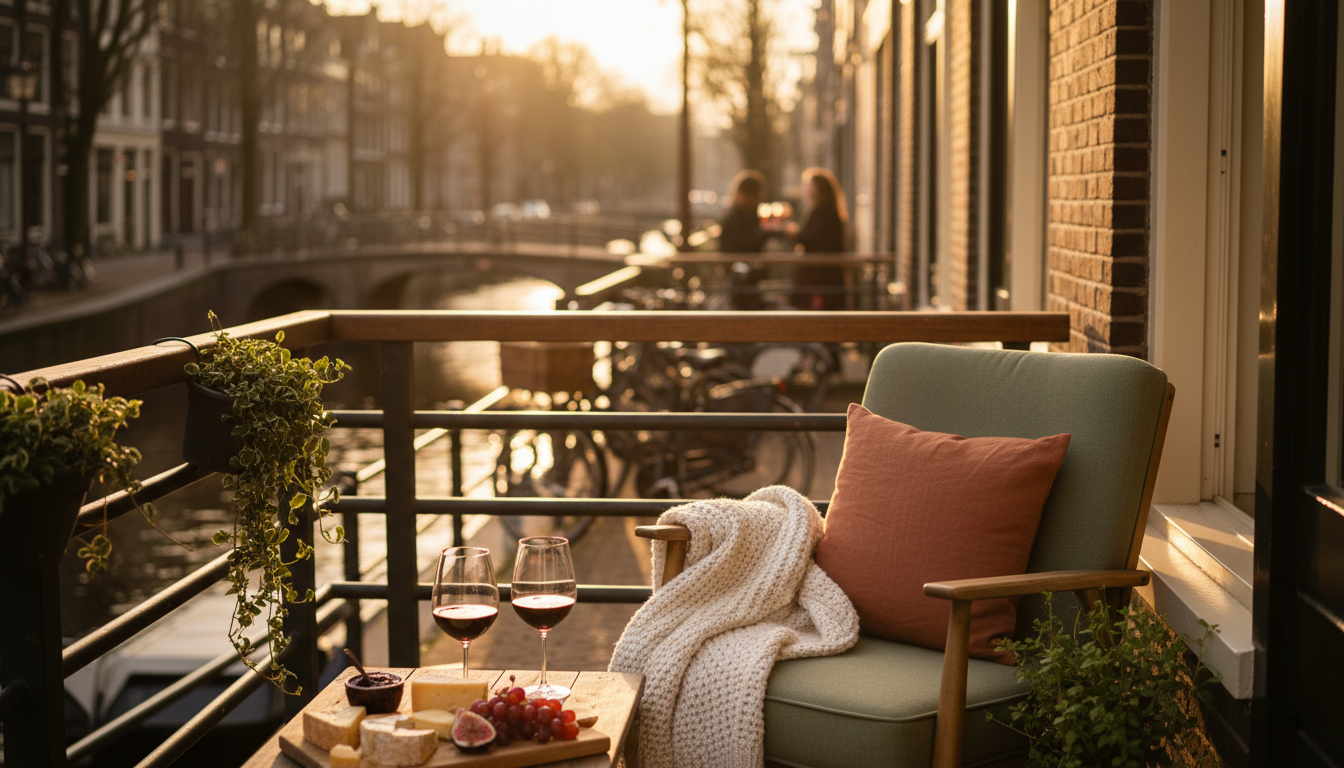 Cozy Amsterdam canal-side apartment balcony at golden hour with two wine glasses, cheese board, and
Marcus's Solo Adventure: 6 Months, 8 Countries, Zero Hotel Bills
Marcus, 34, is a software developer from Austin who negotiated a remote work arrangement in 2022. His plan was ambitious: spend six months traveling through Europe without paying for a single hotel room.
"Everyone thought I was crazy," he laughed when we spoke. "My mom was convinced I'd end up sleeping on park benches."
Instead, Marcus completed home exchanges in Portugal, Spain, France, Italy, Germany, Netherlands, Czech Republic, and Austria. His total accommodation cost for six months? Zero dollars—plus the SwappaHome membership fee.
His journey started in Lisbon—three weeks in a one-bedroom in Alfama with a terrace view of the Tagus River. The owner was staying with family in Brazil, so it was a non-simultaneous exchange. Marcus had earned credits by hosting a German family in his Austin condo before he left.
Then Barcelona for two weeks. A studio in Gràcia, walking distance from Park Güell. "The host left me a list of tapas bars that weren't in any guidebook," Marcus said. "I still dream about the patatas bravas at this tiny place called Bar Bodega Quimet."
Paris came next—three weeks in a compact apartment in the 11th arrondissement, near Oberkampf. Small, maybe 400 square feet, but it had everything he needed. And he was steps from some of the best bars and bakeries in the city.
Florence changed him. A converted artist's studio in the Oltrarno district. "I'd wake up, make espresso on the moka pot, and work at this little desk overlooking terracotta rooftops. I understood why people move abroad."
The pattern continued through Munich, Amsterdam, Prague, and Vienna. Some exchanges were simultaneous, others used the credit system.
Here's Marcus's math: at an average of $150/night for modest hotels in these cities, he would have spent roughly $27,000 on accommodation alone. Instead, he spent that money on experiences—cooking classes in Florence ($85), wine tours in Porto ($60), concert tickets in Vienna ($45).
"The credit system is what made it possible," he explained. "I'd host guests in Austin when I wasn't there—my friend would handle key handoffs—and bank credits for future stays. It's like a travel savings account, except instead of money, you're saving nights."
 Laptop open on a rustic wooden desk with espresso cup, overlooking Florences terracotta rooftops and
My Family's Budget Breakthrough
I'm going to include my own story here because it illustrates something important: these experiences aren't just for solo adventurers or retired couples.
In 2019, my partner David and I took our two kids (then 6 and 9) to Europe for three weeks. We did home exchanges in London, Paris, and a small village in Tuscany.
The London swap was with a family in Notting Hill. Their kids were similar ages to ours, which meant the apartment was already set up for children—books, games, a PlayStation. Our kids felt at home immediately. We saved roughly $4,200 on accommodation over seven nights. (Try finding a family-friendly hotel in Notting Hill for under $600/night.)
But the real magic happened in Tuscany.
We stayed in a converted farmhouse outside Montepulciano, owned by an Italian-American couple who were visiting family in Chicago. The property had a pool, olive trees, and a kitchen stocked with local olive oil and wine.
"Can we just live here?" my daughter asked on day two.
We spent mornings at the pool, afternoons exploring hilltop villages, and evenings cooking pasta with ingredients from the weekly market in Pienza. The kids still talk about that trip—not the museums or monuments, but the feeling of having a home base. Of belonging somewhere.
What I learned? When you're traveling with kids, space matters more than luxury. A two-bedroom apartment with a washing machine beats a fancy hotel room every time. Home exchange gives you that space without the premium price tag.
 Two children running through an olive grove toward a rustic Tuscan farmhouse with a swimming pool vi
When Exchanges Go Unexpectedly Right
Not every success story is about saving money or finding the perfect apartment. Sometimes it's about the connections you never saw coming.
Jennifer, 52, from Seattle, exchanged homes with a woman named Amélie in Lyon, France. They'd communicated extensively before the swap but had never met. When Jennifer arrived, she found a welcome basket with local chocolates, a bottle of Côtes du Rhône, and a handwritten letter.
"Amélie had included her phone number in case I needed anything," Jennifer told me. "I texted her a photo of the sunset from her balcony. She texted back a photo of the rain in Seattle. We started sending each other pictures every day."
That was four years ago. Jennifer and Amélie have since met in person twice—once when Amélie visited Seattle again, and once when Jennifer returned to Lyon. They've become genuine friends.
"I never expected to make a lifelong friend through home exchange. I thought I was just getting a free place to stay."
Then there's David, 41, a graphic designer from Chicago who did a home exchange in Copenhagen and fell in love with Danish design culture. He spent three weeks visiting studios, attending exhibitions, and connecting with local designers.
"Staying in a real Copenhagen apartment—not a hotel—gave me access to a different world," he explained. "My host's neighbor was a furniture designer. We had coffee, and he introduced me to his network."
David now does freelance work for two Danish design firms. The connections he made during that home exchange changed his career trajectory.
The Challenges Nobody Talks About
I'd be doing you a disservice if I only shared the highlight reels.
Marcus admitted that one of his exchanges almost fell apart due to miscommunication. "The host in Prague didn't speak much English, and my Czech is nonexistent. We had some confusion about check-in times, and I ended up waiting outside the apartment for two hours."
His solution now? "I confirm every detail in writing—arrival time, key location, emergency contacts—even if it feels redundant. And I use translation apps liberally."
Sarah mentioned that one exchange didn't meet her cleanliness standards. "The apartment was fine, but it wasn't as clean as I keep my own home. I spent the first hour wiping down surfaces." Her advice: be specific in your listing about your expectations, and look for hosts with detailed reviews that mention cleanliness. It's not rude to ask—it's practical.
Every home exchanger I spoke with mentioned the initial anxiety of having strangers in their home. The universal solution? Start with the review system and verification features on platforms like SwappaHome, then build trust through extensive pre-exchange communication.
"By the time someone stays in my home, we've exchanged dozens of messages," said Jennifer. "I know about their family, their travel style, their expectations. They're not strangers anymore."
 Split-screen style image showing two people video chatting - one in a modern Seattle apartment, one
What Actually Works
After collecting all these stories, I noticed consistent patterns among successful exchangers.
They wrote detailed, honest listings. Marcus's Austin listing included 47 photos and a 2,000-word description covering everything from neighborhood parking to the best breakfast taco spot within walking distance.
They treated inquiries like conversations, not transactions. Sarah and Tom exchanged messages with their Dutch guests for three weeks before confirming. They asked about travel styles, expectations, and even dietary restrictions—the Dutch couple was vegetarian, so Sarah stocked her fridge accordingly.
They created house manuals. This came up in every single interview. Successful home exchangers leave detailed guides covering WiFi passwords, appliance quirks, local recommendations, emergency contacts, and neighborhood tips. It's not just helpful—it's a trust-building gesture.
They started small. Most first-time exchangers began with shorter swaps (one week or less) and domestic or nearby international destinations. Building confidence with lower-stakes exchanges made longer, more ambitious trips feel manageable.
They used the credit system strategically. On SwappaHome, you earn 1 credit for every night you host, regardless of your home's size or location. You spend 1 credit for every night you stay somewhere else. Several travelers I interviewed built up credits by hosting frequently, then used those credits for extended trips.
The Numbers
I love stories, but I also love data.
Average savings per trip among the travelers I interviewed: $2,400-$8,500, depending on destination and length. Average trip length: 12 nights. Most popular destinations: Western Europe (particularly France, Italy, Spain, UK), followed by North America and Australia.
Every traveler I interviewed has done multiple exchanges—the average was 7 exchanges over 3 years.
Biggest single-trip savings? Marcus's 6-month European adventure, at approximately $27,000 in avoided hotel costs.
Smallest exchange? A weekend swap between neighbors in different San Francisco neighborhoods. Yes, really—one wanted to experience a different part of the city.
What Makes an Exchange Great
After seven years of swapping and dozens of conversations with fellow exchangers, I've identified what separates good exchanges from great ones.
Mutual respect. The best exchanges feel like friendships, not transactions. Both parties treat each other's homes with care, leave things better than they found them, and communicate openly about any issues.
Flexibility. Things don't always go perfectly. Flight delays happen. Appliances break. The travelers who thrive are those who roll with minor inconveniences rather than expecting hotel-level service.
Curiosity. The most satisfied home exchangers approach each swap as an opportunity to learn—about a new neighborhood, a different culture, a way of living they'd never experience in a hotel.
Preparation. Successful exchangers invest time upfront: vetting potential guests, creating thorough house manuals, researching their destination, and communicating extensively before arrival.
Your Story Starts Somewhere
I've been asked many times whether home exchange is "worth it."
It depends on what you're looking for.
If you want room service and daily housekeeping, home exchange isn't for you. If you want predictability and zero responsibility for someone else's space, stick with hotels.
But if you want to wake up in a real neighborhood, shop at local markets, cook in a stranger's kitchen, and discover that the world is full of generous people willing to share their homes—then yes. It's worth it.
Every story I've collected started the same way: someone took a chance. They listed their home, sent that first inquiry, or accepted a request from a stranger halfway around the world.
Sarah was nervous about strangers using her dishes. Now she's planning her fourth exchange. Marcus's mom thought he'd end up homeless. He spent six months living better than most tourists ever will. Jennifer just wanted a free place to stay in Lyon. She found a lifelong friend.
The platform I use and recommend is SwappaHome—it's where I've found most of my exchanges, and the credit system makes it flexible enough for any travel style. You start with 7 free credits, which means you could book a 10-night trip before you've even hosted anyone.
But honestly? The platform matters less than the mindset. Home exchange works because people make it work. Because they show up with generosity, communicate clearly, and trust that most humans are fundamentally good.
That Lisbon kitchen where I sat seven years ago, watching Maria's cat and drinking her coffee? It changed how I travel. Not because it was free—though it was—but because it showed me what's possible when you stop being a tourist and start being a temporary local.
Your story is out there, waiting. You just have to be willing to write the first chapter.
Frequently Asked Questions
Are these success stories typical, or just lucky exceptions?
The stories I've shared represent common experiences, not outliers. Platforms like SwappaHome have thousands of completed exchanges annually, with the vast majority going smoothly. The key factors are thorough communication beforehand, honest listings, and using the review system to vet potential exchange partners. Most exchangers report positive experiences and become repeat users.
How much money can you actually save?
It varies dramatically by destination. In expensive cities like London, Paris, or New York, you might save $300-500 per night compared to hotels. For a two-week trip, that's $4,200-$7,000 in accommodation savings alone. Marcus saved approximately $27,000 over six months in Europe. Even in budget destinations, you'll typically save $100-150 nightly while gaining kitchen access and more space.
Is home exchange safe for solo travelers?
Yes, with proper precautions. Solo travelers like Marcus successfully complete extended home exchanges by thoroughly vetting hosts through reviews and verification systems, communicating extensively before confirming, sharing itineraries with friends or family, and trusting their instincts about potential matches. The community-based review system on platforms like SwappaHome helps establish accountability and trust.
What happens if something goes wrong?
Members resolve issues directly through communication—this is a community-based platform, not a hotel service. Most problems are minor and easily solved with a quick message. For your own peace of mind, consider getting personal travel insurance and home insurance that covers guests. The review system also incentivizes good behavior, as negative reviews affect future exchange opportunities for both parties.
How do I get started if I've never done this before?
Start by creating a detailed listing with quality photos and honest descriptions of your space. Begin with shorter exchanges (a weekend or one week) in nearby destinations to build confidence. Use the messaging system to communicate extensively with potential matches before confirming. Create a thorough house manual for your guests. On SwappaHome, new members receive 7 free credits—enough for a 10-night trip—so you can experience being a guest before hosting anyone.

Published by
SwappaHome
SwappaHome Editorial Team
Home Exchange & Slow Travel Editorial
The SwappaHome Editorial Team brings together travel research, home-exchange community insights, and platform data to produce practical guides for first-time and experienced home swappers. Every article cites real platforms, current market rates, and verifiable city-level facts so readers can make informed decisions without guessing.
Ready to try home swapping?
Join SwappaHome and start traveling by exchanging homes. Get 7 free credits when you sign up!
Related articles

Bachelor and Bachelorette Parties in Singapore: The Complete Home Swap Group Guide for 2026
Planning a bachelor or bachelorette party in Singapore? Discover how home swapping lets groups of 6-12 stay together in luxury condos, saving thousands while partying in Marina Bay.

Cycling in Lisbon: 7 Home Swap Bike Tour Itineraries for Every Rider
Discover the best cycling routes in Lisbon with these home swap bike tour itineraries—from waterfront paths to hilltop adventures, all starting from your borrowed home.

Graduation Trip to Barcelona: How Home Swapping Gives New Graduates the Ultimate Celebration
Planning a graduation trip to Barcelona? Discover how home swapping lets new graduates explore Spain's most vibrant city without the hostel crowds or hotel costs.