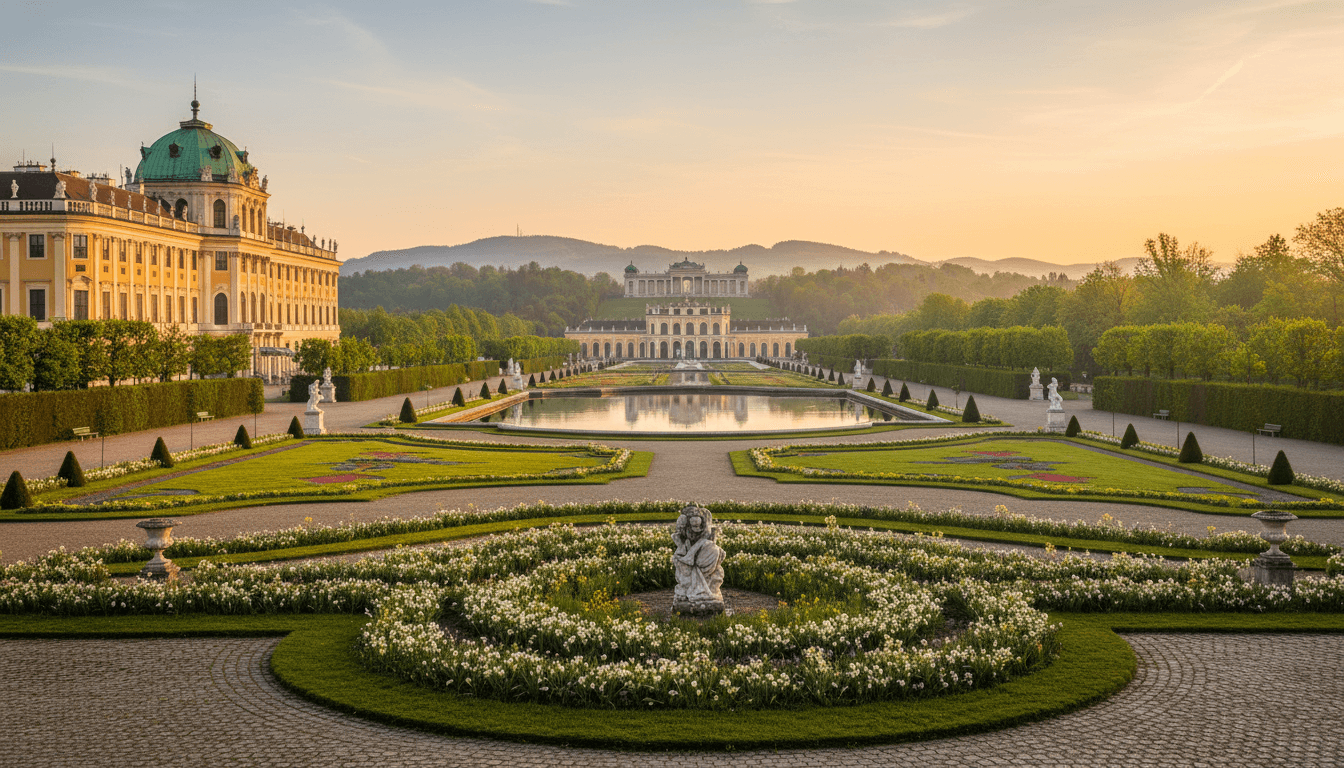
Home Exchange in Vienna: 7 Underrated Neighborhoods Locals Actually Love
Maya Chen
Travel Writer & Home Exchange Expert
Skip the tourist traps. These hidden Vienna neighborhoods offer authentic home exchange experiences, lower costs, and the real Viennese life most travelers miss.
I was standing in a courtyard in Vienna's 7th district, watching an elderly woman water her geraniums from a third-floor window, when it hit me—I'd been doing Vienna wrong for years.
Every previous trip, I'd planted myself near Stephansplatz or somewhere along the Ringstrasse. Premium prices. Tour groups everywhere. Sachertorte that cost twice what it should. But this home exchange in Neubau changed everything. I'd never even heard of the neighborhood before, and within 24 hours I understood why my Viennese friends had always rolled their eyes when I mentioned staying in the 1st district.
Here's the thing about Vienna: its soul doesn't live in the postcard-perfect center. It lives in the Beisl tucked into residential streets, in the morning ritual of grabbing a Melange at the corner café, in Sunday markets where nobody speaks English because nobody needs to. And if you're considering a home exchange in Vienna's underrated neighborhoods, you're about to discover a city that most tourists never see.
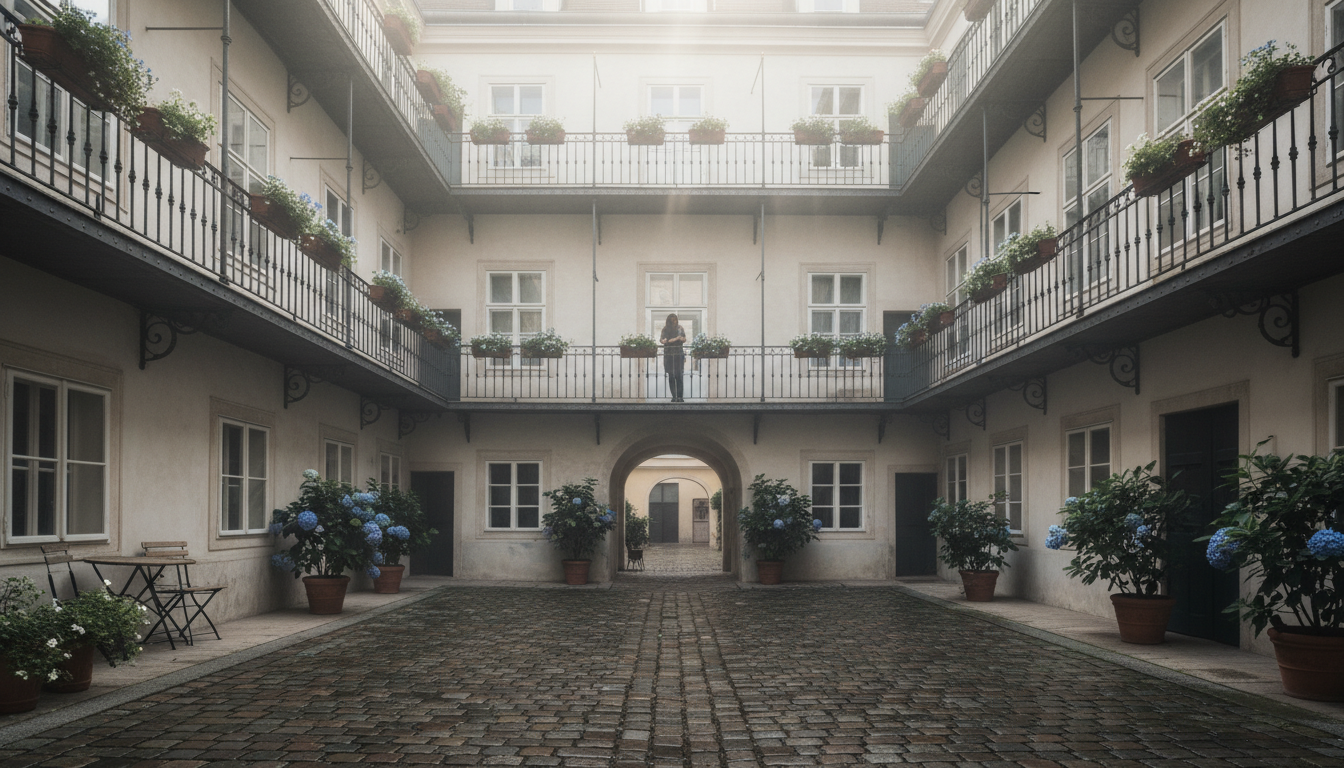 Morning light filtering through a traditional Viennese courtyard with wrought-iron balconies, potted
Why Vienna's Hidden Neighborhoods Beat the Tourist Center for Home Exchange
Let me be honest with you—the 1st district is stunning. The architecture genuinely takes your breath away. But staying there on a home exchange? It's like visiting New York and insisting on sleeping in Times Square.
You end up in apartments designed for short-term rentals, not real life. Your neighbors are also tourists. The grocery stores stock for visitors, which means expensive and limited. And there's this weird feeling of being in a museum after hours.
The underrated Vienna neighborhoods I'm about to share offer something different. These are places where your home exchange host actually lives—where they've built a life, know the butcher's name, and can tell you which bakery has the best Topfenstrudel. (It's always the one that looks least impressive from outside.)
Plus, the practical benefits are real. A home exchange in Vienna's outer districts often means more space, quieter streets, and access to the local infrastructure that makes daily life actually work—laundromats, pharmacies that aren't tourist-priced, restaurants where the menu isn't in four languages.
Neubau (7th District): Vienna's Creative Heart
I'm starting with Neubau because it's where I had my Vienna awakening. Honestly, it might be the perfect introduction to alternative Vienna for first-time home exchangers.
The neighborhood sits just west of the museum district—close enough to walk to the major sights but far enough that the streets belong to residents. Everything centers around the Spittelberg quarter, this tangle of narrow lanes dating back to the 18th century, now filled with independent boutiques, design studios, and some of Vienna's best small restaurants.
The apartments here tend to be in beautifully maintained Gründerzeit buildings with high ceilings, wooden floors, and those distinctly Viennese double windows. Many have been thoughtfully renovated by creative professionals—architects, designers, artists—who've made them genuinely lovely places to live. My host's place had a small balcony overlooking a quiet courtyard, a kitchen stocked with local coffee from a roaster three streets away, and a collection of Vienna guidebooks that were actually useful.
Breakfast at Ulrich on Ulrichsplatz became my morning ritual. Their eggs with speck and chives cost around €12 and come with bread that's worth the trip alone. For dinner, Amerlingbeisl has a hidden garden that feels like a secret, even though locals pack it every summer evening—budget about €18-25 for a main course with wine. And the Saturday market at Schwendplatz? Small but excellent for cheese, bread, and seasonal produce. Get there before 10 AM or the good stuff disappears.
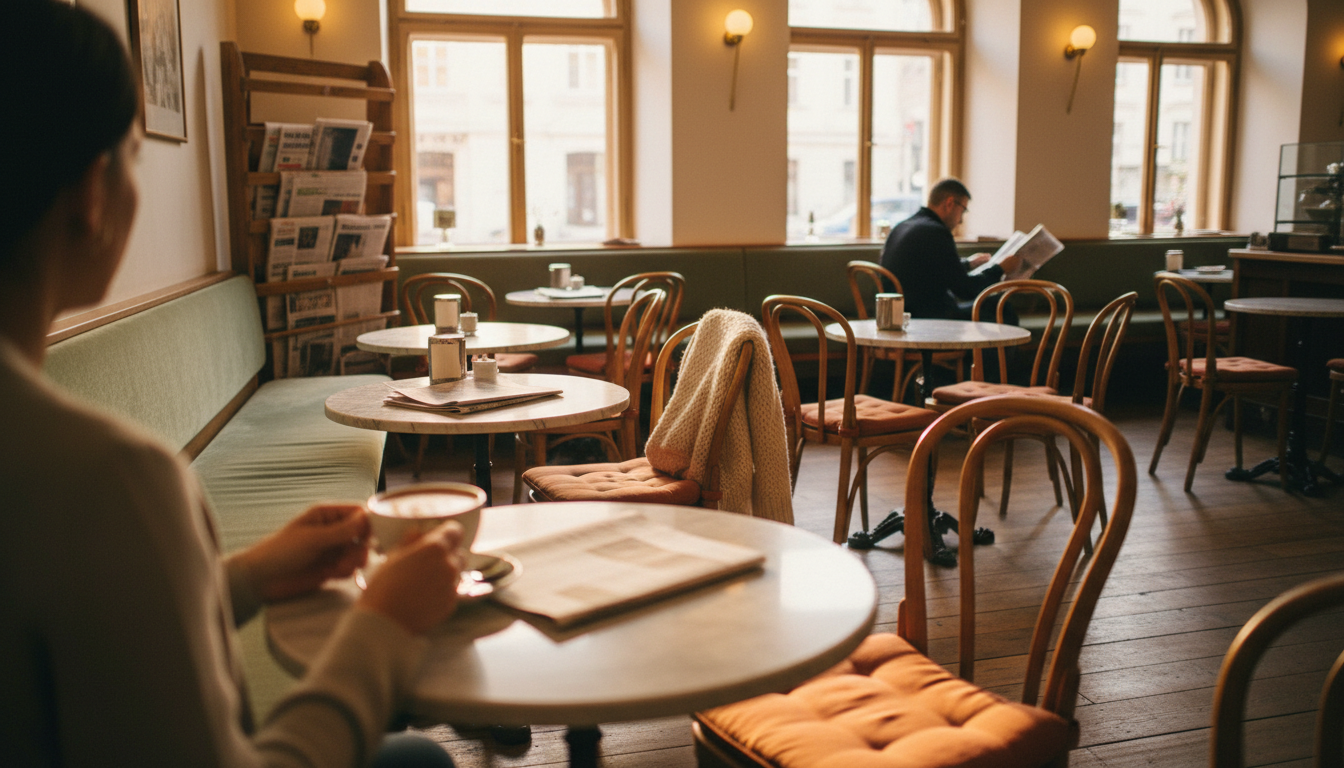 A cozy Viennese caf interior in Neubau with marble tables, bentwood chairs, newspapers on wooden rac
Leopoldstadt (2nd District): The Neighborhood Vienna Forgot to Gentrify
Okay, that's not entirely true—Leopoldstadt is definitely changing. But it's changing slowly, which means you can still find a home exchange that feels genuinely local without paying Neubau prices or fighting for reservations.
Leopoldstadt sits across the Danube Canal from the center. Historically Vienna's Jewish quarter, now one of its most diverse neighborhoods. The Karmelitermarkt anchors the area—a daily market operating since the 1600s that remains stubbornly uncommercial.
This is Vienna without the polish. Some buildings need renovation. Some streets feel a bit rough around the edges. But there's an energy here that the pristine inner districts lack—a sense that things are happening, that the neighborhood is alive and changing. The Prater park forms Leopoldstadt's eastern border, which means morning runs through actual forest, not just manicured gardens. The famous Riesenrad is here too, though locals tend to avoid it unless showing visitors around.
Apartments in Leopoldstadt often offer more space for less. The building stock varies wildly—you might find a renovated loft in a former factory or a traditional apartment in a 1920s social housing block. Vienna's social housing is famously well-built and well-maintained, so either way, you're getting a genuine neighborhood experience.
Skopik & Lohn on Leopoldsgasse serves some of Vienna's best modern Austrian food in a dining room with a ceiling covered in black-and-white drawings—expect around €30-40 for a full meal. For something cheaper, the market stalls at Karmelitermarkt do excellent weekday lunches for under €10. And Tel Aviv Beach, a bar along the canal, is the summer hangout for young Viennese who want drinks without pretension. A spritzer runs about €4.
Josefstadt (8th District): Quiet Elegance Without the Price Tag
If Neubau is Vienna's creative neighborhood and Leopoldstadt is its gritty one, Josefstadt is where you go for old-world charm without the tourist markup.
Vienna's smallest district, tucked between the university area and the outer ring. Historically bourgeois—lots of doctors, lawyers, professors—and the architecture reflects that stability. Well-maintained facades, quiet courtyards, streets that feel like they haven't changed much since 1910.
Josefstadt attracts a certain type of Viennese resident: established, cultured, often older. The apartments tend to be traditional in the best sense—spacious, with original details intact, in buildings where the neighbors say hello in the stairwell. For home exchangers, this translates to staying in places that feel like real homes, not investment properties. My friend Sarah did a two-week exchange here last year and still talks about her host's library, the building's shared garden, and the neighborhood pharmacy where they remembered her name after two visits.
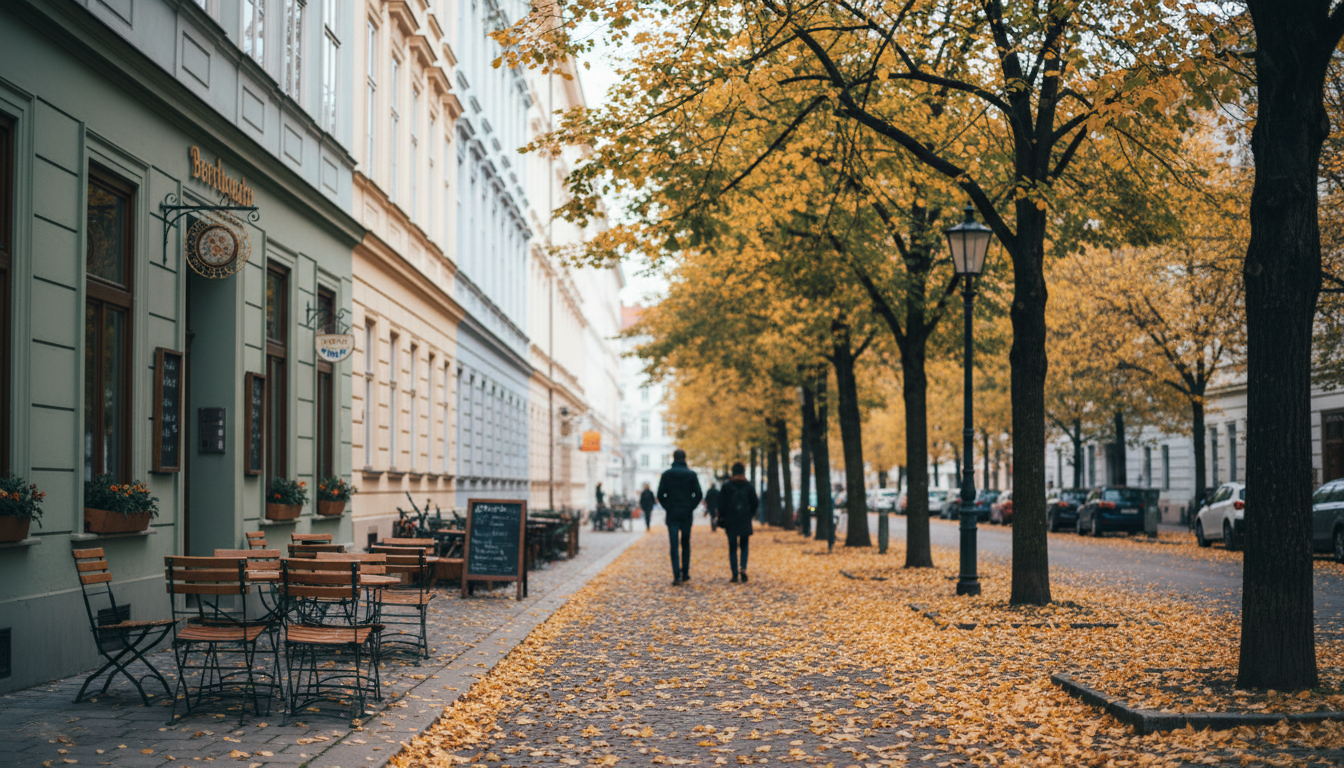 A tree-lined Josefstadt street in autumn with golden leaves, classic Viennese facades, and a traditi
The U2 metro line runs through the district, so you're never more than 20 minutes from anywhere. For coffee, Café Hummel on Josefstädter Straße has been serving since 1938 and still does a proper Viennese breakfast—eggs, ham, cheese, bread, butter, jam, and unlimited coffee—for around €14. The Theater in der Josefstadt, one of Vienna's oldest, is worth checking for performances even if your German is limited.
Alsergrund (9th District): University Life and Hidden Courtyards
Alsergrund wraps around Vienna's main university campus, which gives it an energy the more residential districts lack. Students, academics, young professionals filling the cafés. There's always something happening—lectures, concerts, protests, whatever the current cause demands.
But here's what most visitors miss: Alsergrund also contains some of Vienna's most beautiful hidden courtyards and passage systems. The Palais Liechtenstein, a stunning baroque palace with gardens open to the public, sits in the middle of the district. And the Servitenviertel, a pocket of winding streets near the Rossauer Lände metro, feels like a village dropped into the city.
The housing stock is mixed—some grand 19th-century buildings, some 1960s blocks, some modern developments near the hospital complex. This variety means home exchange options range from student-practical to professor-elegant, often at prices impossible in more fashionable districts.
I stayed in an Alsergrund apartment during a research trip two years ago. Small, on the fifth floor without an elevator, but with a view over the rooftops that made every morning feel like a gift. The neighborhood bakery—I never learned the name, just "the one on the corner with the green awning"—made Mohnflesserl that I still dream about.
Servitenwirt on Servitengasse does traditional Viennese food in a setting that hasn't changed in decades. Wiener Schnitzel runs about €16, and the wine list favors Austrian producers. The Liechtenstein Garden Palace opens its grounds on certain days; check their website for the schedule. For coffee, Café Stein near the university has the best people-watching in Vienna—grab a window seat, order a Melange for around €4, and watch the parade of students, tourists, and elderly regulars.
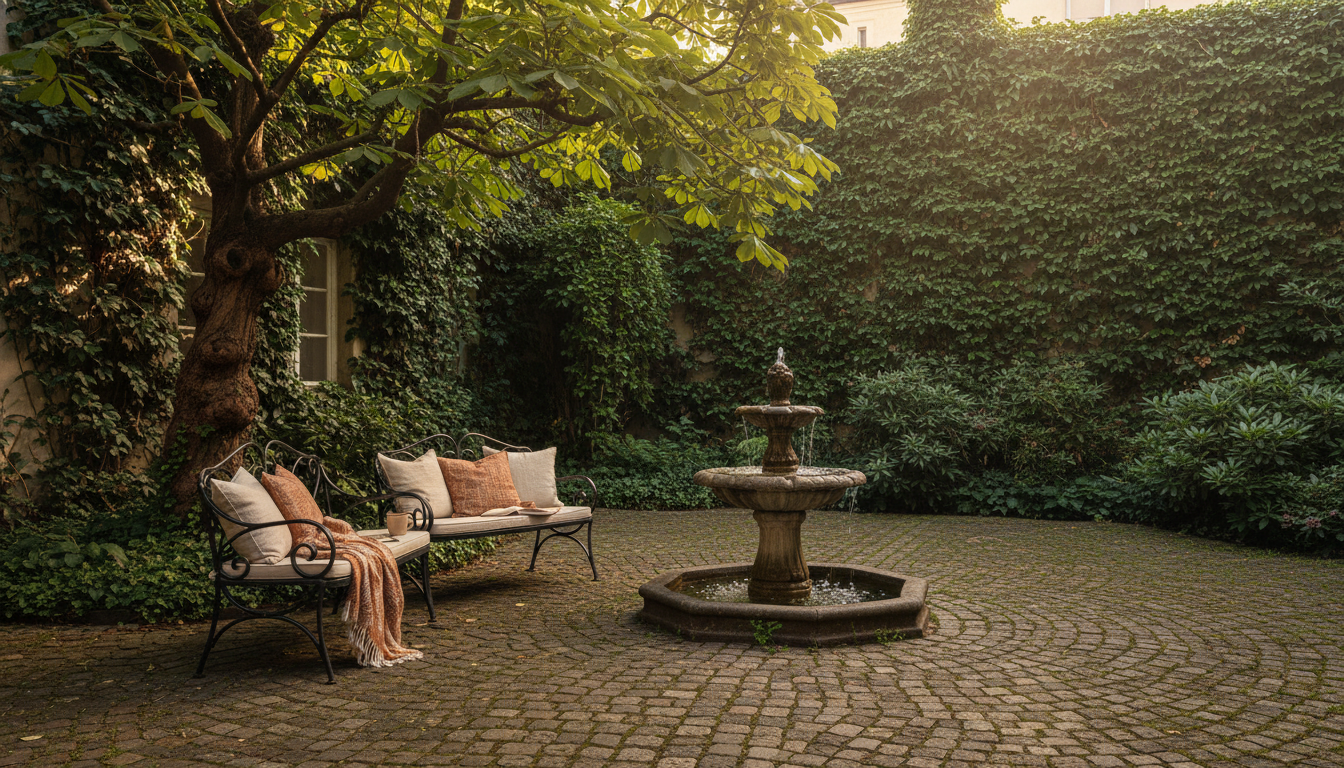 A hidden courtyard in Alsergrund with ivy-covered walls, a small fountain, and wrought-iron benches
Margareten (5th District): The Neighborhood That's Having a Moment
Real talk: Margareten is changing fast. Five years ago, it was firmly working-class, a bit rough, not somewhere tourists ventured. Now it's attracting the creative types who got priced out of Neubau, and the coffee shops and galleries are following.
This makes it an interesting home exchange choice. You're getting in before the transformation is complete—lower costs, more authentic neighborhood life. But you're also getting the benefits of that transformation. Better restaurants, more interesting shops, a sense of energy and possibility.
Margareten sits south of the center, bordering the Naschmarkt at its northern edge. The district stretches from there into increasingly residential territory. For home exchange, the sweet spot is the northern half—close enough to walk to the Naschmarkt and the center, but firmly in neighborhood territory.
Apartments here tend to be in early 20th-century buildings, many built for workers and now appreciated for their solid construction. Ceilings are lower than in the bourgeois districts, but the spaces are practical and often surprisingly bright. The neighborhood's diversity—Turkish grocers next to Austrian butchers, Vietnamese restaurants beside traditional Beisln—gives it a texture that more homogeneous districts lack.
The Naschmarkt is the obvious draw. Go on Saturday morning for the flea market extension, but expect crowds. For something quieter, the Kettenbrückengasse end has better food stalls and fewer tourists. Brut im Künstlerhaus, near the Karlsplatz edge of the district, combines art exhibitions with excellent Austrian wine and small plates—budget €20-30 for drinks and snacks. For a proper meal, Silberwirt on Schlossgasse has been serving Viennese classics since 1604—yes, 1604—and the Tafelspitz is legendary.
Währing (18th District): Where Vienna Meets the Vienna Woods
Now we're getting into territory most tourists never consider. Währing is in Vienna's northwestern corner, where the city starts climbing into the hills that eventually become the Vienna Woods. More houses, more gardens, more families.
Währing offers something the central districts can't: space and nature. Many homes here have gardens or terraces. The Türkenschanzpark, a beautiful 19th-century landscape park, provides genuine green space—not just a manicured garden but actual hills, ponds, forest paths.
For families doing home exchange, or anyone who needs a break from urban intensity, Währing is worth considering. You're trading proximity to the center for peace, quiet, and the ability to walk into actual woods.
But let's be honest—Währing is far from the action. You'll need the tram or metro to reach the center, about 25-30 minutes. The neighborhood itself is quiet in a way that might feel boring if you want nightlife or constant stimulation. But if you're planning to spend your days exploring Vienna and your evenings cooking dinner and relaxing, Währing delivers. The local infrastructure is excellent—good supermarkets, pharmacies, bakeries—because this is where actual Viennese families live their actual lives.
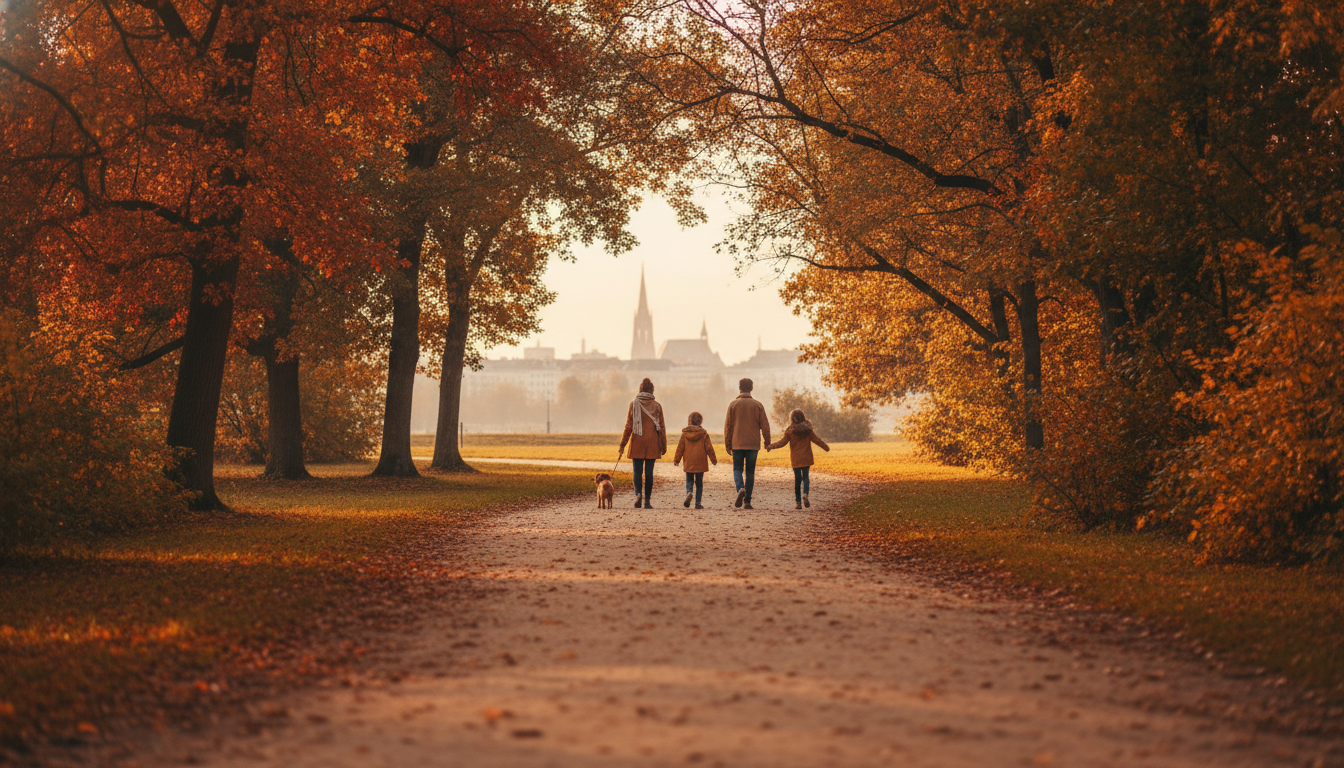 A winding path through the Trkenschanzpark in Whring with autumn foliage, a distant view of Viennas
Heuriger are the specialty out here—Währing borders the wine-growing villages of Grinzing and Neustift, where you can drink new wine in garden settings for €3-4 per glass. Mayer am Pfarrplatz in neighboring Heiligenstadt is where Beethoven lived while composing his famous testament. The wine is good, the history is real, and the garden fills up on summer evenings.
Favoriten (10th District): Vienna's Most Underrated Home Exchange Secret
I saved Favoriten for last because it's the most unexpected recommendation. Honestly, it's not for everyone.
Vienna's largest and most diverse district, stretching from the Hauptbahnhof south into areas that feel nothing like the Vienna of tourist imagination. Working-class, immigrant-heavy, architecturally mixed—everything from social housing blocks to Ottoman-era buildings to modern developments.
So why does it belong on this list? Because the northern part of Favoriten, near the Hauptbahnhof and the new Sonnwendviertel development, represents Vienna's future. This area has been completely transformed in the last decade—new parks, new apartments, new restaurants—while maintaining diversity and affordability that the inner districts lost long ago.
A home exchange in Vienna's 10th district puts you near the train station (convenient for day trips to Bratislava, Budapest, or the Austrian countryside), in a neighborhood that's genuinely multicultural, at prices that make extended stays feasible.
The reality check: Favoriten isn't charming in the traditional Viennese sense. Some areas are rough. The architecture won't make it to Instagram. But if you want to understand how Vienna actually works as a modern, diverse European city—not just as a museum of imperial grandeur—Favoriten delivers that education.
The Sonnwendviertel area around Helmut-Zilk-Park is the most comfortable introduction—modern buildings, good restaurants, a feeling of newness and possibility. The Viktor-Adler-Markt, further south, is Vienna's most diverse market—Turkish, Balkan, Asian, African vendors selling ingredients you won't find anywhere else in the city.
For food, Habibi & Hawara is a social enterprise employing refugees that serves excellent Middle Eastern food for €10-15. The rooftop bar at the 25hours Hotel near the station has views that rival anything in the center.
Making Your Vienna Home Exchange Work: Practical Advice
After multiple home exchanges across different neighborhoods, I've learned a few things worth sharing.
Transportation matters. Vienna's public transport is exceptional—clean, reliable, comprehensive. A weekly pass costs €17.10, covering everything: metro, tram, bus, even some regional trains within city limits. Whatever neighborhood you choose, you're never more than 30-40 minutes from anywhere. That said, districts along the U-Bahn feel closer to the center than their actual distance suggests. Districts served only by trams or buses require more planning.
Seasons transform the city. Summer means outdoor dining, park life, Danube beaches. Winter means Christmas markets, opera season, the particular coziness of Viennese cafés when it's gray and cold outside. For home exchange, this affects which neighborhoods shine. Währing and its access to nature makes most sense in warm months. Inner-adjacent districts like Neubau and Josefstadt work year-round. Favoriten's appeal depends heavily on whether the new outdoor spaces are usable.
What to look for in a listing: Pay attention to floor level—many buildings lack elevators, and fifth-floor walk-ups get old fast. Check the heating type, since older buildings with Einzelöfen can be charming but complicated. Consider courtyard versus street-facing apartments; courtyard units are quieter but sometimes darker. And look at proximity to metro or tram, because anything more than 10 minutes' walk adds friction.
On SwappaHome, I always message hosts with specific questions about their neighborhood—best coffee spot, where they buy groceries, what they wish they'd known when they moved in. The answers tell you more than any listing description.
Frequently Asked Questions
Is home exchange in Vienna safe for first-time swappers?
Vienna consistently ranks among Europe's safest cities, and home exchange here carries minimal risk. The neighborhoods I've recommended are all residential areas where locals live, work, and raise families. SwappaHome's verification system and reviews help you choose reliable hosts. Consider getting your own travel insurance for extra peace of mind, but safety concerns shouldn't stop you from exploring Vienna's underrated districts.
How much can I save with home exchange versus hotels in Vienna?
A mid-range hotel in central Vienna costs €150-250 per night. Over a two-week stay, that's €2,100-3,500. Home exchange costs nothing beyond your SwappaHome membership and the credits you've earned by hosting. Even accounting for groceries and transport, you'll save €1,500-3,000 on a typical two-week Vienna trip—money that goes much further at Heurigen and coffee houses.
Which Vienna neighborhood is best for families doing home exchange?
Währing offers the most family-friendly experience, with access to parks, gardens, and the Vienna Woods. Josefstadt provides a quieter, more central alternative with excellent playgrounds and family-oriented infrastructure. Both neighborhoods have homes with more space than central districts, and the residential character means kid-friendly routines—bakeries, supermarkets, parks—are built into daily life.
How far in advance should I arrange a home exchange in Vienna?
For peak season (December for Christmas markets, June-August for summer), start looking 3-4 months ahead. Vienna's home exchange community is active but not enormous, and the best listings in desirable neighborhoods get booked. For shoulder seasons (April-May, September-October), 6-8 weeks usually suffices. Last-minute exchanges are possible but limit your neighborhood options significantly.
Do I need to speak German for home exchange in Vienna?
No, but a few phrases help enormously. Most Viennese under 50 speak functional English, and tourist-facing businesses operate easily in English. However, neighborhood shops, markets, and traditional Beisln in the districts I've recommended often default to German. Learning basics—greetings, numbers, "Ich hätte gerne..."—opens doors and earns goodwill. Your home exchange host can usually provide a neighborhood cheat sheet with useful phrases.
That courtyard in Neubau where I watched the woman watering her geraniums? I think about it more than I think about Schönbrunn Palace or the Kunsthistorisches Museum. Not because it was more beautiful—it wasn't—but because it was real. It was Vienna as Viennese people actually live it.
That's what home exchange in Vienna's underrated neighborhoods offers: not a postcard, but a life. Even if it's only for a week or two, you get to inhabit a city instead of just visiting it. You learn which bakery opens earliest, which tram is always late, which café has the grumpiest waiter and the best Apfelstrudel.
If you're ready to discover Vienna beyond the tourist center, SwappaHome has listings across all the neighborhoods I've mentioned. Start browsing, reach out to hosts, ask questions. The real Vienna is waiting—you just have to know where to look.
40+
Swaps
25
Countries
7
Years
About Maya Chen
Travel Writer & Home Exchange Expert
Maya is a travel writer with over 7 years of experience in the home swapping world. Originally from Vancouver and now based in San Francisco, she has completed more than 40 home exchanges across 25 countries. Her passion for "slow" and authentic travel led her to discover that true luxury lies in living like a local, not a tourist.
Ready to try home swapping?
Join SwappaHome and start traveling by exchanging homes. Get 10 free credits when you sign up!
Related articles
Lyon Home Exchange: Your Complete Guide to France's Hidden Gem for Home Swapping
Discover why Lyon home exchange is booming among savvy travelers. From Croix-Rousse to Presqu'île, find the best neighborhoods and insider tips for your swap.
Zurich Bucket List: 47 Unforgettable Experiences to Enjoy During Your Home Swap
Discover the ultimate Zurich bucket list for home swappers—from secret swimming spots to fondue rituals locals actually do. Save thousands while living like a true Zürcher.
Dublin Home Exchange Utilities Guide: WiFi, Heating & Everything Your Guests Need
Master Dublin home exchange utilities—from dodgy WiFi fixes to heating quirks. Practical tips from 7 years of swapping homes across Ireland.