
Home Swap Demand in Bali: What Hosts and Guests Need to Know in 2026

SwappaHome Editorial Team
Home Exchange & Slow Travel Editorial
Bali home swap demand is surging. Here's the real breakdown of what hosts offer, what guests want, and how to navigate the island's unique exchange market.
Home Swap Demand in Bali: What Hosts and Guests Need to Know in 2026
Morning light filters through bamboo blinds in Ubud. Somewhere between the distant sound of a gamelan rehearsal and the smell of nasi goreng drifting up from a warung below, you realize this isn't a hotel experience. This is someone's actual life—their bookshelf stacked with dog-eared novels about Balinese spirituality, their favorite coffee mug shaped like a frangipani flower, their handwritten note explaining which neighborhood cat expects breakfast scraps.
Home swap demand in Bali has shifted dramatically over the past three years. What was once a trickle of adventurous travelers testing the waters has become a steady current of digital nomads, families seeking longer stays, and experienced home exchangers specifically targeting the island. Understanding this demand—whether you're a Bali-based host wondering if your villa will attract guests, or a traveler hoping to score that dreamy Canggu bungalow—requires looking beyond the generic "Bali is popular" narrative.
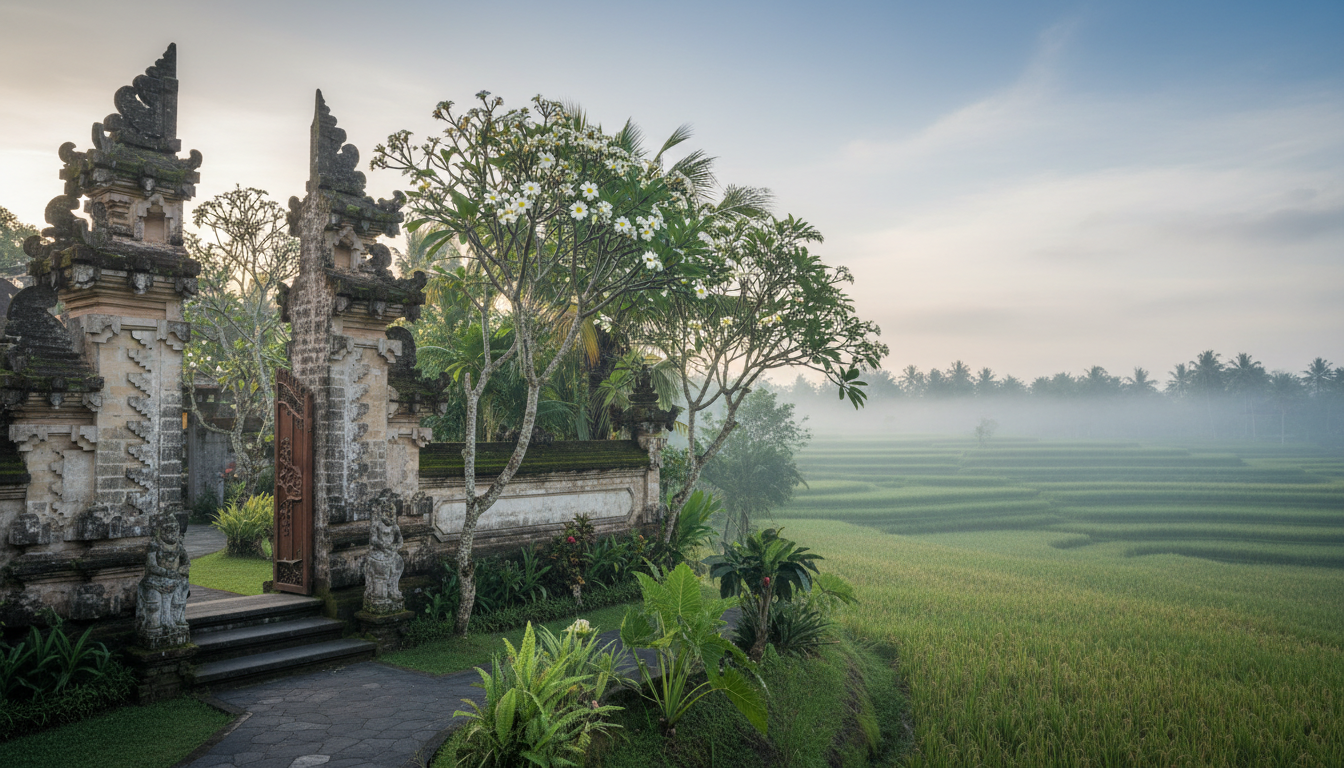 Traditional Balinese compound home in Ubud with carved stone entrance gate, tropical garden with fra
Why Bali Home Swap Demand Has Exploded (And What's Different Now)
Here's the honest truth: Bali's home exchange market doesn't behave like European or North American markets. The demand patterns, guest expectations, and hosting dynamics operate on different rules—rules shaped by the island's unique position as both a spiritual retreat destination and a digital nomad hub.
The numbers tell part of the story. Bali welcomed over 5.2 million international visitors in 2024, but the more relevant figure for home swappers is the estimated 180,000 long-stay visitors (those remaining 30+ days) who passed through that same year. These aren't quick-turnaround tourists. They're the exact demographic driving home swap demand: remote workers seeking month-long stays, families wanting to experience Balinese life beyond resort walls, and retirees testing out potential relocation destinations.
What makes Bali's home swap market distinct:
Seasonality flips expectations. Unlike Mediterranean destinations where summer is peak season, Bali's home swap demand peaks during the dry season (April through October) and again during the December-January holiday window. The "shoulder" months of March and November actually see strong demand from travelers specifically avoiding crowds—many experienced swappers target these windows intentionally.
Length of stay skews long. The SwappaHome community reports that Bali swap requests average 18-25 nights, compared to 7-10 nights for European city swaps. This matters enormously for hosts calculating whether to list their property and for guests understanding competition dynamics.
Guest demographics tilt younger and more nomadic. While a Rome home swap might attract a retired couple from Melbourne, Bali swaps disproportionately attract 28-45 year old remote workers, often traveling solo or as couples without children. Families with kids represent roughly 20% of Bali swap requests versus 40%+ for destinations like Tuscany or Provence.
What Bali Hosts Are Actually Offering (And What Gaps Exist)
Scroll through the home swap listings for Bali, and certain patterns emerge immediately. Understanding what's already available helps guests calibrate expectations and helps prospective hosts identify where demand exceeds supply.
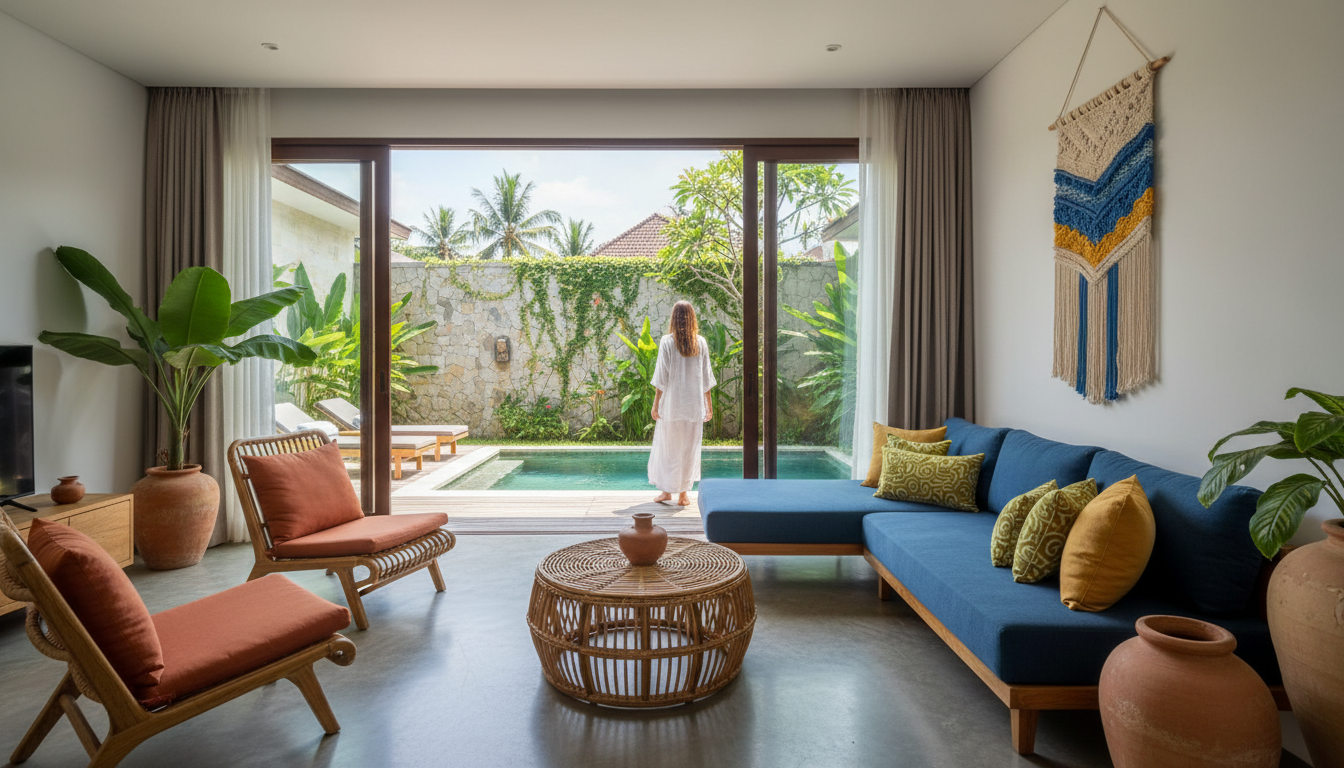 Modern Canggu villa interior with open-plan living space, concrete floors, rattan furniture, and lar
The Canggu Corridor: Oversupplied but Still in Demand
Canggu—stretching from Berawa through Batu Bolong to Pererenan—dominates Bali's home swap supply. These listings typically feature modern villas with private pools (even modest 2-bedroom properties often include plunge pools), open-plan tropical architecture with the now-iconic Bali aesthetic of concrete, terrazzo, rattan, and abundant natural light. Proximity to coworking spaces like Dojo Bali or Outpost is standard. A scooter included with the property? Nearly universal for Canggu listings. Fast WiFi marketed specifically to remote workers rounds out the package.
Typical Canggu villa rental rates run $80-180/night on platforms like Airbnb, making home swaps particularly attractive for longer stays. A three-week swap saves guests roughly $1,700-$3,800 compared to paid rentals.
The catch? Competition among guests for these properties is fierce. Popular Canggu listings receive 4-6 swap requests for every available slot during peak season. Hosts can be selective—and they are.
Ubud: High Demand, Lower Supply
Ubud represents the clearest supply-demand gap in Bali's home swap market. The spiritual and cultural heart of Bali attracts a specific type of traveler: those seeking yoga retreats, art immersion, rice terrace walks, and a slower pace than the surf-and-party scene down south.
Yet Ubud home swap listings number roughly 60% fewer than Canggu equivalents. The expat population skews older and less plugged into home exchange culture. Many Ubud residents own their properties outright (versus renting, as many Canggu digital nomads do) but haven't discovered home swapping as an option.
For prospective Ubud hosts, this represents opportunity. A well-presented traditional Balinese compound in Penestanan or a modern villa overlooking the Campuhan Ridge can expect consistent swap requests year-round.
Guests targeting Ubud should expect to plan further ahead—three to four months minimum for peak season—and should craft compelling swap requests that demonstrate genuine interest in Ubud's specific offerings rather than generic "I want to visit Bali" pitches.
The Bukit Peninsula: Surf-Centric and Seasonal
Uluwatu, Bingin, Padang Padang—the Bukit Peninsula's clifftop villages attract a narrower but passionate demographic: serious surfers. Home swap demand here correlates almost perfectly with swell season (April-October for the west-facing breaks).
Listings tend toward rustic-luxe surf shacks and mid-range villas with ocean views. The infrastructure is less developed than Canggu—expect bumpier roads, fewer restaurant options, and a genuine "end of the road" feeling that some travelers love and others find isolating.
Hosts on the Bukit should emphasize surf-specific amenities: board storage, outdoor showers, proximity to specific breaks, and honest assessments of which skill levels the nearby waves suit.
Sanur and Seminyak: The Overlooked Middle Ground
Sanur—Bali's original tourist beach, now a quiet family-friendly enclave—offers excellent home swap potential that remains underutilized. The calm waters suit families with young children, the cycling infrastructure is Bali's best, and the traditional village atmosphere provides cultural immersion without Ubud's distance from the airport.
Seminyak has shifted from party-central to upscale dining and boutique shopping destination. Home swap listings here tend toward higher-end properties, and demand comes from travelers seeking Bali's best restaurants (Locavore, Mozaic, and Merah Putih are all within easy reach) without the Canggu crowds.
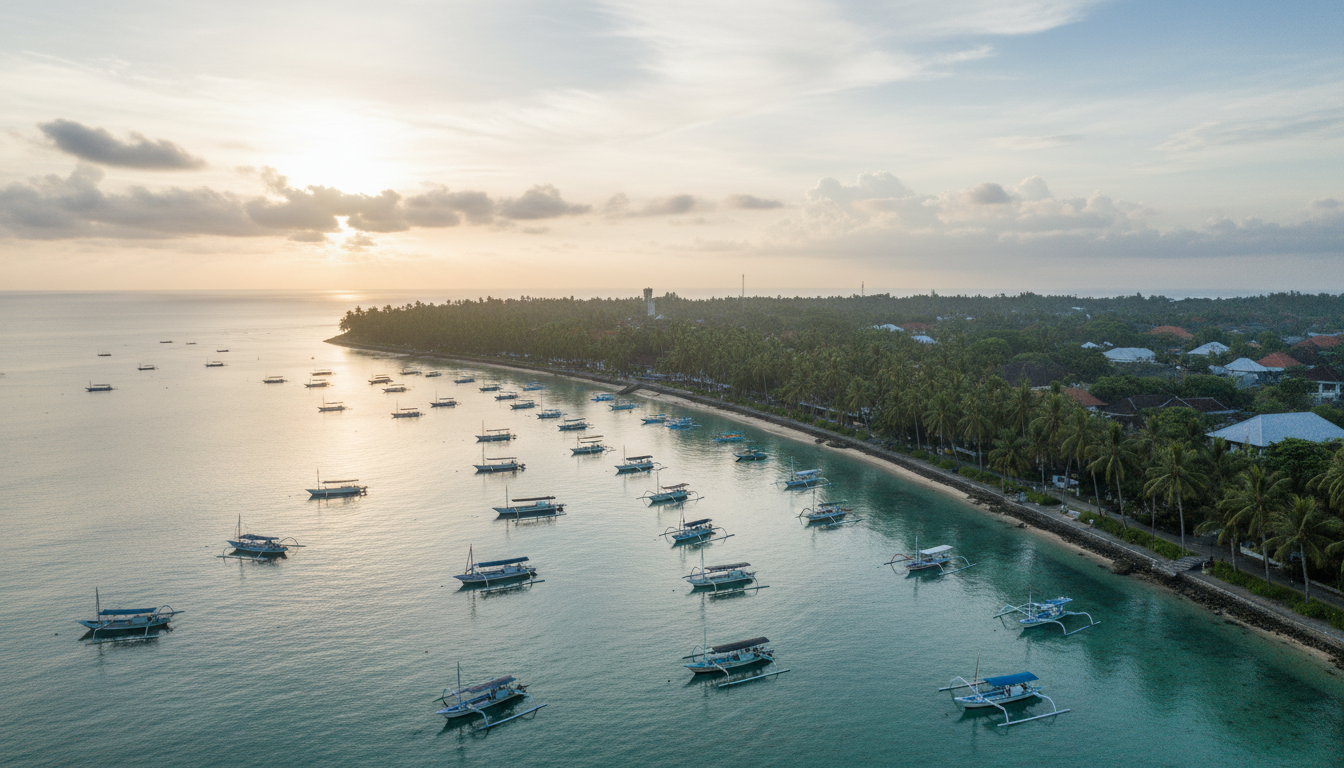 Aerial view of Sanur beachfront at sunrise showing traditional jukung fishing boats on calm water, w
What Guests Actually Want (Insights From the SwappaHome Community)
Community feedback reveals consistent themes about what makes a Bali home swap request succeed or fail.
The Non-Negotiables
Reliable high-speed internet tops every list. Bali's infrastructure has improved dramatically, but connectivity varies wildly by neighborhood and even by specific street. Guests want actual speed test results, not vague assurances. Hosts who include recent Speedtest screenshots in their listings report higher engagement.
Air conditioning in bedrooms matters more than many hosts realize. Bali's tropical climate means nighttime temperatures rarely drop below 24°C (75°F), and humidity hovers around 80%. The romantic notion of sleeping with windows open and ceiling fans? It works for some—but most guests, especially those from temperate climates, need AC to sleep well.
Scooter access has become nearly expected for Canggu and Uluwatu swaps. Bali's traffic makes car transport impractical for daily errands, and ride-hailing apps (Gojek and Grab) don't fully solve the problem. Hosts who include a scooter—or provide clear guidance on reliable rental contacts—remove a significant friction point.
Workspace setup matters for the remote worker demographic: a proper desk, ergonomic chair, and good lighting. Many Bali homes are designed for vacation mode, not work mode. A dedicated workspace signals that the host understands their likely guests.
The Differentiators
Beyond basics, certain offerings generate disproportionate guest interest:
Detailed neighborhood guides specific to that exact location make a difference. Not "Canggu has great cafes" but "Machinery Cafe is a 4-minute walk and has the best flat white in Berawa; Shady Shack does excellent plant-based breakfasts but gets crowded after 9am; the warung on Jalan Pantai Berawa with the green sign does the best nasi campur and costs 35,000 IDR."
Introductions to local staff help when applicable. Many Bali homes include part-time housekeeping or gardening help. Guests appreciate knowing these relationships exist and understanding the expected protocols (typical rates for additional cleaning run 100,000-150,000 IDR per session).
Temple ceremony guidance provides genuine value. Bali's Hindu calendar means ceremonies (odalan) happen constantly at neighborhood temples. Guests who arrive during Galungan or Nyepi have dramatically different experiences than those who don't. Hosts who explain the calendar and local customs set their guests up for success.
 Balinese temple ceremony offerings canang sari arranged on stone steps with incense smoke, colorful
Setting Realistic Expectations: The Host Perspective
Considering listing your Bali home for exchanges? Here's what the market actually looks like from the hosting side.
Your Property's Swap Appeal: An Honest Assessment
Not every Bali property generates equal home swap interest. Factors that increase demand include location within 15 minutes of a major coworking space (for Canggu/Seminyak properties), location within walking distance of Ubud's central market and yoga studios (for Ubud properties), a private pool (even a small plunge pool significantly increases appeal), outdoor living space that functions as a genuine room rather than just a balcony, unique architectural character—traditional joglo houses, renovated colonial buildings, or architect-designed contemporary villas—and views of rice terraces, ocean, or jungle. Generic garden views don't move the needle.
Factors that decrease demand: gang (alley) access only with difficult scooter navigation, shared pool or no pool, location far from established expat infrastructure, properties that require extensive explanation ("the hot water works if you..."), and homes with complicated access to reliable internet.
The Reciprocal Reality
Home swapping works on reciprocity. Bali hosts often wonder: "Will I actually use credits I earn?" The answer depends entirely on your own travel patterns.
SwappaHome's credit system means hosting guests in Bali earns credits spendable anywhere—Tokyo, Barcelona, Cape Town, wherever members list properties. The question is whether you'll travel enough to use accumulated credits before they feel like theoretical value.
For Bali-based hosts who travel internationally once or twice yearly, the math works beautifully. Host guests for a combined 30 nights, earn 30 credits, fund a month of accommodation on your next extended trip.
For hosts who rarely leave Bali? The value proposition weakens. Consider whether home swapping aligns with your actual lifestyle before investing energy in listing optimization.
Managing Guest Expectations
Bali operates differently than most guests' home countries. Proactive communication prevents misunderstandings:
Power outages happen. PLN (the state electricity company) schedules maintenance cuts, and storms cause unplanned outages. Guests should know where flashlights are stored and understand this isn't a property defect.
Water pressure varies. Especially during dry season, especially in hillside Ubud properties. Set expectations honestly.
Noise is contextual. That charming village atmosphere includes roosters at 4:30am, temple ceremonies with amplified gamelan at unpredictable hours, and construction that starts early. Guests from quiet suburban environments may need adjustment time.
Creature coexistence is normal. Geckos are beneficial (they eat mosquitoes). Occasional ants require food storage adjustments. The odd tokay gecko sounds alarming but is harmless. Guests unfamiliar with tropical living benefit from gentle preparation.
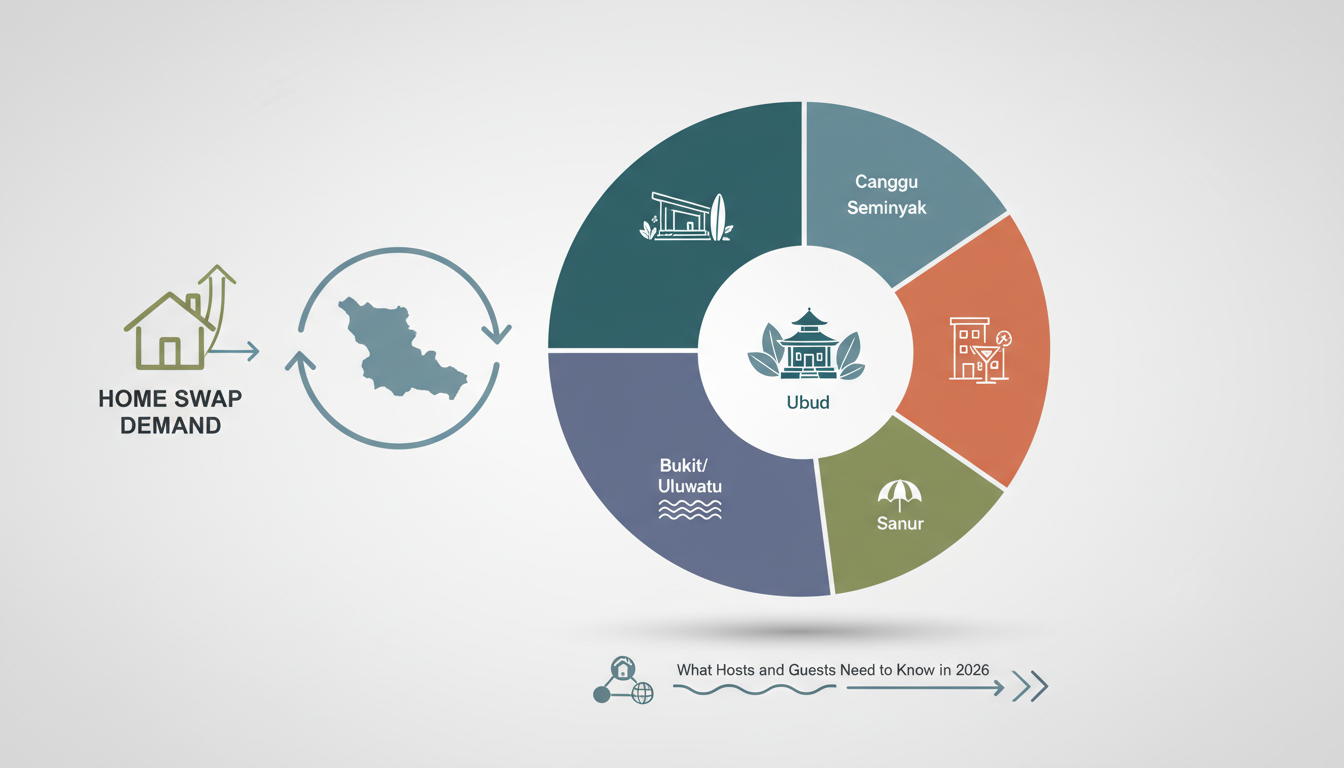 Infographic showing Bali home swap demand by region - pie chart with Canggu 40, Ubud 25, Seminyak 15
Navigating the Guest Side: How to Actually Land a Bali Swap
Competition for desirable Bali properties requires strategy beyond "submit request, hope for best."
Timing Your Search
The sweet spot for Bali swap requests: 3-4 months before arrival for peak season (July-August, December-January), 6-8 weeks for shoulder season (April-June, September-November).
Last-minute requests rarely succeed for quality properties. Bali hosts receive enough advance inquiries that they don't need to accept rushed bookings.
Crafting Requests That Get Accepted
Hosts report that generic requests get ignored while specific, personal messages get responses. The difference:
Generic (low success rate): "Hi! We're interested in your beautiful villa for our Bali trip. We're a quiet couple who will take great care of your home. Let us know if our dates work!"
Specific (higher success rate): "Your Penestanan house caught our attention because of the rice terrace views—we're specifically seeking Ubud's quieter side rather than the central tourist area. We're a couple (both 34, she's a graphic designer, he's a writer) planning to work remotely for three weeks in May. We've completed 12 home swaps across Southeast Asia and can share references. We noticed you mentioned the local warung—we'd love recommendations for where else to eat in the neighborhood. Our Amsterdam apartment is available for exchange if you're planning European travel."
The second message demonstrates: specific property interest, clear dates and duration, professional context, experience verification, genuine engagement with the listing details, and reciprocal value.
What Your Profile Needs
Bali hosts are protective of their properties. Before sending requests, ensure your SwappaHome profile includes recent, clear photos of you (and travel companions), verified identity through the platform's verification system, a complete property listing if you're offering reciprocal exchanges, previous swap reviews (if you're new, acknowledge this and offer additional references), and specific information about your work situation if you're a remote worker.
Backup Plans and Flexibility
Even with perfect preparation, specific properties may not work out. Successful Bali swap seekers typically identify 5-8 target properties rather than fixating on one, remain flexible on exact neighborhoods (Berawa vs. Batu Bolong, for instance), have contingency dates if first-choice windows are unavailable, and consider split stays (two weeks in Ubud, two weeks in Canggu) if single-property availability is limited.
Practical Logistics: What Both Sides Need to Know
Visa Considerations
Indonesia's visa rules affect swap duration planning:
Visa on Arrival (VOA): 30 days, extendable once for another 30 days (total 60 days). Costs 500,000 IDR (~$32 USD) initially, extension costs approximately 500,000 IDR plus agency fees if you use one.
B211A Visa: 60 days, extendable up to 180 days total. Requires sponsorship (agencies handle this for approximately $200-350 USD). Necessary for stays beyond 60 days.
Digital Nomad Visa (pending): Indonesia has announced but not yet fully implemented a specific remote worker visa. Check current status before planning extended stays.
For home swap purposes: most swaps fall within the 30-60 day VOA window. Hosts should understand guest visa constraints when negotiating dates.
Money and Costs
Beyond the swap itself, guests should budget for scooter rental at 800,000-1,500,000 IDR/month ($50-95 USD) if not included with property, groceries at 2,000,000-4,000,000 IDR/month ($125-250 USD) depending on dietary preferences, and eating out ranging from warungs serving meals for 25,000-50,000 IDR ($1.60-3.20 USD) to Western-style cafes running 80,000-150,000 IDR ($5-10 USD) per meal. Coworking runs 2,000,000-4,500,000 IDR/month (~$125-280 USD) for full membership, with day passes available at most spaces. Some hosts request guests cover utilities during their stay—typically 500,000-1,500,000 IDR/month depending on AC usage.
Insurance Considerations
SwappaHome connects members but doesn't provide insurance coverage. Both hosts and guests should arrange their own protection:
For hosts: Standard Indonesian home insurance rarely covers damage from guests. Consider whether your existing coverage addresses this scenario, or look into specific short-term rental coverage if available in your policy market.
For guests: Travel insurance should cover personal liability and medical emergencies. Verify your policy covers Indonesia specifically and includes scooter accident coverage if you'll be riding—many basic policies exclude motorcycle incidents.
The Cultural Layer: What Makes Bali Swaps Different
Bali isn't just a tropical destination—it's a living Hindu culture with daily rituals, temple ceremonies, and community obligations that shape daily life. Guests who understand this context have richer experiences; hosts who explain it facilitate better swaps.
Ceremony Calendar Awareness
Nyepi (Day of Silence): Falls in March (dates vary by Balinese calendar). The entire island shuts down—no flights, no driving, no lights after dark, no leaving your property. Guests present during Nyepi experience something profound but must understand the constraints. Hosts should prominently flag if swap dates overlap.
Galungan and Kuningan: Occur every 210 days (Balinese calendar). Elaborate offerings, decorated penjor (bamboo poles) lining every road, and reduced business operations for several days. Beautiful to witness but affects practical logistics.
Odalan (temple anniversaries): Each of Bali's 20,000+ temples celebrates its anniversary on a rotating schedule. If your property is near a temple, guests will experience ceremonies—sometimes for multiple consecutive nights. This is feature, not bug, but requires framing.
Neighborhood Integration
Bali's banjar (community organization) system means your neighbors notice everything. Guests representing your household should understand basic courtesies: greet neighbors with "Om Swastiastu" (Hindu greeting) or "Selamat pagi/siang/sore" (good morning/afternoon/evening), dress modestly when walking through the village (cover shoulders and knees, especially near temples), don't step on offerings (canang sari) placed on sidewalks and doorsteps, and participate minimally in community events if invited—even brief attendance at a ceremony is appreciated.
Hosts who brief guests on these expectations protect their own community relationships and give guests tools for meaningful cultural engagement.
The Future of Bali Home Swapping
Several trends suggest where this market is heading:
Longer stays becoming standard. As remote work normalizes and Bali's digital nomad infrastructure matures, the 2-3 week swap is giving way to 4-8 week arrangements. Both hosts and guests should plan for this shift.
Quality differentiation intensifying. With more properties entering the market, generic listings struggle while distinctive properties (unique architecture, exceptional locations, outstanding amenities) command premium attention.
Reciprocal exchanges gaining traction. Early Bali home swap activity was heavily one-directional (guests coming to Bali, hosts rarely traveling). Increasingly, Bali-based members are discovering the value of using earned credits for their own international travel, creating more balanced exchange dynamics.
Secondary areas emerging. Amed (east coast diving), Munduk (mountain coffee country), and Nusa Penida (island wildlife) are beginning to appear in swap listings. Early movers in these areas may find less competition and more enthusiastic guests seeking off-beaten-path experiences.
Making It Work: Final Thoughts
Home swap demand in Bali reflects something larger than tourism statistics. It reflects a shift in how people want to travel—not as consumers passing through packaged experiences, but as temporary residents participating in actual places.
The guest who wakes up in a Penestanan compound, walks to the local warung for breakfast, nods to the neighbor setting out morning offerings, and returns to work at a desk overlooking rice terraces—that guest is having a fundamentally different experience than someone in a resort. And the host who facilitates that experience while earning credits toward their own future travels participates in a genuinely reciprocal economy.
Is it for everyone? No. Bali home swapping requires flexibility, cultural sensitivity, and tolerance for infrastructure that doesn't always match Western expectations. The power might go out. The roosters will definitely crow. The ceremonies will happen on their own schedule.
But for those aligned with what Bali actually offers—not the Instagram fantasy but the real, complicated, beautiful island—home swapping opens doors that hotel stays simply cannot.
The SwappaHome community continues to grow in Bali, and the demand shows no signs of slowing. Whether you're considering hosting or hoping to visit, the opportunity is real. The question is whether you're ready to meet it.
Frequently Asked Questions
Is home swapping in Bali safe for first-time exchangers?
Bali's home swap community has an excellent safety track record. The combination of SwappaHome's verification system, member reviews, and Bali's generally low crime rate makes it a reasonable destination for first-time swappers. Standard precautions still apply: verify member profiles thoroughly, communicate extensively before confirming, and consider starting with a shorter swap (2-3 weeks) before committing to longer stays. Most experienced swappers recommend Bali as an accessible entry point for Southeast Asian home exchanges.
How far in advance should I request a Bali home swap?
For peak season (July-August and December-January), submit requests 3-4 months ahead. Shoulder season (April-June, September-November) requires 6-8 weeks minimum. Last-minute requests rarely succeed for quality properties because Bali hosts receive consistent advance interest. The most desirable Ubud and Canggu listings often book 4-5 months out during high season, so earlier is generally better.
What's included in a typical Bali home swap versus what I need to arrange myself?
Most Bali swaps include furnished accommodation, kitchen equipment, linens, WiFi, and often a scooter. You'll typically arrange your own: flights, visa fees (500,000 IDR for VOA), travel insurance, groceries, transportation beyond included scooter, and coworking membership if needed. Some hosts request guests cover utilities during their stay—usually 500,000-1,500,000 IDR monthly depending on AC usage. Clarify all inclusions in writing before confirming.
Can I do a home swap in Bali if I don't have a property to offer in exchange?
Yes—SwappaHome's credit system doesn't require direct reciprocal exchanges. You can earn credits by hosting guests at your home anywhere in the world, then spend those credits on Bali stays. New members receive 7 free credits to start (one free week). If you don't own property, you'll need to earn credits first by hosting before you can book Bali swaps. The credit system means a Tokyo host can stay in Bali without the Bali host ever visiting Tokyo.
What's the best area in Bali for a home swap if I'm working remotely?
Canggu—specifically the Berawa and Batu Bolong neighborhoods—offers the strongest infrastructure for remote workers: multiple coworking spaces (Dojo, Outpost, Tropical Nomad), reliable high-speed internet, abundant cafes with laptop-friendly policies, and the largest concentration of fellow digital nomads. Ubud works well for those prioritizing peaceful environment over community, though coworking options are fewer. Sanur suits remote workers with families, offering calm beaches and good cycling infrastructure with adequate (though less abundant) workspace options.

Published by
SwappaHome
SwappaHome Editorial Team
Home Exchange & Slow Travel Editorial
The SwappaHome Editorial Team brings together travel research, home-exchange community insights, and platform data to produce practical guides for first-time and experienced home swappers. Every article cites real platforms, current market rates, and verifiable city-level facts so readers can make informed decisions without guessing.
Ready to try home swapping?
Join SwappaHome and start traveling by exchanging homes. Get 7 free credits when you sign up!
Related articles
Bachelor and Bachelorette Parties in Singapore: The Complete Home Swap Group Guide for 2026
Planning a bachelor or bachelorette party in Singapore? Discover how home swapping lets groups of 6-12 stay together in luxury condos, saving thousands while partying in Marina Bay.

Cycling in Lisbon: 7 Home Swap Bike Tour Itineraries for Every Rider
Discover the best cycling routes in Lisbon with these home swap bike tour itineraries—from waterfront paths to hilltop adventures, all starting from your borrowed home.

Graduation Trip to Barcelona: How Home Swapping Gives New Graduates the Ultimate Celebration
Planning a graduation trip to Barcelona? Discover how home swapping lets new graduates explore Spain's most vibrant city without the hostel crowds or hotel costs.