Home Swap Etiquette: How to Be a Great Guest and Host

SwappaHome Editorial Team
Home Exchange & Slow Travel Editorial
Home swap etiquette is basically the collection of rules, some written down, most not, that keep a house exchange from turning into a disaster for everyone involved. It comes down to three things...
Home swap etiquette is basically the collection of rules, some written down, most not, that keep a house exchange from turning into a disaster for everyone involved. It comes down to three things really: talk to each other clearly, respect that you're in someone's actual home, and leave the place at least as clean as you found it. Whether you're waking up in a rooftop flat in Denmark or handing your own keys to a family flying in from Melbourne, this stuff is what separates a swap you'll tell stories about for years from one that goes sideways.
And the stakes are a little different than a hotel. There's no front desk, no trained staff paid to smooth over problems. It's just two households trusting each other, which means less room for mix-ups but a much bigger reward when you get it right. You end up with a whole home. Kitchen, garden, the works, instead of one cramped room. Your host gets the same deal when they travel.
So let's get into what's actually expected of you on both sides.
Table of Contents
- What Is Home Swap Etiquette and Why Does It Matter?
- Before the Swap: Setting Expectations Early
- How to Be a Great Guest During a Home Exchange
- How to Be a Great Host When Someone Stays in Your Home
- Home Swap Etiquette Around Money, Bills, and Shared Costs
- What Happens If Something Goes Wrong?
- Home Swap vs. Traditional Rentals: A Quick Comparison
- Frequently Asked Questions
What Is Home Swap Etiquette and Why Does It Matter?
Home swap etiquette is the set of courtesy standards both hosts and guests follow when they trade homes: communicating clearly before arrival, respecting house rules, cleaning up after yourself, and treating someone's stuff the way you'd want yours treated. It matters because a home exchange isn't a commercial transaction. There's no cleaning crew, no front desk sitting between you and the property owner. It's just people trusting people.
Here's what makes it different from a hotel: usually no money changes hands at all. On a platform like Swappahome, you spend credits you earned by hosting other people instead of paying cash, and everyone's ID-verified before they can list or book. That verification takes some of the risk off the table, sure. But it doesn't do a thing for the everyday behavior that actually makes a swap pleasant. How you talk to each other, how you treat the place, whether you're honest about the little mishaps that inevitably happen.
And there's a review left after every stay, in both directions. So your conduct as a guest or host sticks to you. It becomes part of your reputation for the next swap, and the one after that. Which is really the whole point. Etiquette here isn't polite small talk you can skip. It's the currency the entire thing runs on.
Before the Swap: Setting Expectations Early
Good home swap etiquette kicks in weeks before anyone zips up a suitcase, with an honest, detailed conversation between both sides about house rules, timing, and what "home-like" actually means for a given space. Skip this and you're setting yourself up for the single most common source of friction in a home exchange. I've seen more swaps go wrong here than anywhere else.
Before you confirm anything, both sides really need to sort out a handful of things. The exact check-in and check-out times, and whether anyone's going to be around for the handoff. The house rules on smoking, pets, whether your guests can bring their own guests, quiet hours. Which rooms and closets are off-limits versus fair game. The parking situation, permits and garage codes and all that. Utility expectations, meaning thermostat habits, recycling, trash schedule. And an emergency contact, ideally a neighbor or property manager who can show up if the water heater dies.
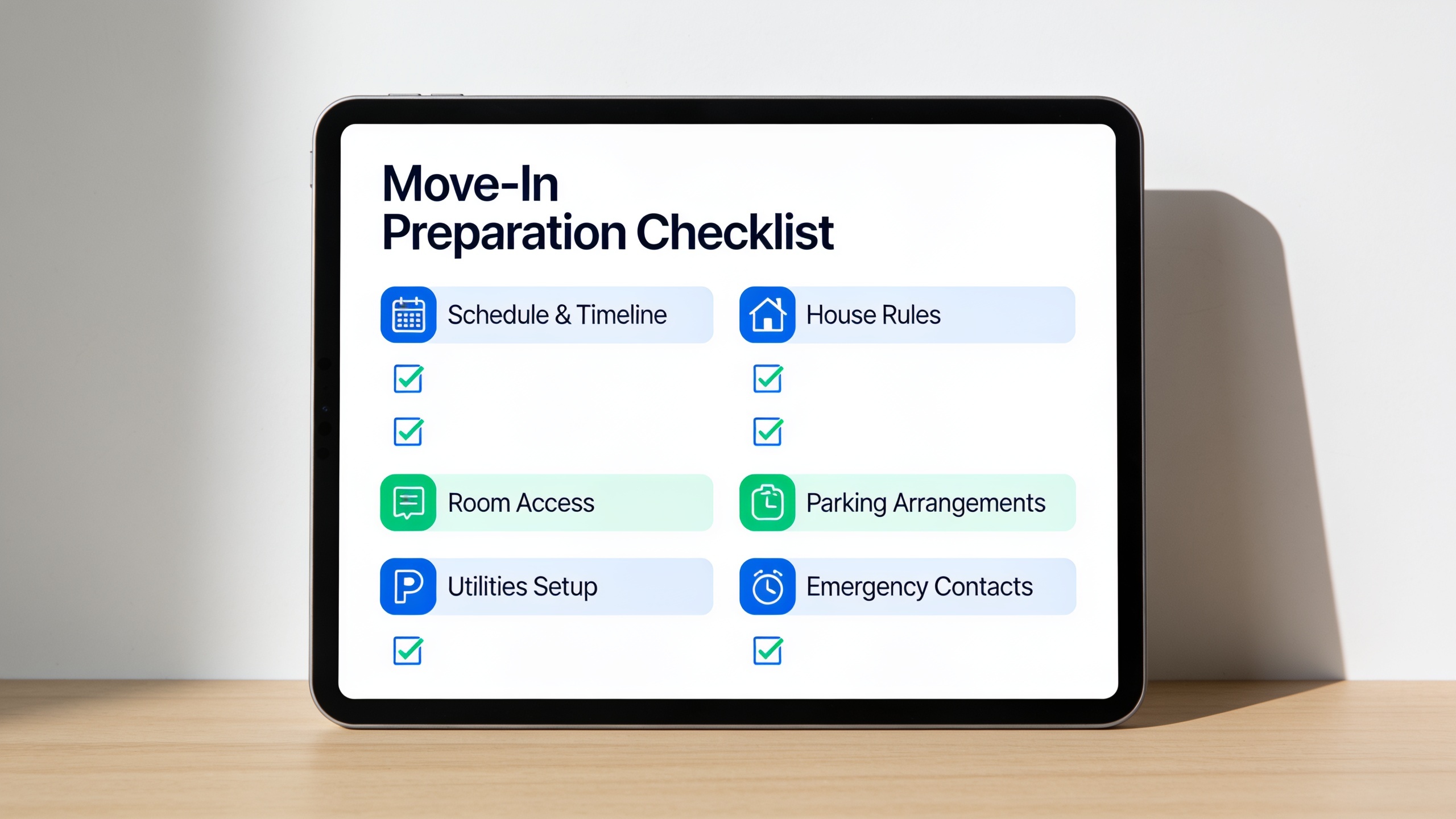 Infographic checklist showing pre-swap planning items including timing, house rules, room access, parking, utilities, and emergency contacts
None of that is thrilling to talk about. But it's the boring stuff that saves you.
If you haven't even settled on who you're swapping with yet, that's worth thinking through before you get anywhere near logistics. Guides like How to Choose the Right Home Swap Partner for Your Trip go into how to size up a match based on lifestyle, location, and travel dates. Because a swap that's mismatched from day one? Way harder to fix once you're already unpacking groceries in someone else's kitchen.
Be upfront about anything odd in your home, too. There's a Swappahome listing in Farum, Denmark that does this beautifully. The host mentions that a quiet student lives on the lower floor, that she's often away over the holidays, and that the family's own schedule follows the Danish school calendar. That's exactly the kind of detail that lets a guest know what they're walking into before they agree to anything. Which, again, is the entire reason you set expectations early.
How to Be a Great Guest During a Home Exchange
A great home swap guest treats a stranger's home the way they'd want their own treated: communicating without being nagged, following house rules without reminders, and leaving the place in the same shape or better than they found it. Doesn't matter if you're there for a long weekend or a month. Same rules.
Communicate Like You Mean It
Confirm your arrival window a few days out, not just the once when you booked. Flight delayed? Plans shifted? Say so right away instead of leaving your host refreshing their phone wondering where you are. Ask questions before you assume anything, whether it's the Wi-Fi password, the temper of an ancient water heater, or if the cat's allowed on the couch. Hosts who write detailed listings (like the Farum host spelling out which rooms are yours and which are shared) have already done half your homework. So actually read it. Don't skim.
Respect the Space Like It's Not Yours (Because It Isn't)
Sounds obvious. It's also the rule people break most. Don't rearrange the furniture. Don't go poking through closets or drawers nobody offered you. And do not, under any circumstances, invite extra people to crash overnight unless that was agreed on ahead of time. If there's a private terrace or a garden or some shared building space, use it the way a thoughtful long-term houseguest would. Not the way people treat a hotel room they'll never lay eyes on again.
Leave It Better Than You Found It
Wash the dishes. Take the trash out on the right day. Replace what you finish off if you can manage it, the coffee, the dish soap, the toilet paper. Strip the beds if that's the local custom. And honestly, a short handwritten note or a quick message flagging anything that broke or ran low or needs attention? That's a tiny thing that means the world to someone walking back into their own home.
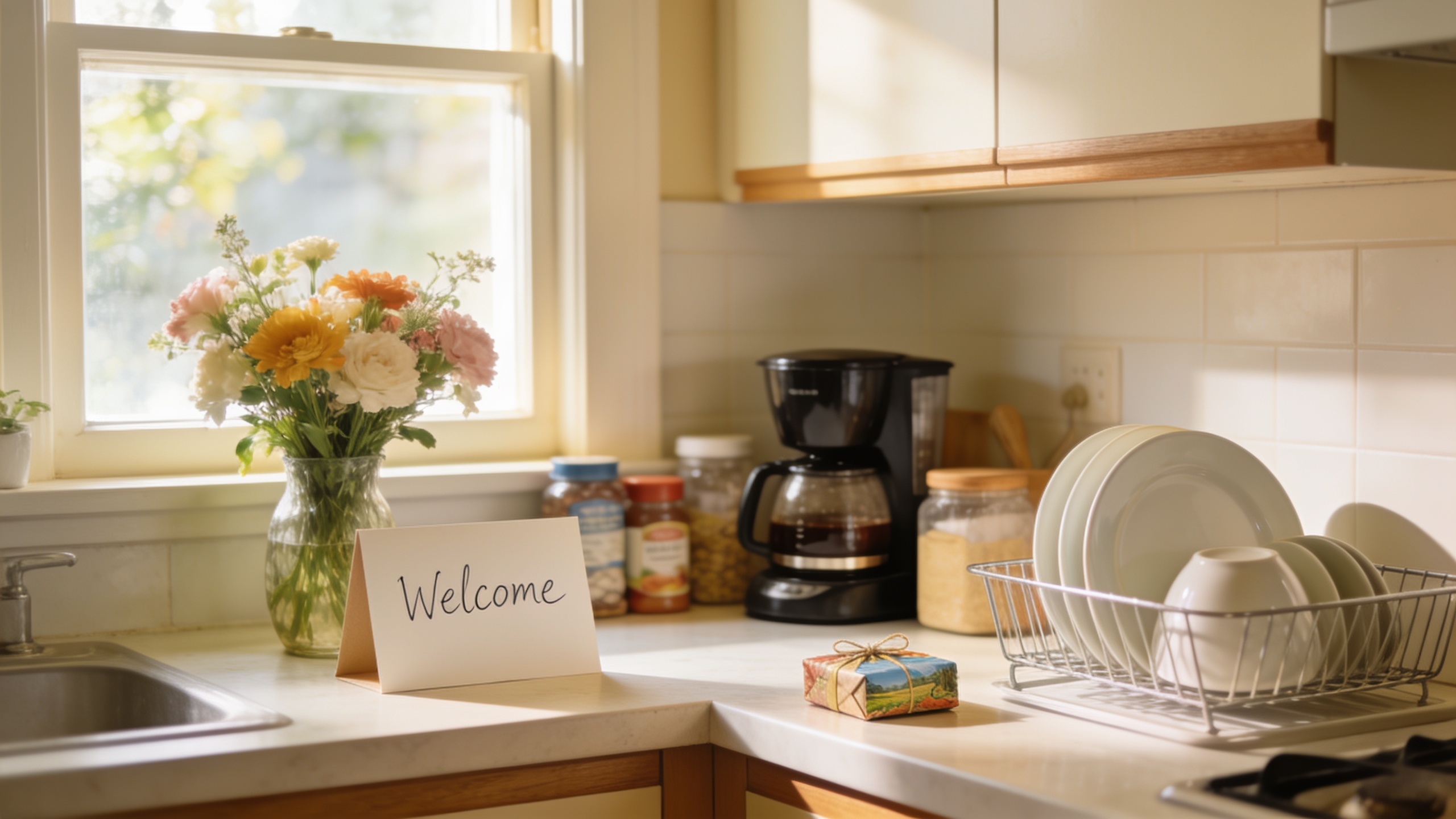 A welcoming kitchen setup with a handwritten note, fresh supplies, and clean dishes, exemplifying thoughtful guest etiquette and leaving a home better than found
If you genuinely break something, own it. Immediately. Don't cross your fingers and hope it goes unnoticed. These communities run on trust, and with two-way reviews baked in, dishonesty has a way of catching up with you.
Be a Good Neighbor, Too
You're not just a guest to the homeowner. You're a temporary presence in someone's neighborhood. Keep the noise down at night, mind the parking, and if it feels natural, say hi to the people next door. A lot of hosts actually love guests who are friendly instead of ghostlike, especially in smaller places where a new face gets noticed within about eleven minutes.
How to Be a Great Host When Someone Stays in Your Home
A great home swap host preps the place properly, is honest about both the charms and the flaws, and stays reachable during the stay without hovering like a helicopter parent. Hosting well is what earns you the credits and the reviews that make your next swap a breeze to arrange.
Prepare Thoroughly, Not Just Tidily
Getting a home ready for a swap is a lot more than running the vacuum before guests roll in. It means locking away or removing anything private or valuable, writing out clear instructions for the appliances and quirks a stranger couldn't possibly guess, and making the place genuinely guest-ready rather than just photogenic. There's a proper room-by-room rundown, plus a pre-departure checklist, over in How to Prepare Your Home for a Swap: A Complete Checklist. Worth reading well ahead of your first exchange. Not the night before, when you're panicking.
Presentation counts too, and it doesn't have to cost a fortune. A fresh coat of paint on scuffed walls or a tired front door can make a home feel far more welcoming, both in photos and in person. Homeowners around the Twin Cities who want that spruced-up look before hosting often call in a local crew like Minneapolis House Painting for interior and exterior work, since a well-kept-looking place just draws more interest from potential swap partners.
Be Honest in Your Listing
The most trustworthy hosts describe their home exactly as it is, warts included. Look at how that Farum, Denmark listing handles it. It states flat out that the home fits a couple comfortably but "can accommodate 3–5 guests if needed," points to precisely which upper-floor rooms are the guests', and mentions the quiet student downstairs. That's not oversharing. That's letting a guest choose a stay they'll genuinely enjoy, and it kills off disappointment before it has a chance to start.
Give Guests Room to Feel at Home
Leave a short welcome note with the practical basics. Wi-Fi password, trash day, how the thermostat behaves, your phone number, and a food recommendation or two. Being around for questions is good hosting. Texting every few hours to "check in" is not. Most guests want to feel like temporary locals, not suspects under surveillance, and the best host reviews almost always mention exactly that. That comfortable, left-alone kind of independence.
Set Boundaries Kindly
If parts of the home are off-limits, say so in the listing and again at check-in. Frame it as helpful info, not a rulebook. Hosts who are upfront about quiet hours, pet policies, parking limits, whatever, rarely end up in conflict. Because the guest already knew the deal before they ever booked.
Home Swap Etiquette Around Money, Bills, and Shared Costs
Money etiquette on a swap is simple in principle: on a credit-based platform no cash changes hands between members for the stay itself, but the everyday costs like utilities, consumables, and any damage get sorted by mutual agreement rather than some fixed policy. On Swappahome specifically, the credit system runs like this: host a guest for one night, earn one credit; credits never expire; one credit equals one night anywhere else in the network. No listed membership fee, nothing required to take part.
That said, "no fees" for the exchange doesn't mean there's nothing to talk about. Good etiquette means agreeing ahead of time on the small stuff. Should guests top off the fridge or the gas tank before they leave? What happens with a weirdly high utility bill during a long stay? Who handles a minor repair? None of this is complicated. But it should never just be assumed. A five-minute chat before arrival heads off basically every awkward money conversation you'd otherwise be having afterward.
What Happens If Something Goes Wrong?
Even a well-matched swap hits a snag sometimes. An appliance dies, someone arrives late, there's a mix-up over house rules. And good etiquette is mostly about how fast and how honestly both sides deal with it, not whether a problem shows up at all. The instinct to hide a mistake and pray nobody notices? That's the single quickest way to torch trust in a home exchange community.
If you're the guest and something breaks, tell your host right away, explain what happened, and ask how they'd like it handled. Don't go MacGyvering a repair yourself unless it's genuinely simple. If you're the host and you come home to find something's off, bring it up directly and calmly with your guest before you dash off to write a review. Most issues sort themselves out through a straight conversation way more easily than through a public complaint. And because Swappahome leans on two-way reviews after every stay plus ID-verified membership, both sides have a real reason to talk honestly instead of letting things fester. Your track record travels with you into the next swap.
Oh, and one more thing: having an emergency contact lined up before the swap even starts, a neighbor, a relative with a spare key, a property manager, is one of the easiest ways to stop a small problem from becoming a stressful one for a guest who doesn't know the area yet.
Home Swap vs. Traditional Rentals: A Quick Comparison
Understanding how a home swap really differs from booking a hotel or a short-term rental goes a long way toward explaining why etiquette carries so much more weight in an exchange. According to figures on Swappahome's own site, average nightly prices across 947 cities tracked by AirROI public data (snapshot dated April 29, 2026) put a 14-night stay in Paris on a traditional booking platform at roughly €1,707 total, versus €0 through a credit-based swap. That's not a typo.
| Factor | Traditional Hotel/Rental | Home Swap |
|---|---|---|
| Typical cost | $150–$400+ per night | 1 credit per night (no cash between members, per Swappahome) |
| Space | Small hotel room | Entire home, often with kitchen and garden |
| Experience | Concentrated in tourist areas | Staying in real, local neighborhoods |
| Check-in | Anonymous, staff-managed | Personal, host-to-guest communication |
| Who sets the rules | Property management company | The individual host, agreed upon directly with the guest |
| Accountability | Corporate policies, cancellation fees | Two-way reviews and ID-verified membership |
The trade-off is pretty clean. A hotel hands off all the etiquette to trained staff and a policy binder. A swap drops that responsibility squarely on the two people involved. Which is exactly why everything in this guide matters more in a swap than in a paid rental. There's no front desk to fix things when communication falls apart.
Frequently Asked Questions
Do I actually have to clean the whole house before I leave? Yeah, you do. Leaving the home in the condition you found it, or better, is one of the most consistently expected guest habits across the community. In practice that's washing the dishes, taking out the trash on schedule, running a load of laundry if you used the bedding, and a general tidy-up. Even when there's no professional cleaner involved.
What if the home isn't quite what the listing promised? Message your host directly and calmly before you assume the worst. Most gaps come from a fuzzy description, not deception. If it's something serious, document it with photos and raise it through the platform's review or support process afterward, so future members get the real picture.
Is it rude to ask a ton of questions before agreeing to a swap? Not at all. Asking detailed questions about house rules, availability, and the space itself is good etiquette, not a bother. Hosts who write thorough listings, like the one describing the Farum, Denmark home's private terrace and the quiet downstairs tenant, genuinely welcome that kind of curiosity because it leads to better matches and fewer headaches.
Who pays for utilities during a swap? Usually settled by direct agreement between host and guest, not by some blanket platform policy, since a credit-based exchange like Swappahome's covers the accommodation itself, not the day-to-day running costs. Talk through utilities and consumables before you arrive and you avoid the awkwardness later.
How much do reviews really affect future swaps? A lot, honestly. Because platforms like Swappahome use two-way reviews after every stay, your behavior as a guest or host becomes a track record other members can see before they agree to swap with you. Consistently good etiquette, clear communication, respect for the home, honesty when something breaks, makes future exchanges much easier to line up. Poor conduct makes people hesitant to match with you at all.
Home swapping rewards the same things that make anyone a memorable houseguest or host for the right reasons: clear communication, real respect for someone else's space, and honesty when things don't go to plan. Nail those three, and the free week in Paris or the cozy Berlin apartment stops being a logistical gamble. It turns into what it was always supposed to be. A chance to actually live somewhere new, on someone else's trust, and to hand that trust right back when it's your turn to host.

Published by
SwappaHome
SwappaHome Editorial Team
Home Exchange & Slow Travel Editorial
The SwappaHome Editorial Team brings together travel research, home-exchange community insights, and platform data to produce practical guides for first-time and experienced home swappers. Every article cites real platforms, current market rates, and verifiable city-level facts so readers can make informed decisions without guessing.
Ready to try home swapping?
Join SwappaHome and start traveling by exchanging homes. Get 7 free credits when you sign up!