Is Home Swapping Safe in Singapore? A Complete Security Guide for 2026

SwappaHome Editorial Team
Home Exchange & Slow Travel Editorial
Wondering if home swapping in Singapore is safe? Discover real security insights, neighborhood tips, and verification steps for worry-free exchanges in one of Asia's safest cities.
You're standing on a 23rd-floor balcony in Tanjong Pagar at 2 AM, watching Marina Bay's skyline glitter against the dark. This apartment belongs to someone else—their books line the shelves, their coffee mugs sit in the cabinet, their life surrounds you. Meanwhile, your own flat back in Melbourne is hosting a Singaporean couple who wanted to explore Australian wine country. No money changed hands. Just keys, trust, and a shared belief that strangers can be good to each other's spaces.
This is home swapping in Singapore. And if you're reading this, you're probably wondering: is it actually safe?
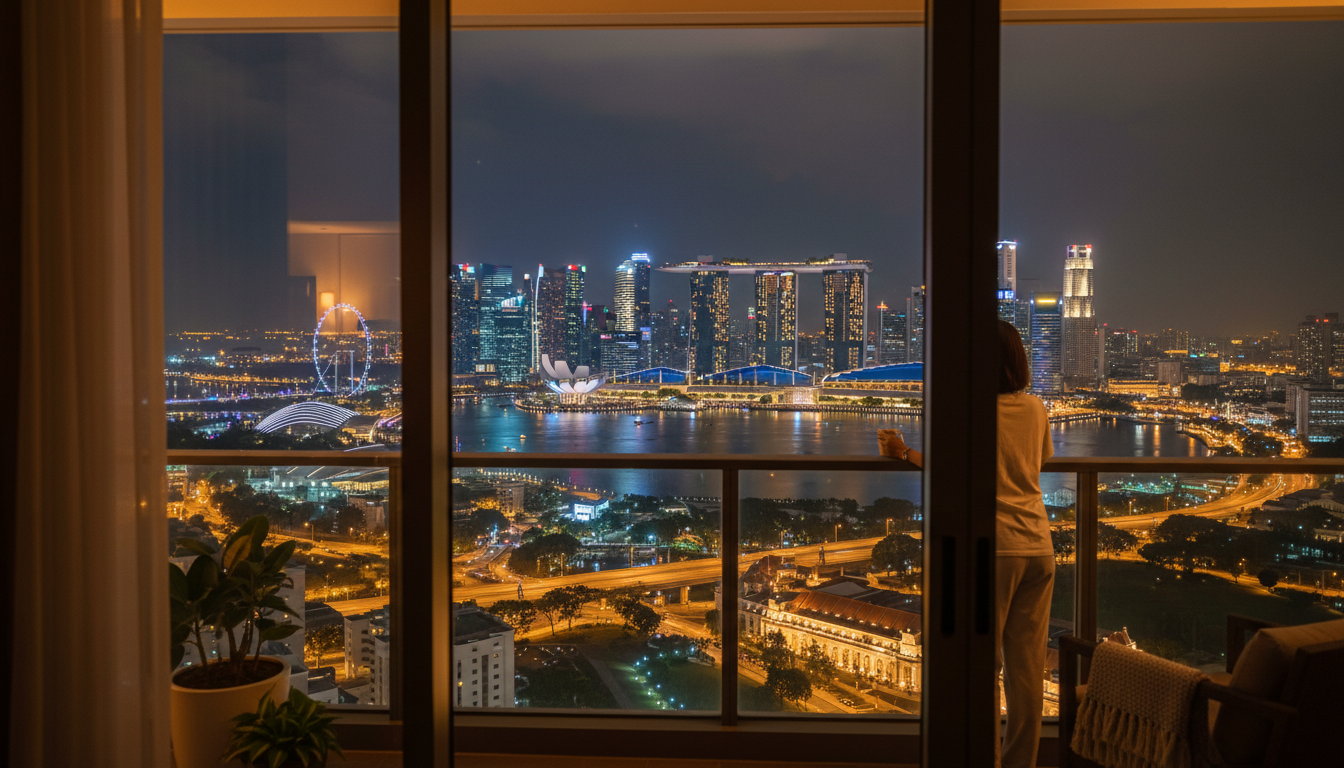 nighttime view of Marina Bay Sands and Singapore skyline from a high-rise apartment balcony, warm in
The short answer is yes—Singapore consistently ranks among the world's safest cities, and home exchanges here benefit from both exceptional security infrastructure and a culture that genuinely respects property. But "safe" means different things to different people. Here's what safety actually looks like when you're swapping homes in the Lion City.
Why Singapore Ranks Among the Safest Home Swap Destinations Worldwide
Consider this number: Singapore's crime rate sits at roughly 352 incidents per 100,000 people—compared to 2,489 in the United States and 1,847 in Australia. The city-state has one of the lowest burglary rates globally, with residential break-ins so rare they make national news when they occur.
What does this mean for home swapping? The baseline risk you're working with is already remarkably low.
Singapore's legal framework plays a significant role here. The country operates under strict property laws, with severe penalties for theft and vandalism. The famous (or infamous, depending on your perspective) caning punishment for serious property crimes isn't just folklore—it's an active deterrent. The practical effect is that property crimes carry consequences that make them exceptionally rare.
Then there's the Housing Development Board (HDB) system, which houses roughly 80% of Singapore's population. Most HDB blocks have CCTV coverage in common areas, and many newer developments include electronic access systems. Private condominiums—common among SwappaHome listings—typically feature 24-hour security, visitor registration, and controlled access points.
Understanding Singapore's Home Exchange Landscape in 2026
Singapore's home swap scene has grown steadily, with particular interest in the Tiong Bahru, Holland Village, and East Coast neighborhoods. These areas offer residential charm that hotels simply can't replicate—local wet markets, neighborhood kopitiams (coffee shops), and the kind of community feel that makes Singapore more than just a business hub.
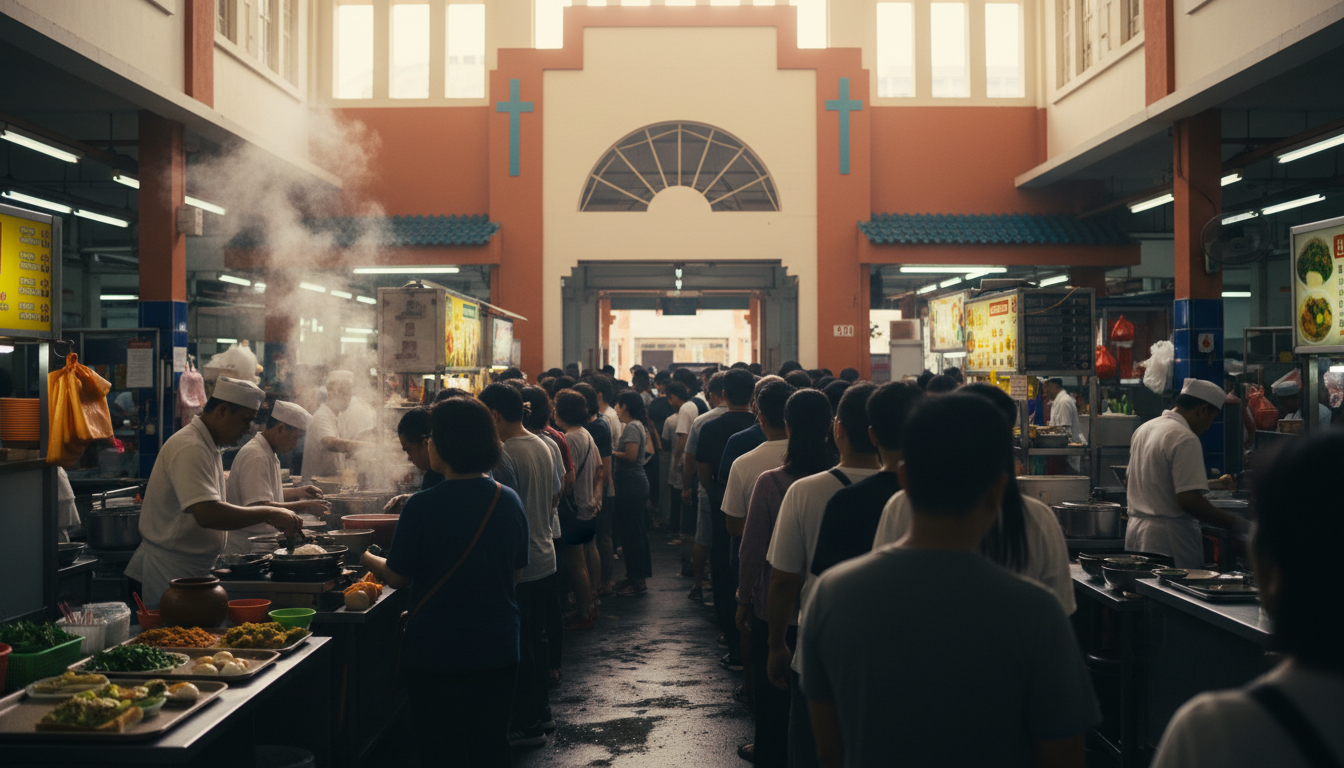 morning scene at Tiong Bahru Market, locals queuing for traditional breakfast, art deco architecture
Typical listings range from compact HDB flats (around 800-1,200 square feet) to spacious private condos and the occasional landed property in areas like Bukit Timah. The credit system works the same everywhere: one night hosted equals one credit earned, one credit spent equals one night anywhere. A week in a Marina Bay condo costs the same credits as a week in a Geylang HDB flat.
This standardization actually enhances safety in an interesting way—there's no financial incentive to misrepresent your property or accept guests you're uncomfortable with. Everyone's trading time for time, space for space.
Pre-Swap Security Measures: Verifying Your Singapore Host
Trust, but verify. This principle applies everywhere, and Singapore is no exception despite its safety reputation.
Member Verification on SwappaHome
The platform offers identity verification, confirming that the person you're communicating with is who they claim to be. In Singapore, this typically involves government ID verification—and Singaporeans take their NRIC (National Registration Identity Card) seriously. A verified Singapore member has passed real identity checks.
Beyond platform verification, look for review history showing multiple positive exchanges. Pay attention to specific comments about cleanliness, communication, and how well properties matched their descriptions. Notice response quality too—Singaporeans tend toward directness in communication, so vague or evasive responses should raise flags. And check profile completeness: thorough profiles with multiple photos and detailed descriptions suggest someone invested in the community.
Video Calls Before Committing
Experienced home swappers often recommend a video call before finalizing any exchange. You can see the actual space, gauge communication style, and establish a personal connection that makes the whole exchange feel less anonymous.
For Singapore specifically, a video call lets you verify practical details: Which MRT station is closest? Is the building's air conditioning central or unit-based? Where's the nearest NTUC FairPrice for groceries?
Neighborhood-by-Neighborhood Safety Breakdown for Singapore Home Swaps
Singapore is remarkably safe across the board, but neighborhoods do have distinct characters that affect your experience.
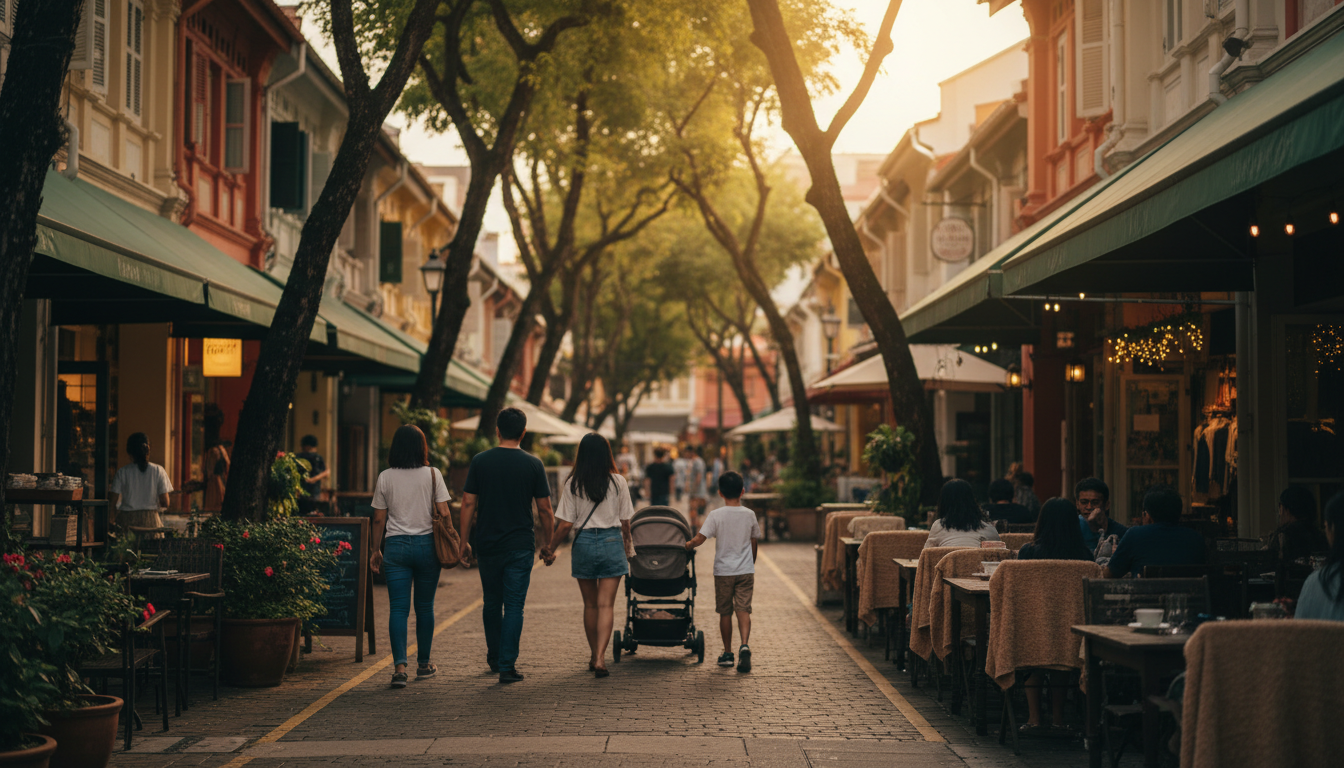 tree-lined street in Holland Village with outdoor cafes, expat families walking, colonial-era shopho
Central Singapore: Orchard, River Valley, Tiong Bahru
The central districts offer convenience and typically the most straightforward home swap experiences. Tiong Bahru, Singapore's oldest housing estate, has become particularly popular—its art deco HDB blocks, independent cafes like Forty Hands, and the famous Tiong Bahru Market create a neighborhood feel rare in Asian megacities.
Security considerations here include high foot traffic, excellent lighting, and multiple transport options. Many buildings have been retrofitted with modern security systems. The main consideration is noise—some central locations near Orchard Road can be loud on weekends.
East Coast: Katong, Marine Parade, Bedok
The East Coast offers a more residential, family-oriented atmosphere. Katong's Peranakan heritage shophouses and the beachfront parks along East Coast Park make this area popular with families doing home exchanges. It's generally quieter with a strong community feel, excellent for longer stays. The East Coast Park Connector provides safe cycling and walking routes, though some older buildings may have less sophisticated security systems than newer developments.
North and West: Bukit Timah, Holland Village, Clementi
These areas tend toward larger properties—landed houses in Bukit Timah, spacious condos near Holland Village. The National University of Singapore's proximity to Clementi brings an academic community feel. Landed properties require more attention to security basics (locking gates, alarm systems), but these neighborhoods have active resident associations and neighborhood watch programs. Holland Village's expat community means many residents are familiar with hosting international visitors.
Areas Requiring Extra Awareness: Geylang and Little India
Geylang is Singapore's designated red-light district, though it's also home to some of the city's best food and most affordable housing. Little India, particularly around Serangoon Road, can feel overwhelming to first-time visitors.
Both areas are statistically safe—violent crime remains rare—but they have different atmospheres than Singapore's polished central districts. Travelers considering swaps in these areas should know the experience will be more adventurous. Many love the authenticity; others prefer the predictability of more tourist-friendly neighborhoods.
Protecting Your Singapore Home While You're Away
If you're a Singapore resident offering your home for exchange, safety works both ways.
Before Your Guest Arrives
Secure valuables appropriately. Most Singapore homes have built-in safes or lockable storage. Use them for passports, jewelry, important documents, and anything irreplaceable. This isn't about distrust—it's about removing any possibility of awkwardness.
Document your space. Take dated photos of each room before your guest arrives. This creates a clear baseline and helps you notice things you might want to tidy or repair.
Inform your building management. Singapore condos typically require visitor registration. Let your management office know you're hosting guests, provide their names, and ensure they'll have smooth access to facilities.
Brief your neighbors. A quick message to immediate neighbors—"We're hosting friends from abroad for two weeks, please let us know if there are any issues"—creates an informal watch network and prevents misunderstandings.
Setting Clear House Rules
Singapore has specific regulations guests should know. No smoking indoors—Singapore law prohibits smoking in most indoor spaces, including private homes in some contexts. Quiet hours are enforced in most residential areas (typically 10:30 PM to 7 AM). Singapore's waste management system requires proper sorting, so leave clear instructions. And electricity costs run high (roughly S$0.30-0.35 per kWh), so some hosts set expectations about AC usage to avoid surprise utility bills.
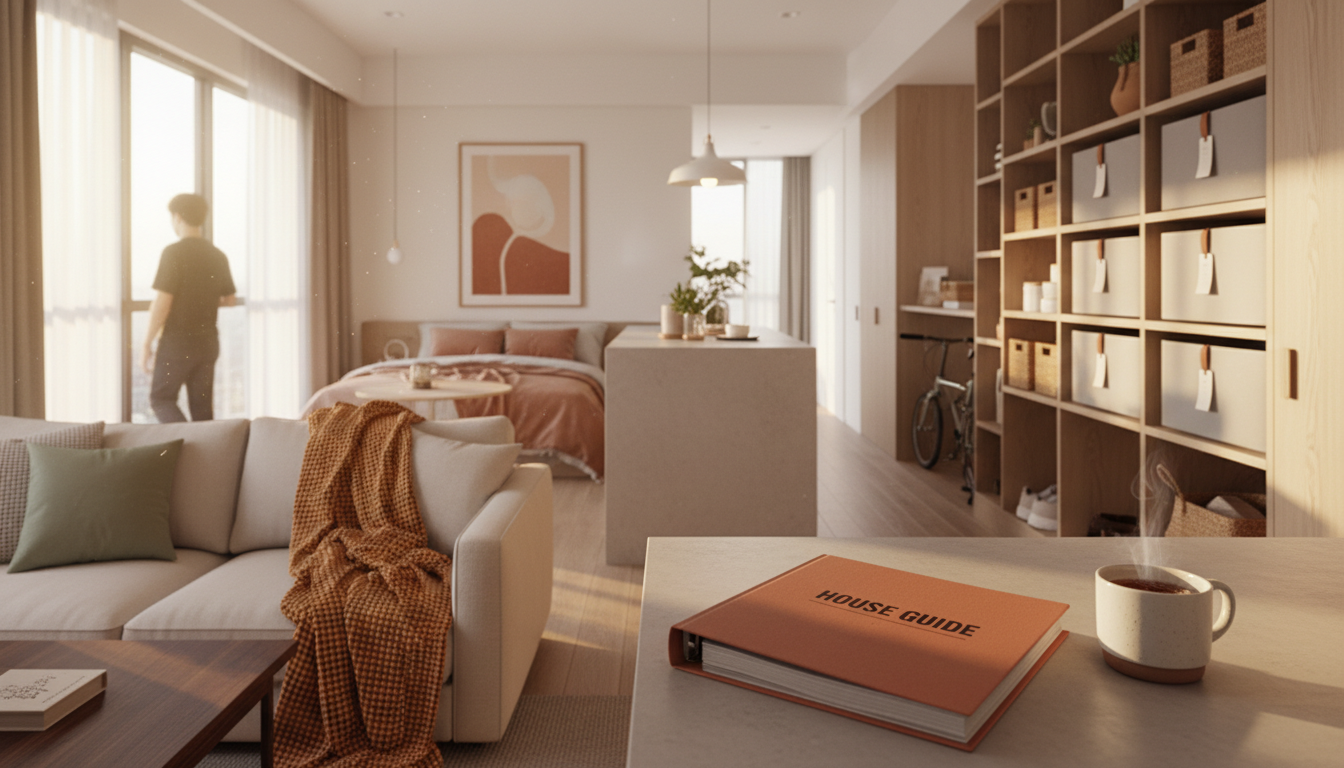 organized Singapore apartment interior showing labeled storage areas, house manual on counter, moder
What to Do If Something Goes Wrong During Your Singapore Home Swap
Even in the world's safest city, things can go wrong. Pipes leak. Keys get lost. Misunderstandings happen.
Minor Issues
For everyday problems—a broken appliance, confusion about building rules, questions about local services—direct communication usually resolves things quickly. Singapore's efficient infrastructure means help is never far. The country's 1800-CALL-GOV hotline (1800-225-5685) can direct you to appropriate services for most issues.
More Serious Concerns
If you experience theft, property damage, or feel unsafe, contact Singapore Police first (emergency line 999, non-emergencies 1800-255-0000). Document everything with photos, written accounts, and timestamps. Notify your host immediately—they may have local contacts or insurance that applies. Contact SwappaHome as well; while the platform doesn't provide insurance or guarantee coverage, they can help mediate communication and maintain records.
A Note on Insurance
SwappaHome connects members but doesn't provide damage coverage or insurance. This matters. If you want protection beyond Singapore's baseline safety, arrange your own travel insurance that covers accommodation issues, and consider whether your home insurance covers short-term guests.
Many Singapore residents have HDB or private home insurance that includes some guest coverage—check your policy before hosting. For travelers, comprehensive travel insurance from providers like AXA, Allianz, or Singapore-based NTUC Income typically costs S$50-150 for a two-week trip.
Singapore-Specific Safety Considerations for Home Swappers
Domestic Helper Situations
Many Singapore households employ live-in domestic helpers, often from the Philippines, Indonesia, or Myanmar. If you're swapping with a home that has a helper, clarity is essential. Will the helper remain during your stay? What are the expectations? Some families prefer their helper stays to maintain the home and provide local assistance; others arrange for the helper to take leave. This requires direct conversation—vagueness creates problems.
Building-Specific Rules
Singapore condos and HDB blocks often have rules that surprise visitors. Short-term rentals under three months (private properties) or six months (HDB flats) are prohibited by law. Home exchanges are different from rentals—no money changes hands—but some building managements are strict. Your host should confirm their building permits home exchanges. Facility booking for pools, BBQ pits, and function rooms often requires advance booking through building apps or management offices. And if you're renting a car (rates run S$80-150/day for basic models), confirm parking arrangements—visitor parking in Singapore is limited and expensive.
Weather and Health Safety
Singapore's equatorial climate means year-round heat and humidity (typically 25-32°C/77-90°F) with sudden afternoon thunderstorms. Dengue fever remains a concern—Singapore reports several thousand cases annually. Check the National Environment Agency's dengue cluster map and ensure your swap home has proper mosquito prevention (screens, repellent, no standing water).
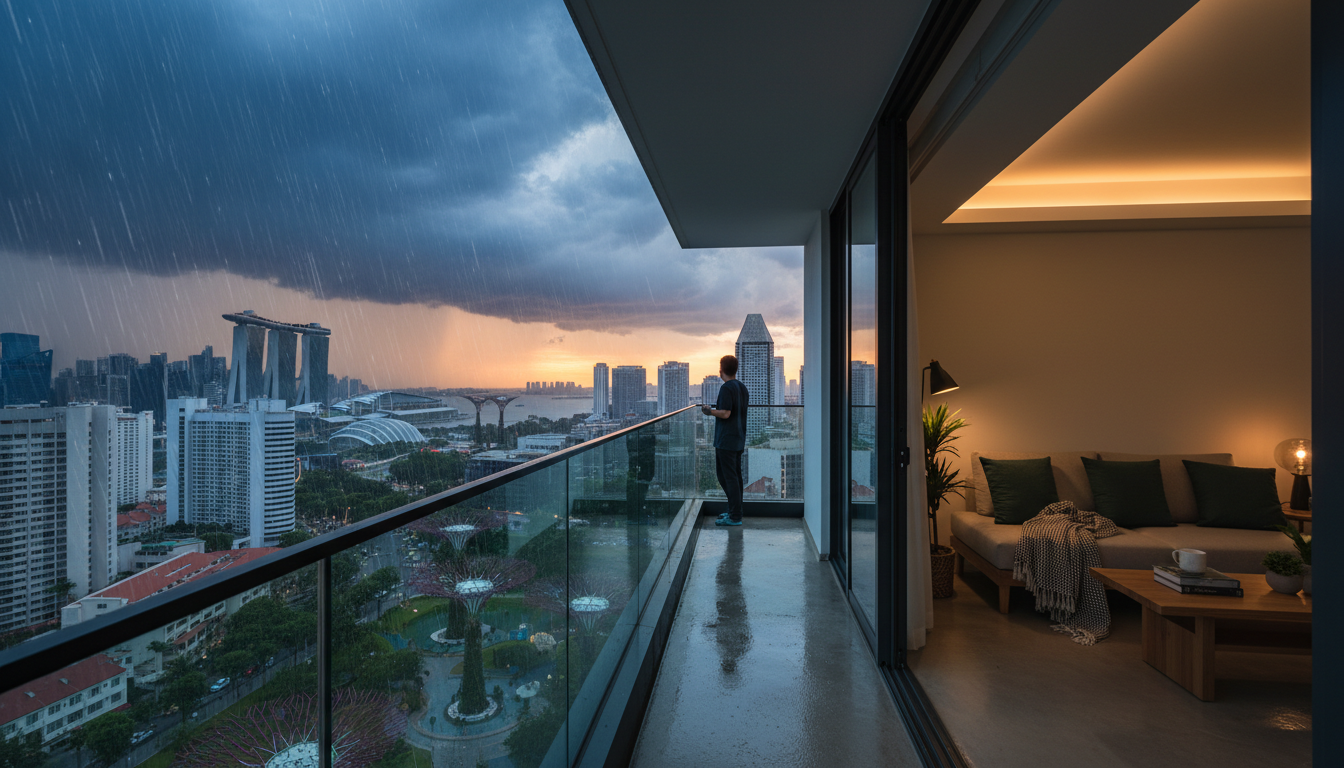 afternoon thunderstorm over Singapore skyline viewed from covered balcony, dramatic clouds, rain str
Building Trust: The SwappaHome Community Approach to Safety
The most effective safety mechanism in home swapping isn't locks or cameras—it's community accountability.
SwappaHome's review system creates a permanent record. A member who damages property, misrepresents their home, or behaves poorly receives reviews that follow them. This mutual accountability means most members are genuinely invested in positive experiences.
The Singapore SwappaHome community specifically tends toward detailed communication and clear expectations—cultural traits that translate well to home exchange. Common feedback from members hosting in Singapore mentions the thoroughness of house manuals, the quality of local recommendations, and the responsiveness of hosts.
Practical Security Checklist for Your Singapore Home Swap
Before finalizing that exchange, run through these points:
For guests coming to Singapore: Verify your host's identity through SwappaHome's verification system. Conduct a video call to see the space and meet your host. Confirm building access procedures (visitor registration, key collection). Understand house rules, especially around smoking and quiet hours. Arrange your own travel insurance. Save emergency contacts: Police (999), Ambulance (995), your host's mobile.
For Singapore hosts: Secure valuables in locked storage. Document your home's condition with dated photos. Inform building management about your guests. Leave a comprehensive house manual. Provide emergency contacts (building management, trusted neighbor, yourself). Confirm your home insurance covers short-term guests.
The Honest Truth About Home Swap Safety in Singapore
Here's the straightforward assessment: home swapping in Singapore is about as safe as home swapping gets.
The city's low crime rates, efficient infrastructure, strict property laws, and culture of respect for others' belongings create an environment where the inherent risks of home exchange are minimized. The SwappaHome community's verification and review systems add another layer of accountability.
Does this mean zero risk? Of course not. Any time you let strangers into your home or stay in a stranger's space, you're extending trust. But Singapore's combination of safety infrastructure and community accountability makes it an ideal place to try home swapping if you've been hesitant.
Singapore has grown as a home exchange destination precisely because the safety concerns that might give pause elsewhere simply don't apply with the same weight here. First-time swappers often choose Singapore as their entry point—and many become enthusiastic repeat participants.
Your first swap might feel like a leap of faith. In Singapore, that leap has an exceptionally soft landing.
Frequently Asked Questions
Is home swapping legal in Singapore?
Yes, home swapping is legal in Singapore. Unlike short-term rentals (which face strict regulations requiring minimum stays of three months for private properties and six months for HDB flats), home exchanges where no money changes hands operate in a different category. However, always confirm with your specific building management, as some condos have their own rules about hosting guests.
How does Singapore's safety compare to other Asian home swap destinations?
Singapore consistently ranks as Asia's safest city and among the top five globally. Its crime rate of roughly 352 incidents per 100,000 people is significantly lower than Hong Kong (approximately 800), Tokyo (around 900), and most Western cities. For home swappers, this translates to minimal concerns about property crime, theft, or personal safety—allowing you to focus on enjoying the exchange experience.
What should I do if my Singapore home swap host becomes unresponsive?
First, try multiple communication channels—SwappaHome messaging, email, phone, and WhatsApp are all commonly used in Singapore. If you're already in Singapore and can't access your accommodation, contact SwappaHome support for assistance with communication. In genuine emergencies, Singapore's efficient hotel market means last-minute accommodation is available (expect S$150-300/night for decent options near MRT stations).
Do I need special insurance for home swapping in Singapore?
SwappaHome doesn't provide insurance coverage, so arranging your own protection is wise. For travelers, comprehensive travel insurance (S$50-150 for two weeks) from providers like AXA or NTUC Income covers accommodation issues. For Singapore hosts, check whether your existing HDB or private home insurance covers short-term guests—many policies include some coverage, but limits vary.
What's the best time of year for a Singapore home swap?
Singapore's tropical climate means relatively consistent weather year-round, but the driest months (February through April) offer the most comfortable conditions for exploring. Avoid the weeks around Chinese New Year (late January/early February) unless you specifically want to experience the festivities—many Singaporeans travel during this period, which actually increases home swap availability but reduces local services. The Great Singapore Sale (June-August) attracts shopping-focused visitors, while the Formula 1 Singapore Grand Prix (September) creates peak demand for central accommodations.

Published by
SwappaHome
SwappaHome Editorial Team
Home Exchange & Slow Travel Editorial
The SwappaHome Editorial Team brings together travel research, home-exchange community insights, and platform data to produce practical guides for first-time and experienced home swappers. Every article cites real platforms, current market rates, and verifiable city-level facts so readers can make informed decisions without guessing.
Ready to try home swapping?
Join SwappaHome and start traveling by exchanging homes. Get 7 free credits when you sign up!
Related articles
Bachelor and Bachelorette Parties in Singapore: The Complete Home Swap Group Guide for 2026
Planning a bachelor or bachelorette party in Singapore? Discover how home swapping lets groups of 6-12 stay together in luxury condos, saving thousands while partying in Marina Bay.
Cycling in Lisbon: 7 Home Swap Bike Tour Itineraries for Every Rider
Discover the best cycling routes in Lisbon with these home swap bike tour itineraries—from waterfront paths to hilltop adventures, all starting from your borrowed home.

Graduation Trip to Barcelona: How Home Swapping Gives New Graduates the Ultimate Celebration
Planning a graduation trip to Barcelona? Discover how home swapping lets new graduates explore Spain's most vibrant city without the hostel crowds or hotel costs.